Ibn Battuta
“The Moroccan judge who travelled for 29 years, from Mali to Delhi, Sumatra and China, and dictated the Rihla (1355), the great eyewitness picture of the 14th-century Muslim world.”
Ibn Battuta was a Moroccan scholar of Islamic law who became the greatest traveller of the Middle Ages. Between 1325 and 1354 he journeyed through almost every Muslim land of his day and many beyond it, from Morocco, Spain and Mali to Constantinople, the steppes of the Golden Horde, Delhi, the Maldives, Sumatra and China: some 120,000 kilometres by Britannica's estimate, a distance hardly matched by anyone before the age of steam. He discovered no unknown lands. What he found was the 14th-century world itself, and he left the fullest picture of it that survives: he met at least sixty rulers, his book names more than two thousand people, and later research has confirmed most of them.
He was born in Tangier on 24 February 1304 into a family of judges (qadis) of Berber descent and was trained in law. On 14 June 1325, aged 21, he set out alone on the pilgrimage to Mecca. In Egypt, he later said, he resolved to see as much of the world as he could and never to travel the same road twice. His learning paid his way: rulers welcomed a scholar from the far west, and the gifts of one court carried him to the next. After his first pilgrimage in 1326 he crossed Iraq and Persia, riding for a time with the camp of the Mongol ruler Abu Sa'id; studied for years in Mecca; sailed down the East African coast as far as Kilwa; crossed Anatolia, visited the khan of the Golden Horde and went on to Constantinople in the train of a Byzantine princess; and came through Central Asia and Afghanistan to the Indus, in September 1333 by his own dating.
In Delhi the sultan Muhammad bin Tughluq, famous both for lavish gifts and for sudden cruelty, made him a judge with a huge salary. He served about eight years, ran up great debts, fell from favour and escaped with his life, and in 1342 was sent as the sultan's envoy to the emperor of China. Robbers, a shipwreck at Calicut and the loss of all the presents sent him wandering instead: he was a judge in the Maldives and married into its ruling family, climbed Adam's Peak in Sri Lanka and passed through Bengal. A junk then took him to Samudra on the north coast of Sumatra, the capital of Samudera Pasai, one of the first Muslim kingdoms in the Indonesian islands. Its sultan, al-Malik al-Zahir, a friend of scholars who walked to the Friday prayer, received him in his wooden-walled city and gave him a ship for China. These pages are among the earliest outside descriptions of a Muslim kingdom in what is now Indonesia. In China he landed at Quanzhou, which he called Zaitun and thought perhaps the largest port in the world; his further journey to Beijing is doubted by historians.
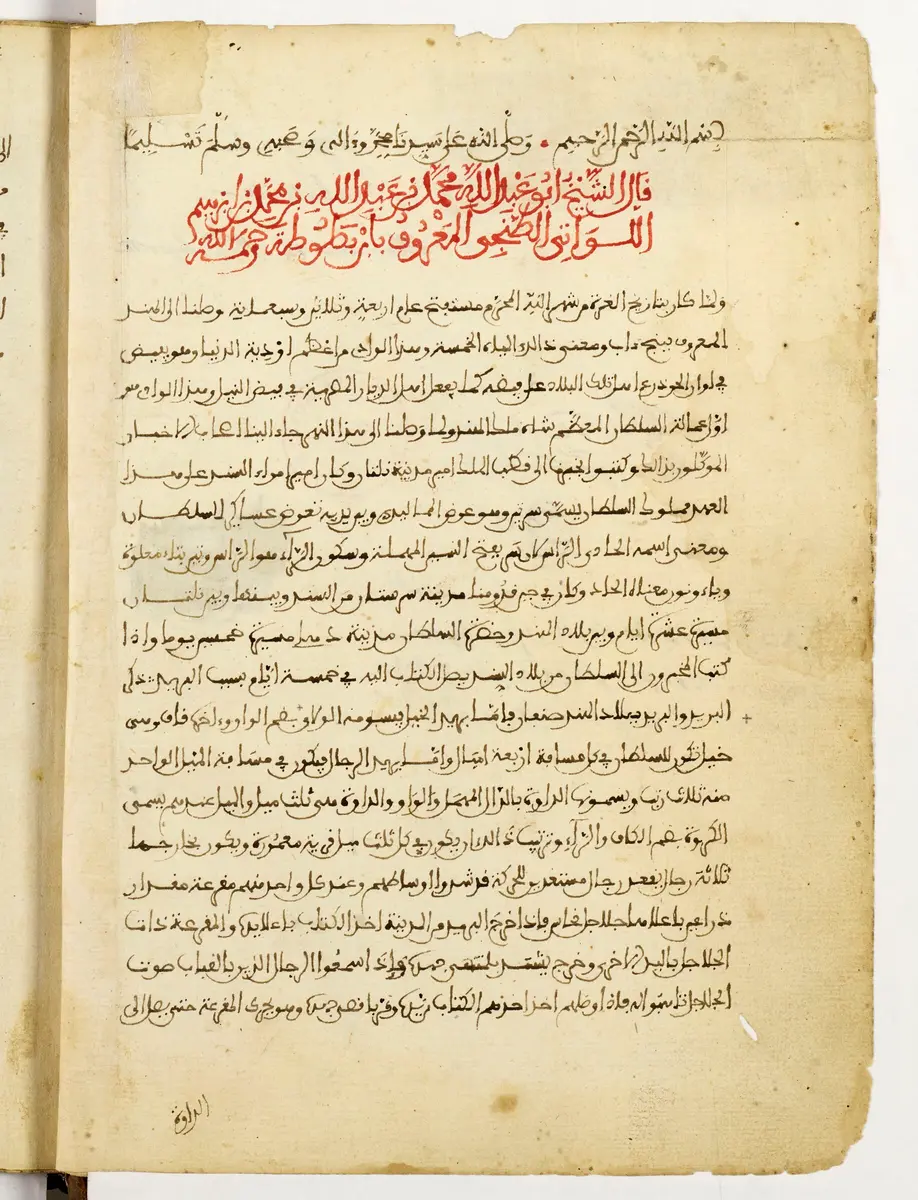
On the way home he saw the Black Death sweep through Syria in 1348, and learned that it had killed his mother before he reached Fez in November 1349. Two Muslim lands were still missing from his list: Granada, where he met a young scholar named Ibn Juzayy, and the empire of Mali across the Sahara, where he spent eight months at the court of Mansa Sulayman in 1352 and 1353 and saw Timbuktu. Back in Fez the Marinid sultan Abu Inan ordered him to dictate his memories, and Ibn Juzayy turned them into a polished book, finished in December 1355, 'A Gift to Those Who Contemplate the Wonders of Cities and the Marvels of Travelling', known simply as the Rihla ('Journey'). Ibn Battuta then served as a judge in a Moroccan town and died in 1368 or 1369 (some say 1377). A small tomb in Tangier is honoured as his, though no one can confirm that he lies there.
The Rihla made little stir in the Muslim world, and Europe found it only in the 19th century: an English translation of a short version appeared in 1829, and the full Arabic text with a French translation in 1853 to 1858, edited partly from a Paris manuscript in Ibn Juzayy's own hand. Historians still argue over its dates, know that Ibn Juzayy borrowed some descriptions from an earlier traveller, and believe that a side trip to Bulghar on the Volga was invented. Yet most of what can be checked holds up, and for Mali, the Maldives, Anatolia, India and early Muslim Sumatra the Rihla remains one of the main sources we have.
What happened
- 1304
Ibn Battuta is born in Tangier into a family of judges of Berber descent, the Luwata, and is educated there in Islamic law.
Tangier: his birthplace (24 February 1304) and the port he left for Mecca in 1325; a small tomb in the old medina is honoured as his grave- 1325
On a Thursday, aged 21, he leaves Tangier alone, 'with the intention of making the Pilgrimage to the Holy House' at Mecca. He will not see Morocco again for 24 years.
Tangier: his birthplace (24 February 1304) and the port he left for Mecca in 1325; a small tomb in the old medina is honoured as his grave- 1326
Having crossed North Africa by Tunis, he reaches Alexandria and Cairo. In Egypt, he later says, he resolves to see as many countries as he can and never to travel the same road twice; a first attempt to cross the Red Sea from Upper Egypt fails.
He enters Damascus, where he studies with its scholars and collects most of the diplomas that later make him welcome as a judge.
At the new moon of Shawwal he leaves Damascus with the Hijaz caravan, the pilgrims' caravan to Medina and Mecca.
He completes his first pilgrimage at Mecca, then turns north-east with the caravan going back to Iraq instead of heading home.
- 1327
He travels through Iraq and southern Persia to Isfahan and Shiraz, and at Baghdad meets the Ilkhan Abu Sa'id, the last great Mongol ruler of Iran, riding ten days with his camp before going north to Tabriz and back.
- 1328
Back in Mecca after his second pilgrimage, he stays on for the next two years, living quietly as a student and devotee.
- 1331
After the pilgrimage of 1330 he sails from Jedda down the Red Sea to Yemen and from Aden along the East African coast: Mogadishu, Mombasa and Kilwa, whose sultan Abu'l-Muzaffar Hasan is famed for his gifts. He returns by Oman and Hormuz.
- 1332
After a third pilgrimage he decides to seek his fortune with the sultan of Delhi. Unable to sail directly, he turns north through Egypt and Syria and takes ship for Anatolia.
- 1333
He crosses Anatolia's small Turkish states, sails the Black Sea to Crimea, and joins the camp of Ozbeg, khan of the Golden Horde. One of the khan's wives, a Byzantine princess, takes him to Constantinople, where he stays a month and six days and is received by the emperor. Then he crosses the steppes to Bukhara, Samarkand and Balkh and the Hindu Kush.
By his own dating he reaches the Indus on the night of the new moon of Muharram 734; the government's news writers report his arrival to the sultan.
- 1334
Outside Delhi he is presented to Sultan Muhammad bin Tughluq, who gives him a large salary and villages and makes him a qadi of Delhi.
Delhi: qadi of the city under Sultan Muhammad bin Tughluq, 1334–1342; the point is the Qutb Minar and the Quwwat al-Islam mosque, whose minaret he described as without parallel in Islam- 1341
After years of service, great debts and growing fear of the sultan, he falls into disgrace, withdraws into an ascetic's life, and asks leave to make the pilgrimage.
Delhi: qadi of the city under Sultan Muhammad bin Tughluq, 1334–1342; the point is the Qutb Minar and the Quwwat al-Islam mosque, whose minaret he described as without parallel in Islam- 1342
Restored to favour, he leaves Delhi at the head of the sultan's embassy to the emperor of China. Near Koel his party is attacked and he barely escapes; on the Malabar coast the ships are wrecked at Calicut and the presents for China are lost.
Delhi: qadi of the city under Sultan Muhammad bin Tughluq, 1334–1342; the point is the Qutb Minar and the Quwwat al-Islam mosque, whose minaret he described as without parallel in Islam- 1343
Fearing the sultan's anger, he goes to the Maldives, where he becomes a judge, marries into the ruling family and is drawn into its politics; he stays nearly two years.
- 1344
He sails from the Maldives and nine days later lands in Sri Lanka, where he visits the king and climbs Adam's Peak to see the footprint in the rock.
- 1345
After another shipwreck on the Coromandel coast and a last stay in the Maldives he reaches Bengal, visits a famous holy man at Sylhet and at Sunarkawan boards a junk for Sumatra.
He lands at the port of Samudra and rides to its wooden-walled capital. The sultan, al-Malik al-Zahir, receives him after the Friday prayer and keeps him fifteen days, then gives him a junk and supplies for China.
Samudra (Samudera Pasai), near Lhokseumawe on the north coast of Sumatra: guest of Sultan al-Malik al-Zahir in 1345 and again in 1346, the earliest Muslim kingdom of the islands he could visit- 1346
He lands at Quanzhou, which he calls Zaitun, perhaps the largest port in the world, and is welcomed by its Muslim judge and merchants. His account of a journey on to Hangzhou and Beijing is so brief that historians doubt it.
Quanzhou (Zaitun), Fujian: the great port where he landed in China in 1345 or 1346; the point is the Qingjing Mosque of its Muslim merchantsHe sails back on a junk of the sultan of Samudra, spends about two months at his court and attends the wedding of the sultan's son, and leaves with gifts of aloes-wood, camphor, cloves and sandalwood.
Samudra (Samudera Pasai), near Lhokseumawe on the north coast of Sumatra: guest of Sultan al-Malik al-Zahir in 1345 and again in 1346, the earliest Muslim kingdom of the islands he could visit- 1347
He lands at Quilon on the Indian coast during Ramadan, thinks of returning to Delhi but dares not, and sails west by Zafar, Muscat and Hormuz.
- 1348
He reaches Baghdad; in Damascus he learns that his father died fifteen years earlier.
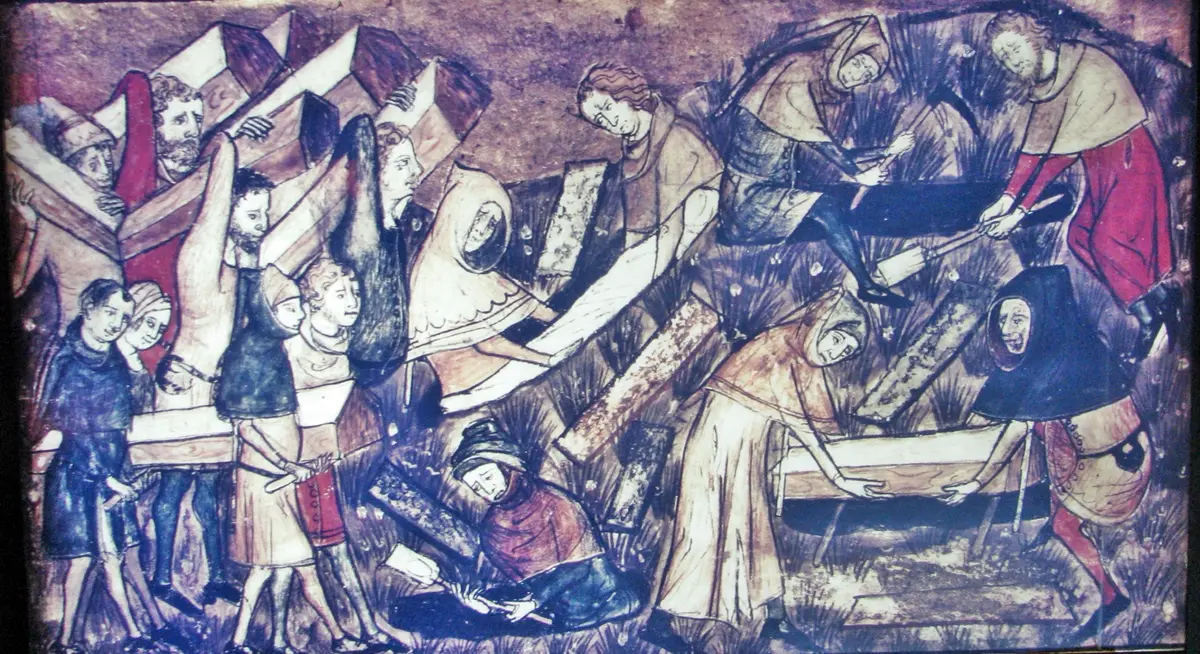
At Aleppo he hears that plague has broken out at Gaza. He finds it in Hims, then in Damascus, where the people fast and pray in the Great Mosque and walk out barefoot, Muslims, Jews and Christians together, and up to 2,400 die a day. The Black Death follows him to Jerusalem, Gaza and Cairo.
He reaches Mecca for his last pilgrimage.
- 1349
At Taza he learns that his mother has died of the plague. On a Friday he reaches Fez and presents himself to the Marinid sultan Abu Inan.
Fez: the Marinid capital, where he arrived home in November 1349 and dictated the Rihla to Ibn Juzayy, finished in December 1355; the point is Sultan Abu Inan's Bou Inania madrasa- 1350
He crosses to al-Andalus and visits Granada. Its sultan Yusuf I is ill, but the sultan's mother sends him gold, and he meets the young scholar Ibn Juzayy, his future editor.
- 1352
Sent by the sultan, he sets out from Sijilmasa with a camel caravan across the Sahara, by the salt mines of Taghaza, to Walata.
He arrives at the capital of Mali, ruled by Mansa Sulayman, whom he finds a miserly king; he is ill for two months, but records the court's ceremonies in detail.
- 1353
He leaves the capital of Mali. At Timbuktu he sees the grave of the Granadan poet al-Sahili, then sails down the Niger in a dugout canoe to Gao.
At Takedda, ordered home by the sultan, he leaves with a large caravan to cross the Sahara northward.
- 1354
He is back in Fez. Abu Inan, who has heard his stories, orders him to dictate an account of his travels to Ibn Juzayy.
Fez: the Marinid capital, where he arrived home in November 1349 and dictated the Rihla to Ibn Juzayy, finished in December 1355; the point is Sultan Abu Inan's Bou Inania madrasa - 1355
The dictation of the Rihla, 'A Gift to Those Who Contemplate the Wonders of Cities and the Marvels of Travelling', is finished.
Fez: the Marinid capital, where he arrived home in November 1349 and dictated the Rihla to Ibn Juzayy, finished in December 1355; the point is Sultan Abu Inan's Bou Inania madrasa- 1356
Ibn Juzayy completes his edited text; the second volume in the Bibliothèque nationale, held to be in his own hand, is dated AH 757.
- 1369
After years as a judge in a Moroccan town, Ibn Battuta dies, in 1368 or 1369 by the usual dating (1377 in another); he may have been buried in Tangier.
Tangier: his birthplace (24 February 1304) and the port he left for Mecca in 1325; a small tomb in the old medina is honoured as his grave