Jensen Huang
“The Taiwanese-born engineer who co-founded Nvidia at a Denny's in 1993 and led it from gaming graphics chips to the GPUs that power the AI boom.”
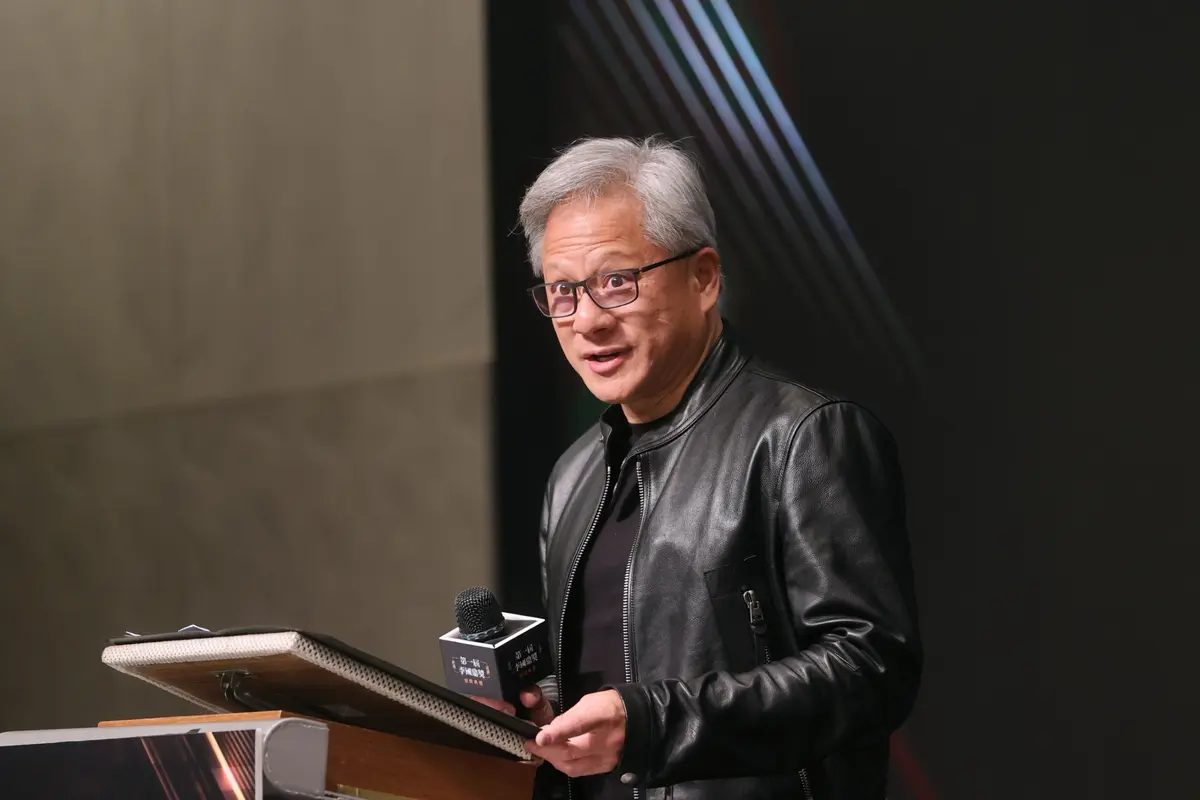
Jensen Huang (Huang Jen-Hsun, born 1963) is the Taiwanese-born American electrical engineer who co-founded Nvidia in April 1993 and has led it as chief executive ever since. Under him the company made the graphics chips on which PC games were played, sold the GeForce 256 of 1999 as 'the world's first GPU', opened its graphics processors to scientists and programmers with CUDA in 2006, and then became the main maker of the chips on which modern artificial intelligence is trained and run. By the 2020s Nvidia was one of the most valuable companies in the world, and Huang, on stage in his black leather jacket, one of the best-known figures in technology.
He was born in Tainan, Taiwan, the second son of a chemical engineer and a schoolteacher. When he was five the family moved to Thailand, where his father worked on an oil refinery, and in 1973, as unrest grew there, the parents sent him and his older brother to an uncle in Tacoma, Washington. The uncle placed the boys at the Oneida Baptist Institute in rural Kentucky, which he took for a good boarding school; it was in fact a strict school for troubled boys, where the younger Huang cleaned the toilets every day and was bullied. About two years later the parents came to America and the family settled near Portland, Oregon. He went to Aloha High School, played table tennis at national level, and at fifteen washed dishes, cleared tables and waited at a Denny's restaurant in Portland.
At Oregon State University he studied electrical engineering, graduating in 1984; there he met Lori Mills, his lab partner and later his wife. He designed microprocessors at Advanced Micro Devices, then joined LSI Logic, where he rose to run a unit that helped other companies design their own chips, and took a master's degree at Stanford in 1992. At LSI he worked with two engineers from Sun Microsystems, Chris Malachowsky and Curtis Priem. When they wanted to start a company, the three planned it over coffee in a Denny's on Berryessa Road in San Jose and founded Nvidia, with Huang as chief executive, to make 3D graphics chips for PC games, a market that barely existed. The first chip, the NV1 of 1995, used the wrong methods and nearly ruined the company; Huang asked Sega to release Nvidia from a games-console contract and still pay, and the team built the RIVA 128 in about nine months. It sold well from 1997, the company went public in January 1999, and that August it launched the GeForce 256.
Huang's long bet was that the GPU, built to draw millions of pixels at once, could do other parallel work too. CUDA, announced with the GeForce 8800 in November 2006, let programmers use the chips for any computation-heavy work, and GPUs soon ran oil-exploration software and the largest supercomputers. In 2012 AlexNet, a neural network trained on two Nvidia gaming cards, won the ImageNet contest, and Nvidia turned to deep learning: in 2016 Huang delivered the first DGX-1, an 'AI supercomputer in a box', to OpenAI in person. A bid to buy the chip designer Arm for 40 billion dollars, announced in 2020, was abandoned in 2022 in the face of regulators. Then ChatGPT set off the AI boom, demand for Nvidia's data-centre GPUs exploded, and on 30 May 2023 the company was briefly worth a trillion dollars, the first chipmaker to get there.
Huang runs Nvidia without annual or five-year plans, letting its strategy shift as the world does, and says he meets every new field with the question 'how hard can it be?'. He has received the semiconductor industry's highest honour, the Robert N. Noyce Award (2021), was named one of Time's hundred most influential people (2021) and a Fellow of the Computer History Museum (2024), and in 2026 was appointed to the President's Council of Advisors on Science and Technology. With Lori Huang he has given buildings to the two universities that taught them: the Jen-Hsun Huang Engineering Center at Stanford, opened in 2010, and the Jen-Hsun and Lori Huang Collaborative Innovation Complex at Oregon State, a supercomputer centre still being built in 2026. His company designs chips but makes none: since the 1990s they have come mostly from TSMC in Taiwan, the island where he was born.
What happened
- 1963
Huang Jen-Hsun is born in Tainan, Taiwan, the second son of Huang Hsing-tai, a chemical engineer, and Lo Tsai-hsiu, a schoolteacher.
Tainan, Taiwan: Huang was born here on 17 February 1963- 1968
At five he moves with his family to Thailand, where his father has a job starting an oil refinery.
- 1973
With unrest and a coup in Thailand, his parents send him and his older brother to an uncle in Tacoma, Washington, who places them at the Oneida Baptist Institute in Kentucky, a strict school for troubled boys. The younger boy cleans the toilets every day and is bullied.
Oneida Baptist Institute, Oneida, Kentucky: the boarding school where he and his brother were sent from about 1973 - 1978
About two years after the boys were sent to Oneida, their parents arrive and the family settles near Portland, Oregon. He goes to Aloha High School, plays table tennis every day for years, up to the US Open, and at fifteen takes his first job, washing dishes, then clearing and waiting tables at a Denny's in Portland.
- 1984
He graduates in electrical engineering from Oregon State University, where he met Lori Mills when they were paired as lab partners in an electrical fundamentals class; they later marry. He joins Advanced Micro Devices to design microprocessors.
Oregon State University, Corvallis: he studied electrical engineering here, graduating in 1984, and met Lori Mills in the lab - 1985
He moves to LSI Logic, whose design tools let computer makers design their own chips; he works with Sun Microsystems' engineers, among them Chris Malachowsky and Curtis Priem, and rises to direct LSI's CoreWare 'system-on-a-chip' unit.
- 1992
Studying while he works, he takes a master's degree in electrical engineering at Stanford.
- 1993
After talks over coffee at a Denny's on Berryessa Road in San Jose, Huang, Malachowsky and Priem found Nvidia to make 3D graphics chips for PC games; the other two choose Huang as chief executive. They start with 40,000 dollars, and by June the venture firms Sequoia and Sutter Hill have seats on the board.
The Denny's at 2484 Berryessa Road, San Jose: where Huang, Malachowsky and Priem planned Nvidia; a plaque was unveiled here in 2023- 1995
Nvidia introduces its first chip, the NV1, a multimedia accelerator aimed at game consoles, and is working under contract with Sega on a chip for its next console. The NV1 draws curved surfaces while the rest of the industry settles on triangles, and its sales soon fall away.
- 1996
Nvidia stops selling the NV1 and cancels the NV2, the chip for Sega's console. Huang tells Sega's chief executive, Irimajiri, that the design is wrong and asks to be released from the contract and still be paid; Sega agrees, and the money keeps Nvidia alive.
- 1997
Nvidia begins shipping the RIVA 128, a conventional 3D chip it designed in about nine months, testing it on an emulator bought from a failing company; it sells well and saves the company.
- 1999
Nvidia's shares begin trading on Nasdaq as NVDA, after an offering of 3.5 million shares at 12 dollars; Huang is 35.
Nvidia begins shipping the GeForce 256, which it calls 'the world's first GPU': the first chip to add hardware transform and lighting to the rendering pipeline.
- 2006
Nvidia launches the GeForce 8800 and announces CUDA, which lets programmers use the GPU's power for any computation-heavy work, not only graphics.
- 2010
Stanford dedicates the Jen-Hsun Huang Engineering Center, a 30 million dollar building of which he is the lead donor, with a symposium between Huang, Stanford's president John Hennessy and Yahoo's co-founder Jerry Yang.
- 2012
AlexNet, a neural network trained on two Nvidia gaming cards, wins the ImageNet contest; Nvidia, in its own words, 'sparks the era of modern AI' and turns towards deep learning.
- 2016
Huang hand-delivers the first DGX-1, a deep-learning server with eight Pascal GPUs that Nvidia calls an 'AI supercomputer in a box', to OpenAI's headquarters in San Francisco.
- 2018
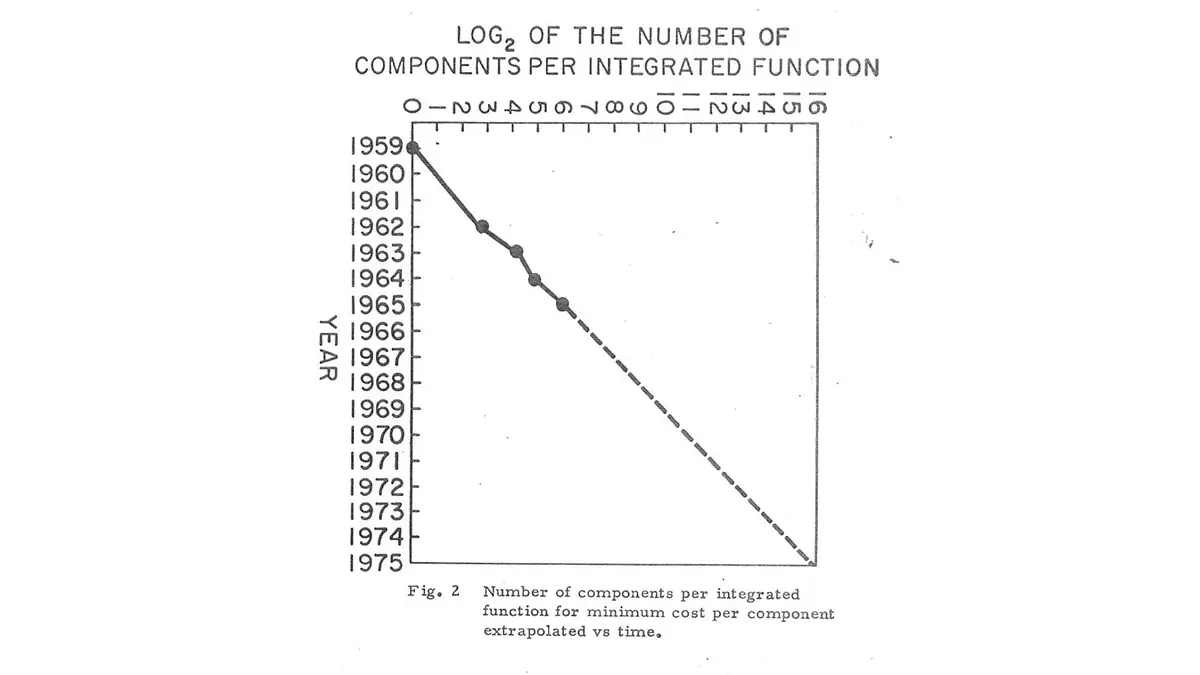
At Nvidia's GPU Technology Conference in San Jose he says its GPUs are 25 times faster than five years before, far ahead of Moore's law; the press calls it 'Huang's law'.
At SC18, the supercomputing conference, Huang presents Nvidia's data-centre GPUs in the week the new TOP500 list is published: the two fastest computers in the world, Summit and Sierra, both run on Nvidia V100 GPUs.
- 2020
Nvidia agrees to buy the British chip designer Arm from SoftBank for 40 billion dollars.
Nvidia's headquarters, Endeavor, 2788 San Tomas Expressway, Santa Clara- 2021
He receives the Semiconductor Industry Association's Robert N. Noyce Award, the industry's highest honour; the same year Time lists him among the hundred most influential people.
- 2022
Nvidia and SoftBank call off the Arm deal 'because of significant regulatory challenges'; SoftBank keeps Nvidia's 1.25 billion dollar prepayment.
Nvidia's headquarters, Endeavor, 2788 San Tomas Expressway, Santa ClaraOregon State announces a 50 million dollar gift from Jen-Hsun and Lori Huang towards a 200 million dollar research centre with an Nvidia supercomputer, to be named after them.
Oregon State University, Corvallis: he studied electrical engineering here, graduating in 1984, and met Lori Mills in the lab- 2023
As the AI boom drives demand for its chips, Nvidia is briefly worth more than a trillion dollars, the first chipmaker to get there (the AI boom record follows its later records).
Nvidia's headquarters, Endeavor, 2788 San Tomas Expressway, Santa ClaraBack at the Denny's where Nvidia began, Huang and Denny's chief executive Kelli Valade unveil a plaque to the founding.
The Denny's at 2484 Berryessa Road, San Jose: where Huang, Malachowsky and Priem planned Nvidia; a plaque was unveiled here in 2023In Taipei he speaks at the first K. T. Li Award ceremony, attended by President Tsai Ing-wen.
- 2024
The Computer History Museum makes him a Fellow, 'for visionary leadership in the advancement of devices and systems for computer graphics, accelerated computing, and artificial intelligence'.
- 2025
In his keynote at CES in Las Vegas he traces AI from AlexNet in 2012 to 'physical AI' for robots and self-driving cars.
- 2026
He is appointed to the President's Council of Advisors on Science and Technology.