AlexNet wins the ImageNet contest
“In 2012 AlexNet, a neural network built in Toronto by Krizhevsky, Sutskever and Hinton and trained on two gaming graphics cards, won the ImageNet contest by a huge margin and launched the deep-learning era.”
AlexNet was a computer program that learned to recognise what is in a photograph, and its victory in an academic contest in the autumn of 2012 is usually counted as the start of the deep-learning era of artificial intelligence. The contest was the ImageNet Large Scale Visual Recognition Challenge: programs had to name the main object in photographs they had never seen, choosing among 1,000 categories from 'container ship' to 'mite', with five guesses allowed for each picture. AlexNet, entered under the team name SuperVision by two graduate students of the University of Toronto, Alex Krizhevsky and Ilya Sutskever, and their professor Geoffrey Hinton, was wrong only 15.3 percent of the time. The next best entry, from the University of Tokyo, was wrong 26.2 percent of the time. In the two earlier contests the winners had improved on each other by only a few points.
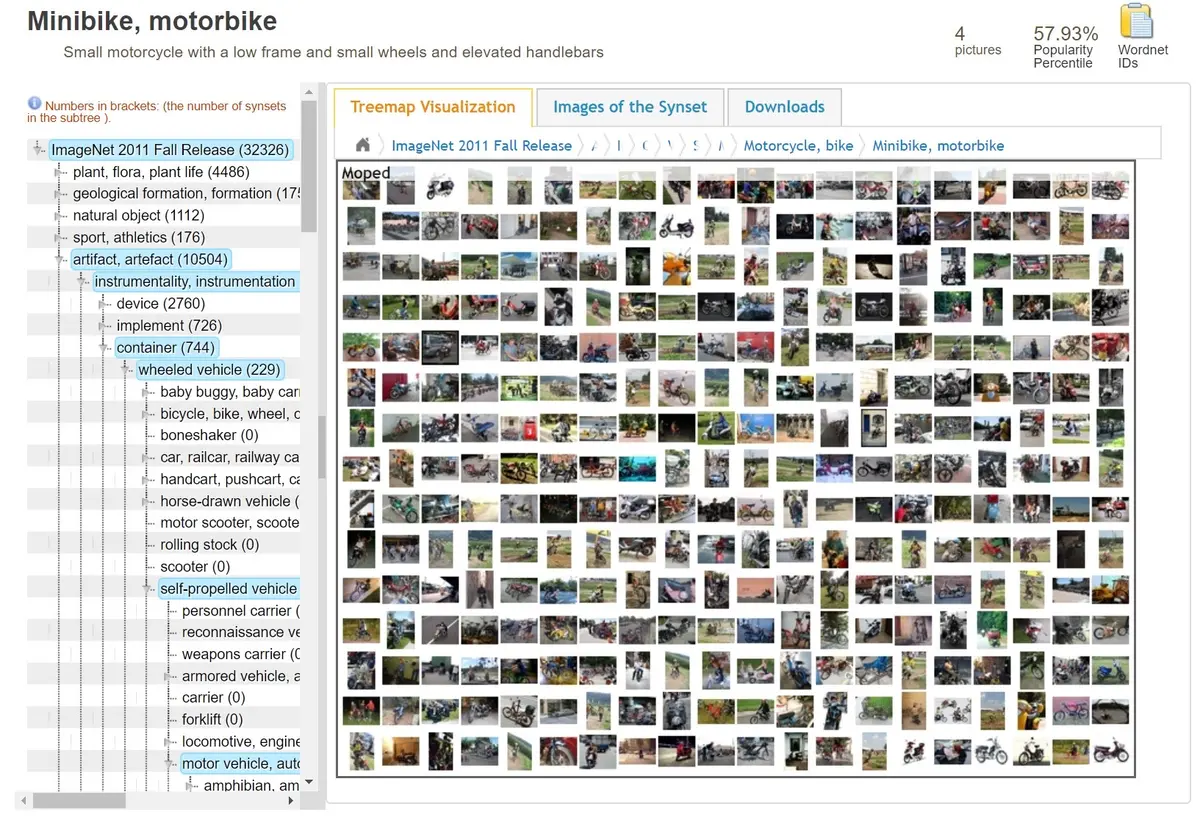
Three things came together. The first was data. Beginning in 2006, Fei-Fei Li set out to collect pictures for every noun in WordNet, a database of English words and how they relate. Her team at Princeton gathered images from the web and paid online workers on Amazon's Mechanical Turk to check them, and presented ImageNet at the CVPR conference in June 2009 with 3.2 million pictures; by 2012 it held more than 14 million in about 22,000 categories. From 2010 Li, by then at Stanford, ran a yearly contest on a slice of it. The second was the method. Neural networks, programs loosely modelled on the brain that learn by adjusting millions of connections, had long been out of fashion, but Hinton had kept working on them since the 1980s, and his former postdoc Yann LeCun had shown that 'convolutional' networks, which scan a picture with small learned filters, could read handwritten numbers. The third was computing power: the graphics chips that Nvidia made for video games do exactly the kind of arithmetic, many sums at once, that such networks need, and Nvidia's CUDA software of 2007 let researchers program them.
Sutskever believed that a big enough network with enough data would win, and in 2011 he persuaded Krizhevsky, who was unusually good at making graphics chips run fast, to try. Krizhevsky extended his own program, cuda-convnet, to split one network across two Nvidia GeForce GTX 580 cards and trained it on a computer in his bedroom at his parents' house, tuning and retraining it for most of a year. The final network had eight layers that learn, 60 million adjustable numbers and 650,000 artificial neurons, and it learned from 1.2 million labelled photographs in five to six days. Two simple tricks mattered: a kind of neuron (the 'ReLU') that trained several times faster, and 'dropout', which switches off half the neurons at random during training so that the network cannot just memorise. Krizhevsky presented the result at the contest's workshop in Florence on 12 October 2012, and the paper, 'ImageNet Classification with Deep Convolutional Neural Networks', at the NIPS conference at Lake Tahoe that December.
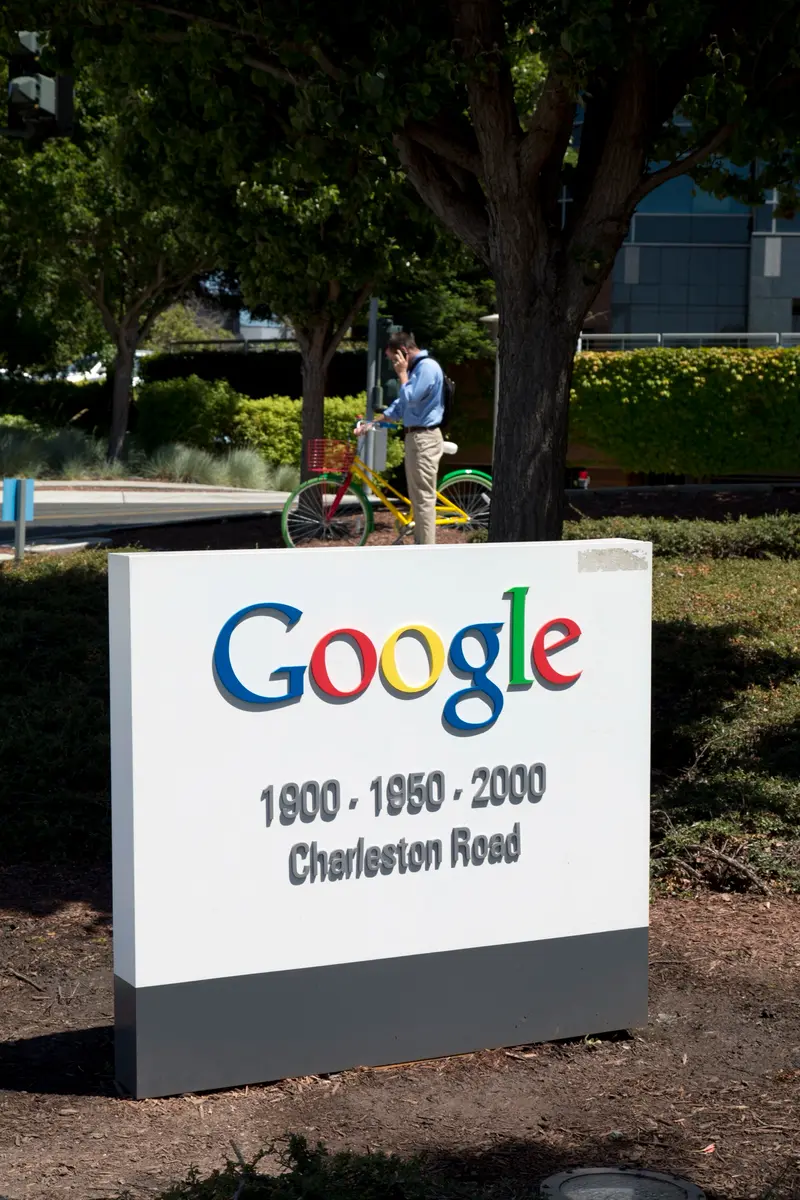
The effect was immediate. At Lake Tahoe, Hinton auctioned the three men's new company, DNNresearch, from his hotel room; Baidu, Google, Microsoft and the young DeepMind bid, and Hinton stopped at 44 million dollars and chose Google, which announced the deal on 12 March 2013. Before AlexNet almost no leading computer-vision papers used neural networks; soon almost all of them did, and the same approach spread to speech, translation and games, all trained on Nvidia's chips. Sutskever went on to co-found OpenAI in 2015; Hinton, LeCun and Yoshua Bengio received the 2018 Turing Award, computing's highest honour, and Hinton shared the 2024 Nobel Prize in Physics.
AlexNet is remembered as the moment when big data, big computing and neural networks together first beat hand-designed methods by a wide margin: the recipe behind today's AI, from photo search to chatbots. The paper had been cited more than 172,000 times by 2025, when the Computer History Museum, with Google, released AlexNet's original source code. Hinton summed up the work for the museum: 'Ilya thought we should do it, Alex made it work, and I got the Nobel Prize.'
What happened
- 2009
CVPR 2009, the main computer-vision conference, opens at the Fontainebleau in Miami Beach (22 to 25 June). There Jia Deng, Wei Dong, Richard Socher, Li-Jia Li, Kai Li and Fei-Fei Li of Princeton present ImageNet: 3.2 million images in 5,247 WordNet categories, checked by workers on Amazon Mechanical Turk, a first step towards 50 million.
Fontainebleau hotel, Miami Beach: CVPR 2009, where ImageNet was presented in June 2009- 2010
The first ImageNet Large Scale Visual Recognition Challenge, organised by Alex Berg (Columbia), Jia Deng (Princeton) and Fei-Fei Li (Stanford), presents its results at a workshop of the European Conference on Computer Vision in Crete: the winners, a team from NEC and the University of Illinois, are wrong 28.2 percent of the time with five guesses.
- 2011
In Toronto, Ilya Sutskever persuades his fellow graduate student Alex Krizhevsky to train a convolutional network on ImageNet, with Hinton as principal investigator. Krizhevsky extends his graphics-card program cuda-convnet to two Nvidia cards and, over the following year, keeps tuning and retraining it on a computer in his bedroom at his parents' house.
D. L. Pratt Building, University of Toronto: Hinton's office and his machine-learning group, home of the SuperVision team and DNNresearchThe second challenge's full results are released: the winner, Xerox Research Centre Europe, is wrong 25.8 percent of the time, only a little better than the year before.
- 2012
The organisers release the training data for the 2012 challenge: 1,281,167 photographs in 1,000 categories, with new photographs held back for testing. A new task, telling apart 120 breeds of dog, is added.
Gates Computer Science Building, Stanford University: Fei-Fei Li's group ran the ImageNet challenge from Stanford from 2010Hinton's group, with Krizhevsky and Sutskever among the authors, posts 'Improving neural networks by preventing co-adaptation of feature detectors' on arXiv: dropout, which leaves out half of the network's units at random on each training example so that it cannot simply memorise. AlexNet uses it.
D. L. Pratt Building, University of Toronto: Hinton's office and his machine-learning group, home of the SuperVision team and DNNresearch- 7:00 p.m.
Entries close at 23:00 GMT, 7 p.m. in Toronto, after a deadline extension. SuperVision has entered two versions: one trained only on the contest's photographs, and one first trained on the whole ImageNet Fall 2011 release of 15 million images.
D. L. Pratt Building, University of Toronto: Hinton's office and his machine-learning group, home of the SuperVision team and DNNresearch The organisers send the preliminary results to the teams and invite them to the challenge's session at the PASCAL VOC workshop in Florence on 12 October.
Gates Computer Science Building, Stanford University: Fei-Fei Li's group ran the ImageNet challenge from Stanford from 2010- 5:05 p.m.
At the ECCV 2012 workshop in Florence, Fei-Fei Li opens the ImageNet session at 15:30 with an overview of the results; after the Oxford and Tokyo teams, Alex Krizhevsky presents SuperVision. Many computer-vision veterans are unconvinced, but Yann LeCun, in the audience, calls it a turning point for AI.
Palazzo degli Affari, Florence: the ECCV 2012 workshops, where Krizhevsky presented SuperVision's entry on 12 October 2012 The full results go online: SuperVision's best entry is wrong 15.3 percent of the time with five guesses, against 26.2 percent for the runner-up, the University of Tokyo's ISI team. The challenge had 107 registrations and 30 submissions.
Gates Computer Science Building, Stanford University: Fei-Fei Li's group ran the ImageNet challenge from Stanford from 2010During the NIPS conference at Lake Tahoe, Hinton auctions DNNresearch, the company he has just formed with Krizhevsky and Sutskever, from room 731 of the Harrah's tower. Baidu, Google, Microsoft and DeepMind bid by email; Hinton stops the bidding at 44 million dollars and chooses Google.
Harrah's Lake Tahoe, Stateline, Nevada: the NIPS 2012 poster session of 6 December, and the hotel room where Hinton auctioned DNNresearch- 5:40 p.m.
'ImageNet Classification with Deep Convolutional Neural Networks' gets a four-minute spotlight in NIPS's fourth spotlight session, on the convention floor at Harveys.
Harveys Lake Tahoe, Stateline, Nevada: NIPS 2012's convention floor, where the AlexNet paper had its spotlight on 4 December 2012 - 2:00 p.m.
AlexNet's poster (Th25) is shown in the afternoon poster session, 2 to 6 p.m., in Harrah's Special Events Center. It is Hinton's 65th birthday, which by Cade Metz's account he spends at dinner in Harrah's top-floor steakhouse with Google's Alan Eustace and Jeff Dean, who have come to meet his students in the week of the auction.
Harrah's Lake Tahoe, Stateline, Nevada: the NIPS 2012 poster session of 6 December, and the hotel room where Hinton auctioned DNNresearch - 2013
Google announces that it has hired Hinton, Krizhevsky and Sutskever and bought DNNresearch for an undisclosed sum. Hinton will split his time between Google and teaching in Toronto; the two students move to Google's campus in Mountain View.
D. L. Pratt Building, University of Toronto: Hinton's office and his machine-learning group, home of the SuperVision team and DNNresearch