Geoffrey Hinton
“The British-Canadian 'godfather of AI' who kept neural networks alive, helped make backpropagation and deep learning work, won the Turing Award and the 2024 Nobel Prize, then warned about AI's dangers.”
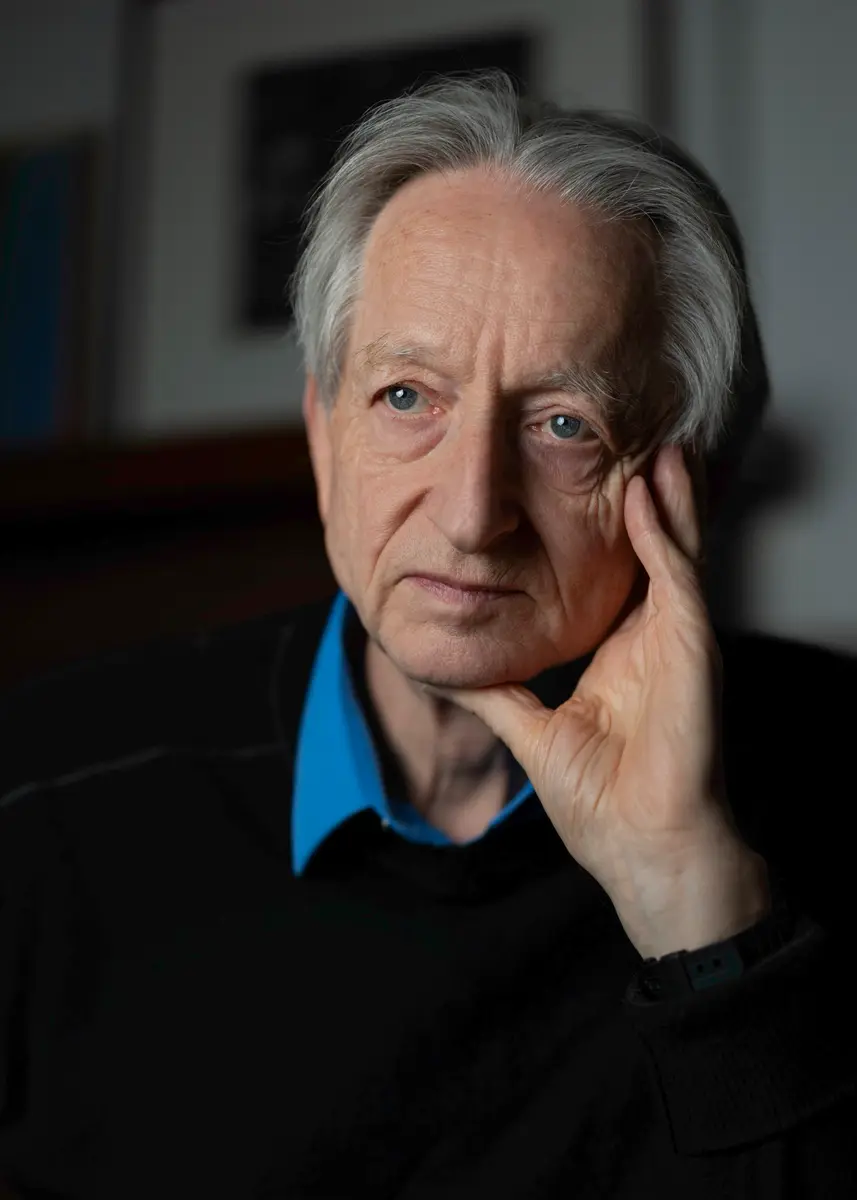
Geoffrey Hinton (born 1947) is the British-Canadian computer scientist and cognitive psychologist often called the 'godfather of AI'. For more than forty years he worked on artificial neural networks, computer programs loosely modelled on the brain that learn by adjusting the strengths of millions of connections, at a time when most of the field thought them a dead end. His ideas and his students, above all the AlexNet team of 2012, made 'deep learning' the method behind modern artificial intelligence, from photo search and speech recognition to chatbots. He shared the 2018 Turing Award, computing's highest honour, with Yoshua Bengio and Yann LeCun, and the 2024 Nobel Prize in Physics with John Hopfield. Since leaving Google in 2023 he has become one of the best-known voices warning that AI could get out of human control.
He was born in London on 6 December 1947 into a family of scientists. His father, Howard Everest Hinton, was a distinguished entomologist; his great-great-grandfather was George Boole, the Victorian logician whose algebra of true and false underlies every digital computer; his great-grandfather Charles Howard Hinton wrote about the fourth dimension and coined the word 'tesseract'; and the family's middle name, Everest, comes from the relative after whom the mountain is named. At King's College, Cambridge, he moved between physiology, physics and philosophy before taking a degree in experimental psychology in 1970, worked for a while as a carpenter, and in 1972 went to Edinburgh to study artificial intelligence under Christopher Longuet-Higgins. His thesis on how a visual system can settle on the best consistent interpretation of a scene was finished in 1977 and the doctorate awarded in 1978.
The decisive years came in California and Pittsburgh. From 1978 Hinton was a visiting scholar in the cognitive science group at the University of California, San Diego, where with David Rumelhart and James McClelland he laid out the 'parallel distributed processing' (PDP) programme: thinking as the work of many simple, neuron-like units in parallel. At Carnegie Mellon (1982 to 1987) he invented the Boltzmann machine with Terrence Sejnowski and David Ackley, a network that uses ideas from statistical physics to learn the hidden structure of data; this is the work the Nobel committee cited. In 1986 Rumelhart, Hinton and Ronald Williams showed in Nature how 'backpropagation', which sends a network's errors backwards to adjust every connection, lets networks with hidden layers learn useful internal features. The method itself was older: Seppo Linnainmaa had described the underlying calculation in 1970, Paul Werbos had proposed it for neural networks, and David Parker and Yann LeCun found it independently in 1985. Those who were there credit Rumelhart with working it out for the group; the 1986 papers made it famous by showing what it could do.
Unwilling to depend on Pentagon money, Hinton moved to the University of Toronto and the Canadian Institute for Advanced Research in 1987, spent 1998 to 2001 founding the Gatsby Computational Neuroscience Unit in London, and returned to Toronto. When neural networks fell out of fashion again in the 1990s he kept a small group going, and from 2004 he led a CIFAR programme that brought together the few researchers still working on them, LeCun and Bengio among them. In 2006 he showed how deep networks could be trained one layer at a time with 'restricted' Boltzmann machines; by 2012 his students' networks had transformed speech recognition, and AlexNet, built by Alex Krizhevsky and Ilya Sutskever, won the ImageNet contest by a wide margin. Google bought their small company, DNNresearch, in 2013, and Hinton worked for Google half-time for ten years while Toronto, with the Vector Institute he advised from 2017, became a centre of the AI industry.
In May 2023, alarmed by how quickly large language models such as GPT-4 were improving, he left Google so that he could speak freely about the dangers of AI: misinformation, lost jobs, autonomous weapons and, in the longer run, machines more intelligent than people that might not stay under control. The Nobel Prize in Physics of 8 October 2024, which reached him at two in the morning in a cheap hotel in California, gave that warning a bigger stage, and his banquet speech in Stockholm was a plea for safety research. Hinton is only the second person, after Herbert Simon, to win both a Turing Award and a Nobel Prize. He remains University Professor Emeritus at Toronto and, still lecturing in 2026, says he would like to understand how the brain works.
What happened
- 1947
Geoffrey Everest Hinton is born in London, the son of the entomologist Howard Everest Hinton. Among his forebears are the logician George Boole, his great-great-grandfather, and the mathematician Charles Howard Hinton, his great-grandfather; the family's middle name honours the surveyor George Everest.
Wimbledon, London: Hinton was born in London on 6 December 1947, in Wimbledon by Wikidata's record- 1967
He goes up to King's College, Cambridge, where he moves between physiology, physics and philosophy before settling on experimental psychology.
King's College, Cambridge: he studied here from 1967, taking a degree in experimental psychology in 1970 - 1970
He graduates with a BA in experimental psychology, decides that none of these sciences explains how people think, and works for a time as a carpenter.
King's College, Cambridge: he studied here from 1967, taking a degree in experimental psychology in 1970 - 1972
Drawn back by the promise of artificial intelligence, he begins a PhD at the University of Edinburgh, supervised by Christopher Longuet-Higgins, and chooses the unfashionable subject of networks of simulated neurons.
- 1976
He becomes a research fellow in the Cognitive Studies Programme at the University of Sussex.
- 1977
He completes his thesis, 'Relaxation and its Role in Vision': a parallel method by which a visual system weighs many locally plausible hypotheses about a scene until the best consistent set wins. The Edinburgh doctorate is awarded in 1978.
- 1978
He arrives at the University of California, San Diego, as a visiting scholar in a Sloan Foundation-funded cognitive science group gathered by Don Norman, and joins David Rumelhart and James McClelland in exploring neural-network models of the mind.
University of California, San Diego: visiting scholar in cognitive science 1978–80 and again in 1982, with Rumelhart and McClelland; the PDP group and the backpropagation report- 1980
He returns to England as a scientific officer at the Medical Research Council's Applied Psychology Unit in Cambridge.
- 1982
Back at UCSD for six months as a visiting assistant professor, he plans with Rumelhart, McClelland and Paul Smolensky the framework of 'parallel distributed processing' and the first chapters of the PDP books.
University of California, San Diego: visiting scholar in cognitive science 1978–80 and again in 1982, with Rumelhart and McClelland; the PDP group and the backpropagation reportHe joins the Computer Science Department of Carnegie Mellon University in Pittsburgh as an assistant, later associate, professor.
- 1983
With Terrence Sejnowski he invents the Boltzmann machine, a stochastic version of Hopfield's 1982 network that uses the statistics of physics to learn the hidden structure of a set of patterns; it is the work the 2024 Nobel Prize cites.
- 1985
Ackley, Hinton and Sejnowski publish 'A learning algorithm for Boltzmann machines' in Cognitive Science. Convinced that 'the future is actually in Boltzmann machines', Hinton gives up co-editing the PDP books, a decision he later called 'a big mistake'.
UCSD's Institute for Cognitive Science issues ICS Report 8506, 'Learning Internal Representations by Error Propagation', by Rumelhart, Hinton (now at Carnegie Mellon) and Ronald Williams. It notes that David Parker and Yann LeCun had found the same procedure independently.
University of California, San Diego: visiting scholar in cognitive science 1978–80 and again in 1982, with Rumelhart and McClelland; the PDP group and the backpropagation report- 1986
MIT Press publishes the two volumes of 'Parallel Distributed Processing' by Rumelhart, McClelland and the PDP Research Group, with the backpropagation report as a chapter; it becomes the textbook of the neural-network revival.
Nature publishes 'Learning representations by back-propagating errors' by Rumelhart, Hinton and Williams: networks with hidden units, trained by sending errors backwards, learn useful features of their own; Hinton's companion experiment had a network discover age, nationality and family branch from a set of family relationships. The method had been described before (Seppo Linnainmaa, 1970; Paul Werbos); the paper showed what it could do and made it famous.
- 1987
Reluctant to depend on Pentagon funding for AI, Hinton leaves the United States to become a professor of computer science at the University of Toronto and a fellow of the Canadian Institute for Advanced Research. Yann LeCun joins him as a postdoctoral fellow for 1987–88.
Sandford Fleming Building, 10 King's College Road, University of Toronto: the Department of Computer Science, his base from 1987- 1998
He is elected a Fellow of the Royal Society, and in July moves to London as founding director of the Gatsby Computational Neuroscience Unit at University College London.
- 2001
He returns to the University of Toronto. The same year he receives the first David E. Rumelhart Prize for contributions to the theory of cognition.
Sandford Fleming Building, 10 King's College Road, University of Toronto: the Department of Computer Science, his base from 1987- 2004
He becomes director of CIFAR's new programme 'Neural Computation and Adaptive Perception', which until 2013 brings together the few researchers still betting on neural networks, LeCun and Yoshua Bengio among them.
- 2006
Toronto names him a University Professor, its highest academic rank.
With Simon Osindero and Yee-Whye Teh he publishes 'A fast learning algorithm for deep belief nets' in Neural Computation: deep networks can be trained one layer at a time with restricted Boltzmann machines, then fine-tuned with backpropagation.
In Science, Hinton and Ruslan Salakhutdinov of Toronto show that such pre-trained deep 'autoencoder' networks compress data far better than older methods, a milestone towards what is now called deep learning.
- 2010
He receives the Gerhard Herzberg Canada Gold Medal, Canada's highest award for science and engineering.
- 2012
AlexNet, the network his students Alex Krizhevsky and Ilya Sutskever built and trained on two gaming graphics cards, wins the ImageNet contest by a wide margin (see the AlexNet record).
Hinton and researchers from Microsoft, Google and IBM publish 'Deep Neural Networks for Acoustic Modeling in Speech Recognition', the shared view of four groups whose neural networks had beaten the old methods of speech recognition.
- 2013
Google announces that it has bought DNNresearch, the company Hinton had formed with Krizhevsky and Sutskever; Hinton begins working for Google half-time while staying in Toronto.
- 2014
He retires from teaching and becomes University Professor Emeritus, setting up a Toronto branch of Google Brain; he later becomes a vice-president and Engineering Fellow at Google.
- 2017
The Vector Institute for AI is launched in Toronto with 135 million dollars from Canadian governments and industry, built on the work of Hinton and his colleagues; he becomes its chief scientific advisor.
- 2018
He is made a Companion of the Order of Canada, the country's highest civilian honour.
- 2019
ACM names Yoshua Bengio, Geoffrey Hinton and Yann LeCun the winners of the 2018 Turing Award 'for conceptual and engineering breakthroughs that have made deep neural networks a critical component of computing'.
The Turing Award is presented to the three at ACM's annual awards banquet in San Francisco.
- 2022
He shares the Princess of Asturias Award for Technical and Scientific Research with LeCun, Bengio and Demis Hassabis, and receives the Royal Society's Royal Medal.
- 2023
The New York Times reports that Hinton has quit Google so that he can speak freely about the risks of AI; a part of him, he says, regrets his life's work. He writes that he left 'so that I could talk about the dangers of AI' without considering how it affects Google, which he says has acted very responsibly.
At the Collision conference in Toronto he speaks on Centre Stage about the dangers of AI.
- 2024
The Royal Swedish Academy of Sciences awards the Nobel Prize in Physics to John Hopfield and Geoffrey Hinton 'for foundational discoveries and inventions that enable machine learning with artificial neural networks'. The call reaches Hinton at two in the morning in a cheap hotel in California; he says he will give his share of the money to charities.
On his 77th birthday, during Nobel Week, he signs a chair at the Nobel Prize Museum, as laureates traditionally do, and records his official interview.
He gives his Nobel lecture at the Aula Magna of Stockholm University, introduced by Ellen Moons, chair of the Nobel Committee for Physics.
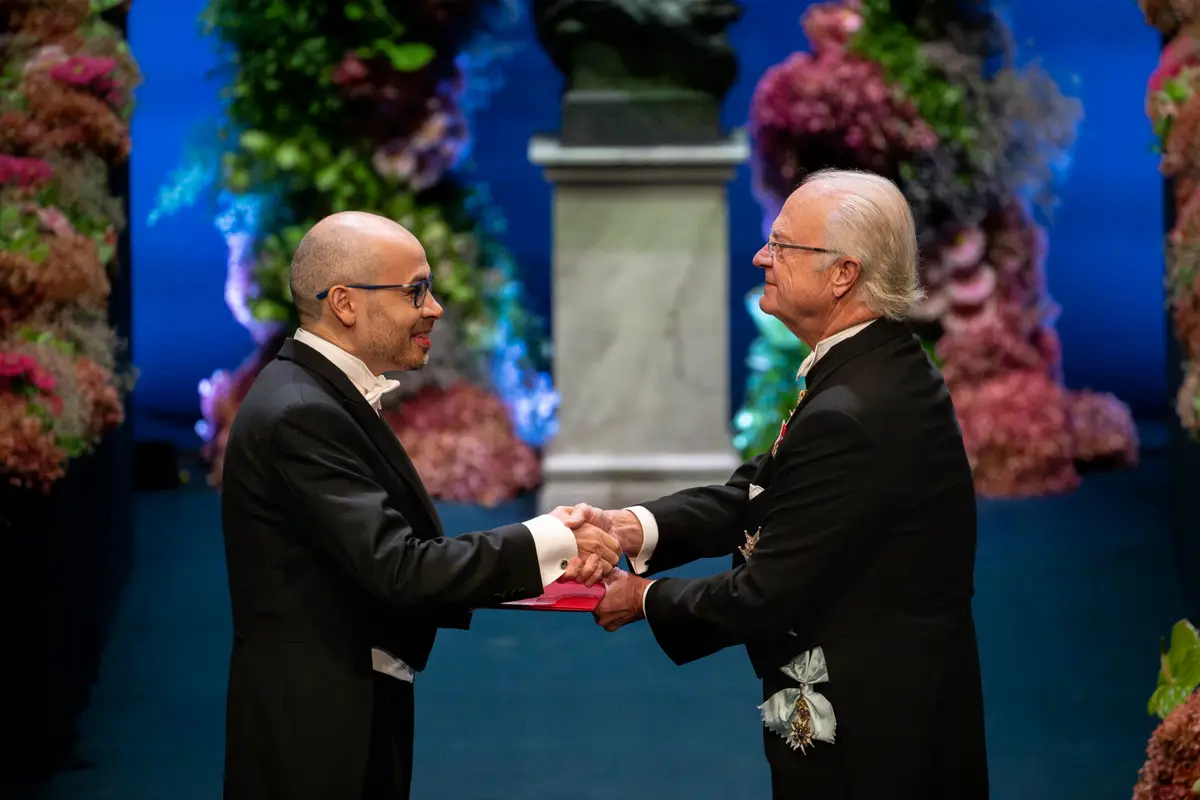
At the Stockholm Concert Hall he receives the Nobel Prize from King Carl XVI Gustaf; Hinton is only the second person, after Herbert Simon, to hold both a Turing Award and a Nobel Prize.
Konserthuset, Stockholm: Hinton received the 2024 Nobel Prize in Physics here on 10 December 2024In his banquet speech at Stockholm City Hall he warns of AI's short-term risks, from echo chambers and surveillance to new viruses and lethal autonomous weapons, and of the longer-term threat of digital beings more intelligent than ourselves: 'We have no idea whether we can stay in control.'
- 2025
He is named one of seven winners of the 2025 Queen Elizabeth Prize for Engineering for modern machine learning, with Bengio, Hopfield, LeCun, Jensen Huang, Bill Dally and Fei-Fei Li; the winners are announced at the Science Museum in London.
He gives a Friday Evening Discourse at the Royal Institution in London on how artificial intelligence differs from biological intelligence and might surpass it.
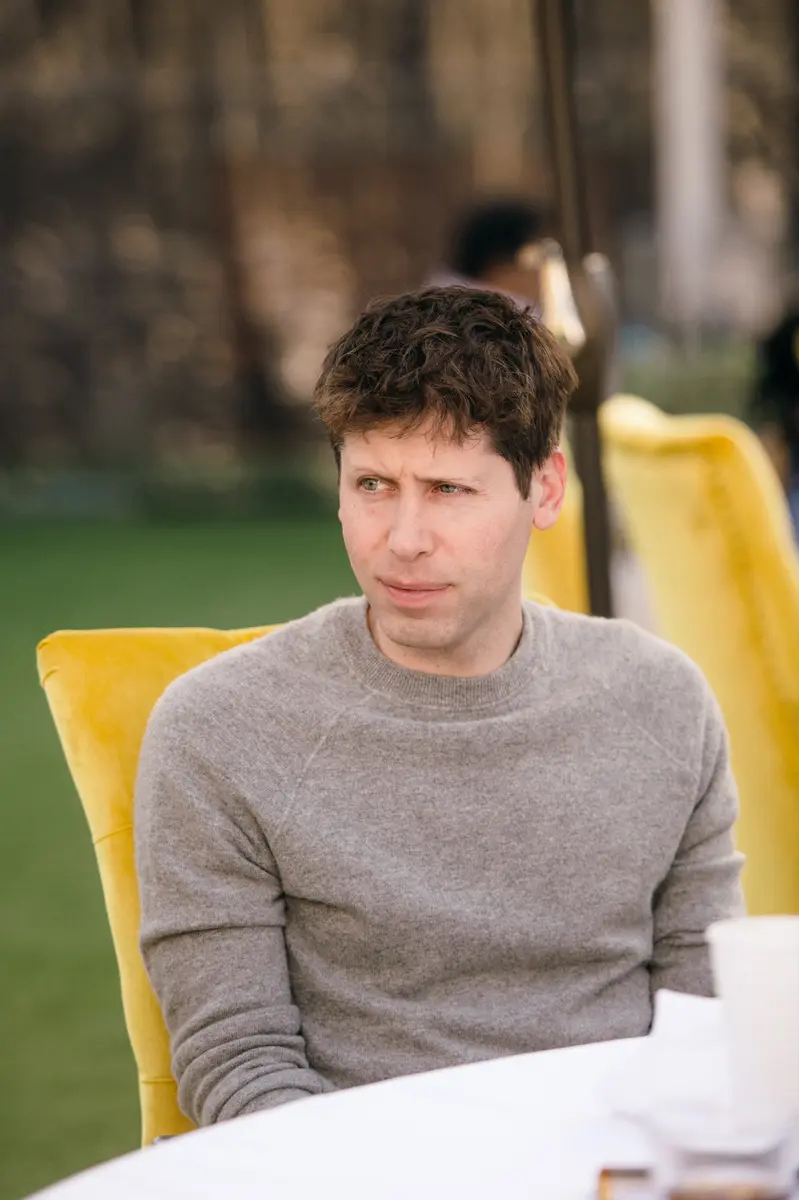
He is photographed at NeurIPS 2025 in San Diego, the neural-networks conference where AlexNet was presented in 2012.
University of California, San Diego: visiting scholar in cognitive science 1978–80 and again in 1982, with Rumelhart and McClelland; the PDP group and the backpropagation report- 2026
At MIT he gives the inaugural Judith Richter Lecture, 'Are We Creating Alien Beings?', on how AI works and how people might coexist with superintelligent machines.