Nobel Prize for AlphaFold
“In 2024 Demis Hassabis and John Jumper won half the chemistry Nobel for AlphaFold, an AI that predicts a protein's 3D shape from its amino acids; David Baker won the other half for designing new proteins.”
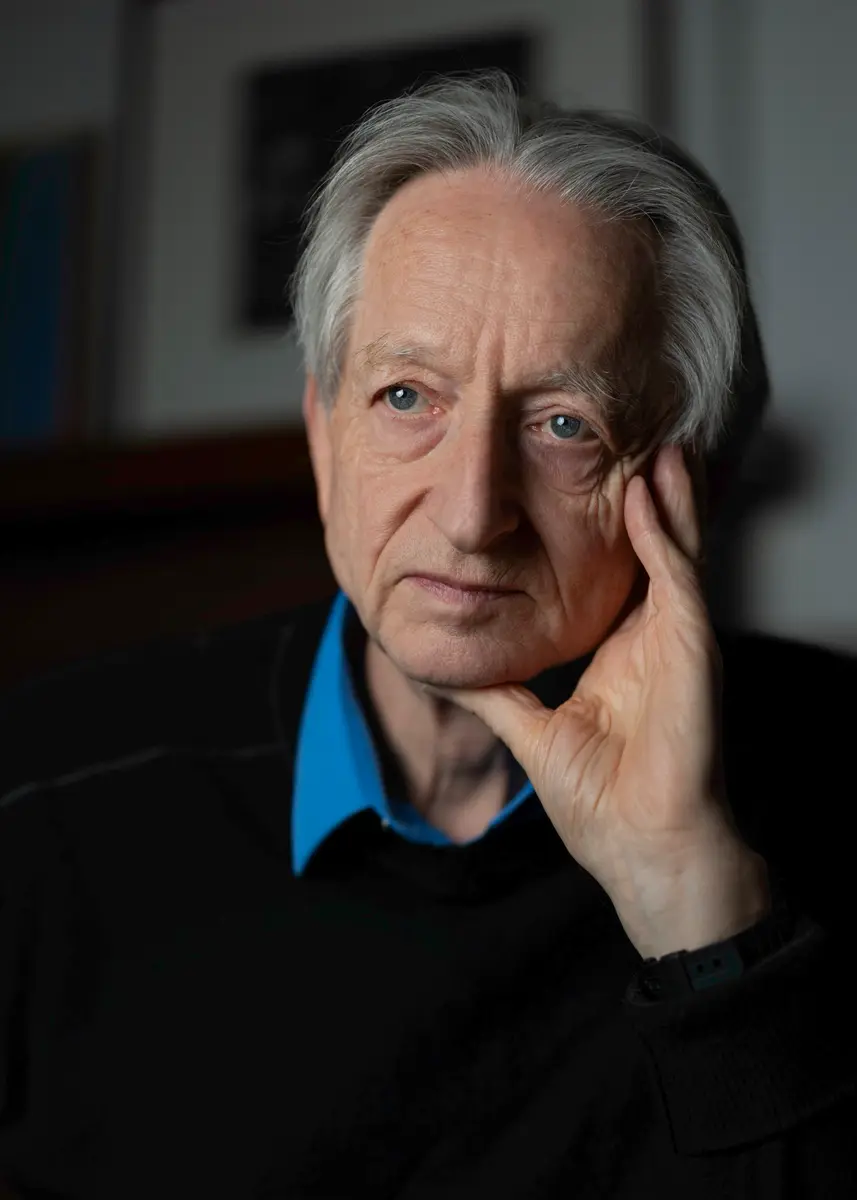
On 9 October 2024 the Royal Swedish Academy of Sciences in Stockholm gave the Nobel Prize in Chemistry to two ways of mastering proteins with computers. One half went jointly to Demis Hassabis and John Jumper of Google DeepMind in London 'for protein structure prediction'. Their artificial-intelligence system, AlphaFold, takes the chain of amino acids that makes up a protein and works out the three-dimensional shape it folds into, usually in minutes, where an experiment could take months or years for a single protein. The other half went to David Baker of the University of Washington in Seattle 'for computational protein design': he taught computers to run the problem backwards, drawing shapes that nature never made and finding chains that fold into them. The day before, the physics prize had gone to John Hopfield and Geoffrey Hinton for the neural networks behind machine learning, so in one week two Nobel Prizes rewarded artificial intelligence.
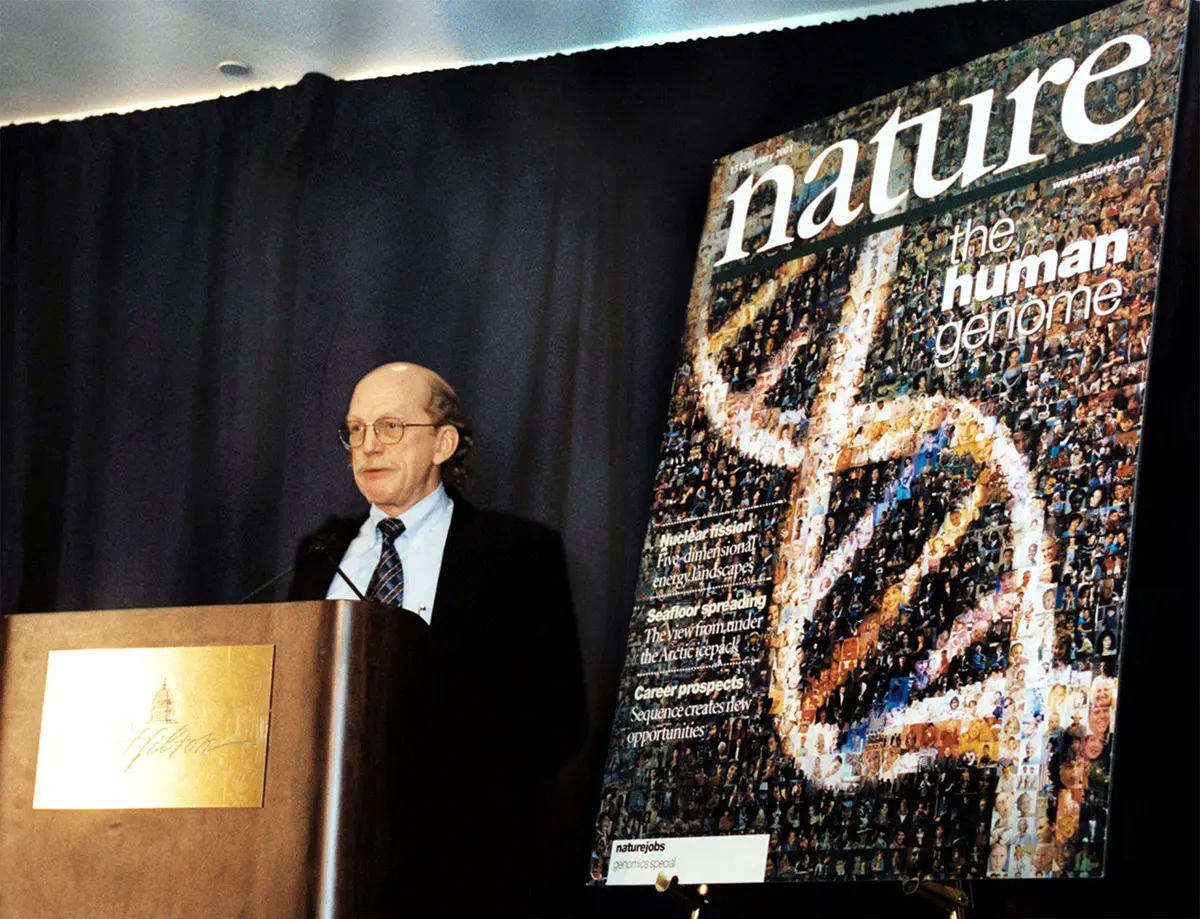
Proteins do almost all the work in living cells: as enzymes they drive its chemical reactions, and they also serve as hormones, antibodies and the building material of muscles, horns and feathers. Each one is a string of tens to thousands of amino acids, of 20 kinds, that folds itself into a precise shape, and the shape decides what the protein does. In 1961 the American biochemist Christian Anfinsen concluded that the sequence alone fixes the shape, work that won him the chemistry prize of 1972; so the shape should be computable from the sequence. But in 1969 Cyrus Levinthal pointed out that a chain of only 100 amino acids could in theory take at least 10 to the power 47 shapes, far too many to try one by one, although a cell folds it in milliseconds. From 1994 a blind contest, CASP, founded by John Moult and Krzysztof Fidelis, tested predictions every two years against structures that laboratories had just solved and kept secret. For two decades progress was slow: the best predictions for the hardest proteins scored below 40 out of 100. Experiments, meanwhile, had solved about 200,000 structures, against more than 200 million known protein sequences.
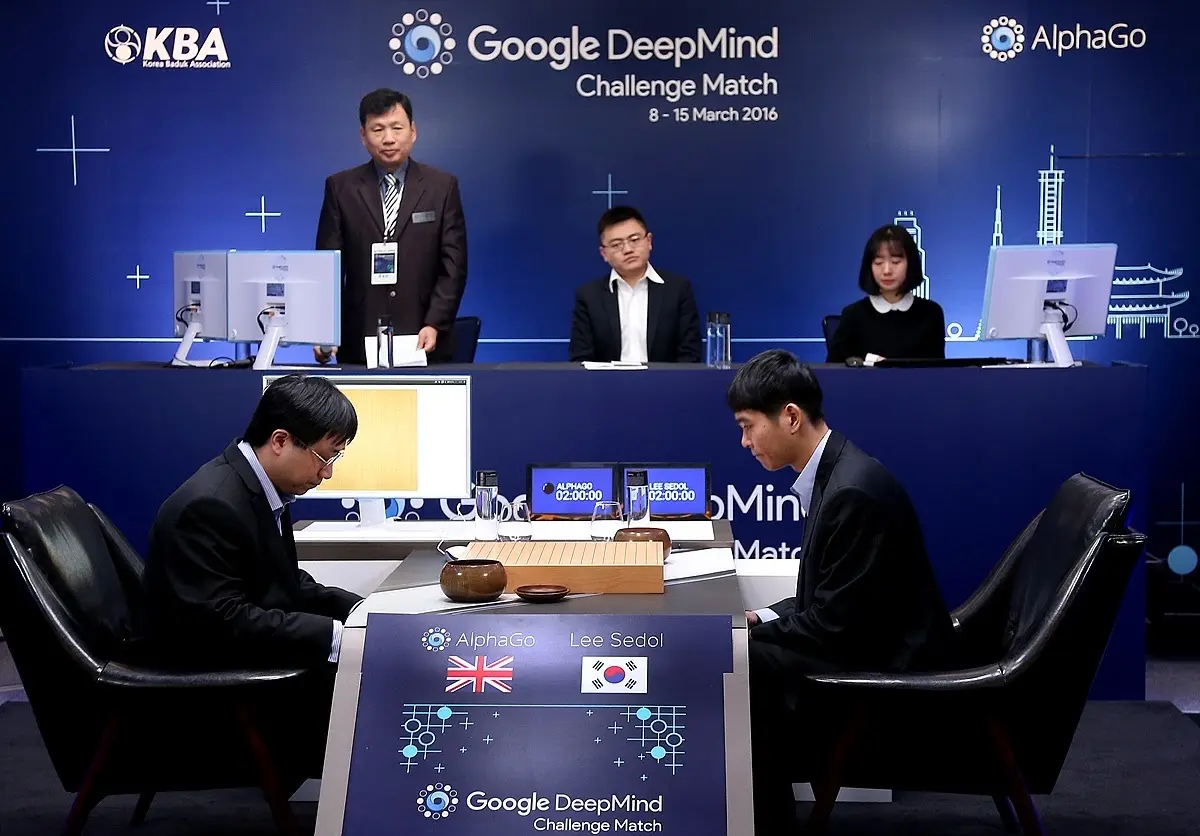
DeepMind was founded in London in 2010 by Hassabis, a chess master at 13, then a games programmer and a neuroscientist, and bought by Google in 2014. After its program AlphaGo beat a champion at the board game Go in 2016, it turned to proteins. Its first AlphaFold came top at CASP13 in December 2018, with scores near 60, still far from what biologists needed. John Jumper, an American who had studied physics and written a doctorate in Chicago on simulating proteins, joined in 2017, and he and Hassabis led a complete rebuild around transformers, the attention-based networks of modern AI, trained on the structures in the public Protein Data Bank. When the results of CASP14 were released on 30 November 2020, AlphaFold2 had reached a median score of 92.4, and about two-thirds of its models were as accurate as laboratory experiments; the organisers said the problem was largely solved for single proteins. The method and its code were published in Nature on 15 July 2021, and the same day Baker's group described a similar open system, RoseTTAFold, in Science.
DeepMind and EMBL's European Bioinformatics Institute at Hinxton, near Cambridge, then gave the predictions away. The AlphaFold Protein Structure Database opened on 22 July 2021 with some 350,000 structures, among them nearly every protein of the human body, and on 28 July 2022 it grew to more than 200 million, almost every protein known to science. By the time of the prize more than two million people in 190 countries had used AlphaFold, for work from antibiotic resistance to enzymes that break down plastic, and in May 2024 AlphaFold 3, made with the drug-design company Isomorphic Labs, extended it to proteins bound to DNA, RNA and drug-like molecules. Baker's half honoured a longer road: his program Rosetta, begun in the late 1990s, produced in 2003 Top7, the first protein designed from scratch with a shape unknown in nature, and his group, in the Institute for Protein Design that he founded in 2012 and directs, has since made proteins for medicines, vaccines, nanomaterials and tiny sensors.
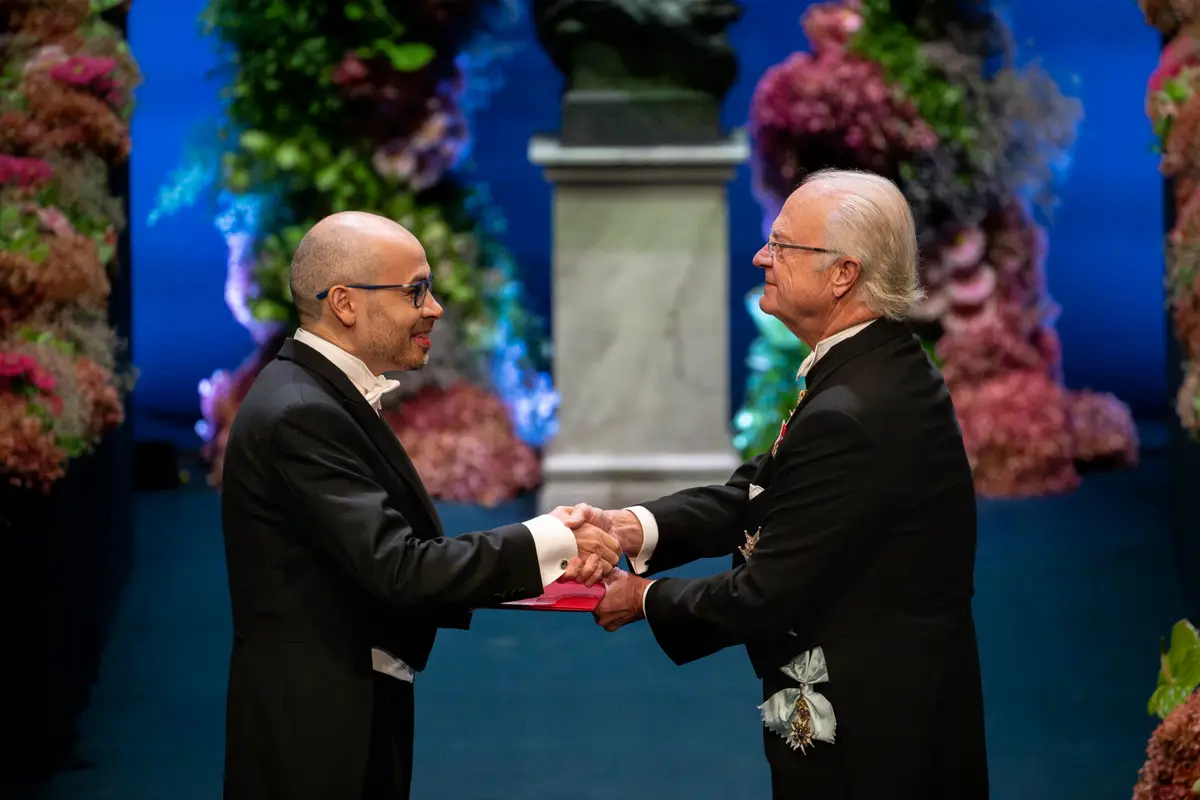
King Carl XVI Gustaf handed the three laureates their medals and diplomas at the Stockholm Concert Hall on 10 December 2024; the prize was worth 11 million Swedish kronor. For the Nobel committee AlphaFold2 could be seen as the first real scientific breakthrough of artificial intelligence, and the prize became the emblem of AI as a tool for discovery: finding a protein's shape now takes minutes instead of years. AlphaFold's models are still predictions. They are less reliable for floppy parts of proteins and for many complexes, the program reports how confident it is in each part, and it was trained on, and is still judged against, the structures that laboratories determine by experiment.
What happened
- 2018
CASP13, the thirteenth round of the blind contest in protein-structure prediction, opens. From May to July the organisers post the sequences of proteins whose shapes laboratories have just solved but not published, and about 100 groups send in models until late August, over 57,000 predictions of 90 targets. DeepMind takes part for the first time, as group A7D, with the first version of AlphaFold.
Google DeepMind, King's Cross, London: where Hassabis, Jumper and their team built AlphaFold and heard of the prizeAt the CASP13 meeting on the Riviera Maya in Mexico (1–4 December) the organisers announce that AlphaFold has topped a table of 98 entrants: it made the most accurate structure for 25 of the 43 hardest proteins, against 3 for the next team, and lifted the best scores from about 40 to almost 60 out of 100. Hassabis calls it a first step: the models are not yet accurate enough for biologists.
Riviera Maya, near Playa del Carmen, Mexico: the CASP13 meeting of 1–4 December 2018, where AlphaFold's first result was announced- 2020
Nature publishes the CASP13 AlphaFold (Senior et al., 'Improved protein structure prediction using potentials from deep learning'), and DeepMind puts its code on GitHub. By then the team, now with John Jumper among its leaders, has started again from scratch.
CASP14 opens: from May to August sequences are posted, and models are collected until mid-September. DeepMind enters AlphaFold2, a new network built around transformers, which learn what to pay attention to; it was trained on about 170,000 structures from the public Protein Data Bank, on some 16 of Google's TPU chips over a few weeks.
- 3:30 p.m.
At 15:30 GMT CASP's embargo lifts and the results are out: AlphaFold2 reaches a median score of 92.4 out of 100 over all targets and 87.0 on the hardest, and about two-thirds of its models are as accurate as the experiments, 'largely solved for single proteins', the organisers say. The virtual CASP14 meeting runs to 4 December, when John Moult, CASP's co-founder, closes it by asking: what now?
- 2021
Nature publishes AlphaFold2 (Jumper et al., 'Highly accurate protein structure prediction with AlphaFold'), and DeepMind releases its code for anyone to use. The same day Science publishes RoseTTAFold from David Baker's laboratory in Seattle, a similar three-track network built after the CASP14 results.
Google DeepMind, King's Cross, London: where Hassabis, Jumper and their team built AlphaFold and heard of the prizeDeepMind and EMBL's European Bioinformatics Institute open the AlphaFold Protein Structure Database, free to all: more than 350,000 predicted structures, among them about 20,000 human proteins, nearly the whole human proteome, and those of 20 organisms used in research. A second Nature paper describes the human set.
EMBL's European Bioinformatics Institute, Wellcome Genome Campus, Hinxton: home of the free AlphaFold Protein Structure Database since July 2021- 2022
The database grows from nearly 1 million to over 200 million structures, nearly every protein catalogued by science, from plants and bacteria to animals. In its first year more than 500,000 researchers from 190 countries had used it.
EMBL's European Bioinformatics Institute, Wellcome Genome Campus, Hinxton: home of the free AlphaFold Protein Structure Database since July 2021- 2024
Google DeepMind and the drug-design company Isomorphic Labs publish AlphaFold 3 in Nature: it predicts not only single proteins but how they fit together with DNA, RNA and small drug-like molecules, and scientists can use most of it free through a new AlphaFold Server.
Google DeepMind, King's Cross, London: where Hassabis, Jumper and their team built AlphaFold and heard of the prizeIn the Session Hall of the Royal Swedish Academy of Sciences, its Secretary General Hans Ellegren announces the chemistry prize: one half to David Baker for computational protein design, the other jointly to Demis Hassabis and John Jumper for protein structure prediction; 11 million kronor in all. The physics prize had gone the day before to John Hopfield and Geoffrey Hinton. In London the call reached Jumper only about 30 minutes before the announcement, because Stockholm had neither his nor Hassabis's number; later that day the two spoke to reporters at DeepMind in King's Cross.
The Royal Swedish Academy of Sciences, Frescati, Stockholm: the prize announced in its Session Hall on 9 October 2024, and the laureates' press conference of 7 DecemberGoogle DeepMind releases AlphaFold 3's code and trained weights for academic research.
Nobel Week begins for the laureates at the Nobel Prize Museum in Stockholm, where they sign chairs and give objects to the collection: Jumper gives an origami paper crown, the prize his 'origami team' passed to whoever had done something good.
The Nobel Prize Museum, Stortorget, Gamla stan: the laureates' get-together of 6 December 2024, where Jumper gave his paper crownThe laureates in physics, chemistry and economics meet the press at the Royal Swedish Academy of Sciences: Baker, Hassabis and Jumper side by side.
The Royal Swedish Academy of Sciences, Frescati, Stockholm: the prize announced in its Session Hall on 9 October 2024, and the laureates' press conference of 7 DecemberBaker, Hassabis and Jumper give their Nobel lectures in chemistry at the Aula Magna of Stockholm University.
The Aula Magna, Stockholm University: the Nobel lectures in chemistry on 8 December 2024At the Stockholm Concert Hall Johan Åqvist of the Nobel Committee presents the chemistry prize, saying AlphaFold has caused a revolution in structural biochemistry, and King Carl XVI Gustaf hands Baker, Hassabis and Jumper their medals and diplomas. In the evening the laureates dine at the Nobel banquet in Stockholm City Hall, where Baker gives a speech of thanks.
The Stockholm Concert Hall (Konserthuset): the prize ceremony of 10 December 2024