AlphaGo beats the world's best Go player
“In March 2016 DeepMind's AlphaGo beat Go master Lee Sedol 4–1 in Seoul, a decade before experts thought a computer could; its move 37 became the symbol of a machine's creativity.”
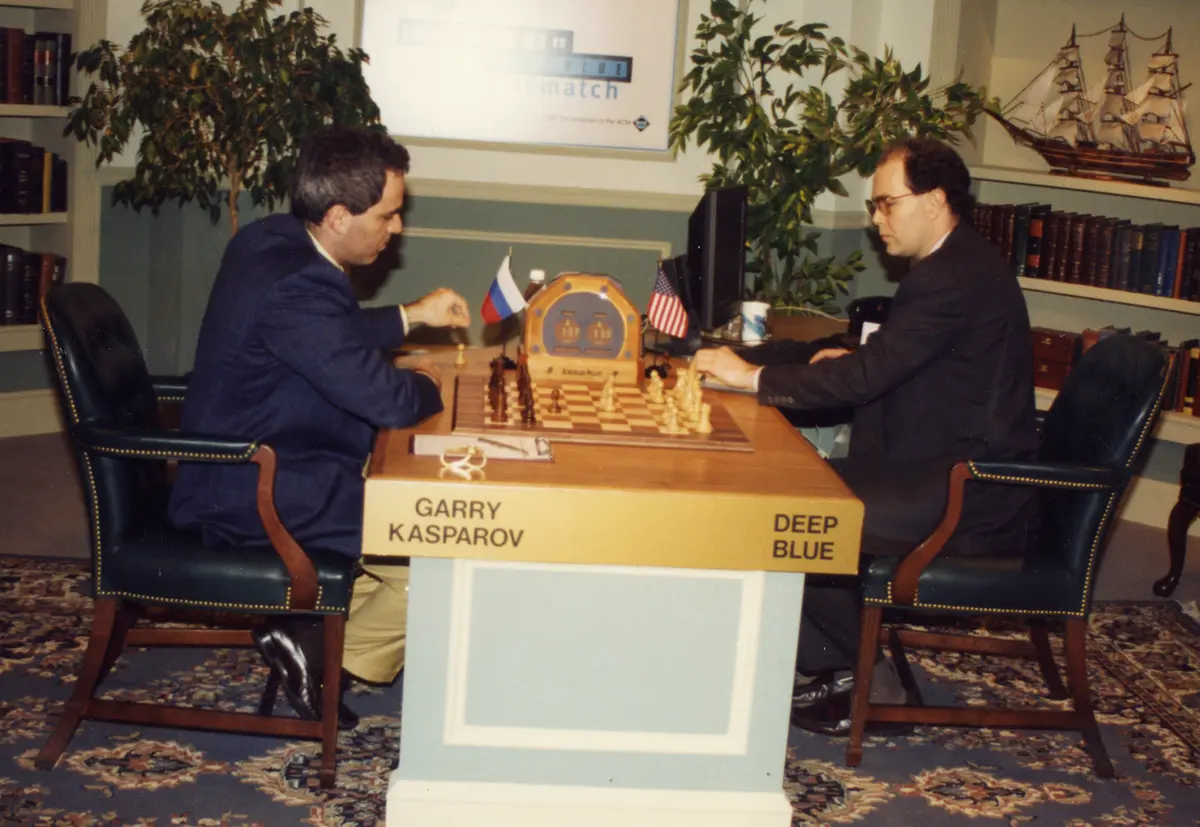
In March 2016 a computer program called AlphaGo, made by DeepMind, Google's artificial-intelligence laboratory in London, beat Lee Sedol of South Korea, winner of 18 world titles and widely seen as the best Go player of the past decade, by four games to one in Seoul. Go is a board game that began in China more than 2,500 years ago: two players take turns to place black and white stones on a grid of 19 by 19 lines, trying to surround more of the board than the other. The rules are simple, but the game has more possible positions than there are atoms in the universe. After IBM's Deep Blue beat the chess champion Garry Kasparov in 1997, Go became the great unsolved game for computers: the best programs still played like good amateurs, and experts thought a win over a top professional was at least ten years away.
DeepMind had been founded in London in 2010 by Demis Hassabis, Shane Legg and Mustafa Suleyman, and Google bought it in 2014. Instead of writing rules for good play, its researchers let AlphaGo learn. Two deep neural networks, programs loosely modelled on the brain, worked together with a search of possible futures: a 'policy network' suggested promising moves, and a 'value network' judged who was winning. The networks first studied 30 million moves from games between strong human players, then improved by playing thousands of games against each other, learning from their mistakes; this is called reinforcement learning. In October 2015, behind closed doors at DeepMind's London office, AlphaGo beat the three-time European champion Fan Hui five games to nothing, the first time a computer had beaten a Go professional on a full board without a handicap. The result was published in the journal Nature on 27 January 2016.
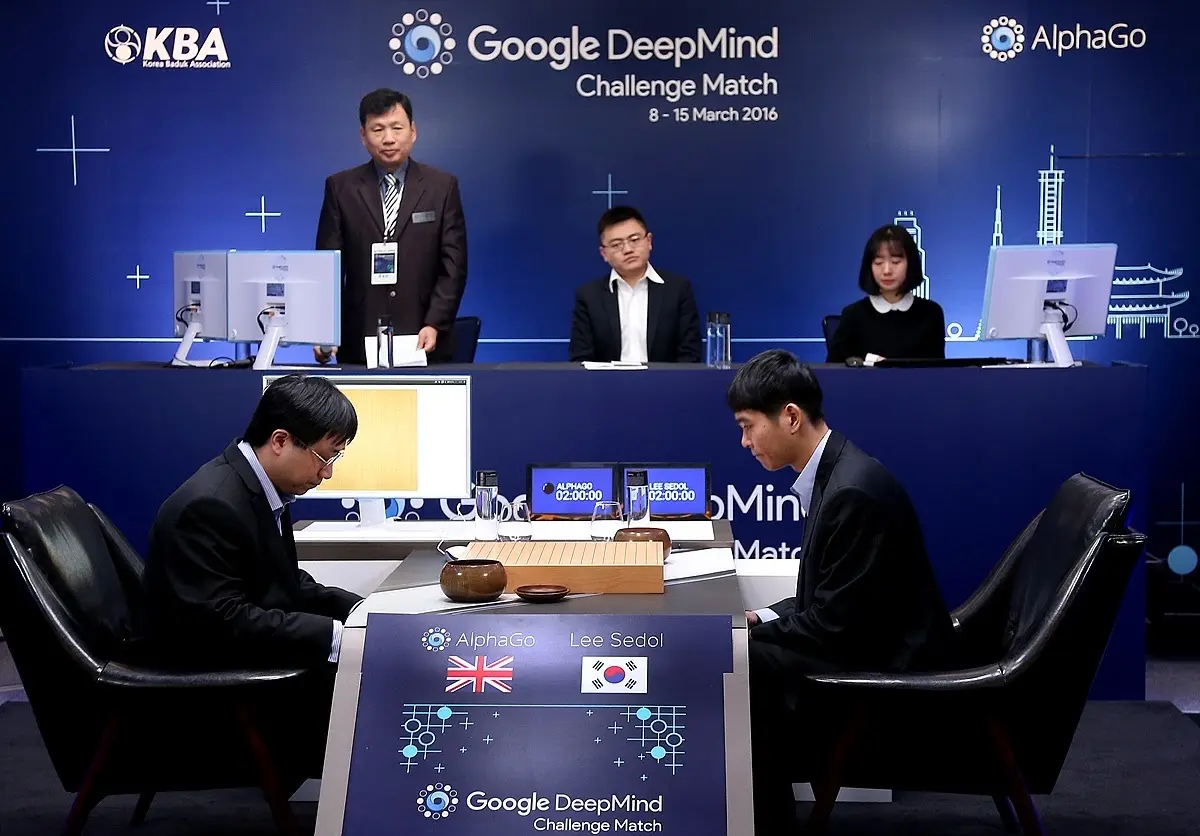
The match against Lee Sedol was played at the Four Seasons Hotel in Seoul from 9 to 15 March 2016, for a prize of one million dollars, and more than 200 million people followed it online. AlphaGo won the first three games. In game two its 37th move, a stone placed high on the side of the board that its own calculations said a human would play only once in ten thousand times, first puzzled the experts and then decided the game. In game four Lee found a one-in-ten-thousand move of his own, move 78, AlphaGo lost its way, and the human won his only game. Lee called his defeat 'Lee Sedol's defeat, not the defeat of mankind'. The Korea Baduk Association gave AlphaGo an honorary 9-dan, its highest professional rank, DeepMind gave the prize money to charities including UNICEF, and two days after the match South Korea's government promised one trillion won (about 860 million dollars) for research in artificial intelligence.
AlphaGo then grew stronger. Around New Year 2017 a new version, playing online as 'Master', won 60 games out of 60 against top professionals. In May 2017, at the Future of Go Summit in Wuzhen, China, it beat Ke Jie, ranked number one in the world, by three games to nothing, and DeepMind retired it from competition. In October 2017 Nature published AlphaGo Zero, which learned from the rules alone, without a single human game, and after three days of playing itself beat the version that had beaten Lee by 100 games to 0. Lee Sedol retired in November 2019, saying that AI was 'an entity that cannot be defeated'.
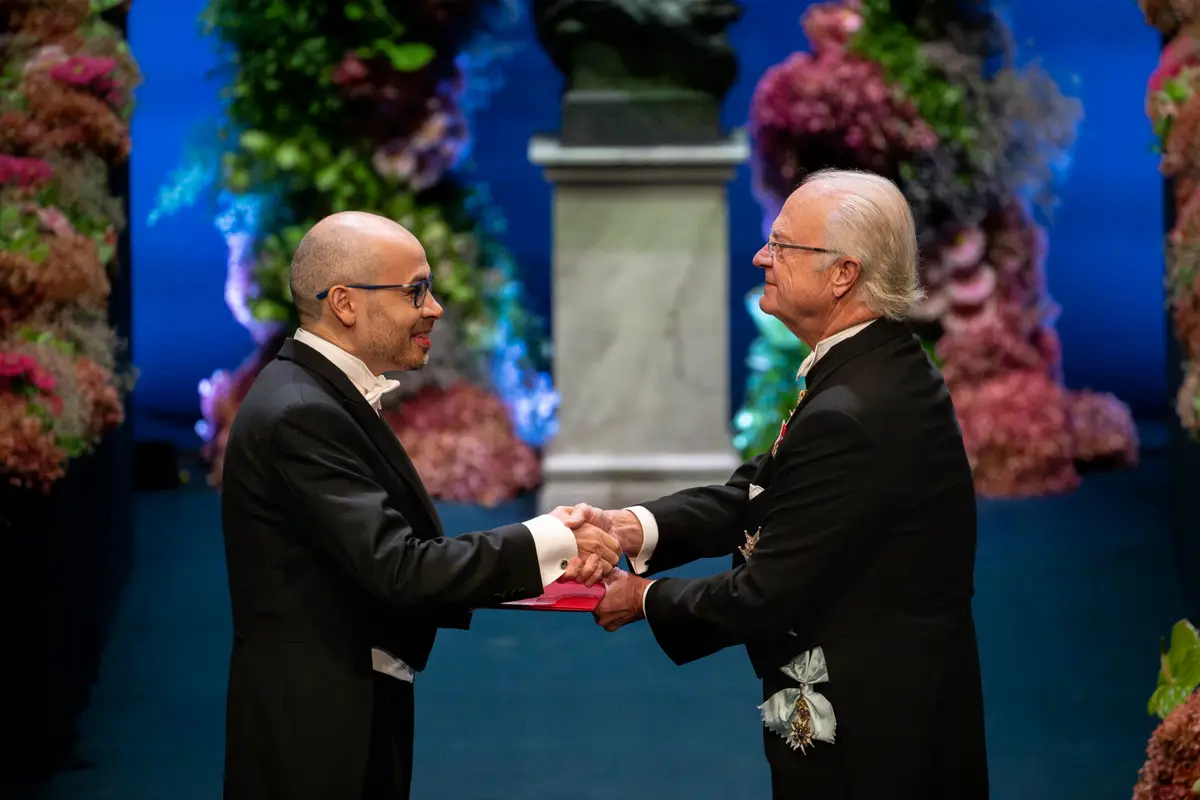
AlphaGo showed that learning machines could master a problem far too large for brute calculation, and could even find ideas that thousands of years of human play had missed: professionals have studied and copied its moves ever since. It turned a laboratory result into a moment watched around the world, years before ChatGPT. DeepMind took the same approach into science, and its protein-structure program AlphaFold later earned Hassabis and John Jumper a share of the 2024 Nobel Prize in Chemistry.
What happened
- 2015
In the week of 5 to 9 October, behind closed doors at DeepMind's London office, AlphaGo plays the three-time European champion Fan Hui in a formal match of five games and wins all five: the first time a computer has beaten a professional Go player on a full board without a handicap. Toby Manning of the British Go Association referees; DeepMind's Aja Huang places the program's stones on a real board.
DeepMind's offices on Pancras Square, King's Cross, London: AlphaGo's home, where it beat Fan Hui in October 2015- 2016
Nature publishes the AlphaGo paper and DeepMind reveals the Fan Hui result, a feat 'previously thought to be at least a decade away'; a match against Lee Sedol in Seoul is announced for March.
DeepMind's offices on Pancras Square, King's Cross, London: AlphaGo's home, where it beat Fan Hui in October 2015- 1:00 p.m.
Game 1 at the Four Seasons Hotel in Seoul, broadcast live: Lee Sedol plays black and resigns about three and a half hours in. 'I'm in shock,' he says.
Four Seasons Hotel Seoul, Saemunan-ro, Gwanghwamun: the Google DeepMind Challenge Match, 9–15 March 2016 - 1:00 p.m.
Game 2: AlphaGo, playing black, places its 37th stone high on the right side, a move it estimates a human would play once in ten thousand times. Commentators are puzzled at first; the move decides the game, and AlphaGo leads 2–0.
Four Seasons Hotel Seoul, Saemunan-ro, Gwanghwamun: the Google DeepMind Challenge Match, 9–15 March 2016 - 1:00 p.m.
Game 3: AlphaGo wins a third time and takes the best-of-five match. Lee apologises: 'Lee Sedol's defeat, not the defeat of mankind.'
Four Seasons Hotel Seoul, Saemunan-ro, Gwanghwamun: the Google DeepMind Challenge Match, 9–15 March 2016 - 1:00 p.m.
Game 4: Lee's move 78, which AlphaGo had judged a one-in-ten-thousand play, slips past the program; it blunders on the next move, and Lee wins the only human victory of the match. 'This one victory is priceless,' he says.
Four Seasons Hotel Seoul, Saemunan-ro, Gwanghwamun: the Google DeepMind Challenge Match, 9–15 March 2016 Before the last game the Korea Baduk Association awards AlphaGo an honorary 9-dan, its highest professional rank, certificate number 001: no man or machine had received an honorary professional dan before.
Four Seasons Hotel Seoul, Saemunan-ro, Gwanghwamun: the Google DeepMind Challenge Match, 9–15 March 2016- 1:00 p.m.
Game 5: Lee plays black and leads early, but AlphaGo recovers from a mistake and Lee resigns after 280 moves and about five hours. AlphaGo wins 4–1; DeepMind gives the million-dollar prize to charities including UNICEF, and Lee signs the match board.
Four Seasons Hotel Seoul, Saemunan-ro, Gwanghwamun: the Google DeepMind Challenge Match, 9–15 March 2016 Two days after the match, South Korea announces one trillion won (about 863 million dollars) for research in artificial intelligence over five years; President Park Geun-hye speaks of the 'AlphaGo shock'.
- 2017
Hassabis reveals that 'Master', a player that has just won 60 games out of 60 online against top professionals, is a new version of AlphaGo.
The Future of Go Summit opens in Wuzhen, China, organised by the China Go Association, Zhejiang's sports bureau and Google. In game 1 the world number one, Ke Jie, opens with AlphaGo's own favourite moves and loses by half a point.
Wuzhen, Zhejiang: the Future of Go Summit, where AlphaGo beat Ke Jie 3–0, 23–27 May 2017Game 2: Ke Jie plays what AlphaGo rates as the best opening anyone has played against it, but loses again.
Wuzhen, Zhejiang: the Future of Go Summit, where AlphaGo beat Ke Jie 3–0, 23–27 May 2017Pair Go, in which two Chinese professionals each play alongside an AlphaGo partner, and Team Go, in which five top Chinese professionals play together against AlphaGo and lose.
Wuzhen, Zhejiang: the Future of Go Summit, where AlphaGo beat Ke Jie 3–0, 23–27 May 2017Game 3: Ke Jie resigns after 209 moves; AlphaGo wins 3–0, and DeepMind announces that the summit is its last match: AlphaGo retires from competition.
Wuzhen, Zhejiang: the Future of Go Summit, where AlphaGo beat Ke Jie 3–0, 23–27 May 2017Nature publishes AlphaGo Zero, which learned from the rules alone, without human games: after three days of playing itself it beat the version that had beaten Lee Sedol by 100 games to 0, and after 40 days it was stronger than Master.
DeepMind's offices on Pancras Square, King's Cross, London: AlphaGo's home, where it beat Fan Hui in October 2015