Karl Lagerfeld
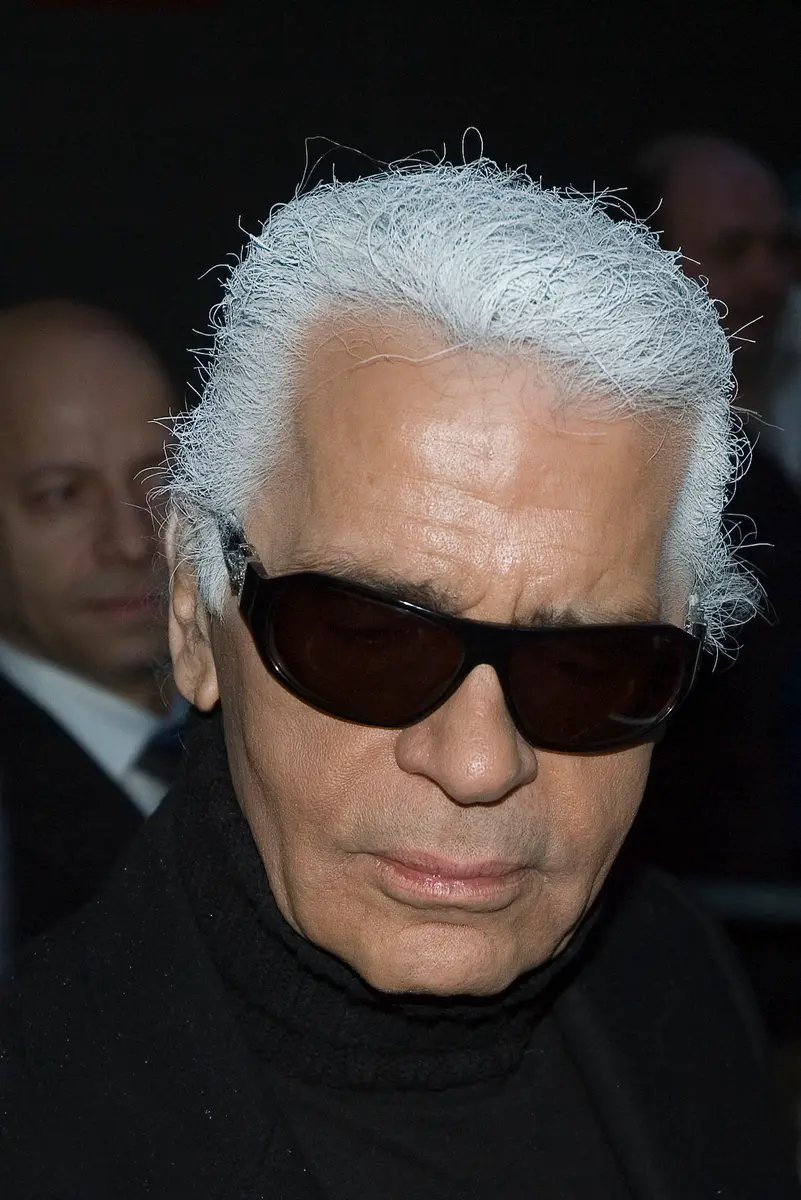
“German designer who ran Chanel from 1983 and Fendi from 1965 until he died in 2019, and made the designer a celebrity brand: white ponytail, dark glasses, starched collar, and the cat Choupette.”
Karl Lagerfeld was a German designer who ran the French house of Chanel for 36 years and the Italian house of Fendi for 54, and for much of that time a label with his own name as well. The New York Times called him the most prolific designer of the 20th and 21st centuries: in his eighties he made about fourteen collections a year, from couture to the high street. He is remembered less for a new silhouette than for a method. He took a famous house, found its signs (at Chanel the tweed, the pearls, the camellia, the chains and the double C) and pushed them into the present with wit and a little disrespect.
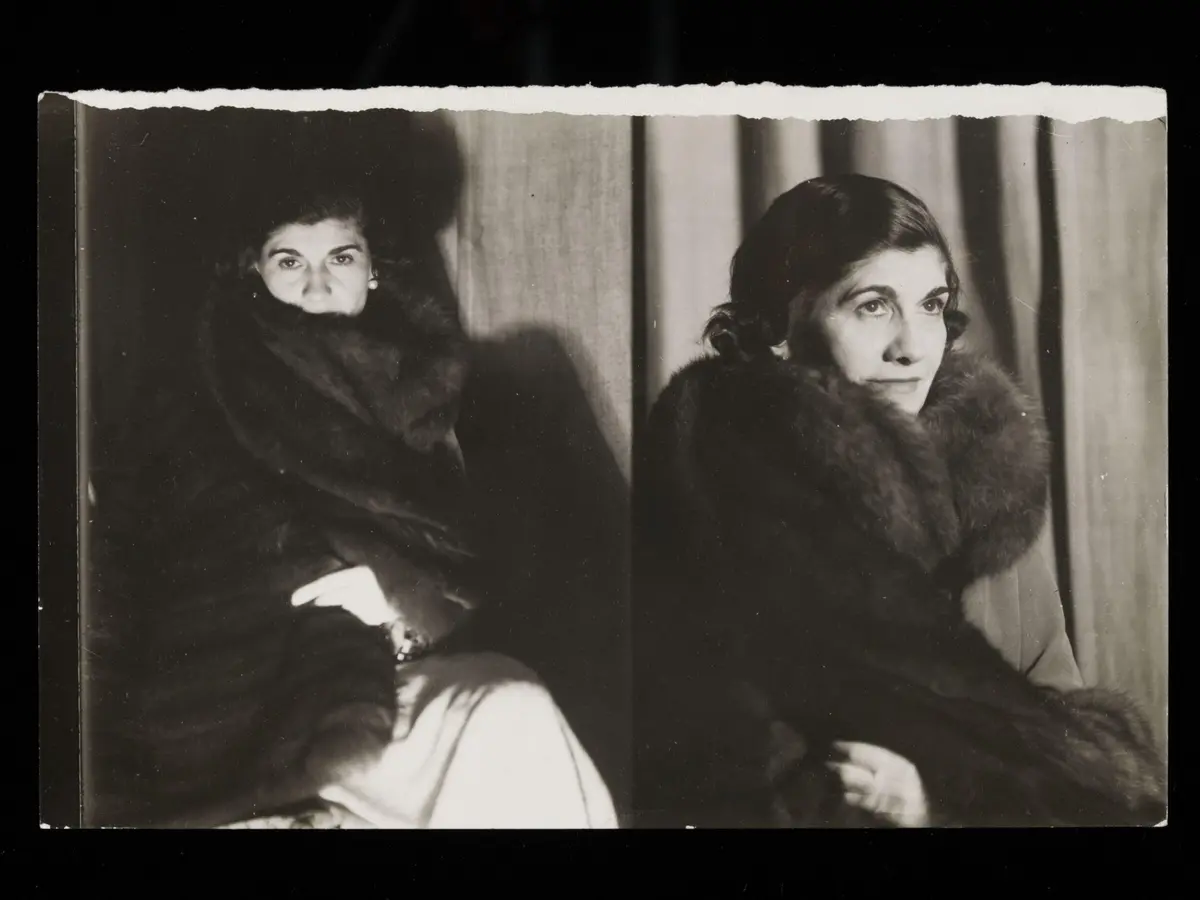
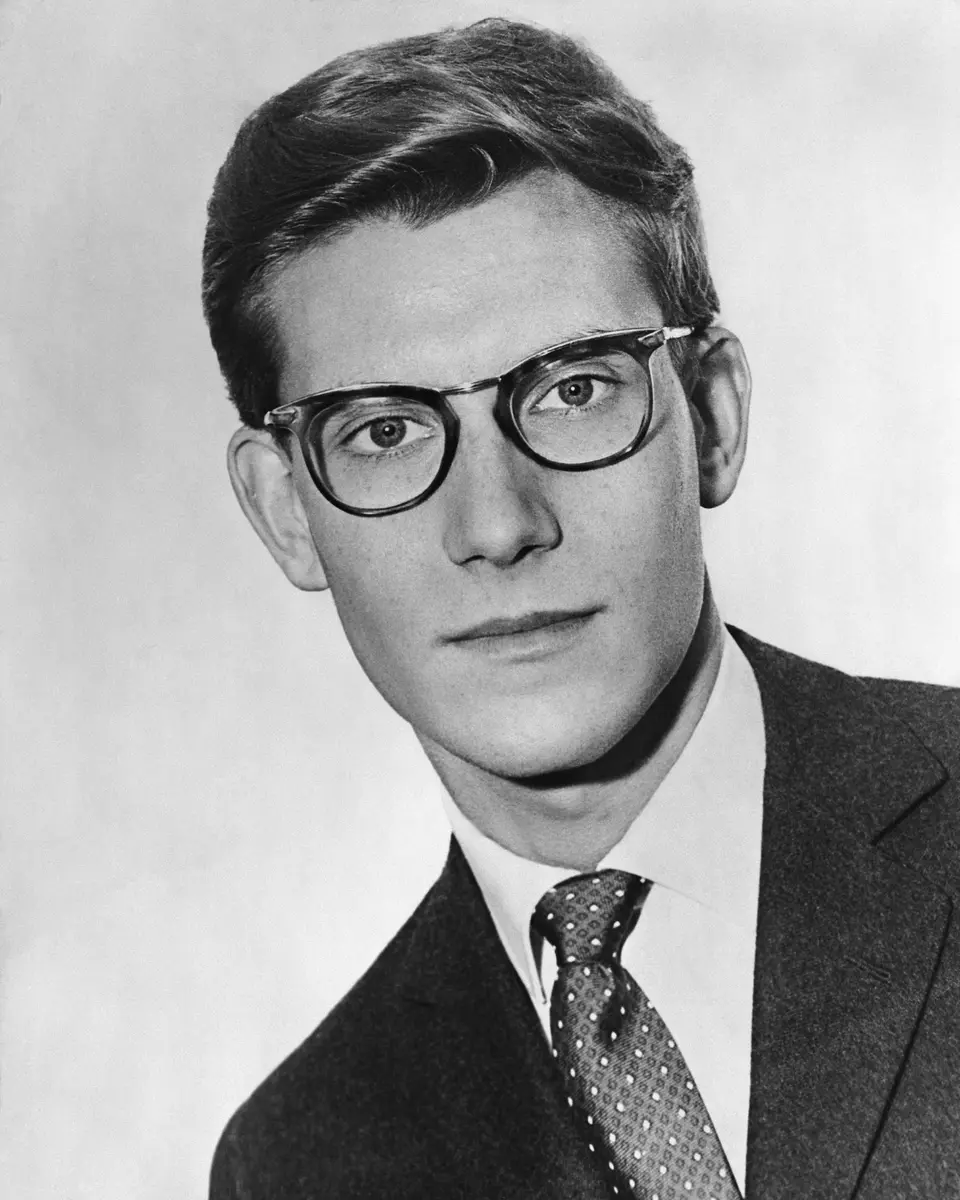
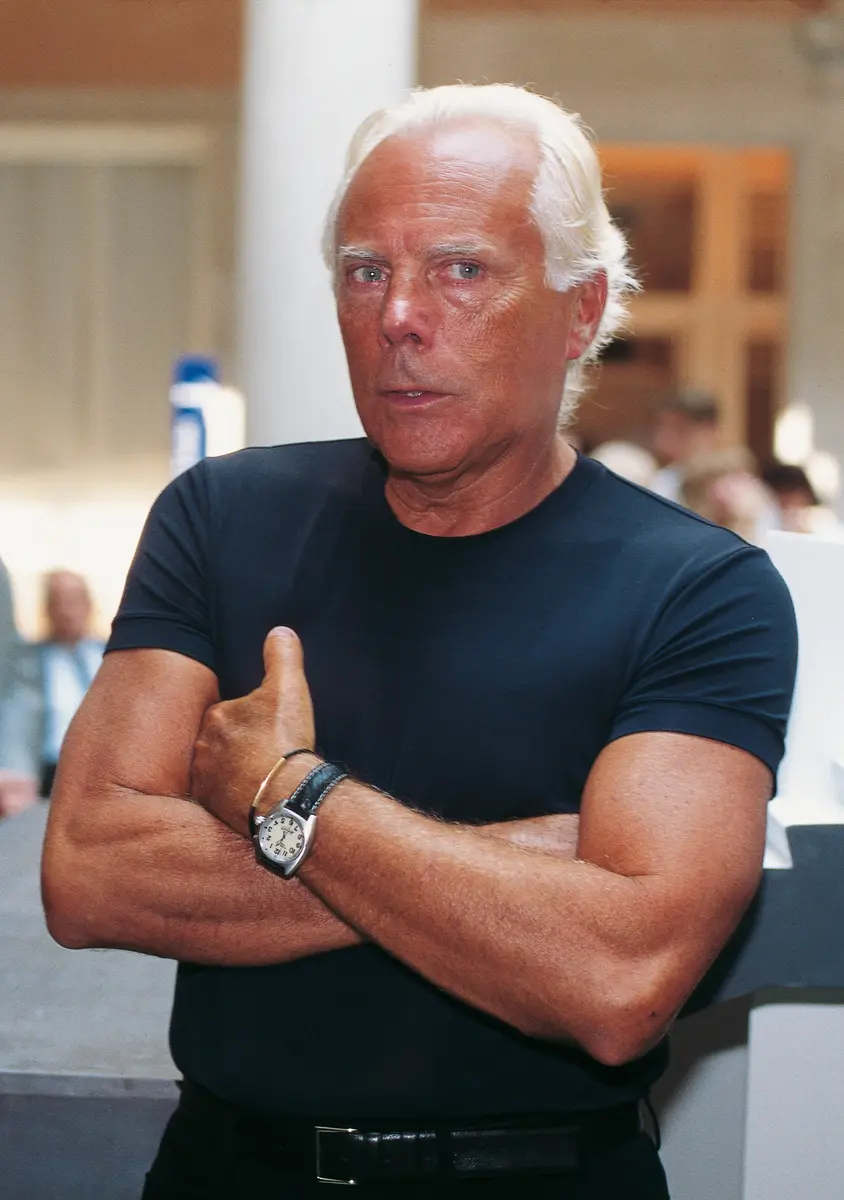
He was also his own creation: the powdered ponytail, black sunglasses, fingerless gloves and stiff white collars, the one-liners, and later the Birman cat Choupette. He was born in Hamburg on 10 September 1933, although for decades he gave a later year, 1938 and once 1935. His biographer William Middleton and the German records point to 1933, and he told his publisher he was ashamed of being born in the year Hitler took power. He grew up in the Hamburg suburb of Blankenese and then on an estate in Schleswig-Holstein, the son of a milk-company director, and moved to Paris at 19. In 1954 he won the coat prize of the International Wool Secretariat's design contest, where Yves Saint Laurent won the dress prize, and that took him to Pierre Balmain's couture house in 1955 and then to Jean Patou.
From the 1960s he worked as a freelance designer, which was unusual then, mostly for ready-to-wear firms. At Chloé, which he joined in the early or mid 1960s and left in 1983 (and again from 1992 to 1997), he made light, printed, flea-market-and-Art-Deco dresses that set the house style in the 1970s. At Fendi, the Roman fur house run by five sisters, he began in 1965 and never left. There he treated fur like cloth, shaving, dyeing and cutting even rabbit and squirrel into what became known as 'Fun Fur', and the double F became the house's mark. In those years his world was Warhol, the illustrator Antonio Lopez and the young aristocrat Jacques de Bascher, whose life he paid for and who died of AIDS in 1989.
In 1983 Chanel, then a quiet house kept alive by perfume, hired him. His first couture show, on 25 January 1983, got a cool reception, but he treated the house as an institution to be played with, and within a few seasons he had turned its codes into a language of his own. In 1984 he started a label under his name. Over the next three decades he made the Chanel show a piece of theatre at the Grand Palais in Paris: an iceberg in 2010, a supermarket in 2014, a rocket in 2017. In 2000 he lost about 90 pounds in 13 months so that he could wear Hedi Slimane's slim suits for Dior, and the new, thin Lagerfeld became his best-known image. In 2004 his small collection for H&M sold out almost at once in Stockholm and started the age of designer collaborations with the high street; the same December he sold his own trademarks to Tommy Hilfiger. He was also a photographer, a publisher and a caricaturist.
He died on 19 February 2019 at the American Hospital in Neuilly-sur-Seine, a month after skipping the bow at the end of the Chanel couture show. Fendi showed his last collection two days later and Chanel its farewell show on 5 March 2019, in a snow-covered Alpine village at the Grand Palais; a tribute, 'Karl For Ever', followed there on 20 June. In 2023 the Metropolitan Museum of Art's Costume Institute gave its spring exhibition, 'Karl Lagerfeld: A Line of Beauty' (5 May to 16 July 2023), to his drawings and clothes, and the Met Gala of 1 May opened it. He also left a reputation for cruel remarks, especially about women's bodies; the Guardian's obituary says he could be publicly dismissive of strangers, and many found him hurtful as well as brilliant.
What happened
- 1933
Karl Otto Lagerfeld is born in Hamburg, on a Sunday, to Otto Lagerfeld, who made his money in evaporated milk (the firm Glucksklee), and Elisabeth Bahlmann. The family lives at Baurs Park 3 in Blankenese, on the Elbe. All his life he took years off his age, saying 1938 and once 1935; his publisher Gerhard Steidl believed he had altered the 3 to an 8 on his papers, and Lagerfeld told him he was ashamed of the year Hitler began his rule.
Baurs Park, Blankenese, Hamburg: where he was born in 1933 and the family lived, at Baurs Park 3- 1935
The family moves 25 miles north of Hamburg to Bissenmoor, an estate of over 1,200 acres near Bad Bramstedt in Schleswig-Holstein. Lagerfeld grows up there in a country house in the forest, draws all the time, asks for a French tutor at five because his parents speak French together and he hates not understanding them.
- 1952
At 19, not 14 as he later claimed, he moves to Paris, which he treats as his home for the rest of his life, and goes for a time to the Lycee Montaigne. His Paris is small: the Luxembourg and Saint-Sulpice at first, then the Faubourg Saint-Germain, the Avenue Montaigne and, much later, the rue Cambon.
- 1954
He wins the coat prize in the International Wool Secretariat's design competition in Paris, aged 21, with a coat; the dress prize goes to Yves Saint Laurent, who, it is said, is hired by Dior on the spot. Lagerfeld and Saint Laurent become friends and, later, rivals.
- 1955
Pierre Balmain hires him and puts his prize-winning wool coat into production. Lagerfeld works as Balmain's assistant, later his apprentice, for about three years and learns couture there.
- 1958
He becomes artistic director of the couture house of Jean Patou, where, the Guardian says, he designed under the name 'Roland Karl'. He stays until about 1962 or 1963, and then leaves couture.
- 1964
He gives up couture. Britannica says he left Paris in 1964 to study art history in Italy, but he soon works freelance for ready-to-wear firms: Chloe, Krizia, Valentino, Charles Jourdan and others. At Chloe, founded by Gaby Aghion, he stays for more than ten years and finds his freedom to be irreverent.
- 1965
The five Fendi sisters hire him in Rome to modernise their fur house. He treats fur as cloth: he shaves, dyes and tufts it, uses pelts such as rabbit, squirrel and mole that high fashion had not used before, and creates what the house calls 'Fun Fur'. The double F that came with it becomes the house's mark, and he stays until he dies.
Palazzo della Civilta Italiana, EUR, Rome: Fendi's headquarters since 2015; Lagerfeld worked for the house from 1965 - 1971
At Chloe he designs printed, flowing dresses with references from flea markets and Art Deco, such as a 1971 silk crepe dress printed after Gustav Klimt. His Art Deco collection of 1972 draws more attention than most couture shows, and the house's perfume of 1975 raises his income.
- 1972
In the early 1970s he falls for Jacques de Bascher, a young aristocrat of the Paris night, and pays for his lavish life. In 1973 Saint Laurent and de Bascher begin an affair, which precipitates a break between the two camps.
- 1973
A Pop-art moment: Andy Warhol borrows a Lagerfeld apartment for his film 'L'Amour', and Lagerfeld and the illustrator Antonio Lopez keep a Paris salon, drawing against each other and building the collage mood boards that designers use today. He also wins the German fashion prize the Golden Spinning Wheel that year.
- 1980
He designs costumes for Berlioz's 'Les Troyens' at La Scala in Milan; he also works for the Florence opera house and the Monte Carlo Ballet.
- 1981
The interlinked double F of Fendi is redrawn in his own handwriting, which the house calls 'Karligraphy'. Vogue says he invented it in 1981; the 'Fun Fur' double F of the 1960s is the older story, and by 2019 the pattern was woven into tights and shearling.
- 1983
His first couture collection for Chanel is shown, part time at first, while he also works for Chloe and Fendi. The sign on the studio door still reads 'Mademoiselle - Prive'. He draws on Chanel's work of the 1920s and 30s, shows a suit with a slender skirt cut with four slits that he calls 'the windmill', and says of his changes, 'Even if she never did it this way, it's very Chanel, no?' Women's Wear Daily is unkind, the Guardian calls the show not a critical success, but a Rothschild guest says 'It will come'.
29-31 rue Cambon, Paris: the Chanel house, where he worked from 1983 to 2019- 1984
A year into Chanel he shows 'Imperatrice', a long black silk coat-dress with a train, a choker, ropes of pearls and a chain belt: Look 68 of the Spring-Summer 1984 couture collection, now in Melbourne. It shows what he does with the house's signs: he makes them larger and plays with them.
He starts a label under his own name, 'Karl Lagerfeld', for ready-to-wear. The label, run with American money at first, never becomes as successful as Chanel or Fendi, and changes owners several times.
- 1987
He takes up photography. Britannica says that from 1987 he photographed many of Chanel's own advertisements; he later makes books with the German publisher Gerhard Steidl and shoots magazine pages.
- 1989
Jacques de Bascher dies of AIDS at 38. Lagerfeld mourns him in public, yet insists that he was never in love: 'I am just in love with my job.'
- 1992
He returns to Chloe, for which he designs until 1997, and Chloe's parent company, Dunhill (the Vendome group), buys his own label. At Chanel in the same year, the Spring-Summer 1992 couture collection shows a black dress with shoulder straps of gilt chains, the sort of look that makes the house's old signs new.
- 1994
Chanel's Autumn-Winter 1994-95 couture shows a pink tweed jacket with black braid, a short black skirt and a chain brooch: the old suit made young, in the years when the supermodels wore Chanel's tweed.
Three dresses in his Spring 1994 couture collection for Chanel are decorated with words from the Koran. An Indonesian council of Muslim clerics calls for a boycott of Chanel, Lagerfeld apologises, and a dress has to be burned. He later explains that he took the words from a book about the Taj Mahal and thought they came from a love poem.
- 1996
Chanel's Spring-Summer 1996 couture includes a gold gown, covered with lace, sequins and glass, with a chain belt: made with the embroiderer Lesage, the shoemaker Massaro and the costume jeweller Gripoix, the craft workshops whose future Chanel later secured.
- 1997
He leaves Chloe again and buys back his own name and label from the Vendome group for a symbolic franc.
- 2000
In 2000 he begins a strict diet and loses about 90 pounds in 13 months, to be able to wear the slim suits that Hedi Slimane is designing for Dior Homme. His doctor Jean-Claude Houdret devises it; the book, 'The Karl Lagerfeld Diet', follows, and the slim man with powdered hair and dark glasses, the 'new' Lagerfeld, becomes his image for the rest of his life.
- 2004
Lagerfeld unveils his collection for H&M at a party for a thousand guests at the Georges restaurant of the Pompidou Center in Paris, after keeping the project secret for most of a year. It has about thirty pieces, in black or white, from a $19.90 T-shirt to a $149 wool and cashmere coat, and a fragrance called 'Liquid Karl'. Donald Schneider, who made H&M's advertising, had approached him; Lagerfeld asked only whether anyone else had been asked, and, told no, said let's do it.
The H&M line goes on sale at 10:00 in 40 Swedish stores and many other countries. In Stockholm's Hamngatan store the clothes are gone in five minutes, the stockroom in thirty; fistfights are reported, and stores in Malmo and Gothenburg are sold out too. The first high-street collaboration with a luxury designer starts the age of such collections.
Tommy Hilfiger announces that it has bought the Lagerfeld trademarks, which include the Lagerfeld Gallery and his women's ready-to-wear line, and his boutiques in Paris and Monaco; Lagerfeld stays as creative director and his Chanel and Fendi contracts are untouched. The deal is expected to close within thirty days, that is by mid-January 2005.
- 2007
Fendi and Lagerfeld stage the first fashion show on the Great Wall of China: 88 looks of the Spring-Summer 2008 collection, shown to about 500 guests at sunset on a restored stretch of wall, at a reported cost of $10 million.
- 2010
Chanel's Autumn-Winter 2010-11 show turns the Grand Palais into an Arctic: giant pieces of iceberg melt on the set while models in shaggy fake fur walk through the water in snow boots with ice-block heels, in a show about climate change.
Grand Palais, Paris: the nave where Chanel showed its collections, with the iceberg of 2010, the supermarket of 2014 and the rocket of 2017The Maison Europeenne de la Photographie in Paris opens 'Karl Lagerfeld, parcours de travail', an exhibition of his photographs that runs to 31 October. By then he has photographed Chanel's advertising campaigns himself for more than twenty years.
- 2011
Around Christmas he takes in a Birman kitten, Choupette, born on 15 August 2011 and first lent to him by the model Baptiste Giabiconi. Choupette becomes the most famous cat in fashion, with her own maids, pillow, diamond necklaces and Instagram account, and Lagerfeld tells Le Figaro that she has her own little fortune.
- 2014
Chanel's Autumn-Winter 2014-15 show is a supermarket in the Grand Palais: more than a hundred thousand items on the shelves, five hundred everyday products re-labelled in Chanel's name, a hardware department with a chain saw with a real Chanel chain, and a collection built on trainers. At the end the audience raids the shelves; Chanel says the non-perishable food will go to food banks.
Grand Palais, Paris: the nave where Chanel showed its collections, with the iceberg of 2010, the supermarket of 2014 and the rocket of 2017- 2015
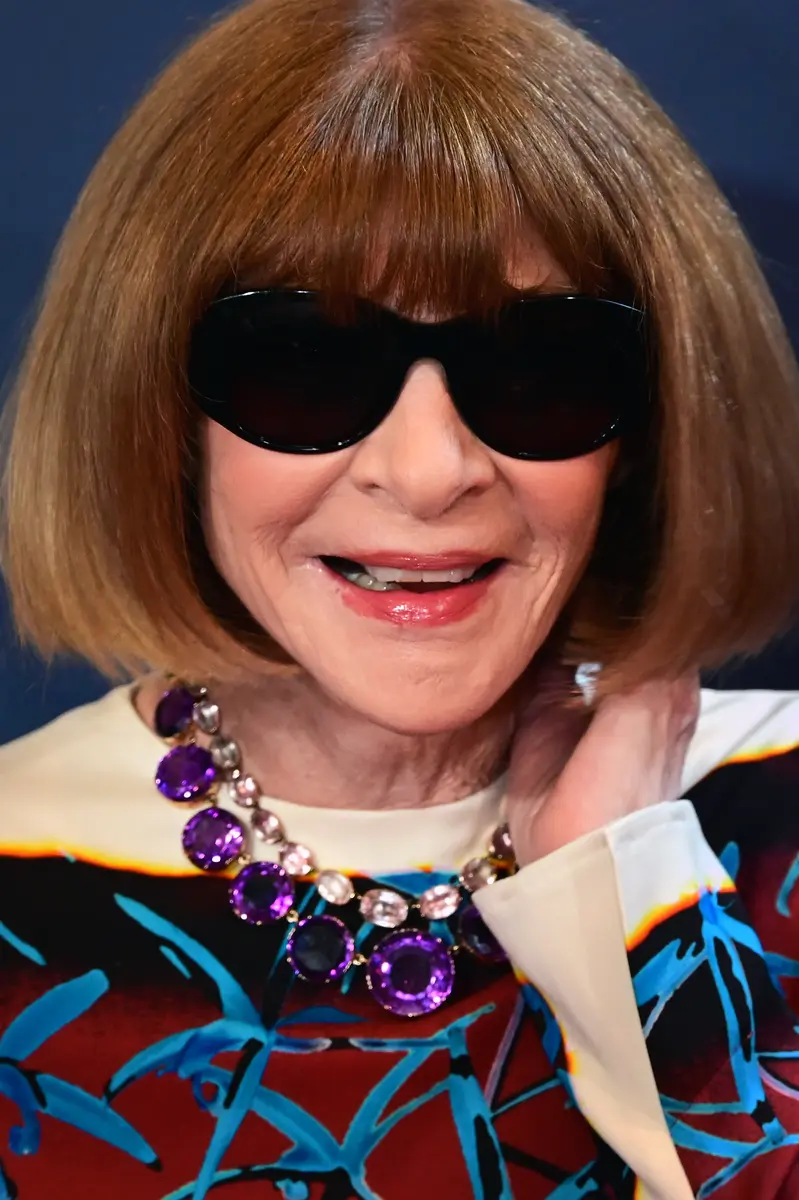
He receives the Outstanding Achievement Award at the British Fashion Awards in London, presented by Anna Wintour, who says he 'represents the soul of fashion: restless, forward-looking and voraciously attentive'.
- 2017
The mayor of Paris, Anne Hidalgo, awards him the Medal of the City of Paris, the city's highest honour, for services to the capital.
Chanel's Autumn-Winter 2017-18 show puts a space rocket in the Grand Palais, below a sign 'Centre de lancement N°5'. At the finale the rocket 'lifts off' with sparks and smoke. Vogue's Sarah Mower sees a metaphor for the times; the collection is in silver and white tweed, with glitter boots.
Grand Palais, Paris: the nave where Chanel showed its collections, with the iceberg of 2010, the supermarket of 2014 and the rocket of 2017- 2018
One of his last big shows: Chanel's 17th annual 'Metiers d'art' collection is staged around the Temple of Dendur in the Metropolitan Museum of Art in New York, with gold, scarabs and hieroglyph-like graffiti; only the third time he had shown in New York. The same museum gives him an exhibition in 2023.
- 2019
In January he does not appear to take his bow at the Chanel couture show in Paris, because he is 'tired', which fuels speculation about his health. He is still working on his last two collections: Vogue says he supervised every look of Fendi's Fall 2019 collection, and Chanel's show of March 2019 had long checked tweed coats and wide trouser suits he had envisaged with Virginie Viard.
Lagerfeld dies on the morning of Tuesday 19 February 2019 at the American Hospital of Paris in Neuilly-sur-Seine, where he was admitted the night before; Chanel announces it. Fendi shows his last collection two days later, in Milan; Chanel's farewell show, on 5 March at the Grand Palais, is a snow-covered Alpine village. A tribute, 'Karl For Ever', is held at the Grand Palais on 20 June. The Metropolitan Museum's 'Karl Lagerfeld: A Line of Beauty' (5 May to 16 July 2023, more than 200 objects) and the Met Gala of 1 May 2023 follow, outside this entry's dates.
American Hospital of Paris, Neuilly-sur-Seine: where he died on 19 February 2019