Eratosthenes measures the Earth
“About 240 BCE Eratosthenes compared the noon Sun at Syene and at Alexandria and worked out the Earth's size: 250,000 stadia, within 2 to 16 percent of the truth.”
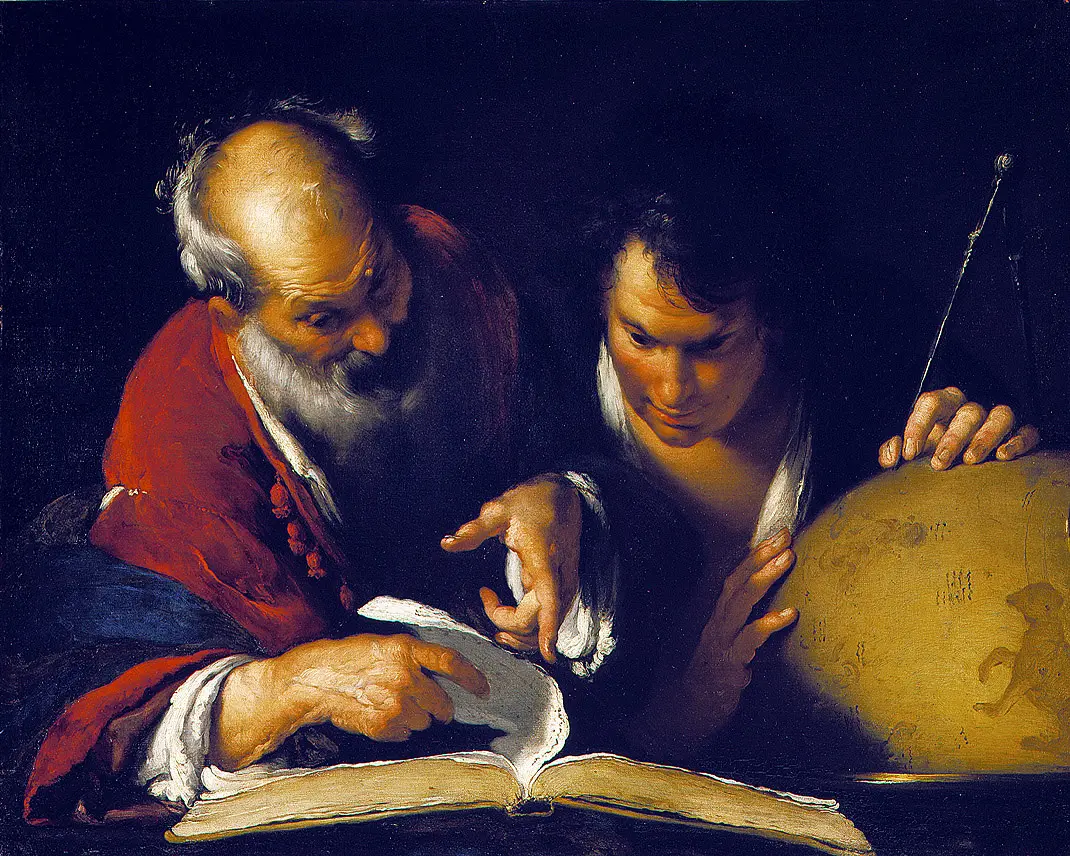
Around 240 BCE a Greek scholar in Alexandria, Eratosthenes of Cyrene, worked out how big the Earth is. That it was a ball was not news: Greek thinkers had said so since about 500 BCE, and Aristotle had given evidence for it, such as the round shadow the Earth throws on the Moon in an eclipse. Its size was another matter; earlier guesses of 400,000 and 300,000 stadia survive without any method. Eratosthenes found one. At Syene, today's Aswan, far up the Nile, the pointers of sundials cast no shadow at noon on midsummer day, because the Sun stood straight overhead. At the same hour in Alexandria, which he took to lie due north, the pointer of a bowl-shaped sundial did cast a shadow, and it covered one fiftieth of a full circle, about 7.2 degrees. Because the Sun's rays arrive parallel, simple geometry says the two cities are also one fiftieth of the way round the Earth apart. They were reckoned 5,000 stadia apart, so the whole Earth measured 50 × 5,000 = 250,000 stadia.
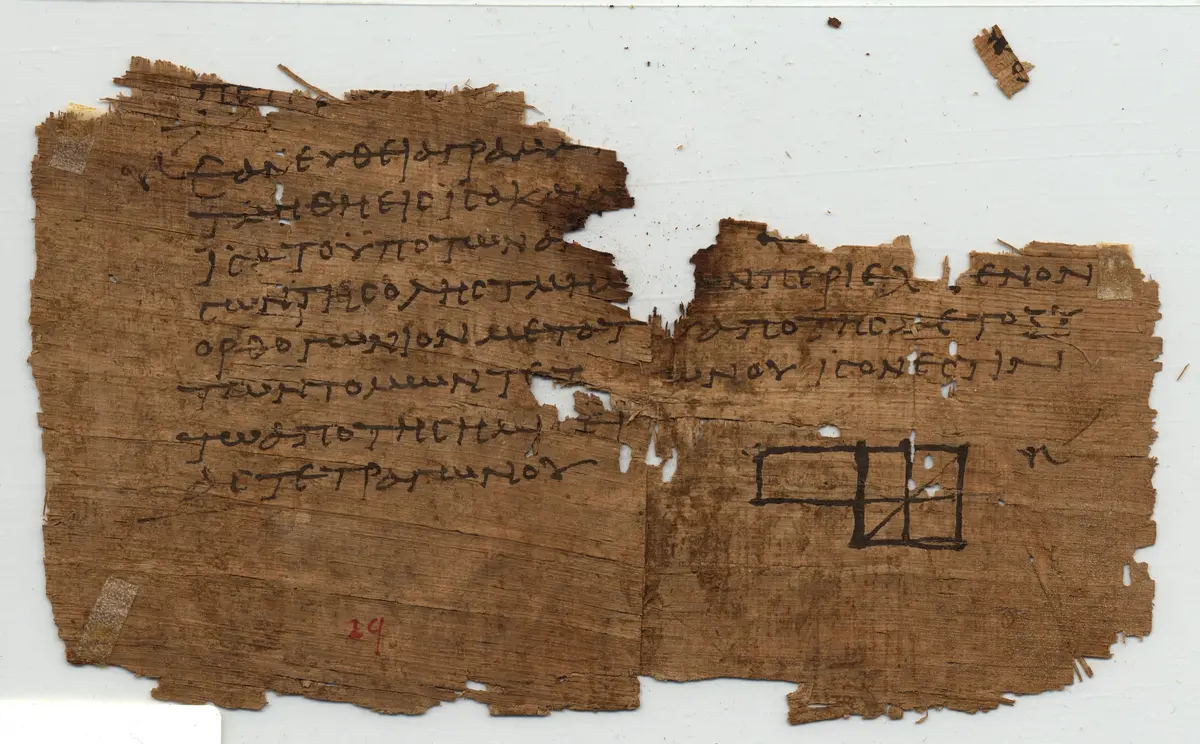
His own book, On the Measurement of the Earth, is lost, like almost everything he wrote. The method survives because a Stoic teacher named Cleomedes explained it in a textbook on astronomy written long afterwards: scholars have dated him anywhere from the first century BCE to the fourth century CE, and the most recent translators place him around 200 CE. Strabo, Pliny and Heron give Eratosthenes' figure as 252,000 stadia, perhaps a later correction that made a neat 700 stadia to the degree, and Strabo adds the famous well at Syene that the noon Sun lit to the bottom. The method was sound but the numbers were rough: Syene lies about three degrees east of Alexandria and a little north of the tropic, and 5,000 stadia was a round estimate. How close he came depends on the length of his stadion, which nobody knows for certain. With the short stadion of about 157.5 metres that some scholars derive from Pliny, 252,000 stadia is about 39,700 km, within 1 or 2 percent of the true 40,000 km around the poles; with the common Greek stadion of about 185 metres it is about 46,600 km, some 16 percent too big. Either way, he had the right size.
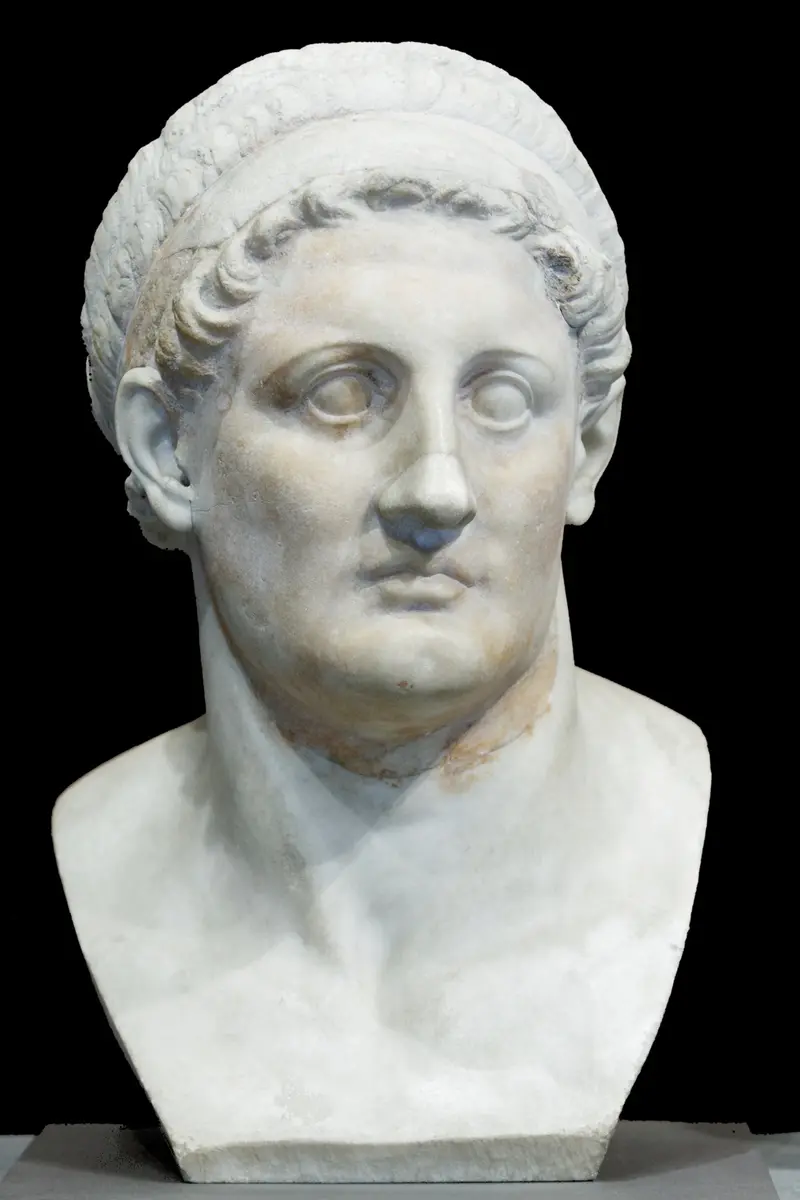
Eratosthenes was born in Cyrene, a Greek city in what is now Libya, around 276 BCE, and studied in Athens. Around 245 the new king of Egypt, Ptolemy III, whose queen Berenice also came from Cyrene, called him to Alexandria to teach his son, and within a few years he was head of the Library, the heart of the royal research institute called the Museum. He worked in nearly every field. His Geography in three books drew the known world on a line parallel to the equator from the Strait of Gibraltar to India; his chronology dated events back to the fall of Troy; he built an instrument for doubling a cube and devised a way of sifting out the prime numbers that is still taught as the sieve of Eratosthenes. Archimedes sent him The Method, in which he explained how he found his results. Because he was very good at everything but first at nothing, people called him Beta, the second letter of the alphabet. Blind in old age, he is said to have starved himself to death around 194 BCE, at about 80.
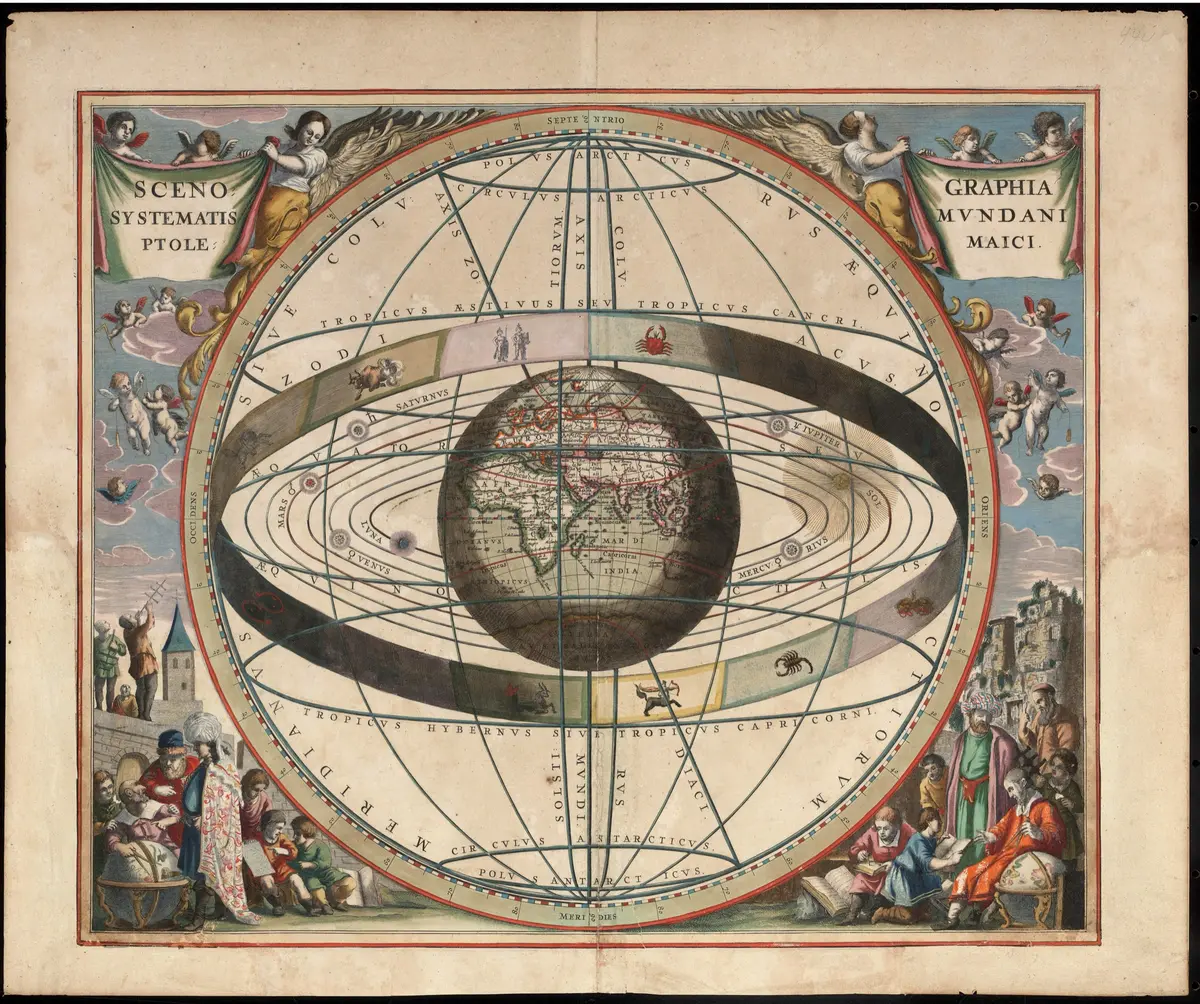
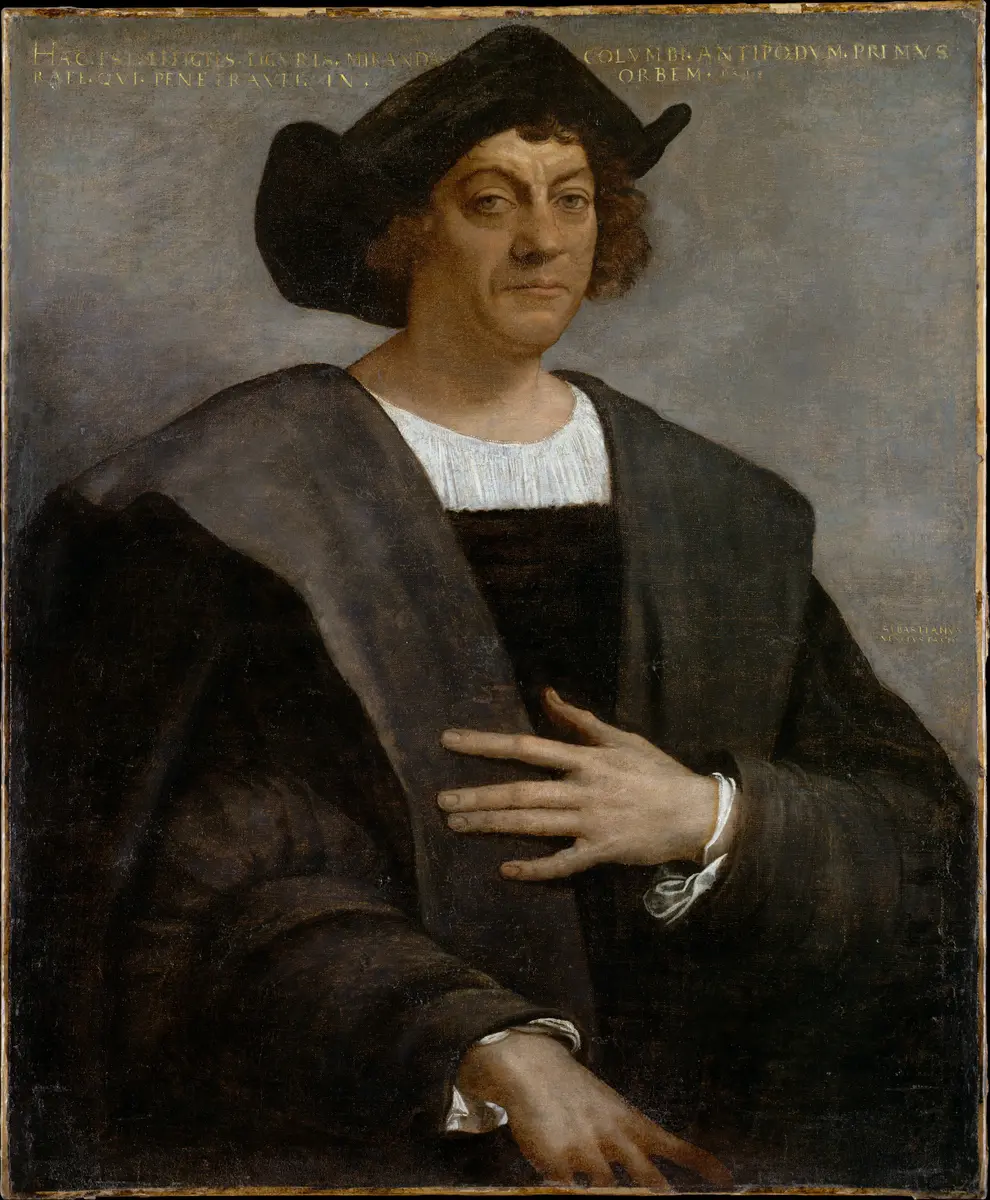
His figure did not stand unchallenged. Hipparchus, a century later, criticised his geography and added about 25,000 stadia to the Earth; Posidonius worked out 240,000 stadia, and Strabo says he favoured about 180,000; the smaller figure passed into Ptolemy's Geography, which Renaissance Europe rediscovered and trusted. Columbus, trusting such small values, believed Asia lay within sailing distance west of Spain; had he believed Eratosthenes, he might never have set out. The method itself lasted: two places on the same north–south line, the angle of the Sun or a star at each, and the distance between them. It is the first lesson of geodesy, the science of measuring the Earth, and modern surveying took it up again when Willebrord Snellius measured the Earth in Holland in 1617. Schoolchildren still repeat the experiment with a stick and a shadow on the same day in different cities.
What happened
- 245 BCE
Ptolemy III, king of Egypt since 246, calls Eratosthenes, a scholar from Cyrene then living in Athens, to Alexandria to teach his son, the future Ptolemy IV. The year is approximate.
Alexandria, where Eratosthenes headed the Library and measured the noon shadow - 240 BCE
By about now he heads the Library of Alexandria, part of the Museum, the kings' research institute. A list of librarians on a papyrus of the second century CE names him after Zenodotus and Apollonius of Rhodes; MacTutor has him succeed the poet Callimachus, who died about 240.
Alexandria, where Eratosthenes headed the Library and measured the noon shadowAt Syene on the Nile, at Egypt's southern border, the pointers of sundials cast no shadow at noon on midsummer day, because the Sun stands straight overhead; Cleomedes says this holds over a circle 300 stadia across. Eratosthenes takes Syene to lie on the summer tropic and due south of Alexandria. The year of the measurement is not recorded; about 240 BCE is the usual date.
Syene (Aswan), where the noon Sun stood overhead on midsummer dayAt the same hour in Alexandria the pointer of a bowl-shaped sundial does cast a shadow, and its arc in the bowl is one fiftieth of a full circle, about 7.2 degrees.
Alexandria, where Eratosthenes headed the Library and measured the noon shadowBecause the Sun's rays fall parallel, the two cities are one fiftieth of the Earth's circumference apart. Reckoning the distance between them at 5,000 stadia, he finds the whole circumference to be 250,000 stadia, and sets out the work in a book, On the Measurement of the Earth, now lost. Later writers give his figure as 252,000.
Alexandria, where Eratosthenes headed the Library and measured the noon shadow- 222 BCE
By 222 or 221, when Ptolemy III dies, Eratosthenes has thanked him with a column in Alexandria carrying a bronze model of his mesolabe, an instrument for doubling a cube, and an epigram to the king and his son.
Alexandria, where Eratosthenes headed the Library and measured the noon shadow - 212 BCE
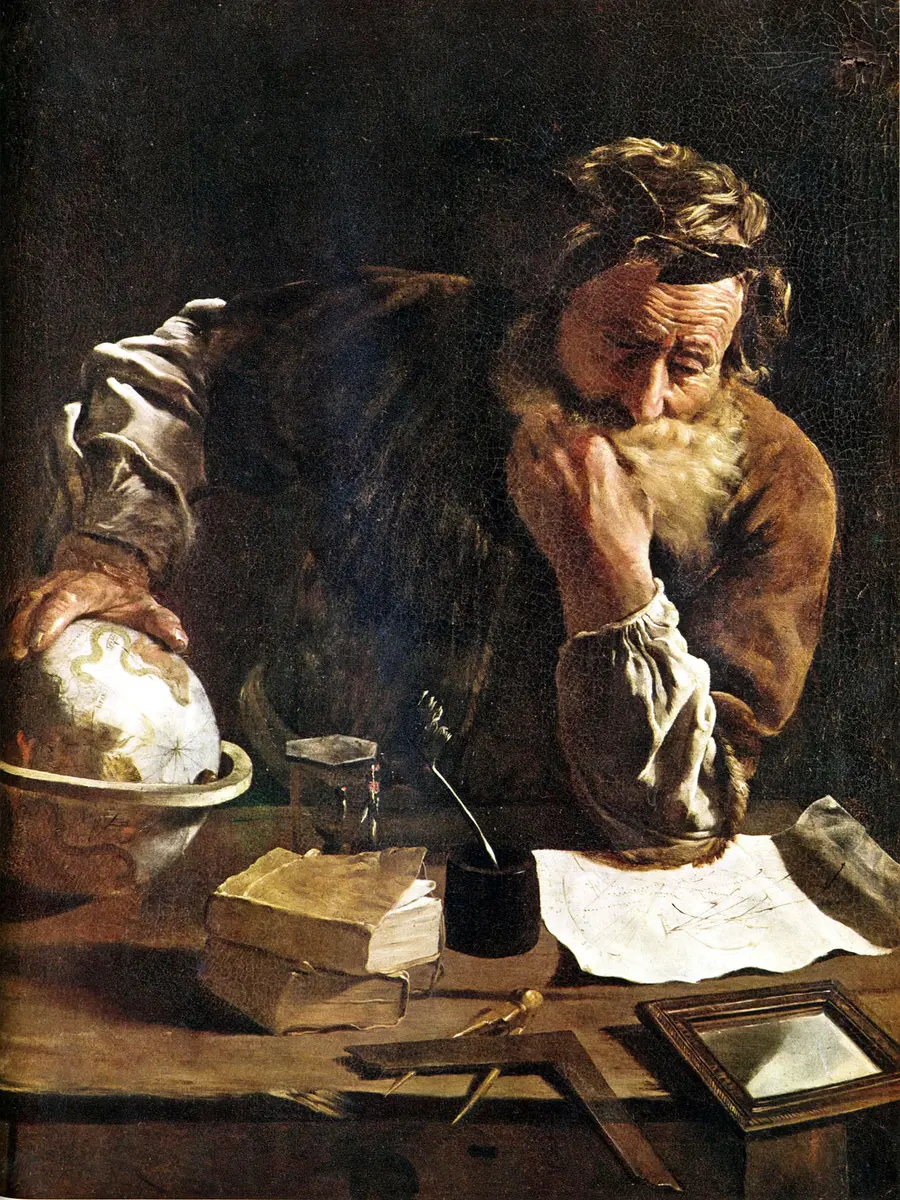
By 212, when Archimedes is killed in the Roman capture of Syracuse, he has sent Eratosthenes The Method, with a letter praising him, and, if its heading is right, the Cattle Problem for the mathematicians of Alexandria.
- 195 BCE
Blind in old age, he can no longer work.
Alexandria, where Eratosthenes headed the Library and measured the noon shadow - 194 BCE
He dies in Alexandria at about 80, said to have starved himself because his sight had failed.
Alexandria, where Eratosthenes headed the Library and measured the noon shadow