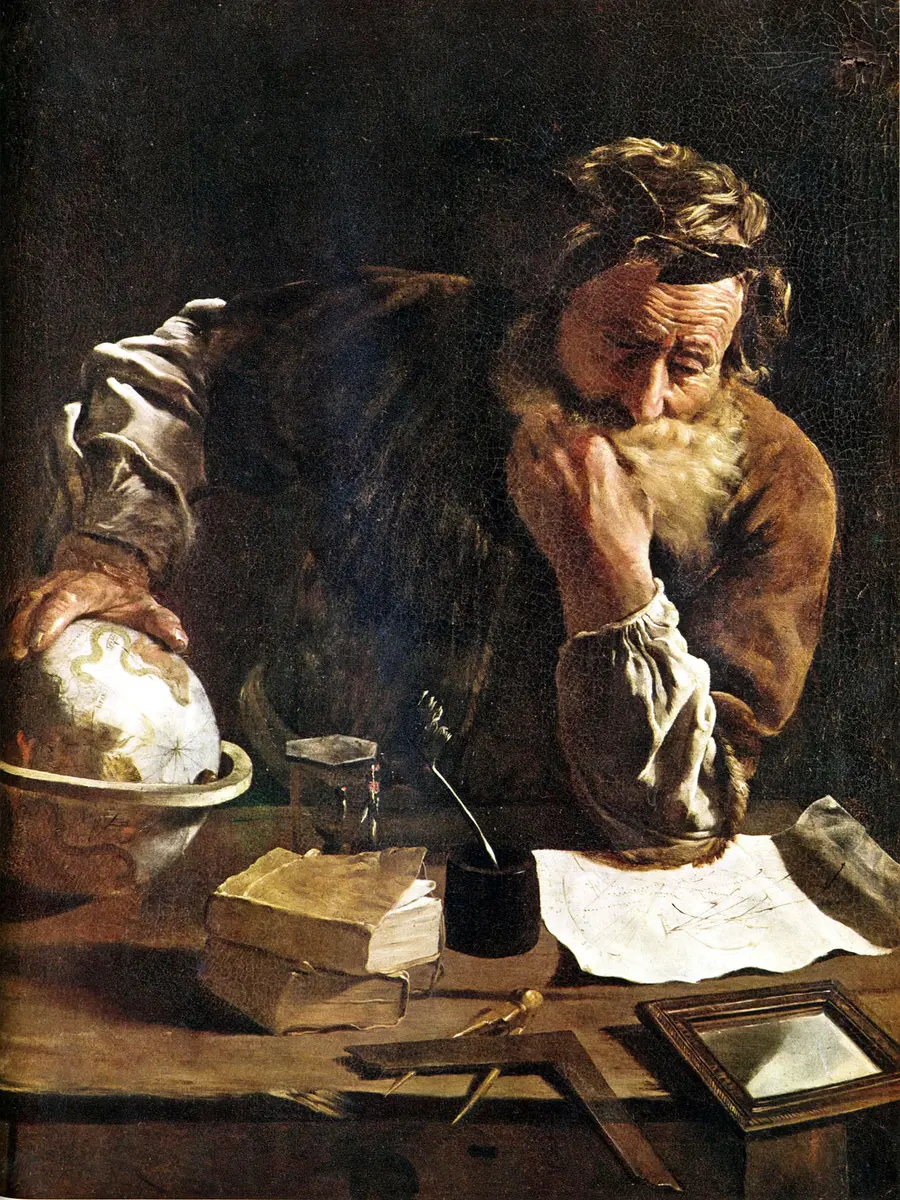
Archimedes
“The Syracusan genius who measured the sphere, pinned down π, explained floating and the lever, held off Rome with his machines, and was killed when Syracuse fell in 212 BCE.”
Archimedes of Syracuse was the greatest mathematician of the ancient world and its most famous engineer. He showed that a sphere has exactly two-thirds of the volume, and of the surface, of the cylinder that just holds it, a result he was so proud of that he asked for it to be shown on his tomb. He trapped the number π between 3 10/71 and 3 1/7 by fitting polygons of 96 sides inside and outside a circle, invented a way of writing enormous numbers, and founded the science of floating bodies with the rule still called Archimedes' principle: a body in water is pushed up by a force equal to the weight of the water it pushes aside. His way of cutting curved figures into ever thinner slices came close to the integral calculus that Newton and Leibniz built nineteen centuries later.
He was born in Syracuse, the leading Greek city of Sicily, around 287 BCE, the son of the astronomer Phidias. He probably studied in Alexandria in Egypt, where the successors of Euclid worked, and he published his discoveries as letters to mathematicians there, among them his friend Conon and Eratosthenes. At home he served King Hiero II, who ruled Syracuse for some sixty years and was, Plutarch says, his friend and relative; Hiero's alliance with Rome from 263 BCE gave the city decades of peace. Later writers made Archimedes the king's problem-solver. The Roman architect Vitruvius tells how he tested whether a gold wreath made for Hiero had been mixed with silver, the idea coming to him in the bath (the test is probably true; the naked run through the streets shouting 'Eureka!', 'I have found it!', is a popular embellishment). Plutarch tells how, after boasting that given another earth to stand on he could move this one, he single-handedly drew a fully loaded ship across the shore with compound pulleys. Tradition also gives him the water-lifting screw that bears his name, though the device may be older.
Hiero died in 215 BCE, and his young grandson Hieronymus took Syracuse over to Carthage in its war with Hannibal. Rome sent its general Marcellus. When the Romans attacked by land and sea, the old mathematician's machines drove them back: catapults hurled stones, beams dropped weights onto the ships, and iron 'claws' lifted ships by the bow and smashed them on the rocks, until Roman soldiers fled at the sight of a rope over the wall and Marcellus settled for a siege. The story that Archimedes set the fleet on fire with mirrors is a legend: Britannica calls it apocryphal, and the detailed accounts come from Byzantine writers more than thirteen centuries later. In 212 BCE the Romans broke in during a festival, and in the sack of the city a soldier killed Archimedes, who, Livy says, was bent over figures drawn in the dust. Marcellus, who had wanted him alive, mourned him and honoured his family. In 75 BCE the Roman orator Cicero, then a Roman official in Sicily, found his forgotten grave by one of the city gates, overgrown with brambles and still marked with a sphere and a cylinder.
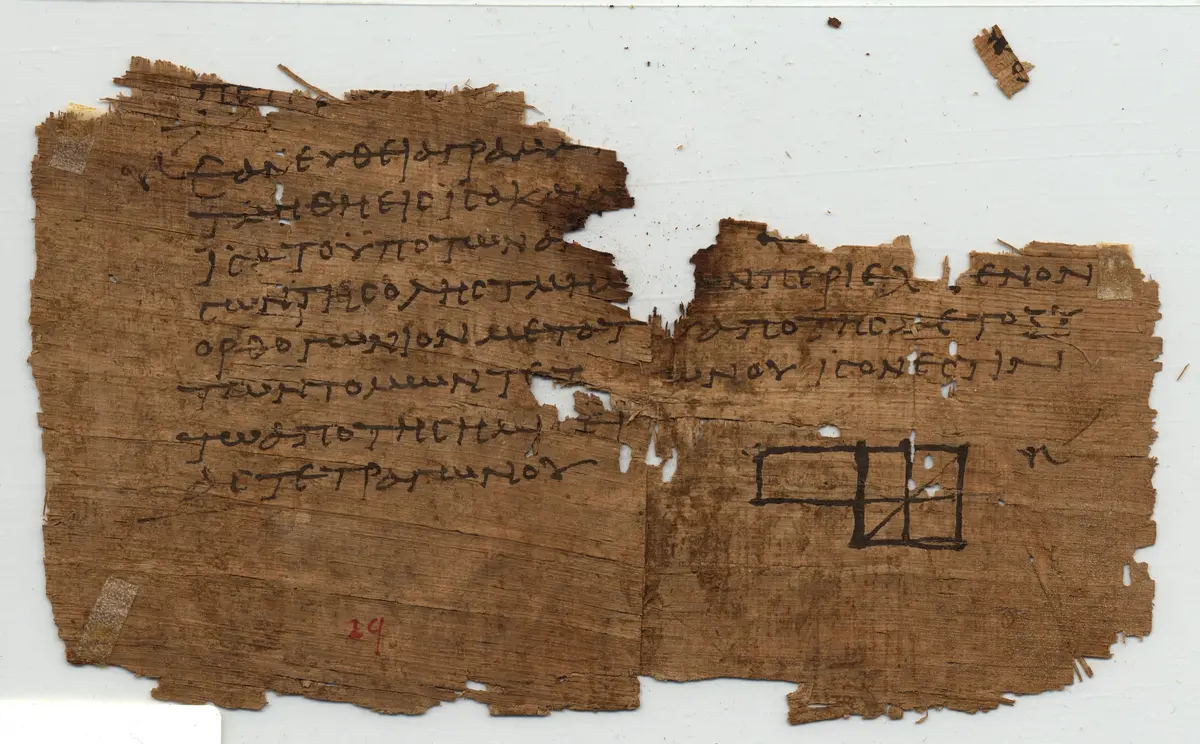
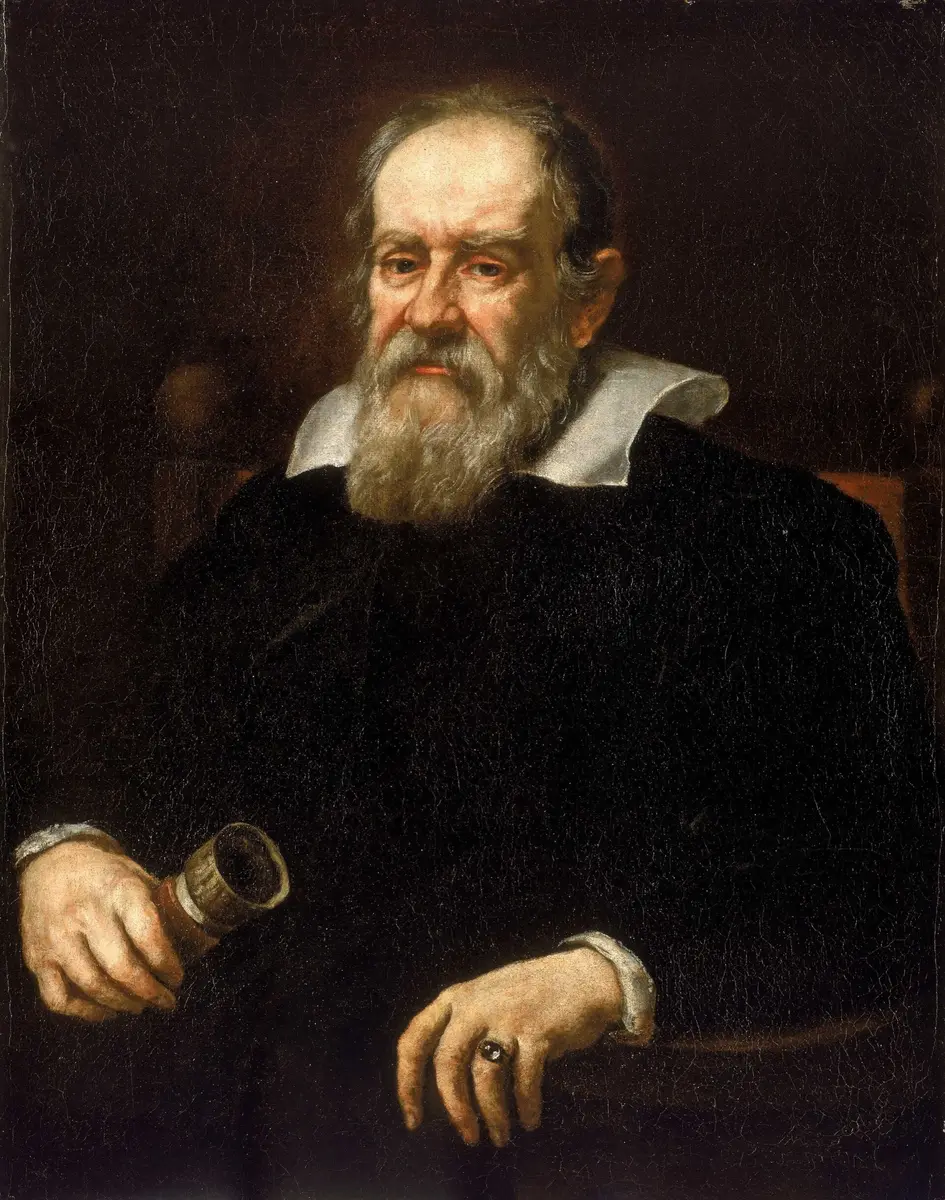
His books came down to us through only a few medieval Greek copies. One, probably made in Constantinople in the 10th century, was scraped and written over as a prayer book in 1229. In 1906 the Danish scholar J. L. Heiberg recognised Archimedes under the prayers and found two works known nowhere else: the Stomachion, about a square cut into fourteen pieces, and The Method, in which Archimedes explains how he found his results by imagining shapes weighed against each other on a balance. The book then disappeared, was damaged by mould and by forged paintings, reappeared at auction in New York in 1998, and was imaged at the Walters Art Museum in Baltimore with ultraviolet, visible and infrared light and with X-rays until the faded text could be read again; the images were put online, free for anyone, in 2008. The first printed edition of his works, published at Basel in 1544, was read by the founders of modern science: Galileo called Archimedes 'my master'.
What happened
- 287 BCE
Archimedes is born in Syracuse, the leading Greek city of Sicily, the son of the astronomer Phidias, whom he names in The Sand Reckoner. The year is an estimate, worked back from the tradition that he was 75 when he died.
Ortygia, the island at the heart of Syracuse: his city, where he was born about 287 BCE, served King Hiero II and was killed when the Romans sacked it in 212 BCE - 275 BCE
Hiero, a young officer who had served under King Pyrrhus, seizes power in Syracuse with the army behind him and marries Philistis, daughter of the leading citizen Leptines. He will rule for some sixty years; Plutarch calls Archimedes his friend and kinsman.
Ortygia, the island at the heart of Syracuse: his city, where he was born about 287 BCE, served King Hiero II and was killed when the Romans sacked it in 212 BCE - 269 BCE
After beating the Mamertines, the mercenaries who held Messana, Hiero is proclaimed king of Syracuse.
Ortygia, the island at the heart of Syracuse: his city, where he was born about 287 BCE, served King Hiero II and was killed when the Romans sacked it in 212 BCE - 264 BCE
Rome crosses into Sicily over Messana and the First Punic War with Carthage begins; Syracuse at first sides with Carthage.
- 263 BCE
Hiero makes peace with Rome and becomes its ally, paying tribute and supplying grain. He keeps the treaty for the rest of his life, and the long peace lets Archimedes work.
Ortygia, the island at the heart of Syracuse: his city, where he was born about 287 BCE, served King Hiero II and was killed when the Romans sacked it in 212 BCE - 241 BCE
The First Punic War ends. Rome takes the rest of Sicily as its first province, leaving Hiero his kingdom around Syracuse.
- 218 BCE
The Second Punic War breaks out and Hannibal crosses the Alps into Italy. Hiero stays loyal to Rome.
- 216 BCE
Hannibal destroys a Roman army at Cannae. Hiero's son and co-ruler Gelon, to whom Archimedes addressed The Sand Reckoner, dies the same year.
- 215 BCE
Hiero dies at about ninety. His fifteen-year-old grandson Hieronymus inherits the throne and turns from Rome to Carthage.
Ortygia, the island at the heart of Syracuse: his city, where he was born about 287 BCE, served King Hiero II and was killed when the Romans sacked it in 212 BCE - 214 BCE
Hieronymus is murdered at Leontini after thirteen months on the throne. In the strife that follows most of Hiero's family is killed and Hannibal's agents Hippocrates and Epicydes take control of Syracuse. Rome sends Marcellus, consul for the third time, who storms Leontini.
- 213 BCE
Marcellus attacks the sea walls with sixty warships while Appius Claudius leads the assault by land. Archimedes' engines meet them: catapults hurl stones, beams drop weights onto the ships, and iron 'claws' lift ships by the bow and dash them on the rocks. Marcellus calls him a 'geometrical Briareus', a hundred-handed giant, and settles down to a long siege.
Ortygia, the island at the heart of Syracuse: his city, where he was born about 287 BCE, served King Hiero II and was killed when the Romans sacked it in 212 BCE - 212 BCE
During a festival of Artemis, while the defenders are feasting, Roman troops climb a carelessly guarded tower whose height Marcellus had estimated during talks over a prisoner, then cut their way through the Hexapylon gate in the inland walls and take the upper city.
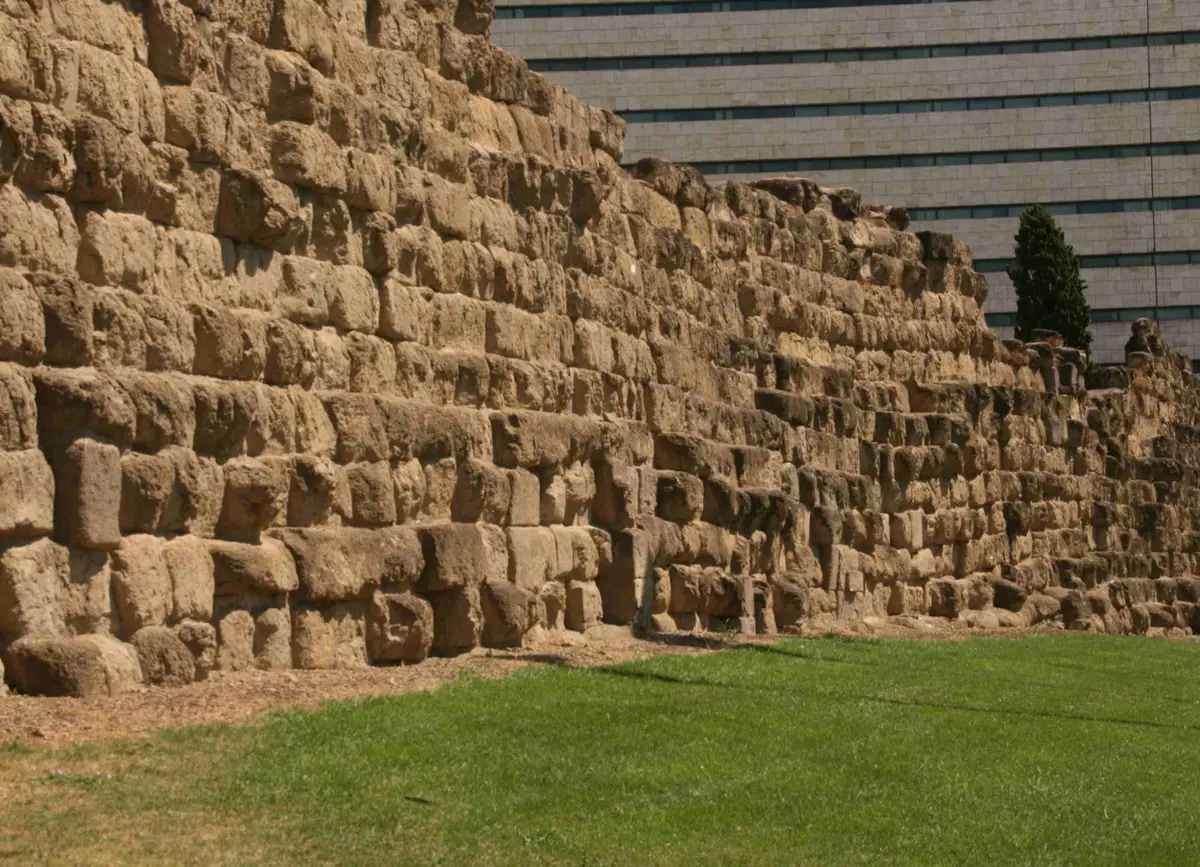
The Euryalus fortress, at the tip of the Epipolae plateau: part of the defences Archimedes is said to have strengthened; the Romans broke into the upper city in 212 BCEThe inner city falls through treachery and is given over to plunder. Archimedes is killed by a Roman soldier: Livy says he was intent on figures drawn in the dust and the soldier did not know who he was; Plutarch tells three versions. Marcellus, who had ordered him spared, mourns him, has him buried and honours his family.
Ortygia, the island at the heart of Syracuse: his city, where he was born about 287 BCE, served King Hiero II and was killed when the Romans sacked it in 212 BCE