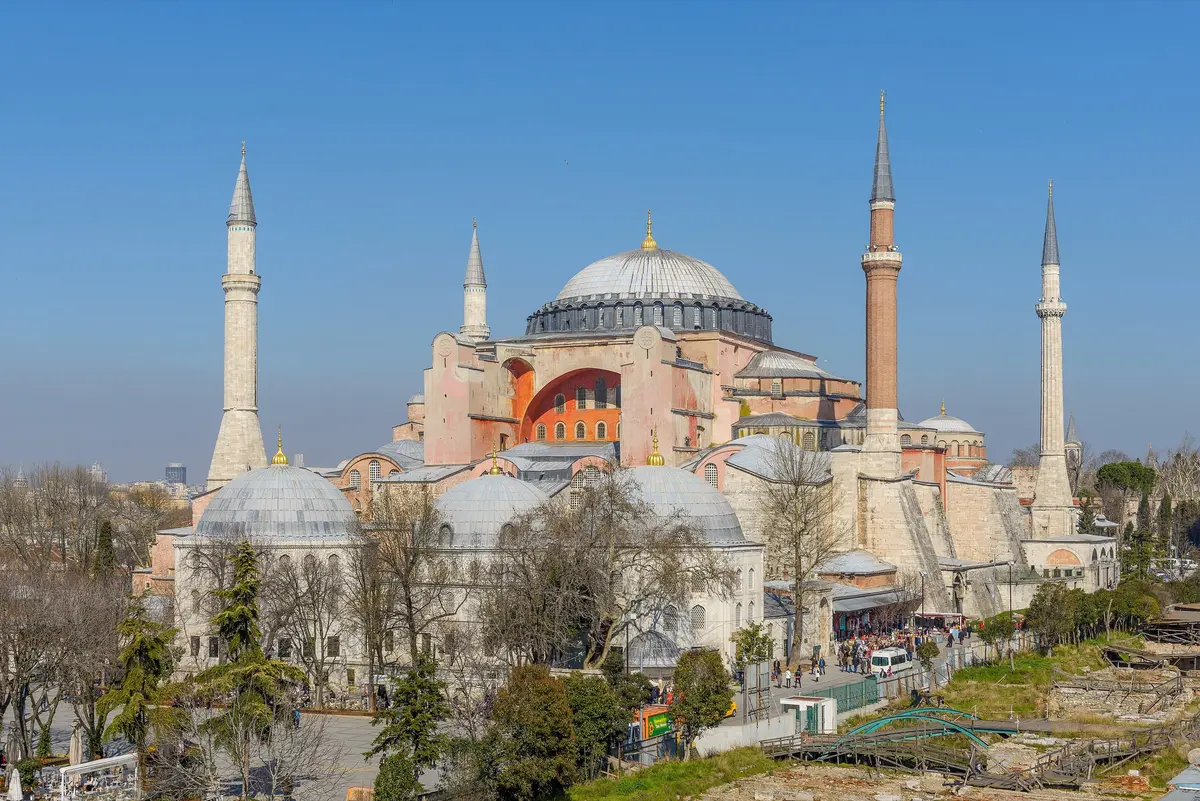
Hagia Sophia is completed
“Justinian rebuilt Hagia Sophia in under six years after the Nika riot of 532; dedicated in 537, its vast dome on pendentives made it Christendom's largest cathedral for almost a thousand years.”
On 13 January 532 the two great racing factions of Constantinople, the Blues and the Greens, turned on Emperor Justinian together, shouting 'Nika!' ('Win!'). That evening the rioters set fire to the Chalke, the bronze gate of the palace, and the flames spread to the Senate house and to the city's cathedral, the Great Church of Hagia Sophia, 'Holy Wisdom', a basilica with a timber roof that had already been rebuilt once after a fire in 404. It burned to the ground. Five days later, when the crowd had proclaimed a rival emperor and seated him in the imperial box of the Hippodrome, Empress Theodora talked Justinian out of fleeing by sea, and his generals Belisarius and Mundus trapped the rioters inside the arena: more than 30,000 people were killed. On 23 February, about forty days after the riot, work began on a new church on the ruins.
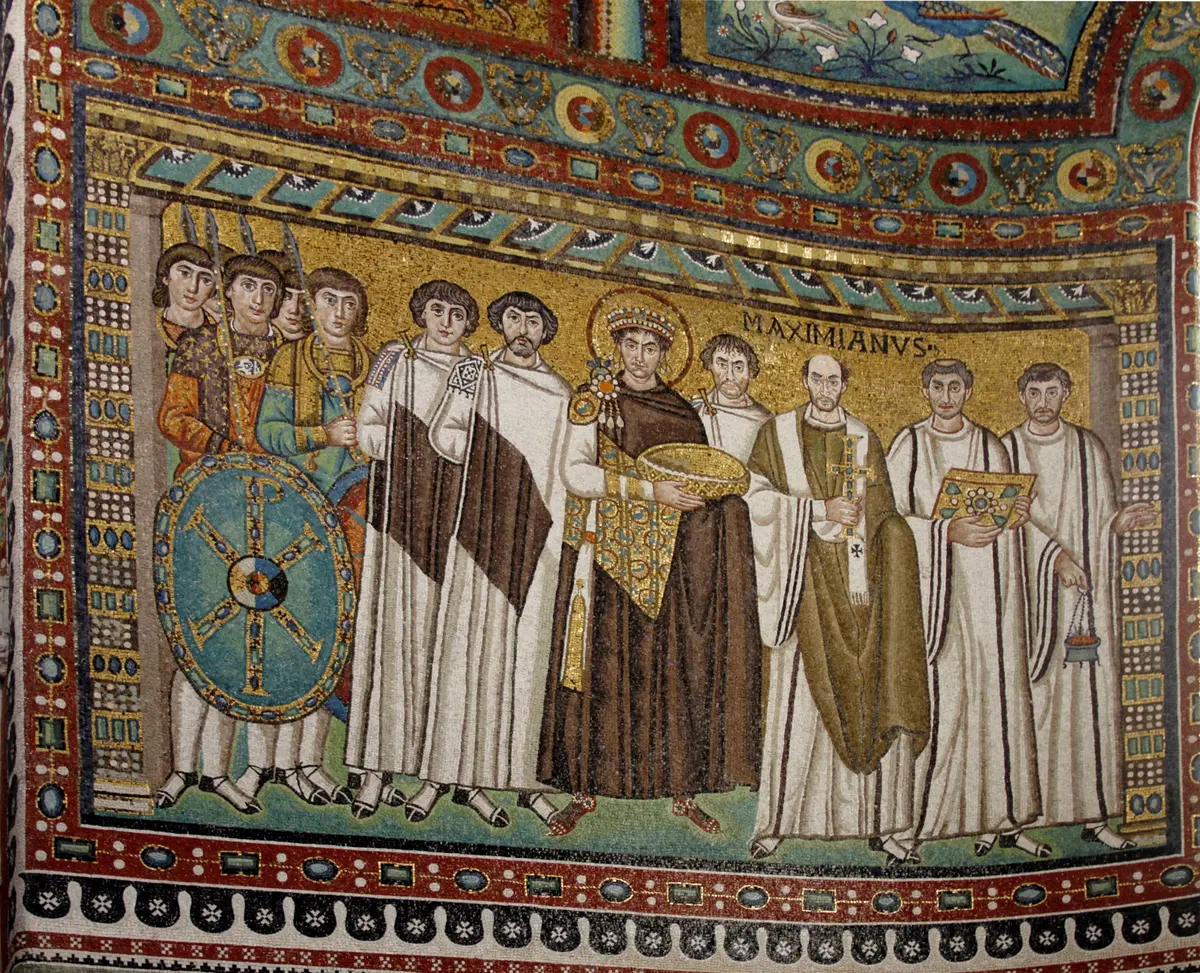
Justinian did not simply rebuild. He gave the design to two men known for geometry and mechanics rather than for building, Anthemius of Tralles and Isidore of Miletus, and they joined the long hall of a basilica to a vast central dome. The dome, about 32 metres across, rests on four great arches and on pendentives, curved triangles of masonry that let a round dome stand on a square; half-domes to the east and west continue its curve, and forty windows ring its base, so that to the court historian Procopius the dome seemed to hang from heaven. Walls and columns were faced with coloured marbles from all over the Mediterranean, and the vaults with gold mosaic showing crosses and ornament, not figures. The church went up in less than six years, and Justinian and Patriarch Menas dedicated it on 27 December 537. A later legend has the emperor cry on entering: 'Solomon, I have surpassed thee.'
Anthemius had built too boldly. Earthquakes cracked the dome, and on 7 May 558, while builders were repairing the cracks, its eastern part fell and crushed the altar, the canopy over it and the pulpit. Anthemius was dead; Isidore the Younger rebuilt the dome on widened north and south arches, steeper and about six metres (20 feet) higher, and on Christmas Eve 562 the church was dedicated a second time, the poet Paul the Silentiary, an official of the court, celebrating it in a long poem describing every part. That is essentially the building that stands today, although parts of the dome fell again in later earthquakes and were rebuilt, and heavy buttresses were added outside to hold it.
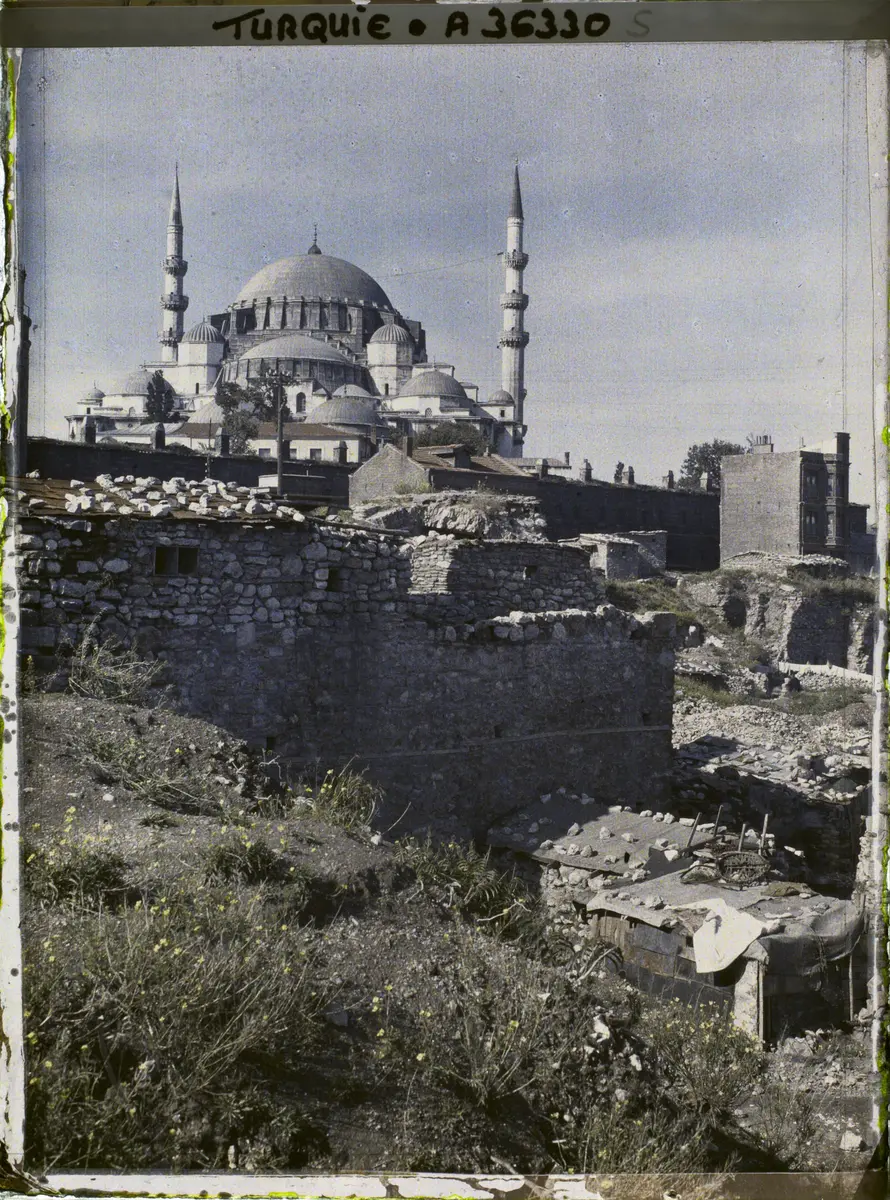
For nine centuries Hagia Sophia was the cathedral of the patriarchs of Constantinople and the stage of Byzantine imperial ceremony. There, on 16 July 1054, a papal legate excommunicated the patriarch, the moment remembered as the split between the Catholic and Orthodox churches; in 1204 the knights of the Fourth Crusade looted it and made it a Latin church until the Byzantines came back in 1261. When Sultan Mehmed II took the city in 1453 he made it a mosque, with a mihrab pointing to Mecca and a pulpit; four minarets were added by the end of the sixteenth century, and the Christian mosaics were later whitewashed. The architect Gaspare Fossati repaired it for Sultan Abdülmecid in 1847-49. The Turkish Republic secularised it in 1934 and opened it as a museum in 1935; in 2020 it became a mosque again, still open to visitors.
Hagia Sophia set the pattern for what came after: UNESCO calls it the model for a whole family of churches and, later, of mosques, and for almost a thousand years it was the largest cathedral in Christendom. Unusually for its age, the names of its architects are known, and its building is described by men who watched it rise or fall: Procopius, the historian Agathias, the chronicler John Malalas and Paul the Silentiary. Its life as a cathedral, a mosque, a museum and a mosque again makes it the plainest single witness, in one building, to the changes of faith and power in the city that was Byzantium, Constantinople and Istanbul.
What happened
- 532
At the races on the Ides of January the Blue and Green factions unite against Justinian under the cry 'Nika!'. That evening the rioters burn the city prefect's headquarters, then the Chalke, the bronze gate of the palace; the flames spread to the Senate house and to the old Hagia Sophia, which burns to the ground.
The Hippodrome, today Sultanahmet Square: where the Nika riot broke out on 13 January 532 and was crushed on 18 JanuaryJustinian's oath of amnesty in the Hippodrome is jeered and the crowd proclaims Hypatius emperor. In the palace, where flight by sea is being prepared, Theodora tells the council that 'royalty is a good burial-shroud'; Belisarius and Mundus then fall on the packed Hippodrome from two sides. More than 30,000 die; Hypatius is executed the next day.
The Hippodrome, today Sultanahmet Square: where the Nika riot broke out on 13 January 532 and was crushed on 18 JanuaryAbout forty days after the riot the ruins are cleared, neighbouring houses are bought up, and work begins on a new church designed by Anthemius of Tralles and Isidore of Miletus.
Hagia Sophia: Justinian's cathedral of 532-537, a mosque from 1453, a museum from 1935 and a mosque again since 2020- 537
Justinian and Patriarch Menas ride in procession from the church of St Anastasia and dedicate the new Hagia Sophia, less than six years after work began.
Hagia Sophia: Justinian's cathedral of 532-537, a mosque from 1453, a museum from 1935 and a mosque again since 2020- 557
A great earthquake shakes Constantinople and cracks the dome of Hagia Sophia.
Hagia Sophia: Justinian's cathedral of 532-537, a mosque from 1453, a museum from 1935 and a mosque again since 2020- 558
A Tuesday, at the fifth hour: while Isaurian builders are repairing the cracks, the eastern part of the dome crashes down, crushing the canopy over the altar, the altar table and the pulpit (ambo).
Hagia Sophia: Justinian's cathedral of 532-537, a mosque from 1453, a museum from 1935 and a mosque again since 2020- 562
Christmas Eve: Justinian and Patriarch Eutychius dedicate the church a second time, under Isidore the Younger's new dome, steeper and some 20 feet higher. A few days later the court poet Paul the Silentiary recites his long description of the church, first in the palace and then in the patriarch's hall.
Hagia Sophia: Justinian's cathedral of 532-537, a mosque from 1453, a museum from 1935 and a mosque again since 2020