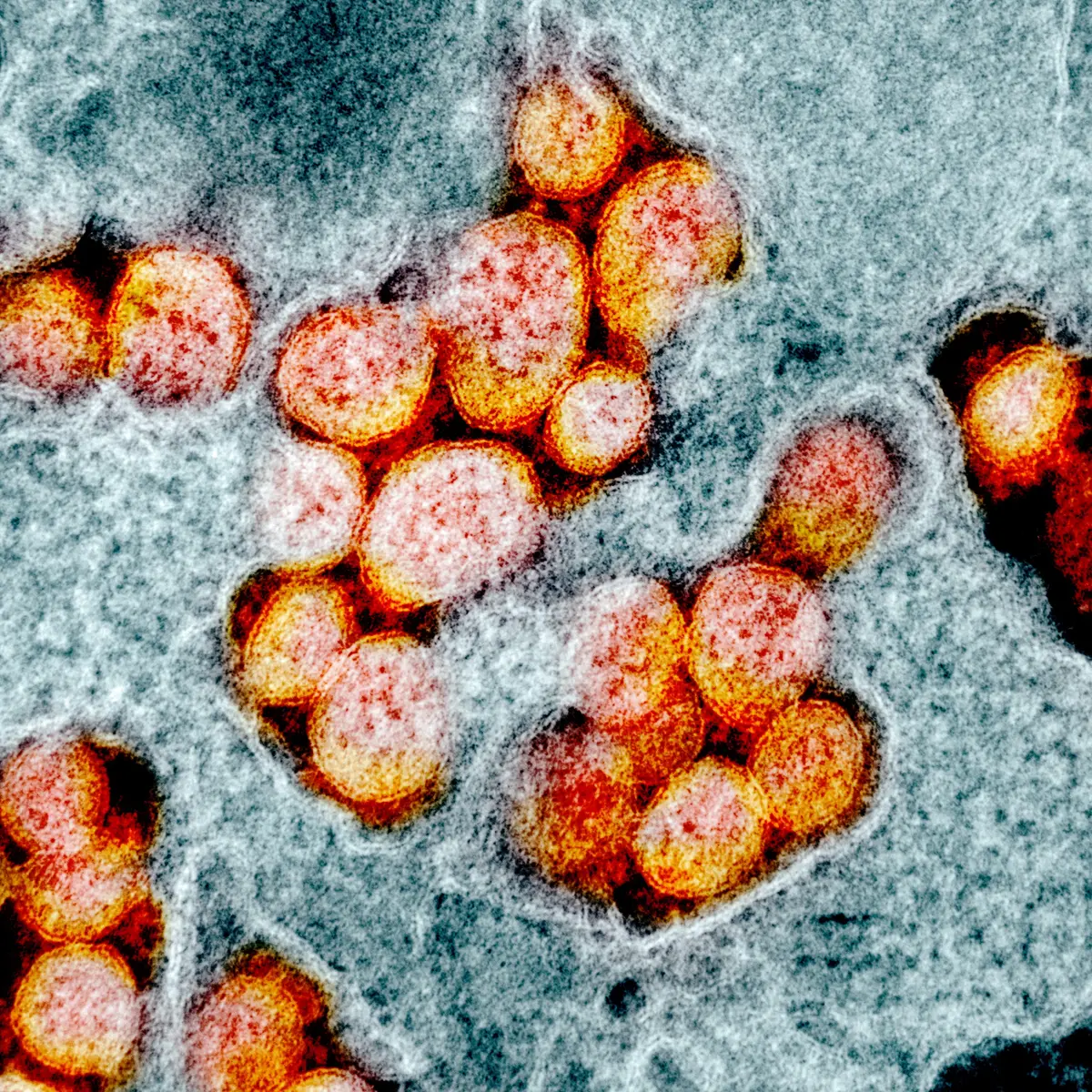
mRNA vaccines
“In 2020 the first mRNA vaccines, Pfizer–BioNTech's and Moderna's, went from the virus's genetic code to approval in under a year, built on Karikó and Weissman's 2005 discovery.”
In 2020 a new kind of vaccine went from a line of genetic code to people's arms in less than a year. On 10 January scientists in China led by Zhang Yongzhen posted the genome of the new coronavirus online. Within days Moderna, a young company in Cambridge, Massachusetts, working with the US government's Vaccine Research Center, and BioNTech in Mainz, Germany, had designed vaccines from that code alone, without ever growing the virus. Moderna's first volunteer was injected in Seattle on 16 March, 66 days after the code appeared. In November trials with about 43,000 and 30,000 volunteers showed both vaccines, Pfizer and BioNTech's and Moderna's, about 95 percent effective against the disease. On 2 December Britain became the first country to approve one, and on 8 December, at 6:31 in the morning, Margaret Keenan, a 90-year-old grandmother, received the Pfizer–BioNTech vaccine at her local hospital in Coventry, the first person in the world to get it after its approval. The United States authorised it on 11 December and Moderna's on 18 December.
Messenger RNA, or mRNA, is the working copy that a cell makes of a gene: it carries the recipe for one protein to the cell's protein factories. The vaccines contain mRNA for the virus's spike, the protein it uses to enter our cells, slightly changed so that the spike keeps the shape it has before it attacks. The mRNA travels inside tiny bubbles of fat, called lipid nanoparticles. In the arm, cells read it and make spike proteins for a short time, and the immune system learns to recognise them without ever meeting the virus. The mRNA cannot reach the cell's DNA or change it. Because only the code is needed, a new vaccine can be designed in days, and made without the large cell cultures older vaccines need.
The idea was decades old. Messenger RNA was discovered in 1961 by Sydney Brenner, François Jacob and Matthew Meselson, and in the same issue of Nature by François Gros, Walter Gilbert and their colleagues. From 1984 scientists could make any mRNA in a test tube. In 1987–89 Robert Malone at the Salk Institute in San Diego, with Philip Felgner and Inder Verma, showed that mRNA wrapped in fatty droplets got into cells, which then made its protein, and in 1990 a team including Felgner and Malone made mouse muscle produce protein from injected mRNA. But mRNA made in the laboratory was fragile and caused inflammation, and most scientists lost interest. The Hungarian biochemist Katalin Karikó, who came to Philadelphia in 1985 and joined the University of Pennsylvania in 1989, did not: refused grants and demoted, she kept working. In 1997, at a photocopier at Penn, she met the immunologist Drew Weissman, who wanted to make an HIV vaccine. In 2005 they showed that swapping one of mRNA's four letters, uridine, for a natural variant, pseudouridine, hid the molecule from the immune system's alarms, and in 2008 that it also made far more protein. In Vancouver, Pieter Cullis's laboratory developed the fat particles that could carry mRNA safely into the body.
Companies took up the threads: CureVac in 2000; BioNTech, founded in Mainz in 2008 by Uğur Şahin, Özlem Türeci and Christoph Huber to make cancer vaccines; and Moderna, founded in 2010. Karikó joined BioNTech in 2013. At the Vaccine Research Center, Barney Graham's team, working on a vaccine against the MERS coronavirus, had learned to lock a coronavirus spike in its pre-attack shape. So when the pandemic came, the pieces were ready. Pfizer joined BioNTech on 17 March 2020. The US government's Operation Warp Speed paid for development and ordered 100 million doses from each company before the results were in, and the trials ran their phases side by side instead of one after another, while completing every necessary step. Both vaccines replaced every uridine with a modified letter, N1-methylpseudouridine, building on Karikó and Weissman's discovery.
No mRNA vaccine had ever been approved before. By 2023 more than 13 billion doses of COVID-19 vaccines of all kinds had been given, saving millions of lives, and serious side effects of the two mRNA vaccines proved exceptionally rare. The doses were unevenly shared: at the end of 2021, when in most countries of Europe and the Americas a majority had had at least one, in much of Africa fewer than one person in five had. The method can be updated for a new variant faster than any other, and mRNA vaccines and medicines are now being tested against other infections and cancer. On 2 October 2023 Karikó and Weissman were awarded the Nobel Prize in Physiology or Medicine for the discovery that made the vaccines work.
What happened
- 2020
Edward Holmes of the University of Sydney posts online, for the team of Zhang Yongzhen in Shanghai, the genome of the new coronavirus from a patient in Wuhan, and it goes into GenBank as MN908947. The virus is still unnamed; its code is now open to every laboratory in the world.
The morning after, scientists at the NIH's Vaccine Research Center put into the new spike the two changes that had locked the MERS spike in shape. Within five days of the code's release Moderna begins manufacturing the vaccine, mRNA-1273, for a trial. In the same month BioNTech in Mainz decides to make a vaccine of its own, Project Lightspeed.
The Vaccine Research Center of the US National Institutes of Health, Bethesda, Maryland: Barney Graham's team designed the spike for Moderna's vaccine the day after the genome was postedJason McLellan's group, with the VRC's Kizzmekia Corbett and Barney Graham, publishes the atomic structure of the stabilised spike online in Science, in record time. It guides both mRNA vaccines and others.
In Seattle the first volunteer receives Moderna's vaccine in a trial of 45 healthy adults at Kaiser Permanente Washington Health Research Institute, 66 days after the genome was posted. 'Launched in record speed', says Anthony Fauci.
Kaiser Permanente Washington Health Research Institute, Seattle: where the first volunteer received Moderna's vaccine on 16 March 2020Pfizer and BioNTech agree to develop and distribute BioNTech's vaccine together, outside China, building on their 2018 deal for an mRNA flu vaccine. The giant brings money, trial sites and factories; the small company brings the vaccine.
BioNTech, An der Goldgrube 12, Mainz: where Şahin and Türeci's company designed the first approved mRNA vaccine, BNT162b2In the Rose Garden President Trump presents Operation Warp Speed, the government's drive to have vaccines by the end of the year. It funds six candidates, the two mRNA vaccines among them, and later orders 100 million doses from Pfizer and BioNTech (22 July) and from Moderna (11 August) before their results are known.
The White House, Washington: where the government's vaccine drive, Operation Warp Speed, was presented in the Rose Garden on 15 May 2020Both companies start their final, Phase 3 trials on the same day: Pfizer and BioNTech's will enrol more than 43,000 people in six countries, Moderna's 30,420 at 99 American sites, half of them given a dummy injection.
Pfizer and BioNTech announce the first result: in 94 cases of COVID-19 among the volunteers, the vaccine was more than 90 percent effective.
Moderna reports that its vaccine works as well: about 95 percent effective in its first analysis.
Moderna, 200 Technology Square, Cambridge, Massachusetts: the company that made the second mRNA vaccine, mRNA-1273, with the NIHThe final count for the Pfizer–BioNTech vaccine: 162 cases among those given the dummy, 8 among the vaccinated, 95 percent effective. The companies expect to make up to 50 million doses in 2020 at Pfizer's plants in the United States and at Puurs in Belgium, shipped in dry ice at minus 70 °C.
Pfizer's plant at Puurs, Belgium: one of the four Pfizer factories that made the Pfizer–BioNTech vaccineBritain's medicines regulator, the MHRA, approves the Pfizer–BioNTech vaccine after a 'rolling review' of the data begun in October: the first approval of an mRNA vaccine anywhere.
- 6:31 a.m.
At 6:31 in the morning the nurse May Parsons gives the first dose to Margaret Keenan, 90, a former jewellery shop assistant from Enniskillen who has lived in Coventry for over sixty years, at University Hospital Coventry. 'If I can have it at 90 then you can have it too!', she says.
University Hospital Coventry: where Margaret Keenan became the first person to receive the approved Pfizer–BioNTech vaccine, at 6:31 on 8 December 2020 The US Food and Drug Administration gives the Pfizer–BioNTech vaccine an emergency use authorisation for everyone aged 16 and over, its first for any COVID-19 vaccine.
Sandra Lindsay, a nurse in New York, becomes the first American vaccinated outside the trials, and military hospitals such as Walter Reed begin vaccinating their staff the same day. That day the country's recorded COVID-19 deaths pass 300,000.
The FDA authorises Moderna's vaccine for adults, 94.1 percent effective in its trial: the second mRNA vaccine, 343 days after the virus's code was posted.