Silicon Valley Bank collapses
“In March 2023 Silicon Valley Bank, the startup world's bank, lost $42 billion in deposits in one day as clients fled online, and failed: the fastest bank run in history.”
Silicon Valley Bank, based in Santa Clara, California, was the bank of America's startup world. It opened in 1983, and by 2023 it said it served nearly half of all American technology and life-science companies backed by venture capital. On Wednesday, March 8, 2023, it announced that it had sold $21 billion of bonds at a loss of $1.8 billion and needed to raise $2.25 billion in new capital. The next day its shares fell 60 percent, venture capitalists told the companies they funded to move their money, and customers pulled out $42 billion, nearly a quarter of the bank's deposits, in a single day. Social media spread the alarm, and online banking let the money leave at once. By that evening the bank was $958 million short of cash. On the morning of Friday, March 10, California's banking regulator closed it and handed it to the FDIC, the federal deposit insurer. With $209 billion in assets it was, at that moment, the second-largest bank failure in American history.
The causes went back to the boom years. In 2020 and 2021 startups raised record sums and kept the cash at SVB, which tripled in size, from $71 billion to $211 billion in assets. The bank put much of the money into long-term government and mortgage bonds, bought when interest rates were close to zero. When the Federal Reserve raised its rate from near zero in March 2022 to more than 4.5 percent a year later to fight inflation, those bonds lost value, and startups, now raising less money, began to draw their deposits down. About 94 percent of the deposits were above the $250,000 that federal insurance covers, so depositors had every reason to run at the first sign of trouble, and a close network of investors and founders, linked by social media and personal ties, ran together. The Fed's own review called it a textbook case of mismanagement, and admitted that its supervisors had seen the problems without acting forcefully enough.
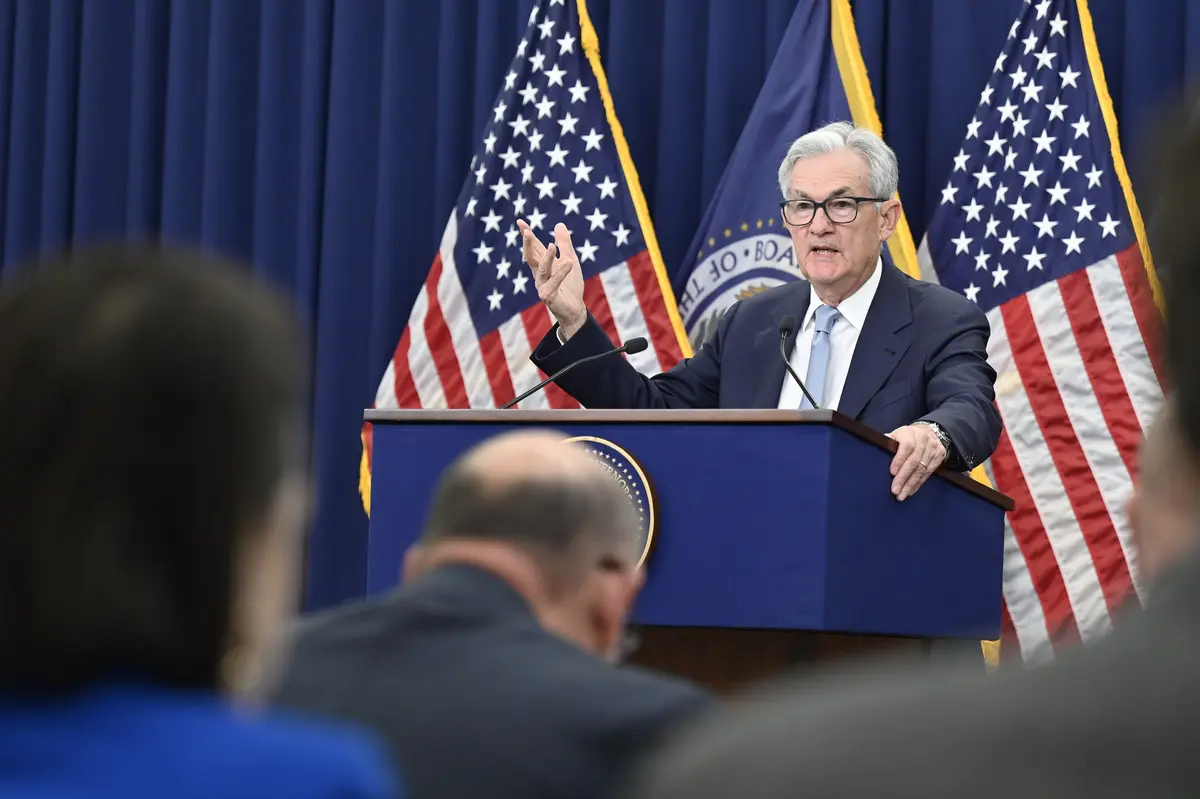
Fear spread at once. Signature Bank in New York lost a fifth of its deposits on March 10 and was closed on Sunday, March 12. That evening Treasury Secretary Janet Yellen, Fed Chair Jerome Powell and FDIC Chairman Martin Gruenberg announced that every depositor of both banks, insured or not, would get all their money back, with any loss charged to the banks rather than to taxpayers; shareholders were not protected. The Fed opened a new lending program that let banks borrow against their bonds at full face value, and that week banks borrowed a record $153 billion from its discount window. Abroad, Credit Suisse, already weakened, was taken over by UBS on March 19. First Citizens bought most of SVB a week later, at an expected cost of about $20 billion to the insurance fund. On May 1 First Republic Bank of San Francisco, larger still, failed and was sold to JPMorgan Chase.
Senators called it the fastest bank run in history: in the smartphone age, panic moved at the speed of a message. Its rescue reopened old arguments. Guaranteeing all deposits calmed the system, but it protected wealthy companies and investors beyond the legal limit, and the FDIC's review of deposit insurance favoured far higher coverage for business payment accounts instead. Regulators promised tougher rules for mid-sized banks, whose oversight had been loosened in 2018 and 2019. Banks were charged a special assessment to recover about $16.3 billion for the insurance fund, and the Fed's emergency program stopped making new loans on March 11, 2024. The story is now the standard example of how quickly trust in a bank can vanish when most of its depositors are uninsured and all of them know each other.
What happened
- 2023
In the afternoon, SVB Financial Group announces that it has sold almost all of its available-for-sale bonds, $21 billion, at an after-tax loss of $1.8 billion, and that it will raise $2.25 billion in new shares. The same day the crypto bank Silvergate says it will wind down, and a rating agency cuts SVB by one notch.
Silicon Valley Bank's headquarters, 3003 Tasman Drive, Santa Clara: closed on March 10, 2023SVB's shares fall 60 percent. Chief executive Greg Becker urges the venture-capital clients to stay calm, but investors tell their startups on social media to move their money. By the end of the day $42 billion has left the bank, and it closes the day $958 million short of cash.
Silicon Valley Bank's headquarters, 3003 Tasman Drive, Santa Clara: closed on March 10, 2023By the morning SVB has told its supervisors that another $100 billion is due to go out during the day. That morning California's Department of Financial Protection and Innovation declares the bank insolvent, takes possession and appoints the FDIC as receiver. The FDIC puts the insured deposits in a new Deposit Insurance National Bank of Santa Clara. Trading in SVB's shares is halted.
Silicon Valley Bank's headquarters, 3003 Tasman Drive, Santa Clara: closed on March 10, 2023Panic spreads to Signature Bank in New York, which loses a fifth of its deposits in a few hours and covers its overdraft at the Fed with minutes to spare before the wire room closes.
Signature Bank's head office, 565 Fifth Avenue, New York: closed on March 12, 2023New York's Department of Financial Services closes Signature Bank, with $110 billion in assets, and the FDIC turns it into Signature Bridge Bank.
Signature Bank's head office, 565 Fifth Avenue, New York: closed on March 12, 2023- 6:15 p.m.
In Washington, Janet Yellen, Jerome Powell and Martin Gruenberg announce that all depositors of SVB and Signature Bank, insured or not, will have all their money from Monday; any loss to the insurance fund will be charged to the banks. The Fed opens the Bank Term Funding Program, lending for up to a year against bonds valued at full face value.
The US Treasury, Washington: Janet Yellen's department, which approved the guarantee of all deposits SVB's offices open again as Silicon Valley Bridge Bank, run by the FDIC with all deposits, insured and uninsured, transferred to it. In London the same morning, SVB's British arm is sold to HSBC in a sale arranged by the Bank of England.
Silicon Valley Bank's headquarters, 3003 Tasman Drive, Santa Clara: closed on March 10, 2023- 9:00 a.m.
In the Roosevelt Room, President Biden tells Americans they can have confidence that the banking system is safe, and that no losses will be borne by taxpayers.
The White House, Washington: President Biden's remarks on the banks, March 13, 2023 - 4:00 p.m.
The Federal Reserve Board announces that its Vice Chair for Supervision, Michael Barr, will lead a review of how it supervised SVB, to be published by May 1.
The Federal Reserve Board, Eccles Building, Washington The Fed's weekly figures show the scale of the scramble: banks owe a record $152.9 billion at the discount window, against $4.6 billion a week earlier, and have borrowed $11.9 billion from the new program. Deposits at small banks have fallen by about $150 billion in a week.
The Federal Reserve Board, Eccles Building, WashingtonSVB Financial Group, the bank's former parent, files for Chapter 11 bankruptcy in New York.
The FDIC sells most of Signature Bank to Flagstar Bank, part of New York Community Bancorp; it expects the failure to cost its fund about $2.5 billion.
Signature Bank's head office, 565 Fifth Avenue, New York: closed on March 12, 2023In Switzerland, UBS agrees to take over Credit Suisse, with liquidity from the Swiss National Bank under a government guarantee; the regulator FINMA says the bank's crisis of confidence was intensified by the upheavals in American banking.
The Swiss National Bank, Bundesplatz, Bern: it backed UBS's takeover of Credit Suisse- 2:00 p.m.
The Fed raises its key rate again, to 4.75–5 percent, declaring the US banking system sound and resilient but warning that credit will tighten.
The Federal Reserve Board, Eccles Building, Washington First Citizens Bank of Raleigh buys SVB's deposits and loans from the FDIC: $72 billion of assets at a $16.5 billion discount, while about $90 billion stays with the receiver. The FDIC puts the cost to its insurance fund at about $20 billion. The 17 branches reopen as First Citizens the next day.
First Citizens BancShares' headquarters, 4300 Six Forks Road, Raleigh: the buyer of SVB- 10:00 a.m.
The Senate Banking Committee questions Gruenberg, Barr and the Treasury's Nellie Liang. Chair Sherrod Brown calls the $42 billion run the largest and fastest in history; Barr calls SVB's failure a textbook case of mismanagement.
Dirksen Senate Office Building, Washington: the Senate Banking Committee's hearings of March 28 and May 16, 2023 - 11:00 a.m.
The Fed publishes Barr's review. It finds that SVB's board and managers failed to manage their risks, that the San Francisco Fed's supervisors did not act with enough force, and that the looser rules of 2018 and 2019 had made supervision weaker. The FDIC publishes its own review of Signature Bank the same day.
The Federal Reserve Bank of San Francisco, 101 Market Street: SVB's supervisor California closes First Republic Bank of San Francisco, with $229 billion in assets, and the FDIC sells it to JPMorgan Chase; its 84 offices reopen as Chase branches the same day. The FDIC puts the cost at about $13 billion.
First Republic Bank's head office, 111 Pine Street, San Francisco: closed on May 1, 2023The FDIC publishes 'Options for Deposit Insurance Reform', weighing limited, unlimited and targeted coverage, and favouring much higher protection for business payment accounts.
The FDIC's headquarters, 550 17th Street NW, Washington- 10:00 a.m.
Greg Becker, SVB's former chief executive, testifies before the Senate Banking Committee with Signature Bank's former chairman Scott Shay and president Eric Howell.
Dirksen Senate Office Building, Washington: the Senate Banking Committee's hearings of March 28 and May 16, 2023