The American Revolutionary War
“1775–1783: thirteen colonies fight Britain from Lexington to Yorktown, win with France's help after Saratoga, and the Treaty of Paris makes the United States independent.”
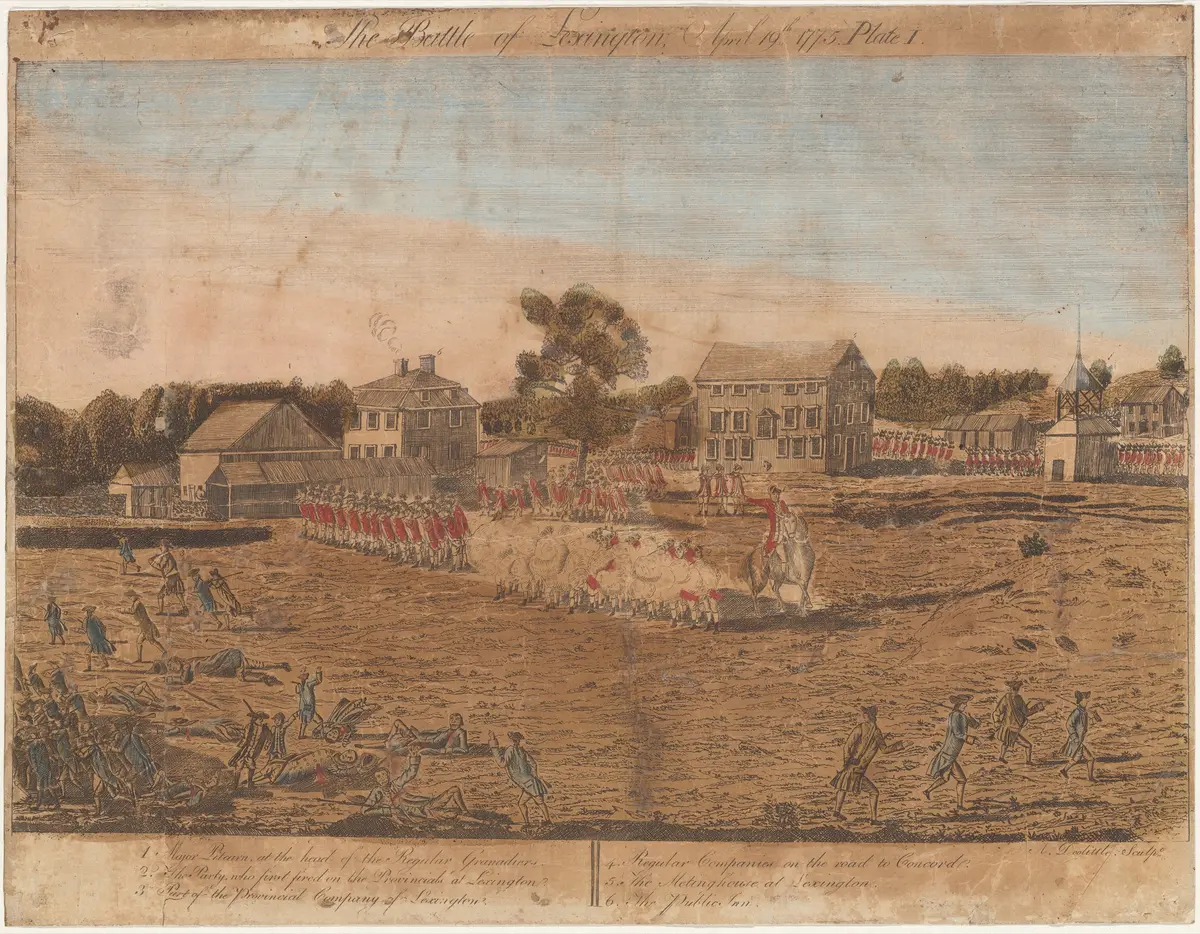
The war began as a quarrel inside the British Empire. After the Seven Years' War Britain tried to make its American colonies pay part of the cost of defending them and to govern them more closely, with the Sugar Act of 1764, the Stamp Act of 1765 and, after the Boston Tea Party, the punishing Intolerable Acts of 1774, which put Massachusetts under a military governor, General Thomas Gage. On the night of April 18, 1775 Gage sent about 700 regulars to seize the militia's arms and powder at Concord. Warned by Paul Revere and William Dawes, 77 Lexington militiamen were waiting on their village green when the column arrived at about five in the morning. Nobody knows who fired first; two British volleys killed eight of them. At Concord's North Bridge the militia fired back, and on the eighteen miles back to Boston the regulars were shot at from behind every wall and tree: by nightfall the British had lost 273 men killed, wounded or missing, the Americans 95.
Within a week some 20,000 New Englanders had answered the alarm and shut the army up in Boston. On June 17 the British stormed the American earthwork on Breed's Hill above Charlestown, in the battle named after Bunker Hill next to it: they took the hill but lost 1,054 of about 2,400 men. Two days earlier the Continental Congress in Philadelphia had made George Washington of Virginia commander in chief, and when cannon hauled from Fort Ticonderoga were set up on Dorchester Heights the British left Boston on March 17, 1776; four months later Congress declared independence. Then Britain came back in force. General William Howe and his brother, Admiral Lord Howe, brought 34,000 British and German troops to New York, beat Washington on Long Island on August 27, took the city and chased his shrinking army across New Jersey. On Christmas night Washington recrossed the icy Delaware, took about 900 Hessians prisoner at Trenton and beat a British brigade at Princeton on January 3, 1777, small victories that roused the country when the cause seemed lost.
In 1777 Howe sailed to the Chesapeake, beat Washington at Brandywine and took Philadelphia, the American capital, while Congress fled west to York. But a second British army, about 9,000 men under General John Burgoyne coming south from Canada, was stopped by Horatio Gates's Americans at Freeman's Farm, beaten at Bemis Heights with Benedict Arnold in the thick of the fight, and surrendered at Saratoga on October 17: some 6,300 British and German soldiers laid down their arms. Washington's army spent the winter at Valley Forge, a day's march from Philadelphia, where more than 12,000 soldiers and 400 women and children built a town of log huts, nearly 2,000 died of disease, and a Prussian officer, Baron von Steuben, drilled the rest into a disciplined army. Saratoga had meanwhile decided France, which had been sending money and arms in secret since 1776. On February 6, 1778 Benjamin Franklin, Silas Deane and Arthur Lee signed a treaty of alliance in Paris; Spain joined the war against Britain in June 1779 and the Dutch in 1780, and a colonial rebellion became a world war fought from the English Channel to the Caribbean, Gibraltar and India.
Britain now turned south, where it hoped the loyalists would rise for the King. Savannah fell at the end of 1778 and Charleston on May 12, 1780, with some 5,000 American soldiers, almost the whole Continental army in the South. But the backcountry became a savage civil war between patriot and loyalist militias: frontier militia destroyed a loyalist force at Kings Mountain in October 1780, Daniel Morgan routed Banastre Tarleton at Cowpens in January 1781, and at Guilford Courthouse in March Nathanael Greene lost the field but cost Lord Cornwallis more than a quarter of his army. Cornwallis marched into Virginia and fortified Yorktown, on the York River, as a harbour for the navy. The French came instead. Some 5,300 soldiers under the comte de Rochambeau had landed at Newport in July 1780; in August 1781 Washington and Rochambeau marched south, and on September 5 Admiral de Grasse's 24 ships of the line drove off a British fleet of 19 at the mouth of the Chesapeake. About 17,600 American and French soldiers besieged the town from September 28, stormed two of its redoubts on the night of October 14, and on October 19, 1781 Cornwallis's army of more than 7,000 marched out between their lines and laid down its arms.
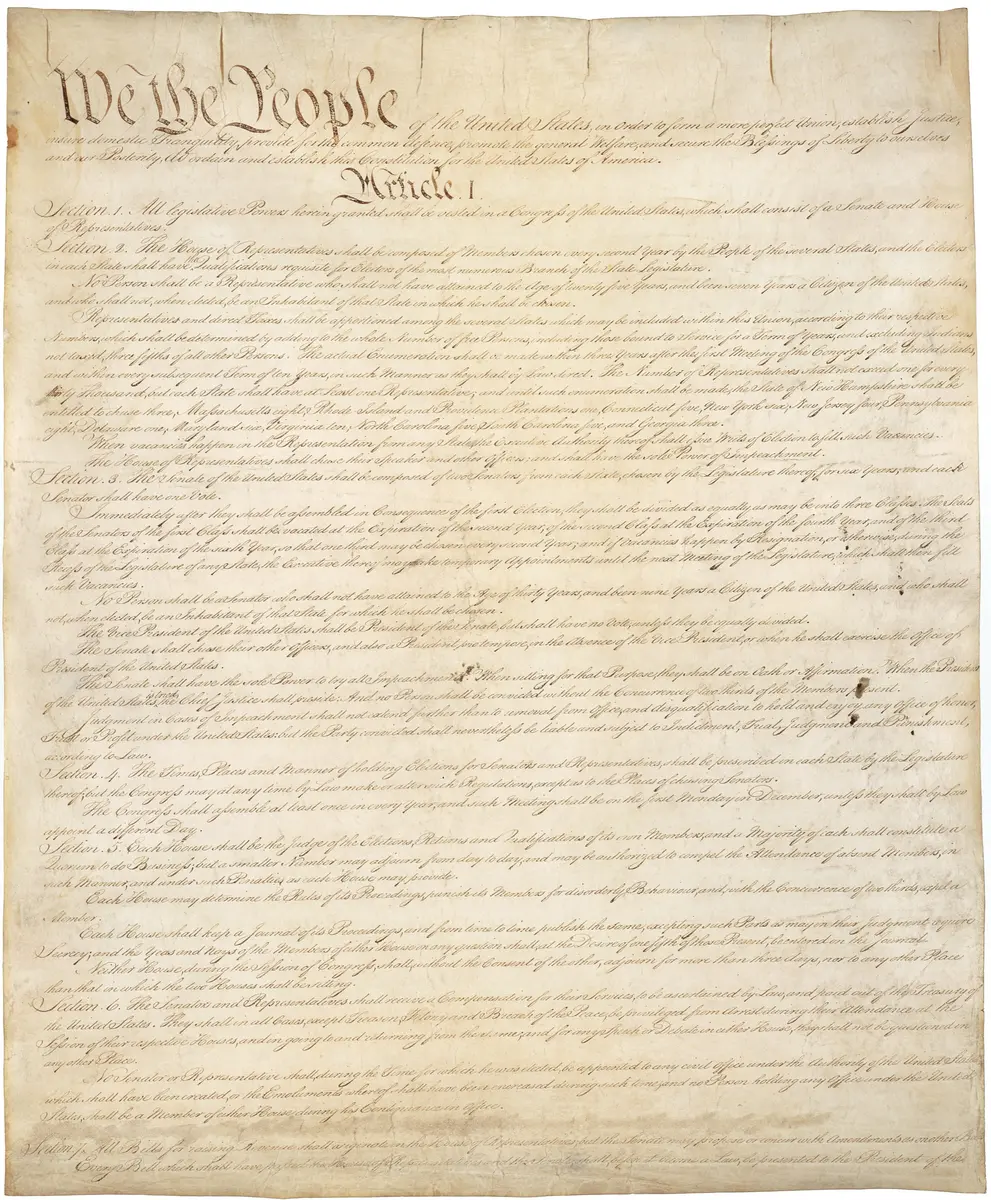
Yorktown broke Britain's will to fight in America: Lord North's government fell, and in March 1782 Parliament resolved against going on with the war. In Paris Franklin, John Adams and John Jay signed preliminary articles on November 30, 1782, and the definitive Treaty of Paris on September 3, 1783: Britain recognised the thirteen states as free, sovereign and independent, with a border on the Mississippi and the right to fish off Newfoundland, and Spain got Florida. Not everyone won. Thousands of loyalists left with the British, 3,800 of them from Charleston alone in December 1782, together with some 5,000 enslaved people; about 5,000 Black soldiers had fought on the American side; and the treaty did not mention the Native nations whose lands lay inside the new borders. France's share of the cost brought its government to the edge of bankruptcy, one cause of its own revolution in 1789, and the Confederation that won the war proved too weak for the peace, which led to the Constitution of 1787. Benjamin West's painting of the American peacemakers was never finished: the British delegates would not sit for it.
What happened
- 1775
- 5:00 a.m.
About 700 British grenadiers and light infantry, marching since 2 a.m. to seize the militia's stores at Concord, find 77 militiamen under Captain John Parker on Lexington Green; Parker orders them to disperse, a shot rings out from no one knows where, and two British volleys and a bayonet charge leave eight Americans dead and ten wounded.
Lexington Battle Green, Massachusetts: where 77 militiamen faced the regulars at dawn on April 19, 1775 and the first eight Americans died - 9:30 a.m.
About 400 militia and minutemen march down on the North Bridge in Concord, held by some 96 regulars; the regulars fire first, killing Captain Isaac Davis and Abner Hosmer of Acton, and at Major John Buttrick's 'Fire, for God's sake fire!' the militia answer: three British soldiers are killed or mortally wounded and nine wounded, and then neither side presses on.
The Old North Bridge, Concord: where the militia first fired back on the morning of April 19, 1775 - 3:00 p.m.
Shot at all the way back from Concord, Colonel Smith's column reaches Lexington and Lord Percy's relief brigade of about 1,000, whose two field guns fire the first artillery of the war; the joint force fights on to Charlestown, which it reaches at nightfall. The day has cost the British 273 men killed, wounded or missing and the Americans 95, and by the next day the militia have Boston under siege.
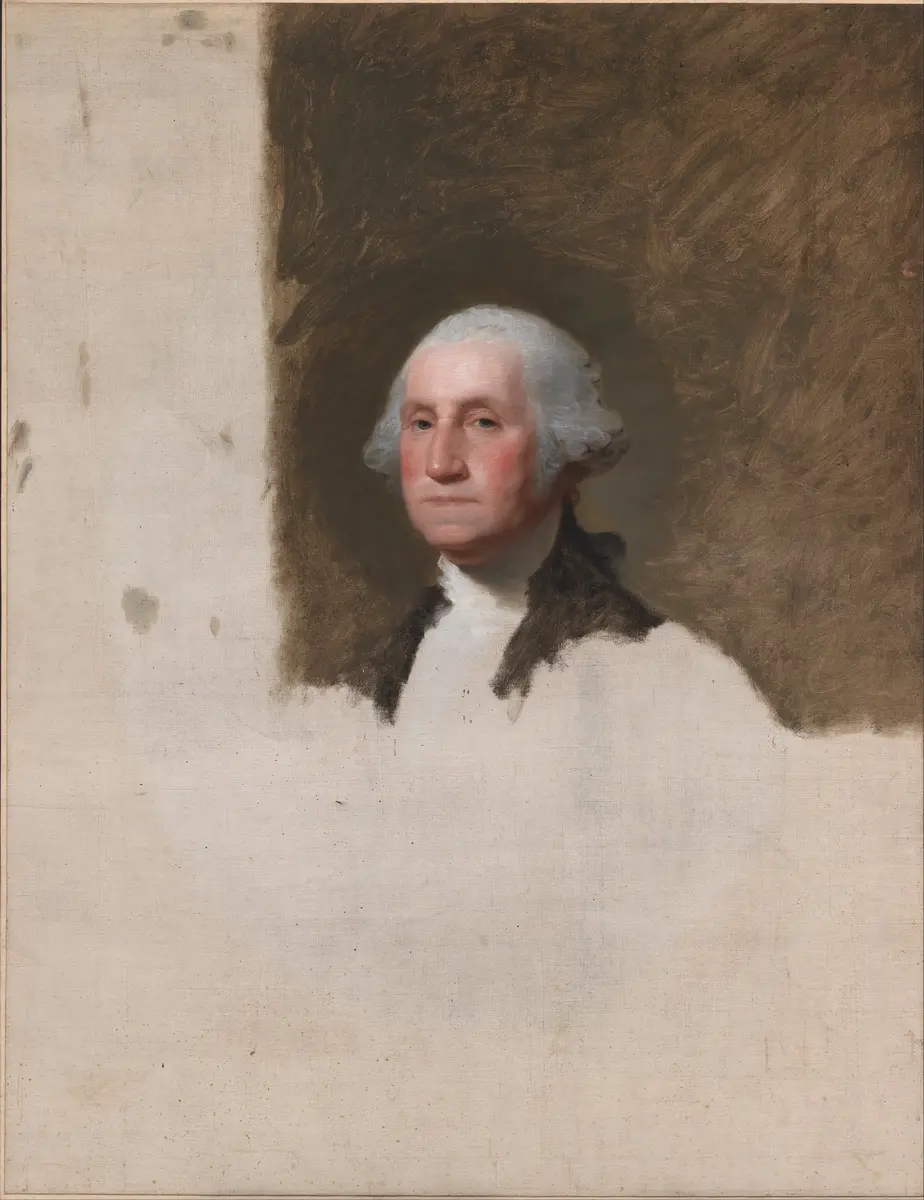
Lexington Battle Green, Massachusetts: where 77 militiamen faced the regulars at dawn on April 19, 1775 and the first eight Americans died A day after creating the Continental Army, the Second Continental Congress in Philadelphia appoints George Washington of Virginia commander in chief; he takes command of the troops besieging Boston at Cambridge on July 3.
- 3:30 p.m.
Around 3:30 p.m. General William Howe sends about 2,400 regulars and marines against the redoubt New England troops dug overnight on Breed's Hill above Charlestown; thrown back once, they carry it with the bayonet when the defenders run short of powder, while Charlestown burns below. The British lose 1,054 killed and wounded, the Americans about 450.
Breed's Hill, Charlestown, now Monument Square: the redoubt stormed in the Battle of Bunker Hill on June 17, 1775 - 1776
With cannon hauled from Fort Ticonderoga, which the Green Mountain Boys had taken on May 10, 1775, now mounted on Dorchester Heights above the town, Howe's army leaves Boston by sea for Halifax.
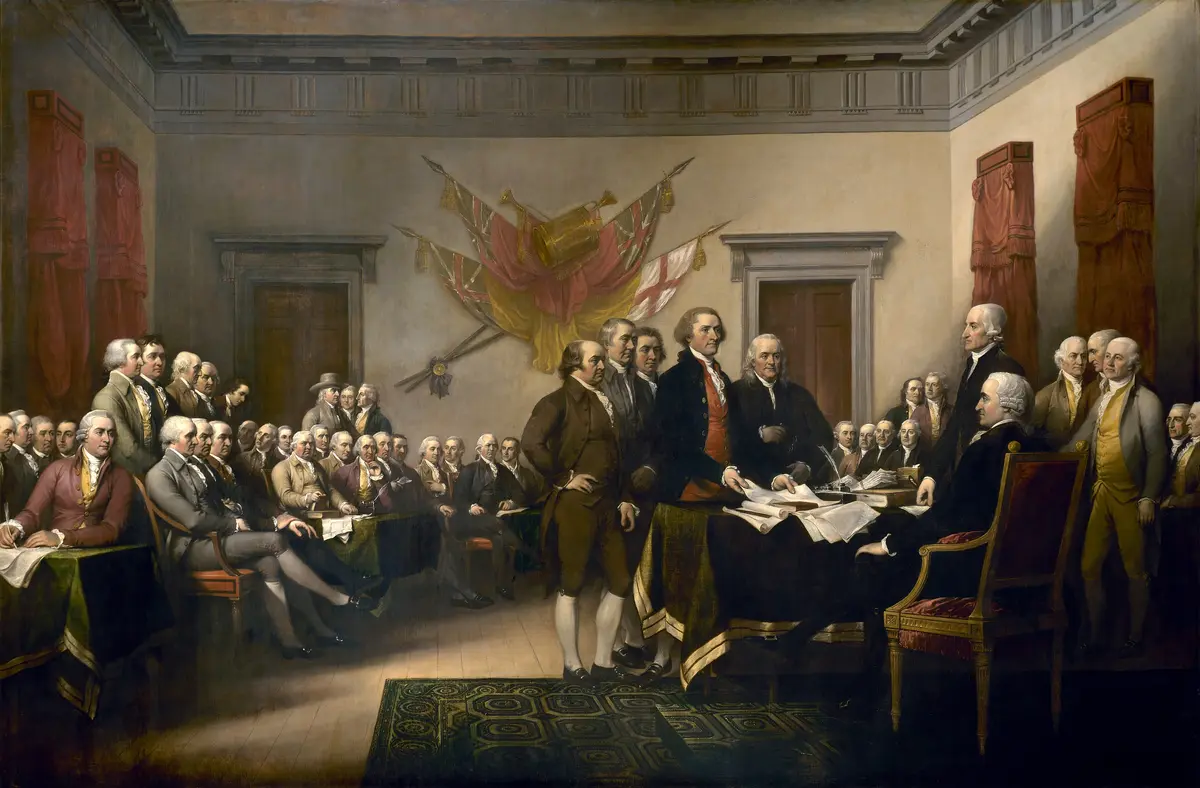
Two days after voting for independence, Congress adopts the Declaration of Independence in Philadelphia: the war is now for a new country, not for the colonists' rights as Britons.
Having landed some 20,000 men on Long Island, Howe outflanks Washington's army in front of its Brooklyn lines and routs it, at a cost of about 1,400 Americans; Washington slips the rest across the East River to Manhattan by night under cover of fog, but loses New York City in September and Fort Washington, with nearly 3,000 prisoners, in November.
- 8:00 a.m.
After crossing the ice-filled Delaware on Christmas night with about 2,400 men, Washington attacks the Hessian garrison of Trenton shortly after 8 a.m. through thick snow; in about an hour Colonel Rall is mortally wounded and some 900 Hessians are taken prisoner. A week later, on January 3, 1777, Washington beats a British brigade at Princeton.
Trenton, New Jersey: Washington's surprise attack on the Hessian garrison on December 26, 1776 - 1777
Howe, who has shipped his army to the head of Chesapeake Bay, beats Washington at Brandywine Creek; on September 26 the British occupy Philadelphia, the American capital, and Congress flees west to York.
Coming south from Canada towards Albany, Burgoyne's army meets Gates's Americans at Freeman's Farm; after four hours of fighting the British hold the field but lose nearly 600 men and cannot go on.
Saratoga battlefield, New York: Freeman's Farm (September 19) and Bemis Heights (October 7, 1777), after which Burgoyne surrendered nearby on October 17Burgoyne's reconnaissance in force is routed at Bemis Heights, and Benedict Arnold rides in with the troops who storm Breymann's redoubt; the British lose over 630 men, the Americans about 150, and Burgoyne falls back towards Saratoga.
Saratoga battlefield, New York: Freeman's Farm (September 19) and Bemis Heights (October 7, 1777), after which Burgoyne surrendered nearby on October 17Surrounded, Burgoyne surrenders at Saratoga under a 'convention' he wrote himself: about 6,300 British and German officers and soldiers and 600 women and children lay down their arms; Congress later refuses to send them home, and they spend years as prisoners.
Saratoga battlefield, New York: Freeman's Farm (September 19) and Bemis Heights (October 7, 1777), after which Burgoyne surrendered nearby on October 17More than 12,000 soldiers and 400 women and children march into winter quarters at Valley Forge, a day from British-held Philadelphia; they build a town of log huts, nearly 2,000 die of disease by June, and Baron von Steuben drills the survivors.
Valley Forge, Pennsylvania: the Continental Army's winter camp from December 19, 1777 to June 19, 1778- 1778
Persuaded by Saratoga, France signs a Treaty of Amity and Commerce and a Treaty of Alliance with Franklin, Deane and Lee in Paris: neither side will make peace with Britain until American independence is assured. Congress ratifies on May 4, and France is soon at war with Britain.
Paris: the alliance with France signed on February 6, 1778, the preliminary peace on November 30, 1782 and the Treaty of Paris on September 3, 1783Nine days after leaving Valley Forge, Washington's retrained army catches Sir Henry Clinton's British, marching from Philadelphia to New York, at Monmouth Court House in New Jersey and holds its ground: the last major battle in the North.
- 1779
Spain, wary of American independence, enters the war against Britain as France's ally; the Dutch Republic follows in 1780.
- 1780
After a siege of six weeks, General Benjamin Lincoln surrenders Charleston to Sir Henry Clinton with about 5,000 men, almost the whole Continental Army in the South, and is refused the honours of war.
Charleston, South Carolina: surrendered with its American garrison on May 12, 1780 and evacuated by the British on December 14, 1782- 1781
At the Cowpens in South Carolina, Daniel Morgan's riflemen, militia and Continentals, drawn up in three lines, destroy Banastre Tarleton's column of British regulars: the turning point of the war in the South.
Nathanael Greene fights Cornwallis at Guilford Courthouse in North Carolina and retreats in good order; Cornwallis holds the field but has lost 28 per cent of his army, and he marches north into Virginia.
Guilford Courthouse, North Carolina: Greene against Cornwallis on March 15, 1781Off the Virginia Capes, Admiral de Grasse's 24 French ships of the line fight Admiral Graves's 19 British; Graves has the worst of it and sails back to New York, leaving Cornwallis cut off at Yorktown.
Off the Virginia Capes: de Grasse's French fleet turns back Graves's British fleet on September 5, 1781About 17,600 American and French soldiers march from Williamsburg to Yorktown, where some 8,300 British are dug in, and begin to dig their siege lines; by October 9 their guns are firing day and night.
At night 400 French soldiers storm Redoubt 9 and 400 Americans Redoubt 10, the last British works in the way of the allies' second siege line, in less than thirty minutes; 9 Americans and 15 French are killed.
Redoubt 10, Yorktown: stormed by American light infantry on the night of October 14, 1781, while the French took Redoubt 9- 10:00 a.m.
At ten in the morning a British drummer beats a parley on the parapet and an officer comes out with a flag of truce; the next afternoon two British officers, John Laurens for the Americans and the Viscount de Noailles for the French settle the terms at the Moore House.
In the afternoon Cornwallis's army, more than 7,000 men, marches out of Yorktown between a mile-long line of American and French soldiers and lays down its arms at Surrender Field; Cornwallis stays away, and his deputy surrenders his sword to General Lincoln. That day a British relief fleet sails from New York, too late.
Surrender Field, Yorktown: where Cornwallis's army laid down its arms on October 19, 1781- 1782
After Yorktown Lord North's government falls, and Parliament resolves that the war in America should not go on.
In Paris, after two months of hard bargaining, John Adams, Benjamin Franklin and John Jay sign preliminary articles of peace : independence, boundaries, fisheries and the withdrawal of British forces, to take effect only once Britain and France have made peace too.
Paris: the alliance with France signed on February 6, 1778, the preliminary peace on November 30, 1782 and the Treaty of Paris on September 3, 1783The British evacuate Charleston, taking with them about 3,800 loyalists and 5,000 enslaved people.
Charleston, South Carolina: surrendered with its American garrison on May 12, 1780 and evacuated by the British on December 14, 1782- 1783
Congress ratifies the preliminary peace, after Britain has signed preliminaries with France and Spain on January 20 and George III has proclaimed an end to hostilities.
In Paris David Hartley for Britain and Adams, Franklin and Jay sign the definitive Treaty of Paris: George III acknowledges the thirteen states to be 'free sovereign and Independent States', with a western border on the Mississippi; France and Spain make their own peace with Britain.
Paris: the alliance with France signed on February 6, 1778, the preliminary peace on November 30, 1782 and the Treaty of Paris on September 3, 1783