American Declaration of Independence
“July 4, 1776: two days after voting for independence, the Continental Congress adopts Jefferson's Declaration, 'all men are created equal', and thirteen colonies become the United States.”
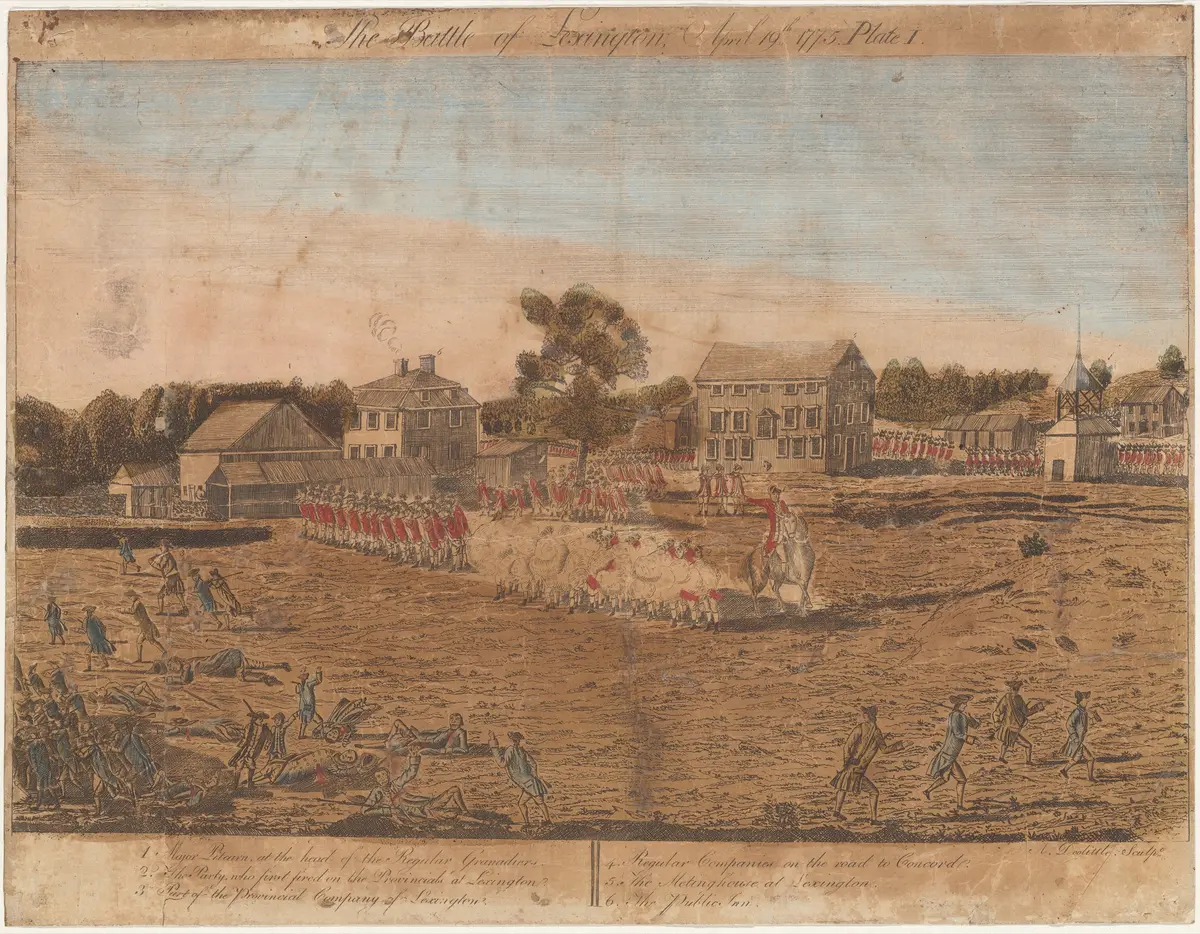
By the summer of 1776 Britain's thirteen American colonies had been fighting the mother country for more than a year, since the shots at Lexington and Concord in April 1775, and yet most of their leaders still called themselves the King's loyal subjects. George III answered their last petition by declaring them in open rebellion, Parliament cut off their trade and treated their ships as enemy prizes, and in January 1776 Thomas Paine's pamphlet Common Sense, sold by the thousands, argued plainly for independence and against kings altogether. One colony after another told its delegates to vote for a break, and on June 7, in the Pennsylvania State House in Philadelphia, Richard Henry Lee of Virginia moved in the Continental Congress that 'these United Colonies are, and of right ought to be, free and independent States'.
Several delegations had no instructions yet, so Congress put the decision off to July 1 and on June 11 chose five men to draft a statement of the reasons: John Adams, Benjamin Franklin, Thomas Jefferson, Robert R. Livingston and Roger Sherman. They left the writing to Jefferson, who spent about two weeks on it in the rented second floor of a brick mason's house at Seventh and Market Streets, drawing on Virginia's new Declaration of Rights and on his own draft constitution for Virginia; Adams, Franklin and the committee made 47 changes, three new paragraphs among them, and the draft went to Congress on June 28. On July 2 twelve colonies, with New York abstaining, voted for Lee's resolution. That was the decision for independence itself, and Adams wrote to his wife that the second of July would be celebrated by every generation to come. Congress spent the rest of that day and the next two going through Jefferson's text, made 39 more changes, cut among other things his long charge that the King had forced the slave trade on America, and adopted the Declaration on July 4.
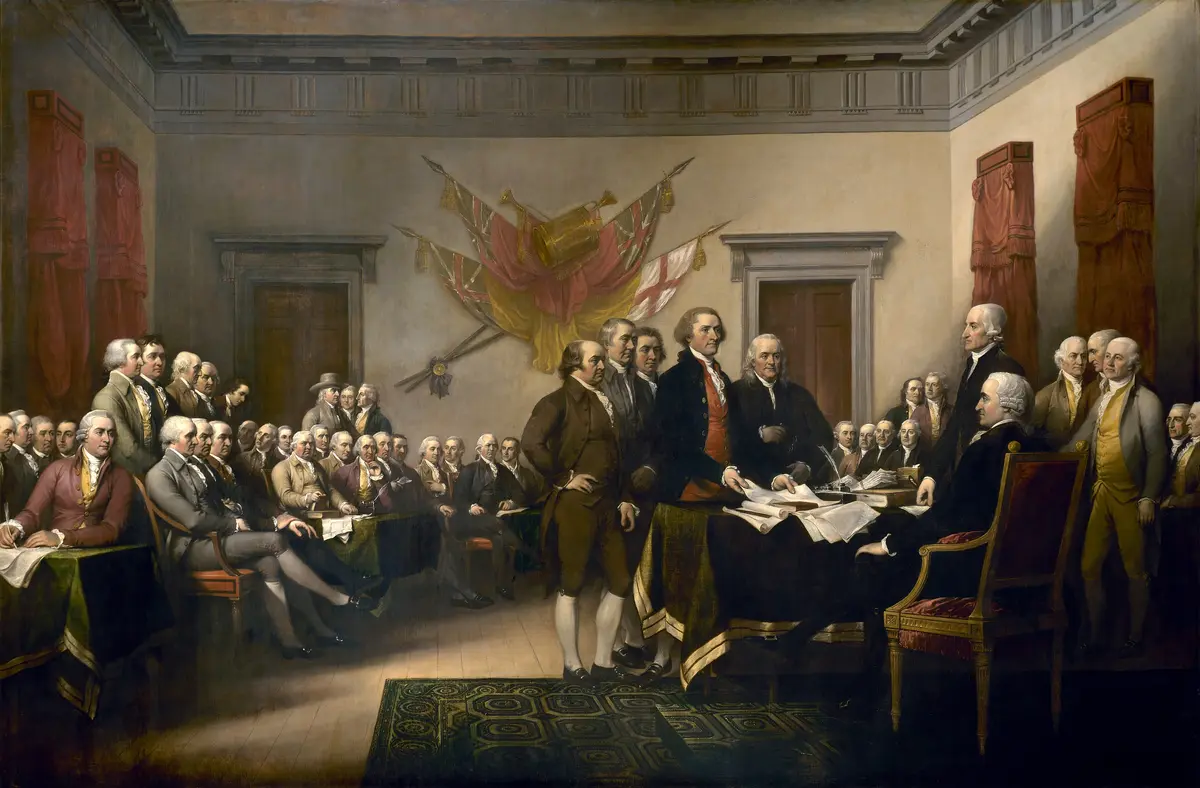
That night John Dunlap, the printer to Congress, set it as a broadside signed in print only by John Hancock, the president of Congress, and Charles Thomson, its secretary. Copies rode out to the states and the army the next morning: it was printed in a Philadelphia newspaper on July 6, read to a crowd behind the State House on July 8 and to Washington's troops in New York on July 9, after which New Yorkers pulled down the statue of George III on the Bowling Green. Once New York's convention had approved, Congress ordered on July 19 a fair copy on parchment titled 'The unanimous Declaration of the thirteen united States of America', and on August 2 the members began to sign it, Hancock first and largest in the middle; 56 signed in the end, some of them months later. The parchment in the National Archives was signed then, not on July 4.
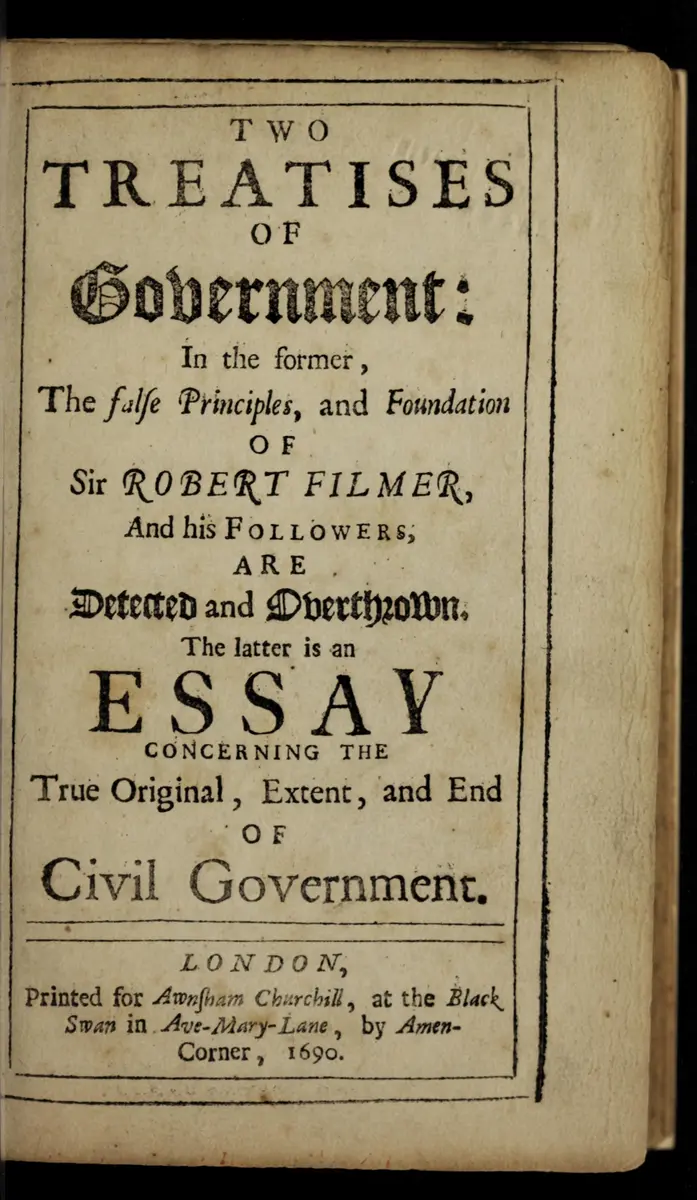
The Declaration had several jobs: to announce the break, to justify it to the world, and to make the United States a country that foreign powers could deal with, which brought the French alliance of 1778 and, with the peace of 1783, Britain's own recognition. To the men who voted for it, its heart was the long list of charges against George III, meant to show that the King, not the colonists, had broken the bond. The short preamble before the list is what lasted: that all men are created equal, that they have unalienable rights to life, liberty and the pursuit of happiness, that governments get their just powers from the consent of the governed, and that a people may alter or abolish a government that destroys those rights. The ideas were John Locke's and, as the National Archives puts it, already self-evident to most Englishmen of the time; Jefferson put them in a few lines that anyone could quote.
And they were quoted, often against the men who wrote them. Jefferson drafted 'all men are created equal' with a fourteen-year-old enslaved valet, Robert Hemings, waiting on him in Philadelphia, and slavery stayed legal in the United States for almost ninety more years; the women's rights convention at Seneca Falls rewrote the sentence in 1848 as 'all men and women are created equal', and Lincoln at Gettysburg dated the nation from 1776, 'four score and seven years ago', and called it dedicated to that proposition. In France the Declaration of the Rights of Man of 1789 was written with the American one in mind. July 4 became the national holiday, Jefferson and Adams both died on its fiftieth anniversary in 1826, and the faded parchment has been on show in the National Archives since 1952, though most people know it from William Stone's engraved copy of 1823.
What happened
- 1776
Acting on the Virginia Convention's instructions of May 15, Richard Henry Lee moves in Congress that 'these United Colonies are, and of right ought to be, free and independent States', that they form foreign alliances and a confederation; John Adams seconds.
Independence Hall, then the Pennsylvania State House: the Continental Congress met in its Assembly Room, heard Lee's resolution on June 7, voted independence on July 2, adopted the Declaration on July 4 and signed it from August 2, 1776After two days of debate in which Dickinson, Wilson and Rutledge argue that the time is not yet right, Congress postpones the vote to July 1 and names a committee to draft a declaration: Adams, Franklin, Jefferson, Livingston and Sherman.
Independence Hall, then the Pennsylvania State House: the Continental Congress met in its Assembly Room, heard Lee's resolution on June 7, voted independence on July 2, adopted the Declaration on July 4 and signed it from August 2, 1776The committee leaves the writing to Jefferson, who drafts it over about two weeks on the second floor of Jacob Graff's house at Seventh and Market, then on the edge of town, waited on by his enslaved valet Robert Hemings; Adams and Franklin add their corrections.
The Declaration House at Seventh and Market Streets: the site of Jacob Graff's house, where Jefferson rented the second floor and drafted the Declaration in June 1776The committee's draft is read in Congress and ordered to lie on the table while the vote on independence is still to come.
Independence Hall, then the Pennsylvania State House: the Continental Congress met in its Assembly Room, heard Lee's resolution on June 7, voted independence on July 2, adopted the Declaration on July 4 and signed it from August 2, 1776Sitting as a committee of the whole, Congress debates Lee's resolution all day: nine colonies vote for it, Pennsylvania and South Carolina against, Delaware's two members split and New York's delegates, still bound by year-old instructions, stand aside; Edward Rutledge asks for the final vote to wait a day.
Independence Hall, then the Pennsylvania State House: the Continental Congress met in its Assembly Room, heard Lee's resolution on June 7, voted independence on July 2, adopted the Declaration on July 4 and signed it from August 2, 1776Independence is voted: South Carolina comes over, a third Delaware member rides in to break his colony's tie and Pennsylvania's vote turns, so twelve colonies say yes and New York abstains. The next day Adams writes to Abigail that the second of July will be celebrated for ever.
Independence Hall, then the Pennsylvania State House: the Continental Congress met in its Assembly Room, heard Lee's resolution on June 7, voted independence on July 2, adopted the Declaration on July 4 and signed it from August 2, 1776After two and a half days of editing, 39 changes in all, among them the deletion of Jefferson's charge that the King had forced the slave trade on America, Congress adopts the Declaration; that night John Dunlap prints it, and next morning Hancock starts sending copies to the states and the army.
Independence Hall, then the Pennsylvania State House: the Continental Congress met in its Assembly Room, heard Lee's resolution on June 7, voted independence on July 2, adopted the Declaration on July 4 and signed it from August 2, 1776Benjamin Towne's Pennsylvania Evening Post prints the Declaration, the first newspaper to do so; printers in the other states soon follow with their own versions.
First public reading: Colonel John Nixon reads the Declaration to a crowd of patriots and loyalists in the yard behind the State House.
Independence Hall, then the Pennsylvania State House: the Continental Congress met in its Assembly Room, heard Lee's resolution on June 7, voted independence on July 2, adopted the Declaration on July 4 and signed it from August 2, 1776In New York, where the British fleet and army had arrived on July 2, Washington has his copy read to the army; that night a crowd pulls down the statue of George III at the foot of Broadway on the Bowling Green. The same day New York's convention approves independence, so all thirteen states are now behind it.
Bowling Green, New York: the Declaration was read to Washington's army in the city on July 9, 1776, and that night the statue of George III that stood here was pulled downCongress orders the Declaration 'fairly engrossed on parchment' under a new title, 'The unanimous Declaration of the thirteen united States of America', to be signed by every member.
Independence Hall, then the Pennsylvania State House: the Continental Congress met in its Assembly Room, heard Lee's resolution on June 7, voted independence on July 2, adopted the Declaration on July 4 and signed it from August 2, 1776The engrossed parchment, probably written out by Timothy Matlack, is compared with the adopted text and signed, Hancock first and largest; others sign later, 56 in all, and Dickinson and Livingston never do.
Independence Hall, then the Pennsylvania State House: the Continental Congress met in its Assembly Room, heard Lee's resolution on June 7, voted independence on July 2, adopted the Declaration on July 4 and signed it from August 2, 1776