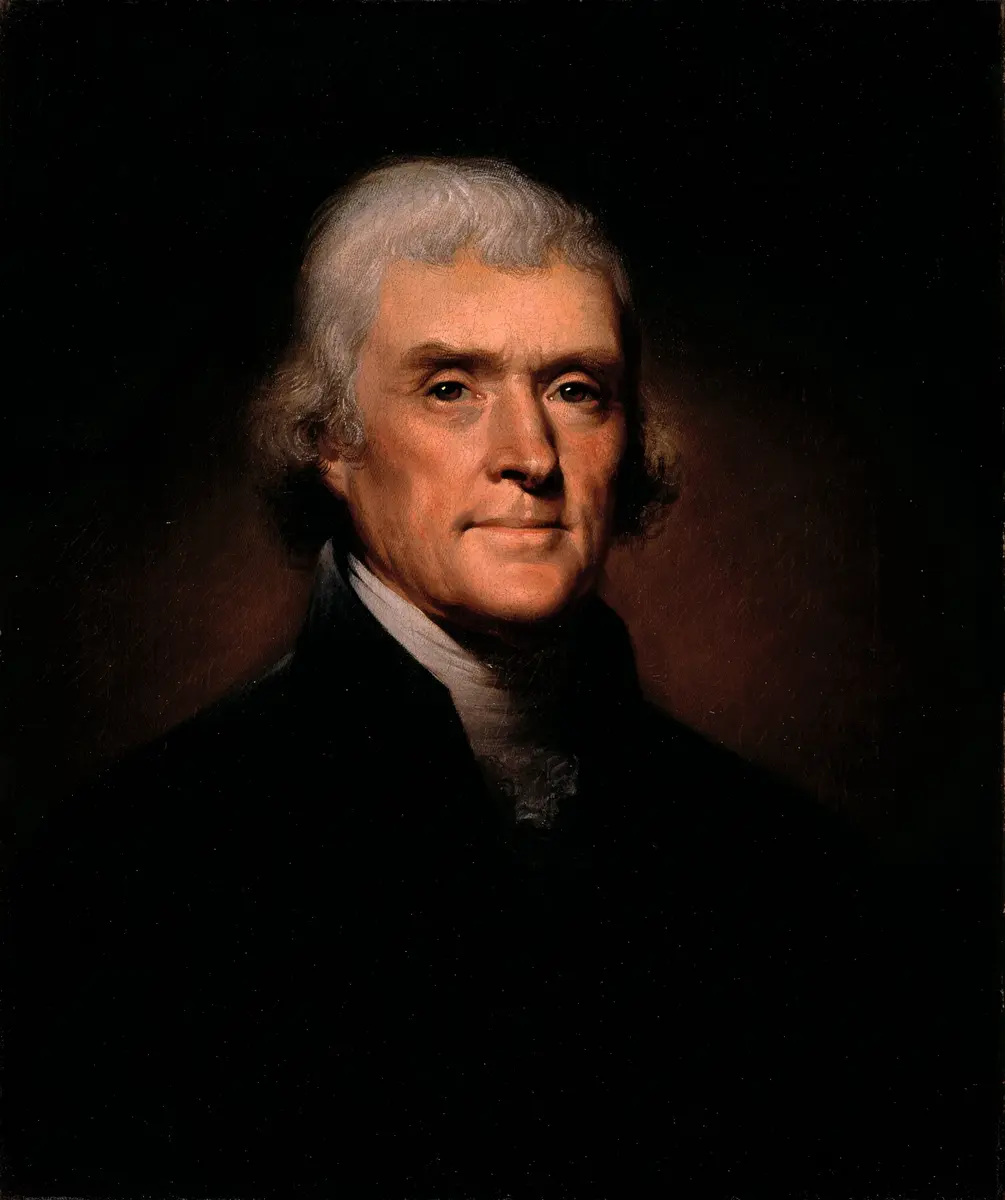
Thomas Jefferson
“The Virginian who wrote the Declaration of Independence and, as third president, doubled the country with the Louisiana Purchase, while enslaving more than 600 people over his life.”
Thomas Jefferson was born on April 13, 1743 (April 2 by the calendar Virginia then used) at Shadwell, his father's plantation on the Rivanna River in the Virginia Piedmont. Peter Jefferson, a surveyor and planter who drew the great map of the colony with Joshua Fry, died when his son was fourteen, leaving him land and enslaved people. The boy studied at the College of William & Mary in Williamsburg from 1760, read law with George Wythe and became one of the best-read lawyers in Virginia. In 1768 he had the top of a mountain cleared near Shadwell for a house he called Monticello, which he designed himself and kept rebuilding for the rest of his life, and he was elected to the House of Burgesses. On January 1, 1772 he married a young widow, Martha Wayles Skelton; of their six children only two daughters grew up, and Martha died in 1782.
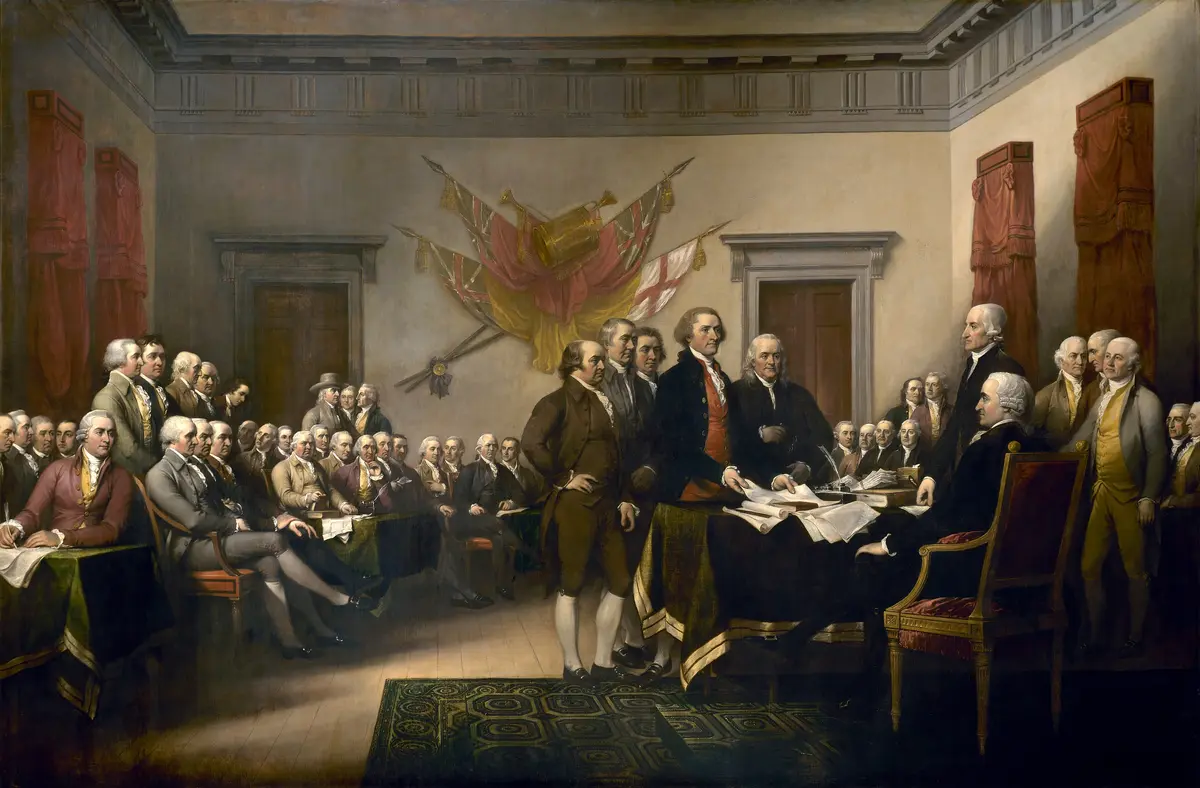
Shy, and a poor speaker, Jefferson was a brilliant writer. His Summary View of the Rights of British America (1774) told the King that Parliament had no power over the colonies, and in June 1776 the Continental Congress gave him, at thirty-three, the draft of the Declaration of Independence, which it adopted on July 4 after cutting his attack on the slave trade. Back in Virginia he rewrote the state's laws; his bill for religious freedom, steered through the Assembly by his friend James Madison, became law in January 1786 and separated church and state in Virginia. As governor in 1779–81 he had to flee Monticello just ahead of a British raiding party, a humiliation his enemies never let him forget. From 1784 he was in Paris, Benjamin Franklin's successor as American minister, and watched the first events of the French Revolution.
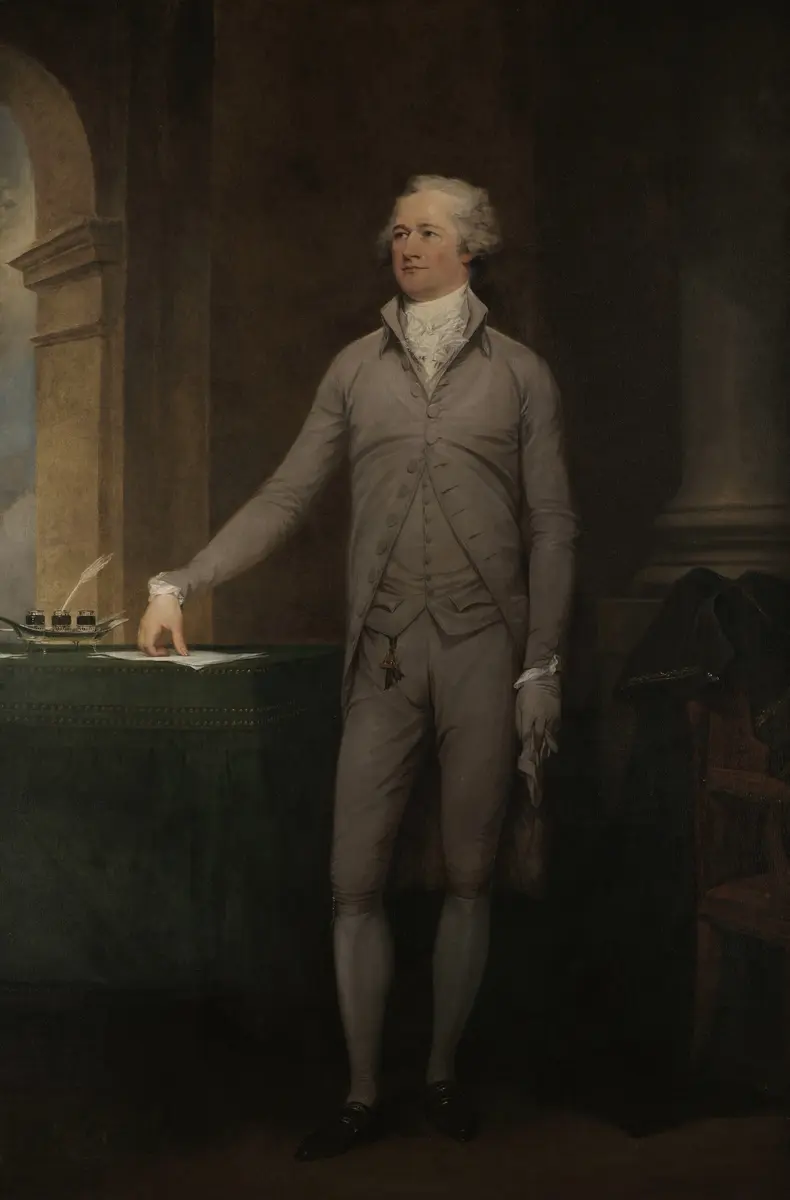
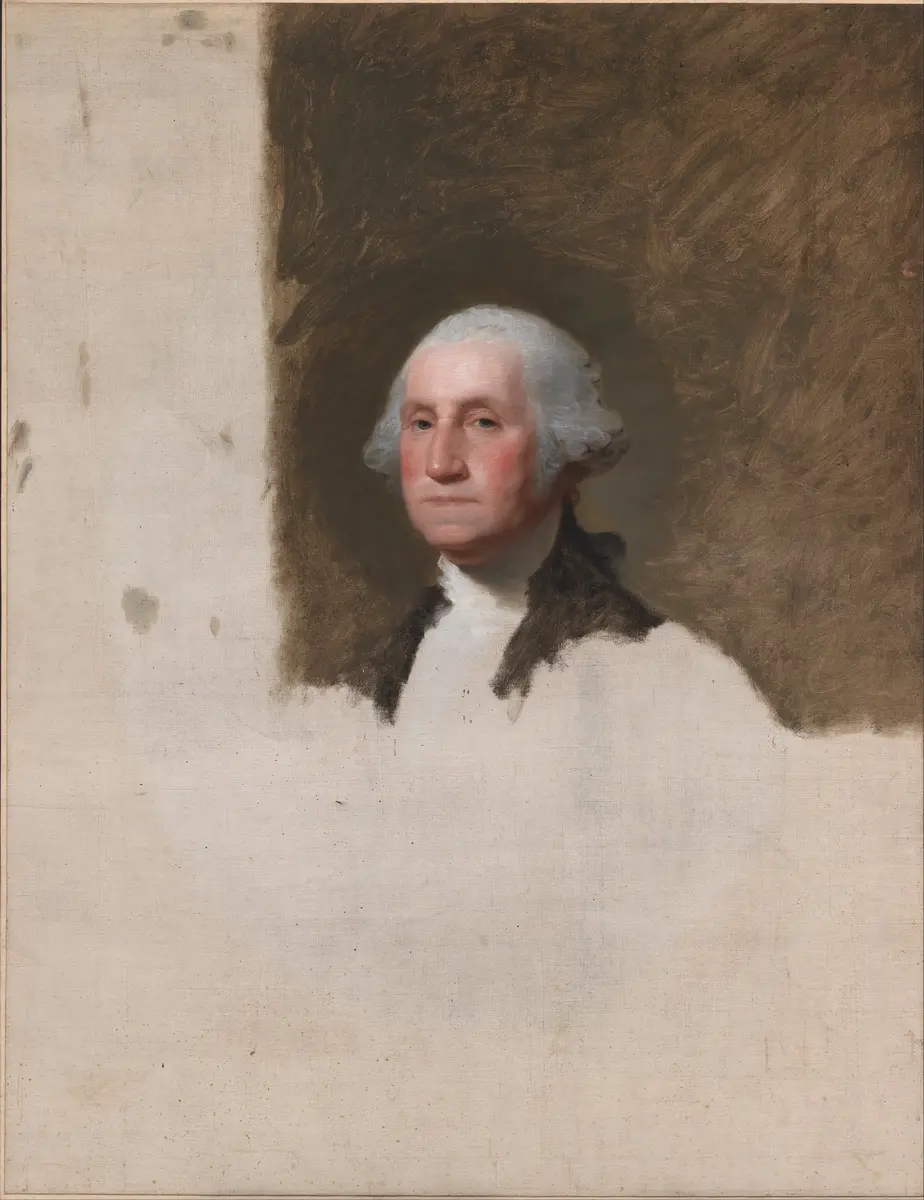
Washington made him the first Secretary of State in 1790. His quarrels with Alexander Hamilton over debt, a national bank and Britain helped split the country into its first two parties, and Jefferson led the Republican opposition. He lost the presidency to John Adams in 1796 by three electoral votes and became vice-president, then tied with his own running mate, Aaron Burr, in 1800 until the House of Representatives chose him on February 17, 1801. As the third president he cut taxes, the army and the national debt. In 1803 he bought Louisiana from Napoleon for $15 million, doubling the country although the Constitution said nothing about buying land, and sent Meriwether Lewis and William Clark across it to the Pacific. His second term foundered on the embargo of December 1807, which stopped American trade to keep the country out of the war between Britain and France and wrecked the economy instead.
The man who wrote that all men are created equal enslaved more than 600 people in his lifetime, some 200 in a typical year, on whose labour Monticello's fields, workshops and house ran; he sold more than 110 of them, mostly for money. He called slavery a moral evil, yet in his only book, Notes on the State of Virginia, he also argued that Black people were inferior. Years after his wife's death he fathered at least six children with Sally Hemings, an enslaved woman who was his wife's half-sister and had been with him in Paris from the age of fourteen. Monticello's historians, after the DNA study of 1998 and their own review of the records, say so plainly. He freed the four children who lived, the only enslaved family he ever set free; Sally Hemings herself he never freed.
He retired to Monticello in 1809, sold his library of 6,487 volumes to Congress after the British burned the Capitol, and gave his last years to the University of Virginia, whose buildings, books, teachers and lessons he chose himself. Debts of more than $100,000 shadowed the end. He died at Monticello at about half past noon on July 4, 1826, fifty years to the day after the Declaration, and John Adams died that afternoon. He wrote his own epitaph and left out the presidency: author of the Declaration of American Independence, of the Statute of Virginia for religious freedom, and father of the University of Virginia. The next year Monticello and most of the people enslaved there were auctioned to pay what he owed.
What happened
- 1743
Born at Shadwell, his father Peter Jefferson's plantation on the Rivanna River in Albemarle County, Virginia; it was April 2 by the Old Style calendar Virginia then used.
Shadwell, Albemarle County, Virginia: his father's plantation on the Rivanna, where he was born on April 13, 1743- 1760
Enters the College of William & Mary in Williamsburg, where the Scottish professor William Small opens the Enlightenment to him; from 1762 he reads law with George Wythe.
- 1768
Has the top of the mountain above Shadwell cleared for the house he will call Monticello, and stands for the House of Burgesses, where he sits from 1769 until it is dissolved in 1774.
Monticello, near Charlottesville, Virginia: the house he designed and rebuilt from 1768, his home for most of his life, where he died on July 4, 1826 and is buried - 1770
The house at Shadwell burns with, as he writes, 'every paper I had in the world, and almost every book'; he never lives there again.
Shadwell, Albemarle County, Virginia: his father's plantation on the Rivanna, where he was born on April 13, 1743- 1772
Marries Martha Wayles Skelton, a young widow; they begin their married life in a one-room brick building on the unfinished mountaintop.
Monticello, near Charlottesville, Virginia: the house he designed and rebuilt from 1768, his home for most of his life, where he died on July 4, 1826 and is buried- 1774
His Summary View of the Rights of British America, written as instructions for Virginia's delegates and printed without his permission, tells the King that Parliament has no authority over the colonies. The same year his father-in-law's estate brings him about 135 more enslaved people, and debts.
- 1776
Named to the committee of five, he drafts the Declaration of Independence over the next two weeks in rooms he rents on the edge of Philadelphia, waited on by his fourteen-year-old enslaved valet, Robert Hemings.
The Declaration House, Seventh and Market Streets, Philadelphia: where he drafted the Declaration of Independence in June 1776Congress adopts the Declaration in the afternoon, after cutting, among other things, his charge that the King had forced the slave trade on America.
- 1779
Elected governor of Virginia; the revised laws he drafted go to the Assembly, among them Bill No. 82, 'for establishing religious freedom', dated June 18.
- 1781
As British troops overrun Virginia he flees Monticello just ahead of a British raiding party; an inquiry into his conduct as governor follows, and the charge of cowardice follows him for life.
Monticello, near Charlottesville, Virginia: the house he designed and rebuilt from 1768, his home for most of his life, where he died on July 4, 1826 and is buried - 1782
His wife Martha dies at Monticello, four months after the birth of their sixth child; only two of their daughters live to grow up.
Monticello, near Charlottesville, Virginia: the house he designed and rebuilt from 1768, his home for most of his life, where he died on July 4, 1826 and is buried- 1785
In Paris since 1784, he presents his credentials as minister to France, succeeding Benjamin Franklin; that year he also designs Virginia's new Capitol for Richmond.
- 1786
With Madison steering it, the Virginia Senate passes his Statute for Religious Freedom; it is signed into law three days later.
- 1787
Sally Hemings, fourteen, enslaved, and his late wife's half-sister, arrives in Paris with his daughter Mary; in France, where she could have claimed her freedom, she later bargains to return to Monticello for privileges and freedom for her future children.
- 1789
Leaves his post in Paris; Sally Hemings, who has lived there with him and his two daughters since 1787, goes home with them to Virginia.
- 1790
Takes office as the first Secretary of State under Washington; his quarrels with Alexander Hamilton over the debt, the national bank and Britain lead him to resign on December 31, 1793.
- 1796
Insures his buildings at Monticello; his plat shows the workshops and the houses of enslaved workers along Mulberry Row, where that year Isaac Granger is the most efficient worker in the nailery.
Monticello, near Charlottesville, Virginia: the house he designed and rebuilt from 1768, his home for most of his life, where he died on July 4, 1826 and is buried - 1797
Having lost the presidency to John Adams by 71 electoral votes to 68, he becomes vice-president, and the informal leader of the Republican opposition.
- 1801
After he and his running mate Aaron Burr tie at 73 electoral votes, the House of Representatives, deadlocked through 35 ballots, finally chooses Jefferson.
Gives his inaugural address in the unfinished Capitol of the new capital city: 'We are all Republicans, we are all Federalists'; it is the first transfer of power from one party to another.
- 1802
In a Richmond newspaper the journalist James Callender, once his ally, writes that he has 'several children' by an enslaved woman named Sally; Jefferson never answers in public.
- 1803
In Paris, Livingston and Monroe sign the treaty by which France sells Louisiana, 828,000 square miles, for $15 million, doubling the size of the United States.
- 1804
The expedition he has sent under Meriwether Lewis and William Clark sets off up the Missouri from its winter camp near St. Louis.
- 1805
Clark writes in his field journal that they are 'in view of the opening of the Ocian, which Creates great joy'; the party returns to St. Louis on September 23, 1806.
- 1807
Congress passes his Embargo Act, closing American ports to foreign trade to force Britain and France to respect American ships; exports collapse and the merchant towns of the Northeast are hit hardest.
- 1809
Hands the presidency to James Madison and retires to Monticello for the last seventeen years of his life.
Monticello, near Charlottesville, Virginia: the house he designed and rebuilt from 1768, his home for most of his life, where he died on July 4, 1826 and is buried- 1822
Beverly and Harriet Hemings, two of Sally Hemings's children, are allowed to leave Monticello; their brothers Madison and Eston will be freed in his will.
Monticello, near Charlottesville, Virginia: the house he designed and rebuilt from 1768, his home for most of his life, where he died on July 4, 1826 and is buried - 1825
The University of Virginia, chartered in 1819 with Jefferson as its first rector, opens with eight professors; he laid out its 'academical village', designed its buildings around a Rotunda modelled on the Pantheon in Rome, and chose its books, curriculum and teachers.
The Rotunda, University of Virginia, Charlottesville: the centre of the university he founded, designed and saw open in 1825 - 1826
Too ill to travel, he declines the invitation to Washington's fiftieth anniversary of independence in his last letter: 'All eyes are opened, or opening, to the rights of man.'
Monticello, near Charlottesville, Virginia: the house he designed and rebuilt from 1768, his home for most of his life, where he died on July 4, 1826 and is buriedDies at Monticello at about half past noon, fifty years to the day after the Declaration; John Adams dies in Massachusetts later that afternoon.
Monticello, near Charlottesville, Virginia: the house he designed and rebuilt from 1768, his home for most of his life, where he died on July 4, 1826 and is buried