The Bhagavad Gita
“Krishna's answer to Arjuna on the battlefield of Kurukshetra: do your duty without clinging to the fruits, and trust in God; eighteen chapters inside the Mahabharata, the best-known book of Hinduism.”
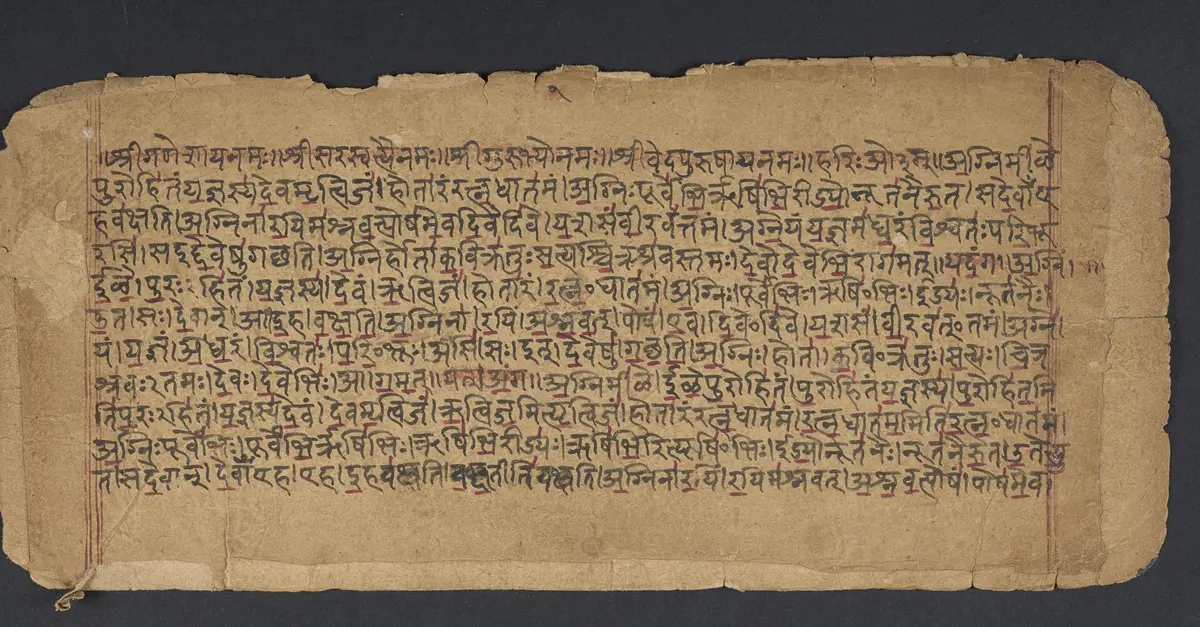
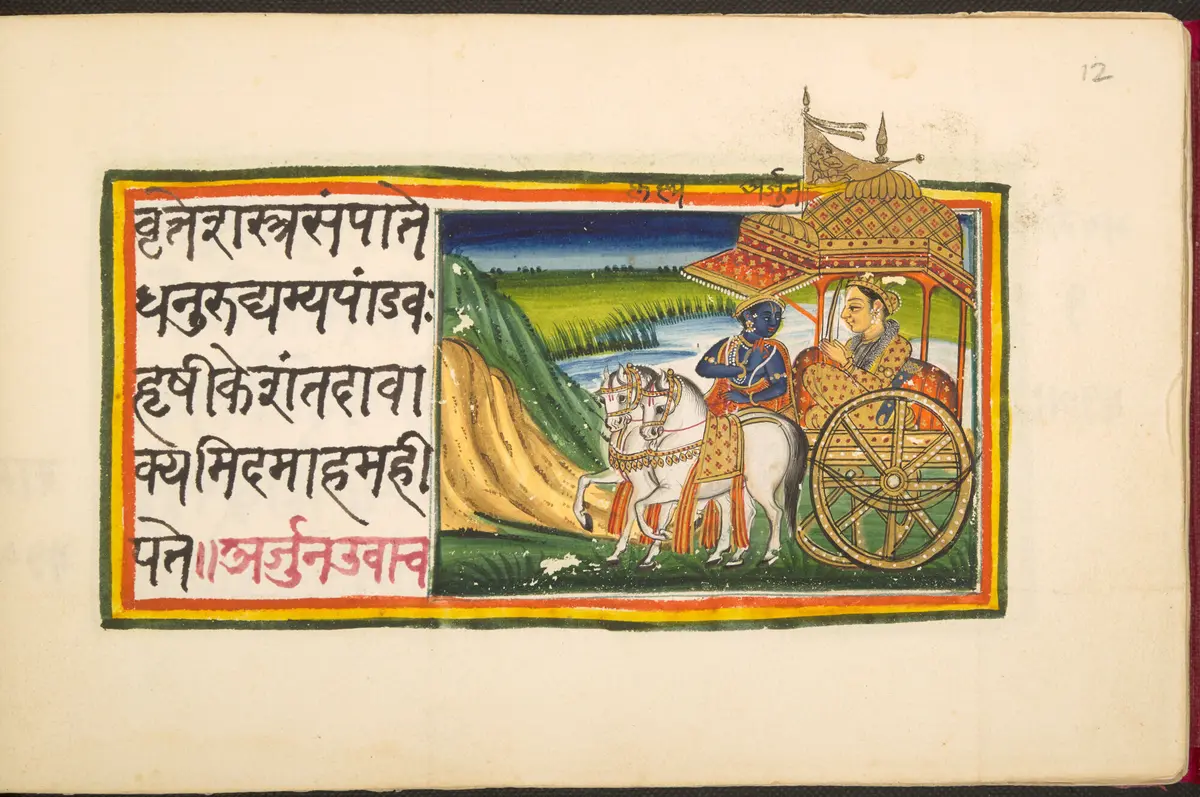
The Bhagavad Gita, 'the song of the Lord', is a poem of eighteen chapters and about 700 Sanskrit verses set inside the Mahabharata, the enormous epic of the war between two branches of one royal family, the Pandavas and the Kauravas. It fills chapters 23 to 40 of the sixth book, the Bhishma Parva, and takes the form of a conversation. On the field of Kurukshetra, north of today's Delhi, the two armies stand ready. The Pandava hero Arjuna asks his charioteer Krishna, a cousin who is also the god Vishnu in human form, to drive between the lines. There he sees teachers, uncles and friends on the other side, drops his bow and says he will not fight. The blind king Dhritarashtra, father of the Kauravas, hears all of it from his minister Sanjaya, who reports the scene from the palace at Hastinapura.
Krishna's answer fills the rest of the poem. The self, he says, is never born and never dies; weapons cannot cut it, so grief for the body is misplaced. A warrior's own duty, his dharma, is to fight, and it is better to do one's own duty badly than another's well. The way out of Arjuna's trap is to act without clinging to the results: a person has a right to the work, never to its fruits. This is karma yoga, the discipline of action, which Krishna sets beside the discipline of knowledge taught in the Upanishads and above both places bhakti, loving devotion to God. He tells Arjuna that whenever right order decays he is born into the world, age after age, to restore it. In the eleventh chapter Arjuna asks to see Krishna as he really is and is shown the universal form, Vishvarupa, blazing like a thousand suns, with all the warriors of both armies rushing into its mouths; Krishna names himself Time, the destroyer of worlds, and tells Arjuna that the enemy is already slain. Arjuna, terrified, begs him to take back his gentle human shape, and in the last chapter promises to act as he has been told.
No one knows who wrote the Gita or exactly when. The Mahabharata grew between about 400 BCE and 400 CE, and the Gita is one of its later layers. Britannica's Wendy Doniger places it in the first or second century CE; other scholars put it in the second century BCE, so this entry runs from 200 BCE to 200 CE and is marked approximate. Its world is the rise of the worship of Vasudeva-Krishna as the highest god. Around 113 BCE a Greek envoy, Heliodorus from Taxila, set up a pillar to 'Vasudeva, god of gods' at Besnagar in central India and called himself a Bhagavata, a devotee; early in the first century CE an inscription at Mathura, Krishna's city in the legends, records a shrine to the five Vrishni heroes, Vasudeva among them. Hindus class the Gita as smriti, 'what is remembered', not as revealed Veda, yet it became the one Hindu text that nearly everyone knows.
Its later life is a history of readers. The philosopher Shankara (about 700 to 750) wrote the oldest surviving commentary, reading the poem as a teaching of non-dual knowledge; Ramanuja in the eleventh or twelfth century read it as a gospel of devotion to a personal God, and Madhva followed with his own. The Mughal emperor Akbar had the whole Mahabharata turned into Persian as the Razmnama, the 'Book of War', and his nobles had illustrated copies made. In 1785 Charles Wilkins, a merchant of the East India Company who had learnt Sanskrit at Benares, published the first direct English translation in London, with a letter of recommendation from the governor-general Warren Hastings, dated Benares, 4 October 1784, and the Company's authority on the title page. Through Wilkins the Gita reached Europe and America: Emerson read it in 1845 and Thoreau took it to Walden Pond and wrote of bathing his intellect each morning in its 'stupendous and cosmogonal philosophy'.
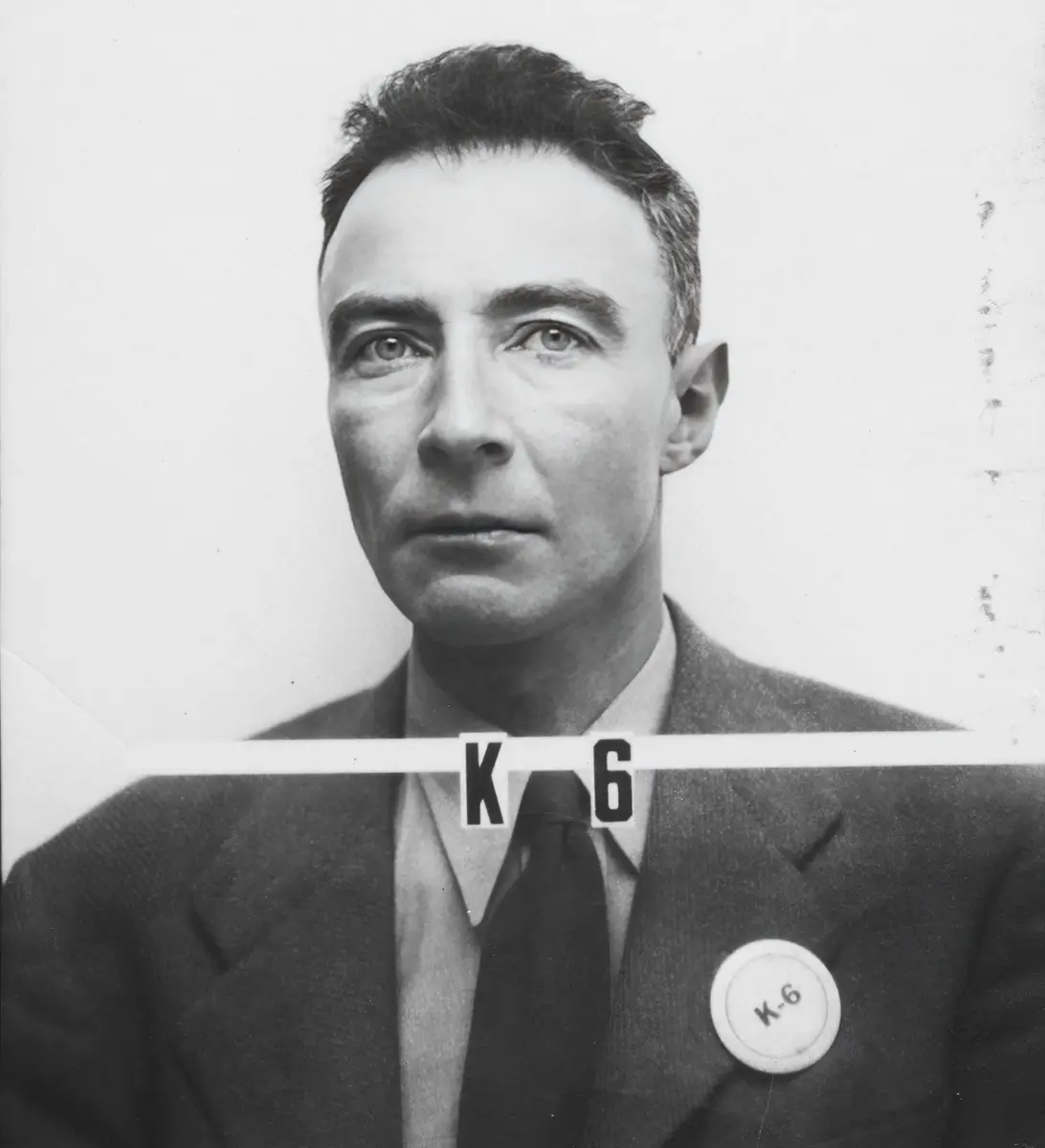
Gandhi first met the Gita in London in 1888 or 1889, in Edwin Arnold's English verse, when two Theosophist friends asked him to read the Sanskrit with them; it became his daily reading, the book he called his mother, and in 1930 he published his own Gujarati translation, Anasaktiyoga, 'the yoga of non-attachment', and wrote a letter on each chapter from Yeravda prison. J. Robert Oppenheimer learnt Sanskrit at Berkeley from Arthur Ryder in the 1930s, and in a 1965 NBC documentary recalled that the first atomic explosion at Trinity in 1945 had brought the eleventh chapter to his mind: 'Now I am become Death, the destroyer of worlds.' Printed by the million in Gorakhpur, sworn on in Indian courts, carved at Angkor and chanted at Kurukshetra, the Gita remains the shortest way into Hindu thought, and the question it begins with, what a decent person should do when every choice costs something, has not aged.
What happened
- 200 BCE
Around 200 BCE, the earliest date most scholars allow for the Gita, the Mahabharata is already a vast and growing poem of the Kuru war, and Vasudeva-Krishna, deified since at least the fifth century BCE, is worshipped by the Bhagavatas as the highest god. The Gita will be composed somewhere in the next four centuries.
- 113 BCE
About 113 BCE, Heliodorus of Taxila, envoy of the Greek king Antialcidas to King Bhagabhadra, raises a Garuda pillar to 'Vasudeva, god of gods' at Besnagar in central India and calls himself a Bhagavata, a devotee. It is the oldest dated monument of the religion the Gita teaches, and its donor is a Greek.
Besnagar (Vidisha), Madhya Pradesh: the Heliodorus pillar, raised about 113 BCE by a Greek envoy to 'Vasudeva, god of gods', the oldest dated monument of Krishna worship - 15
In the early decades of the first century CE, under the great satrap Sodasa, a stone shrine with images of the five Vrishni heroes, Vasudeva among them, is recorded by an inscription at Mora near Mathura, Krishna's city in the legends: his worship now has temples.
Mathura, Uttar Pradesh: Krishna's birthplace in the legends; the Mora well inscription of the early first century CE and the shrine of the five Vrishni heroes - 100
Around 100 CE (Britannica: perhaps the first or second century CE), an unknown poet composes the Gita in about 700 verses and eighteen chapters and sets it at the start of the Mahabharata's sixth book, the Bhishma Parva, as chapters 23 to 40, just before the fighting begins.
The poem opens on the field of Kurukshetra. The conches sound; Arjuna has Krishna drive the chariot between the armies, sees his teacher Drona, his great-uncle Bhishma and his cousins on the other side, and lets his bow fall: he will not kill his own family for a kingdom. The blind king Dhritarashtra hears it all at Hastinapura from Sanjaya.
Jyotisar, Kurukshetra: the sacred banyan under which, by tradition, Krishna spoke the Gita to Arjuna on the field of Kurukshetra, north of DelhiKrishna answers. The self is unborn and cannot be killed; a warrior's duty is to fight; act without desire for the fruits of action, which is karma yoga; knowledge, meditation and above all devotion lead to release. He reveals himself as God, born age after age to restore right order whenever it decays.
In the eleventh chapter Arjuna asks to see Krishna's true form and is given divine sight. He sees the universal form, Vishvarupa, bright as a thousand suns, all the gods and worlds within it and the warriors of both armies rushing into its mouths. 'I am Time, destroyer of worlds,' Krishna says; the enemy is already dead. Arjuna begs him to be human again.
In the last chapter Krishna tells Arjuna to give up every other refuge and take refuge in him, and asks whether his confusion is gone. Arjuna says it is and takes up his bow. Sanjaya closes: where Krishna and Arjuna are, there are fortune and victory. The eighteen-day war follows, and the Pandavas win.
- 200
By about 200 CE, the latest date most scholars allow, the Gita is a settled part of the epic, which reaches its present form about 400 CE. Hindus will count it as smriti, 'what is remembered', not as revealed Veda, and it will outgrow the Mahabharata to be read, chanted and commented on as a book of its own.