The Vedas are composed in India
“India's oldest scriptures: hymns and rites in archaic Sanskrit, made from about 1500 BCE and handed down by memory almost word for word for 3,000 years, the root of Hinduism.”
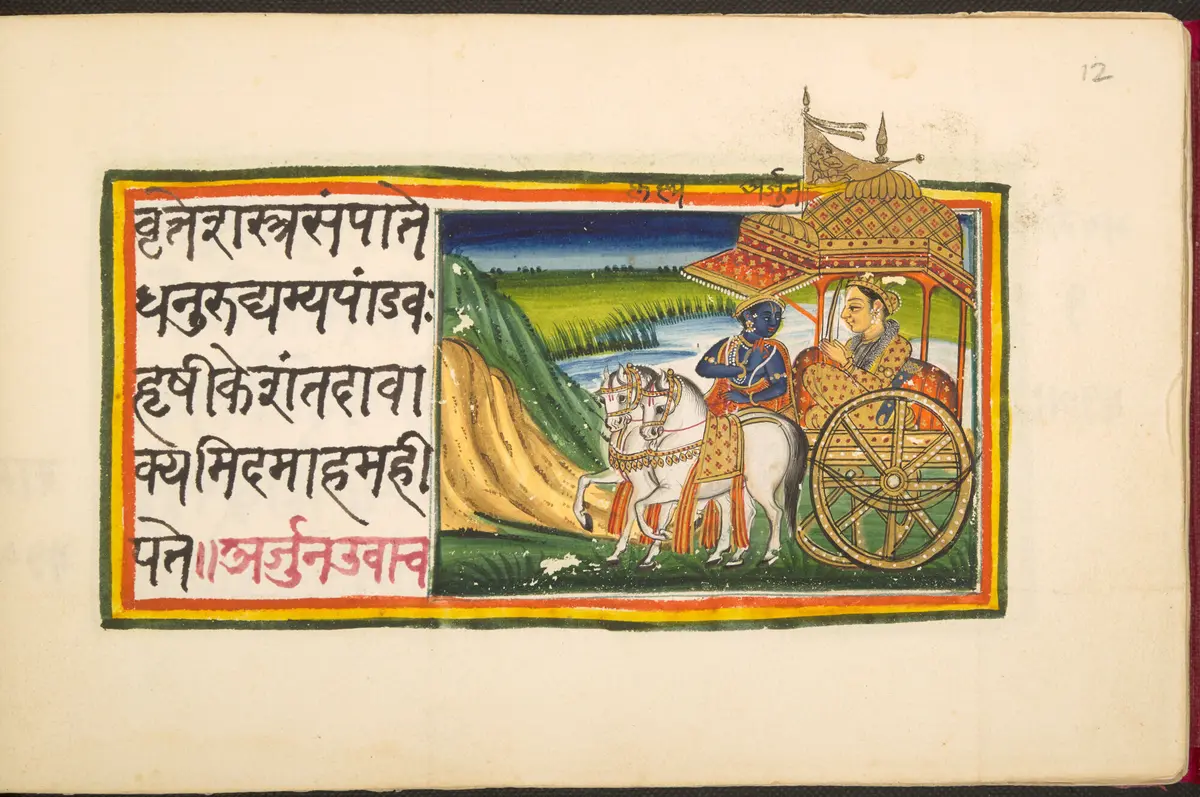
The Vedas, from the Sanskrit for 'knowledge', are the oldest scriptures of Hinduism and among the oldest religious texts still in use anywhere. They are four great collections of hymns, chants, ritual formulas and spells in an archaic form of Sanskrit, made by the Indo-Aryan-speaking peoples of northern India over roughly a thousand years, from about 1500 to 500 BCE. The oldest, the Rigveda, holds 1,028 hymns in ten books. Its poets praise a crowd of gods: Agni, the sacrificial fire that carries offerings to heaven; Indra, the warrior king of the gods; Varuna, guardian of cosmic and moral order; the goddess Dawn; and Soma, the plant whose pressed juice was drunk and offered at the sacrifice. Hindus call the whole body of Vedic texts shruti, 'what was heard': revealed to ancient seers, not written by human authors.
No inscription or excavated object dates the hymns; the dates come from the language and from the texts' own world. Most scholars place the oldest hymns between about 1500 and 1200 BCE, in the Punjab, the 'land of seven rivers', where families of priest-poets composed the core books, two to seven, each tied to one family. Indo-Aryan names of kings and gods and words for horse training already appear in the kingdom of Mitanni in northern Mesopotamia in the 15th and 14th centuries BCE, the oldest datable trace of the language. Three more collections followed: the Samaveda, Rigvedic verses set to melodies; the Yajurveda, the formulas spoken by the priest who handled the fire; and the Atharvaveda, spells and charms whose hymns are the first to mention iron, around 1200 BCE. In the same centuries the Kurus, a new union of tribes in the plain of Kurukshetra north of today's Delhi, became the centre of Vedic life, and their kings, the Harvard Indologist Michael Witzel argues, brought poets and priests together to fix the hymns as a canon and to reform the great rites.
Later layers explained and then questioned the ritual. The Brahmanas, prose works of about 900 to 700 BCE, spell out what each act of the sacrifice means; the Shatapatha Brahmana prescribes a fire altar of five layers of bricks in the shape of a bird. The Aranyakas and the Upanishads, the last part of the Veda, turn inward. In the Brihadaranyaka Upanishad the sage Yajnavalkya out-argues the learned Brahmins at the court of King Janaka of Videha; in the Chandogya, Uddalaka Aruni teaches his son that the hidden essence of everything is the self: 'you are that'. The idea that the atman, the inner self, is one with brahman, the ultimate reality, became the basis of Hindu philosophy, and the spread of beliefs in karma, rebirth and release from rebirth in the sixth century BCE marks the end of the Vedic age. Teachers such as the Buddha then offered paths to release that needed no Vedic sacrifice at all.
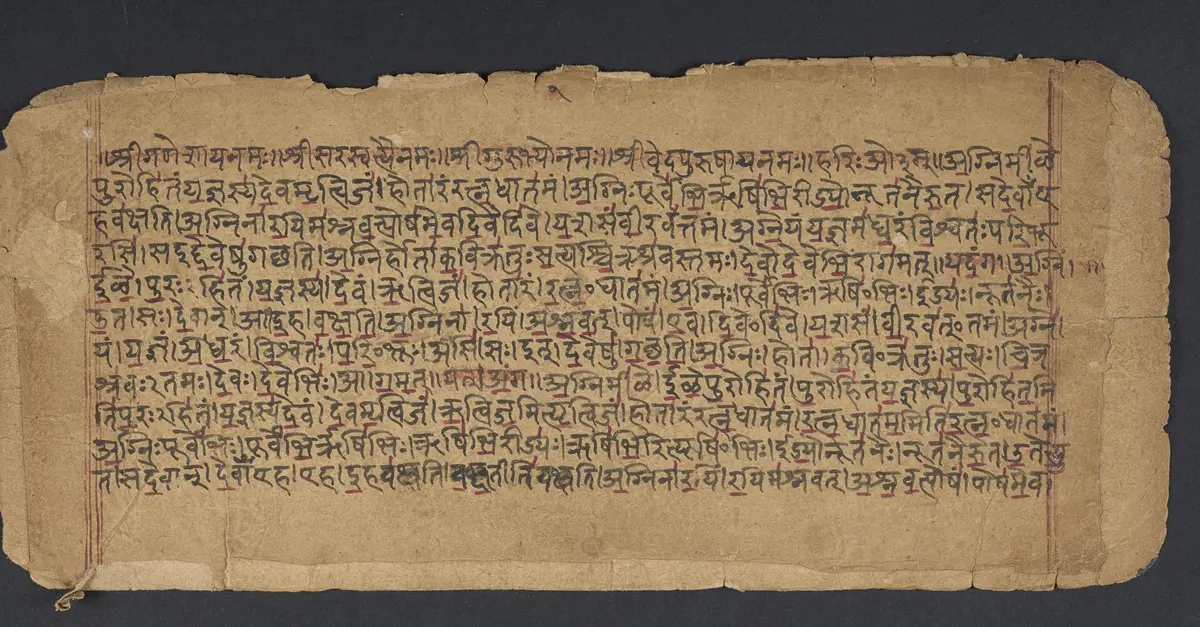
For most of their history the Vedas were not read but memorised. Boys learnt them from a teacher syllable by syllable, with their pitch accents, and in several patterns: as continuous text, word by word, and with the words repeated in overlapping pairs, so that nothing could slip; Witzel compares the result to tape recordings, passed on 'usually without the change of a single word'. They were written down late. The scholar al-Biruni reported in the eleventh century that a Kashmiri Brahmin, Vasukra, had been the first to do it, and most surviving manuscripts are only a few centuries old: the oldest dated one of the thirty Rigveda manuscripts at the Bhandarkar Oriental Research Institute in Pune, on UNESCO's Memory of the World Register since 2007, was copied in 1464. UNESCO also lists the tradition of Vedic chanting itself (proclaimed 2003, inscribed 2008), and in 1975 Nambudiri Brahmins in Kerala performed the twelve-day Agnicayana, with its altar of a thousand bricks shaped like a bird, before a Harvard film crew.
Europe met the Vedas in the nineteenth century. The German-born Oxford scholar Friedrich Max Müller edited the Rigveda with the fourteenth-century commentary of Sayana, using manuscripts that included one now at Pune; the first of his six volumes appeared in 1849 under the patronage of the East India Company, the last in 1874. The hymns became a founding text of comparative philology and of the comparative study of religion, Müller's own fields. In India they never stopped being used: the Hindu initiation rite, the upanayana, and the offering of oblations into a sacred fire, the homa, are direct survivals of Vedic ritual, and the Upanishads, through the later schools of Vedanta, have shaped Indian thought ever since.
What happened
- 1500 BCE
Around 1500 BCE, Indo-Aryan-speaking herders live in the Punjab, the land of seven rivers. Families of priest-poets begin the hymns of the Rigveda's oldest books, two to seven, each book the work of one family.
The Sutlej at Rupnagar (Ropar), Punjab: the Shutudri of the Rigveda, one of the rivers of the Sapta Sindhu, the 'land of seven rivers' where the oldest hymns were made - 1350 BCE
Around 1350 BCE, cuneiform records of the kingdom of Mitanni in northern Mesopotamia carry Indo-Aryan royal names, gods and horse-training terms; a treaty with the Hittite king Suppiluliuma calls on Mitra, Varuna, Indra and the Nasatyas, gods of the Rigveda. It is the oldest datable trace of the Vedic language.
- 1250 BCE
Late in the Rigvedic age (no year can be given), King Sudas of the Bharata tribe defeats an alliance of ten kings, a victory the seventh book celebrates; soon after, the first collection of the hymns is made.
- 1200 BCE
Around 1200 BCE the Rigveda is complete: the later books, one and ten, now frame the old family books, and the tenth adds the hymn of the cosmic Man, Purusha, from whose body come the four classes of society.
Iron comes into use, and the Atharvaveda, the Veda of spells and charms, is composed and collected; its hymns are the first to mention the new metal. The Samaveda sets Rigvedic verses to melodies and the Yajurveda gathers the formulas spoken at the fire.
- 1100 BCE
The Kurus, a new union of tribes in Kurukshetra, become the centre of Vedic India. Their kings, Parikshit among them, bring poets and priests together to collect the hymns into fixed Vedas and to reform the great rites; archaeologists link their world with the Painted Grey Ware villages of about 1200–800 BCE.
Kurukshetra, Haryana: the holy land of the Kurus, whose kings had the hymns collected into the Vedas around 1200–1000 BCE; Brahma Sarovar, the great sacred tank - 900 BCE
The Brahmanas, prose explanations of the sacrifice, are composed: the Aitareya for the priests of the Rigveda, and the Shatapatha for the White Yajurveda.
- 800 BCE
The Shatapatha Brahmana lays down the Agnicayana, the building of a great fire altar in five layers of bricks in the shape of a bird that carries the sacrificer to heaven.
- 750 BCE
A legend of the Shatapatha Brahmana tells how King Videgha Mathava followed the sacred fire east from the Sarasvati to the river Sadanira; the story describes Vedic ritual and its Brahmins reaching the lands of the eastern Ganges, in Videha.
- 700 BCE
In the Brihadaranyaka Upanishad, the sage Yajnavalkya defeats the learned Brahmins from the west in debate at the court of King Janaka of Videha and teaches that the self, the atman, is one with brahman, the ultimate reality.
- 600 BCE
In the Chandogya Upanishad, Uddalaka Aruni teaches his son Shvetaketu, home proud from twelve years of study, that the hidden essence of all things is his own self: 'you are that'.
- 500 BCE
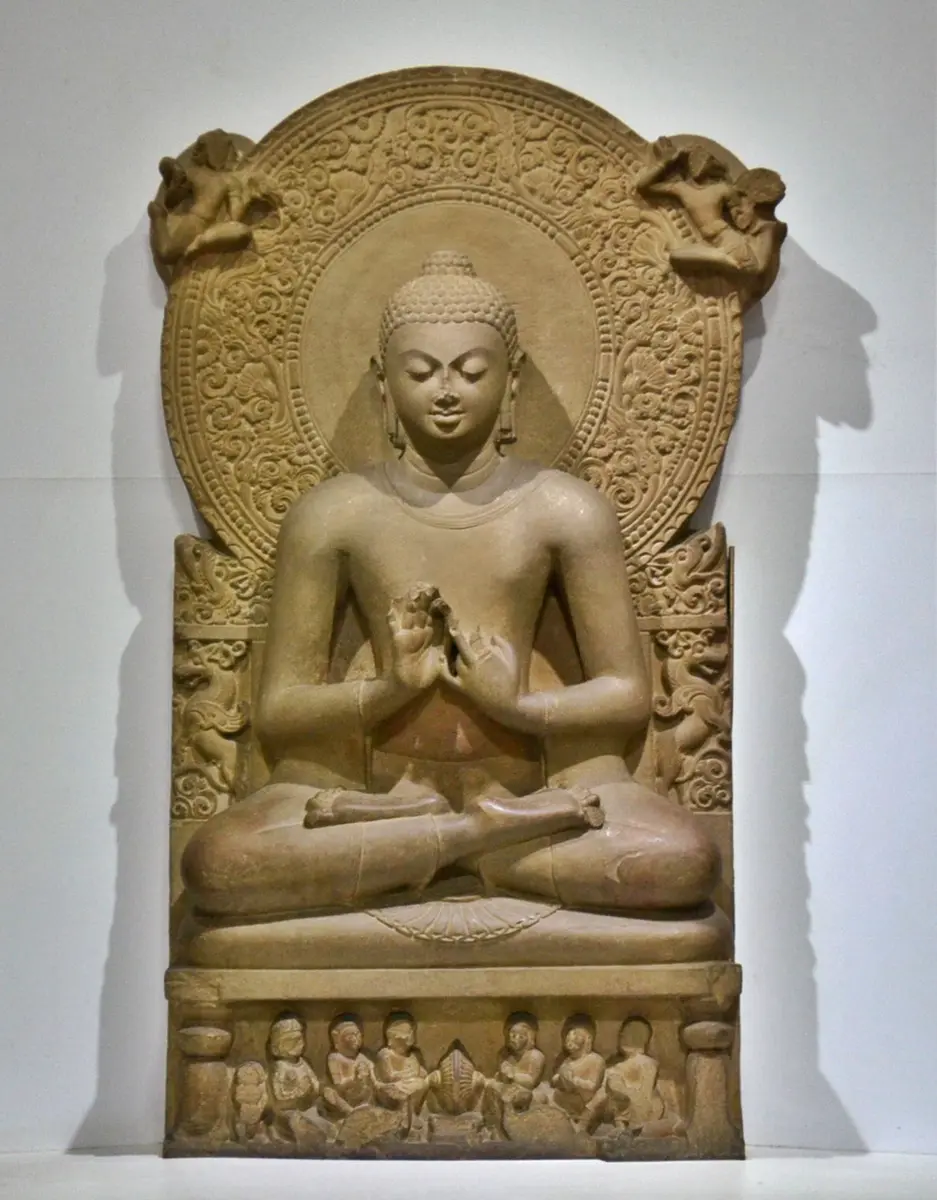
Around 500 BCE the Vedic age ends: beliefs in karma, rebirth and release spread, and in the Ganges kingdoms, Kashi among them, teachers such as the Buddha offer paths to release that need no Vedic sacrifice. The Vedas themselves are now a fixed canon, handed down by memory.
Varanasi (Kashi): a kingdom of the Ganges already named in late Vedic texts, and a home of Brahmin learning and Vedic recitation ever since