Prambanan is built
“Mataram's great temple of Shiva on the plain east of Yogyakarta: three towers among 224 shrines, the Ramayana carved on its galleries, dedicated in 856, a heap of stones for centuries and rebuilt between 1918 and 1953.”
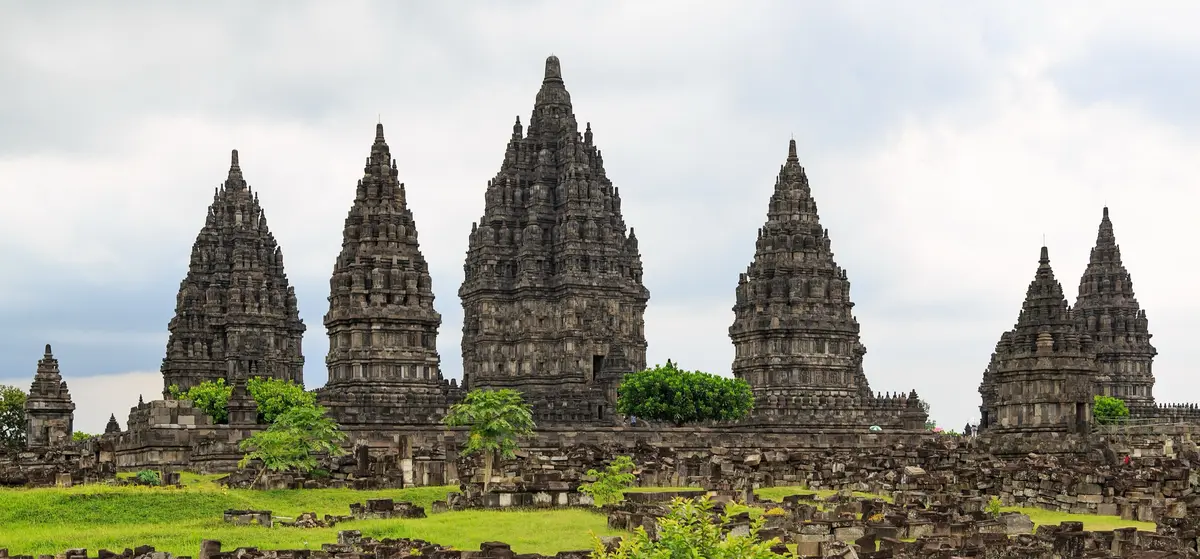
Prambanan, which the Javanese call Loro Jonggrang, is the largest Hindu temple complex in Indonesia: a walled square on the plain about 15 kilometres east of Yogyakarta, built for the god Shiva by the kings of Mataram in the ninth century. Its plan held about 240 temples in three walled courts. In the raised inner court the three great temples of the Hindu trinity stand in a row and face east, Shiva's in the middle, 47 metres high and 34 metres square, Brahma's to the south and Vishnu's to the north, 33 metres each; three smaller temples face them, the middle one sheltering Nandi, the bull Shiva rides. Around this court 224 small shrines of one design, each 14 metres high, stood in four rows. Inside the Shiva temple four chambers hold the god himself as Mahadeva, the Great God, in the east, the sage Agastya in the south, his elephant-headed son Ganesha in the west and, in the north, the goddess Durga killing the buffalo demon. The villagers call her statue Loro Jonggrang, the 'slender maiden' of a legend: a princess who tricked the prince who had promised her a thousand temples in a single night, and whom he cursed into stone. On the inner walls of the galleries of the Shiva and Brahma temples the Ramayana is carved panel after panel, read clockwise from the east; the Vishnu temple tells the life of Krishna.
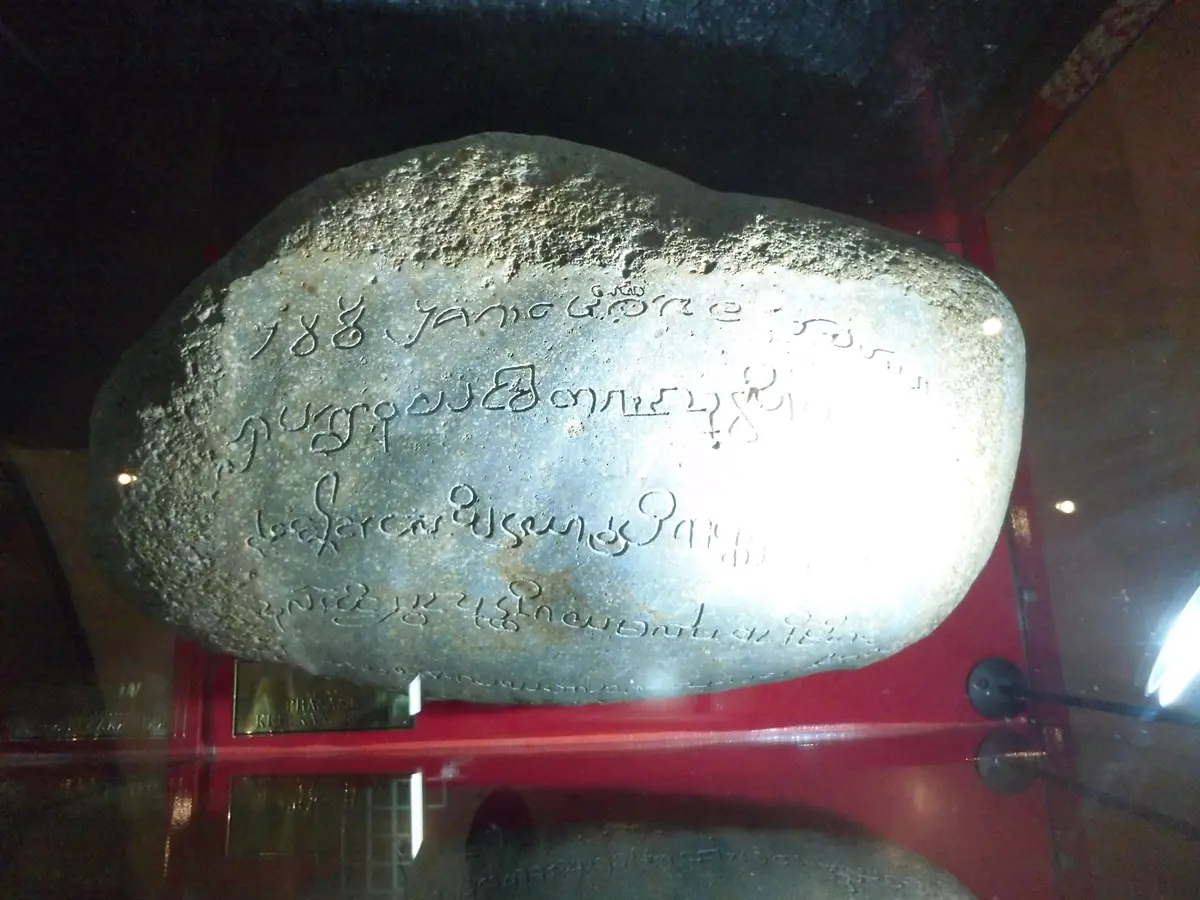
No founding charter survives. The key text is an Old Javanese poem cut on a stone now in the National Museum in Jakarta and dated by a chronogram to the year 778 of the Saka era, 856 CE: the oldest dated Old Javanese poem. It tells of a war, of the king Jatiningrat handing the kingdom to Dyah Lokapala, and of a great House of Shiva, a Shivagrha, whose god was finished and inaugurated on the eleventh day of the bright half of the month Margasirsa, 12 November 856; then a river was moved to run along the temple grounds. The epigrapher J. G. de Casparis, who published the text in 1956, saw how closely its walls, gateways and rows of small votive shrines match Loro Jonggrang, and the identification is now generally accepted; short inscriptions painted on the temple's own stones, one of them reading 'pikatan', are in the same early script as those of Plaosan, older than the script of Daksa's time. Until then scholars had given the temple to King Daksa in the early tenth century, as Britannica still does. The king of the poem is taken to be Rakai Pikatan, a worshipper of Shiva who, de Casparis argued, had married a princess of the Buddhist Sailendra house that built Borobudur and Sewu, and for decades Prambanan was read as his line's Hindu answer to Borobudur. Later scholars doubt the rivalry: Pikatan's name also stands on the Buddhist temples of Plaosan, a charter published in 1986 says he died in 855, and the scholar Roy Jordaan argues that so large a work must have been begun years, perhaps decades, before 856.
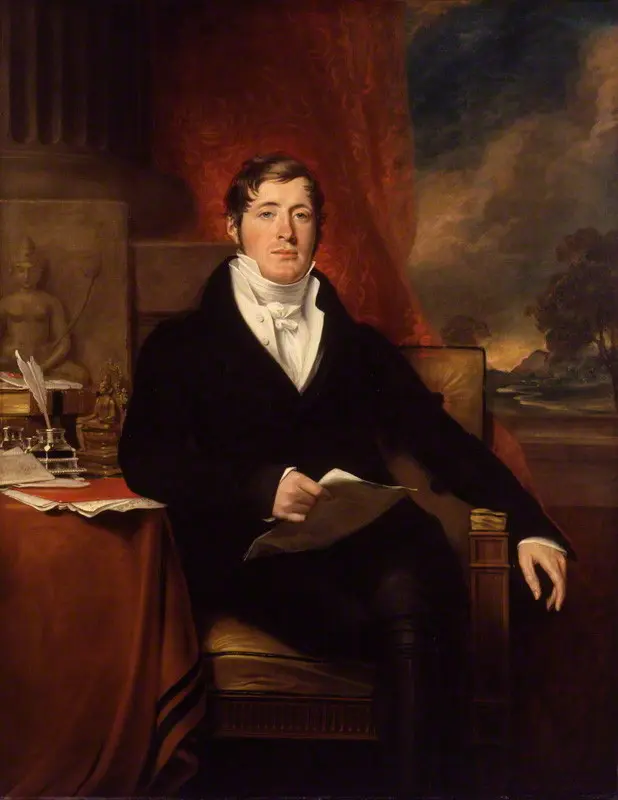
About 930 the kings moved their court to East Java and the temples of the Prambanan plain were left to decay. The towers fell, in an earthquake or under the weight of time (the sources put the collapse anywhere between the eleventh century and about 1600), and the ruin became a hill of stone that only the legend explained. Dutch envoys travelling to the court of Mataram reported it from 1733; the engineer H. C. Cornelius surveyed the plain in 1805-1807; Colin Mackenzie described the ruins of 'Brambana' for Stamford Raffles, and Raffles printed a view of 'the principal temple at Jongrangan' in his History of Java in 1817. In 1885 the engineer J. W. IJzerman cleared the chambers and found the statue of Shiva Mahadeva, which proved at last that the complex was Hindu and not Buddhist. In 1889 Isaac Groneman's men stripped the site and dumped the loose stones in heaps and down the bank of the Opak river, 'a large-scale archaeological slaughter' in the scholar J. Brandes's words, while the Javanese photographer Kassian Céphas recorded what was laid bare. In 1896 King Chulalongkorn of Siam was allowed to carry statues and reliefs home by the cartload, and villagers, planters and the railway company built Prambanan's carved stones into houses, culverts and a station.
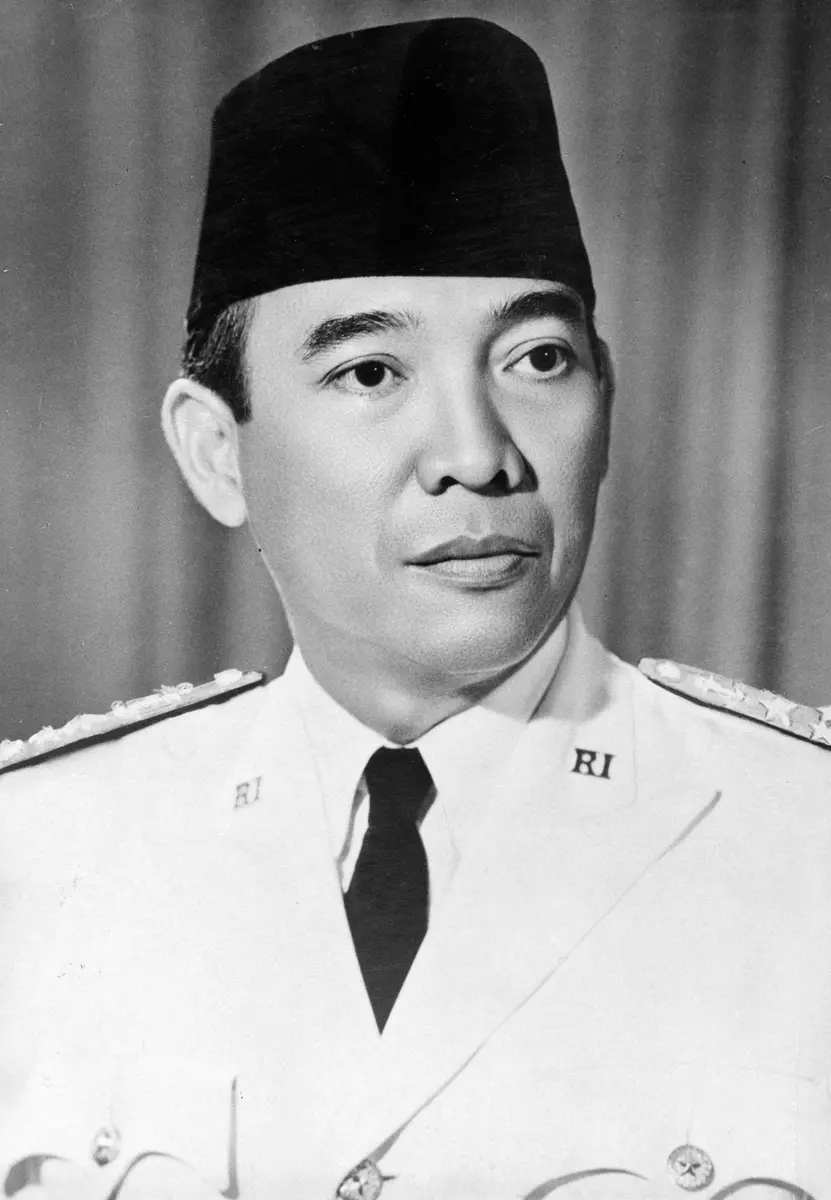
In 1918 the Archaeological Service of the Netherlands Indies began to sort the stone dump. After a public quarrel over the first restorer's methods the work passed in 1926 to B. de Haan, who had fitted the main temple together on the ground by his death in 1930, and in 1931 to V. R. van Romondt. The real rebuilding of the Shiva temple began in 1937, block by block, for every stone had been dressed to fit one place only. Three Indonesian overseers, Soehamir, Soewarno and Samingoen, kept the work going through the Japanese occupation and the war of independence, in which shells struck the temple in 1948; the top was reached in January 1952, and on 20 December 1953 President Sukarno opened the finished temple. The Brahma temple followed in 1978-1987 and the Vishnu temple in 1982-1991, and in 1991 UNESCO made the Prambanan temple compounds, with the Buddhist Sewu and the smaller ruins around them, a World Heritage site. The earthquake of 27 May 2006 damaged the temples again. Of the 224 small shrines only a few have been rebuilt; the rest are still rows of stones on the grass, waiting to be fitted together.
What happened
- 842
Rakai Pikatan, a worshipper of Shiva, is probably king of Mataram by this year, de Casparis judged, the year in which a queen of the Buddhist Sailendra line endows Borobudur; the great Shiva temple on the Prambanan plain is begun in his reign, or before it.
- 850
Pikatan issues the two Perot charters, the first documents dated in his reign; about this time the Buddhist twin temples of Plaosan Lor are finished, two kilometres north-east of the future Shiva temple, and the short inscriptions of the courtiers who paid for their parts name the king several times.
Plaosan Lor: the Buddhist twin temples two kilometres north-east, whose short inscriptions name King Rakai Pikatan - 855
Rakai Pikatan dies, according to the Wanua Tengah III charter, which lists the twelve kings before Balitung; if so, the inscription of the next year speaks of a dead king, and the temple it dedicates was begun while he lived.
- 856
War for the succession: a king called Kumbhayoni sets up three lingas of Shiva on the Ratu Boko plateau after a great victory, in or a little before this year. De Casparis read the defeated rival as the Sailendra prince Balaputra, holding Ratu Boko as his last fortress before he withdrew to Srivijaya in Sumatra; later scholars doubt the reading.
Ratu Boko: the walled plateau two kilometres south where three linga inscriptions of 856 record a victory, de Casparis's 'last fortress' of the Sailendra prince BalaputraThe House of Shiva is inaugurated: on the eleventh day of the bright half of Margasirsa, a Thursday, the statue of the god is finished and consecrated; then the river is moved to run along the temple grounds, and the grounds, with their gateways, wall and rows of small votive shrines, are dedicated as temple land with rice fields for its upkeep.
The Shiva temple: the 47-metre central tower with the four chambers of Shiva Mahadeva, Agastya, Ganesha and Durga, rebuilt between 1918 and 1953The same stone, the oldest dated Old Javanese poem, records that the king Jatiningrat, taken to be Rakai Pikatan, handed the kingship and the palace to Dyah Lokapala, who reigns as Rakai Kayuwangi until about 882.
Prambanan (Loro Jonggrang): the walled temple compound of Shiva, Vishnu and Brahma on the Prambanan plain