The cavity magnetron crosses the Atlantic
“In 1940 the Tizard Mission gave America Britain's new cavity magnetron: it made compact microwave radar possible, founded MIT's Radiation Laboratory and helped beat the U-boats.”
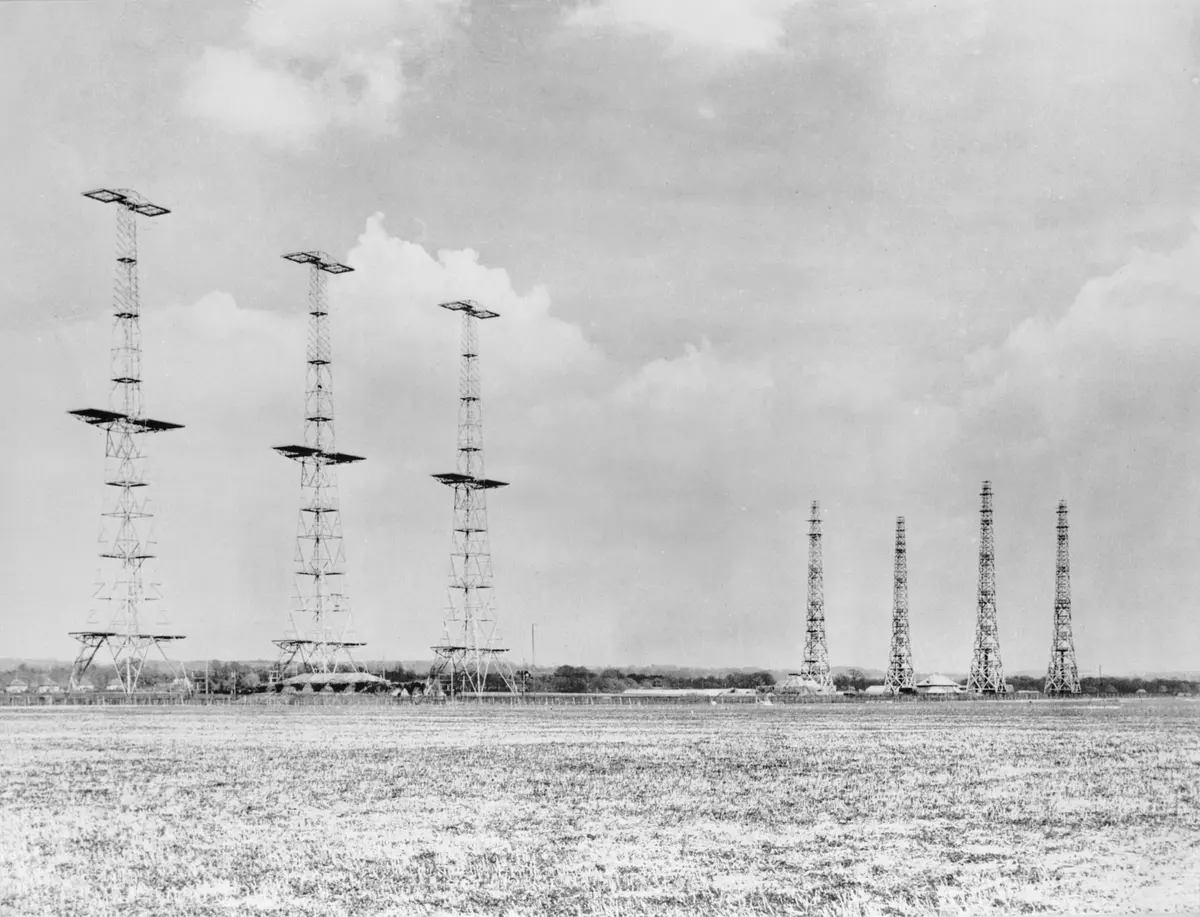
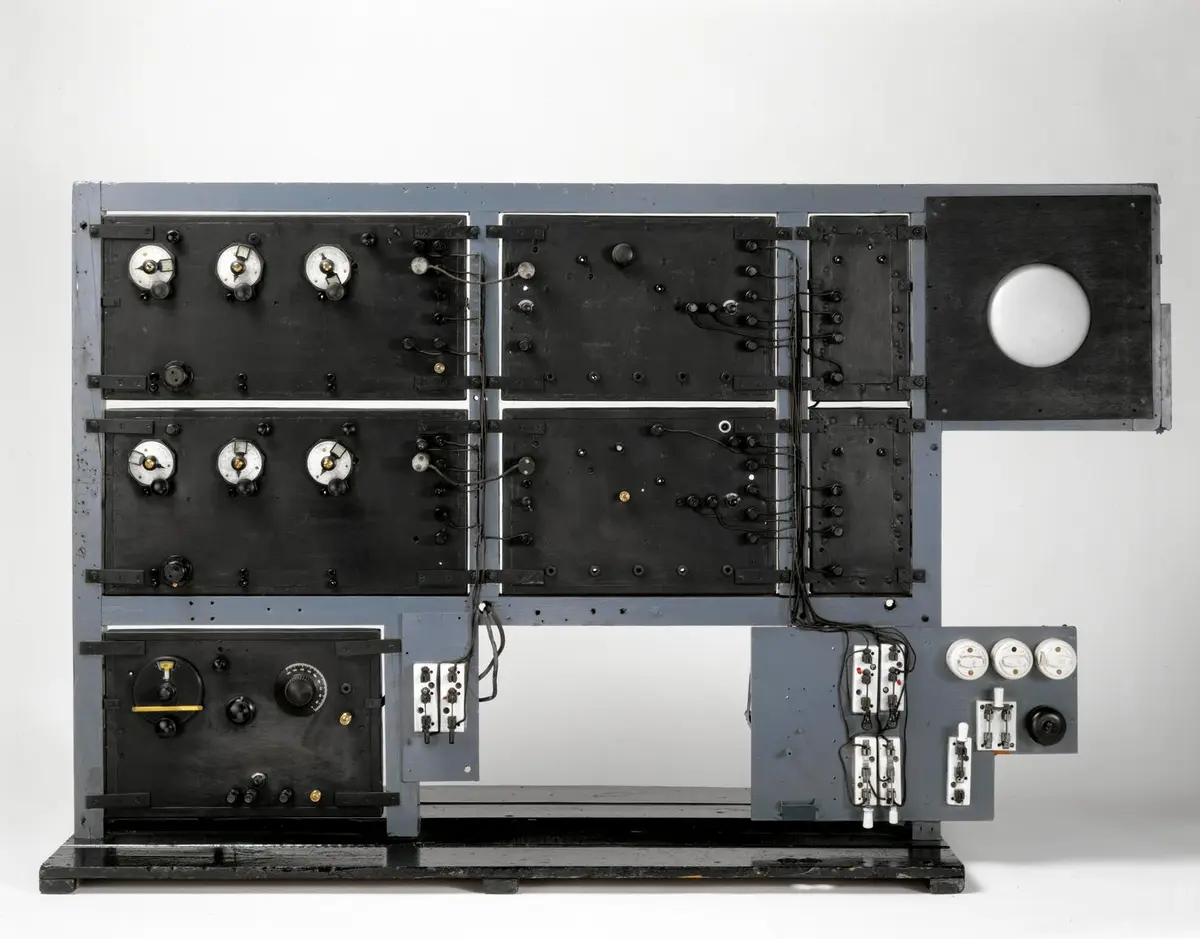
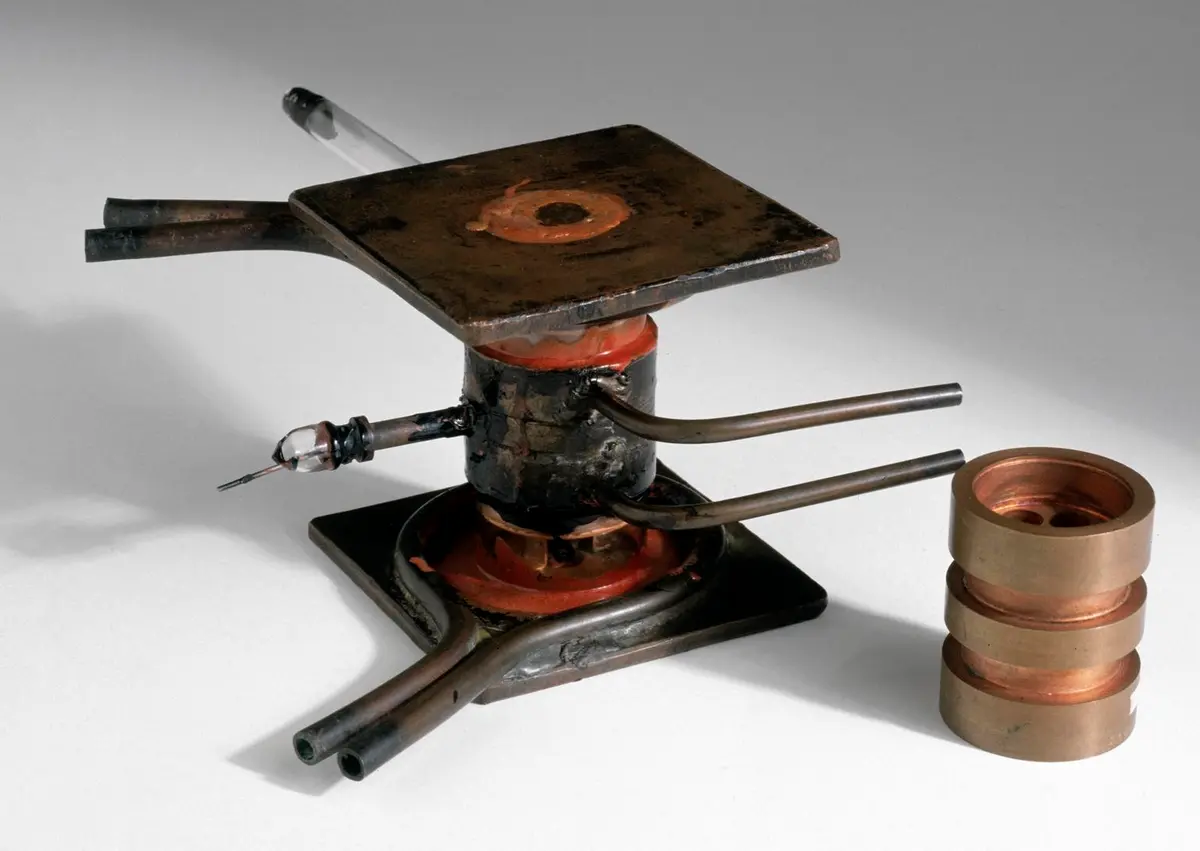
The cavity magnetron is a small block of copper, drilled with a ring of holes, that turns electricity into powerful radio waves only ten centimetres long. Two physicists at the University of Birmingham, John Randall and Harry Boot, got the first one working on 21 February 1940. Radar until then had used long waves and huge aerials: the Chain Home stations that guarded Britain's coast stood on masts more than a hundred metres tall. Waves a thousand times shorter could be sent from an aerial small enough for the nose of an aircraft and could pick out something as small as a submarine's conning tower, but no valve could make them with real power. Randall and Boot's first magnetron gave about 400 watts, far more than anything before it, and within months engineers at GEC in Wembley had turned it into a sealed, rugged valve giving ten kilowatts and more.
Britain had the idea but not the factories. In the summer of 1940, with France beaten and the Battle of Britain being fought overhead, Churchill agreed that the scientist Henry Tizard should take Britain's best military secrets to the still-neutral United States and simply give them away, in return for American industry. Tizard flew ahead in August. On 29 August the radar expert Edward 'Taffy' Bowen boarded the liner Duchess of Richmond with a black metal deed box of secret papers and a GEC magnetron, number 12 of the first dozen, after nearly losing the box to an over-eager porter at Euston station.
In Washington the mission met the Microwave Committee of the new National Defense Research Committee, chaired by the banker and amateur physicist Alfred Loomis. The Americans had been trying to build ten-centimetre radar and were stuck for lack of power; when Bowen and John Cockcroft showed them the magnetron in late September, the talks changed tone. On 6 October Bell Telephone Laboratories tested it at Whippany, New Jersey, and confirmed that it gave several times the power of their best valves at four times the frequency. Bell began to copy it at once, with the eight cavities of No. 12 rather than the six of GEC's drawings, and the committee set up a new laboratory at the Massachusetts Institute of Technology. Named the Radiation Laboratory so that outsiders would think it worked on nuclear physics, it met for the first time on 11 November 1940.
The Rad Lab picked up its first microwave echoes from a rooftop at MIT on 4 January 1941, and on 27 March an experimental set flying in a B-18 bomber, with Bowen on board, found aircraft, ships and surfaced submarines. In Britain the magnetron went into the night fighters' radar, into H2S, which drew a rough map of the ground beneath a bomber and was first used against Hamburg on 30 January 1943, and into ASV radar for the aircraft hunting U-boats. The U-boats' detectors could not hear the new short waves. In May 1943 the Allies sank 41 U-boats, and on 24 May Admiral Dönitz pulled his wolf packs out of the North Atlantic.
The magnetron was not the only reason the U-boats lost, and it was not only a British idea: Soviet, German, Japanese and American researchers had all built cavity magnetrons of a sort. What Randall and Boot built was the first that gave great power and could be made by the thousand, and the Tizard Mission put it in American hands more than a year before the United States entered the war. The Rad Lab grew to nearly 4,000 people, designed about half the radar the Allies used and became the model for government-funded research at universities. Randall and Boot's original magnetron is now in the Science Museum in London, and No. 12, which the mission left with Canada's National Research Council, is in Ingenium's collection in Ottawa. The same device, mass-produced, heats food in microwave ovens today.
What happened
- 1940
In the Poynting Physics Building at Birmingham, John Randall and Harry Boot switch on their first cavity magnetron, still connected to the vacuum pump and set between the poles of a laboratory electromagnet. It gives about 400 watts at a wavelength of about 10 centimetres, so much power that they can hardly believe it is microwaves.
Poynting Physics Building, University of Birmingham: where Randall and Boot first ran the cavity magnetronAt GEC's research laboratories in Wembley, Eric Megaw's team tests the prototype of a sealed magnetron that needs no pump and works with a small permanent magnet, the design that becomes the E1189. GEC makes twelve of them over the summer; from No. 12 on they have eight cavities instead of six.
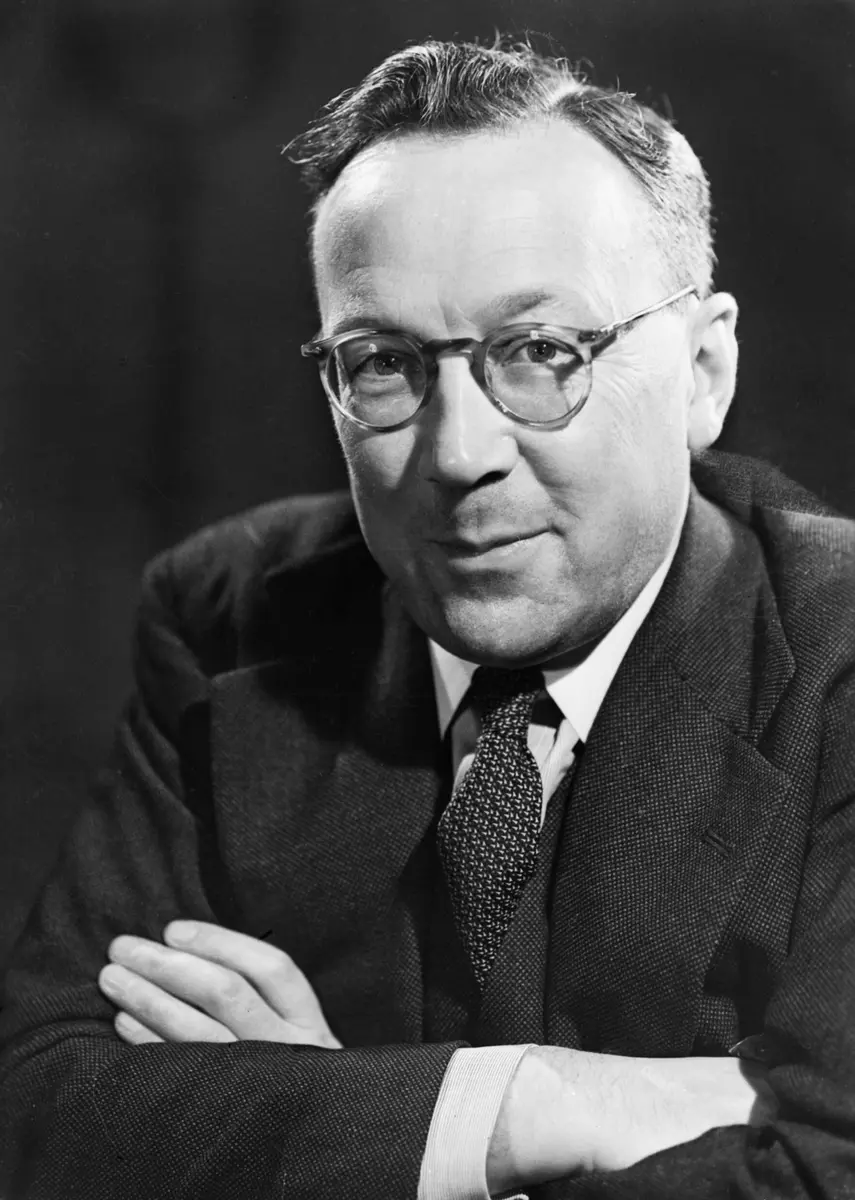
Henry Tizard, chairman of the Aeronautical Research Committee and the man behind Britain's radar, flies ahead of his mission to Canada and on to Washington to prepare the ground. Churchill has agreed that Britain will show the Americans its secrets, the magnetron among them, without asking for anything specific in return.
- 8:30 a.m.
At Euston station Taffy Bowen hands the mission's black deed box to a porter, who sets off for the 8:30 boat train to Liverpool without him; Bowen just keeps him in sight. In Liverpool the team, with the box and magnetron No. 12, boards the liner Duchess of Richmond for Halifax.
Euston station, London: where Bowen nearly lost the deed box on 29 August 1940 After landing at Halifax, the six members of the mission meet in Washington, where Tizard has set up an office. That day the US Army allows the National Defense Research Committee to share its secrets with the British; the Navy follows four days later.
At the Wardman Park Hotel, Alfred Loomis's Microwave Committee meets the British. Each side describes its long-wave radar; the Americans admit their 10-cm work is stuck for want of power, and Bowen and Cockcroft reveal the cavity magnetron: a valve the size of a fist giving about ten kilowatts at 10 centimetres.
Wardman Park Hotel, Washington: where the mission met Loomis's Microwave Committee on 19 September 1940Over the weekend of 28-29 September the British are Loomis's guests at his estate in Tuxedo Park, New York. There, with the magnetron on the table, the British and the Microwave Committee agree what to build first: a 10-cm radar for night fighters, then a gun-laying radar and a long-range navigation system.
Tuxedo Park, New York: Alfred Loomis's estate and laboratoryAt Bell Telephone Laboratories' radio laboratory in Whippany, New Jersey, No. 12 is run for the first time in America. It confirms everything the British claimed: several times the power of Bell's best valves at four times the frequency. Bell sets about copying it, eight cavities and all.
Whippany, New Jersey: Bell Laboratories' radio laboratory, where the magnetron was tested on 6 October 1940After MIT's president Karl Compton has agreed to host it, the National Defense Research Committee approves a contract for a central microwave laboratory at MIT. It is called the Radiation Laboratory, a name meant to make outsiders think of nuclear physics.
MIT, Cambridge, Massachusetts: the Radiation LaboratoryThe Radiation Laboratory's first staff, about twenty physicists, most of whom have never seen a radar, meet in Room 4-133 at MIT and share out the work. Lee DuBridge of Rochester is the director, Isidor Rabi of Columbia soon his deputy, and Bowen works with them as an adviser.
MIT, Cambridge, Massachusetts: the Radiation Laboratory- 1941
Two days ahead of their own deadline, the Rad Lab's physicists get echoes from their first 10-cm radar, rigged on an MIT rooftop with the transmitting and receiving aerials at opposite ends; the targets are buildings across the river in Boston.
MIT, Cambridge, Massachusetts: the Radiation LaboratoryA Douglas B-18 bomber with a 10-cm radar in a perspex nose flies from Boston with Bowen and the Rad Lab's scientists on board. The set picks up aircraft and ships, and off the submarine base at New London, Connecticut, surfaced submarines at about three miles: the first American microwave airborne radar works, seven months after the mission landed.
- 1943
That night RAF bombers use H2S for the first time, in an attack on Hamburg. Its magnetron and spinning scanner draw a rough map of coast, rivers and towns on a screen, so the crews can find their target through cloud and darkness.
Hamburg: target of the first H2S raid, 30-31 January 1943After a month in which Allied ships and aircraft, many now carrying centimetric radar that the U-boats' warning receivers cannot hear, have sunk 41 U-boats, Admiral Karl Dönitz orders his wolf packs out of the North Atlantic. The U-boats will come back, but they never again threaten to cut Britain's supply line.