Chain Home and the Battle of Britain
“In 1940 Britain's Chain Home radar stations, linked by Dowding's control system to the fighter squadrons, let the RAF meet each German raid in time and win the Battle of Britain.”
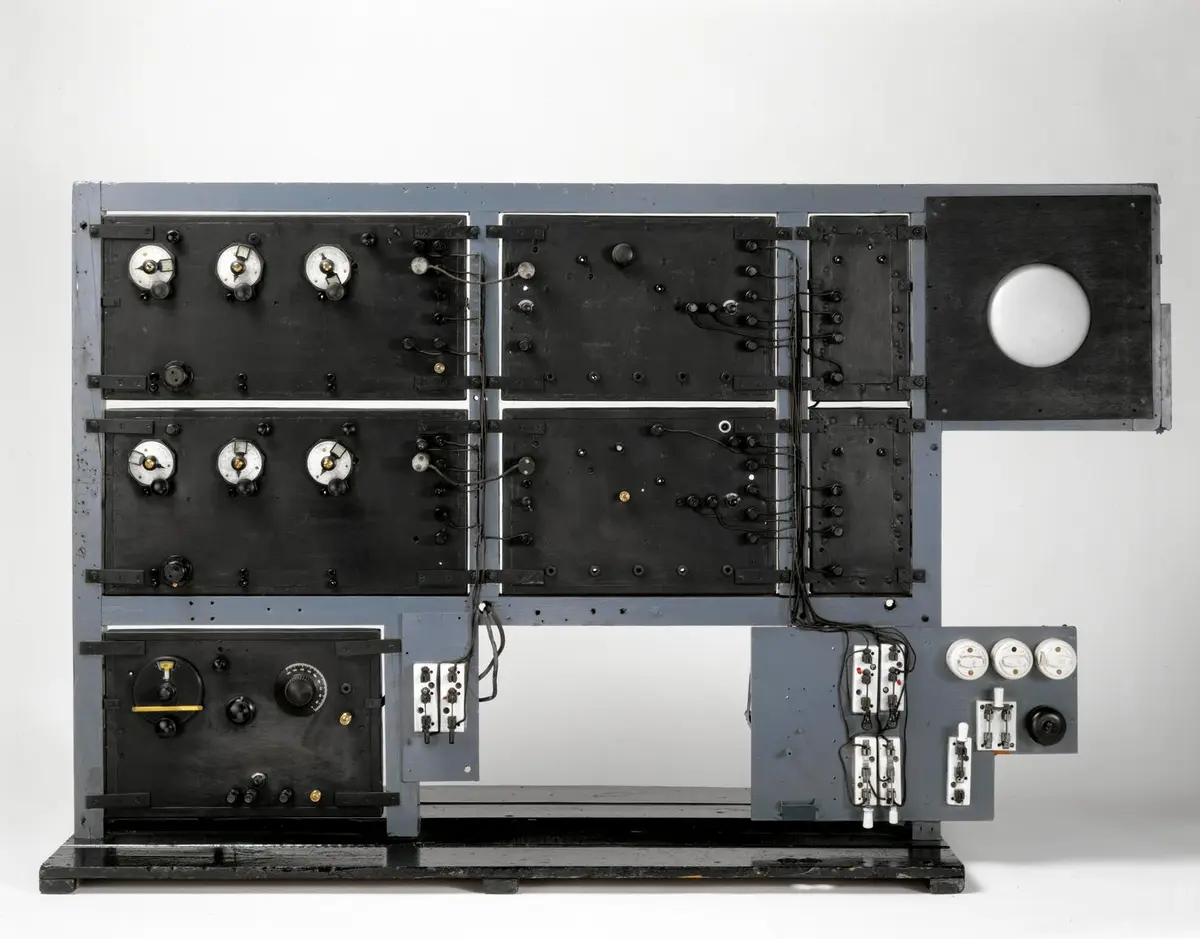
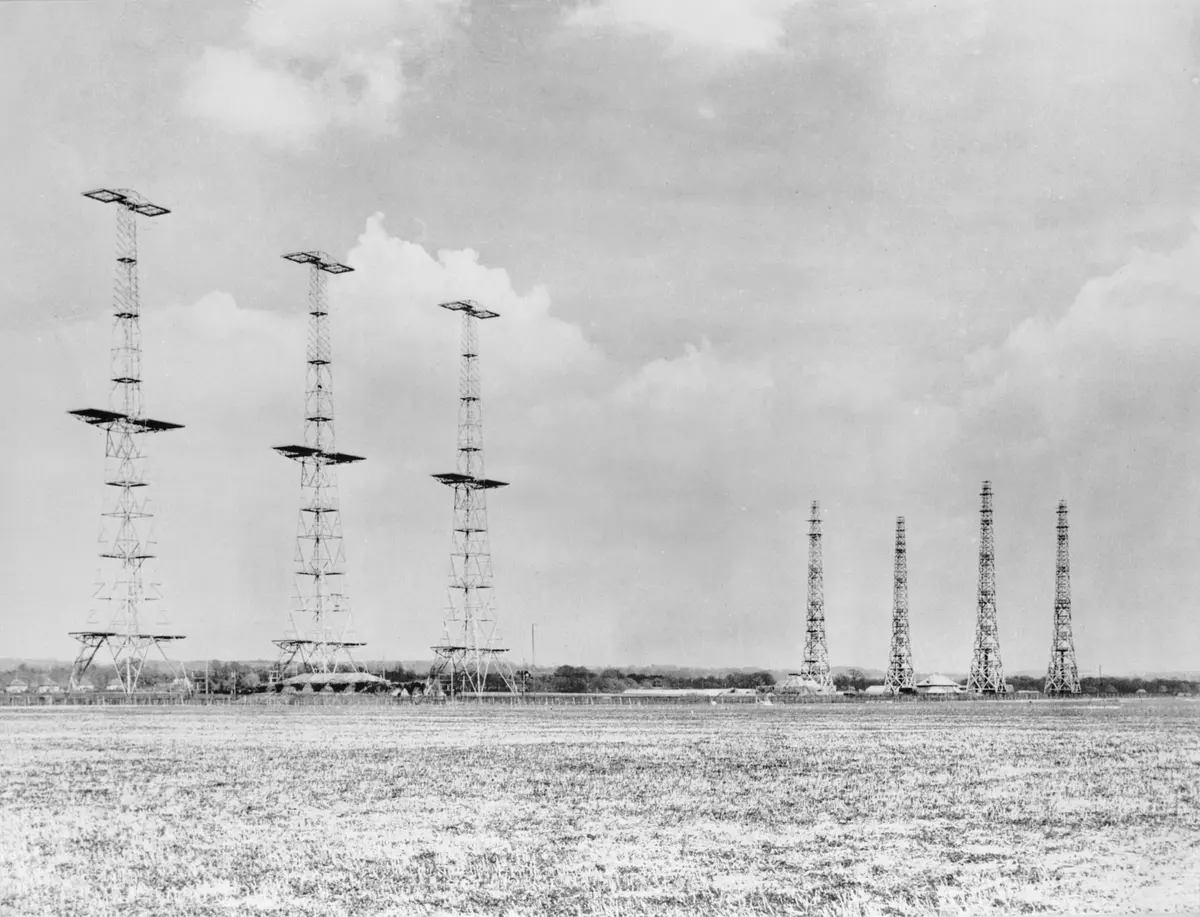
Chain Home was the ring of radar stations that Britain built along its coasts in the late 1930s to see German bombers coming. Each station had a row of steel towers about 360 feet tall, with the transmitting aerials slung between them, and a cluster of wooden receiver towers beside them. The transmitter sent out pulses of radio waves; an aircraft out at sea reflected a tiny echo, which showed up as a small dip on the screen of a cathode-ray tube in the receiver hut. From the echo a trained operator, by 1940 usually a young woman of the Women's Auxiliary Air Force, read off the range, the bearing, the height and a rough number of aircraft, often while the raiders were still forming up over France, eighty miles away. The idea came from Robert Watson-Watt's team after their test at Daventry in February 1935; from 1936 they worked at Bawdsey Manor on the Suffolk coast, and on 24 September 1937 RAF Bawdsey became the first fully operational radar station in the world. When war came in September 1939, the twenty stations of the main chain were on the air from the north of Scotland to the Isle of Wight, and lower 'Chain Home Low' sets were added from early 1940 to catch aircraft that flew under the main beams.
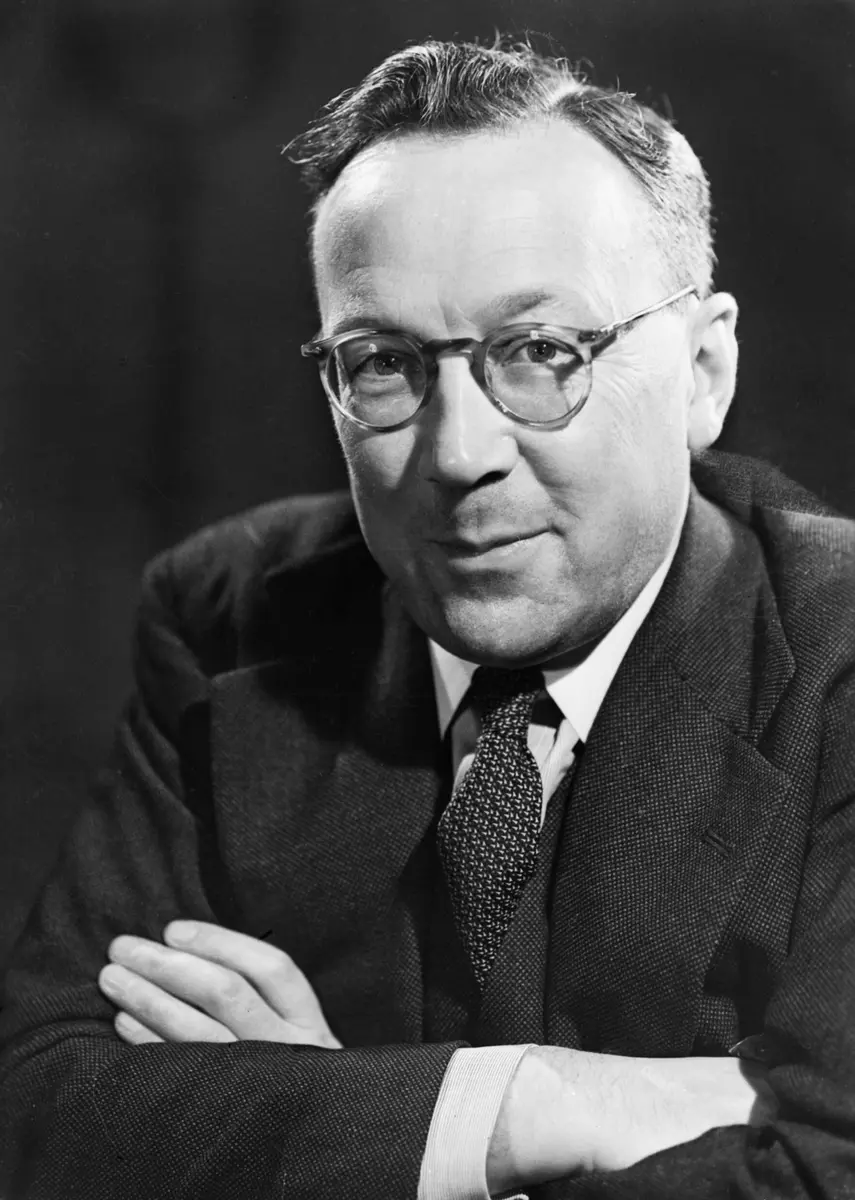
Radar alone did not win anything. What made it decisive was the system Air Chief Marshal Sir Hugh Dowding built around it as head of RAF Fighter Command from July 1936. Every station telephoned its plots to a Filter Room at his headquarters at Bentley Priory in Stanmore, where the reports from several stations were checked against each other and turned into one clean track for each raid. Over land, where the radars could not see, thousands of volunteers of the Observer Corps watched and listened from posts on hills and rooftops. The tracks went on to the operations rooms of the fighter groups, such as No. 11 Group's bunker at Uxbridge, and of the sector airfields, where WAAF plotters pushed counters across a big map table and a controller sent each squadron up and steered it by radio towards the enemy. The system let a small fighter force wait on the ground and meet each raid in time, instead of wearing itself out on standing patrols.
The test came in the Battle of Britain, which the British date from 10 July to 31 October 1940. After the fall of France, Hitler planned an invasion, Operation Sea Lion, and first needed the Luftwaffe to destroy the RAF. It began with attacks on convoys in the Channel. On 12 August German fighter-bombers and dive-bombers hit radar stations in Kent, Sussex and on the Isle of Wight; most were back on the air within hours, but Ventnor was out of action until a new station opened at Bembridge on 23 August. The main offensive, 'Eagle Day', opened on 13 August with costly attacks on airfields, and on 15 August the Luftwaffe flew 1,786 sorties, including raids across the North Sea that radar picked up far out to sea. Yet the Germans, who never grasped how much the towers mattered and saw them back on the air so quickly, mostly left them alone. The hardest weeks were from late August to early September, when airfields such as Biggin Hill and Kenley were bombed again and again.
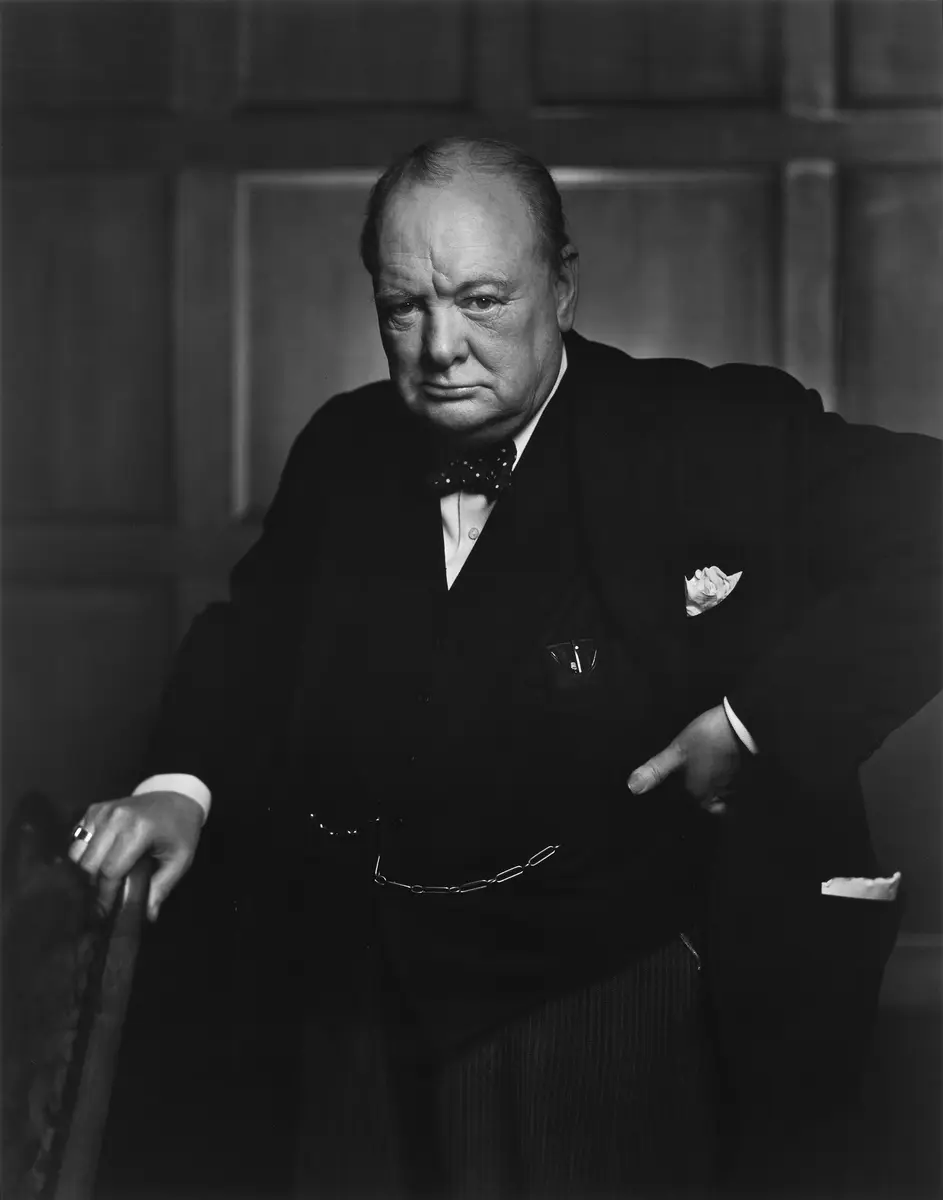
On 7 September the Luftwaffe turned on London, the start of the Blitz, and gave Fighter Command's airfields a rest. On 15 September, now celebrated as Battle of Britain Day, two great raids on London were broken up; Churchill watched from the operations room at Uxbridge as every squadron of No. 11 Group went into the air. The RAF claimed 185 German aircraft that day; the real number was about 60, still a loss the Luftwaffe could not keep up. Two days later Hitler put off the invasion, and in October he gave it up for the year. About 2,900 pilots flew with Fighter Command in the battle, 'the Few' of Churchill's speech of 20 August, and 544 of them were killed.
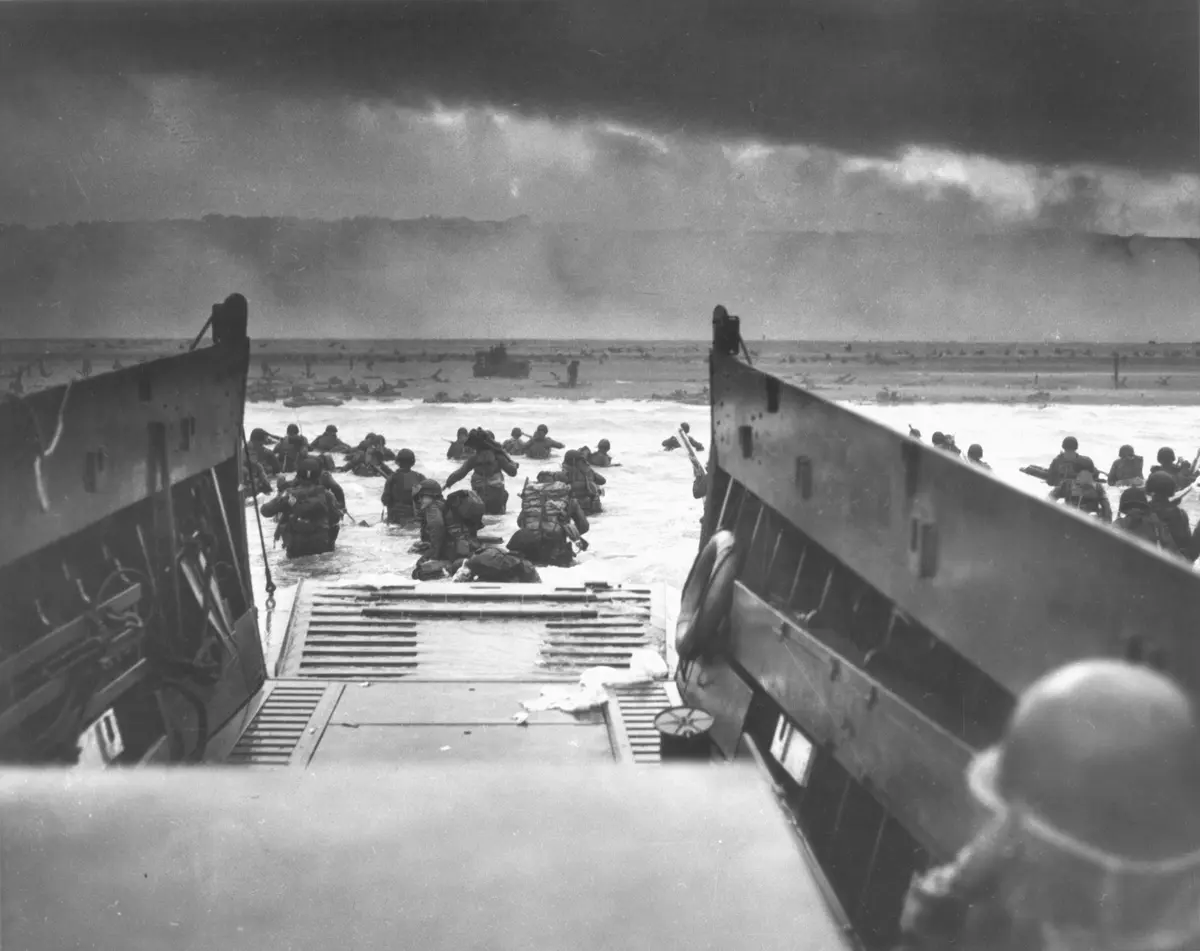
Chain Home showed that a weapon is only as good as the organisation behind it: the Dowding system was the first integrated air defence network, joining sensors, communications and command into one picture, and every air defence system since has followed its pattern. The battle itself was Germany's first defeat of the war; it kept Britain in the fight and left it as the base from which the Allies invaded France four years later. Some of the tall steel towers still stand, at Swingate above Dover and at Great Baddow in Essex; Bentley Priory is a museum with its Filter Room rebuilt, and the bunker at Uxbridge shows its map table as it was on 15 September 1940.
What happened
- 1936
RAF Fighter Command is formed, with its headquarters at Bentley Priory in Stanmore and Air Marshal Sir Hugh Dowding in command. He will build the system that turns radar plots into orders for his fighters.
Bentley Priory, Stanmore: headquarters of RAF Fighter Command and its Filter Room from July 1936Robert Watson-Watt leaves the National Physical Laboratory to become full-time Superintendent of Bawdsey Manor on the Suffolk coast, bought by the Air Ministry as the radar team's research station and the headquarters of the planned chain.
RAF Bawdsey, Suffolk: the research station in Bawdsey Manor and the first Chain Home station to go operational, on 24 September 1937- 1937
With only one station working well, the Air Ministry decides, with the Treasury's approval, to build the whole chain of twenty 'Chain Home' stations at once, from north of St Andrews to St Catherine's Point. Metropolitan-Vickers makes the transmitters, Cossor the receivers.
RAF Bawdsey becomes the first fully operational radar station in the world, eighteen months after the first experiment at Daventry.
RAF Bawdsey, Suffolk: the research station in Bawdsey Manor and the first Chain Home station to go operational, on 24 September 1937- 1939
Britain goes to war with all twenty Chain Home stations of the main chain on the air and the Observer Corps almost complete; the Chain Home Low sets for low-flying aircraft have been ordered but none is ready yet.
- 1940
The Chain Home Low station at Foreness Point in Kent is in place, giving warning of aircraft flying low towards the Thames estuary and London; more CHL stations follow along the coast.
Foreness Point, Kent: one of the first Chain Home Low stations, in place by January 1940As the battle begins, the chain runs from Shetland and Caithness down the east coast and along the south coast to Cornwall, with Chain Home Low stations between, and Observer Corps centres cover England inland as far west as Wales.
First day of the Battle of Britain in the British reckoning. A little before half-past one radar stations in the south-east see a large German force gathering behind Calais; Hurricanes meet about twenty bombers and forty fighters over a convoy off Dover, the battle's first big fight.
Swingate near Dover: the Dover Chain Home station, attacked on 12 August 1940, whose last towers still standRadar reports a raid heading for Portland as a single aircraft; six Hurricanes of No. 601 Squadron find some fifteen dive-bombers and thirty to forty fighters. Judging numbers and height from the echoes stays the system's weak point.
The Luftwaffe tries to blind the system: fighter-bombers hit the radar stations at Dover, Rye, Pevensey and Dunkirk in Kent in the morning, and around midday bombers hit Ventnor on the Isle of Wight. Most are back on the air within hours, but Ventnor is put out of action.
Ventnor Chain Home station on St Boniface Down, Isle of Wight: knocked out on 12 August 1940'Eagle Day', the opening of the main German offensive against the RAF. An order to postpone reaches some units too late, and the morning raids go in piecemeal. By night the Luftwaffe has lost 45 aircraft, Fighter Command 13 aircraft and seven pilots.
The battle's first climax: the Luftwaffe flies 1,786 sorties, and for the first time all three air fleets attack together. Radar picks up the raid from Norway far out over the North Sea, and the fighters of the north meet it with heavy losses to the Germans. The Foreness radar station is among the targets.
Foreness Point, Kent: one of the first Chain Home Low stations, in place by January 1940Ventnor is bombed again, hampering repairs, even though Göring, not knowing it is out of action, has just told his commanders that attacks on radar stations seem to be of doubtful value.
Ventnor Chain Home station on St Boniface Down, Isle of Wight: knocked out on 12 August 1940'The Hardest Day': Kenley, Biggin Hill, Croydon and West Malling are bombed, and the radar station at Poling in Sussex is put out of action for the rest of the month. The Luftwaffe loses 71 aircraft, Fighter Command 27.
Poling, West Sussex: Chain Home station put out of action on 18 August 1940Churchill tells the House of Commons: 'Never in the field of human conflict was so much owed by so many to so few.' The pilots become 'the Few'.
A new station on another site at Bembridge closes the gap in the chain left by Ventnor.
Ventnor Chain Home station on St Boniface Down, Isle of Wight: knocked out on 12 August 1940Fighter Command's worst day of the battle. In the week to 6 September, as the airfields of south-east England are bombed again and again, it loses 161 aircraft against the Luftwaffe's 189: the most critical week for Dowding and Park.
King George VI and Queen Elizabeth visit Fighter Command's headquarters at Bentley Priory, escorted by Dowding.
Bentley Priory, Stanmore: headquarters of RAF Fighter Command and its Filter Room from July 1936Towards five in the evening more than 300 bombers and some 600 fighters attack the London docks. The Luftwaffe has switched from the RAF's airfields to London: the Blitz begins, and Fighter Command gets the rest it needs.
Wapping, East London: the docks bombed on 7 September 1940, the start of the BlitzBy evening Fighter Command has lost 26 aircraft and claims 185 German; the Luftwaffe has in fact lost about 60, a loss it cannot keep up. Germany is shown that it will not win control of the air.
- 11:30 a.m.
Battle of Britain Day. As the first great raid on London comes in, the squadrons of Nos. 11 and 12 Groups are already in the air over Kent, Essex and London. Churchill, watching in the operations room at Uxbridge, sees every one of Park's squadrons committed; asked what reserves there are, Park answers that there are none.
The Battle of Britain Bunker at Uxbridge: No. 11 Group's operations room, where Churchill watched on 15 September 1940 Hitler postpones Operation Sea Lion, the invasion of Britain, and orders the invasion fleet to be partly dispersed.
Hitler gives up any landing in Britain in 1940.
Last day of the Battle of Britain in the British reckoning. Of the 2,917 RAF pilots who took part, 544 have been killed. Daylight raids have given way to the night bombing of the Blitz.