Winston Churchill
“Britain's wartime prime minister who refused to make peace with Hitler in 1940, rallied the nation with his speeches and led it to victory in 1945.”
Winston Churchill was a British politician, soldier and writer who was prime minister twice, from 1940 to 1945 and from 1951 to 1955. He is remembered above all for 1940, when France had fallen and Britain fought on alone against Hitler's Germany: he refused to make peace, held the country together with his speeches, and built the alliance with the United States and the Soviet Union that won the Second World War. His career ran for more than sixty years, through Liberal and Conservative governments, with great failures as well as triumphs, and in 1953 he won the Nobel Prize in Literature for his histories and his speeches.
He was born on 30 November 1874 at Blenheim Palace in Oxfordshire, the home of his grandfather, the Duke of Marlborough. His father, Lord Randolph Churchill, was a brilliant Conservative politician; his mother, Jennie Jerome, was the daughter of a New York financier. A lonely boy with a poor school record at Harrow, he got into the Sandhurst military college only at his third attempt and joined the 4th Hussars in 1895, a month after his father died. He then went looking for wars to fight in and write about: in Cuba, on India's North-West Frontier, in the Sudan, where he rode in the cavalry charge at Omdurman in 1898, and in South Africa, where the Boers captured him in November 1899. His escape from a prison in Pretoria a month later made him famous, and in 1900 he was elected to Parliament for Oldham.
In 1904 he left the Conservatives for the Liberals over free trade. As a minister he worked with David Lloyd George on social reform and set up state labour exchanges, and from 1911 he ran the Royal Navy as First Lord of the Admiralty, which he had ready when war came in 1914. In 1915 he pushed for a naval attack through the Dardanelles towards Constantinople; its failure cost him the Admiralty, and when the land campaign at Gallipoli failed too he resigned and went to command a battalion on the Western Front. He returned to office, lost his seat in 1922, came back as a Conservative and became Chancellor of the Exchequer in 1924. His return to the gold standard in 1925, at the pound's pre-war value, is widely judged a mistake that deepened unemployment. Out of office from 1929, he fought self-government for India, which made him look old-fashioned, but he also warned, almost alone, about Hitler's rearmament, and called the Munich agreement of 1938 'a total and unmitigated defeat'.
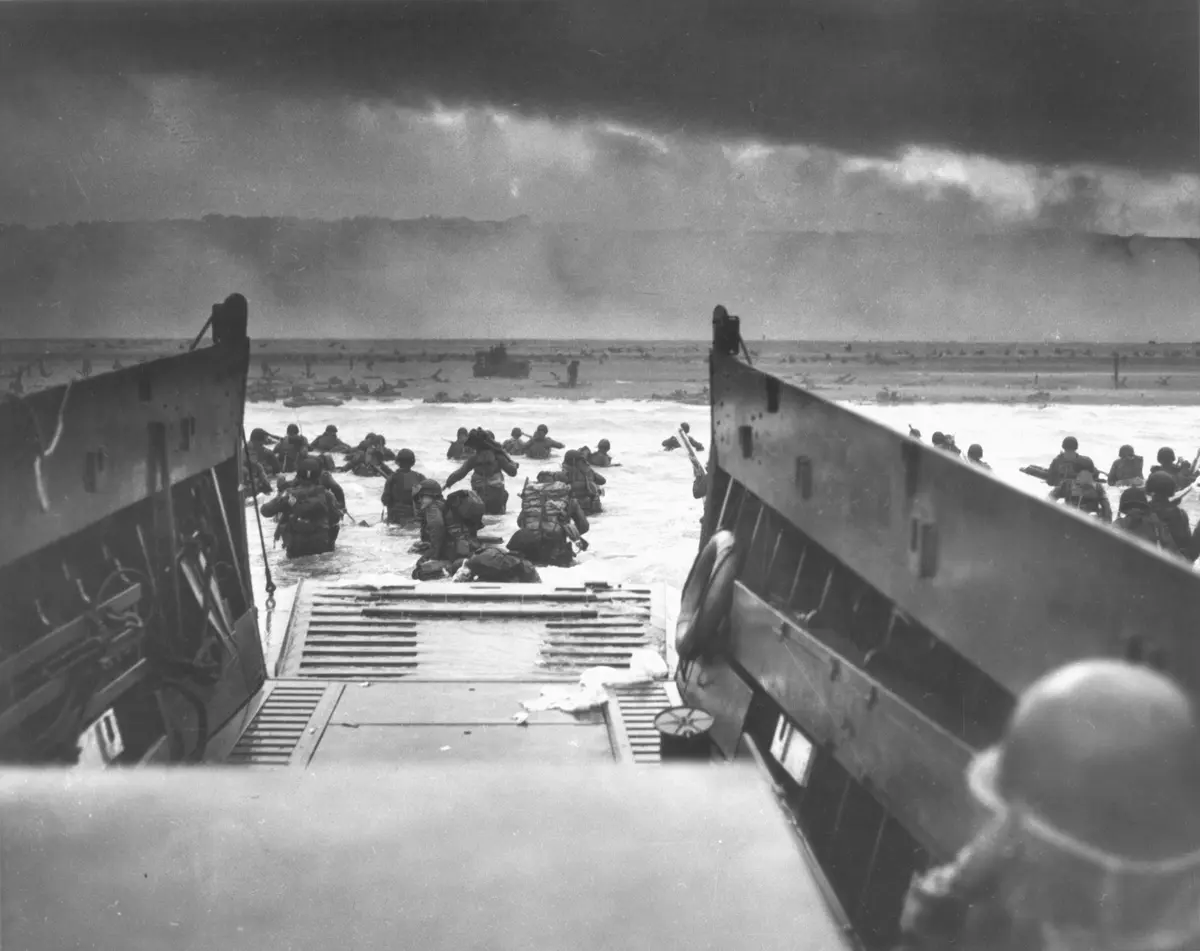
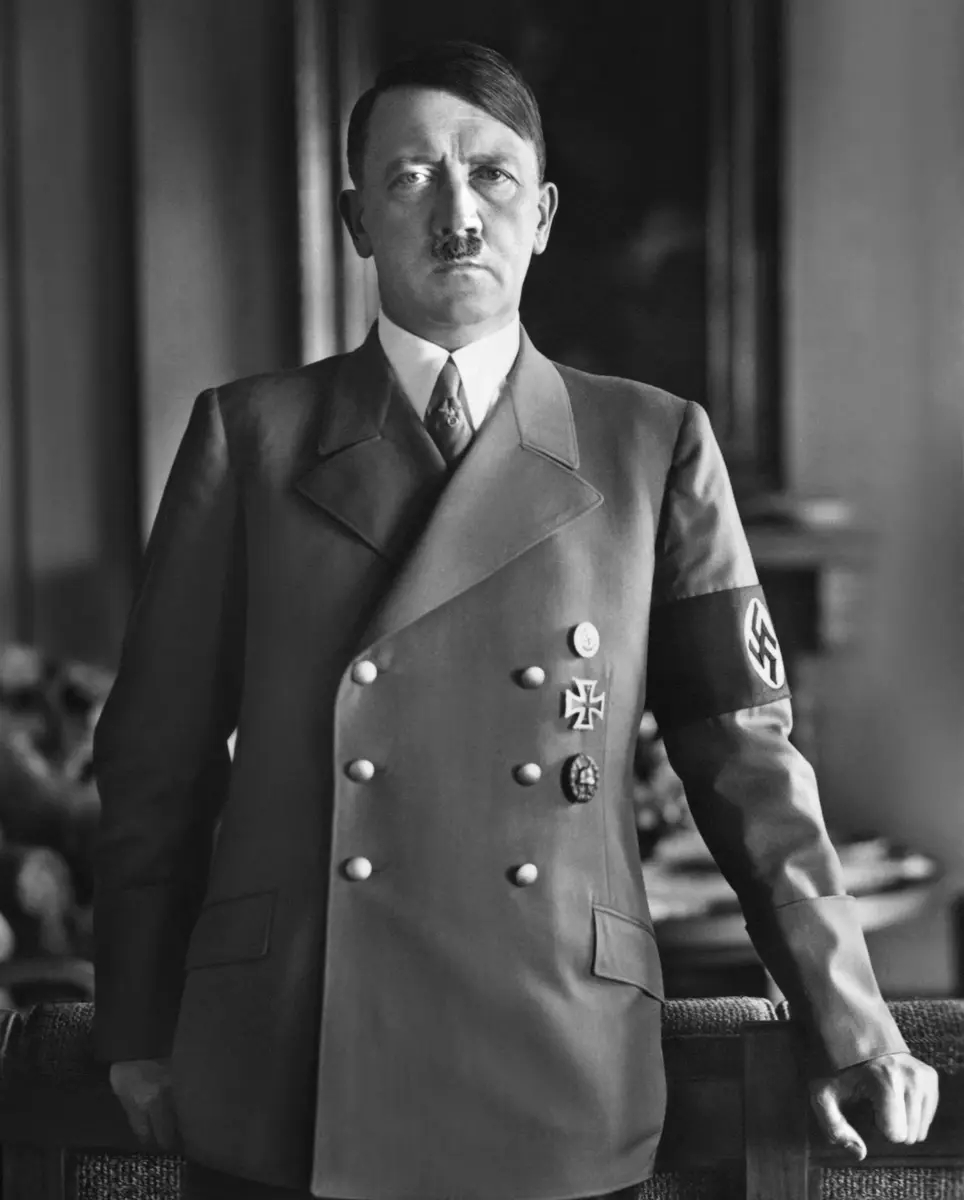
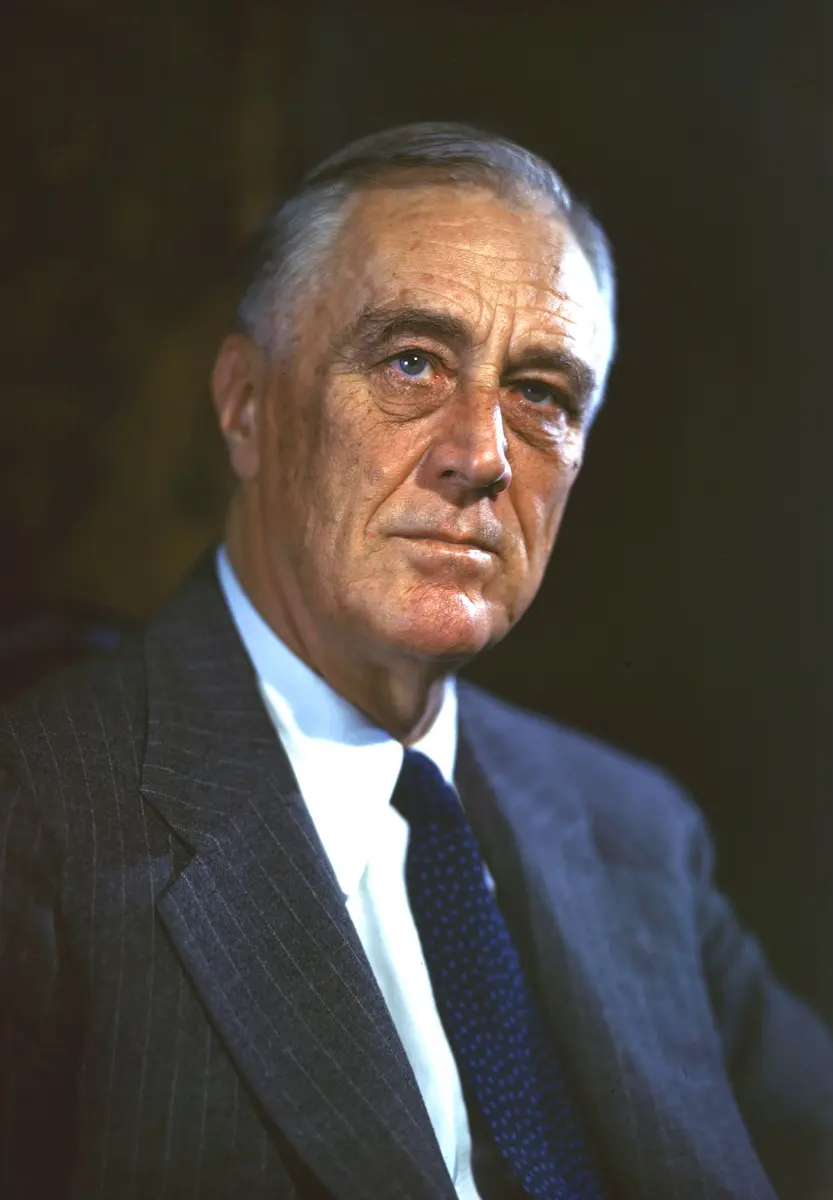
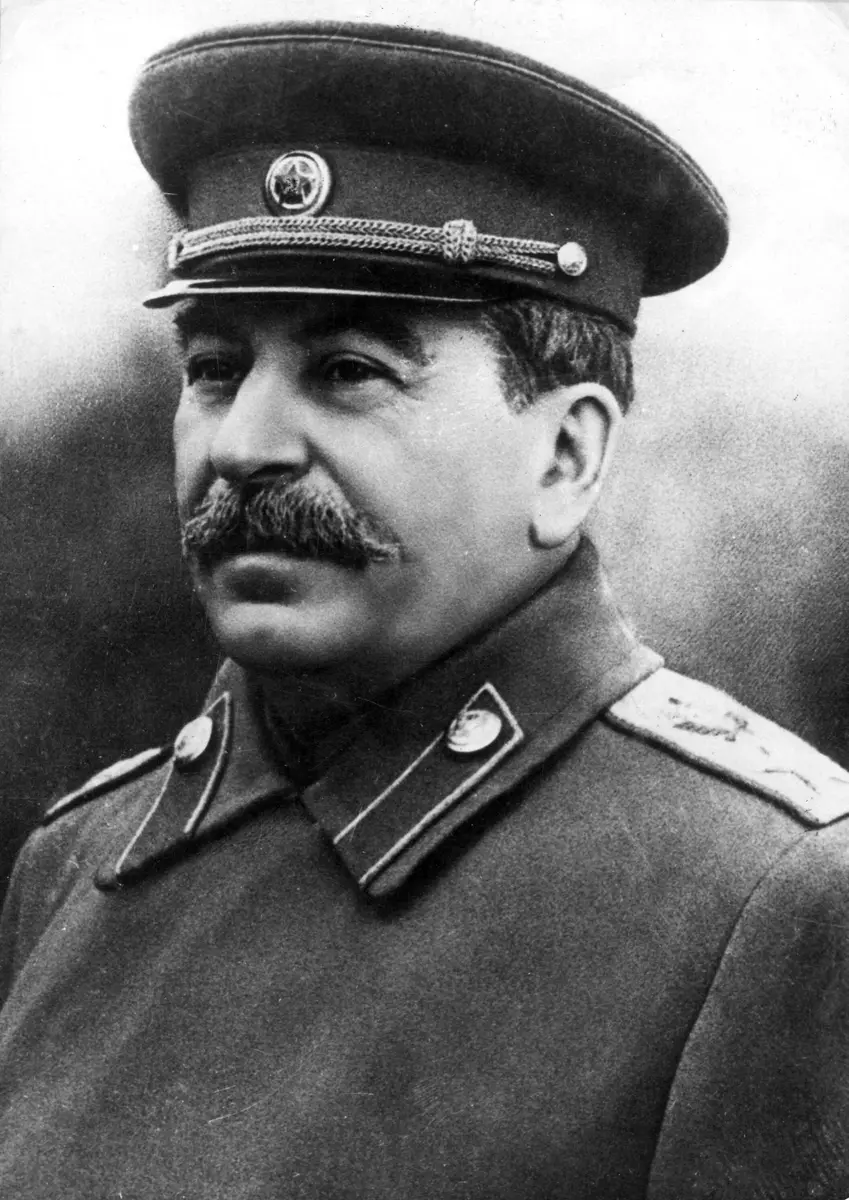
When war came in September 1939 he went back to the Admiralty, and on 10 May 1940, the day Germany attacked France and the Low Countries, he became prime minister at the head of a coalition with the Labour Party. Through the evacuation from Dunkirk, the fall of France, the Battle of Britain and the Blitz he spoke to Parliament and the nation in words that are still quoted: 'blood, toil, tears and sweat', 'we shall fight on the beaches', 'their finest hour'. He courted President Franklin D. Roosevelt, agreed the Atlantic Charter with him in August 1941, promised help to Stalin on the day Germany invaded the Soviet Union, and met both at Tehran in 1943 and at Yalta in 1945. On 8 May 1945 he announced victory in Europe, yet in July the voters chose Labour's programme of social reform and he lost power.
In opposition he warned at Fulton, Missouri, in March 1946 that an 'iron curtain' had come down across Europe, called for the nations of Europe to unite, and wrote a six-volume history of the war. He was prime minister again from 1951, already old and often ill, and a stroke in 1953 was kept from the public; he resigned in April 1955 but stayed in the House of Commons until 1964. He died at his London home on 24 January 1965, aged 90. After a state funeral, watched by half a million people in the streets of London, he was buried in the churchyard at Bladon, within sight of Blenheim. Most Britons remember him as the man who saved the country in 1940; his critics point to Gallipoli, the gold standard and his defence of the empire against Indian self-rule.
What happened
- 1874
Born at Blenheim Palace, the home of his grandfather the Duke of Marlborough, to Lord Randolph Churchill and the American Jennie Jerome.
Blenheim Palace, Woodstock: where he was born on 30 November 1874- 1895
Commissioned into the 4th Queen's Own Hussars, a month after his father's death on 24 January.
- 1897
Joins the Malakand Field Force on India's North-West Frontier; his dispatches become his first book, The Story of the Malakand Field Force.
- 1898
Attached to the 21st Lancers, rides in their charge at the Battle of Omdurman in the Sudan, which he describes in The River War.
- 1899
Reporting the Boer War for The Morning Post, he is captured when Boer commandos ambush an armoured train in Natal, after helping to get its engine away with the wounded.
Escapes over the wall of his prison in Pretoria and gets out to Portuguese East Africa; the escape makes him a national hero.
- 1900
Elected Conservative member of Parliament for Oldham, aged 25, at his second attempt there.
- 1904
Breaks with the Conservatives over free trade and crosses the floor of the Commons to the Liberals.
- 1908
Marries Clementine Hozier in London, five months after joining the Cabinet as President of the Board of Trade.
- 1911
Becomes First Lord of the Admiralty, convinced Britain will have to stand by France in a war with Germany.
- 1914
On his own responsibility orders the fleet mobilized, so the navy is ready when Britain declares war two days later.
- 1915
The British and French naval attack he championed fails in the Dardanelles: mines sink battleships, the Irresistible and the Ocean among them, and the fleet turns back.
After Admiral Fisher's resignation and the forming of a coalition, the Conservatives insist he leave the Admiralty; he is demoted to Chancellor of the Duchy of Lancaster.
- 1916
Having resigned from the government in November, he takes command of the 6th Royal Scots Fusiliers in the line at Ploegsteert in Belgium, until May or June, when the battalion is merged.
- 1917
Lloyd George brings him back as Minister of Munitions, where he speeds up the making of tanks.
- 1922
Buys Chartwell in Kent, which will be the family's home from 1924 until his last years.
Chartwell, near Westerham, Kent: his country home from 1924Struck down by appendicitis during the campaign, he loses his seat at Dundee: 'without an office, without a seat, without a party'.
- 1924
Back in the Commons for Epping as a 'Constitutionalist', he is made Chancellor of the Exchequer by the Conservative leader Stanley Baldwin.
- 1925
In his first budget he returns Britain to the gold standard at the pound's pre-war value, a decision blamed for deflation, unemployment and the General Strike of 1926.
- 1938
In the Munich debate tells the Commons that Britain has suffered 'a total and unmitigated defeat'.
- 1939
On the day Britain declares war, Chamberlain makes him First Lord of the Admiralty again; the signal goes out to the fleet: 'Winston is back'.
- 1940
As Germany invades the Low Countries and France, Chamberlain resigns and Churchill becomes prime minister of a coalition with Labour, taking the new post of Minister of Defence for himself.
10 Downing Street, London: prime minister 1940–1945 and 1951–1955In his first speech as prime minister tells the Commons he has nothing to offer but 'blood, toil, tears and sweat'.
After the evacuation from Dunkirk tells the Commons: 'we shall fight on the beaches ... we shall never surrender'.
As France falls, he calls on the British to bear themselves so that men will say: 'This was their finest hour'.
Honours the fighter pilots of the Battle of Britain: 'Never in the field of human conflict was so much owed by so many to so few'.
Walks through the bombed streets of London's East End at the start of the Blitz.
- 1941
On the day Germany invades the Soviet Union, he broadcasts that Britain will help the Russian people, without unsaying a word against Communism.
At their first meeting as war leaders, in Placentia Bay, Newfoundland, he and Roosevelt share a Sunday service on the deck of HMS Prince of Wales.
The Atlantic Charter, their joint statement of war aims, is published: no conquests, free trade, and self-government restored to the occupied countries.
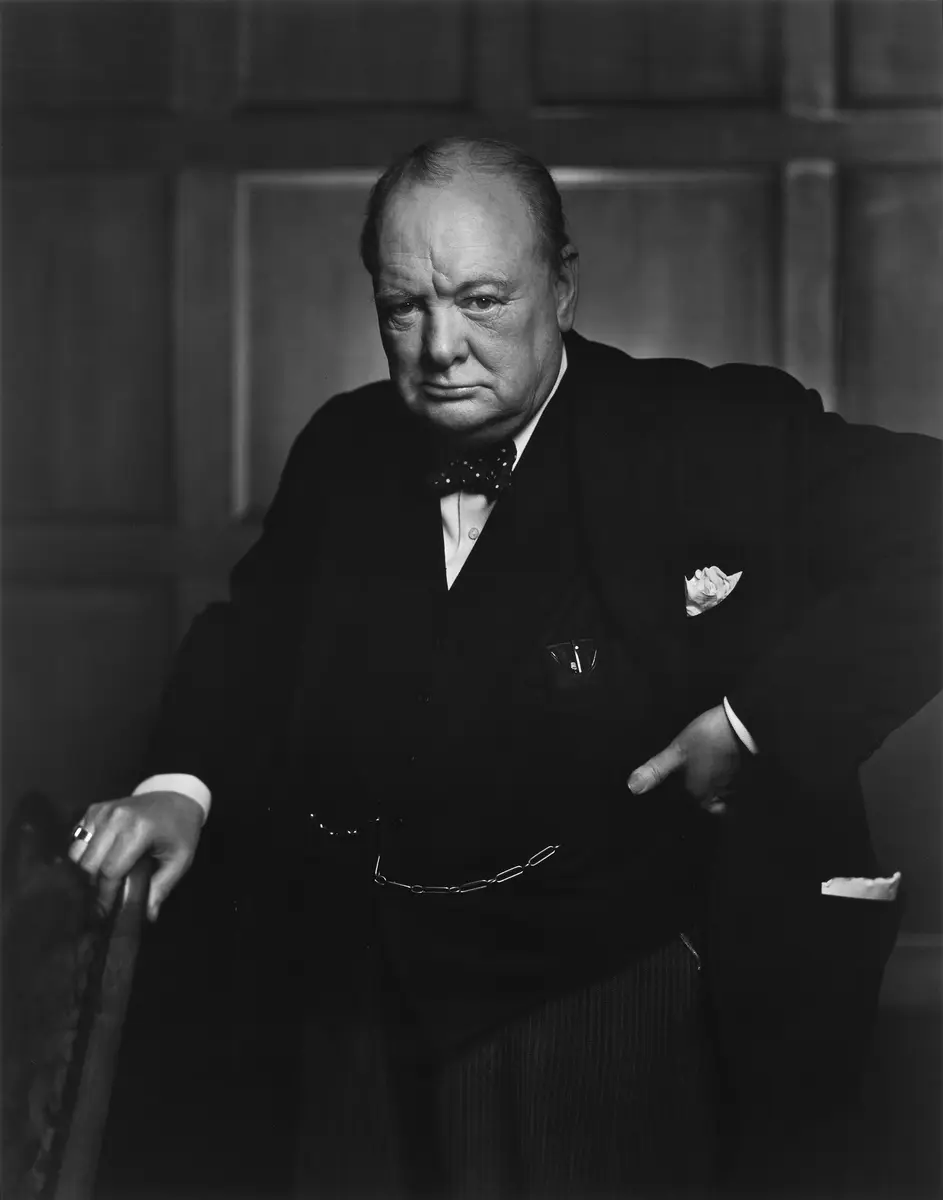
After Pearl Harbor and talks in Washington, he speaks to Canada's Parliament in Ottawa; afterwards Yousuf Karsh takes his portrait.
- 1942
Flies to Moscow to meet Stalin for the first time and tell him there will be no second front in France that year.
- 1943
Meets Roosevelt and Stalin together for the first time at Tehran, where the landing in France is fixed for May 1944.
- 1945
At Yalta in the Crimea the Big Three settle the occupation of Germany, the United Nations and the fate of Poland, which he fights for in vain.
VE Day: he broadcasts the end of the war in Europe and greets the crowds in Whitehall from the balcony of the Ministry of Health.
Called home from the Potsdam Conference by the election result, he resigns as Labour wins a landslide; Clement Attlee takes his place.
- 1946
At Westminster College in Fulton, Missouri, with President Truman beside him, warns that an 'iron curtain' has descended across Europe.
Westminster College, Fulton, Missouri: the 'iron curtain' speech, 5 March 1946In Zurich calls for a council of Europe and reconciliation between France and Germany.
- 1951
Prime minister again, aged 76, after the Conservatives win the October election.
- 1953
Attends the coronation of Queen Elizabeth II; earlier that year she had made him a Knight of the Garter.
Suffers a stroke that leaves him partly paralysed; the government keeps it secret and he recovers by the autumn.
Receives the Nobel Prize in Literature; Lady Churchill accepts it in Stockholm and reads his speech.
- 1955
Resigns as prime minister, aged 80; Anthony Eden succeeds him.
- 1963
Made an honorary citizen of the United States by an act of Congress, proclaimed by President Kennedy.
- 1965
Dies at his home at 28 Hyde Park Gate in London, aged 90, seventy years to the day after his father.