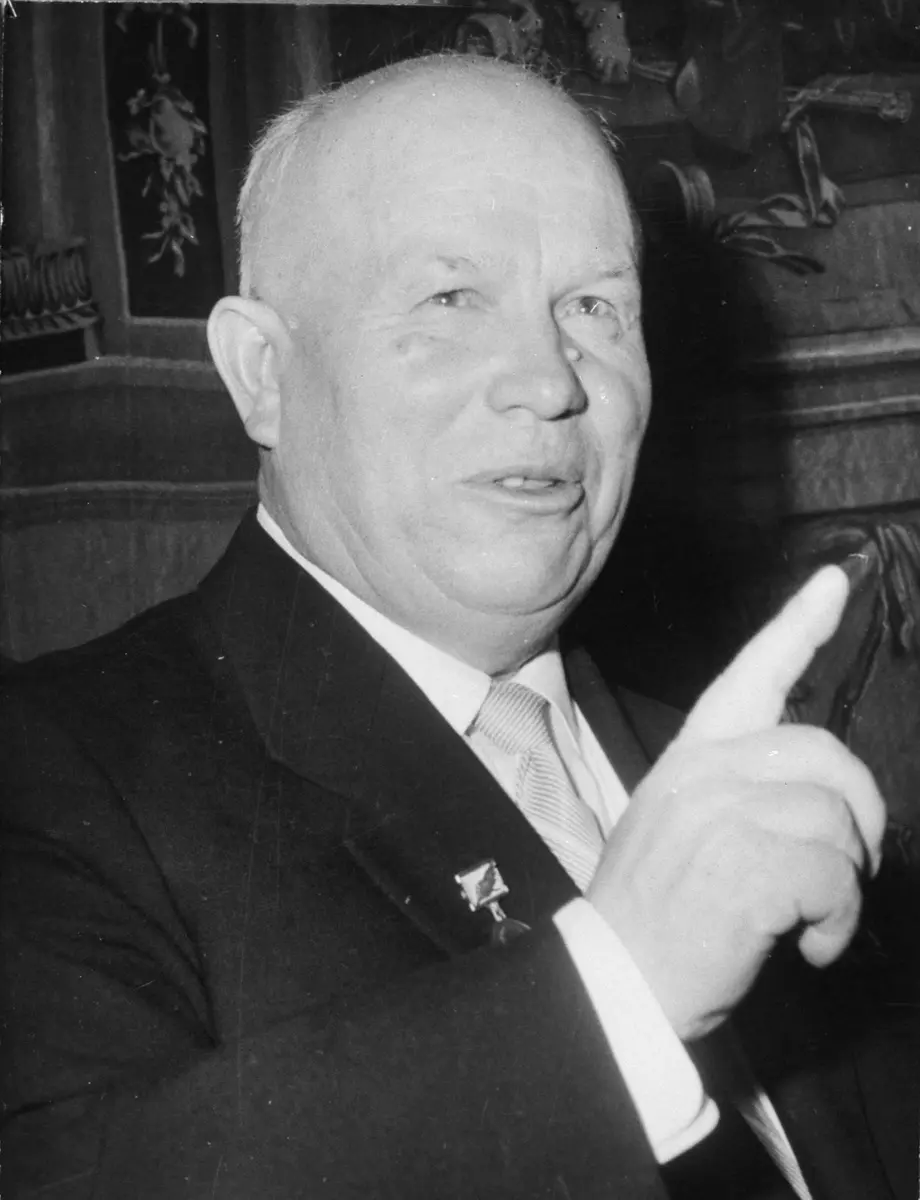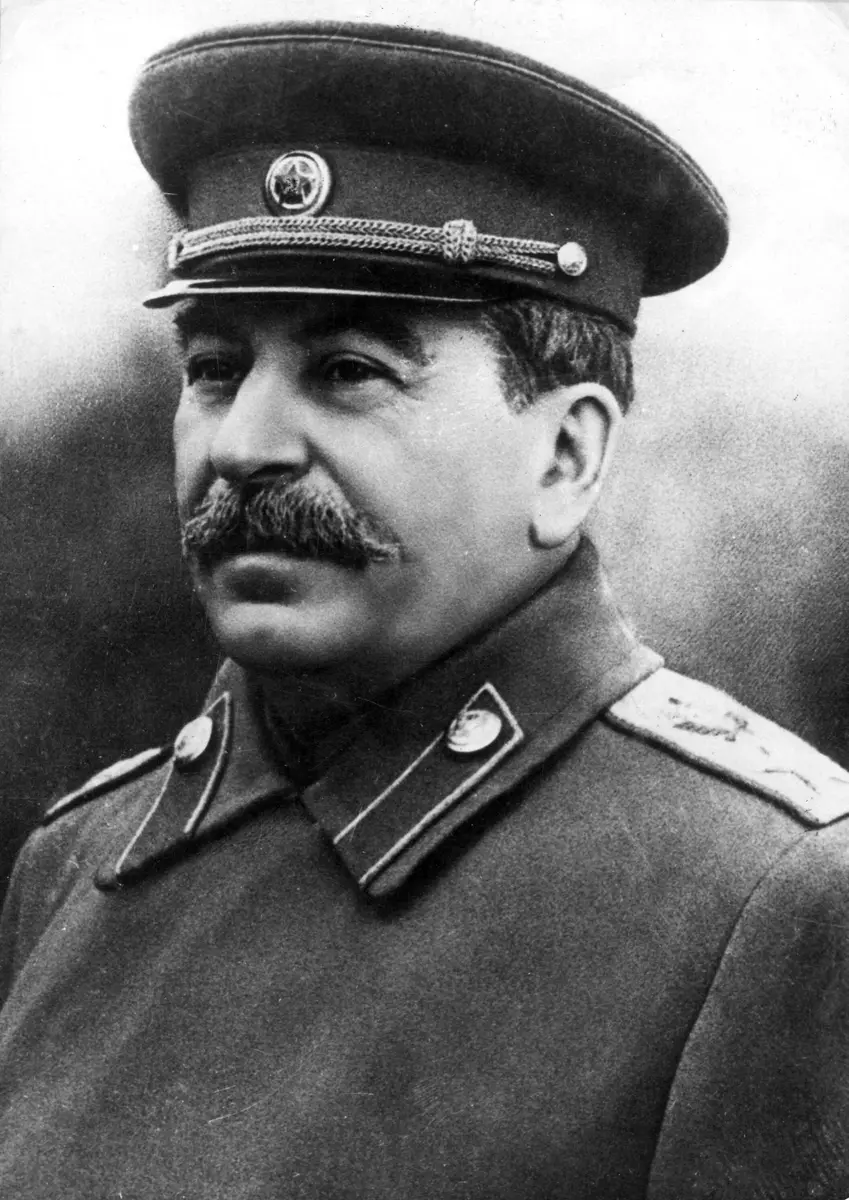
Joseph Stalin
“The Georgian-born dictator of the Soviet Union from the late 1920s to 1953, who industrialised it by terror, caused a great famine and the Great Terror, and led it to victory over Hitler.”
Joseph Stalin ruled the Soviet Union for a quarter of a century, from the late 1920s until his death in 1953. Born Ioseb Jughashvili in Georgia, he rose in Lenin's Bolshevik party not as a speaker or a thinker but as its organiser, and as General Secretary of the Communist Party from 1922 he built a personal dictatorship. He turned a country of peasants into an industrial and military power by force, and his policies and purges cost millions of lives. He led the Soviet Union to victory over Nazi Germany at a terrible price, extended Soviet rule over eastern Europe and gave his country the atomic bomb.
He was born on 18 December 1878 in Gori, a small town in Georgia, then part of the Russian Empire. His father, a cobbler, drank and beat him; his mother, a washerwoman, hoped he would become a priest. Smallpox scarred his face, and his left arm was damaged, probably in a carriage accident. He learned Russian at the church school in Gori and in 1894 entered the theological seminary in Tiflis (now Tbilisi), where he read Marx in secret; he left in 1899. He became an underground organiser of strikes in the Caucasus, joined Lenin's Bolsheviks after the party split in 1903, and helped plan an armed raid on a bank convoy in Tiflis in 1907 to raise money for the party. Between 1902 and 1913 the police arrested him seven times, and he was jailed and exiled again and again. By 1913 he had taken the name Stalin, from the Russian word for steel, and he spent the next four years in Siberian exile.
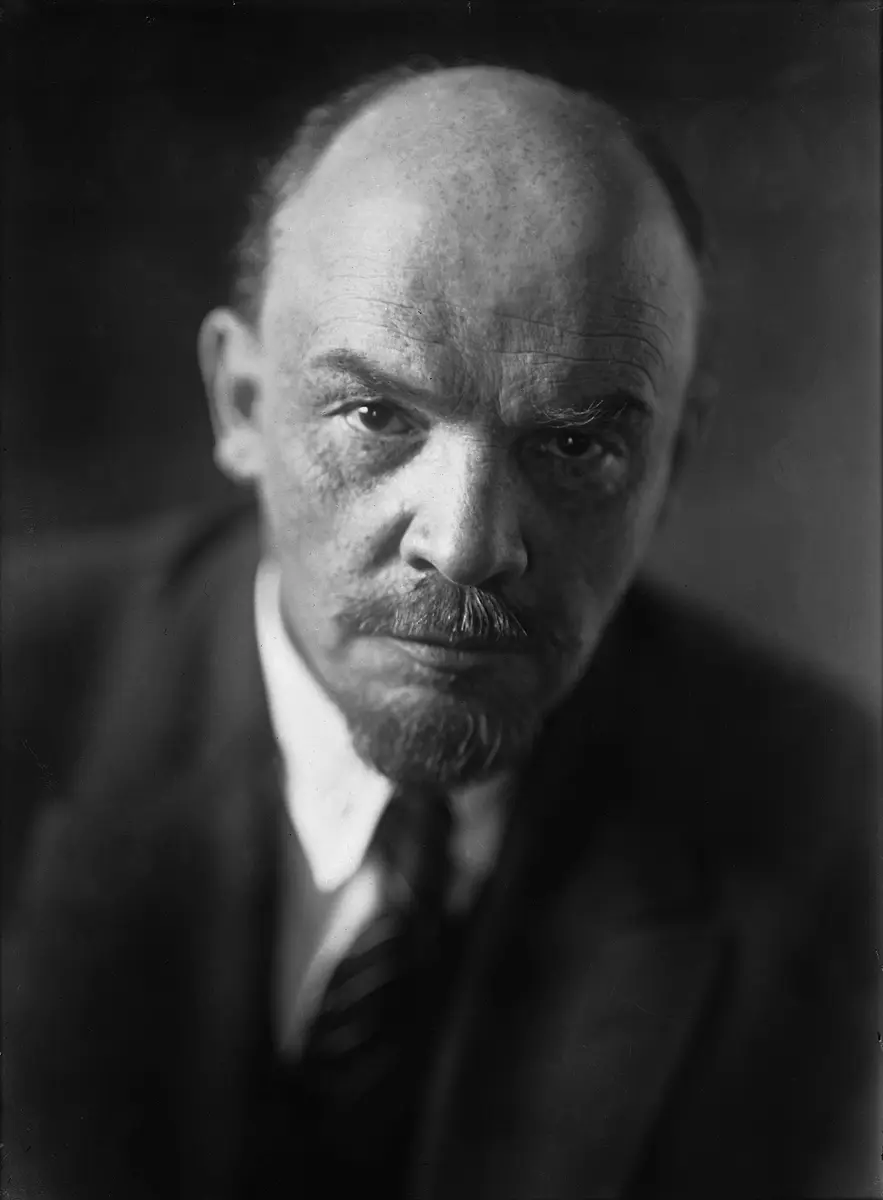
The revolution of 1917 set him free. Back in Petrograd in March, he edited the party newspaper Pravda, and after the Bolsheviks took power in November he became the commissar for the nationalities. In April 1922 he was made General Secretary, a post that looked like office work but let him place loyal men in party jobs across the country. Lenin, ill after a stroke, turned against him: in notes dictated at the end of 1922 he called Stalin 'too rude' and asked for his removal, but after Lenin's death in January 1924 the warning was set aside. Allied first with Zinoviev and Kamenev against Trotsky, then with Bukharin against them, Stalin defeated each rival in turn, preaching 'socialism in one country'. By 1929, when Trotsky was expelled from the Soviet Union, he ruled alone.
From 1928 he ended Lenin's limited market economy and launched Five-Year Plans to build heavy industry at breakneck speed. Some 25 million peasant households were forced into collective farms; peasants branded kulaks were shot, deported or sent to the growing network of labour camps, the Gulag. The upheaval caused a famine in 1932 and 1933 that killed at least five million people, above all in Ukraine, while grain was still sold abroad. After the murder of the Leningrad party chief Sergei Kirov in December 1934, Stalin turned on the party itself. In the Great Terror of 1936 to 1938, old Bolsheviks confessed to invented crimes at show trials in Moscow, the army's commanders were shot, and the secret police worked to quotas: by the archives' own count, about 680,000 people were executed in 1937 and 1938 alone. Around him grew a cult that hailed him as a genius and the 'great teacher and friend' of the Soviet peoples.
In August 1939 he made a pact with Hitler that secretly divided eastern Europe; he took eastern Poland, the Baltic states and part of Romania, attacked Finland, and had some 20,000 Polish officers and others shot at Katyn and elsewhere. Hitler's invasion of 22 June 1941 caught him unprepared, but he stayed in Moscow, took supreme command, and after Stalingrad and Kursk his armies drove the Germans back to Berlin. With Churchill and Roosevelt, then Truman, he shaped the post-war world at Tehran, Yalta and Potsdam; afterwards he imposed communist governments on eastern Europe as the Cold War began, and in 1949 the Soviet Union tested its first atomic bomb. He died on 5 March 1953 at his dacha at Kuntsevo, outside Moscow, four days after a stroke, as a new purge over a supposed 'Doctors' Plot' was gathering. His embalmed body lay beside Lenin's on Red Square until 1961, five years after Khrushchev had denounced his crimes, when it was moved to a grave by the Kremlin wall.
What happened
- 1878
Born Ioseb Jughashvili in Gori, Georgia, the son of a cobbler and a washerwoman; he later gave 21 December 1879 as his birthday.
Gori, Georgia: the house where he was born, kept under a pavilion in front of the Stalin Museum- 1894
After six years at the church school in Gori, where he learns Russian, he enters the theological seminary in Tiflis and secretly reads Marx.
The former Tiflis Theological Seminary on Erivan (now Freedom) Square, Tbilisi: where he studied, 1894–99 - 1899
Leaves the seminary, expelled for revolutionary activity according to the later Soviet legend, for ill health according to his mother; in December he becomes a clerk at the Tiflis Observatory, his only paid job outside politics.
The former Tiflis Theological Seminary on Erivan (now Freedom) Square, Tbilisi: where he studied, 1894–99 - 1902
Arrested for the first time; by March 1913 the police will have arrested him seven times, and he passes through prisons and exile, escaping again and again.
- 1903
When the Russian Social Democrats split, he joins Lenin's more militant Bolsheviks.
- 1907
Helps plot the armed holdup of the State Bank's money carriages on Erivan Square in Tiflis, which seizes a fortune for the party.
The former Tiflis Theological Seminary on Erivan (now Freedom) Square, Tbilisi: where he studied, 1894–99- 1912
Lenin, in exile, co-opts him onto the first Central Committee of the Bolshevik Party.
- 1913
Publishes 'Marxism and the National Question' at Lenin's request, now signing himself Stalin, from the Russian for 'steel', and briefly edits the new Bolshevik paper Pravda.
Begins his longest exile, in Siberia, which lasts until the revolution of March 1917.
- 1917
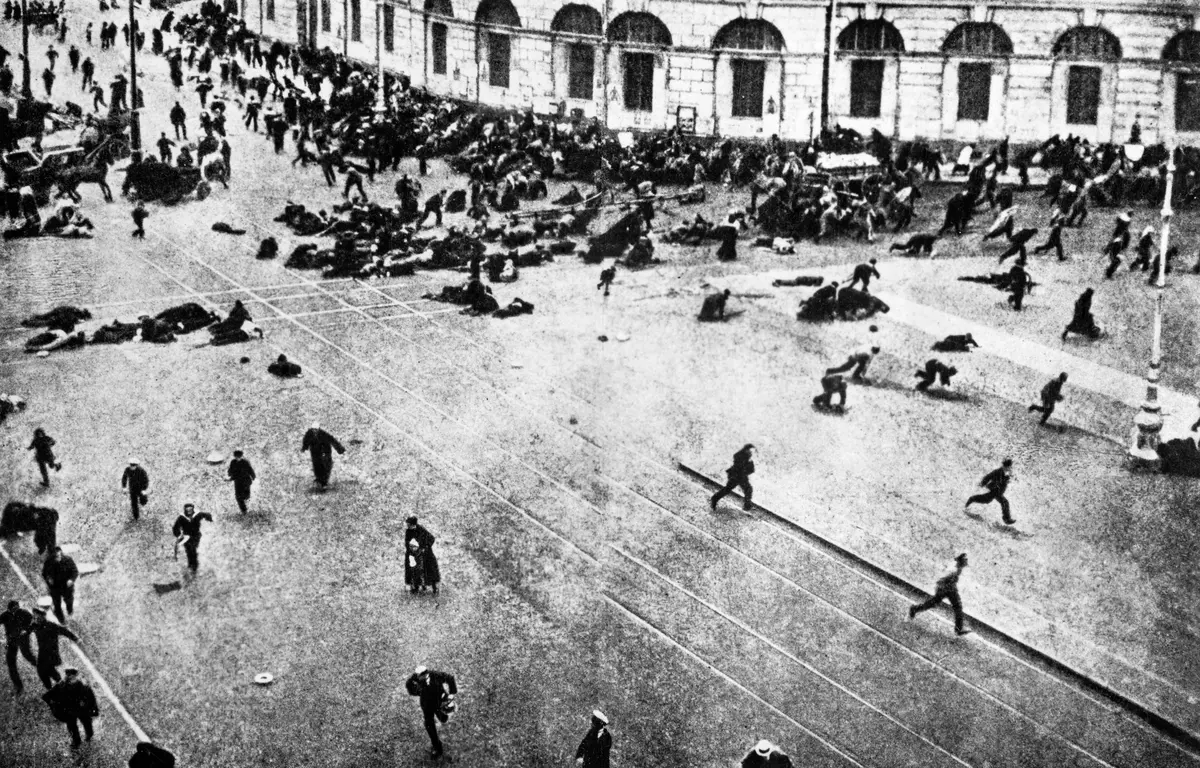
Reaches Petrograd from Siberia and takes over Pravda again; at first he backs cooperation with the Provisional Government, then follows Lenin's call for a seizure of power.
After the Bolsheviks take power, becomes People's Commissar for the Nationalities in Lenin's government, a post he holds until 1923.
- 1919
Marries Nadezhda Alliluyeva, becomes also commissar for state control, and serves as a political leader on several civil-war fronts.
- 1922
Pravda announces that the new Central Committee has made him General Secretary, with Molotov and Kuibyshev as fellow secretaries.
The Kremlin, Moscow: the seat of his powerLenin suffers the first of three strokes; that summer Stalin visits him at his country house at Gorki.
In notes later called his 'Testament', Lenin attacks Stalin's handling of Georgia; in a postscript of early January 1923 he writes that Stalin is 'too rude' and should be removed as General Secretary.
- 1924
Lenin dies; Stalin leads the cult of the dead leader, whose embalmed body is put on show in a mausoleum on Red Square. In May the Testament is read to the Central Committee and sidetracked.
- 1925
Trotsky, ousted by the triumvirate of Zinoviev, Kamenev and Stalin, loses his post at the head of the Red Army.
Tsaritsyn on the Volga is renamed Stalingrad; Stalin preaches 'socialism in one country' and, with Bukharin and Rykov, turns on Zinoviev and Kamenev.
The Kremlin, Moscow: the seat of his power- 1928
Abandons Lenin's New Economic Policy and starts the First Five-Year Plan of forced industrialisation; he soon breaks with Bukharin and the 'right'.
- 1929
Trotsky is expelled from the Soviet Union.
On the revolution's twelfth anniversary Pravda prints his article 'A Year of Great Change', announcing the 'great breakthrough' to collective farming.
- 1930
A Central Committee decree orders the collectivisation of most peasant farms in the main grain regions; peasants branded kulaks are shot, deported or sent to labour camps.
- 1932
Excessive grain quotas and a poor harvest bring famine to Ukraine, the Lower Volga and the North Caucasus; by 1933 at least five million people have died, while grain is still exported.
His wife Nadezhda Alliluyeva, who had tried to moderate his policies, kills herself.
- 1934
Sergei Kirov, the Leningrad party chief, is shot at the Smolny; Stalin blames Zinoviev's followers and uses the murder to launch a new terror.
- 1936
At the first Moscow show trial Zinoviev, Kamenev and fourteen others confess to invented crimes and are shot.
Replaces Genrikh Yagoda with Nikolai Yezhov at the head of the secret police, the NKVD.
- 1937
A second show trial condemns Yuri Pyatakov and other leaders of industrialisation.
Marshal Mikhail Tukhachevsky and other leading generals are court-martialled and shot; the purge of the Red Army's command follows.
The Politburo orders 'mass operations' against former kulaks and other 'anti-Soviet elements', with quotas of arrests and executions for each district; in 1937 and 1938 some 680,000 people are shot.
- 1938
At the third show trial Bukharin, Rykov and Yagoda are sentenced to death.
- 1939
Signs a non-aggression pact with Hitler's Germany whose secret protocol divides eastern Europe between them.
The Red Army crosses into eastern Poland, which is annexed to Soviet Ukraine and Belorussia.
Invades Finland; the League of Nations expels the Soviet Union, and the Winter War ends in March 1940 with Finland ceding territory.
- 1940
On orders later admitted to have been Stalin's, the NKVD shoots some 20,000 captured Polish officers and officials at Katyn and other sites.
Estonia, Latvia and Lithuania, occupied in June, are proclaimed Soviet republics; Trotsky is murdered in Mexico the same year on Stalin's orders.
- 1941
Makes himself chairman of the Council of People's Commissars, head of the government, his first government post since 1923.
Germany invades the Soviet Union; his defences collapse, but he soon names himself supreme commander.
With the Germans close to Moscow, troops parade on Red Square for the revolution's anniversary and march on to the front; Stalin stays in the capital and helps organise the winter counter-offensive.
The Kremlin, Moscow: the seat of his power- 1942
The German Sixth Army begins its advance on Stalingrad; under his Order No. 227, 'Not one step back!', the defenders fight for the city house by house.
- 1943
Paulus surrenders at Stalingrad after a Soviet counter-offensive from 19 November trapped some 250,000 Germans; in the summer the victory at Kursk follows.
Meets Roosevelt and Churchill at Tehran until 1 December; they agree on a second front in France and Stalin promises to join the war against Japan after Germany's defeat.
- 1945
The Big Three meet at Yalta in the Crimea until 11 February to settle Germany, Poland and the war with Japan.
Meets Truman and Churchill, later Attlee, at Potsdam until 2 August; on 24 July Truman tells him that the United States has a new bomb.
- 1947
As the break with the West becomes final, the Cominform is founded to bind Europe's communist parties to Moscow.
- 1948
Tito's Yugoslav party is expelled from the Cominform; Stalin answers with show trials of communist leaders across eastern Europe.
- 1949
The Soviet Union tests its first atomic bomb, ending the American monopoly.
- 1952
At the Nineteenth Party Congress a larger Presidium replaces the Politburo; he asks to be relieved as Secretary General, and his frightened colleagues refuse.
- 1953
TASS announces the arrest of Kremlin doctors, most of them Jews, for murdering Soviet leaders: the 'Doctors' Plot', which looks like the start of a new purge.
In mid-February he leaves the Kremlin for the last time for his dacha at Kuntsevo.
The Kuntsevo dacha ('Near Dacha'), Moscow: his country house, where he died on 5 March 1953Late in the evening, after a night of heavy drinking that ran into the early hours, his staff find him on the floor of his bedroom; he has had a massive stroke, and doctors are not called until the next day.
The Kuntsevo dacha ('Near Dacha'), Moscow: his country house, where he died on 5 March 1953- 9:50 p.m.
Dies at Kuntsevo; the death is announced the next day, and after his funeral on Red Square on 9 March his embalmed body is laid beside Lenin's.
The Kuntsevo dacha ('Near Dacha'), Moscow: his country house, where he died on 5 March 1953