X-rays are discovered
“On 8 November 1895 in Würzburg, Wilhelm Röntgen found invisible rays that pass through flesh but not bone; within weeks of his paper, doctors around the world were using X-rays to see inside the body.”
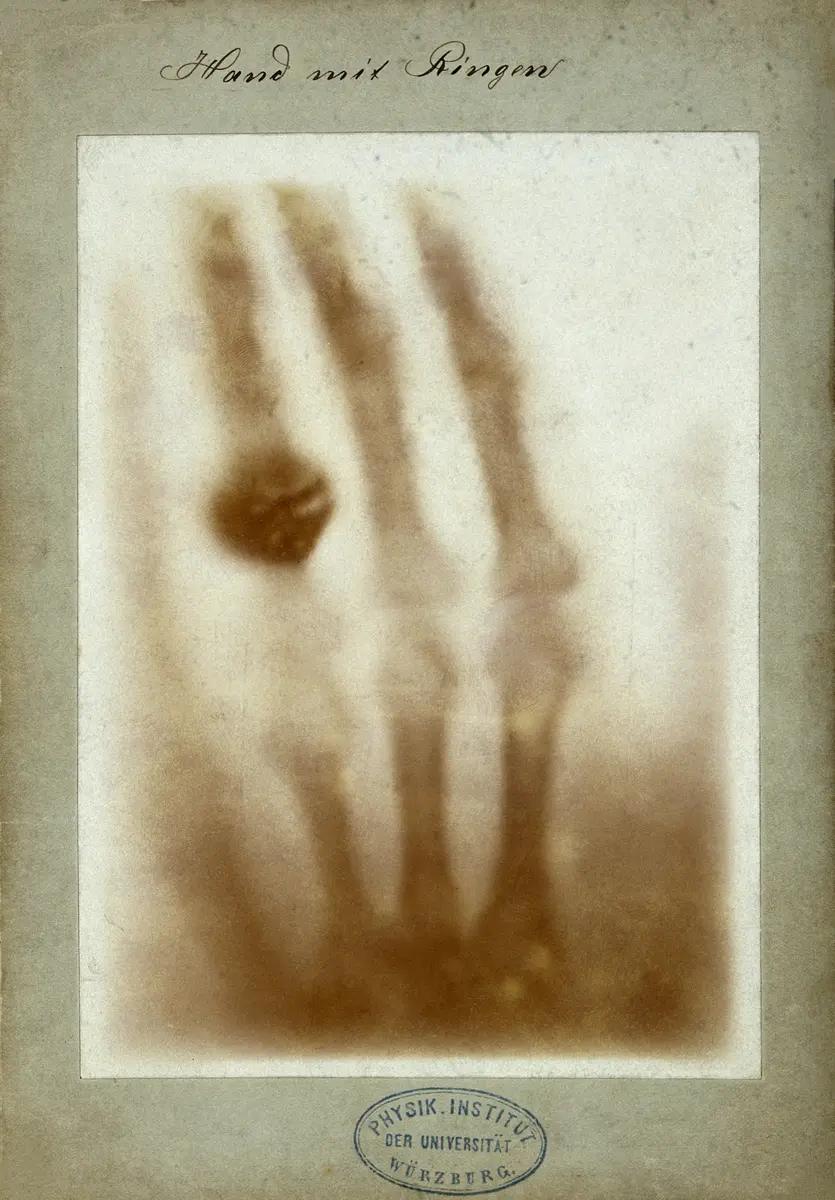
On the evening of Friday 8 November 1895, Wilhelm Conrad Röntgen, the 50-year-old professor of physics at the University of Würzburg in Bavaria, was sending electric discharges through a glass vacuum tube wrapped in thin black card in his darkened laboratory when a paper screen painted with barium platinocyanide, lying up to two metres away, began to glow. Nothing known could pass through the card and across the room, so he called the unknown cause 'X-rays', X for the unknown. For seven weeks he worked almost alone, eating and sleeping in the laboratory, and found that the rays passed through paper, wood and flesh but were stopped by lead and bone, and that they blackened photographic plates. On 22 December he photographed his wife Anna Bertha's hand: the bones and her ring stood out inside a pale shadow of flesh. Six days later he handed in a short, sober report, 'On a new kind of rays', to the Würzburg Physical-Medical Society.
No scientific discovery had ever spread so fast. On New Year's Day 1896 Röntgen posted about ninety copies of his paper to physicists across Europe, a dozen of them with prints of his first X-ray pictures. In Vienna Franz Exner showed his prints to dinner guests; one of them, Ernst Lecher, lent them to his father, the editor of Die Presse, which put 'a sensational discovery' on its front page on Sunday 5 January. Within days the story was in the German, British and American papers. Doctors saw at once that they could look inside the body without cutting it, and within weeks they were using the rays to find needles and bullets and to set broken bones. Röntgen gave only one public lecture, on 23 January in Würzburg, where the anatomist Albert von Kölliker proposed to call them Röntgen rays. He took out no patent, so anyone could build the simple apparatus: by the end of 1896 more than a thousand books and papers on X-rays had appeared, and the rays had become a public sensation, from cartoons to 'X-ray-proof' underwear.
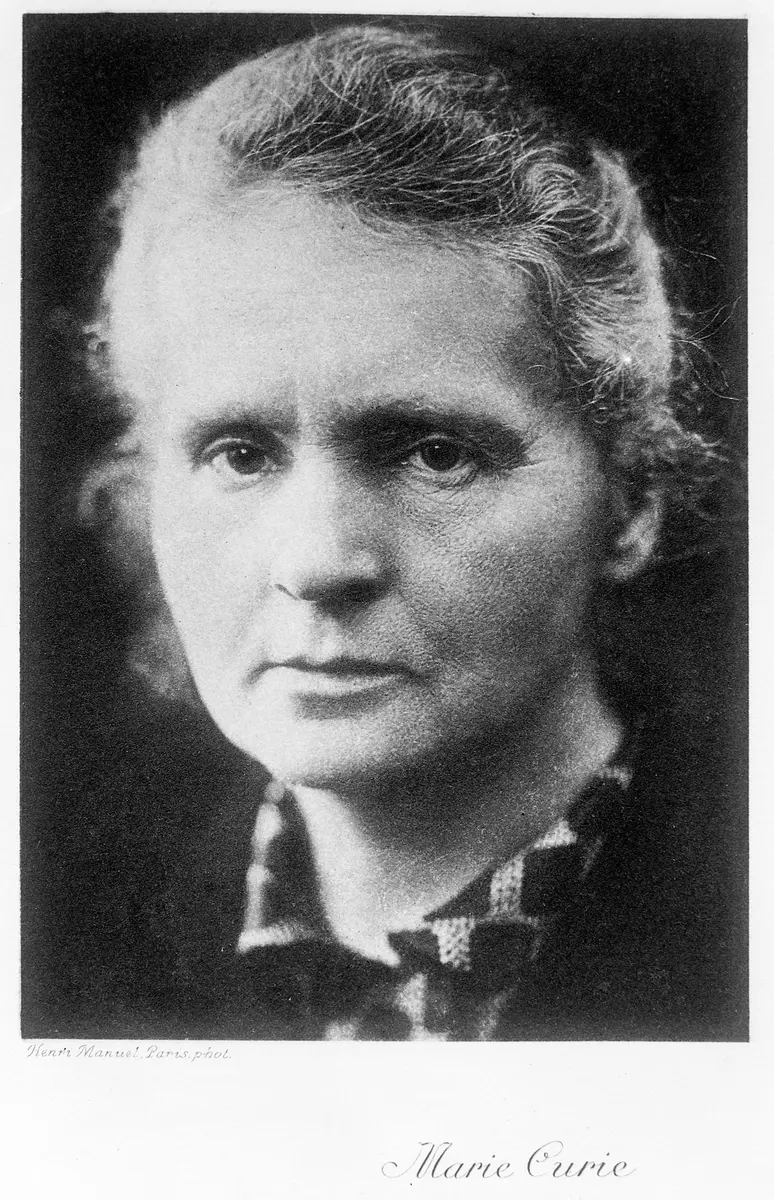
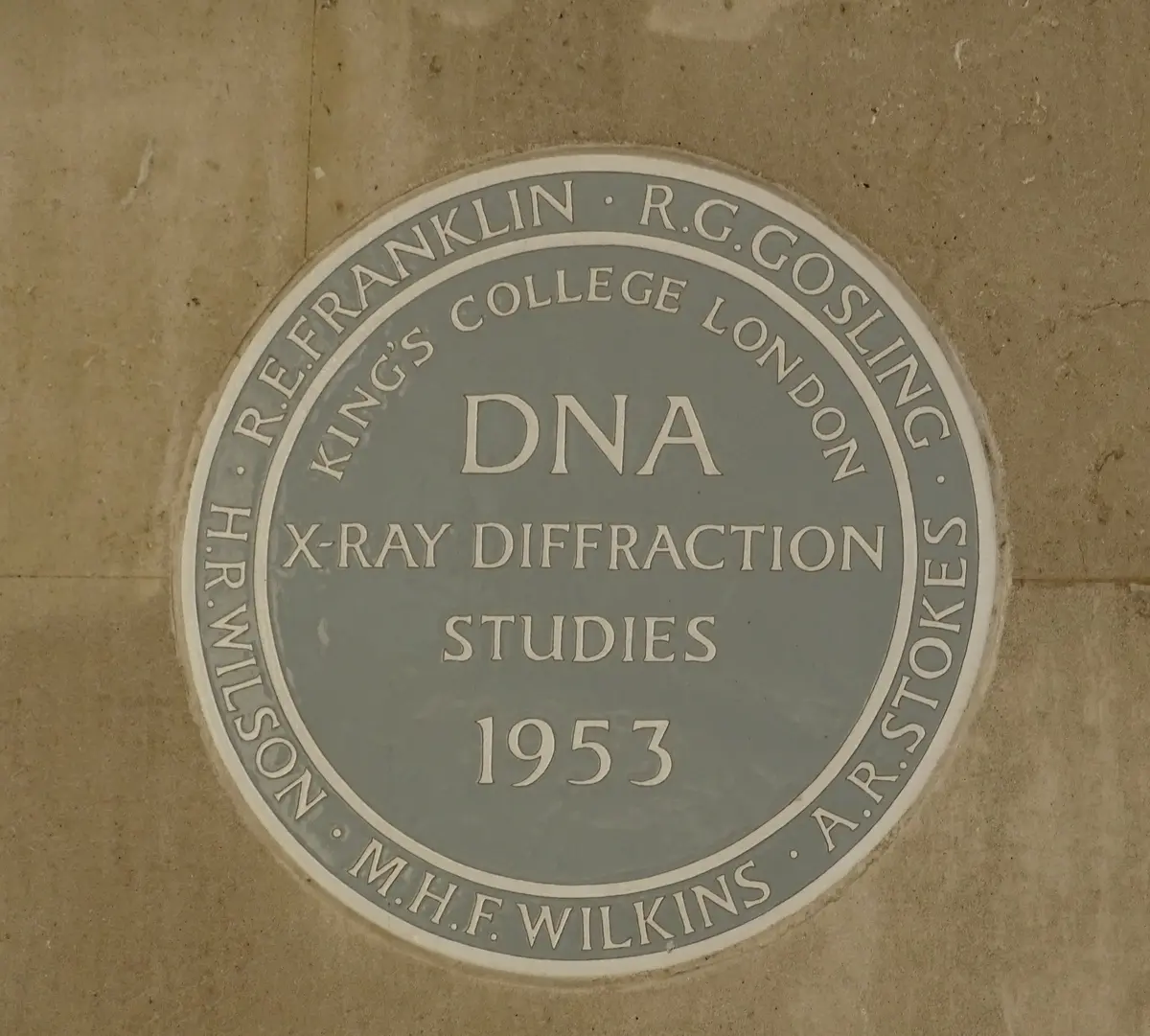
The discovery opened the way to modern physics. Wondering whether glowing substances might give off similar rays, Henri Becquerel in Paris found on 1 March 1896 that uranium salts darken a wrapped photographic plate even in a drawer, without any light: the first sign of radioactivity, which Marie Curie made her subject the next year. Together with radioactivity and the electron, found in 1897, X-rays led physicists into the atom. Nobody yet knew what the rays were. In 1912 Max von Laue in Munich had the idea of sending them through a crystal, and Walter Friedrich and Paul Knipping found a regular pattern of spots: X-rays are waves like light, only far shorter, and a crystal scatters them according to the way its atoms are arranged. From that grew X-ray crystallography, the method that would later show the double helix of DNA.
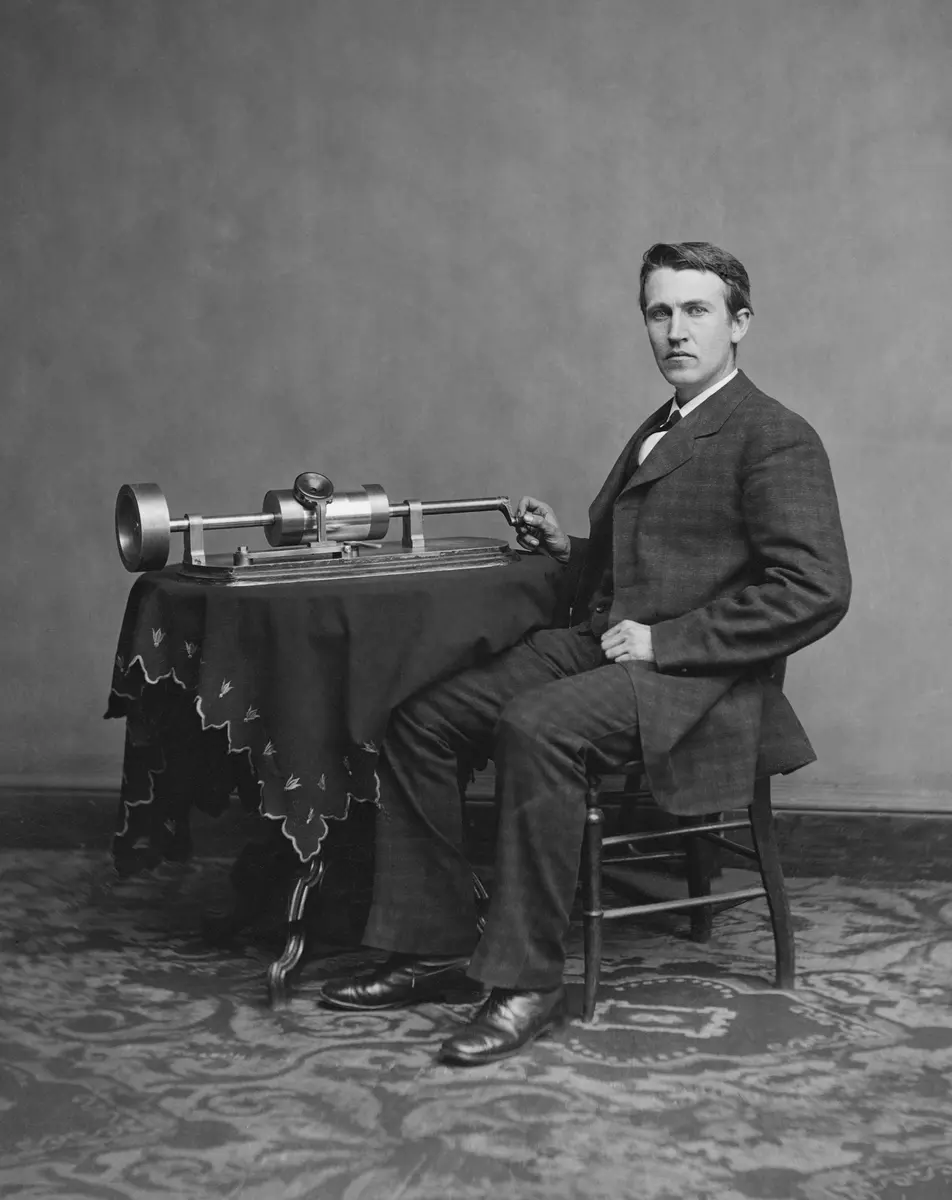
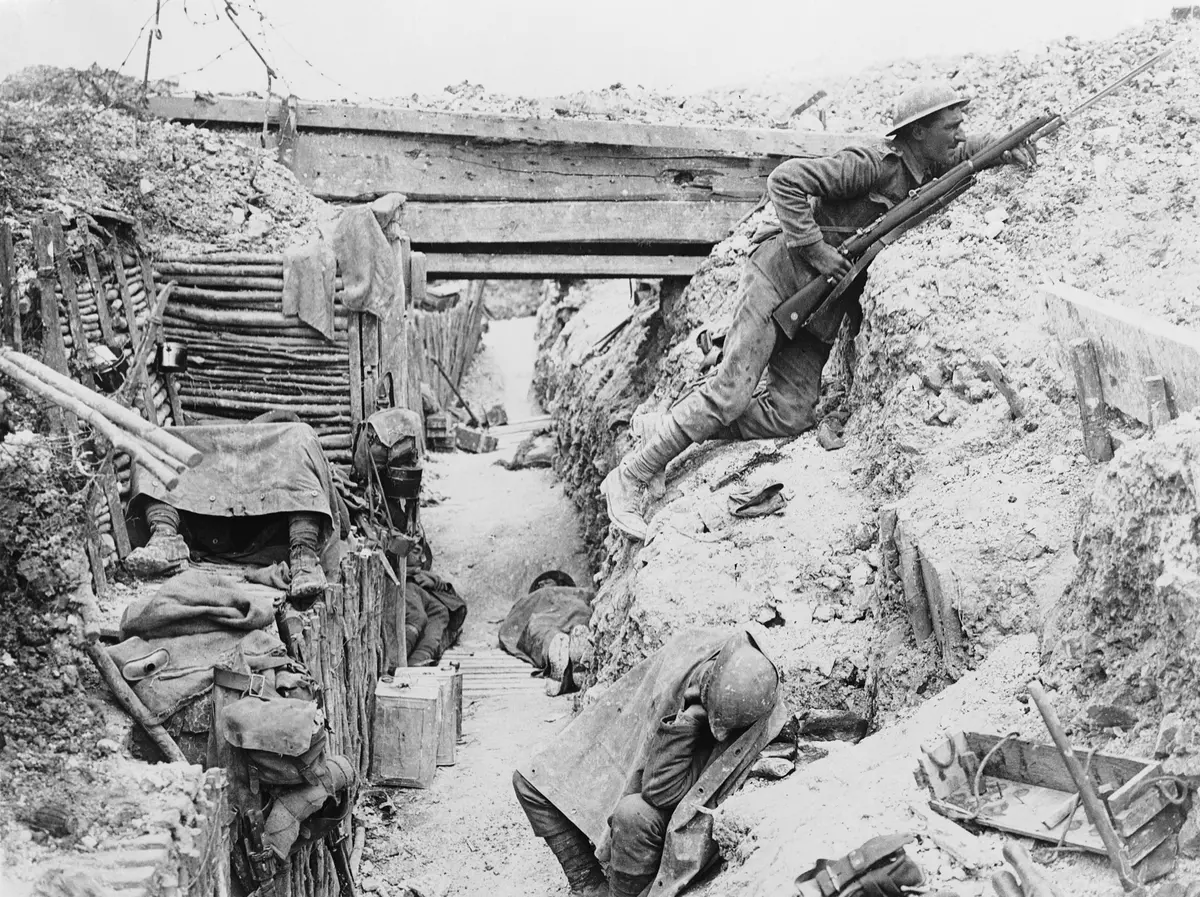
In medicine the change was immediate and permanent, but the first workers paid for it, because no one knew that the rays could burn and cause cancer. Thomas Edison, who built a fluoroscope in early 1896, a box with a glowing screen for watching X-ray shadows directly, lost his laboratory assistant Clarence Dally, who died of radiation burns in October 1904; John Hall-Edwards, who in February 1896 took Britain's first X-ray to guide an operation, lost his left arm in 1908. In the First World War mobile X-ray units, among them the cars that Marie Curie fitted out, helped surgeons find bullets and shell fragments at the front.
Röntgen moved to the University of Munich in 1900 and in 1901 received the very first Nobel Prize in Physics. He gave the prize money to the University of Würzburg, declined a title of nobility and died in Munich in 1923, nearly ruined by the post-war inflation. His discovery is still in daily use: every hospital X-ray and CT scan, every baggage scanner at an airport, descends from the glowing screen in his Würzburg laboratory.
What happened
- 1895
Late on a Friday evening in his darkened laboratory, Röntgen sends discharges from an induction coil through a vacuum tube wrapped in black card and sees a paper screen painted with barium platinocyanide glow up to two metres away. Some unknown rays must be crossing the card and the room.
The Physical Institute of the University of Würzburg (Röntgenring 8, then Pleicherring 8): Röntgen's laboratory, where he found the rays on 8 November 1895, and the lecture hall of 23 January 1896; today the Röntgen MemorialAfter weeks of eating and sleeping in the laboratory, testing paper, wood, metals and flesh, he holds his wife Anna Bertha's hand over a photographic plate: her bones and ring appear inside a faint shadow of flesh.
The Physical Institute of the University of Würzburg (Röntgenring 8, then Pleicherring 8): Röntgen's laboratory, where he found the rays on 8 November 1895, and the lecture hall of 23 January 1896; today the Röntgen MemorialOn Christmas Day he X-rays a set of weights shut in a wooden box, one of the shadow pictures his paper will list as proof that the agent travels in straight lines like rays.
The Physical Institute of the University of Würzburg (Röntgenring 8, then Pleicherring 8): Röntgen's laboratory, where he found the rays on 8 November 1895, and the lecture hall of 23 January 1896; today the Röntgen MemorialHe hands in 'On a new kind of rays (preliminary communication)', ten printed pages, to the Physical-Medical Society of Würzburg; offprints are run off before the year ends.
The Physical Institute of the University of Würzburg (Röntgenring 8, then Pleicherring 8): Röntgen's laboratory, where he found the rays on 8 November 1895, and the lecture hall of 23 January 1896; today the Röntgen Memorial- 1896
At the Würzburg post office Röntgen mails about ninety offprints to physicists across Europe; twelve envelopes, to friends and to leading scientists such as Lord Kelvin, also hold nine photographs.
The Physical Institute of the University of Würzburg (Röntgenring 8, then Pleicherring 8): Röntgen's laboratory, where he found the rays on 8 November 1895, and the lecture hall of 23 January 1896; today the Röntgen MemorialIn Vienna the physicist Franz Exner, a former fellow student of Röntgen's, shows Röntgen's photographs to his Saturday dinner guests. Ernst Lecher of Prague borrows them for a day to show his father, the editor of Die Presse.
Vienna, where Franz Exner showed Röntgen's prints on 4 January 1896 and Die Presse broke the news the next morningDie Presse changes its front page overnight: 'A sensational discovery' tells Vienna of 'Professor Routgen' and rays that photograph through wood and organic matter but not through metal or bone, and imagines an immense help for medicine.
Vienna, where Franz Exner showed Röntgen's prints on 4 January 1896 and Die Presse broke the news the next morningForeign correspondents cable the Vienna story home: on Monday the leading German papers carry it, London's Daily Chronicle has the first British report, and the next day the Standard assures readers there is 'no joke or humbug' in it.
Nature gives Röntgen seventeen lines; a week later it prints an English translation of his paper. The Lancet, dismissive on 11 January, now expects 'quite a revolution' in examining the inside of the body.
In the lecture hall of his institute Röntgen gives his only public lecture on the rays, to the Physical-Medical Society, and X-rays the hand of the anatomist Albert von Kölliker, who proposes calling them Röntgen rays, to applause.
The Physical Institute of the University of Würzburg (Röntgenring 8, then Pleicherring 8): Röntgen's laboratory, where he found the rays on 8 November 1895, and the lecture hall of 23 January 1896; today the Röntgen MemorialThe 'new photography' becomes a craze: the British Medical Journal leads with it on 1 February, cartoonists draw skeletons, a London firm sells 'X-ray proof' underclothing and New Yorkers talk of banning X-rays in opera glasses.
In Birmingham John Hall-Edwards takes the first X-ray in Britain made to guide an operation. Doctors everywhere bring patients to the physicists: Arthur Schuster in Manchester spends three mornings of one week hunting a needle in a ballet dancer's foot, and at Dartmouth College Edwin Frost X-rays a broken wrist for his brother, a local doctor.
In Paris Henri Becquerel, who has been testing whether glowing uranium salts give off rays like Röntgen's, develops plates left in a dark drawer through two cloudy days and finds strong images made without any light. He reports it to the Academy of Sciences the next day: the discovery of radioactivity.
The Muséum national d'Histoire naturelle in Paris, where Henri Becquerel, its professor of applied physics, found the rays of uranium in March 1896Thomas Edison, experimenting since January, perfects a fluoroscope with a calcium tungstate screen for watching X-ray shadows directly, and late in the month sends one to Michael Pupin at Columbia University.
Edison's laboratory in West Orange, New Jersey, where he built his X-ray fluoroscope in early 1896 and where Clarence Dally was fatally exposedBy the end of the year more than a thousand books and papers on X-rays have appeared, and the rays have gone to war with the British expedition up the Nile. Röntgen himself publishes only two more papers on them and turns down every invitation to lecture.
- 1900
Röntgen leaves Würzburg, where he later said he spent his happiest twelve years, for the chair of physics at the University of Munich.
- 1901
In Stockholm the Royal Swedish Academy of Sciences awards Röntgen the first Nobel Prize in Physics, for 'the remarkable rays subsequently named after him'. He gives no Nobel lecture and gives the prize money, 50,000 crowns, to the University of Würzburg.
Stockholm, where the first Nobel Prize in Physics was presented to Röntgen on 10 December 1901