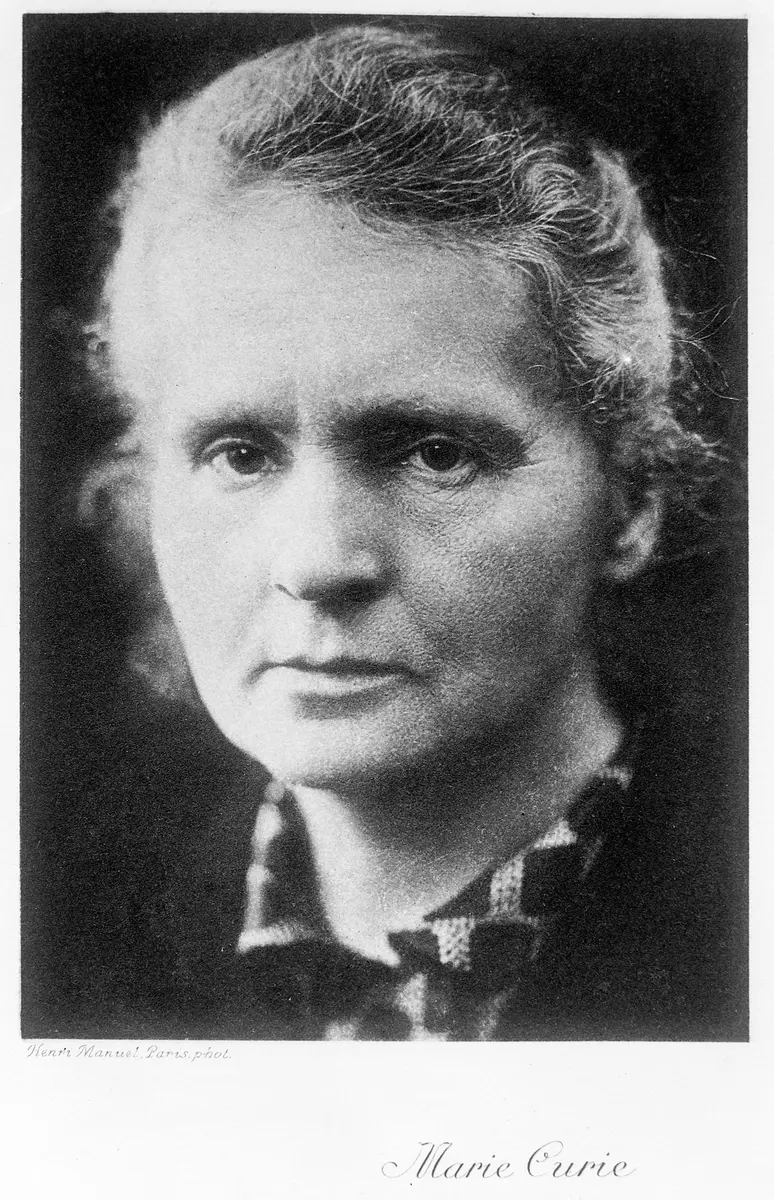
Marie Curie
“The Polish-born scientist who, with her husband Pierre in Paris, discovered polonium and radium, named radioactivity, and became the first person to win two Nobel Prizes (1903 and 1911).”
Marie Curie was the Polish-born physicist and chemist who, working in Paris with her husband Pierre, discovered the elements polonium and radium and founded the study of radioactivity, a word she coined. Her key idea, reached in 1898 by careful measurement, was that the rays given off by uranium depend only on how much uranium a sample contains, not on its chemical form: they come from inside the atom itself. That insight, and the radium she spent years extracting from tons of ore, opened the way to nuclear physics and to the treatment of cancer with radiation. She was the first woman to win a Nobel Prize, in Physics in 1903, shared with Pierre and Henri Becquerel, and in 1911 she won a second, in Chemistry, alone: the first person ever to receive two.
She was born Maria Skłodowska in Warsaw on 7 November 1867, the youngest of five children of two teachers, in the part of Poland ruled by the Russian tsar, where Polish language and culture were suppressed in the schools. She lost her eldest sister to typhus and her mother to tuberculosis by the age of ten, yet left school at fifteen with a gold medal. Women could not study at the university in Warsaw, so she and her sister Bronisława (Bronya) attended the illegal 'Floating University' and made a pact: Maria would work as a governess to pay for Bronya's medical studies in Paris, and Bronya would later help her. In November 1891, aged 24, she followed her sister to Paris, enrolled at the Sorbonne as Marie, lived in a freezing attic in the Latin Quarter, and came first in the physics degree in 1893 and second in mathematics in 1894.
In the spring of 1894 she met Pierre Curie, a physicist known for his work on crystals and magnetism and laboratory chief at the city's School of Industrial Physics and Chemistry; they married in a simple civil ceremony in July 1895 and spent their honeymoon cycling through France. For her doctorate she chose the 'uranium rays' that Henri Becquerel had found in 1896. Measuring them with an electrometer invented by Pierre and his brother, she found that thorium gives off the same rays and that the ore pitchblende is far more active than its uranium can explain. Pierre joined her search, and in July 1898 they announced polonium, named after her occupied homeland, and on 26 December radium. In a leaky shed at the school, helped by a chemical firm and a ton of ore residues given by the Austrian government, she worked for more than three years to isolate a tenth of a gram of radium chloride. She defended her thesis on 25 June 1903 and that December shared the Nobel Prize. When Pierre was killed by a horse-drawn wagon in a Paris street on 19 April 1906, she took over his course and became the first woman to teach at the Sorbonne.
Alone, she isolated radium as a metal in 1910 and set the international standard for measuring it. In January 1911 the Academy of Sciences refused her a seat after a campaign in the nationalist press, and that November newspapers printed letters revealing her love for her married colleague Paul Langevin; in the middle of the scandal came her second Nobel Prize. Her Radium Institute in Paris, built by the University of Paris and the Pasteur Institute, was finished in 1914, just as war broke out. She turned to X-rays: as head of the Red Cross radiology service she equipped about twenty radiology cars, which soldiers called 'petites Curies', and some two hundred fixed posts, learned to drive and to work the machines, and with her daughter Irène trained about 150 women as radiology assistants. After the war her institute became a world centre for research on radioactivity, and her tours of the United States in 1921 and 1929 brought her a gram of radium from President Harding, on behalf of the women of America, and money from President Hoover to buy radium for the new radium institute in Warsaw.
Decades of handling radium without protection ruined her health. She died on 4 July 1934 at the Sancellemoz sanatorium in the French Alps, of what the sanatorium's director called aplastic anaemia (other sources say leukaemia), a failure of the bone marrow he blamed on a long accumulation of radiation; her notebooks of those years are still radioactive. A few months earlier she had seen Irène and her husband Frédéric Joliot discover artificial radioactivity, which won them the Nobel Prize in 1935. She was buried beside Pierre at Sceaux, and on 20 April 1995 their remains were moved to the Panthéon in Paris, where she became the first woman honoured for her own achievements.
What happened
- 1867
Maria Skłodowska is born in Warsaw, in the part of Poland ruled by the Russian tsar, the fifth child of two teachers, in the school her mother heads.
16 Freta Street, Warsaw: Maria Skłodowska was born here on 7 November 1867, in the school her mother headed; today the Maria Skłodowska-Curie Museum- 1878
Her mother dies of tuberculosis, two years after her eldest sister died of typhus. Maria, ten, later called it the first great sorrow of her life.
- 1883
She finishes secondary school top of her class with a gold medal, at fifteen.
- 1886
Barred from the university, she has been teaching privately and attending the illegal Floating University. Now she becomes a governess on a country estate north of Warsaw, under a pact to pay for her sister Bronya's medical studies in Paris.
- 1890
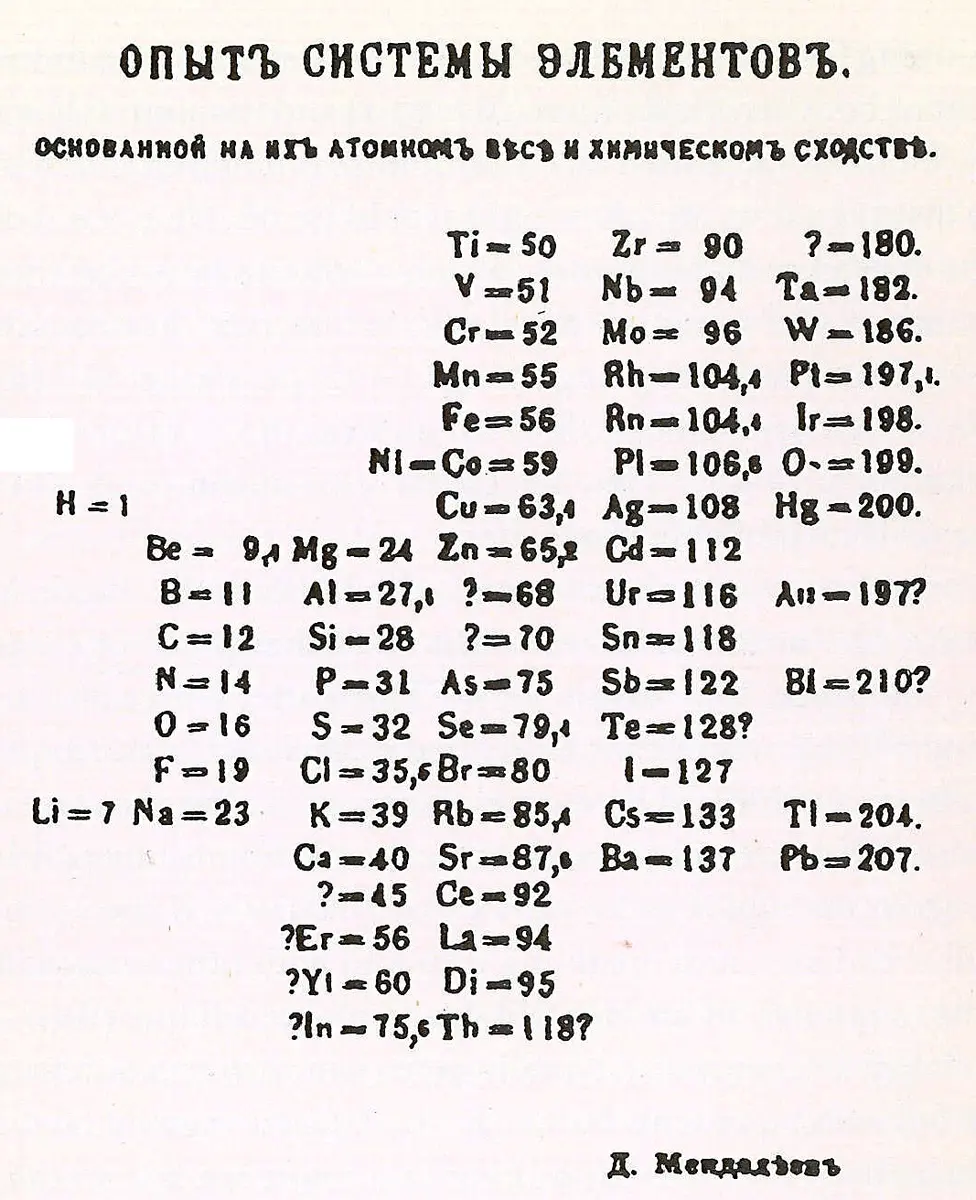
Back in Warsaw with her father, she does her first real chemistry in a secret laboratory run by her cousin Józef Boguski, a former assistant of Mendeleev.
- 1891
At 24 she travels to Paris, enrols at the Sorbonne's Faculty of Sciences as Marie, and soon moves to a cold attic in the Latin Quarter.
- 1893
She comes first in the degree (licence) in physics; the next year she comes second in mathematics.
- 1894
Looking for space to study the magnetism of steels, she meets Pierre Curie, laboratory chief at the Municipal School of Industrial Physics and Chemistry, known for piezoelectricity and magnetism.
- 1895
Marie and Pierre marry at the town hall of Sceaux, with no religious service and no rings; with wedding money they buy bicycles and cycle through France on their honeymoon.
- 1897
Their daughter Irène is born. At the end of the year Marie chooses Becquerel's mysterious uranium rays as the subject of her doctorate.
- 1898
In her first note to the Academy of Sciences, presented by her teacher Gabriel Lippmann, she reports that thorium also gives off the rays, that their strength depends only on the amount of uranium or thorium, and that pitchblende is far more active than its uranium explains.
The School of Industrial Physics and Chemistry (today ESPCI Paris), Latin Quarter: in its storeroom and then a shed across the courtyard the Curies found polonium and radium in 1898 and isolated radiumWith Pierre, who has joined her search, she announces a new element in the bismuth fraction of pitchblende and names it polonium, after Poland; the paper also uses the word 'radio-active'.
The School of Industrial Physics and Chemistry (today ESPCI Paris), Latin Quarter: in its storeroom and then a shed across the courtyard the Curies found polonium and radium in 1898 and isolated radiumThe Curies and the chemist Gustave Bémont tell the Academy of a second new element, found with barium, and propose the name radium.
The School of Industrial Physics and Chemistry (today ESPCI Paris), Latin Quarter: in its storeroom and then a shed across the courtyard the Curies found polonium and radium in 1898 and isolated radium- 1902
After more than three years of work in a leaky shed across the school courtyard, processing ore residues from Joachimsthal given by the Austrian government, she has a tenth of a gram of pure radium chloride and measures radium's atomic weight as 225. Her father dies in Warsaw.
The School of Industrial Physics and Chemistry (today ESPCI Paris), Latin Quarter: in its storeroom and then a shed across the courtyard the Curies found polonium and radium in 1898 and isolated radium - 1903
She defends her doctoral thesis, 'Research on radioactive substances', at the Sorbonne; the examiners, Lippmann and Moissan among them, call it the greatest contribution ever made by a thesis.
Marie and Pierre share half the Nobel Prize in Physics, Becquerel the other half; she was added to the nomination only after Pierre insisted. Too ill and busy to travel, they go to Stockholm only in June 1905.
- 1904
Their second daughter, Ève, is born, and Marie is appointed chief assistant in the laboratory Pierre now directs for the Sorbonne, her first university salary. On 22 December Vanity Fair publishes the couple as a caricature: the Curies have become famous.
- 1906
Pierre is run over and killed by a heavy horse-drawn wagon in a Paris street on a rainy afternoon. Marie refuses a state pension.
Having been asked to take over Pierre's post, she gives her first lecture to a packed hall, the first woman to teach at the Sorbonne, and simply picks up where his course left off.
- 1908
She is appointed full professor, the first woman professor at the Sorbonne.
- 1910
With André Debierne she isolates radium as a pure metal, publishes her Treatise on Radioactivity, and sets the international standard for radium, the curie.
- 1911
After a hostile press campaign against the foreign-born candidate, the Academy of Sciences elects the physicist Édouard Branly instead of her.
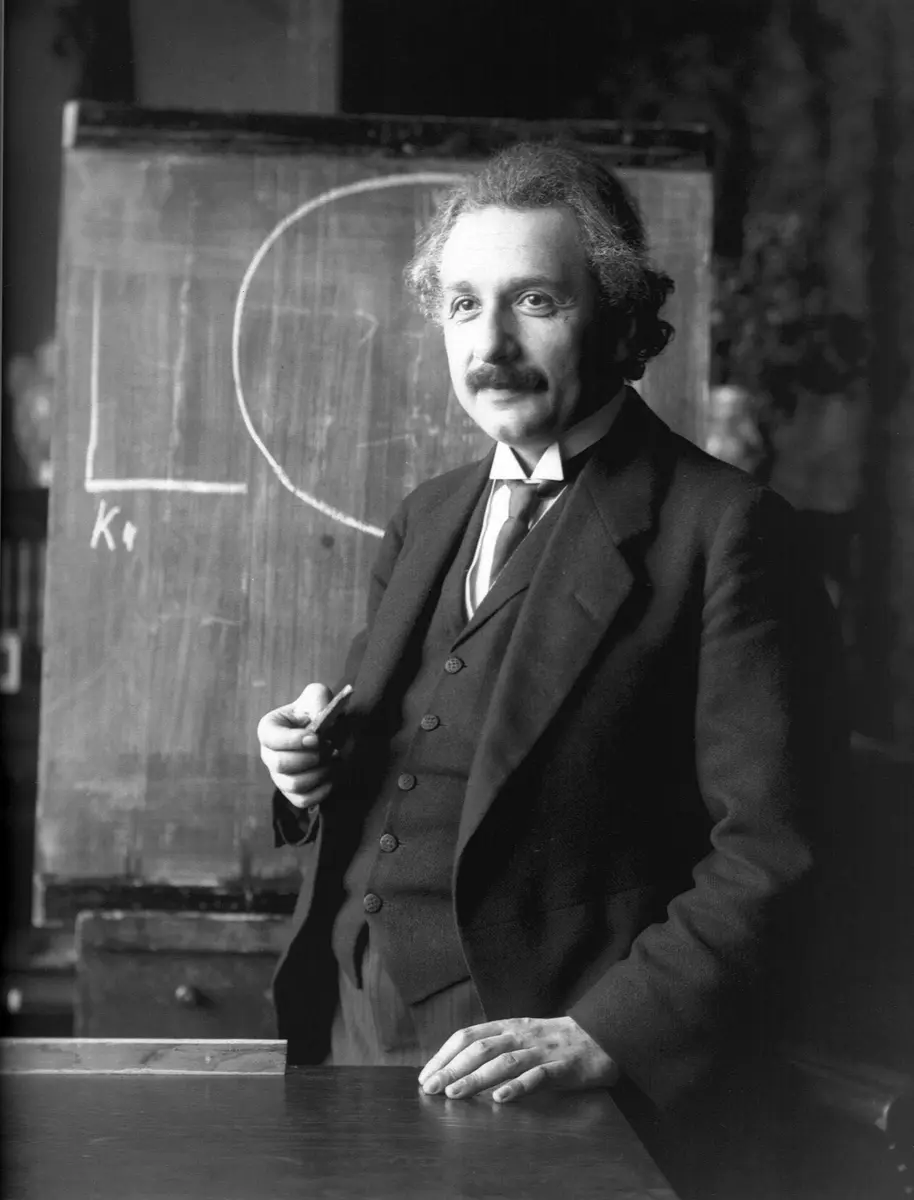
At the first Solvay Conference in Brussels, with Einstein, Planck and Poincaré, she learns that Paris papers are printing her letters to Paul Langevin; a crowd gathers at her house in Sceaux, and friends shelter her and her daughters.
Despite a Swedish academician's letter asking her to stay away, she receives the Nobel Prize in Chemistry in Stockholm, alone, with Bronya and Irène beside her; in her lecture the next day she claims radioactivity as an atomic property, her idea.
- 1912
After depression, a kidney operation in March and a summer in England with the physicist Hertha Ayrton, she writes her first laboratory notebook entry in nearly fourteen months.
- 1914
The Radium Institute, built by the University of Paris and the Pasteur Institute on the new rue Pierre-Curie, is finished, with her radioactivity laboratory in the Curie Pavilion.
The Radium Institute's Curie Pavilion, Paris: her laboratory from 1914 (in use from 1919) until her death, today the Musée CurieAs German armies approach Paris, she carries France's gram of radium, in a heavy lead box, to a bank vault in Bordeaux and returns to Paris on a train full of soldiers.
As director of the Red Cross radiology service, she has the first of some twenty X-ray cars ready by late October; soldiers call them 'petites Curies'. She learns to drive and goes to the front with Irène, seventeen.
- 1916
To staff about twenty mobile and two hundred fixed X-ray units, she begins training women as radiology assistants at the Radium Institute, some 150 by the war's end.
The Radium Institute's Curie Pavilion, Paris: her laboratory from 1914 (in use from 1919) until her death, today the Musée Curie - 1921
On a tour of the United States arranged by the editor Missy Meloney, she receives from President Harding at the White House a gram of radium, bought by the women of America.
- 1922
She joins the League of Nations' Committee on Intellectual Co-operation in Geneva, later serving as its vice-president.
- 1925
The Radium Institute of Warsaw is founded, with her sister Bronya as director.
- 1929
On a second American tour, President Hoover gives her $50,000 from American friends of science to buy radium for the Warsaw institute.
- 1934
In the basement of her institute, Irène and her husband Frédéric Joliot discover artificial radioactivity, the work that will win them the Nobel Prize in Chemistry of 1935.
The Radium Institute's Curie Pavilion, Paris: her laboratory from 1914 (in use from 1919) until her death, today the Musée CurieShe dies at the Sancellemoz sanatorium in the Alps, of a disease of the bone marrow her doctor blamed on radiation. Two days later she is buried beside Pierre at Sceaux; on 20 April 1995 both are moved to the Panthéon.
The Sancellemoz sanatorium, Passy, near Sallanches in the French Alps: where she died on 4 July 1934