Akkadian Empire
“Sargon's dynasty at Agade, about 2334–2154 BCE: the first empire in Mesopotamia, at its height when Naram-Sin had himself shown as a god, until the city fell.”
For about a hundred and eighty years, from 2334 to 2154 BCE on the count most historians use, one family of kings ruled Mesopotamia from a new city, Agade, also called Akkad. Sargon, a Semitic-speaking king from the north of the plain, took the Sumerian city-states, which had fought one another for centuries, and held them from that single capital. A later list of kings, the Sumerian King List, gives the house eleven kings and 181 years, and then says that Agade was defeated. The kings wrote in Akkadian, their own Semitic language, using the cuneiform signs the Sumerians had invented, and Akkadian became the language of government. The land of Akkad was the country where the Tigris and the Euphrates run closest, north of Sumer and past the line of modern Fallujah and Baghdad. The city of Agade itself has never been found.
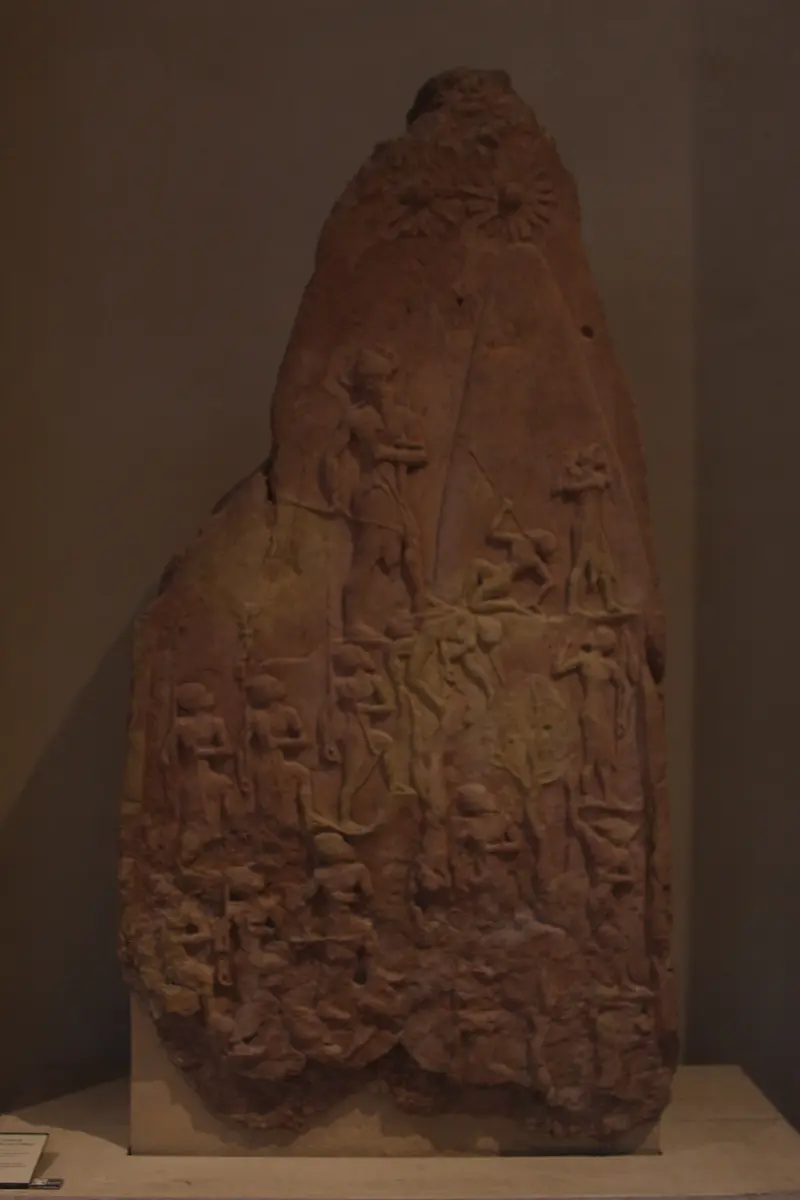
The height of the empire was the reign of Naram-Sin, Sargon's grandson, put at about 2254 to 2218 BCE. His victory stele, a slab of pink limestone two metres high, now in the Louvre, shows him climbing a wooded mountain over the fallen Lullubi, a people of the Zagros hills. He is drawn far larger than his men, and he wears the horned crown that belonged to gods. A copper statue found at Bassetki carries the one inscription that says how he became a god: after he had saved his city in a time of trouble, the people of Agade asked the great gods, Enlil at Nippur and Sin at Ur among them, to make him the god of Agade, and a temple was built for him in the city. That trouble was a great revolt which nearly cost him the kingdom. The year of the revolt, and even the length of his reign, are argued. Sargon's daughter Enheduanna was high priestess of the moon god Nanna at Ur. Hymns in her name are the earliest poems attached to a person we can name. Sumerologists disagree on whether she wrote them: the oldest copies are from centuries later.
Naram-Sin's son Shar-kali-sharri ruled for twenty-five years, about 2217 to 2193. A seal cut for his scribe still calls him the divine king of Akkad, but his own year-names do not. His successors were smaller men. The King List then asks, 'Who was king? Who was not king?' and gives four names, Irgigi, Nanum, Imi and Elulu, three years between them. Dudu and his son Shu-Durul held what was left until 2154, when the List says Agade was defeated and the kingship passed to Uruk. Gutians from the Zagros are the villains of a later poem, the Curse of Agade, which blames the fall on Naram-Sin's looting of Enlil's temple at Nippur and has the god send those mountain people down onto the plain. The poem is Old Babylonian literature, copied centuries after the city fell, not a report from the time. The King List itself puts a short dynasty at Uruk between Agade's defeat and the Gutian kings. The round date 2154 is a frame, not a day anyone recorded.
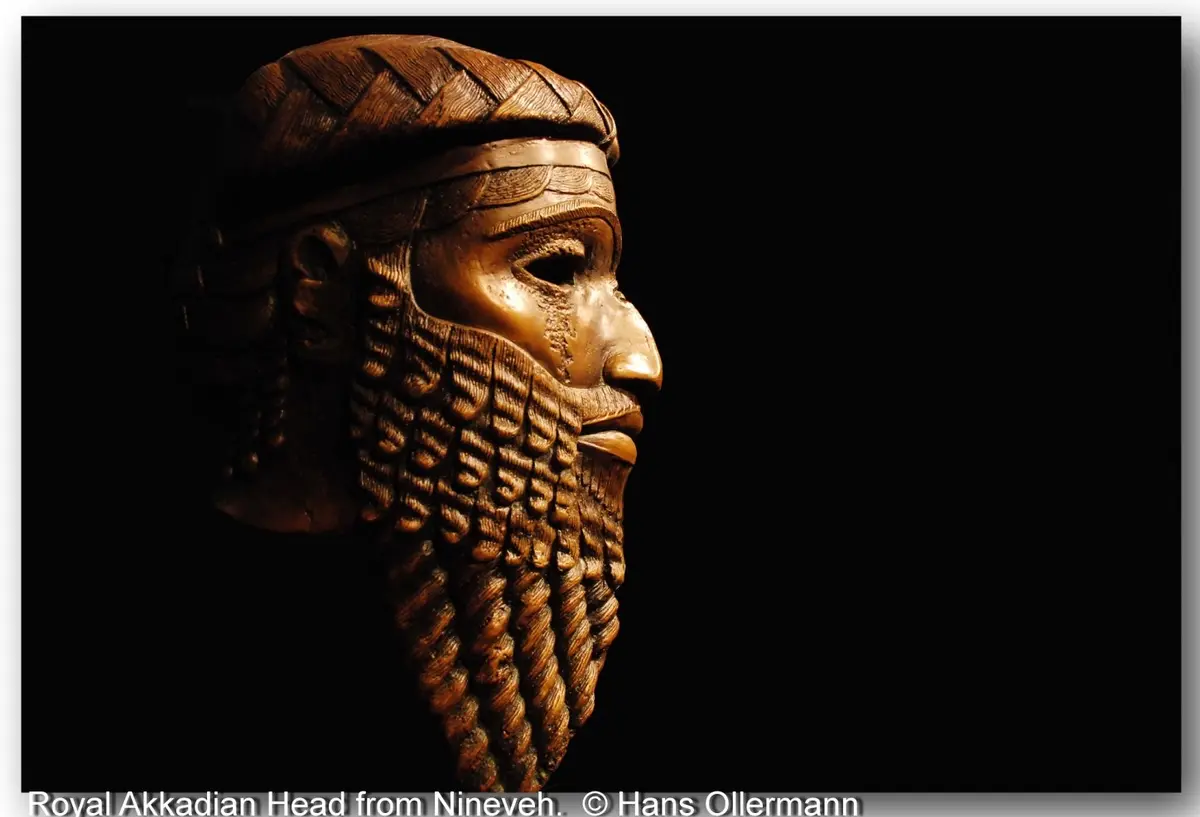
What the empire left was a pattern and a language. It was the first state in Mesopotamia to hold many cities, and peoples who were not its own, from one centre for generations, and later kings of Babylon and Assyria took it as the model of what a great reign looked like. Akkadian remained the written language of Babylonia and Assyria, and of letters between kings across the Near East, long after Agade was gone. Naram-Sin was the first Mesopotamian king to have the sign for a god written before his name. His stele stood at Sippar for a thousand years, until an Elamite king carried it to Susa as booty; that stone, not the bronze head of an Akkadian king found at Nineveh, is the picture of the empire. The head is on the entry for Sargon. The Curse said Agade would never be lived in again. No dig has yet produced the city.
What happened
- 2334 BCE
Sargon becomes king at Agade. The Sumerian King List says the kingship was taken there from Uruk, and counts fifty-six years for him. He holds the Sumerian cities from that one capital. The city has never been found.
- 2300 BCE
Sargon makes his daughter Enheduanna high priestess of the moon god Nanna at Ur. Her disk shows her at a libation. Hymns later copied in her name make her the first poet we can name, if she wrote them. Some scholars think the hymns are the work of scribes long after her death.
Ur (Tell el-Muqayyar): where Sargon made his daughter Enheduanna high priestess of the moon god Nanna. The ziggurat in the photograph was built about 2100 BCE, after this empire - 2279 BCE
Sargon dies. His son Rimush holds the kingdom for nine years, and Rimush's brother Manishtushu for fifteen. Manishtushu builds a temple at Nineveh. The empire does not break up with its founder.
Nineveh (Kuyunjik): Manishtushu, Sargon's son, built a temple on this mound, and the bronze head of an Akkadian king was found here. That head is the lead of the Sargon entry. The gate and wall in the photograph are the later Assyrian city - 2254 BCE
Naram-Sin, Manishtushu's son and Sargon's grandson, becomes king. He is the king under whom the empire is remembered, and the first Mesopotamian ruler to have the sign for a god written before his name.
- 2250 BCE
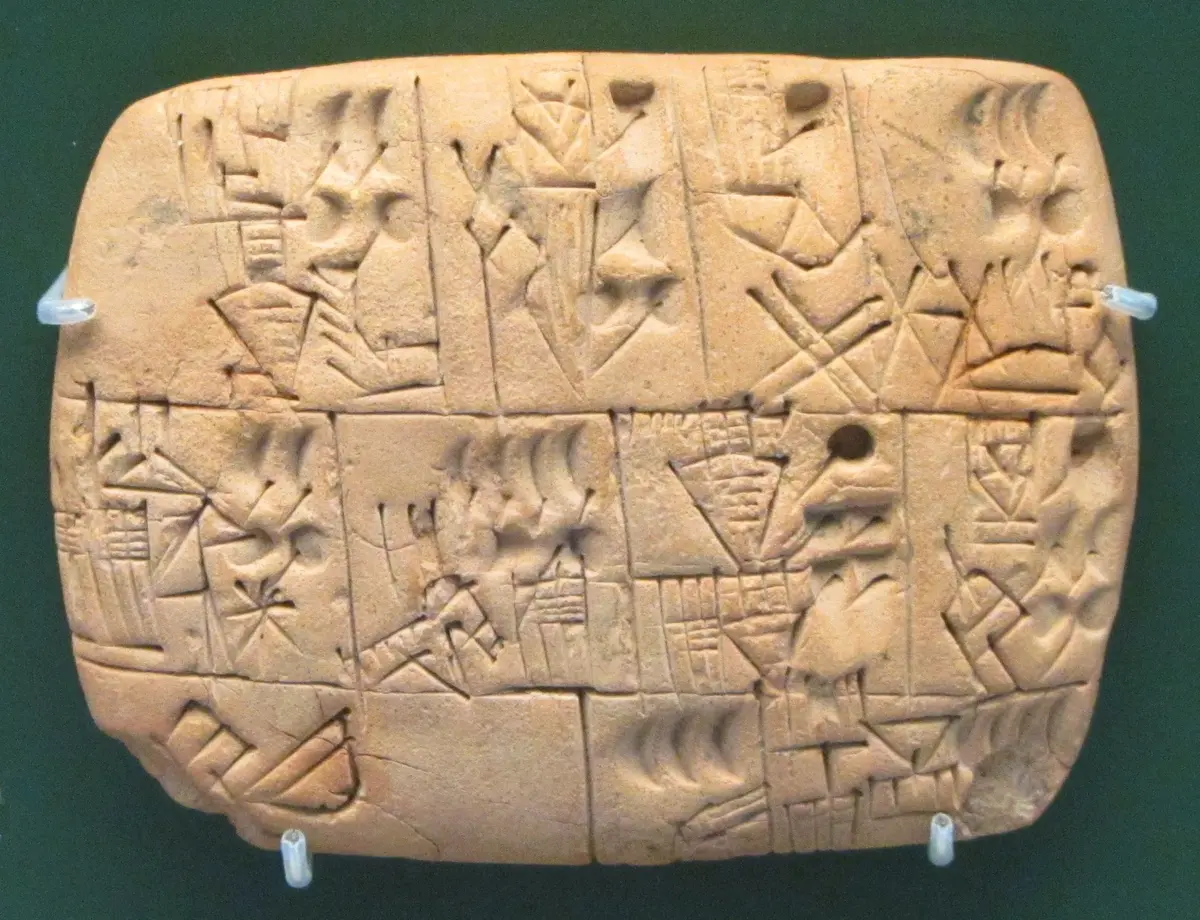
Clerks of his reign keep the empire's accounts on clay: a list of sheep at Nippur, a sealed tag from a basket at Girsu, a list of workmen at Tell Brak. Akkadian is the language of the lists.
Nippur: the city of Enlil, named in the Bassetki inscription among the gods asked to make Naram-Sin a god, and the place where clerks of his reign listed sheep - 2240 BCE
A great revolt nearly costs Naram-Sin the kingdom. When he has secured Agade, the city asks the great gods to make him a god of Agade, and a temple is built for him there. The words are cut on the Bassetki statue. The year of the revolt is not known.
Nippur: the city of Enlil, named in the Bassetki inscription among the gods asked to make Naram-Sin a god, and the place where clerks of his reign listed sheep - 2230 BCE
Naram-Sin sets up, at Sippar, the stele of his victory over the Lullubi. He is shown as a god, horned crown on his head, climbing the mountain over their bodies. Another stele of his, now only a fragment, is set up at Pir Hüseyin on the upper Tigris. The year of the mountain war is not known.
Sippar (Tell Abu Habbah): where Naram-Sin's victory stele was set up, before it was taken to Susa. The city of Agade is not marked: its site is unknown - 2217 BCE
Shar-kali-sharri, Naram-Sin's son, becomes king and rules twenty-five years. His scribe's seal still calls him the divine king of Akkad. His own year-names do not. The empire is already past its height.
- 2193 BCE
The King List stops naming a single house. 'Who was king? Who was not king?' Four men, Irgigi, Nanum, Imi and Elulu, are given three years between them.
- 2190 BCE
Dudu rules for twenty-one years, and his son Shu-Durul for fifteen. They are kings of a smaller land, the last of the eleven.
- 2154 BCE
Agade is defeated, and the King List takes the kingship to Uruk. A later poem, the Curse of Agade, tells it differently: Naram-Sin loots Enlil's temple at Nippur, and the god sends the Gutians out of the mountains to destroy the city. The Gutian kings in the List come only after that short Uruk dynasty. The poem was copied centuries later.
Nippur: the city of Enlil, named in the Bassetki inscription among the gods asked to make Naram-Sin a god, and the place where clerks of his reign listed sheep