Romanticism
“Europe's age of feeling, about 1798 to 1850: Wordsworth, Byron, Goethe's Faust, Friedrich's lonely wanderer, Beethoven, Delacroix and Chopin set the self, nature and the sublime above cool reason.”
Romanticism is the name for the movement in literature, painting, music and thought that swept Europe from the late eighteenth century to the middle of the nineteenth. Where the Enlightenment and the classical taste of the eighteenth century prized order, balance and reason, the Romantics put feeling first: the individual and his inner life, the imagination, wild nature and the sublime, the past and the folk traditions of each people, and a taste for the exotic, the mysterious and the uncanny. The word comes from the medieval romance, the tale of adventure that the movement revived. The historian Isaiah Berlin called it 'the greatest single shift in the consciousness of the West'. This calendar dates it from 1798, the year two small publications set it going: in Berlin the brothers August Wilhelm and Friedrich Schlegel launched their journal the Athenaeum, written with friends who met in the university town of Jena, and in London William Wordsworth and Samuel Taylor Coleridge published Lyrical Ballads without their names.
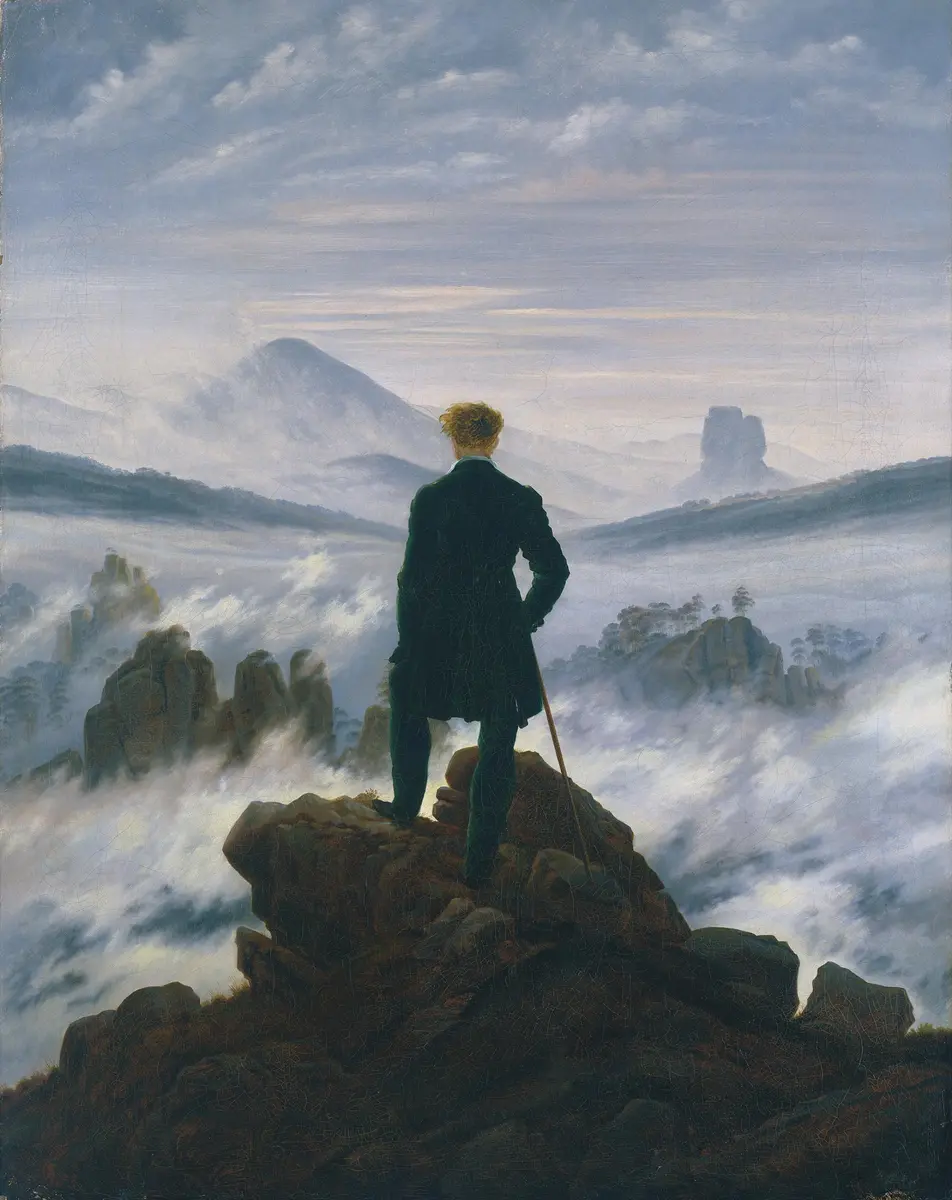
It began in Germany and Britain. In the circle of the Schlegels, the poet Novalis and the theologian Schleiermacher in Jena, Friedrich Schlegel defined 'romantic poetry' as a poetry that is never finished, always becoming. Goethe, whose Sorrows of Young Werther (1774) was a founding novel of feeling, published the first part of Faust in 1808, though the older Goethe called Romanticism 'sick'. Wordsworth's preface of 1800 called poetry 'the spontaneous overflow of powerful feelings' in 'the language really used by men', and from his cottage in the Lake District he made the walk through the mountains a way to the self. Painters turned landscape into a mirror of the soul: Caspar David Friedrich in Dresden, whose Monk by the Sea of 1810 and Wanderer above the Sea of Fog of about 1817 set small figures before the infinite, and in England J. M. W. Turner and John Constable with their storms, light and weather. In Vienna Beethoven's heroic Third Symphony of 1804 and Schubert's songs carried the same inward turn into music.
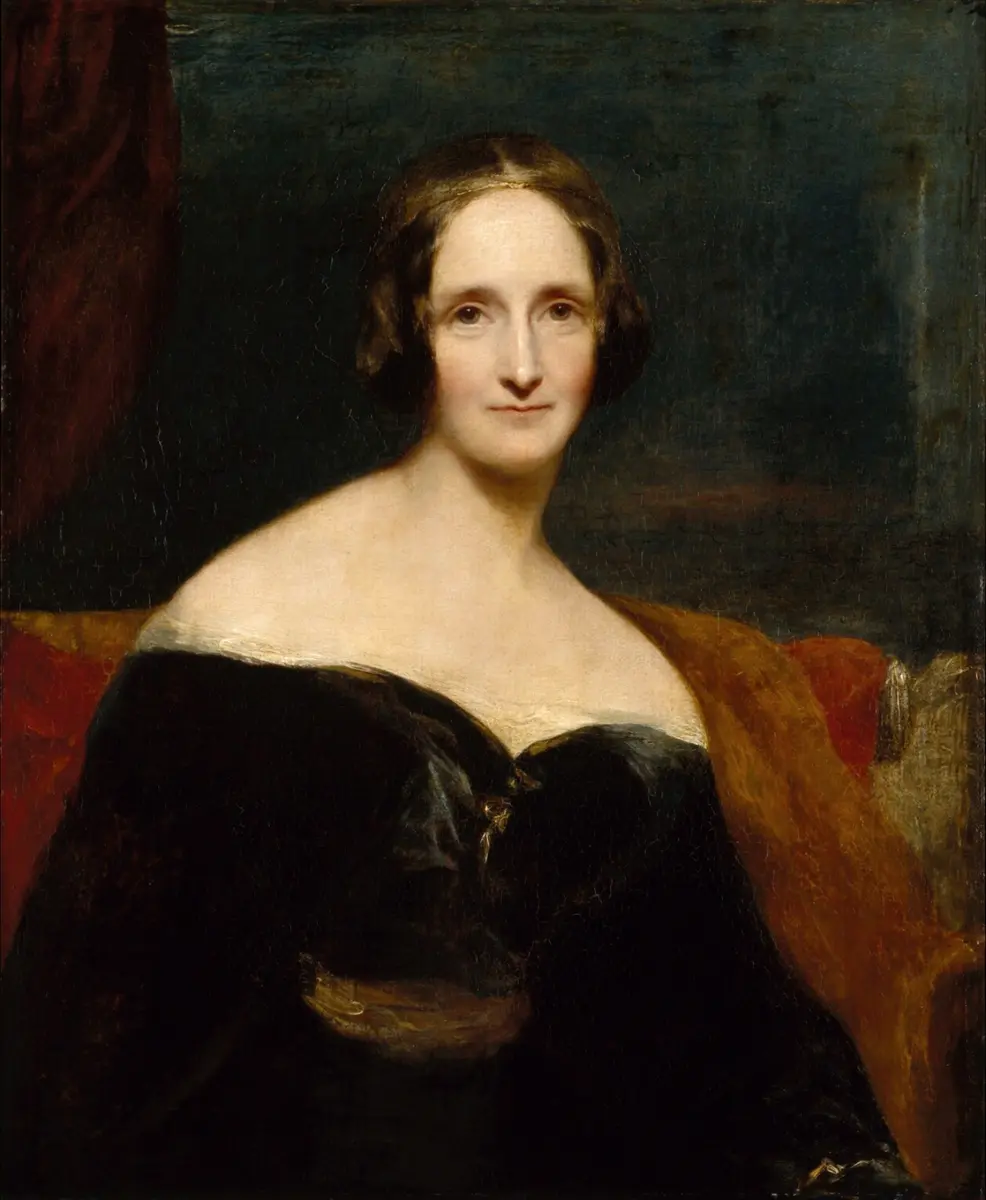
The movement peaked between about 1810 and 1830, and its younger stars lived it as well as wrote it. Lord Byron woke up famous with Childe Harold's Pilgrimage in 1812 and gave his name to the brooding, rebellious Byronic hero; in the stormy summer of 1816, by Lake Geneva, his ghost-story contest gave Mary Shelley the idea of Frankenstein. Keats died at twenty-five in Rome, Percy Shelley drowned off the Italian coast, and Byron died in 1824 at Missolonghi, where he had gone to help the Greeks fight for independence from the Ottoman Empire. That struggle, like the nationalism and liberalism of the age, became a Romantic cause. In Paris the young painters Géricault and Delacroix broke with the classical school: The Raft of the Medusa (1819) made a modern disaster into a history painting, and Liberty Leading the People celebrated the July Revolution of 1830. Earlier that year the first night of Victor Hugo's Hernani, on 25 February 1830, became a battle between Romantics and Classicists in the theatre, and in the 1830s Chopin, Berlioz and Liszt, the first generation of Romantic composers, all worked in Paris.
No single event ended it, and many date its close to the revolutions of 1848. In February that year, as revolution spread from Paris across Europe, the Romantic poet Alphonse de Lamartine became, in effect, head of France's provisional government. The great figures were dying: Goethe in 1832, Friedrich in 1840, Chopin in 1849 and Wordsworth in 1850, the year his autobiographical poem The Prelude was published. In the novel and in painting a harder-edged realism took over from the cult of feeling and of the solitary genius, while in music the Romantic style lived on through Wagner and Verdi to the end of the century.
Romanticism left the modern West many of its habits of mind: that art expresses its maker's self, that originality and genius matter more than rules, that nature is to be loved and protected, that each nation has its own soul in its language and folk songs, and that feeling and imagination are ways of knowing. The love of mountain walks and wild coasts, the rebel hero, the horror story and science fiction, and the idea of the tortured artist all come from it. So does some of its darker legacy: the cult of the nation that, as the critic Jonathan Bate puts it, began in Germany and ended there 'in a very dark place indeed'.
What happened
- 1798
In Berlin the brothers August Wilhelm and Friedrich Schlegel launch the Athenaeum, a journal written with their friends of the Jena circle, Novalis and Schleiermacher among them. In its fragments Friedrich defines 'romantic poetry' as 'a progressive, universal poetry' that is always becoming and never finished. It runs until 1800.
Jena, the university town where the Schlegel brothers, Caroline Schlegel and their friends, Novalis among them, formed the first Romantic circle, 1796–1801Lyrical Ballads is published in London without its authors' names: most of the poems are by William Wordsworth, 28, the opening Rime of the Ancient Mariner by Samuel Taylor Coleridge, 26. Written in plain language about country people and nature, it is harshly reviewed, and later taken as the start of English Romanticism.
London: Lyrical Ballads (1798), Childe Harold (1812) and Frankenstein (1818) were published here; Turner showed The Fighting Temeraire at the Royal Academy in 1839- 1800
In the preface to the second edition of Lyrical Ballads, Wordsworth, settled since 1799 at Grasmere in the Lake District, calls poetry 'the spontaneous overflow of powerful feelings', written in 'the language really used by men': the manifesto of English Romantic poetry.
Dove Cottage, Grasmere, in the Lake District: Wordsworth's home from 1799 (he later lived at nearby Rydal Mount, where he died in 1850) - 1801
Friedrich Schlegel leaves Jena. Novalis had died in March, and the friendships of the first Romantic circle have come apart: its departure marks the end of the 'Jena circle' and of early German Romanticism's common work.
Jena, the university town where the Schlegel brothers, Caroline Schlegel and their friends, Novalis among them, formed the first Romantic circle, 1796–1801- 1804
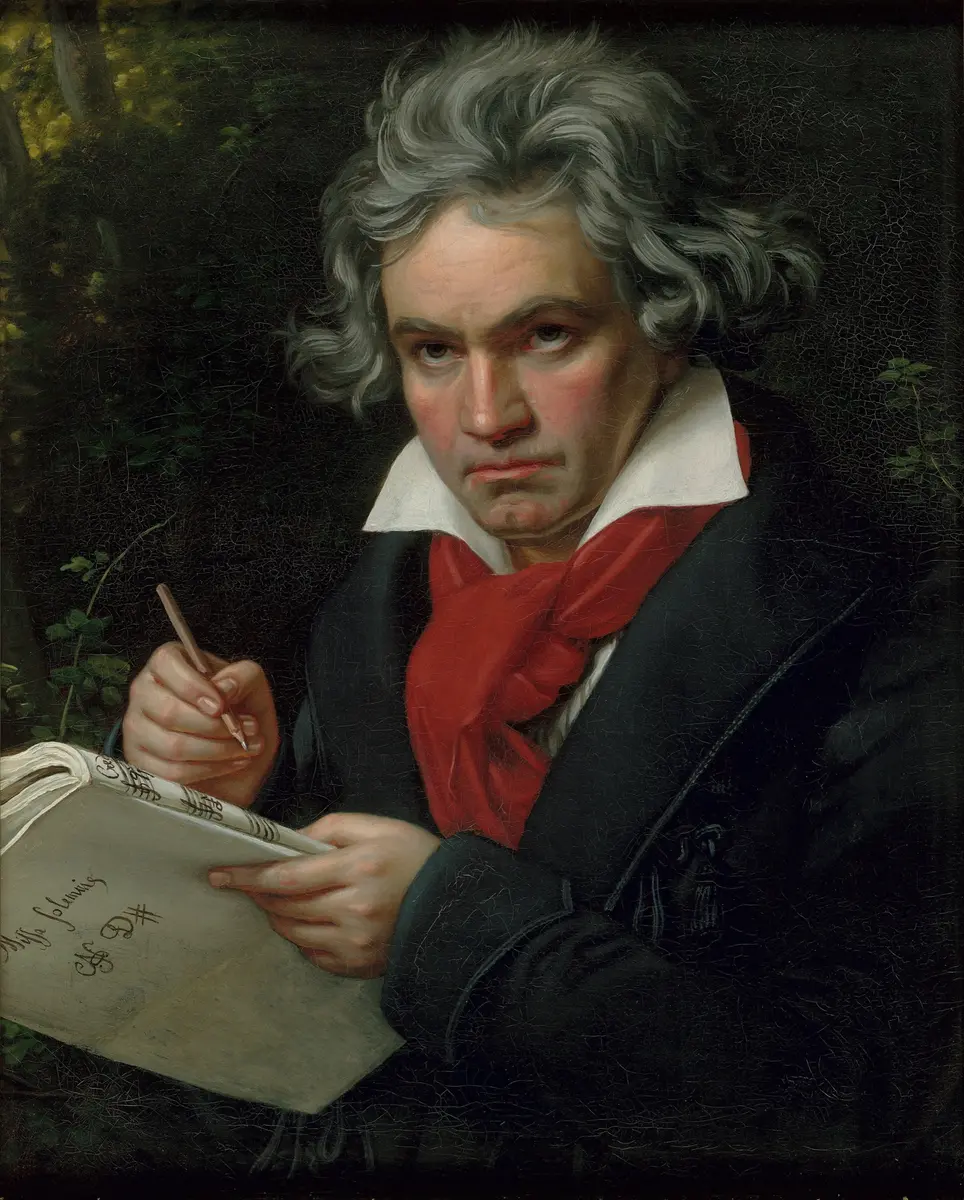
Beethoven completes his Third Symphony and it is first played at Prince Lobkowitz's palace in Vienna. He had written 'for Bonaparte' on the score; the story goes that he struck out the dedication in anger when Napoleon made himself emperor, and the work was published in 1806 as the Sinfonia eroica. It is the piece that most clearly marks his turn from the Classical style to the Romantic.
Vienna: Beethoven's Eroica (1804) and Schubert's songs - 1808
Goethe publishes Faust. Eine Tragödie, the first part of his drama of the scholar who sells his soul for knowledge and experience, with Cotta in Tübingen. The second part appears only after his death.
Weimar: Goethe's home at the ducal court for more than fifty years, where he wrote Faust and died in 1832 - 1810
At Schleiermacher's suggestion, Caspar David Friedrich shows The Monk by the Sea and its pair, the Abbey in the Oak Wood, at the Berlin Academy exhibition; both are bought for the Prussian royal house, and the Academy makes the Dresden painter a member.
Berlin: the Athenaeum was printed here in 1798, and Friedrich's Monk by the Sea was shown and bought for the royal house in 1810Heinrich von Kleist's 'Feelings before Friedrich's Seascape' appears in the Berliner Abendblätter: with nothing in front of it but the frame, he writes, looking at the Monk by the Sea is as if one's eyelids had been cut away.
Berlin: the Athenaeum was printed here in 1798, and Friedrich's Monk by the Sea was shown and bought for the royal house in 1810- 1812
John Murray publishes the first two cantos of Byron's Childe Harold's Pilgrimage, the travels of a young man weary of pleasure; Byron 'woke to find himself famous', and the brooding Byronic hero is born.
London: Lyrical Ballads (1798), Childe Harold (1812) and Frankenstein (1818) were published here; Turner showed The Fighting Temeraire at the Royal Academy in 1839- 1816
In a cold, stormy summer Byron rents the Villa Diodati on Lake Geneva, with Percy Shelley, Mary Godwin and Claire Clairmont nearby. His challenge to write a ghost story sets Mary to work on Frankenstein.
The Villa Diodati at Cologny on Lake Geneva, rented by Byron in the summer of 1816, where Mary Shelley conceived Frankenstein - 1818
Frankenstein; or, The Modern Prometheus is published in London by a small publisher in 500 copies: a novel of science, ambition and horror, and an early work of science fiction.
London: Lyrical Ballads (1798), Childe Harold (1812) and Frankenstein (1818) were published here; Turner showed The Fighting Temeraire at the Royal Academy in 1839- 1819
Géricault shows The Raft of the Medusa at the Salon in Paris: the survivors of a French frigate wrecked off Senegal in 1816, painted on the scale of a history painting. It wins a gold medal, while many critics are repelled by its subject.
The Louvre, Paris: the Salon was held here, where Géricault showed The Raft of the Medusa in 1819; it and Delacroix's Liberty Leading the People hang here today - 1821
John Keats dies of tuberculosis in Rome, aged 25.
- 1822
Percy Bysshe Shelley, 29, drowns when his boat sinks in a storm on the way from Livorno to Lerici.
- 1824
Byron, who had gone to Greece as agent of the London Committee to help the war of independence against the Ottoman Empire, dies of fever at Missolonghi, aged 36.
Missolonghi (Mesolongi), western Greece: Byron died here in 1824, and the town fell to the Ottoman army in 1826- 1826
Missolonghi falls to the Ottoman army after a long siege. In Paris Delacroix paints Greece on the Ruins of Missolonghi and shows it at the galerie Lebrun to raise money for the Greek cause.
Missolonghi (Mesolongi), western Greece: Byron died here in 1824, and the town fell to the Ottoman army in 1826 - 1828
Franz Schubert, the master of the Romantic song whose Erlkönig (1815) set a ballad by Goethe, dies in Vienna at 31, a year and a half after Beethoven.
Vienna: Beethoven's Eroica (1804) and Schubert's songs- 1830
The first night of Victor Hugo's Hernani at the Théâtre-Français turns into the 'battle of Hernani': his young Romantic supporters shout down the Classicists, and the victory of the new drama is won in the theatre.
The Salle Richelieu of the Comédie-Française (then the Théâtre-Français), where the 'battle of Hernani' was fought on 25 February 1830Paris fights on the barricades in the July Revolution. Delacroix paints the day that autumn as Liberty Leading the People, signed 1830; the state buys it in August 1831.
The Louvre, Paris: the Salon was held here, where Géricault showed The Raft of the Medusa in 1819; it and Delacroix's Liberty Leading the People hang here today- 1831
Frédéric Chopin settles in Paris, where he makes his name as a composer and teacher of the piano; Berlioz, whose Symphonie fantastique dates from 1830, and Liszt also work there: the first generation of Romantic composers.
- 1832
Goethe dies in Weimar, aged 82.
Weimar: Goethe's home at the ducal court for more than fifty years, where he wrote Faust and died in 1832- 1839
Turner shows The Fighting Temeraire at the Royal Academy in London: the Trafalgar veteran towed by a steam tug to the breakers' yard at sunset, a farewell to the age of sail.
London: Lyrical Ballads (1798), Childe Harold (1812) and Frankenstein (1818) were published here; Turner showed The Fighting Temeraire at the Royal Academy in 1839 - 1840
Caspar David Friedrich dies in Dresden, aged 65.
Dresden: Caspar David Friedrich's home and workplace, where he painted the Monk and the Wanderer and died in 1840- 1843
Wordsworth, once the radical of Lyrical Ballads, becomes poet laureate.
Dove Cottage, Grasmere, in the Lake District: Wordsworth's home from 1799 (he later lived at nearby Rydal Mount, where he died in 1850) - 1848
The day after revolution brings down the monarchy in Paris, the Romantic poet Alphonse de Lamartine, in effect head of the provisional government of the new Republic, refuses the red flag at the Hôtel de Ville.
The Hôtel de Ville, Paris, where Lamartine refused the red flag on 25 February 1848- 1849
Chopin dies of tuberculosis in Paris, aged 39.
- 1850
Wordsworth dies at Rydal Mount in the Lake District, aged 80. His autobiographical poem The Prelude, on which he had worked for most of his life, is published later that year.
Dove Cottage, Grasmere, in the Lake District: Wordsworth's home from 1799 (he later lived at nearby Rydal Mount, where he died in 1850)