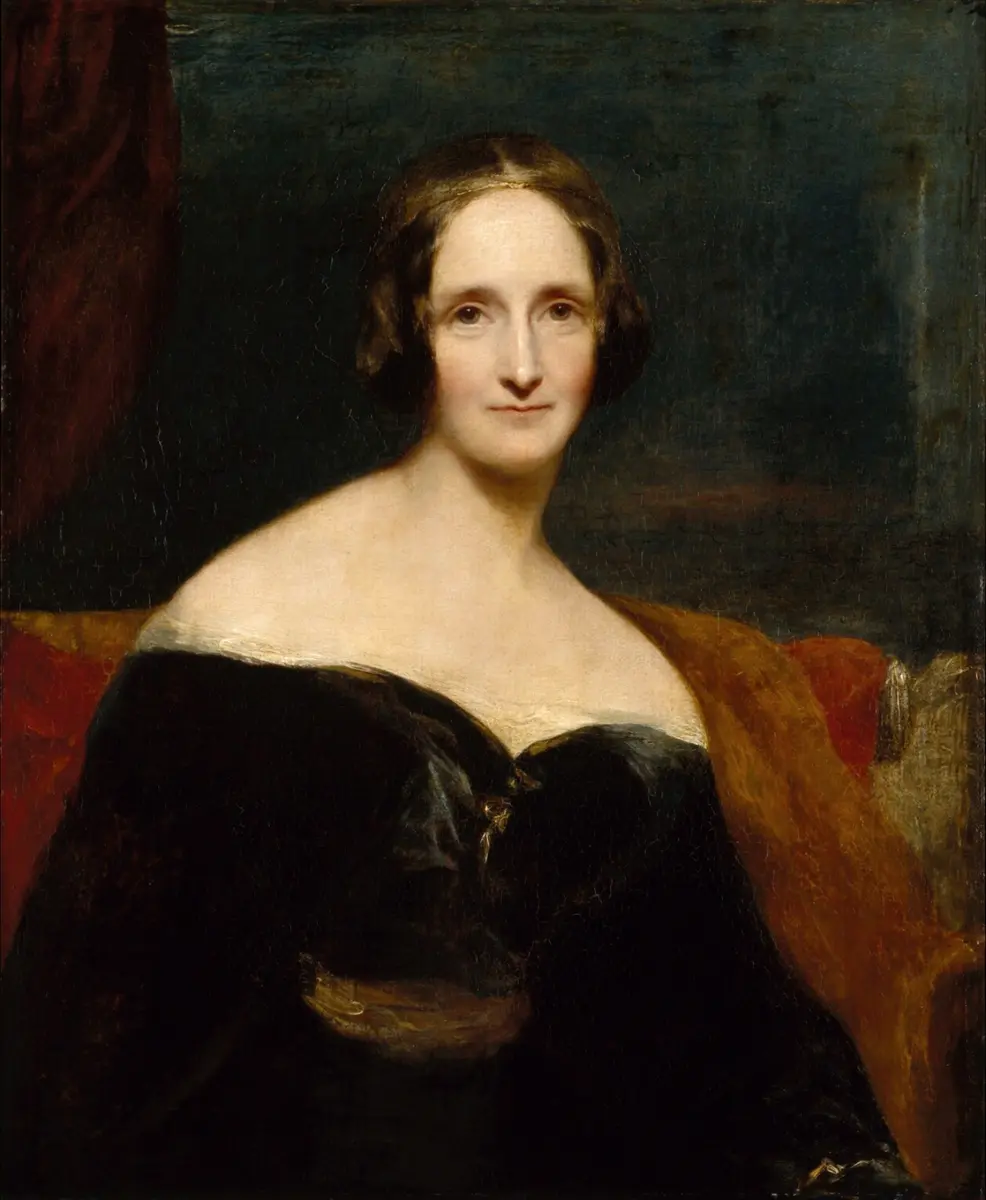
Mary Shelley
“The English writer who began Frankenstein (1818) at eighteen, in a ghost-story contest with Byron by Lake Geneva in 1816; the daughter of Mary Wollstonecraft and William Godwin and the wife of Percy Shelley.”
Mary Shelley was the English novelist who wrote Frankenstein; or, The Modern Prometheus, the story of a young scientist who builds a living man out of dead matter and then flees from what he has made. She began it at eighteen, in the summer of 1816, in a ghost-story contest with Lord Byron by the Lake of Geneva, and it came out without her name on 1 January 1818. Part Gothic horror and part novel of ideas, it is often called the first work of science fiction, and its creature has never stopped walking: on the London stage within five years, then in countless films, and in everyday speech as the image of science that slips out of its maker's control. She was the daughter of two famous radicals, the feminist Mary Wollstonecraft and the philosopher William Godwin, and the wife of the poet Percy Bysshe Shelley.
She was born in Somers Town, then on the northern edge of London, on 30 August 1797, and her mother died eleven days later. Godwin raised her in a house full of writers and books but sent her to no school; in 1801 he married a neighbour, Mary Jane Clairmont, with whom she never got on, and from 1812 to 1814 she lived with a family in Dundee, in Scotland. Back in London she fell in love with Percy Shelley, a young admirer of her father who was already married. In June 1814 they declared their love at her mother's grave in St Pancras churchyard, and before dawn on 28 July they ran away to France, taking her stepsister Claire Clairmont with them. Her father would not see her for two years. A first daughter, born early in February 1815, lived only days; a son, William, followed in January 1816.
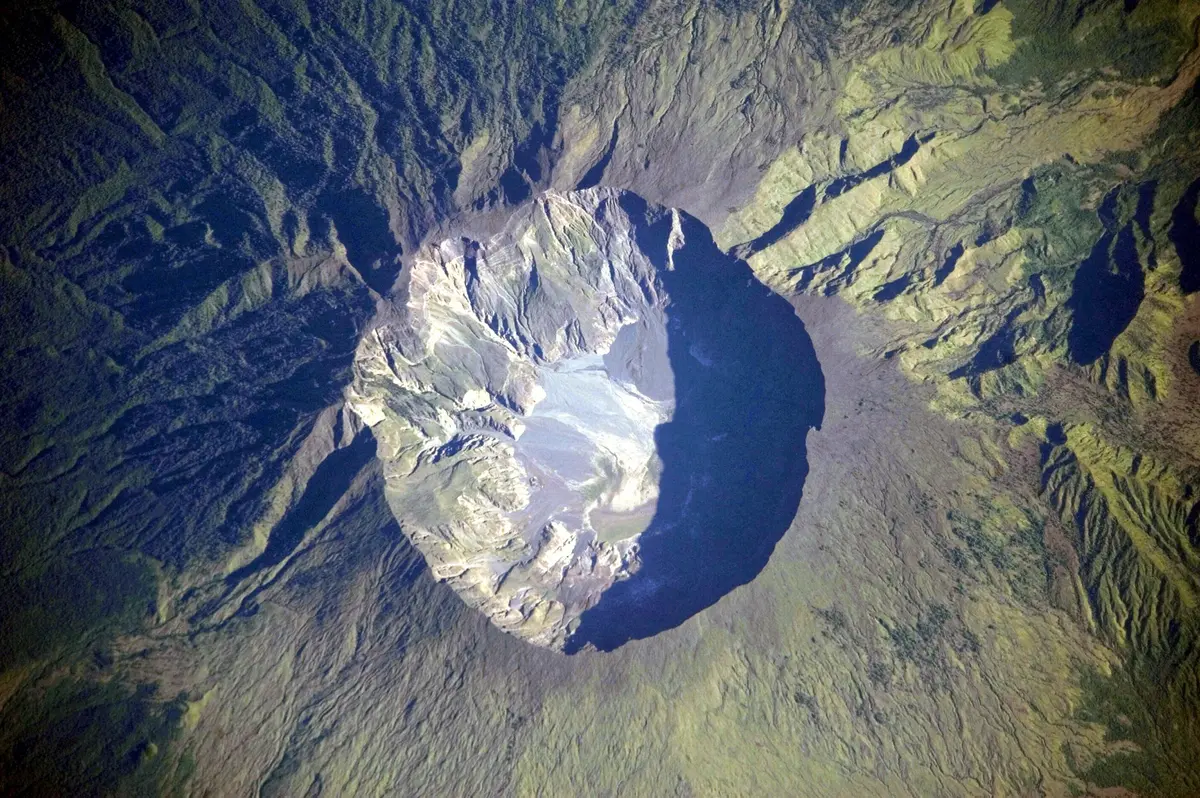
In May 1816 the three travelled to Geneva to meet Byron, Claire's lover, who took the Villa Diodati on the slope above the lake at Cologny. It was the cold, stormy 'year without a summer' that followed the eruption of Tambora; kept indoors, they read German ghost stories, and Byron proposed that each of them write one. Days later, as she told it, a waking vision showed her 'the pale student of unhallowed arts' kneeling beside the thing he had put together. She worked the tale up into a novel through the autumn and winter in two notebooks, which survive in the Bodleian Library with Percy's corrections in the margins. That autumn her half-sister Fanny Imlay killed herself and Percy's wife Harriet drowned herself; Mary and Percy married in London on 30 December 1816. The book, 500 copies from a small publisher, with a preface by Percy and a dedication to Godwin, sold well, and many thought one of the two men had written it.
In 1818 the Shelleys moved to Italy, where both their young children died, Clara at Venice in 1818 and William at Rome in June 1819; only Percy Florence, born in Florence late in 1819, lived to grow up. On 8 July 1822 Percy drowned when his boat went down in a storm off the coast near Lerici, where they were spending the summer at the Casa Magni. A widow at twenty-four, she went back to London in 1823 and lived by her pen: novels such as Valperga (1823), The Last Man (1826), about a plague that wipes out the human race, Perkin Warbeck (1830), Lodore (1835) and Falkner (1837), and stories, travel books and biographies. In 1831 she revised Frankenstein for a cheap one-volume edition and added an introduction telling, for the first time, how it began. She also collected and edited Percy's Posthumous Poems (1824) and his Poetical Works (1839), with notes that did more than anything else to make him famous.
She spent her last years in London, from 1846 in a house in Chester Square, Belgravia. She died there on 1 February 1851, aged 53, probably of a brain tumour. She had asked to lie with her mother and father, but her son and his wife buried her at St Peter's, Bournemouth, near their new home at Boscombe, and had her parents' remains brought there from St Pancras. Her Frankenstein manuscripts, now digitised by the Bodleian, settle the old question of who wrote the book: the hand is hers, with her husband's edits, and the novel she began as a teenage ghost story is read today as one of the founding books of the modern imagination.
What happened
- 1797
- 11:20 p.m.
Born at 29 The Polygon in Somers Town, then on the edge of London, the daughter of Mary Wollstonecraft and William Godwin, who had married in March; her father notes the birth in his diary to the minute.
Somers Town, London: the Polygon, where she was born in 1797 and her mother died; the building is gone, and Oakshott Court stands on its site Her mother dies of puerperal fever eleven days after the birth, aged 38, and is buried in the churchyard of St Pancras; Godwin raises Mary and her half-sister Fanny Imlay alone.
Somers Town, London: the Polygon, where she was born in 1797 and her mother died; the building is gone, and Oakshott Court stands on its site- 1801
Godwin marries his neighbour Mary Jane Clairmont, who brings two children, Charles and Jane (later Claire); Mary never gets on with her stepmother. She has no schooling but grows up among the writers who visit her father.
- 1812
She is sent to stay with a family in Dundee, in Scotland, for her health or to keep her apart from her stepmother; she later calls those two years the 'eyry of freedom' where her imagination was born.
Home on a visit, she probably first meets the young poet Percy Bysshe Shelley, expelled from Oxford for atheism and married to Harriet Westbrook, who has become her father's admirer.
- 1814
Back in London for good, she and Percy, who is estranged from his wife, declare their love at her mother's grave in St Pancras churchyard, where she often goes to read.
Before dawn she slips out of her father's house and elopes with Percy to France, taking her stepsister Jane Clairmont; they travel through France and Switzerland and down the Rhine, and their joint journal opens that morning. Her father refuses to see her for two years.
- 1815
She gives birth to a premature daughter, who dies within days.
- 1816
Her son William is born.
With Percy, the baby and Claire, Byron's lover, she travels to Geneva; Byron follows and leases the Villa Diodati at Cologny, above the lake, where the Shelleys become frequent guests.
Villa Diodati, Cologny, above the Lake of Geneva: Byron's house in the summer of 1816, where the ghost-story contest began FrankensteinKept indoors by the cold and rain of the year without a summer, the party reads German ghost stories in French, and Byron proposes that each of them write one; days later a waking vision of a scientist kneeling beside the creature he has made gives her the start of Frankenstein. Byron and his doctor, John Polidori, also write pieces that will matter to their careers.
Villa Diodati, Cologny, above the Lake of Geneva: Byron's house in the summer of 1816, where the ghost-story contest began FrankensteinHer new journal opens with a journey to Chamonix and the glaciers under Mont Blanc, scenery she later works into the novel.
Back in England since September and living in Bath, she loses her half-sister Fanny Imlay, who kills herself at Swansea; in December Percy's wife Harriet drowns herself in London.
She and Percy marry in London, with her father reconciled; meanwhile she writes the novel through the winter in two notebooks, with Percy's corrections.
- 1817
Living at Marlow on the Thames, she begins the fair copy of Frankenstein for the publishers, finishing it in May; in September her daughter Clara is born.
- 1818
Frankenstein; or, The Modern Prometheus comes out in three volumes, 500 copies on cheap paper, without her name, with a preface by Percy and a dedication to Godwin; many readers take one of the two men for the author.
Pressed by debts and Percy's health, the Shelleys leave England for good with Claire and her baby by Byron, reaching Milan in April.
Her daughter Clara, a year old, falls ill with dysentery on the road and dies at Venice.
- 1819
Her son William dies in Rome, aged three, of malaria; her journal breaks off that day.
Her son Percy Florence is born in Florence, the only one of her four children to grow up.
- 1822
Percy and Edward Williams drown when their boat goes down in a storm on the way back from Livorno to the Casa Magni at San Terenzo, near Lerici, where the two families are spending the summer.
Casa Magni (Villa Magni), San Terenzo, Lerici: the Shelleys' last home, from which Percy sailed to Livorno in July 1822 and never came back- 1823
Her second novel, Valperga, a historical romance of fourteenth-century Tuscany, is published in London; she had written it partly to help her father out of his money troubles.
Home in London since August, she sees Presumption; or, The Fate of Frankenstein at the English Opera House in the Strand, the first stage version of her novel, a hit that runs through the season.
- 1824
She publishes Percy's Posthumous Poems, the first of her editions of his work.
- 1826
The Last Man appears, her vision of a plague that wipes out humanity, often ranked her best book after Frankenstein.
- 1831
She signs the new introduction to a revised one-volume Frankenstein for Colburn and Bentley's Standard Novels, telling for the first time how the story began and bidding her 'hideous progeny go forth and prosper'.
- 1839
Her four-volume edition of Percy's Poetical Works, with long notes on when and why he wrote each poem, makes his name.
- 1840
Richard Rothwell shows his portrait of her at the Royal Academy.
- 1846
She settles at 24 Chester Square in Belgravia, her home for the rest of her life.
24 Chester Square, Belgravia, London: her home from 1846 and the house where she died in 1851 - 1851
She dies at Chester Square, aged 53, probably of a brain tumour. Her son buries her at St Peter's, Bournemouth, near his new home at Boscombe, and has her parents' remains brought from St Pancras to lie with her.
24 Chester Square, Belgravia, London: her home from 1846 and the house where she died in 1851