Mount Tambora erupts
“In April 1815 Mount Tambora on Sumbawa blew apart in the largest eruption in recorded history, killing tens of thousands; its haze made 1816 the 'year without a summer'.”
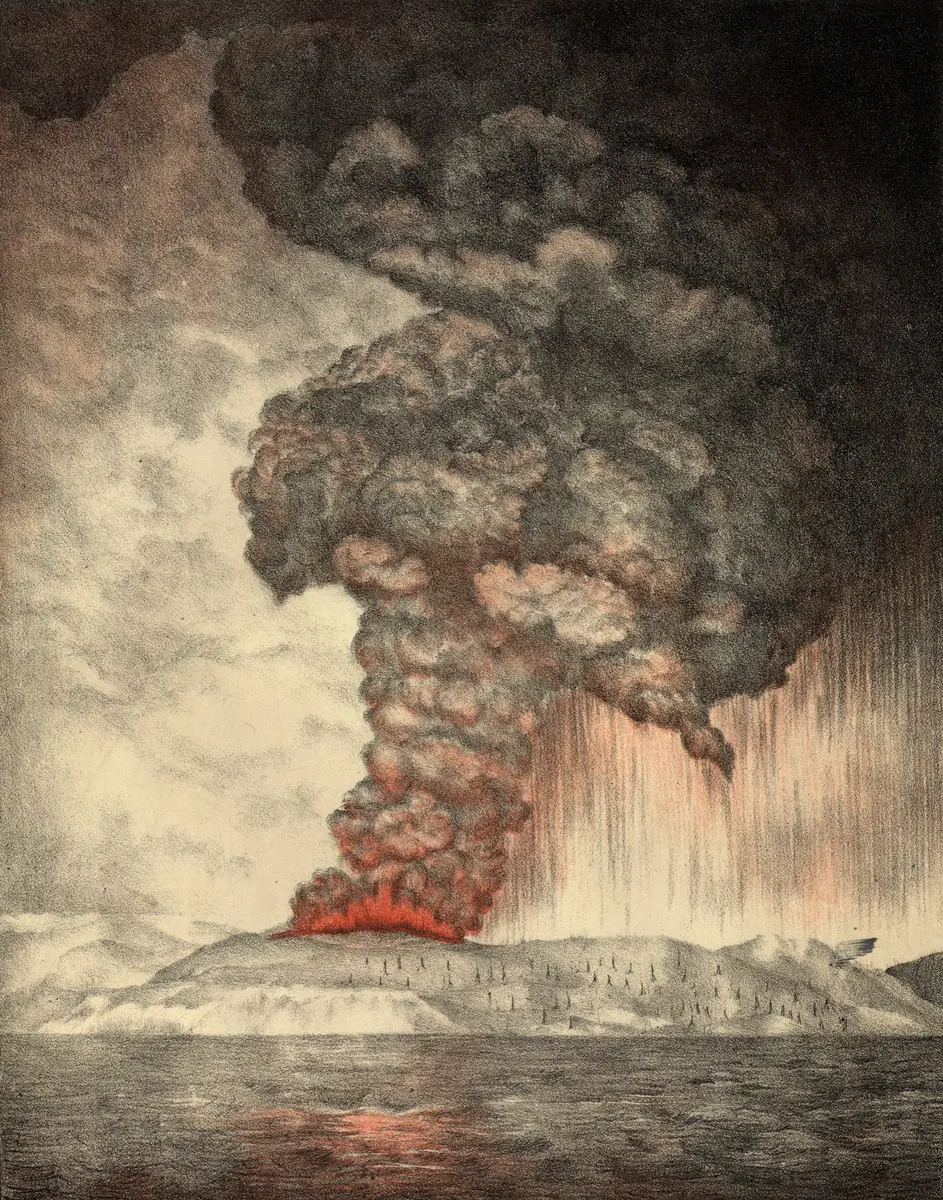
Mount Tambora fills the whole Sanggar peninsula on the north coast of Sumbawa, an island east of Bali and Lombok in today's Indonesia. In 1815 Sumbawa was shared by six small kingdoms, Bima, Dompu, Sumbawa, Sanggar, Pekat and Tambora, bound by treaties to the colonial government at Makassar, which since 1811 had been British, like Java's. The mountain, then probably more than 4,000 metres high, had been rumbling under a dark cloud since about 1812. On the evening of 5 April 1815 it exploded, and the bangs carried so far that people in Java and at Makassar took them for gunfire: troops marched out of Yogyakarta, and a British cruiser left Makassar to hunt for pirates. The real catastrophe came five days later. On the evening of 10 April the raja of Sanggar, about 30 km away, saw three columns of fire rise from the summit and join high in the air, until the whole mountain looked like 'liquid fire'. Stones and ash rained down, a violent wind flattened houses and tore up trees, the sea rose about four metres, and avalanches of glowing ash and gas raced down the slopes to the sea on almost every side of the peninsula.
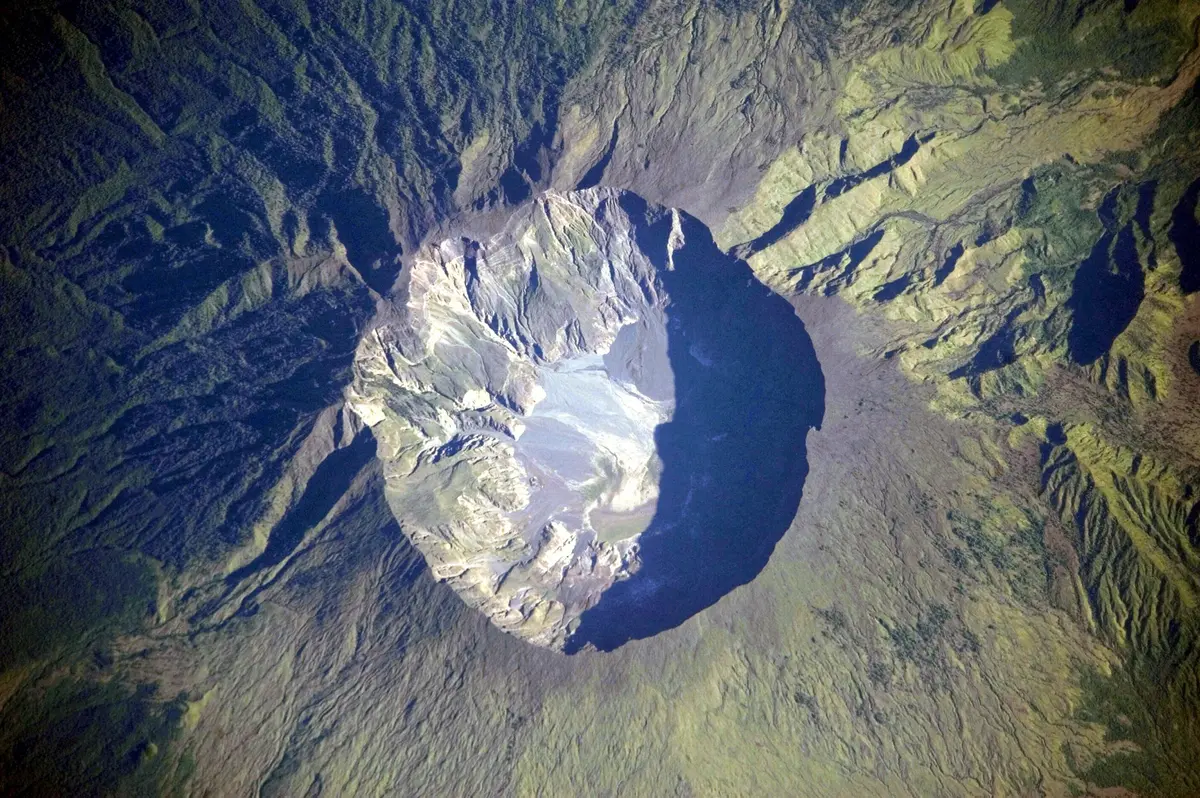
The explosions went on through 11 April and were heard on Sumatra, about 1,800 km away and perhaps as far as 2,600 km. For up to two days the land within some 600 km lay in darkness; at Makassar a ship's captain could not see his hand in front of his face. When the eruption ended (the last explosions were heard on 15 July), the mountain had lost about a third of its height: its top had collapsed into a caldera 6 km wide and more than a kilometre deep, and it stands 2,851 metres high today. It had thrown out about 150 cubic kilometres of ash and rock, roughly ten times as much as Krakatau in 1883, which makes it the largest eruption in recorded history. About 10,000 to 12,000 people died at once. The kingdoms of Tambora and Pekat disappeared with nearly all their people, and with them the Tambora language, which was unlike the languages of its neighbours. Many more died afterwards, because ash buried the rice fields of Sumbawa and Lombok and fouled the drinking water: famine and disease killed tens of thousands, survivors ate leaves and sold their children for rice, and tens of thousands fled to other islands. Estimates of the total dead range from about 60,000 to more than 100,000.
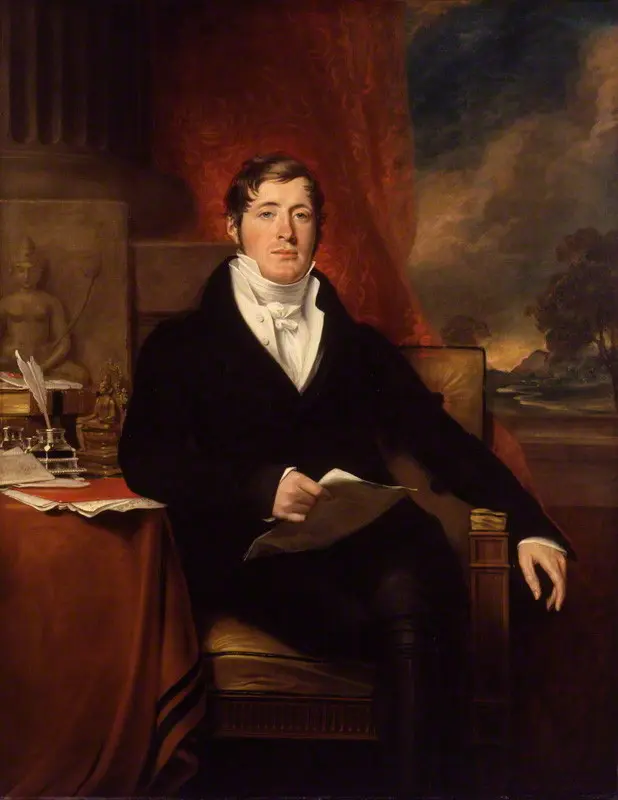
Java was under British rule, so the record of the disaster is mostly British. The lieutenant-governor, Thomas Stamford Raffles, sent a circular asking his officials what they had seen and heard, shipped rice to Sumbawa and sent Lieutenant Owen Phillips to deliver it and report. Phillips found deserted villages and corpses by the roads, and wrote down the raja of Sanggar's eyewitness account. Raffles's summary, signed at Batavia on 28 September 1815, was printed by the Batavian Society in 1816 and again in his History of Java (1817); it is still one of the two main eyewitness sources. In 1847 the Swiss naturalist Heinrich Zollinger climbed the volcano, and in 1855 he published a study of the eruption with a map of Sumbawa. In 2004 the volcanologist Haraldur Sigurdsson and colleagues from the United States and Indonesia dug into a gully 25 km west of the crater and found, under about 3 metres of ash, a house of the lost kingdom with the remains of two people, bronze bowls, pots and iron tools, all turned to charcoal by the heat: a 'Pompeii of the East'.
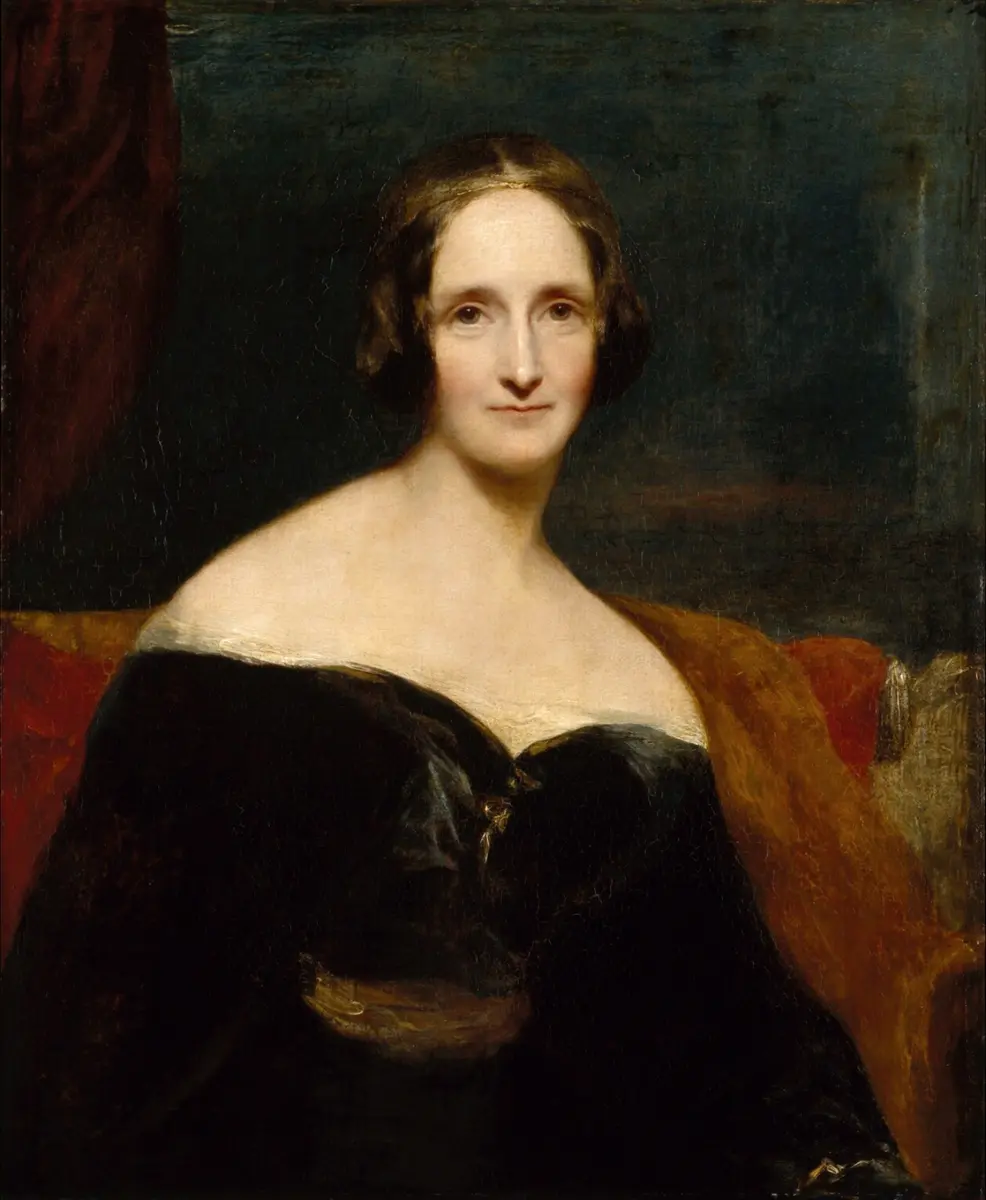
The eruption also blew some 60 million tonnes of sulphur into the stratosphere, where it formed a thin veil of acid droplets that spread around the world and reflected sunlight back into space. Londoners saw brilliant sunsets in the autumn of 1815. In 1816 the Northern Hemisphere was about half a degree colder than usual, and much of western Europe two or three degrees colder, and the year became known as 'the year without a summer'. In New England snow and frost in June, July and August killed the crops; in western Europe cold rain ruined the harvests, grain prices soared, and Switzerland and Germany went hungry in 1816 and 1817. At Lake Geneva, where not one cloudless day was recorded in June, Mary Shelley, Percy Bysshe Shelley and Lord Byron spent rainy days indoors at Byron's Villa Diodati telling ghost stories: Mary's became Frankenstein, and Byron wrote his poem 'Darkness', about a world whose sun has gone out. Apparently no one at the time connected the strange skies and the cold with a volcano on the other side of the world.
Tambora is still active: small eruptions on the caldera floor were recorded in the nineteenth and twentieth centuries, the last in 1967, and unrest in 2011 led the authorities to close the summit for a time. For scientists it has become the reference case for how a single eruption can change the climate of the whole planet. Its acid lies in the ice of Greenland; a study of 2009 concludes that Tambora, together with another eruption in 1809, made the 1810s a cold decade; and because its effects were so well recorded, it serves as a yardstick for measuring older eruptions that nobody wrote down.
What happened
- 1815
In the early evening Tambora, long thought extinct, erupts after three years of rumbling. Its detonations are heard like cannon fire at Makassar, 380 km away, in Batavia, 1,260 km away, and as far as Ternate. In Java troops march out of Yogyakarta, fearing a nearby post is under attack; at Makassar the East India Company's cruiser Benares sails with soldiers to hunt for pirates and comes back on the 8th having found nothing. Next morning a light fall of ash on eastern Java shows what the noise was.
The caldera of Mount Tambora: the summit that collapsed in April 1815, 6 km across and more than a kilometre deepAbout seven in the evening the raja of Sanggar sees three columns of fire burst from near the summit and join high in the air; soon the whole mountain looks like a body of 'liquid fire'. From eight o'clock stones, some as big as two fists, fall on Sanggar, and ash from about nine; then a violent whirlwind blows down nearly every house and lifts trees, people, horses and cattle into the air, and the sea rises nearly twelve feet, about four metres, higher than ever known.
Sanggar, about 30 km east of the summit: where the raja watched the eruption, the whirlwind flattened the houses and the sea rose about four metresThat night the eruption column collapses and avalanches of glowing ash and gas pour down the mountain to the sea, wiping out the village of Tambora. The little kingdoms of Tambora and Pekat are destroyed with their rajas; of at least 12,000 people who lived there, Phillips later learns, only a handful survive.
Pekat, west of the volcano: the kingdoms of Pekat and Tambora lay on these slopes; the buried house dug out in 2004 lies about 25 km west of the calderaThe explosions go on without pause until the evening. That morning 'a cannonade' is heard at Fort Marlborough (Bengkulu) on Sumatra, about 1,800 km away, and along that coast hill people come down armed to defend the British posts; the sound reaches Mukomuko and probably Trumon, some 2,600 km from the volcano.
Fort Marlborough, Bengkulu, on Sumatra, about 1,800 km away: the 'cannonade' heard on the morning of 11 AprilA day of darkness. Within about 600 km of the volcano the sky stays black for one or two days. At Makassar the captain of the Benares finds by noon that it is 'impossible to see your hand when held up close to your eyes', and ash lies a foot deep on his deck. At Gresik in Java the Resident breakfasts by candlelight at eleven in the morning; at Banyuwangi the ash is eight inches deep.
Fort Rotterdam, Makassar, about 380 km north: the bangs taken for pirates' guns on 5 April, and total darkness at noon on 12 AprilHeavy rain at last clears the ash from the air over Java, where the haze and the ashfall had lasted until the 14th and in some districts until the 17th. Most rice is saved, because farmers shook the ash off the growing plants, but in Banyuwangi, at the eastern tip of Java, crops are ruined and 126 horses and 86 cattle die for want of fodder.
The Benares, sent south to find the cause, reaches Bima Bay through rafts of floating pumice and burnt, shattered trees, one of them more than three miles long. The shores are buried in ash; the Resident's house at Bima has broken under its weight, and the waves of the 10th had filled the houses a foot deep and thrown every boat ashore.
Bima, about 90 km east: the Resident's house broken by the ash, the Benares's anchorage on 19 April, and Lieutenant Phillips's baseSailing on, the Benares passes Tambora six miles off. The summit is hidden in smoke and ash, the flanks are still smoking, and dark streams, which the crew take for lava, run down to the sea on the north-north-west; Stothers reads these as the flows of hot ash and pumice.
The caldera of Mount Tambora: the summit that collapsed in April 1815, 6 km across and more than a kilometre deepThe last explosions are heard, more than three months after the first; the mountain still pours out smoke, and its people fear another eruption in the rainy season. Its top, once probably more than 4,000 m high, is now a caldera about 6 km across.
The caldera of Mount Tambora: the summit that collapsed in April 1815, 6 km across and more than a kilometre deepThe raja of Sanggar, who watched the eruption, comes to see Lieutenant Owen Phillips at Dompu. His people are starving and one of his own daughters has died of hunger. Phillips gives him three coyangs of rice in Raffles's name and writes down his account of the night of 10 April.
Sanggar, about 30 km east of the summit: where the raja watched the eruption, the whirlwind flattened the houses and the sea rose about four metresFrom Bima, Phillips reports to Raffles: corpses still lie by the roads of Dompu and Bima, the villages are deserted, and a violent diarrhoea, blamed on ash in the water, is killing people and horses. Of all Tambora's villages only one, with about forty people, remains, and in Pekat not a house is left. A brig with 63 coyangs of rice from Java has just reached Sumbawa.
Bima, about 90 km east: the Resident's house broken by the ash, the Benares's anchorage on 19 April, and Lieutenant Phillips's baseBrilliantly coloured, banded twilights are seen near London through September and into early October, after a first spell at the turn of June and July: the eruption's veil of fine dust and acid droplets has spread to Europe.
At Batavia, Raffles signs his account of the eruption, put together from his residents' replies, the ships' reports and Phillips's letters. It is printed by the Batavian Society of Arts and Sciences in 1816 and, in part, in his History of Java in 1817.
Batavia (Jakarta), about 1,260 km west: where the explosions were heard on 5 April and where Raffles signed his account of the eruption- 1816
Sultan Muhammad Kaharuddin of Sumbawa dies. In June the Resident at Bima writes that 'a serious plague' has carried off the king of Sumbawa and three of his grown sons: famine and disease are killing tens of thousands on Sumbawa and Lombok, and tens of thousands more have fled to other islands.
From a cottage near Cologny on Lake Geneva, Mary Godwin, who will marry Percy Bysshe Shelley at the end of the year, writes that the brilliant skies of their arrival have gone: 'An almost perpetual rain confines us principally to the house.' Lord Byron is their neighbour.
The Villa Diodati at Cologny on Lake Geneva: Byron's house in the rainy summer of 1816, where the ghost-story contest gave birth to FrankensteinIn New England snow falls and frosts kill the crops farmers had sown in spring; they sow again, and more snow and frost in July and August destroy most of the harvest. Wheat prices in the United States triple.
During the total eclipse of the moon on the night of 9 to 10 June, observers at Ipswich, London and Dresden see the moon vanish entirely, though the sky is clear: the volcanic haze is still thick high in the atmosphere.
Across western Europe the cold rain goes on. Harvests rot in the fields, the wine harvest in France will be the latest on record, and grain prices climb towards the famine of 1816 and 1817, worst in Switzerland and Germany, where hunger brings riots and sends many people to emigrate.
Summer ends in Geneva after a June without a single cloudless day, rain on 80 per cent more days than usual, and a warmest afternoon of the year, on 14 August, of only 26.9 °C. At the Villa Diodati, during a week of rain, Byron, the Shelleys and Byron's physician Dr Polidori had agreed to write ghost stories: Mary's became Frankenstein, printed on 1 January 1818, and Byron wrote 'Darkness', a dream of a world without sun.
The Villa Diodati at Cologny on Lake Geneva: Byron's house in the rainy summer of 1816, where the ghost-story contest gave birth to Frankenstein