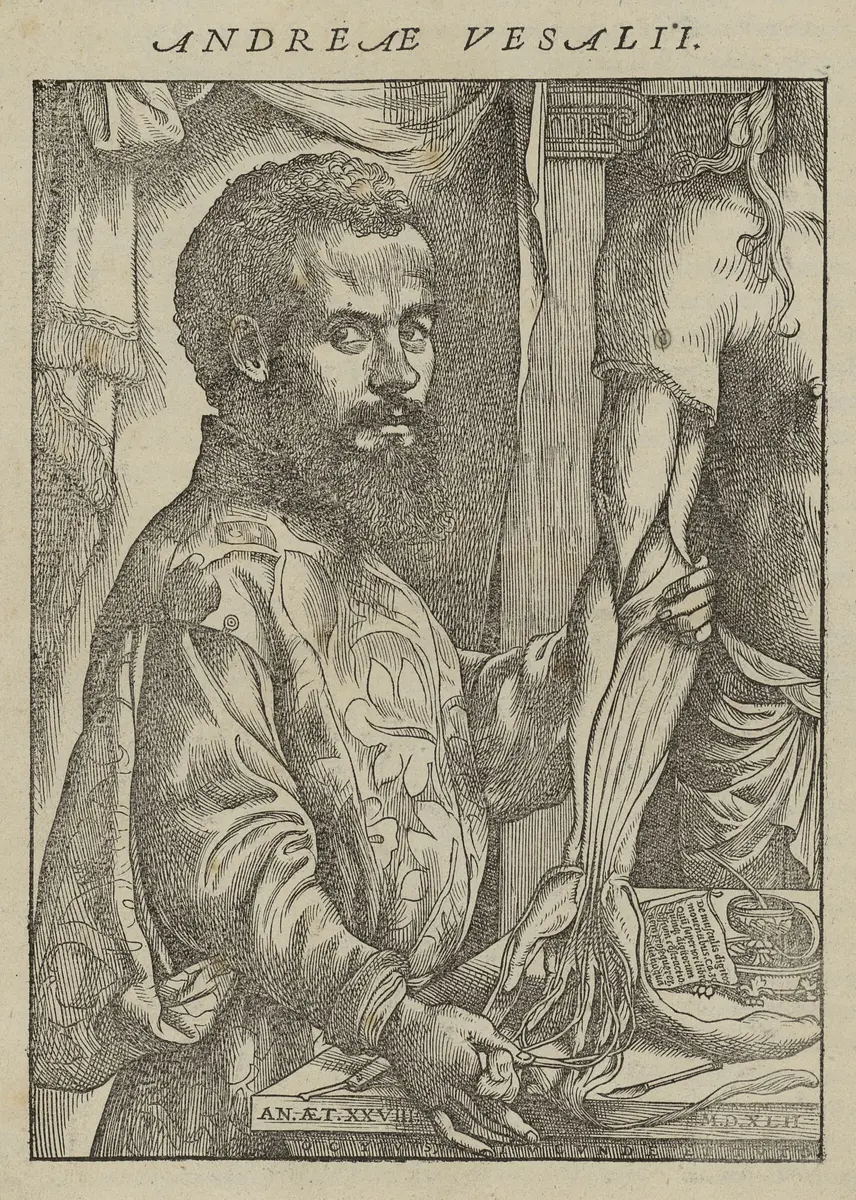
Andreas Vesalius
“The Flemish anatomist who dissected with his own hands and in his Fabrica of 1543 showed, against 1,300 years of Galen, that anatomy must be learned from the human body itself.”
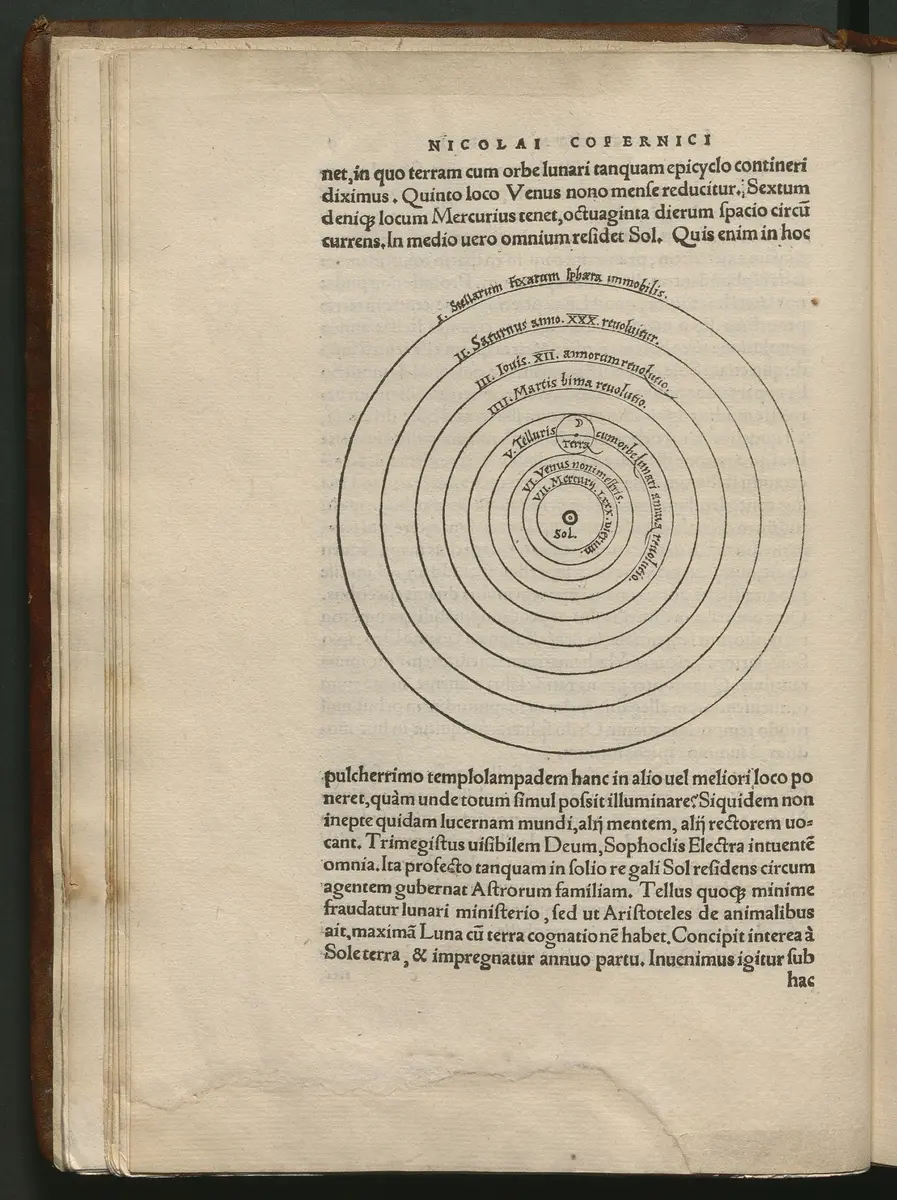
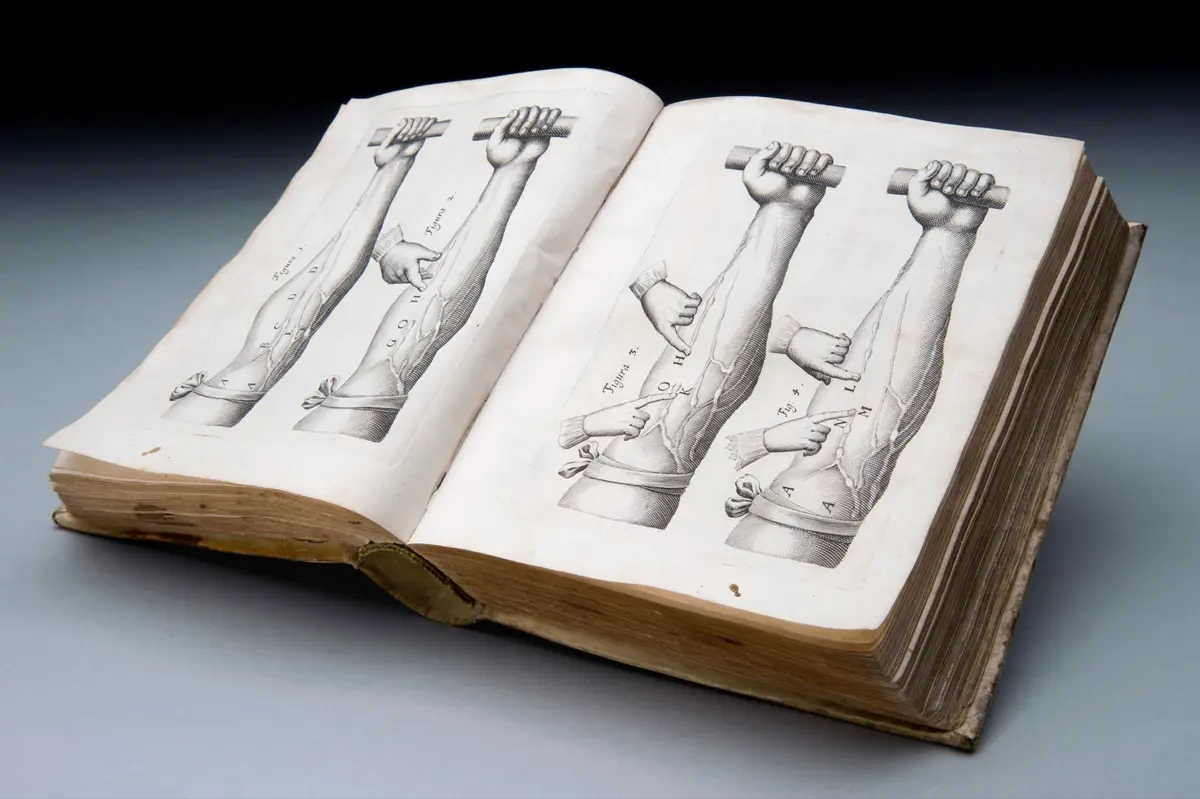
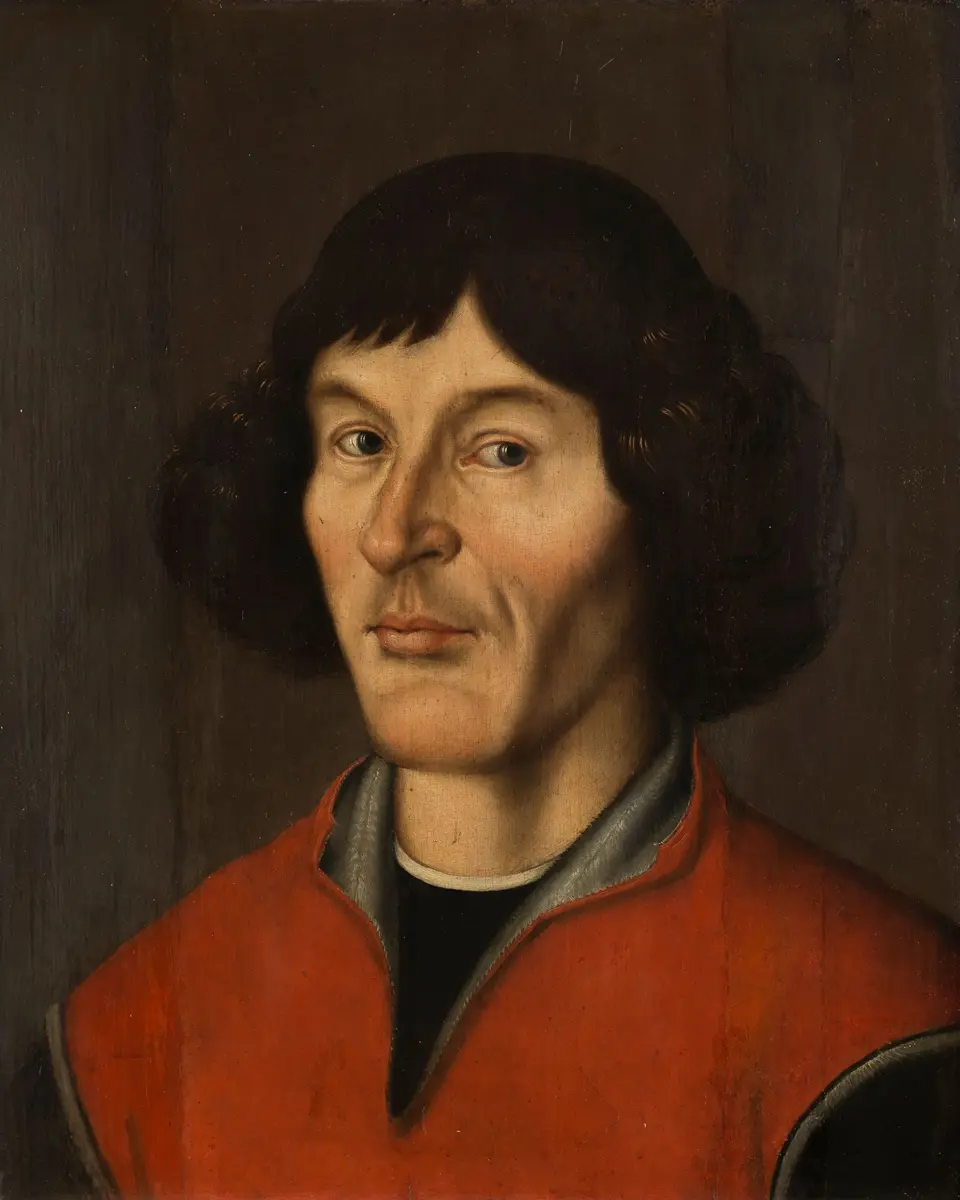
Andreas Vesalius (in Dutch Andries van Wesel) was the Flemish doctor who rebuilt the study of the human body on what can be seen by cutting it open. In 1543, at 28, he published De humani corporis fabrica, 'On the Fabric of the Human Body', a huge illustrated book of about 700 pages that described the bones, muscles, vessels, nerves, organs and brain from his own dissections. It is often called the beginning of modern anatomy, and it appeared in the same year as Copernicus's book on the Sun-centred universe.
He was born in Brussels in 1514 into a family of court doctors and apothecaries. He studied in Leuven and then medicine in Paris, where he learned to dissect and collected human bones from the city's cemeteries. In December 1537 the University of Padua, near Venice, made him a doctor and, the next day, its lecturer in surgery and anatomy. Unlike the professors before him, who read from Galen's ancient Greek texts while a barber did the cutting, Vesalius did the dissections himself, in front of his students.
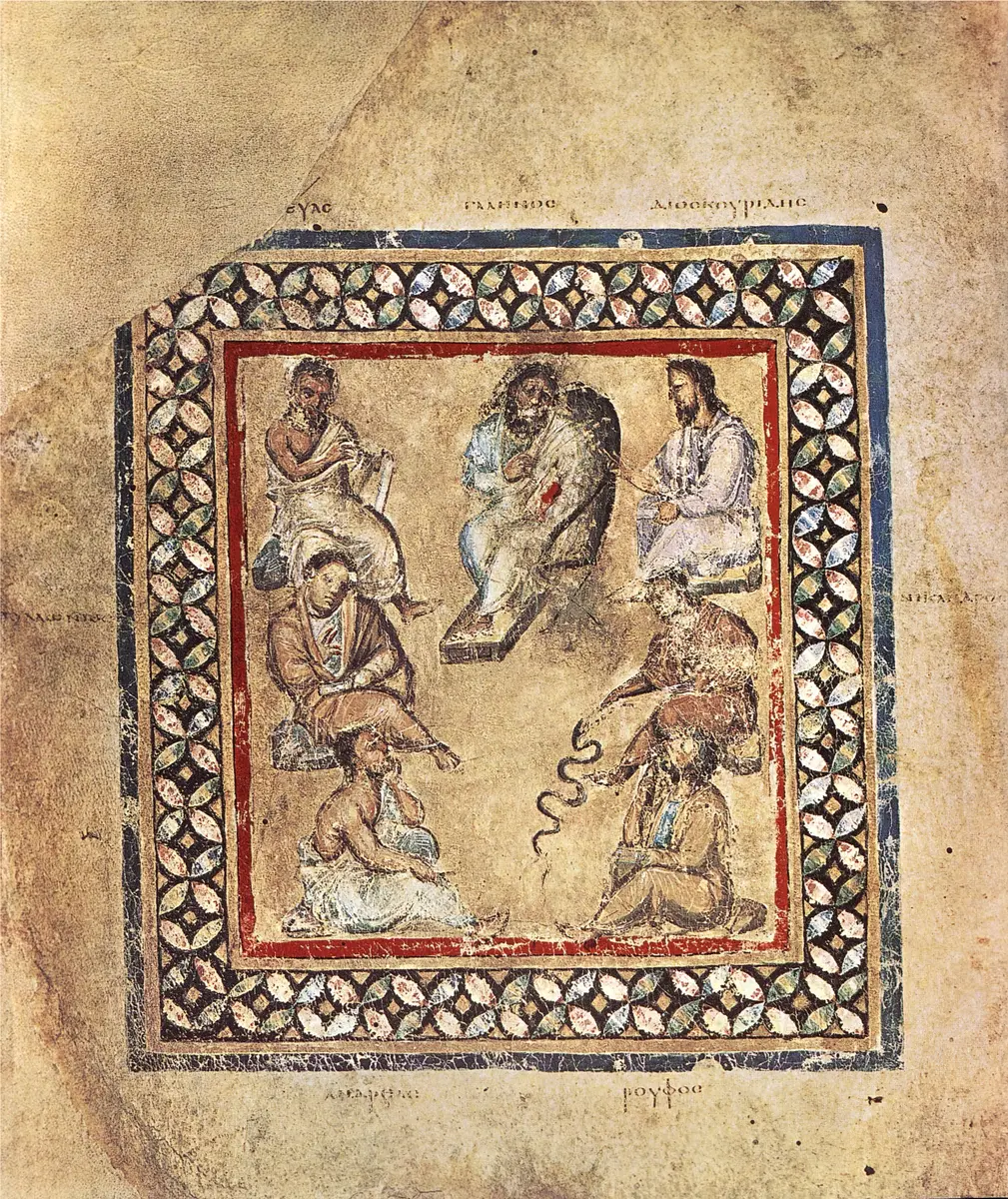
Galen, a Greek doctor of the 2nd century, had been the authority on the body for more than 1,300 years. With a steady supply of executed criminals from 1539, Vesalius found that many of Galen's descriptions fit apes, dogs and pigs better than people: the human lower jaw is one bone, not two; the breastbone has three parts, not seven; the network of vessels Galen put at the base of the brain is not there in humans. The Fabrica said so openly, and its woodcuts, drawn by artists from Titian's circle in Venice and printed in Basel, showed skeletons and flayed 'muscle men' standing in Italian landscapes. They were copied all over Europe for two centuries.
The book made his career. From 1543 he was physician to the Emperor Charles V, following him on his wars and travels, and from 1559 he served his son Philip II at the Spanish court in Madrid. In 1559 he was called to Paris to the deathbed of King Henry II of France, and in 1562 to the injured heir of Spain, Don Carlos. In 1564 he left Spain on a pilgrimage to Jerusalem; on the way back he fell ill at sea and died on the Greek island of Zakynthos, then Venetian, on 15 October 1564. His grave has never been found.
Vesalius did not overthrow all of Galen. He kept Galen's ideas about how the body works, and the circulation of the blood was found only by William Harvey, another Padua graduate, in 1628. What he changed was the method: you learn the body by looking at the body, again and again, and you trust what you see over the oldest authority. His successors at Padua, Colombo, Falloppio and Fabricius, built on that, and every anatomy atlas since stands on his book.
What happened
- 1514
- 5:45 a.m.
Andries van Wesel, called in Latin Andreas Vesalius, is born in Brussels, the second son of Andries van Wesel, apothecary to the Habsburg court, and Isabel Crabbe, in the family house on the Helle Straetken. The day and hour come from a horoscope by Girolamo Cardano, which puts his birth at a quarter to six in the morning.
The church of the Minimes, Brussels: it stands where his family's house on the Helle Straetken stood (demolished in 1621), where he was born on 31 December 1514; he lived and practised in Brussels again from 1553 to 1556 and left from here for Spain in 1559 - 1530
He enrols at the University of Louvain (Leuven) to study the arts at the Castle School, and also learns Greek and some Hebrew at the College of Three Languages.
University Hall, Leuven, the old seat of the University of Louvain: he studied the arts here from February 1530 and returned in 1536 to take his bachelor's degree in medicine- 1533
He arrives in Paris to study medicine under Johann Guinter of Andernach, Jacobus Sylvius and Jean Fernel. He learns to dissect and hunts for human bones in the cemeteries of Paris, until he can name them blindfolded.
- 1536
War between France and the Empire forces him, a subject of the emperor, to leave Paris. Back in Louvain he revives the dissection of human bodies, not done there for years, and secretly takes a skeleton down from a gibbet outside the town to study.
University Hall, Leuven, the old seat of the University of Louvain: he studied the arts here from February 1530 and returned in 1536 to take his bachelor's degree in medicine - 1537
His first book, a paraphrase of the ninth book of Rhazes' medical work for King al-Mansur, is printed at Louvain for his bachelor's degree in medicine; it is reprinted at Basel in March, on his way to Italy.
University Hall, Leuven, the old seat of the University of Louvain: he studied the arts here from February 1530 and returned in 1536 to take his bachelor's degree in medicineAfter two days of examinations the University of Padua makes him a doctor of medicine with high honours (magna cum laude).
Palazzo del Bo, Padua, the seat of the university: doctor of medicine on 5 December 1537 and lecturer in surgery and anatomy until 1542; the Fabrica was written hereThe next day he is appointed lecturer in surgery and anatomy (explicator chirurgiae) at Padua. In his first course he does the dissecting himself instead of leaving it to a barber, and draws large charts for his students.
Palazzo del Bo, Padua, the seat of the university: doctor of medicine on 5 December 1537 and lecturer in surgery and anatomy until 1542; the Fabrica was written here- 1538
He publishes the Tabulae anatomicae sex in Venice, six large sheets of anatomy for students, three of them skeletons drawn by the Flemish painter Jan Steven van Calcar of Titian's workshop; pirated copies appear in Paris, Augsburg and Cologne within a year.
Palazzo del Bo, Padua, the seat of the university: doctor of medicine on 5 December 1537 and lecturer in surgery and anatomy until 1542; the Fabrica was written here - 1539
Marcantonio Contarini, judge of the criminal court of Padua, begins to give him the bodies of executed criminals. With enough bodies to repeat his dissections, he becomes sure that Galen described animals, not people.
Palazzo del Bo, Padua, the seat of the university: doctor of medicine on 5 December 1537 and lecturer in surgery and anatomy until 1542; the Fabrica was written hereHis Venesection Letter on bloodletting is published in Basel. In it he argues from the course of the veins he has dissected rather than from authority, and announces the great anatomy he is preparing.
Palazzo del Bo, Padua, the seat of the university: doctor of medicine on 5 December 1537 and lecturer in surgery and anatomy until 1542; the Fabrica was written here- 1540
Invited by the medical students of Bologna, he gives a series of public dissections there. Against the Galenist professor Matteo Corti he sets up an ape's skeleton beside a human one to show that Galen's bones are an ape's.
- 1542
At Padua he dates the preface of the Fabrica, addressed to the Emperor Charles V: a call to physicians to take back the knife from the barbers and learn anatomy from the human body.
Palazzo del Bo, Padua, the seat of the university: doctor of medicine on 5 December 1537 and lecturer in surgery and anatomy until 1542; the Fabrica was written hereFrom Venice he writes to the Basel printer Johannes Oporinus that the woodblocks for the Fabrica and the Epitome, packed with the help of the block-cutter, are on their way across the Alps; they reach Basel in the middle of September.
- 1543
He arrives in Basel to oversee the printing of the Fabrica, which has been in Oporinus's press since about October.
Anatomical Museum of the University of Basel: Oporinus printed the Fabrica in Basel in 1543, and the skeleton Vesalius made there in May 1543 is kept in this museumJakob Karrer von Gebweiler, a bigamist who had stabbed his wife, is executed in Basel. Vesalius dissects the body in public and assembles the bones into a skeleton, which he gives to the university; it is still in Basel.
Anatomical Museum of the University of Basel: Oporinus printed the Fabrica in Basel in 1543, and the skeleton Vesalius made there in May 1543 is kept in this museumThe Fabrica, 'Seven Books on the Fabric of the Human Body', comes off Oporinus's press, about 700 folio pages with more than 200 woodcuts; the colophon says June 1543. Its short companion, the Epitome, dedicated to Prince Philip, follows within weeks.
Anatomical Museum of the University of Basel: Oporinus printed the Fabrica in Basel in 1543, and the skeleton Vesalius made there in May 1543 is kept in this museumHe leaves Basel with copies of his books to present to the Emperor; five days later Oporinus publishes a German translation of the Epitome.
Anatomical Museum of the University of Basel: Oporinus printed the Fabrica in Basel in 1543, and the skeleton Vesalius made there in May 1543 is kept in this museumHe reaches Charles V in Gelderland, where the Emperor is at war, and is made physician to the imperial household. He gives up his chair at Padua and, by his own account, burns his notes on Galen.
- 1544
At the invitation of Cosimo de' Medici he gives anatomy demonstrations at the University of Pisa, after a last visit to Padua and Bologna; Cosimo tries in vain to keep him.
His father dies, leaving him the family house in Brussels, and he marries Anne van Hamme of Vilvoorde; their only child, Anne, is born the next year.
The church of the Minimes, Brussels: it stands where his family's house on the Helle Straetken stood (demolished in 1621), where he was born on 31 December 1514; he lived and practised in Brussels again from 1553 to 1556 and left from here for Spain in 1559- 1546
During a long stay with the court at Regensburg he writes his Letter on the China Root, printed in Basel: a little on the root as a remedy for gout and syphilis, and much in defence of the Fabrica against his old Paris teacher Sylvius.
- 1551
Sylvius publishes his attack on 'a certain madman', 'Vaesanus', a pun on Vesalius's name, defending Galen and claiming that the human body has changed since Galen's time.
- 1555
Oporinus publishes the revised second edition of the Fabrica in Basel, with a recut title page, new observations from his court years and the plain statement that the wall between the heart's ventricles has no pores.
- 1556
As Charles V gives up his crowns, Vesalius receives a pension for life and the title of count palatine, and is named a physician to the household of the new king, Philip II.
- 1559
At a tournament in Paris celebrating the peace of Cateau-Cambresis, a splinter of the Count of Montgomery's lance pierces King Henry II's eye. Philip II sends Vesalius from Brussels to the royal bedside, where he works beside Ambroise Pare.
Henry II dies at the Hotel des Tournelles in Paris. Vesalius later writes his own account of the case and returns to Brussels in the middle of July.
He leaves Brussels with his wife and daughter to follow Philip II to Spain, as physician to the Netherlanders at the court in Madrid.
The church of the Minimes, Brussels: it stands where his family's house on the Helle Straetken stood (demolished in 1621), where he was born on 31 December 1514; he lived and practised in Brussels again from 1553 to 1556 and left from here for Spain in 1559- 1561
Gabriele Falloppio, his successor at Padua, sends him his Observationes anatomicae, a respectful list of corrections to the Fabrica. Before the year is out Vesalius writes a long and friendly reply, the Examen, which is printed in Venice in 1564.
- 1562
In the spring, at Alcala de Henares, the seventeen-year-old heir to the throne, Don Carlos, falls down a staircase and gravely injures his head. Vesalius is called with the King and joins the physicians in his care; the prince recovers.
- 1564
With the King's leave he sets out on a pilgrimage to Jerusalem; his wife and daughter go home to Brussels. In Venice he is said to be offered his old chair at Padua, vacant since Falloppio's death, and in March he sails for the Holy Land by way of Cyprus.
On the voyage home from Jerusalem a storm delays his ship and he falls ill. Put ashore on the Venetian island of Zakynthos (Zante), he dies there, aged 49, and is buried in a grave that has never been identified.
Zakynthos (Zante), then a Venetian island: put ashore ill on his way back from Jerusalem, he died here on 15 October 1564; tradition places his grave at the church of Santa Maria delle Grazie in the town, destroyed in 1893