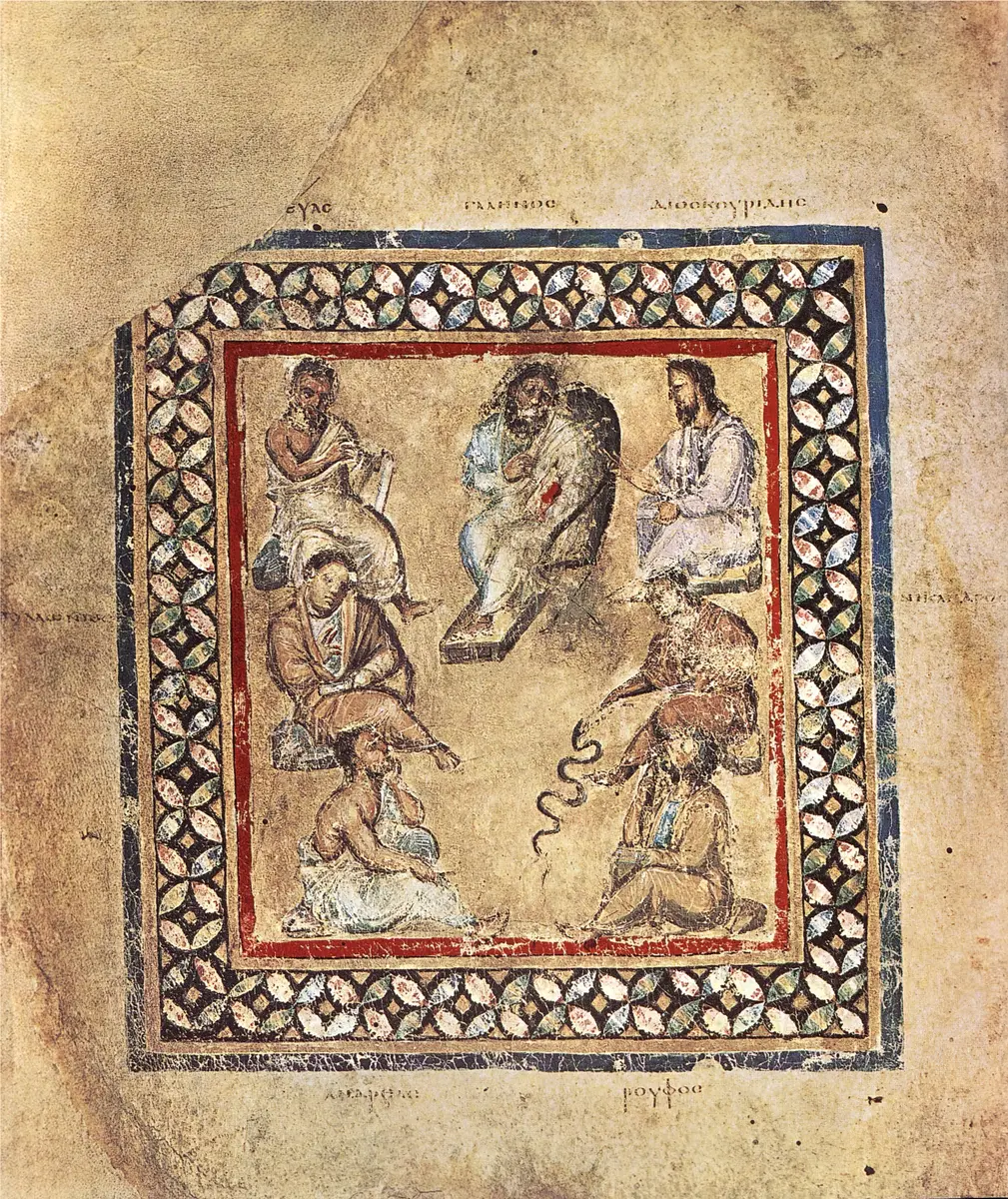
Galen
“The Greek doctor of Roman emperors whose anatomy, drawn mostly from apes and pigs, and humoral medicine ruled Islamic and European medicine for 1,400 years, until Vesalius and Harvey corrected him.”
Galen of Pergamon was the most important doctor of the Roman Empire and, for some fourteen hundred years after his death, the highest authority in medicine from Baghdad to Padua. He was a Greek, born in 129 in Pergamon, a rich city on the west coast of what is now Turkey, the son of a wealthy architect who had him taught mathematics, logic and the four schools of philosophy. At sixteen, after his father dreamed that the healing god Asclepius wanted it, he turned to medicine. He studied at home, at Smyrna and Corinth and for some years at Alexandria, the greatest medical centre of the ancient world, then came back in 157 to look after the gladiators of the high priest of Asia, which taught him surgery on real wounds.
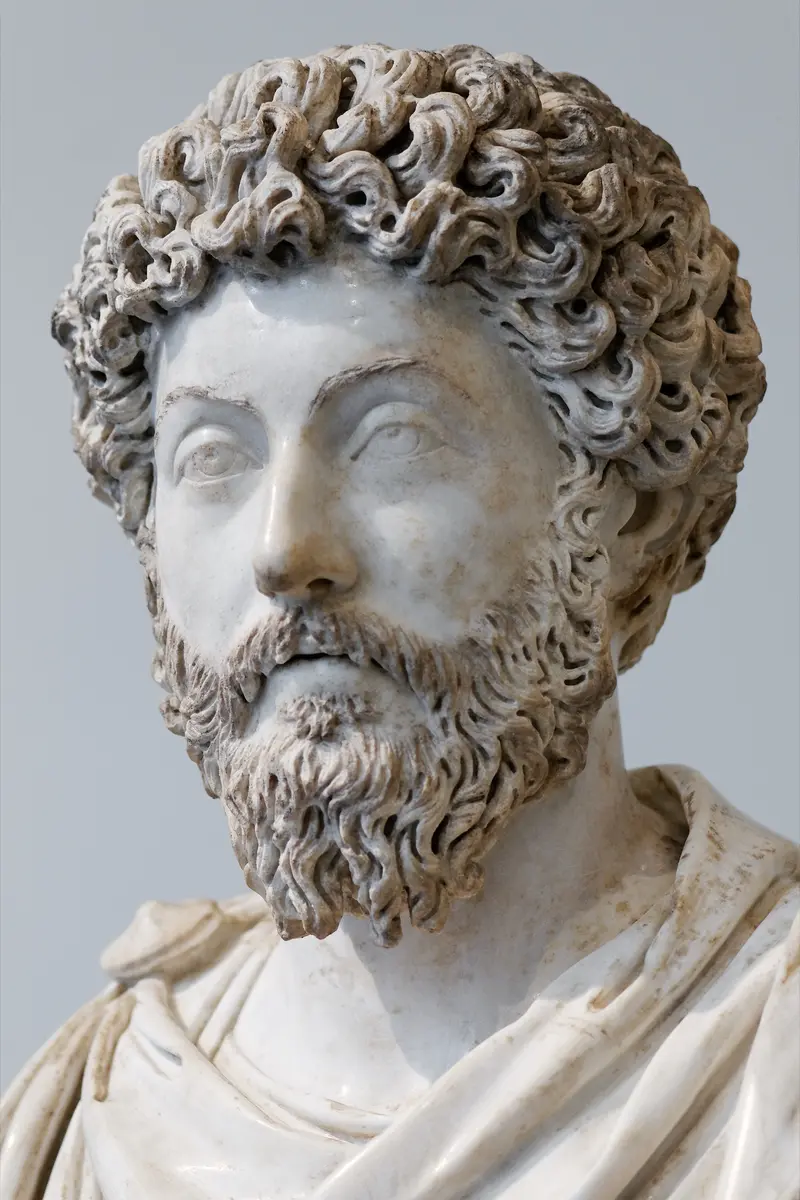
In 162, aged thirty-three, he went to Rome. He made his name quickly and loudly: he cured patients other doctors had given up, read the pulse better than anyone, and staged public dissections of animals before senators and philosophers. In the most famous of them he cut the nerves of the larynx of a live pig and the squealing stopped, proving that the brain, not the heart, controls the voice. He left Rome in 166, as a great plague arrived from the East, was called back by the emperors Marcus Aurelius and Lucius Verus in 168, and from 169 served the imperial family for the rest of his life: Marcus, his son Commodus and Septimius Severus. Marcus, he tells us, called him the first among doctors and unique among philosophers.
His own medicine joined careful anatomy to the old Hippocratic theory of the four humours (blood, phlegm, yellow bile and black bile). He showed that the arteries carry blood, not air, and described the cranial nerves and the valves of the heart. But the Romans did not dissect human bodies, so he worked on apes, pigs and goats, and some of what he taught about humans was really animal anatomy. He believed blood was made in the liver and used up by the body, and that some of it passed through invisible pores in the wall of the heart. He was also the most productive writer of antiquity: more than four million words survive, and much more was lost, some of it in a fire that burned his storerooms in Rome in 192. A letter he wrote about that loss, 'Avoiding Distress', was found only in 2005, in a monastery library in Thessaloniki.
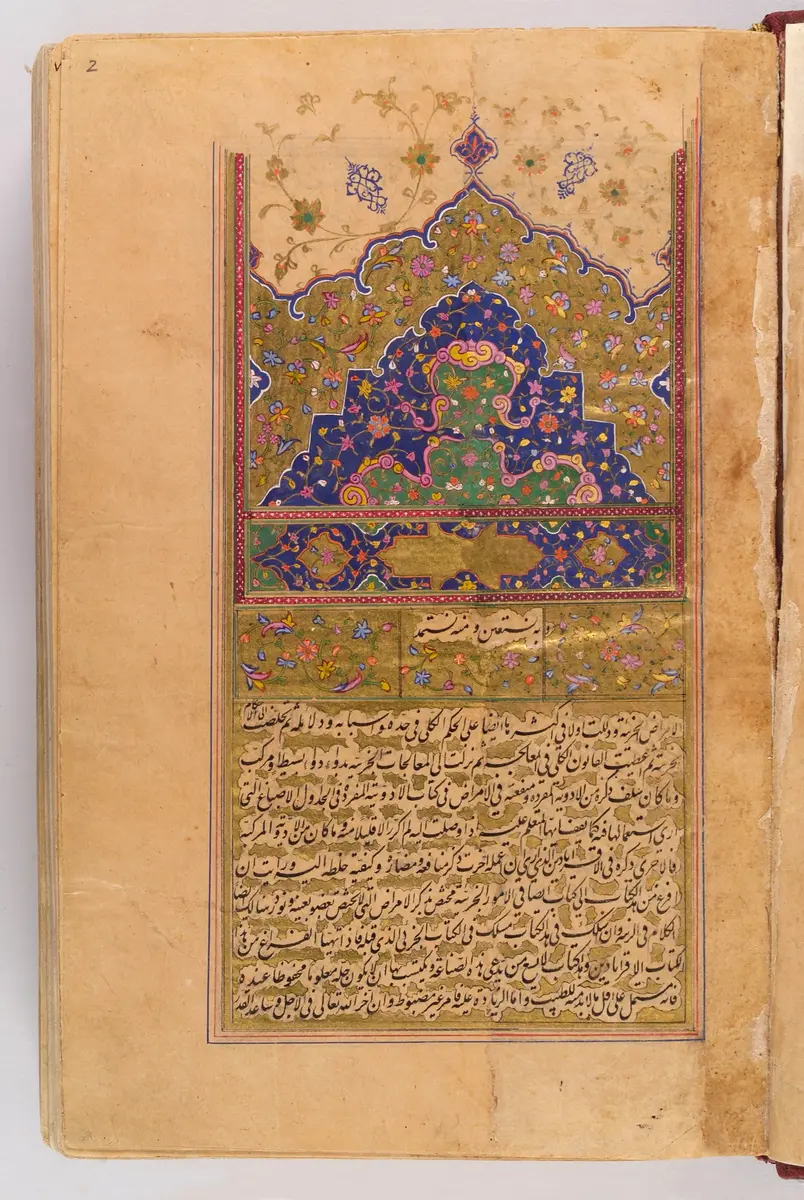
Galen died in Rome around 216, though older books say about 200: the date is still argued. His fame then grew without him. By 500 his works were the core of medical teaching at Alexandria; in ninth-century Baghdad the Christian scholar Hunayn ibn Ishaq and his circle translated some 129 of them into Syriac and Arabic, and Islamic medicine, Avicenna's Canon included, was built on them. From the late eleventh century they reached Latin Europe and became the basis of teaching in the new universities. The Greek text was first printed complete in Venice in 1525.
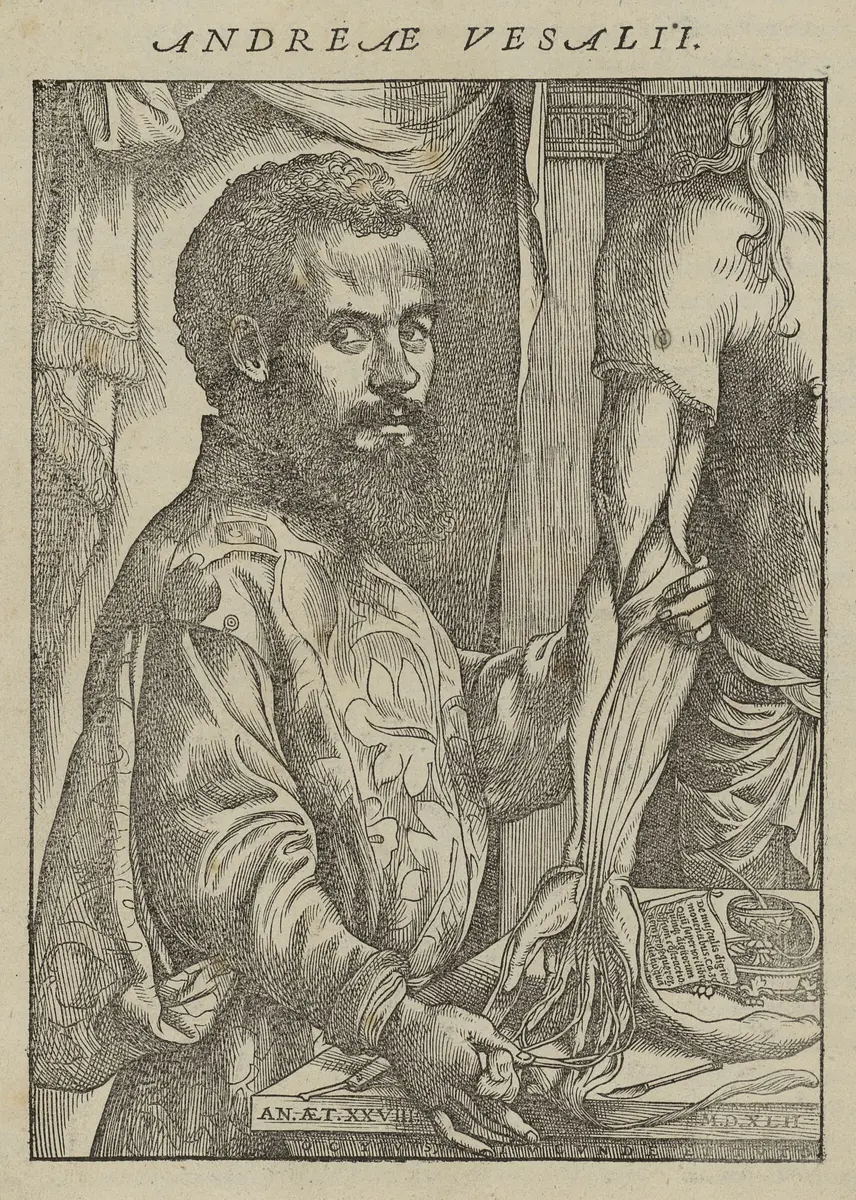
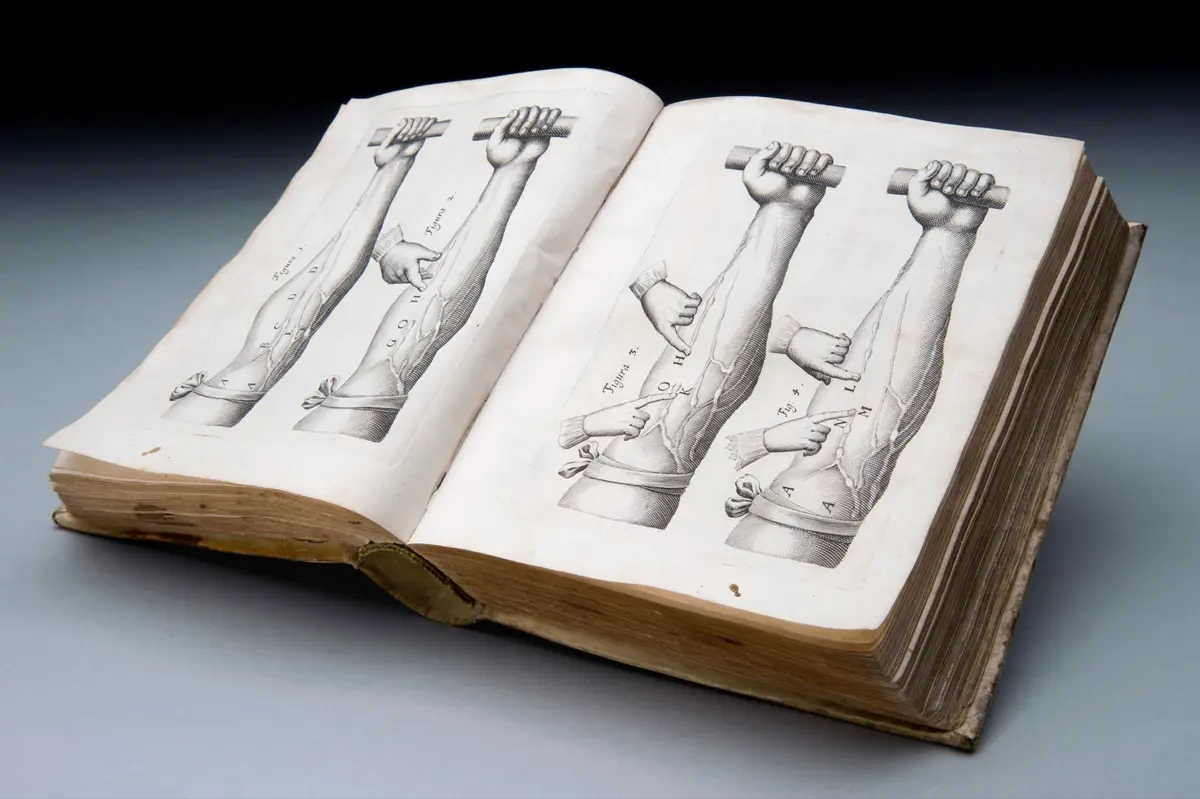
The return to his own words in the Renaissance was what overturned him. Doctors who repeated his dissections found that his human anatomy was partly animal: in 1543 Andreas Vesalius said so in print, in his great book on the human body. In 1628 William Harvey showed that the blood circulates, which ended Galen's physiology. Yet his habits, to observe, to test by experiment and to read the body by its signs, outlived his mistakes, and he remains the clearest voice we have from ancient medicine.
What happened
- 129
Galen is born in Pergamon, a rich Greek city of the Roman province of Asia, to Aelius Nicon, a wealthy architect and builder with a love of mathematics; his mother, Galen later wrote, was a quarrelsome woman whom he compared to Socrates' wife Xanthippe.
Pergamon, the Asclepieion: born in the city in 129, attendant of the healing god and student at his sanctuary, physician to the gladiators 157-161, back again 166-168 - 143
At fourteen he begins philosophy, attending teachers of all four schools, Platonist, Aristotelian, Stoic and Epicurean, after an early training in mathematics and logic that he valued all his life.
Pergamon, the Asclepieion: born in the city in 129, attendant of the healing god and student at his sanctuary, physician to the gladiators 157-161, back again 166-168 - 145
Asclepius appears to his father in a dream and tells him to let his son study medicine. At sixteen Galen begins, with the doctors of the god's sanctuary at Pergamon, while he goes on with philosophy.
Pergamon, the Asclepieion: born in the city in 129, attendant of the healing god and student at his sanctuary, physician to the gladiators 157-161, back again 166-168 - 148
His father dies and leaves him rich and free at nineteen. He sets out to study with the best teachers: first at Smyrna, then at Corinth.
Smyrna, the agora: his first study abroad after his father's death, from about 148 - 152
He reaches Alexandria, the greatest medical centre of the age, and stays perhaps five years. Human dissection is no longer done there, but students can see a human skeleton, and he learns anatomy on animals and the craft of commenting on Hippocrates.
Alexandria: the greatest medical school of the age, where he studied anatomy for some years before 157 - 157
Back in Pergamon, he is appointed physician to the gladiators kept by the high priest of Asia, and holds the post for four years, from autumn 157 to autumn 161, learning surgery on their wounds.
Pergamon, the Asclepieion: born in the city in 129, attendant of the healing god and student at his sanctuary, physician to the gladiators 157-161, back again 166-168 - 162
After journeys to Cyprus, Palestine, Lycia and Lemnos to collect drugs and minerals, he arrives in Rome in the summer, aged thirty-three. There he meets a school friend, Teuthras, who will leave him the great recipe collection of the Pergamene physician Eumenes.
Rome, the Temple of Peace: his home from 162 to his death; the fire of 192 here and on the Sacred Way destroyed his storerooms - 163
In his first months in Rome he treats the Aristotelian philosopher Eudemus, his old teacher, for a quartan fever, foretelling its course from the pulse when the city's doctors cannot: his first great success.
Rome, the Temple of Peace: his home from 162 to his death; the fire of 192 here and on the Sacred Way destroyed his storeroomsIn the spring and summer he gives public anatomical demonstrations before the consular Flavius Boethus and other leading men. Cutting the recurrent laryngeal nerves of a live pig, he silences its squeals and proves that the voice is governed by the brain through the nerves. Boethus, whose wife he also cures, tells the emperor about him.
Rome, the Temple of Peace: his home from 162 to his death; the fire of 192 here and on the Sacred Way destroyed his storerooms- 166
He slips out of Rome, telling friends he is going to Campania, takes ship from Brindisi and returns to Pergamon. He blames the envy of other doctors, but a great plague, brought back from the East by Lucius Verus's army, is just reaching the city; his friend Teuthras dies in its first attack.
Pergamon, the Asclepieion: born in the city in 129, attendant of the healing god and student at his sanctuary, physician to the gladiators 157-161, back again 166-168 - 168
Marcus Aurelius and Lucius Verus, preparing a war against the Germans, summon him to their winter quarters at Aquileia, where plague breaks out in the army.
Aquileia: the emperors' winter quarters in 168-169, where they summoned him and plague struck the army - 169
At midwinter Lucius Verus dies suddenly and Marcus takes his body back to Rome. Galen persuades Marcus to leave him in Rome instead of taking him to the war, as doctor to the eight-year-old Commodus under the court physician Peitholaus.
Rome, the Temple of Peace: his home from 162 to his death; the fire of 192 here and on the Sacred Way destroyed his storerooms - 170
While Marcus campaigns on the Danube (169-176), Galen, left in peace in Rome, writes up a large number of his major works on anatomy, physiology and medical theory, as he later records in My Own Books.
Rome, the Temple of Peace: his home from 162 to his death; the fire of 192 here and on the Sacred Way destroyed his storerooms - 177
Back from the war, Marcus Aurelius falls ill at night and his doctors fear a fever. Galen takes his pulse, finds no fever but an upset stomach, and prescribes warm nard on wool; the emperor calls him 'first among physicians and unique among philosophers'.
Rome, the Temple of Peace: his home from 162 to his death; the fire of 192 here and on the Sacred Way destroyed his storerooms - 178
He writes On Prognosis, addressed to Epigenes: the stories of his diagnoses in Rome, from Eudemus to the emperor himself.
Rome, the Temple of Peace: his home from 162 to his death; the fire of 192 here and on the Sacred Way destroyed his storerooms - 180
Marcus Aurelius dies on campaign on the Danube; Commodus, Galen's patient since boyhood, becomes sole emperor, and Galen stays on as a court physician.
Rome, the Temple of Peace: his home from 162 to his death; the fire of 192 here and on the Sacred Way destroyed his storerooms- 192
At the end of winter a fire destroys the Temple of Peace, the warehouses along the Sacred Way and the libraries on the Palatine. Galen, away in Campania, loses the books, notes, drugs (with eighty litres of theriac), instruments and silver he kept in his storeroom there, among them his own editions of ancient authors and his recipe collections.
Rome, the Temple of Peace: his home from 162 to his death; the fire of 192 here and on the Sacred Way destroyed his storeroomsCommodus is murdered. Galen, who has watched the emperor's reign of terror from close by, is now free to describe it.
Rome, the Temple of Peace: his home from 162 to his death; the fire of 192 here and on the Sacred Way destroyed his storerooms- 193
In the first months of the year he writes Avoiding Distress, a letter to a friend at home on why the loss of his library did not grieve him. The text was lost for centuries until a copy turned up in 2005 in the Vlatadon monastery in Thessaloniki.
Rome, the Temple of Peace: his home from 162 to his death; the fire of 192 here and on the Sacred Way destroyed his storeroomsSeptimius Severus wins the civil war that follows and becomes emperor; Galen serves him as physician. In these later years of his career he completes his great Method of Healing and writes much of his work on drugs and his commentaries on Hippocrates.
Rome, the Temple of Peace: his home from 162 to his death; the fire of 192 here and on the Sacred Way destroyed his storerooms- 209
In his last years he writes My Own Opinions, a short summing-up of his views on body and soul, probably the last of his works.
Rome, the Temple of Peace: his home from 162 to his death; the fire of 192 here and on the Sacred Way destroyed his storerooms - 216
Galen dies, probably in Rome, aged about eighty-seven by the Arabic tradition, in the reign of Caracalla. The Byzantine Suda instead says he died at seventy, about 199; the later date is now preferred.
Rome, the Temple of Peace: his home from 162 to his death; the fire of 192 here and on the Sacred Way destroyed his storerooms