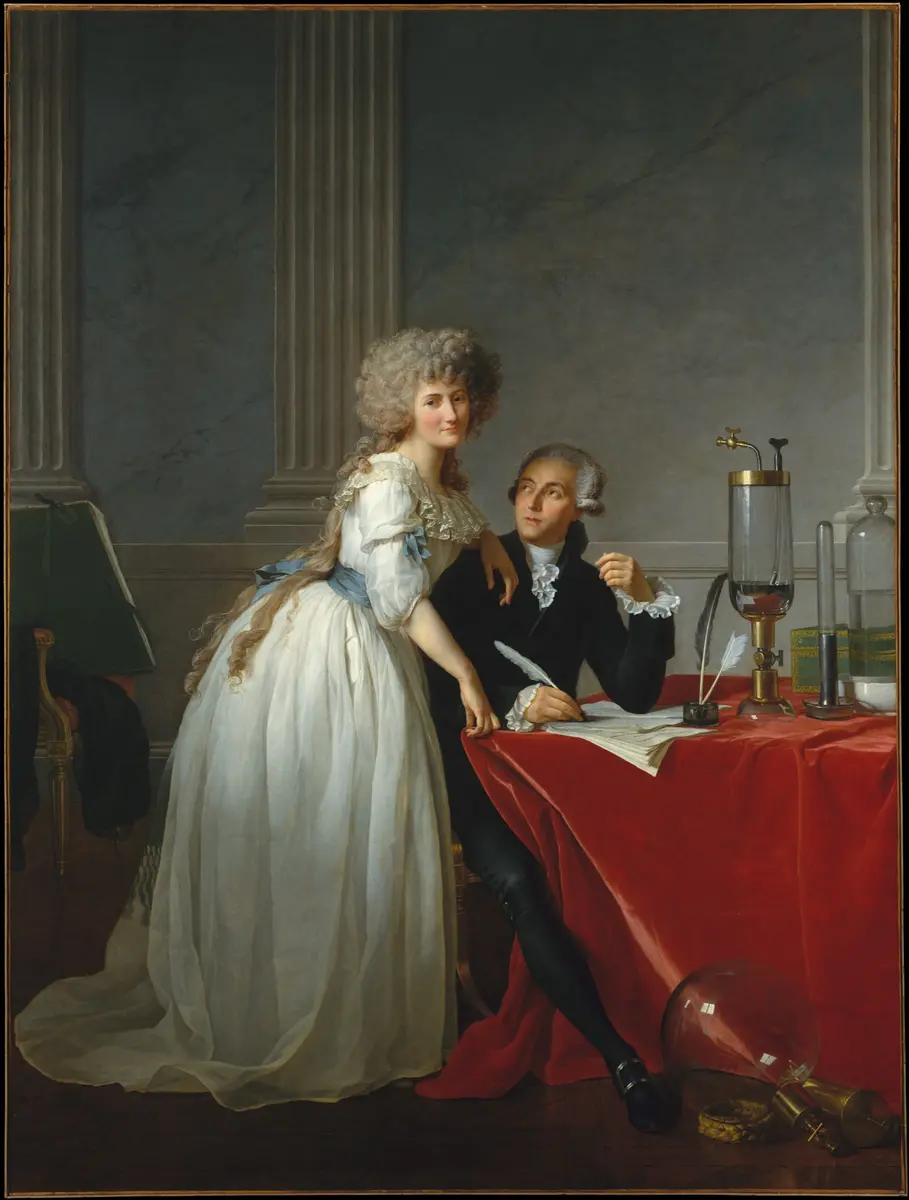
Antoine Lavoisier
“The father of modern chemistry: he named oxygen and hydrogen, showed burning is combination with oxygen, weighed everything, and wrote the 1789 Traité; guillotined in 1794 as a former tax collector.”
Antoine-Laurent Lavoisier was the French chemist who turned chemistry into a modern science. He did not discover oxygen or hydrogen himself, but he understood what they were. He showed that burning, rusting and breathing are all the same kind of reaction, in which a substance combines with a part of the air that he named oxygen. He proved that water is made of hydrogen and oxygen, not a simple element. He insisted that nothing is created or lost in a chemical reaction, so that everything must be weighed before and after, and he gave chemistry the names it still uses: oxide, sulfate, carbonate. His Traité élémentaire de chimie of 1789 is often called the first modern chemistry textbook.
He was born in Paris on 26 August 1743 into a rich family of lawyers. His mother died when he was five and left him a fortune. At the Collège Mazarin he learned mathematics and astronomy, and although he took a law degree in 1763, science had already won him: he studied chemistry with Rouelle and travelled the country with the geologist Guettard to map rocks. He was elected to the Academy of Sciences in 1768, aged 24. The same year he bought a share in the Ferme générale, the private company that collected the king's taxes on salt, tobacco and goods entering Paris. It made him richer still, paid for the finest laboratory in Europe, and in the end cost him his life.
In 1771 he married Marie-Anne Paulze, the 13-year-old daughter of another tax farmer. She became his partner in science. She learned English, which he could not read, and translated the British chemists for him; she kept the laboratory notebooks, studied drawing with Jacques-Louis David and engraved the thirteen plates of the Traité, signed 'Paulze Lavoisier sculpsit'; she drew the experiments on human breathing; and she hosted the gatherings that spread the new chemistry. From 1775 the couple lived at the Arsenal in Paris, where he ran the royal gunpowder service and built his laboratory. There, building on the gas Joseph Priestley had described to him at dinner in October 1774, he worked out the oxygen theory between 1775 and 1785, measured heat with Laplace's ice calorimeter, and decomposed and rebuilt water on a large scale in February 1785.
Lavoisier was a liberal reformer who welcomed the Revolution of 1789. He served on the commission that created the metric system and advised the new governments on money and taxes. But he was also hated as a tax farmer, above all for the customs wall he had proposed around Paris, whose toll houses the crowds set on fire in July 1789. The Ferme générale was abolished in 1791, the Academy in August 1793, and in November 1793 all former tax farmers were ordered arrested. Lavoisier gave himself up with his father-in-law. On 8 May 1794 the Revolutionary Tribunal tried 28 of them in the morning, and that afternoon they were guillotined on the Place de la Révolution, today's Place de la Concorde.
'It took them only an instant to cut off that head, and a hundred years may not produce another like it,' the mathematician Lagrange said the next day. Marie-Anne printed his last memoirs, married the physicist Count Rumford in 1804 and died in 1836. David's double portrait of the couple, painted in 1788, hangs in the Metropolitan Museum in New York; his instruments are in the Musée des Arts et Métiers in Paris; and every chemistry student still learns 'Lavoisier's law', the conservation of mass.
What happened
- 1743
Antoine-Laurent Lavoisier is born in Paris, the first child of Jean-Antoine Lavoisier, a solicitor at the Parlement of Paris, and Émilie Punctis, in the house in the cul-de-sac Pecquet (today's rue Pecquay) that his father had inherited.
Rue Pecquay, Marais: Lavoisier was born on 26 August 1743 in the cul-de-sac Pecquet, today's rue Pecquay, in his great-uncle's house- 1748
His mother dies when he is five, leaving him a fortune. His father moves the children to the house of their widowed grandmother, Madame Punctis, in the rue du Four near Saint-Eustache, where an adoring aunt brings him up.
- 1754
In the autumn, shortly after his eleventh birthday, he enters the Collège des Quatre-Nations (the Collège Mazarin) as a day pupil; there the astronomer Lacaille teaches him mathematics and the habit of exact measurement.
- 1763
He takes his bachelor's degree in law (the licence follows in 1764), but he is already attending Rouelle's chemistry lectures and working with the geologist Guettard on a mineral atlas of France.
- 1765
His first paper, on gypsum and plaster of Paris, is read to the Academy of Sciences: by weighing he shows that plaster sets by taking up water, the 'water of crystallization'.
- 1766
At the Academy's Easter public session he receives a gold medal, specially authorised by the king, for his essay on the best way to light the streets of Paris.
- 1767
For four months he and Guettard ride through the Vosges, Alsace and Lorraine, measuring mountains with a barometer and collecting rocks and waters for the mineral atlas.
- 1768
In March, with money inherited from his mother, he buys a third of a share in the Ferme générale, the company that collects the king's indirect taxes; it will make him very rich, and it will cost him his life. Soon after, following a close vote against the mining engineer Gabriel Jars, he is admitted to the Academy of Sciences as a supernumerary assistant chemist: at 24 he is one of its youngest members.
He starts boiling distilled water in a sealed glass 'pelican'. After 101 days, on 1 February 1769, he weighs everything and shows that the 'earth' that appears comes from the glass, not from water turning into earth.
- 1771
He marries Marie-Anne Pierrette Paulze, aged 13, the daughter of the tax farmer Jacques Paulze. She will learn English and drawing, translate the British chemists, keep his laboratory notebooks and engrave the plates of his books.
- 1772
He deposits a sealed note with the Academy: sulfur and phosphorus gain weight when they burn because they absorb air, and the same may be true of metals turning to calx.
- 1773
He opens the first of his laboratory registers with a plan for a long series of experiments on airs, work he says is 'destined to bring about a revolution in physics and chemistry'.
- 1774
His first book, the Opuscules physiques et chimiques, reviews everything known about the airs given off and absorbed in chemical reactions.
Joseph Priestley, visiting Paris, dines with Lavoisier and other French scientists and tells them of the new air he has made by heating red calx of mercury, in which a candle burns brightly.
- 1775
Appointed one of four commissioners of the new Gunpowder Administration, he moves with Marie-Anne into the Arsenal, where he builds the laboratory in which most of his later work is done. French gunpowder becomes plentiful and good.
The Arsenal, rue Bassompierre: the Hôtel de la Régie des poudres, his home and laboratory as gunpowder commissioner from 1775 to 1792At the Academy's public session he reads his 'Easter memoir' on the principle that combines with metals when they are calcined: the air from calx of mercury is purer than common air.
- 1777
His 'Memoir on combustion in general' sets out his theory of burning, without phlogiston, for the first time.
- 1779
In his 'General considerations on the nature of acids' he names the active part of the air the 'oxygen principle', from the Greek for 'acid-maker'. The same year he proposes a wall around Paris so that goods can no longer slip in untaxed.
Rotonde de la Villette (Barrière Saint-Martin): a surviving toll house of the Wall of the Farmers-General that Lavoisier proposed in 1779 - 1783
Laplace reads their 'Memoir on heat' to the Academy: with their ice calorimeter they have shown that a guinea pig breathing makes about as much heat as burning charcoal, so breathing is a slow combustion.
With Laplace, and with Cavendish's colleague Charles Blagden watching, he burns hydrogen in oxygen and collects water 'as pure as distilled water'.
At the Academy's public meeting he announces that water is not an element but a compound of oxygen and inflammable air, soon named hydrogen, 'water-maker'.
- 1784
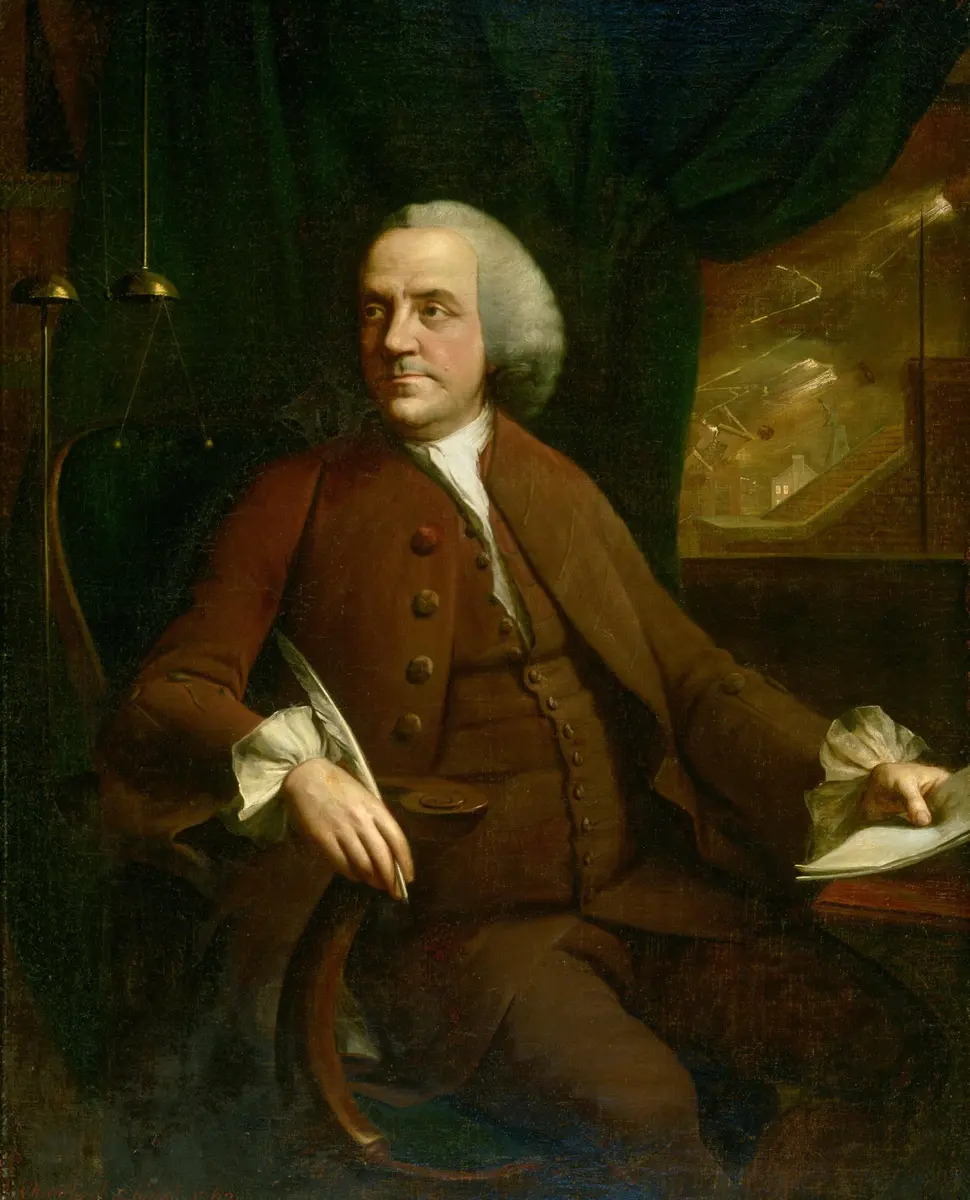
He serves with Benjamin Franklin on the royal commission that investigates Mesmer's 'animal magnetism' and finds no such force.
- 1785
Over two days at the Arsenal, before an Academy committee, he and Meusnier decompose water into its gases and rebuild it on a large scale, measuring the gases with Mégnié's new gasometers.
The Arsenal, rue Bassompierre: the Hôtel de la Régie des poudres, his home and laboratory as gunpowder commissioner from 1775 to 1792- 1787
At the Academy's public session he reads the memoir on reforming the language of chemistry; with Guyton de Morveau, Berthollet and Fourcroy he publishes the Méthode de nomenclature chimique that year.
- 1788
Marie-Anne publishes her French translation of Richard Kirwan's Essay on Phlogiston, with notes by her husband and his allies refuting it chapter by chapter.
Jacques-Louis David signs a receipt for 7,000 livres for the double portrait of the couple; it is withdrawn from the Salon of 1789 for fear of trouble.
- 1789
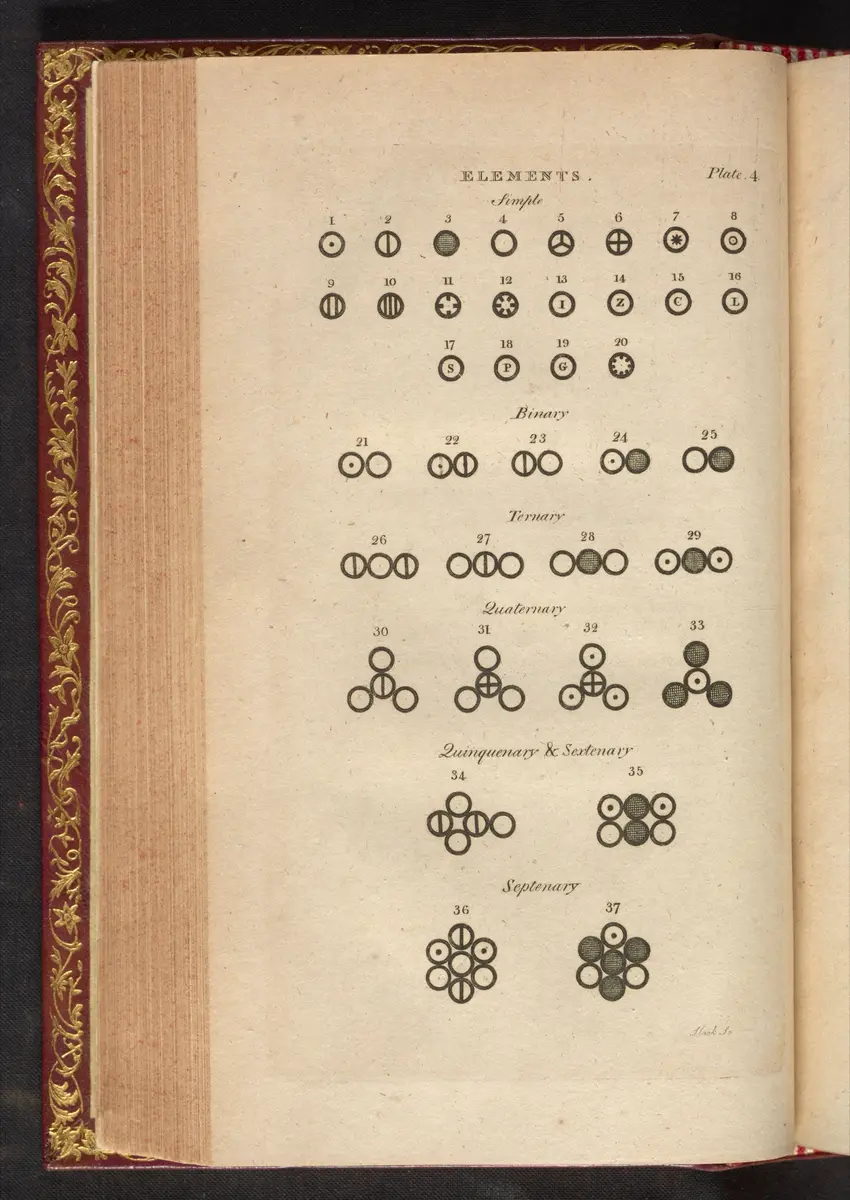
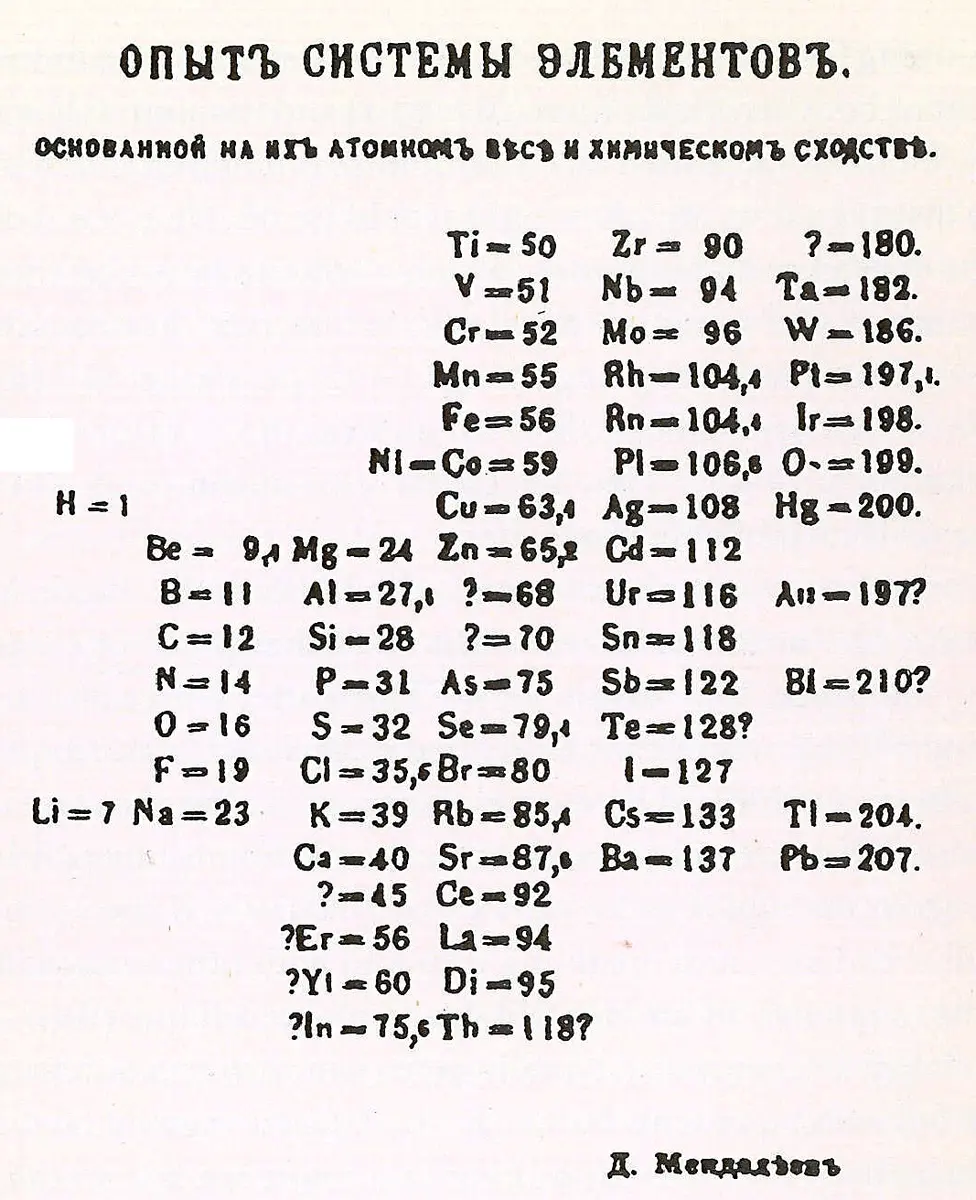
He publishes the Traité élémentaire de chimie, with Marie-Anne's thirteen plates: the conservation of mass, the new names and a table of 33 simple substances. The same year he and his allies prepare the first volume of a new journal, the Annales de chimie.
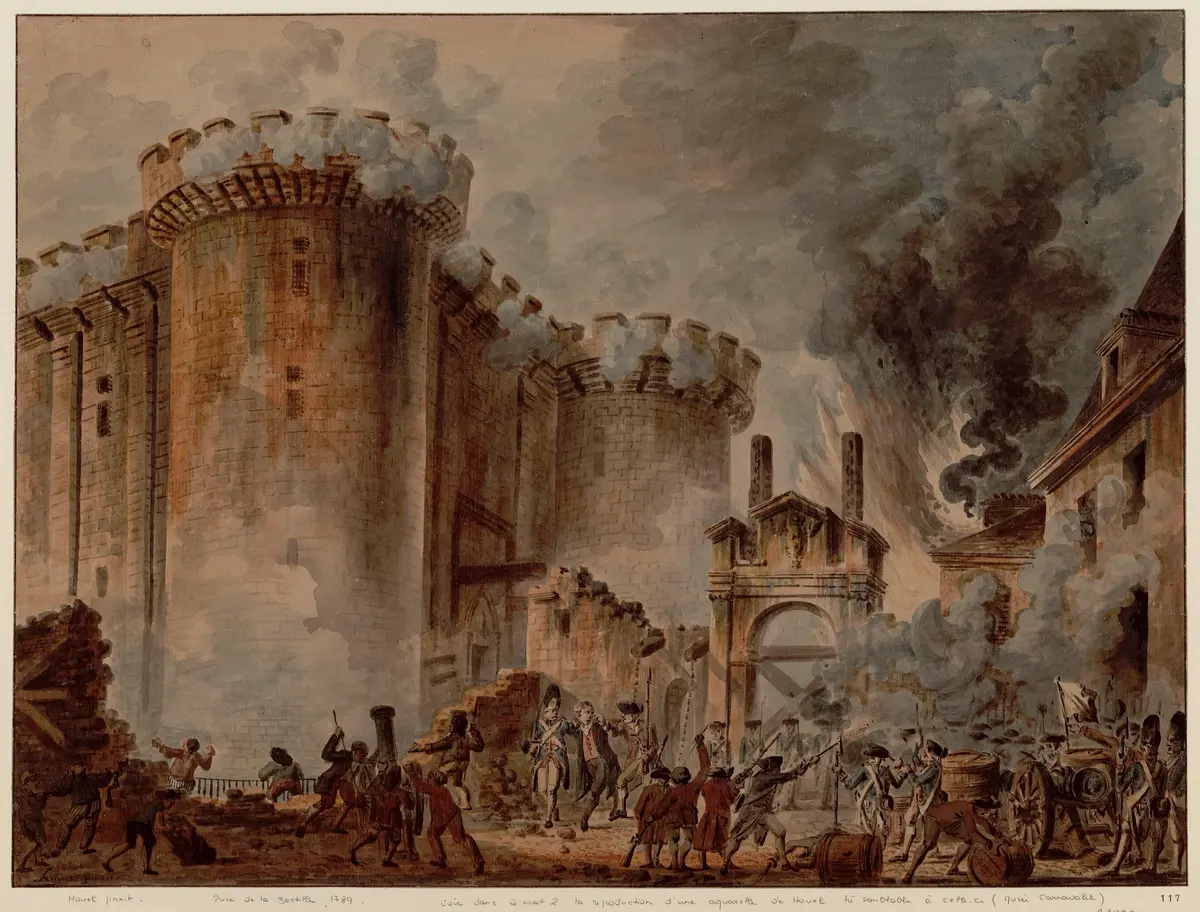
Crowds set fire to the toll houses of the new customs wall around Paris; the wall he had proposed is one of the most hated things in the city.
- 1790
In his laboratory he and his young assistant Armand Seguin measure the oxygen a man consumes at rest, after a meal and while working; Marie-Anne draws the experiments and herself taking notes. That year he joins the commission on weights and measures that will create the metric system.
- 1791
Jean-Paul Marat begins to denounce him in L'Ami du peuple, as a tax farmer with too many posts and as the man behind the wall around Paris.
Two days after the National Assembly names him a commissioner of the treasury, he publishes an open letter in the Moniteur giving up his paid posts except the gunpowder service. The Ferme générale is abolished this year.
- 1793
The Convention abolishes the Academy of Sciences, which he had served as treasurer and tried to save, with all the royal learned societies.
Police officers search his house on the Boulevard de la Madeleine for papers of the Ferme générale, and take away instruments of the weights-and-measures project.
The Convention orders the arrest of all former tax farmers. Lavoisier, out on National Guard duty, hides for some days in the old rooms of the Academy at the Louvre and writes appeals that go unanswered.
He and his father-in-law, Jacques Paulze, give themselves up and are imprisoned with the other tax farmers. Marie-Anne visits, and refuses a deal that would have saved her husband but not her father.
- 1794
In a morning's trial the Revolutionary Tribunal condemns 28 former tax farmers for conspiracy against the people. That afternoon they are guillotined on the Place de la Révolution; Paulze dies third and Lavoisier fourth, about a minute apart.
Place de la Concorde, then the Place de la Révolution: guillotined here on the afternoon of 8 May 1794The bodies are carted away to a common grave, almost certainly in the Errancis cemetery that took those guillotined on the Place de la Révolution; his remains have never been identified.
Site of the Errancis cemetery, rue de Monceau: the common grave for those guillotined on the Place de la Révolution from March 1794, almost certainly where his body was thrown