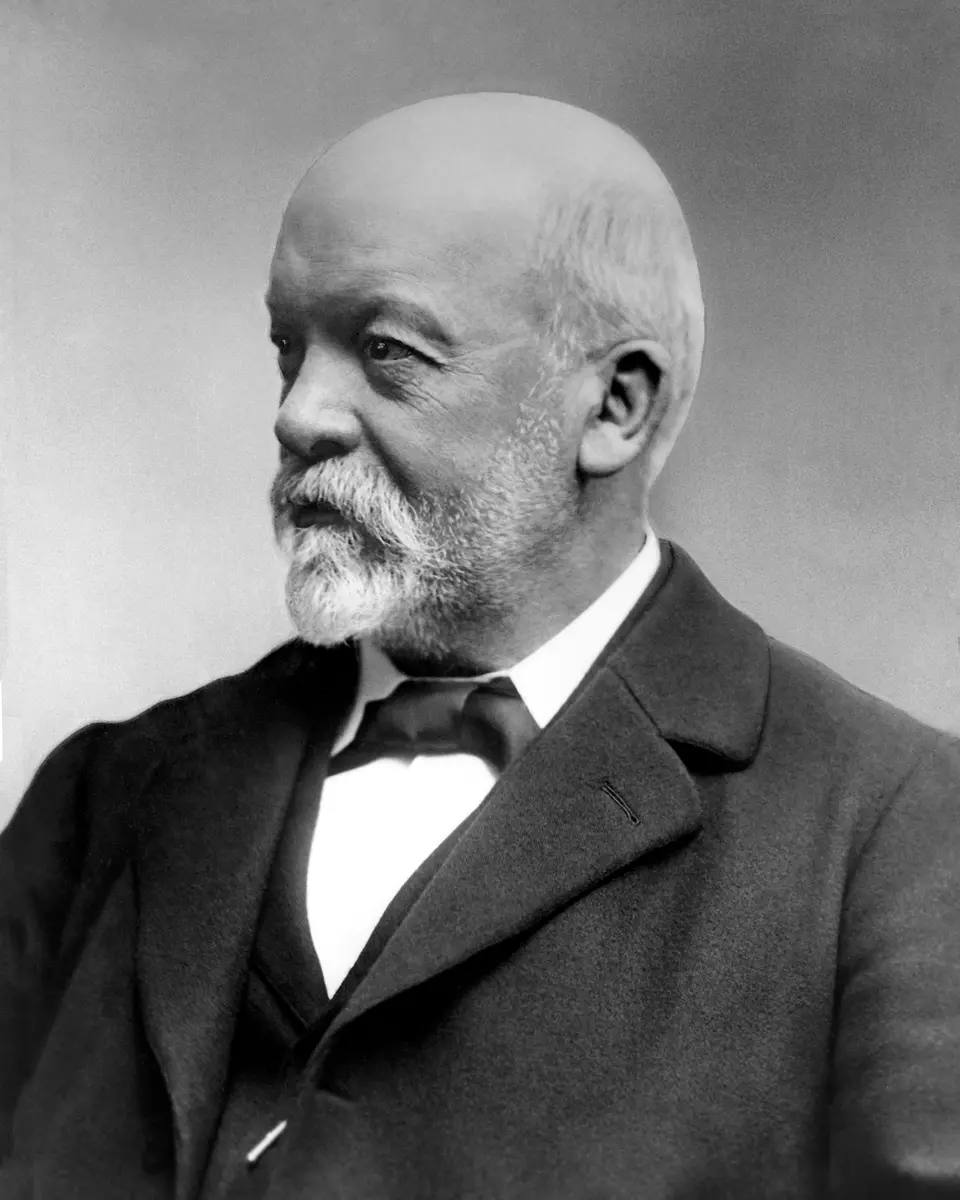
Gottlieb Daimler
“The German engineer who, with Wilhelm Maybach, built the first fast petrol engine and the first motorcycle (1885) and four-wheeled motor car (1886); his company later made the Mercedes.”
Gottlieb Daimler (1834–1900) was a German engineer who, with his partner Wilhelm Maybach, built the first small, fast-running petrol engine and put it into a two-wheeler, a carriage, a boat and a rail car. He was born in Schorndorf, a small town near Stuttgart in the Kingdom of Württemberg, the son of a master baker. He trained as a gunsmith, then studied engineering, worked in factories in Alsace and Paris, and in 1861 and 1862 toured the engine and machine-tool works of northern England, then the most advanced in the world. In Reutlingen he met Maybach, a gifted orphan twelve years younger, and from then on the two worked together for the rest of Daimler's life.
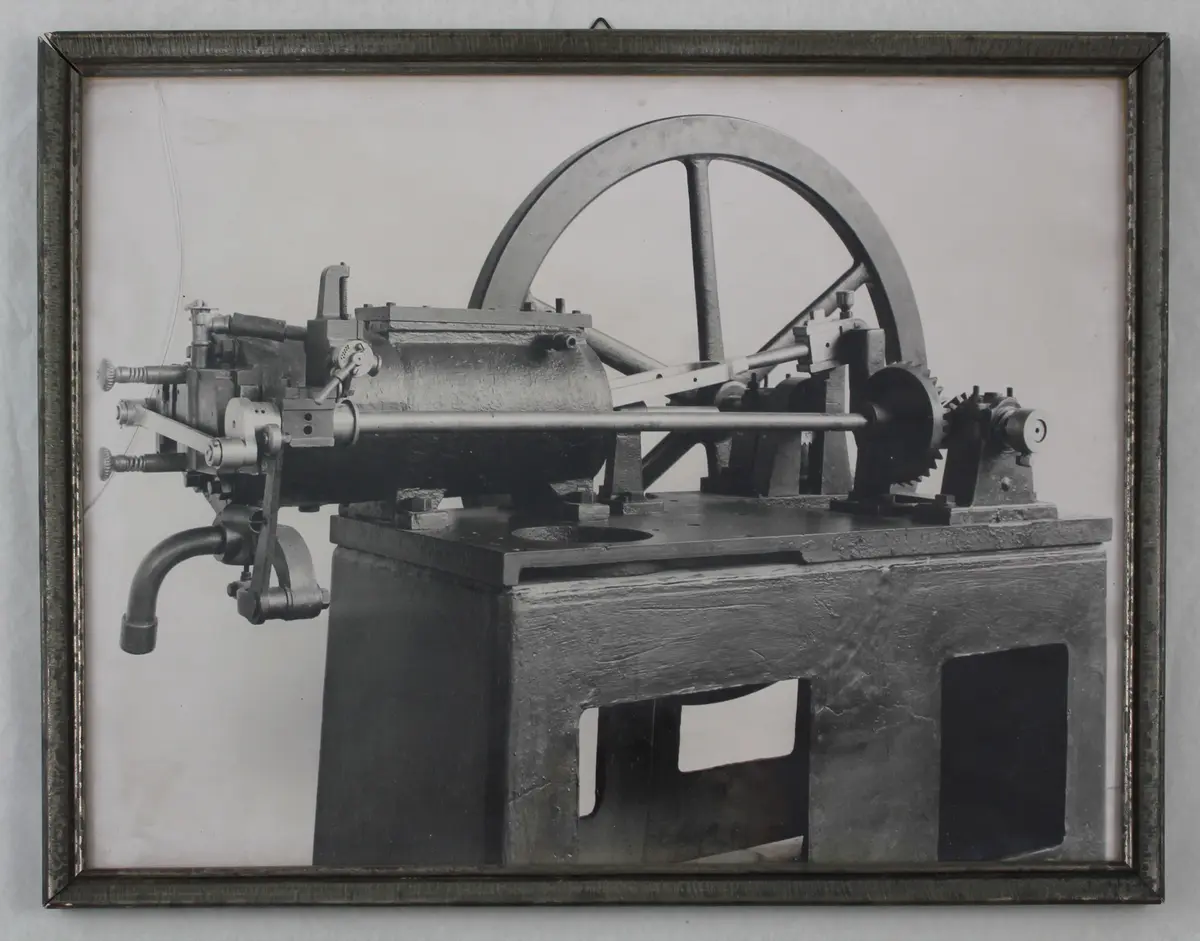
From 1872 to 1882 Daimler was technical director of the gas engine factory at Deutz, near Cologne, the firm of Nikolaus Otto, and with Maybach he made Otto's new four-stroke engine fit for mass production. These engines burned town gas, were heavy and turned slowly, so they could not move a vehicle. After a quarrel with Otto, Daimler left in 1882, bought a villa in Cannstatt near Stuttgart and turned the greenhouse in its garden into a workshop. There he and Maybach built a light engine that ran at about 600 turns a minute, several times faster than the stationary engines of the day, fired by a glowing tube and later fed with petrol by a carburettor. Because of its shape they called the 1884 version the 'grandfather clock'.
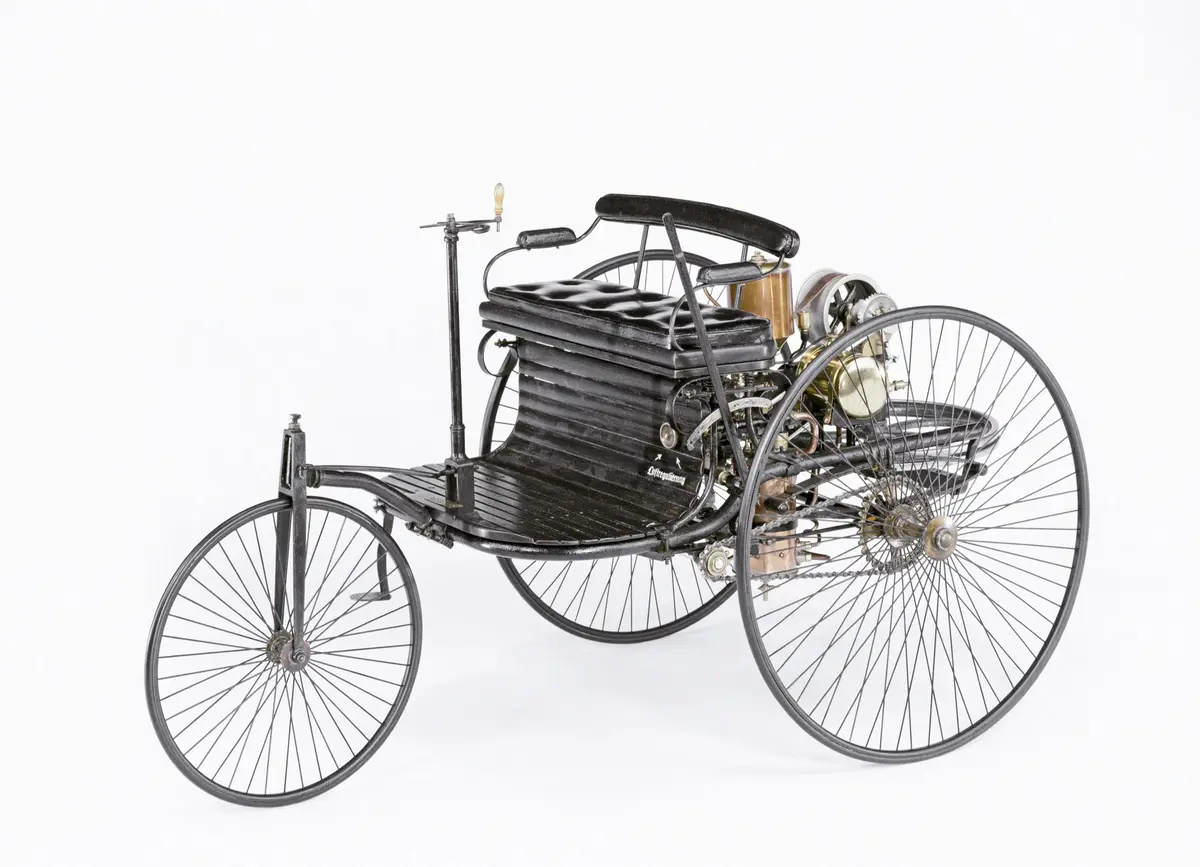
In 1885 they fitted a version of it under the seat of a wooden two-wheeler, the 'riding car', now counted as the first motorcycle. In 1886 they put one into a horse carriage bought as a birthday present for Daimler's wife Emma, and into a boat on the Neckar. Fifty kilometres away in Mannheim, Carl Benz had patented a three-wheeled motor car earlier the same year; the two men worked apart and probably never met. Benz built a new vehicle around his engine, while Daimler, at first, wanted his engine to drive anything that moved. Who made the first car therefore depends on the definition: Benz's patent car of 1885–86 was the first vehicle designed as a car, Daimler's carriage the first four-wheeled one, and his 1889 'wire-wheel car', designed by Maybach and shown at the Paris World Exhibition, was his first real automobile. French firms, Panhard & Levassor and Peugeot, began building cars with Daimler engines made under licence.
In 1890 Daimler founded the Daimler-Motoren-Gesellschaft (DMG) with two rich investors, but he soon fought with them. Maybach left in 1891, Daimler was pushed out in 1894, and the company only recovered when a British group led by Frederick Simms offered a large sum for the British rights on condition that Daimler came back; he and Maybach returned in 1895. Daimler, who had heart trouble, died in Cannstatt on 6 March 1900. Months later DMG built, on the order of the businessman Emil Jellinek, the first Mercedes, a light 35-horsepower car designed by Maybach that is often called the first modern automobile. In 1926 DMG merged with Benz's company to form Daimler-Benz, the maker of Mercedes-Benz cars. Daimler's garden workshop in Cannstatt and his birthplace in Schorndorf are museums today, and his idea of one small, fast engine for every kind of vehicle is the basis of motor transport.
What happened
- 1834
Gottlieb Wilhelm Daimler is born in Schorndorf, near Stuttgart, in the Kingdom of Württemberg, the son of a master baker. At school he also takes technical drawing classes on Sundays.
Schorndorf, Höllgasse 7: born here on 17 March 1834, the son of a master baker; the half-timbered house is now a small museum- 1848
At fourteen he is apprenticed to a gunsmith in Schorndorf, a training in precision metalwork and in controlling explosive forces. He passes his journeyman's examination in 1852 and goes on to the Industrial Trade School in Stuttgart.
Schorndorf, Höllgasse 7: born here on 17 March 1834, the son of a master baker; the half-timbered house is now a small museum - 1853
Ferdinand Steinbeis of Württemberg's trade office finds him work at an engineering works in Graffenstaden, Alsace, where he studies in the evenings. His results let him skip the first two years of engineering at the Polytechnic School in Stuttgart.
- 1861
After a year at a band-saw factory in Paris, he spends the spring of 1861 to the end of 1862 in England, visiting engine and machine works in Oldham, Leeds, Manchester and Coventry, then the most advanced in the world, probably including Beyer, Peacock and Joseph Whitworth's machine-tool works.
- 1863
After a few months as a draughtsman in Geislingen, he becomes workshop inspector at the Bruderhaus in Reutlingen, a Christian charity with an engineering works. There, by 1864, he meets Wilhelm Maybach, an orphan twelve years younger, who will work with him for the rest of his life.
- 1867
He marries Emma Kurtz, the daughter of a pharmacist from Maulbronn. In December 1868 he becomes director of the Maschinenbau-Gesellschaft Karlsruhe, where their sons Paul and Adolf are born, and Maybach follows him there in 1869.
- 1872
Eugen Langen hires him as technical director of the Gasmotoren-Fabrik Deutz near Cologne, the gas engine company of Nikolaus Otto; Maybach joins as a draughtsman and becomes chief designer in January 1873. Production, sales and reliability rise quickly.
Deutz, across the Rhine from Cologne: technical director of Otto's gas engine factory, 1872 to 1882 - 1876
Daimler and Maybach develop Otto's newly patented four-stroke gas engine to production standard, the design on which most later engines are based. But the engines are heavy, slow and fixed to the gas mains.
Deutz, across the Rhine from Cologne: technical director of Otto's gas engine factory, 1872 to 1882 - 1881
After growing quarrels with Otto, the company sends him to Russia to look for business. When he returns in December the board, pressed by Otto, offers him a post in St Petersburg and ends his contract from 30 June 1882.
- 1882
He signs Maybach on as his engineer and designer and, in the spring, buys a villa in Cannstatt near Stuttgart for 75,000 marks. He adds a brick workshop to the greenhouse in its garden and widens the garden paths into 'roads'. Maybach moves to Cannstatt in October.
Daimler's garden house in Cannstatt (Taubenheimstrasse 13): the greenhouse workshop of 1882 where he and Maybach built the fast engine, the riding car and the motor carriage; he lived in the villa beside itHis contract with Deutz ends and he leaves the company, aged 48, with enough money to work on his own idea: a small, light engine that can drive carriages, rail cars, boats or airships.
Deutz, across the Rhine from Cologne: technical director of Otto's gas engine factory, 1872 to 1882- 1883
After long tests in the greenhouse, he patents a 'gas engine' (German patent 28022), uncooled and insulated, with an unregulated hot-tube ignition. A week later a second patent covers its valve control. The test engine already runs at 600 turns a minute, where other engines managed 120 to 180.
Daimler's garden house in Cannstatt (Taubenheimstrasse 13): the greenhouse workshop of 1882 where he and Maybach built the fast engine, the riding car and the motor carriage; he lived in the villa beside it- 1885
He registers the next engine, the 'grandfather clock': upright, closed against oil and dust, about one horsepower at 600 turns a minute, and small enough to fit into a vehicle.
Daimler's garden house in Cannstatt (Taubenheimstrasse 13): the greenhouse workshop of 1882 where he and Maybach built the fast engine, the riding car and the motor carriage; he lived in the villa beside itHe applies for a patent on a 'vehicle with a gas or petroleum engine' (German patent 36423): a wooden two-wheeler with small side wheels and the engine under the seat, the 'riding car', today counted as the first motorcycle. The idea of the two-wheeler probably came from Maybach.
Daimler's garden house in Cannstatt (Taubenheimstrasse 13): the greenhouse workshop of 1882 where he and Maybach built the fast engine, the riding car and the motor carriage; he lived in the villa beside itOne of Daimler's sons rides the riding car about three kilometres from Cannstatt to Untertürkheim, at up to 12 kilometres an hour, the first journey of any length on a motorcycle.
Daimler's garden house in Cannstatt (Taubenheimstrasse 13): the greenhouse workshop of 1882 where he and Maybach built the fast engine, the riding car and the motor carriage; he lived in the villa beside it- 1886
He orders an 'Americaine' carriage from the coach builders Wimpff & Sohn in Stuttgart, officially as a present for his wife's birthday, really to put an engine into it. On 25 March he applies for a patent on a carburettor that lets the engine run on petrol.
On the Neckar near Cannstatt, Daimler and Maybach test a motor boat driven by the 'grandfather clock'. Boats and stationary engines, not road vehicles, are what first sell: the public hardly notices his cars.
The carriage is delivered and brought secretly to his house at night. Under Maybach's supervision the engine and a steering shaft are fitted at the Maschinenfabrik Esslingen. Following Benz's patent car by a few months, it is the first four-wheeled vehicle driven by a fast petrol engine.
Daimler's garden house in Cannstatt (Taubenheimstrasse 13): the greenhouse workshop of 1882 where he and Maybach built the fast engine, the riding car and the motor carriage; he lived in the villa beside it- 1887
He shows a motorized rail trolley to the public in Baden-Baden; the engine also drives a tram in Stuttgart and inspection cars on German railways.
The garden workshop is too small for the orders for boat and stationary engines, so he opens a factory on Ludwigstrasse on the Seelberg in Cannstatt, with 23 workers and his secretary Karl Linck.
Seelberg, Cannstatt (Ludwigstrasse, today Kreuznacher Strasse): his first factory from July 1887 and the first home of the Daimler-Motoren-Gesellschaft from 1890- 1888
With the New York piano maker William Steinway he founds the Daimler Motor Company on Long Island, which takes over his patents for the United States and Canada and starts building engines in 1891.
- 1889
His wife Emma dies. Maybach's 'wire-wheel car', with a steel-tube frame, a four-speed gearbox and a new two-cylinder V-engine, is shown at the World Exhibition in Paris. Through Louise Sarazin, Panhard & Levassor take a licence and start building the engine that autumn; Peugeot and Panhard soon build the first French cars around it.
The US Patent Office grants him patent 418,112 for the V-twin engine, already patented in France, Belgium, Switzerland and Italy that summer.
- 1890
Short of capital, he founds the Daimler-Motoren-Gesellschaft (DMG) in Cannstatt with the gunpowder maker Max Duttenhofer and the cartridge maker Wilhelm Lorenz, to carry on the work on the Seelberg.
Seelberg, Cannstatt (Ludwigstrasse, today Kreuznacher Strasse): his first factory from July 1887 and the first home of the Daimler-Motoren-Gesellschaft from 1890- 1891
Maybach, offered unacceptable terms, leaves DMG. Paid by Daimler, he goes on designing in secret, from 1892 in the ballroom of the empty Hotel Hermann in Cannstatt, where he creates the Phoenix engine and the spray carburettor.
- 1893
In Schwäbisch Hall he marries Lina Hartmann, a widow 22 years younger whom he met again in Florence that spring while taking a cure for his heart. On their honeymoon they visit the World's Fair in Chicago.
- 1894
Duttenhofer and Lorenz, threatening to let DMG go bankrupt, force him to sell them his shares, nominally worth 200,000 marks, and the rights to his inventions for a third of that. Without him and Maybach the company makes no progress.
- 1895
A British group led by Frederick Simms offers 350,000 marks for the British rights to his inventions, but only if Daimler returns. The board gives in: Daimler comes back as adviser and general inspector, and Maybach is made technical director on this day.
- 1896
He is named a director of the new Daimler Motor Company in Britain, formed to build cars under his patents in Coventry.
- 1897
He becomes chairman of DMG's supervisory board. With Maybach back, the company booms, selling his engine for vehicles on land, on water and in the air.
- 1900
Daimler dies of heart disease in Cannstatt, aged 65, and is buried in the Uff-Kirchhof. Nine months later DMG finishes the first Mercedes, designed by Maybach for Emil Jellinek.
Uff-Kirchhof, Cannstatt: buried here after his death on 6 March 1900; Maybach lies nearby