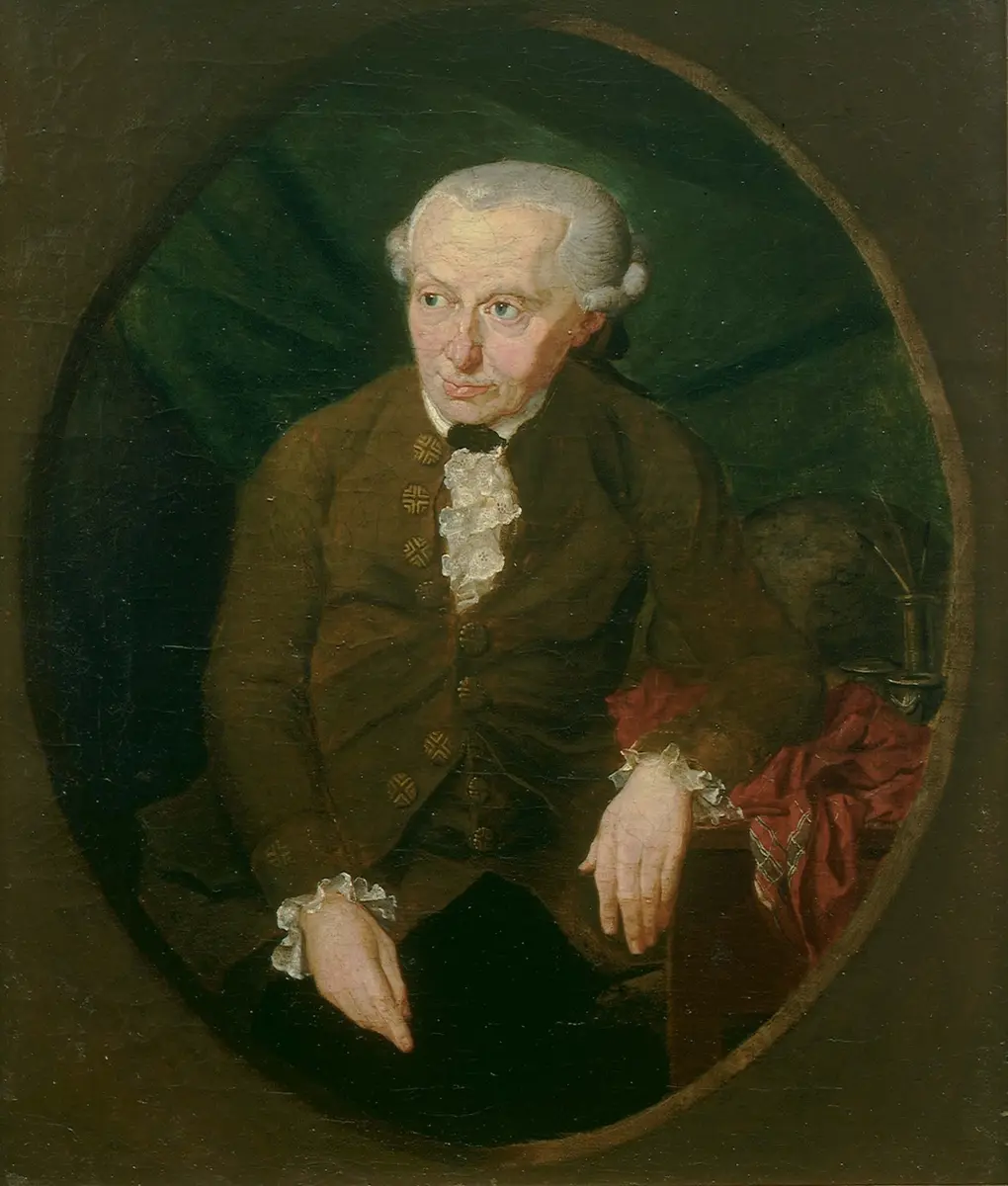
Immanuel Kant
“The Königsberg professor whose Critique of Pure Reason (1781) argued that the mind shapes everything we can know, and whose ethics tells us to act only on rules we could want everyone to follow.”
Immanuel Kant was a professor in Königsberg, the Baltic capital of East Prussia, who never went more than about a hundred kilometres from his home town and still changed the way Western philosophy thinks. The Stanford Encyclopedia of Philosophy calls him the central figure in modern philosophy. In the Critique of Pure Reason (1781) he argued that we can know the world only as it appears to us: space and time, and ideas such as cause and effect, are forms that our own minds bring to experience, so things as they are in themselves stay out of reach, and questions about God, the soul or the beginning of the world cannot be settled by reasoning alone. In ethics he held that a good action is done from duty, on a rule we could want everyone to follow, treating every person as an end and never merely as a tool. And in a short essay of 1784 he summed up the Enlightenment in two Latin words, Sapere aude: dare to think for yourself.
He was born on 22 April 1724, the fourth child of a harness maker, in the suburb just south of the Kneiphof island. Königsberg was then a busy port and university town where people spoke German; today it is Kaliningrad, in Russia. His parents were Pietists, followers of a strict, inward-looking Lutheran movement, and from the age of eight he went to their school, the Collegium Fridericianum, where he came to dislike forced piety and found refuge in the Latin classics. At sixteen he entered the university, the Albertina, where his favourite teacher, Martin Knutzen, introduced him to the physics of Isaac Newton. His mother died when he was thirteen and his father in 1746, and for about six years he earned his living as a tutor to the sons of families in the countryside.
Back in Königsberg, in 1755 he published a theory of how the Sun and planets had condensed from a single cloud of gas, later known as the Kant–Laplace hypothesis; the printer went bankrupt and hardly anyone read it. For fifteen years he taught at the university without a salary, paid by the students who came, and lectured some twenty hours a week on logic, metaphysics, ethics, mathematics and physics, even on fireworks and fortification, and every summer for thirty years on physical geography. Students liked his humour, and the town liked him at its dinner tables; in 1763 Rousseau's Émile changed his mind about what gives ordinary people their worth. Passed over for a chair in 1758, while Russian troops held the city during the Seven Years' War, he turned down posts elsewhere and in 1770, at 46, became professor of logic and metaphysics at home. Eleven years of near silence followed; reading David Hume, he said later, had woken him from his 'dogmatic slumber'.
The Critique of Pure Reason appeared in May 1781. Its first readers found it baffling, so he explained it again in the Prolegomena (1783) and then, in less than a decade, wrote the Groundwork of the Metaphysics of Morals (1785), the Critique of Practical Reason (1788), which closes on 'the starry heavens above me and the moral law within me', and the Critique of the Power of Judgment (1790), on beauty and on purpose in nature. By the late 1780s he dominated German philosophy and was the best-paid professor in Prussia. He bought a house near the castle, had friends to lunch every day from 1787, and kept to a routine so exact that, it is said, people set their clocks by his daily walk. In 1794 King Frederick William II rebuked him for his book on religion and made him promise to write no more on it; a year later Toward Perpetual Peace proposed a voluntary league of free states that would settle their quarrels without war.
He gave his last lecture in July 1796, and from about 1800 his mind failed. He died on 12 February 1804, aged 79, saying 'Es ist gut', 'It is good', and was buried beside Königsberg Cathedral. His tomb, rebuilt in 1924, still stands there in today's Kaliningrad; it was inscribed with the line about the starry heavens and the moral law. His idea that the mind shapes what it knows set the agenda for Fichte, Hegel and the German idealists who followed him, and Britannica counts him among the greatest philosophers of all time.
What happened
- 1724
Born in Königsberg, in the suburb just south of the Kneiphof island, the fourth child of the harness maker Johann Georg Kant and his wife Anna Regina; he is baptised in the cathedral the next day.
Königsberg Cathedral, on the Kneiphof island: baptised here in 1724; the old university, where he studied and took his degrees, stood beside it; buried on its north side in 1804- 1732
At Easter, at about eight, he starts at the Collegium Fridericianum, a Pietist school, where he learns Latin and comes to dislike forced piety.
The Collegium Fridericianum, the Pietist school he attended from 1732 to 1740 - 1737
His mother dies; he is thirteen.
- 1740
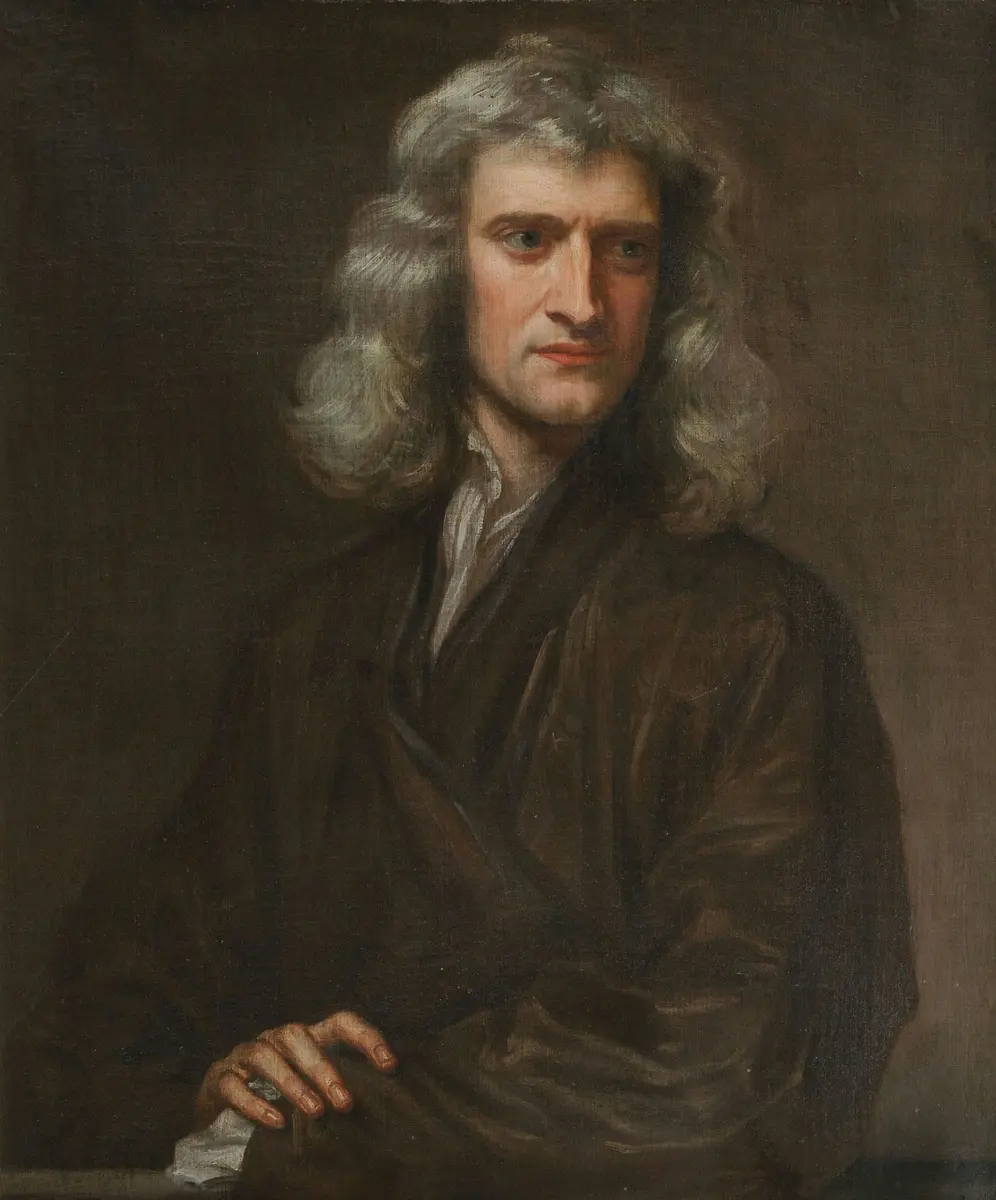
He enrols at the university, the Albertina, where his teacher Martin Knutzen introduces him to Newton's physics.
Königsberg Cathedral, on the Kneiphof island: baptised here in 1724; the old university, where he studied and took his degrees, stood beside it; buried on its north side in 1804- 1746
His father dies. Kant finishes most of his first book, Thoughts on the True Estimation of Living Forces, on a quarrel between Leibniz's and Newton's followers about how to measure force.
- 1748
The first trace of him at Judtschen, a village about a hundred kilometres east of Königsberg, where he stands witness at a baptism: he is house tutor to the sons of the Reformed pastor Daniel Andersch.
Judtschen (today Veselovka): house tutor to Pastor Andersch's sons from about 1748- 1751
From about this year he tutors the sons of Bernhard Friedrich von Hülsen at Groß Arnsdorf, about a hundred kilometres southwest of Königsberg: the farthest he ever travels from home.
Groß Arnsdorf (today Jarnołtowo, Poland): tutor to the von Hülsen family from about 1751, the farthest he ever went from Königsberg - 1754
The Königsberg weekly prints his essay on whether the Earth's rotation has slowed over time; by August at the latest he is back in the city for good.
- 1755
He dates the dedication to King Frederick II of his Universal Natural History and Theory of the Heavens, published without his name: the Sun and planets condensed from a cloud of gas. The printer goes bankrupt and the book goes almost unread.
He receives the Magister degree in a public ceremony in the university's great hall.
Königsberg Cathedral, on the Kneiphof island: baptised here in 1724; the old university, where he studied and took his degrees, stood beside it; buried on its north side in 1804He defends his Latin New Elucidation of the First Principles of Metaphysical Knowledge, which gives him the right to lecture at the university, unpaid except by the students who come.
Königsberg Cathedral, on the Kneiphof island: baptised here in 1724; the old university, where he studied and took his degrees, stood beside it; buried on its north side in 1804He gives the first lecture of a teaching career that will last more than forty years.
- 1756
The first of three essays in which he tries to explain the earthquake that destroyed Lisbon on 1 November 1755.
- 1758
In the Seven Years' War Russian troops occupy Königsberg; the city stays under Russia until 1762.
He applies for the vacant chair of logic and metaphysics, with five others; it goes to Friedrich Johann Buck.
- 1763
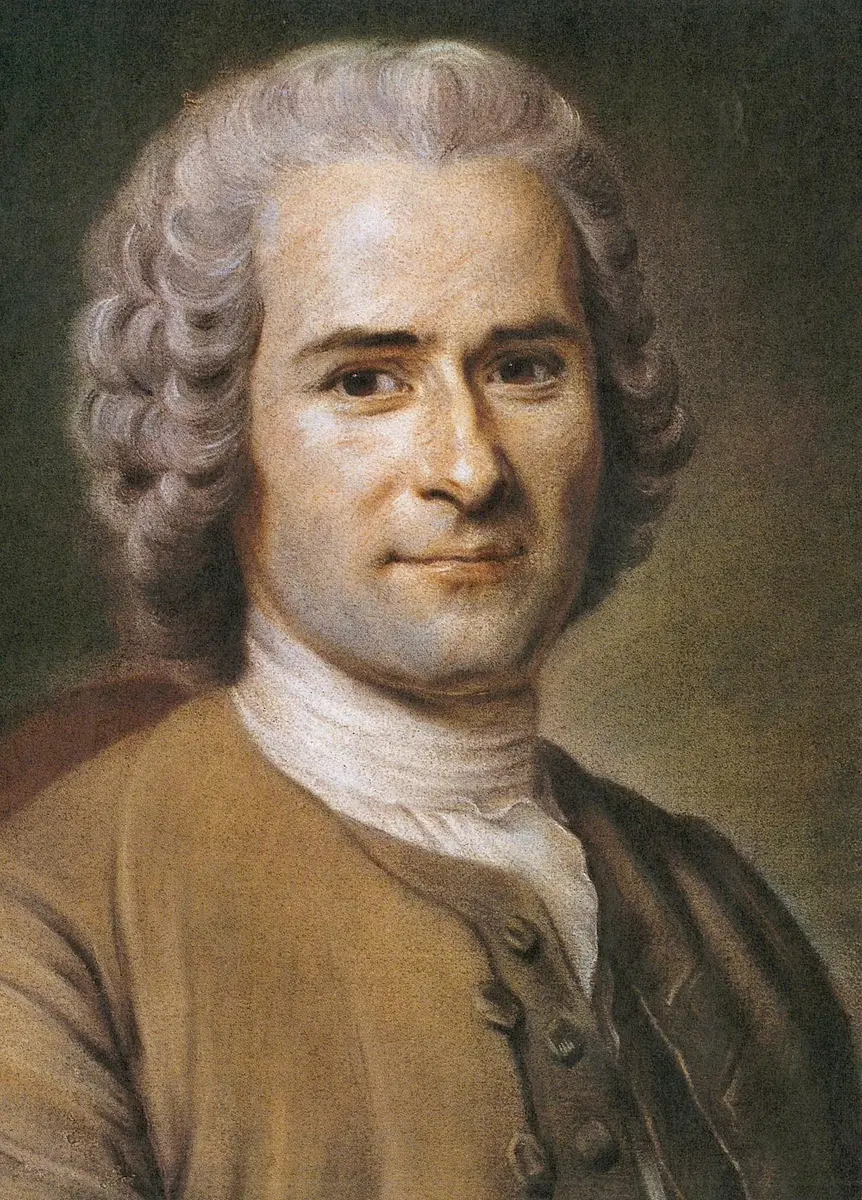
He reads Rousseau's Émile, so absorbed, it is said, that he misses his daily walk. He had believed that knowledge alone gave people their worth and despised those who knew nothing; 'Rousseau brought me around', he notes.
- 1764
He turns down the professorship of poetry.
- 1766
He becomes assistant librarian of the royal library in the castle, his first salary, a post he keeps until 1772.
Königsberg Castle: he worked in its royal library from 1766 to 1772, and from 1784 lived in his own house a few steps north of it- 1770
King Frederick II appoints him, at 46, professor of logic and metaphysics at Königsberg, after he has turned down chairs at Erlangen and Jena.
He defends his Inaugural Dissertation, on the sensible and the intelligible world: space and time are forms of our senses, not things out there.
Königsberg Cathedral, on the Kneiphof island: baptised here in 1724; the old university, where he studied and took his degrees, stood beside it; buried on its north side in 1804- 1772
He writes to his former student Marcus Herz that he has found 'the key to the whole secret of metaphysics' and plans a 'critique of pure reason'.
- 1781
After a decade of work the Critique of Pure Reason appears at the Easter book fair, published by Hartknoch of Riga.
- 1783
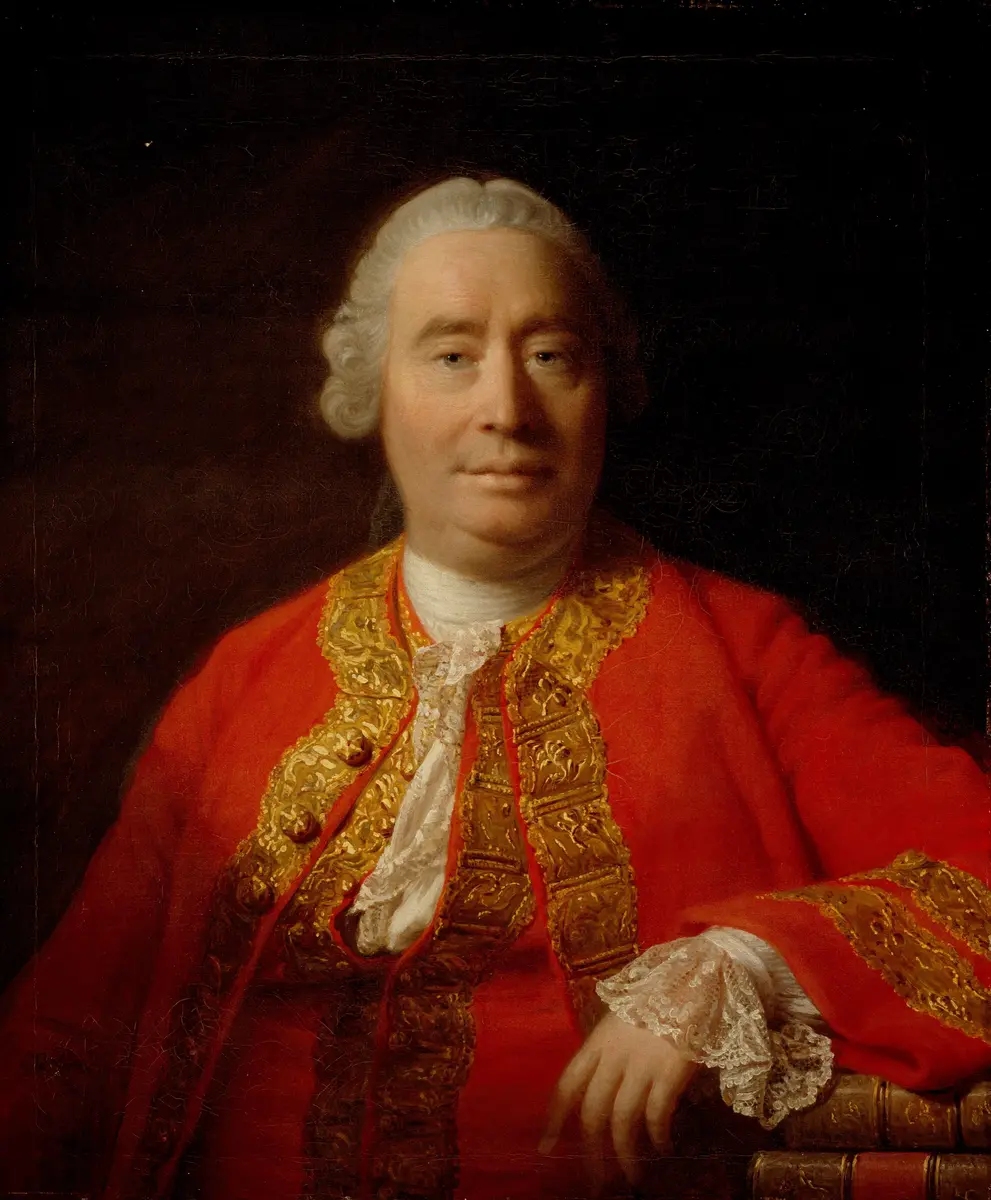
To answer readers who misunderstood the Critique he publishes the shorter Prolegomena, where he writes that David Hume woke him from his 'dogmatic slumber'.
- 1784
He moves into his own house on the Prinzessinstraße, near the castle, where he will live, teach and write until his death.
Königsberg Castle: he worked in its royal library from 1766 to 1772, and from 1784 lived in his own house a few steps north of itThe Berlinische Monatsschrift prints 'An Answer to the Question: What is Enlightenment?': 'Sapere aude! Have the courage to use your own understanding!'
- 1785
The Groundwork of the Metaphysics of Morals sets out the categorical imperative.
- 1786
He begins his first term as rector of the university; in September, after Frederick the Great's death, he takes part as rector in the homage to the new king, Frederick William II, in Königsberg.
Königsberg Cathedral, on the Kneiphof island: baptised here in 1724; the old university, where he studied and took his degrees, stood beside it; buried on its north side in 1804- 1787
The revised second edition of the Critique of Pure Reason appears. From Easter he keeps a cook and takes lunch at home every day with friends, never more than five guests at his table.
Königsberg Castle: he worked in its royal library from 1766 to 1772, and from 1784 lived in his own house a few steps north of it - 1788
The Critique of Practical Reason ends on the starry heavens above him and the moral law within him.
- 1789
A royal rise in salary makes him the best-paid professor in Prussia.
Kant's friend Hippel writes on the back of a small profile drawing of him by the young artist Veit Hans Schnorr von Carolsfeld that it is 'extraordinarily like'.
- 1790
The Critique of the Power of Judgment, on beauty and on purpose in nature, completes his critical system.
- 1791
The Berlin painter Gottlieb Döbler paints his portrait in Königsberg.
- 1793
He publishes Religion within the Bounds of Mere Reason after the censor has refused part of it.
- 1794
A cabinet order from King Frederick William II, written by his minister Wöllner, accuses him of distorting Christian doctrine; Kant promises the king to write no more on religion.
- 1795
Toward Perpetual Peace proposes a voluntary league of free states that would settle their disputes without war.
- 1796
At 72 he stops lecturing, in the middle of the summer term.
Königsberg Castle: he worked in its royal library from 1766 to 1772, and from 1784 lived in his own house a few steps north of it- 1797
The Doctrine of Right, the first part of The Metaphysics of Morals, his main work on law and the state; the Doctrine of Virtue follows in August.
- 1798
With the king who silenced him dead, he returns to religion in The Conflict of the Faculties, and publishes his Anthropology from a Pragmatic Point of View.
The Königsberg publisher Unzer issues a print of his silhouette on his daily walk, after a drawing by the student Puttrich.
- 1801
For three days, 14 to 16 January, he sits for the Berlin sculptor Friedrich Hagemann, who models his bust in clay for the marble versions.
Failing in mind, he agrees to give up his professorship and his seat in the university senate.
- 1804
- 11:00 a.m.
He dies in Königsberg, aged 79, after saying 'Es ist gut', 'It is good'. On 28 February, after a funeral in the cathedral, he is buried in the professors' vault on its north side.
Königsberg Cathedral, on the Kneiphof island: baptised here in 1724; the old university, where he studied and took his degrees, stood beside it; buried on its north side in 1804