Jean-Jacques Rousseau
“The Genevan who taught that people are born good and spoiled by society, wrote The Social Contract and Émile, and became the prophet of the French Revolution and the Romantics.”
Jean-Jacques Rousseau was the Enlightenment's great contrarian: a self-taught watchmaker's son from Geneva who told an age that believed in progress that civilisation had made people worse. Human beings, he held, are good by nature and are corrupted by society, by property, by comparing themselves with others and by their hunger for other people's esteem. From that one idea came the Discourse on Inequality, The Social Contract, the education book Émile and the best-selling love story Julie, and with his Confessions he invented the modern autobiography. He was also a composer whose opera charmed the court of Louis XV, and a keen botanist.
He was born in Geneva on 28 June 1712, a citizen of the small Calvinist republic. His mother died nine days later, and his father Isaac, a watchmaker, brought him up on Plutarch and on pride in Geneva as a new Sparta or Rome, until a quarrel forced Isaac to flee the city when the boy was ten. Boarded with a country pastor, then apprenticed to an engraver, Jean-Jacques ran away at sixteen, after coming back late from a walk to find the city gates shut. In Savoy he found a protector, Madame de Warens, a convert who sent him to Turin to become a Catholic and later took him in at Chambéry as her lover and steward. At her country house, Les Charmettes, the apprentice who had never been to school made himself a scholar, a musician and a philosopher.
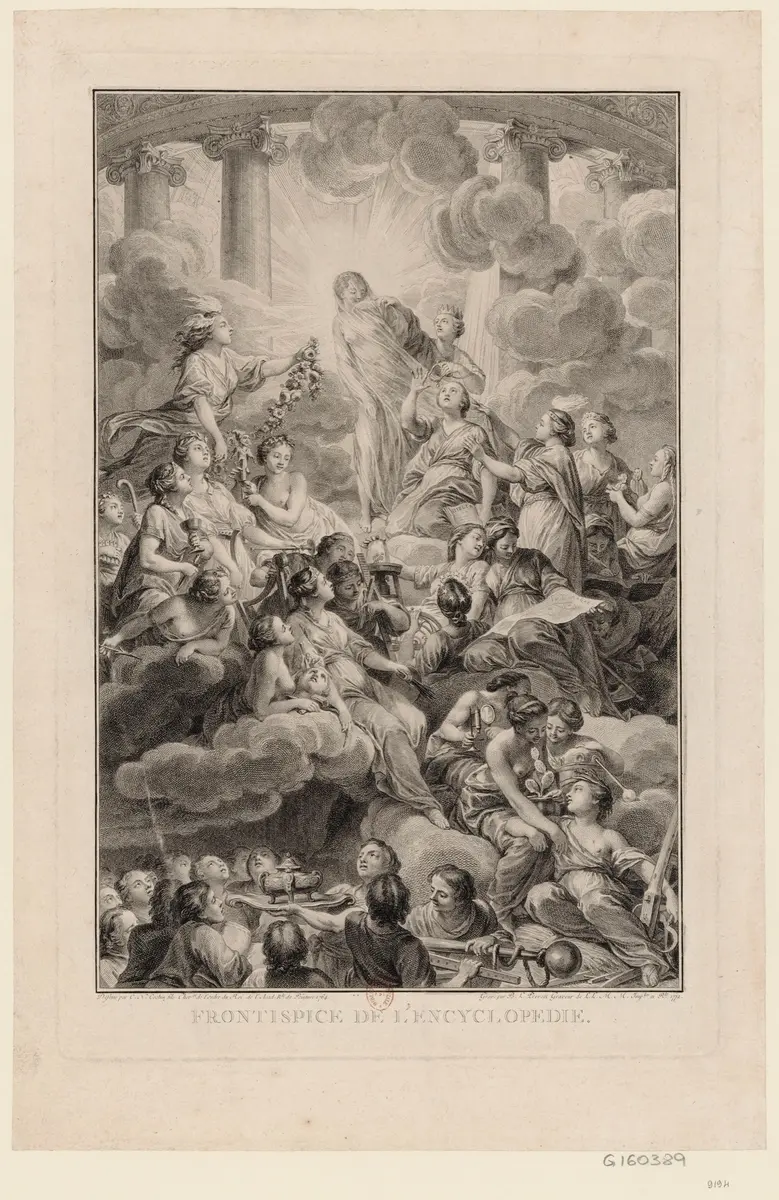
In 1742 he reached Paris with a new system for writing music, which the Academy of Sciences turned down. He became the friend of Denis Diderot, wrote the music articles for the Encyclopédie and took as his companion Thérèse Levasseur, a laundry-maid; their five children were all left at the foundling hospital. In the summer of 1749, walking to Vincennes to visit the imprisoned Diderot, he read the essay question of the Academy of Dijon and was struck, he said, by an illumination: progress had corrupted morals. His prize essay made him famous in 1750, his opera Le Devin du village was a triumph at Fontainebleau in 1752, and in the Discourse on Inequality (1755) he told how property, vanity and a dishonest pact imposed by the rich had led humanity from a free and healthy solitude into dependence and misery.
From 1756 he lived in the country at Montmorency, north of Paris, and there he wrote the three books that came out within a year. Julie (1761) became one of the best-loved books of the century. The Social Contract (1762) opens with 'Man is born free, but is everywhere in chains' and argues that only the general will of a sovereign people can make law legitimate. Émile (1762) raises a child by nature, and sets out a simple faith without revelation or dogma. Paris ordered Émile burned and its author arrested, Geneva burned both books, and Rousseau fled: to Môtiers under the King of Prussia, where villagers stoned his house in 1765, to an island in the Lake of Biel, and to England with David Hume, whom he soon accused of plotting against him. Back in France from 1767, and in Paris from 1770, he copied music for a living and wrote the Confessions, the Dialogues and the Reveries of the Solitary Walker. He died at Ermenonville, as the guest of the Marquis de Girardin, on 2 July 1778, and was buried on an island of poplars in the park.
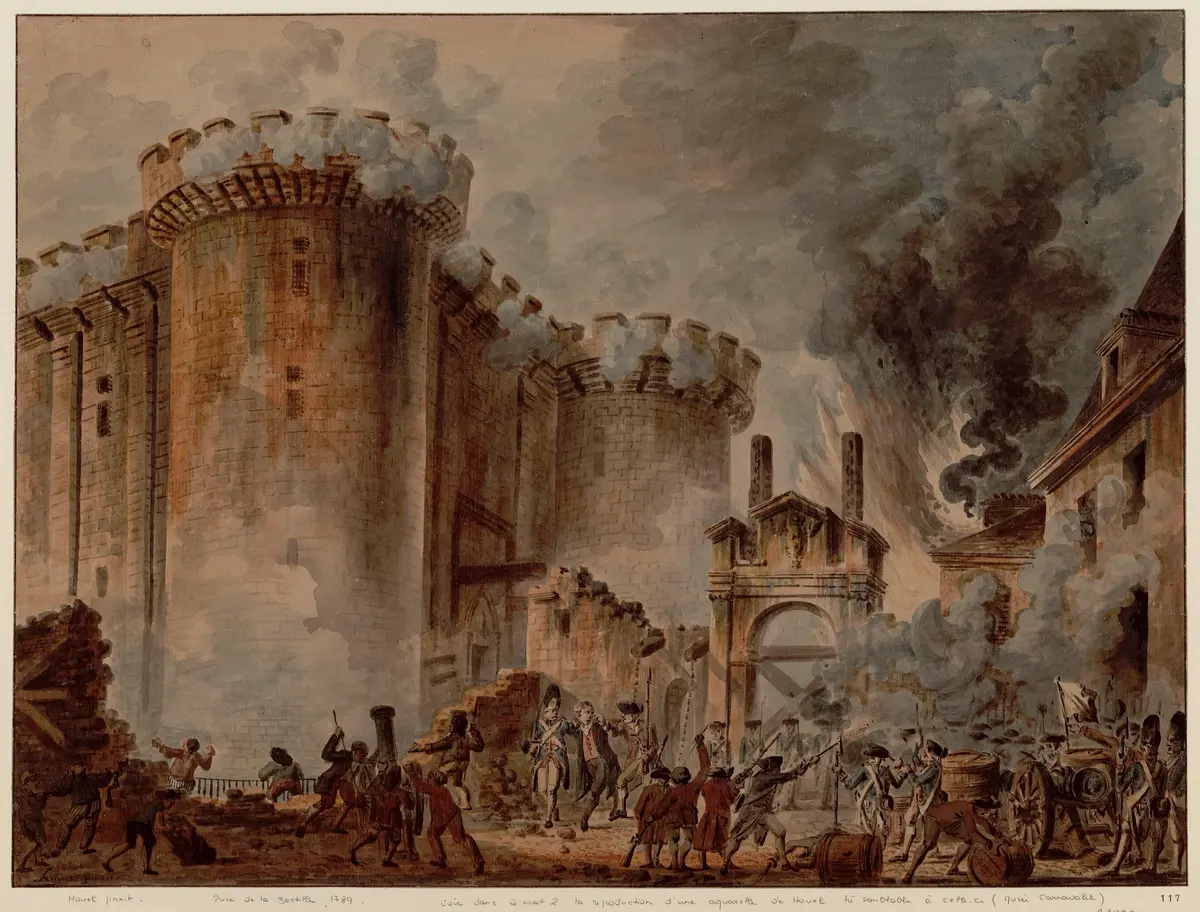
The Revolution made him one of its saints: on 11 October 1794 his remains were carried to the Panthéon in Paris. Democrats have claimed him ever since as the prophet of popular sovereignty, and critics have blamed him for the line that whoever refuses to obey the general will must be 'forced to be free'. Kant kept his portrait as the only picture in his house, Marx and Lenin took fire from his pages on property, the Romantics took his love of nature and feeling, and modern ideas of childhood, and of writing honestly about oneself, go back to him.
What happened
- 1712
Born in Geneva's old town to Isaac Rousseau, a watchmaker and citizen of the republic, and Suzanne Bernard; his mother dies on 7 July, nine days later.
Geneva: Grand-Rue 40 in the old town, on the site of the house where he was born in 1712- 1722
His father, facing prison after a quarrel with a French captain, leaves Geneva for good; the ten-year-old is sent with a cousin to board with a pastor at Bossey, a village outside the city.
Geneva: Grand-Rue 40 in the old town, on the site of the house where he was born in 1712 - 1725
He is apprenticed to an engraver, a master he will remember as violent and tyrannical.
Geneva: Grand-Rue 40 in the old town, on the site of the house where he was born in 1712 - 1728
On Palm Sunday, at Annecy in Savoy, he meets Madame de Warens, a Swiss convert who takes in young Protestants; earlier that month, coming back late from a walk, he had found Geneva's gates shut and sworn never to return to his master.
In Turin she has him received into the Catholic Church; working afterwards as a servant in a noble household, he falsely accuses a fellow servant of stealing a ribbon, a lie he will confess in shame decades later.
- 1731
Back with Madame de Warens, now at Chambéry, he becomes for a while her lover, then the manager of her household.
- 1736
Madame de Warens takes the country house of Les Charmettes in a quiet valley above Chambéry; there he reads and studies on his own and, he said, discovers botany and his love of nature.
Les Charmettes, Chambéry: Madame de Warens's country house, his home in the late 1730s - 1740
He leaves for Lyon as tutor in a family there, which brings him into the circle of Condillac and d'Alembert.
- 1742
In Paris he presents a new, number-based way of writing music to the Academy of Sciences, which rejects it, and he meets Denis Diderot.
Paris: the Panthéon, where the Revolution laid his remains on 11 October 1794; he lived in the city in 1742–56 and again from 1770 - 1743
He goes to Venice as secretary to the French ambassador, a post that lasts about a year, and falls in love with Italian opera.
- 1745
He meets Thérèse Levasseur, a barely literate laundry-maid who will stay with him for life; by his own account she bears him five children, and he leaves every one of them at the Paris foundling hospital.
Paris: the Panthéon, where the Revolution laid his remains on 11 October 1794; he lived in the city in 1742–56 and again from 1770 - 1749
In the summer heat, walking out to Vincennes to visit Diderot, imprisoned there for his writings, he reads the Academy of Dijon's essay question, whether the arts and sciences have improved morals, and has what he calls an illumination: humankind is good by nature and has been corrupted by society.
- 1750
The Academy of Dijon gives his discourse its prize; the essay, signed only 'a citizen of Geneva', argues that the sciences and arts have corrupted virtue, and it makes him famous.
- 1752
His one-act opera Le Devin du village (The Village Soothsayer) is performed before Louis XV at Fontainebleau and enchants the court; asked to be presented to the king next morning, when a pension was to be offered, he stays away. The Paris Opéra stages it on 1 March 1753, and it stays in the repertoire for a century.
- 1753
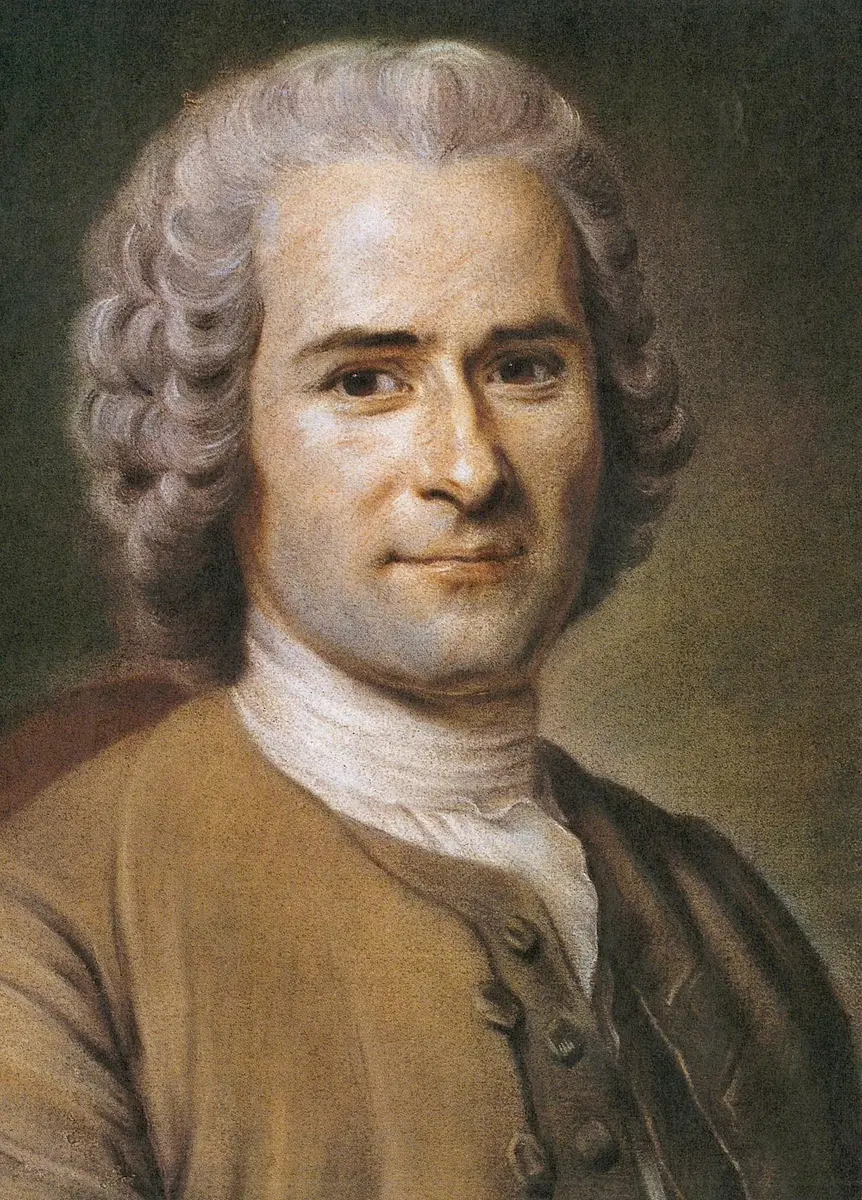
La Tour shows his pastel portrait of Rousseau at the Salon. Rousseau's Letter on French Music, which calls the French language unmusical and sides with Italian melody against Rameau's harmony, causes such an uproar that he is hanged in effigy.
Paris: the Panthéon, where the Revolution laid his remains on 11 October 1794; he lived in the city in 1742–56 and again from 1770 - 1754
He sets out from Paris for Geneva with Thérèse. That summer he returns to the Calvinist church of his childhood and so recovers his rights as a citizen of Geneva, the republic to which he dedicates his next discourse.
Geneva: Grand-Rue 40 in the old town, on the site of the house where he was born in 1712- 1755
Marc-Michel Rey publishes the Discourse on the Origin and Foundations of Inequality in Amsterdam. It does not win Dijon's prize a second time, but it breaks with the optimism of his Encyclopédie friends: inequality began with property, comparison and vanity, and civil society is a fraud of the rich upon the poor.
- 1756
Leaving Paris, he settles in the Hermitage, a cottage on Madame d'Épinay's estate near Montmorency, and begins Julie; the next year he falls passionately in love with Sophie d'Houdetot, the mistress of his friend Saint-Lambert.
Montmorency: Mont-Louis, the house where he lived from December 1757 to June 1762 and wrote Julie, The Social Contract and Émile; the Hermitage, his first home there, was nearby - 1757
After quarrels with Madame d'Épinay, Diderot and Grimm, he leaves the Hermitage in midwinter for Mont-Louis, a small house in Montmorency, where the Maréchal de Luxembourg will become his protector.
Montmorency: Mont-Louis, the house where he lived from December 1757 to June 1762 and wrote Julie, The Social Contract and Émile; the Hermitage, his first home there, was nearby- 1758
Working through a hard winter in the open study at the end of his garden, he writes in three weeks the Letter to d'Alembert on the Theatre, against the proposal, made at Voltaire's prompting, that Geneva should have a theatre; it seals his break with the philosophes.
Montmorency: Mont-Louis, the house where he lived from December 1757 to June 1762 and wrote Julie, The Social Contract and Émile; the Hermitage, his first home there, was nearby - 1761
Julie, or the New Heloise, a novel in letters about a tutor's forbidden love for his pupil in a small town at the foot of the Alps, becomes one of the best-selling books of the century; readers write to him by the thousand.
Montmorency: Mont-Louis, the house where he lived from December 1757 to June 1762 and wrote Julie, The Social Contract and Émile; the Hermitage, his first home there, was nearby - 1762
The Social Contract appears in Amsterdam: 'Man is born free, but is everywhere in chains.' A legitimate state rests on a pact by which each gives himself wholly to the community, whose general will is the only rightful sovereign.
Montmorency: Mont-Louis, the house where he lived from December 1757 to June 1762 and wrote Julie, The Social Contract and Émile; the Hermitage, his first home there, was nearbyÉmile, or On Education follows: a tutor raises a boy by nature, far from books and fashion, and the Profession of Faith of a Savoyard Vicar sets out a religion of the heart without revelation or dogma.
Montmorency: Mont-Louis, the house where he lived from December 1757 to June 1762 and wrote Julie, The Social Contract and Émile; the Hermitage, his first home there, was nearbyThe Parlement of Paris condemns Émile to be torn up and burned by the executioner and orders its author's arrest; at four in the afternoon he leaves Montmorency in a cabriolet given him by the Maréchal de Luxembourg. Within days Geneva burns both Émile and The Social Contract and orders his arrest too, Bern turns him out of its territory, and he finds refuge at Môtiers, in the King of Prussia's principality of Neuchâtel.
Montmorency: Mont-Louis, the house where he lived from December 1757 to June 1762 and wrote Julie, The Social Contract and Émile; the Hermitage, his first home there, was nearby- 1763
Embittered by Geneva's treatment of him, he renounces his citizenship.
Geneva: Grand-Rue 40 in the old town, on the site of the house where he was born in 1712- 1764
At Môtiers, where he now wears Armenian dress, he writes the Letters Written from the Mountain, which attack Geneva's rulers as 'twenty-five despots'; Voltaire, his old enemy, makes public that he abandoned his children.
- 1765
On the night of the Môtiers fair, villagers stirred up against him throw stones at his house and through his windows. He takes refuge on the Île Saint-Pierre in the Lake of Biel, an island he comes to love, until the government of Bern expels him.
- 1766
Invited by David Hume, he crosses from Paris to England; in London Allan Ramsay paints him, in his fur cap and Armenian coat, in the portrait Hume will own.
Settled at Wootton in Staffordshire, he writes the first books of the Confessions, and convinces himself that Hume is at the centre of a plot against him.
- 1767
He slips back into France incognito and lives on the estates of noble protectors, first the Prince de Conti.
- 1768
He marries Thérèse Levasseur, his companion of twenty-three years.
- 1770
Back in Paris, in a street that now bears his name, he earns his living by copying music and finishes the Confessions.
Paris: the Panthéon, where the Revolution laid his remains on 11 October 1794; he lived in the city in 1742–56 and again from 1770 - 1772
He writes the Considerations on the Government of Poland, advice on a constitution for the Polish republic, and the Dialogues, 'Rousseau, Judge of Jean-Jacques', a defence against the plot he believes surrounds him.
Paris: the Panthéon, where the Revolution laid his remains on 11 October 1794; he lived in the city in 1742–56 and again from 1770 - 1777
He writes most of the Reveries of the Solitary Walker, in which the old passion and quarrels give way to memories and a new serenity.
Paris: the Panthéon, where the Revolution laid his remains on 11 October 1794; he lived in the city in 1742–56 and again from 1770 - 1778
He moves with Thérèse to Ermenonville, north of Paris, as the guest of the Marquis de Girardin at his château and landscape park.
Ermenonville: the Île des Peupliers in the Marquis de Girardin's park, where he was buried on 4 July 1778, two days after his death at the châteauHe dies suddenly at Ermenonville, aged sixty-six. That night Girardin sends for the sculptor Houdon, who takes a mask of his face on 3 July; on 4 July he is buried on the Île des Peupliers, an island of poplars in the park, which soon draws pilgrims from all over Europe.
Ermenonville: the Île des Peupliers in the Marquis de Girardin's park, where he was buried on 4 July 1778, two days after his death at the château