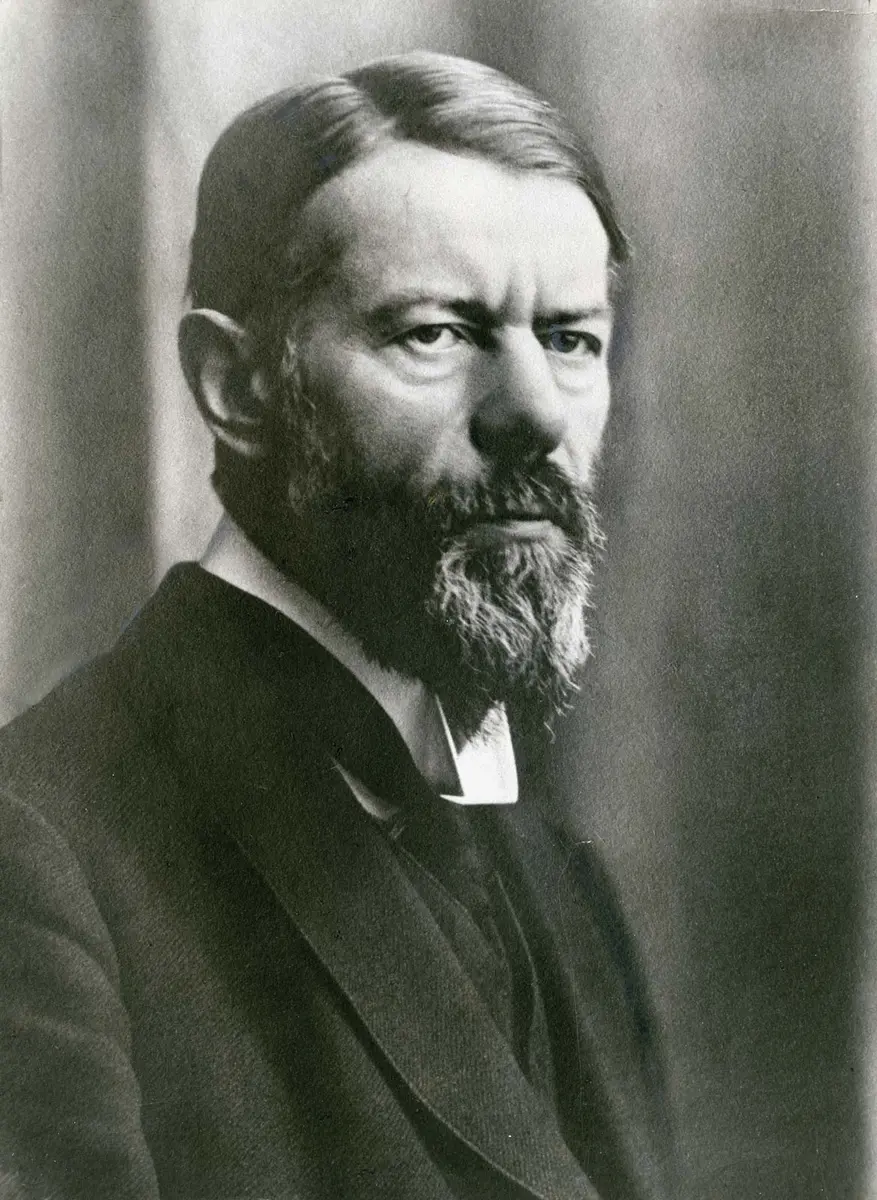
Max Weber
“The German sociologist of The Protestant Ethic and the Spirit of Capitalism (1904–05), who argued that Calvinist discipline helped to make modern capitalism and described the rule of bureaucracy.”
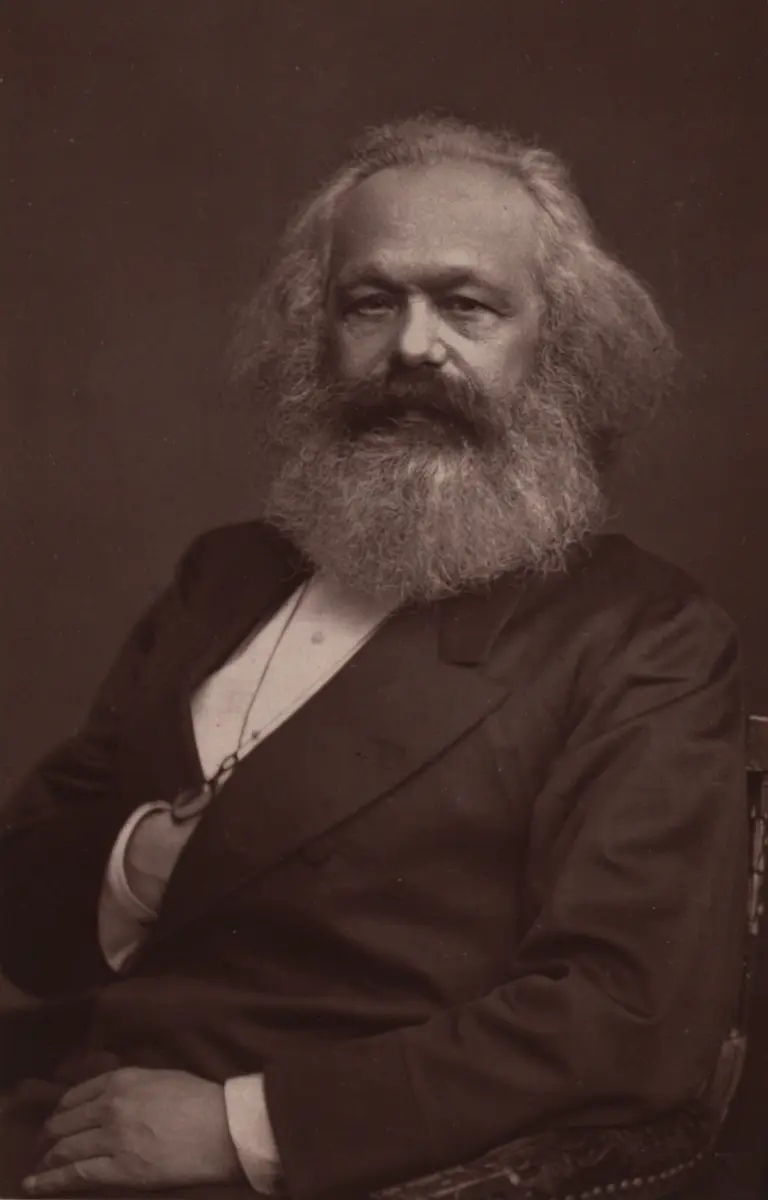
Max Weber was the German economist, historian and sociologist who, with Karl Marx and Émile Durkheim, is counted among the founders of modern social science. He is best known for The Protestant Ethic and the Spirit of Capitalism (1904–05), which argued that the religious discipline of Calvinist and Puritan Protestants helped to make the restless, saving, working spirit of modern capitalism, and for his account of bureaucracy, the rule by trained officials, files and fixed rules that he saw spreading through the modern state and economy. His words are still in daily use: the 'disenchantment' of a world explained by science, 'charisma', the three kinds of legitimate authority (charismatic, traditional and legal), the 'ideal type', and the state as the community that claims the monopoly of the legitimate use of physical force within its territory.
He was born in Erfurt on 21 April 1864, the first child of Max Weber senior, a lawyer and liberal politician who moved the family to Berlin in 1869 and sat in the Prussian House of Deputies and the Reichstag, and of Helene Fallenstein, a woman of strict Calvinist piety. The tension between his worldly, authoritarian father and his devout mother shaped him for life. He studied law at Heidelberg from 1882, served a year in the army at Strasbourg and finished his studies in Berlin, where he took his doctorate in 1889 on medieval trading companies and his second thesis in 1891 on Roman agrarian history. A study of farm labourers east of the Elbe for the Association for Social Policy made his name; in 1893 he married his father's grand-niece Marianne Schnitger, in 1894 he became professor of economics at Freiburg and in 1896 he was called to the chair at Heidelberg.
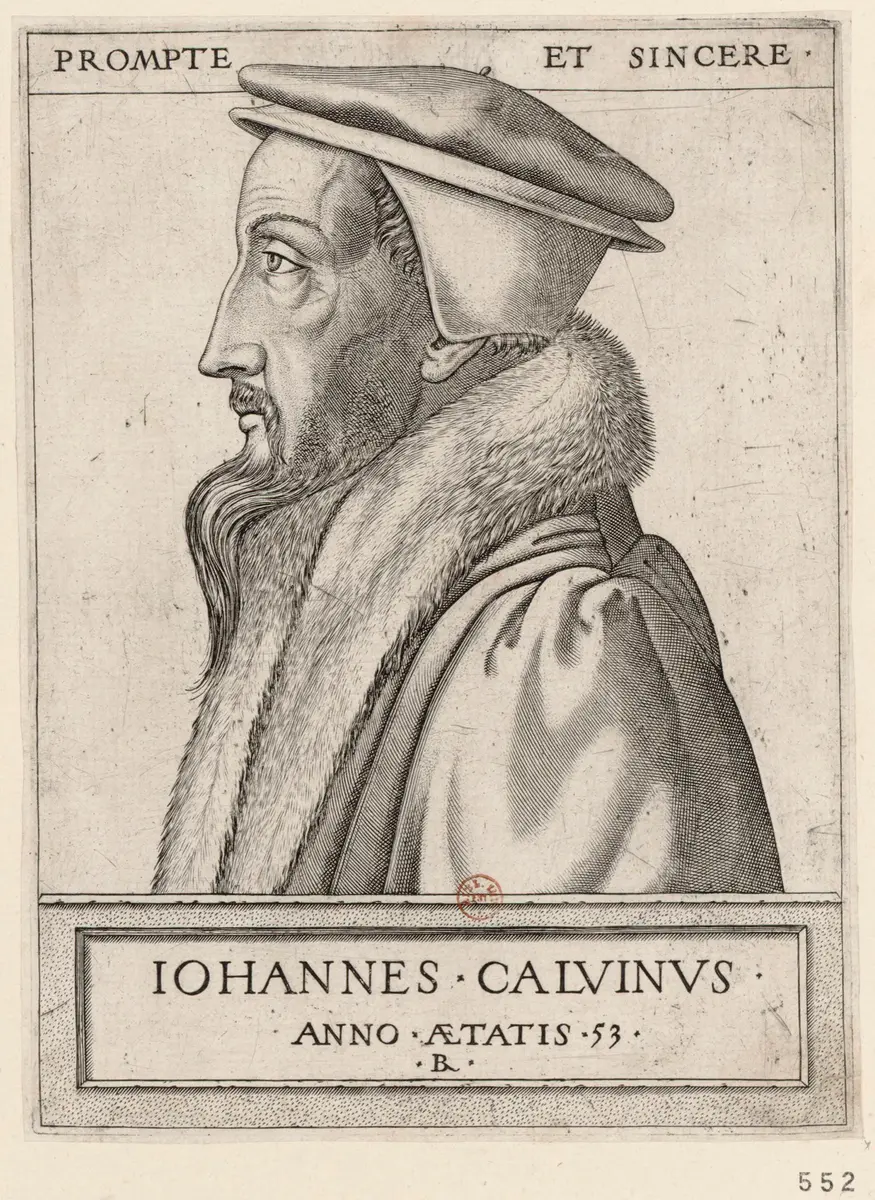
In 1897 he quarrelled bitterly with his father over the way he treated his mother; the father died in August without a reconciliation, and early in 1898 the son began to collapse. For five years he could hardly read, write or teach; he spent long months in clinics and in Italy, and in 1903 he gave up his professorship. His recovery came with new work. With Edgar Jaffé and Werner Sombart he took over a journal, the Archiv für Sozialwissenschaft und Sozialpolitik, in 1904, and from August to November that year he travelled across the United States, speaking at the Congress of Arts and Science of the St. Louis World's Fair. In the same months the Archiv printed the first part of The Protestant Ethic: Calvin's doctrine of predestination, he argued, left believers anxious for signs of their salvation, which they found in disciplined work in a worldly calling and in saving rather than spending what it earned. The capitalism that this ethic helped to build no longer needed it, and he closed with the image his translator Talcott Parsons later rendered as an 'iron cage'.
An inheritance in 1907 let him live as a private scholar. From 1910 he and Marianne, a leading figure of the women's movement, kept open house on Sunday afternoons in the Fallenstein villa on the Neckar in Heidelberg, where scholars such as Karl Jaspers, Georg Lukács and Ernst Troeltsch met. He compared the economic ethics of the world's religions, from Confucianism to ancient Judaism, and wrote much of what became Economy and Society. In the First World War he ran military hospitals around Heidelberg, then became one of the sharpest critics of Germany's war aims and a campaigner for parliamentary government. In Munich he gave two lectures to students that are still read, 'Science as a Vocation' (1917) and 'Politics as a Vocation' (1919); after the defeat he helped to found the liberal German Democratic Party, took part in the talks on the new Weimar constitution, where he argued for a strong president elected by the people, and went to Versailles as an adviser to the German peace delegation.
In the summer of 1919 he took up a chair at the University of Munich, and on 14 June 1920 he died there of pneumonia, probably after catching the Spanish flu, aged 56. His ashes were buried in the Bergfriedhof in Heidelberg. Marianne edited his unfinished Economy and Society (1921–22) and became his first biographer; Parsons's English translation of The Protestant Ethic (1930) made him a founding figure of sociology in America and then around the world. Historians still argue over his thesis, since there were capitalists long before Calvin, but his questions, about how beliefs shape economic life and how the modern world is ruled, still frame the social sciences.
What happened
- 1864
Born in Erfurt, in the Prussian province of Saxony, the first child of Max Weber, a lawyer serving as a paid city official, and Helene Fallenstein, the daughter of a Heidelberg family of Huguenot descent.
Erfurt: where he was born on 21 April 1864, the first child of a city official; the family left for Berlin in 1869- 1869
The family moves to Charlottenburg, outside Berlin, where his father becomes a paid municipal official and later a National Liberal deputy in the Prussian House of Deputies and the Reichstag; politicians and scholars are guests at the house.
- 1882
After school at the Kaiserin-Augusta-Gymnasium in Charlottenburg he enrols at the University of Heidelberg to study law, with history, philosophy and economics on the side.
- 1883
He breaks off his studies for a year of military service at Strasbourg, where he grows close to the family of his aunt Ida and her husband, the liberal historian Hermann Baumgarten.
- 1886
He passes his first state examination in law at Celle and moves back into his parents' house in Charlottenburg, working unpaid as a trainee lawyer and university assistant until 1890.
- 1889
He takes his doctorate in Berlin, summa cum laude, with a thesis on the trading companies of the medieval Italian and Spanish cities; at the public examination the great historian Theodor Mommsen debates with him and praises him.
- 1892
With a second thesis on Roman agrarian history behind him, he is licensed to lecture in commercial and Roman law in Berlin; the same year he writes the 600-page report on the farm labourers east of the Elbe for the Association for Social Policy, published in December.
- 1893
He marries Marianne Schnitger, his father's grand-niece, at Oerlinghausen, where her grandfather ran a linen business; in November he becomes associate professor in Berlin.
- 1894
He is appointed full professor of economics and finance at the University of Freiburg and moves there with Marianne.
- 1895
His inaugural lecture at Freiburg, 'The Nation State and Economic Policy', indicts the Prussian Junker landowners as a class whose day is over and calls for a nation educated to political maturity; it causes a stir and is printed the same year.
- 1896
He accepts the chair of economics at Heidelberg as the successor of Karl Knies, a leader of the historical school, and begins teaching there in 1897; the Webers become the centre of a circle that includes the lawyer Georg Jellinek and the theologian Ernst Troeltsch.
- 1897
His father dies, weeks after a bitter quarrel in which Max defended his mother against him; the two are never reconciled, and the son later sees his outburst as a guilt he could never put right.
- 1898
Early in the year he starts to break down: in March the psychiatrist Emil Kraepelin diagnoses 'neurasthenia', he still lectures in the summer semester, and in July he enters a clinic on Lake Constance. For five years he can barely work.
- 1903
After years of clinics and of travel in Italy, the Baden ministry accepts his resignation as professor and makes him an honorary professor; he slowly returns to writing.
- 1904
The first issue of the Archiv für Sozialwissenschaft und Sozialpolitik appears under its new editors Edgar Jaffé, Werner Sombart and Weber, with his essay on 'objectivity' in social science; he makes it a leading journal of the field.
Max and Marianne Weber land in New York, ten days after sailing from Bremerhaven, for three months in the United States.
At the Congress of Arts and Science of the St. Louis World's Fair he gives his first lecture in six and a half years, on rural society and capitalism in Germany, and meets W. E. B. Du Bois; then he travels on to Oklahoma, New Orleans and the Tuskegee Institute.
St. Louis: the Hall of Congresses of the 1904 World's Fair, now Ridgley Hall of Washington University, where the Congress of Arts and Science met in September 1904As the Webers sail home from New York, the Archiv prints the first part of 'The Protestant Ethic and the "Spirit" of Capitalism', which opens with the link in German statistics between a Protestant background and success in business.
- 1905
The second part of The Protestant Ethic appears: the Puritans' anxious search for signs of grace in disciplined work and thrift helped to build modern capitalism, which then no longer needed the faith. Critics answer, and he replies to them in the Archiv until 1910.
- 1909
He co-founds the German Sociological Association and serves as its first treasurer, resigning in 1912 when his insistence on value-free science meets resistance.
- 1910
The Webers move into the first floor of the Fallenstein villa on the Neckar, his mother's childhood home; their Sunday afternoons there draw scholars such as Karl Jaspers, Georg Lukács, Ernst Bloch and Friedrich Gundolf.
Heidelberg, Ziegelhäuser Landstraße 17: the Fallenstein villa on the Neckar, his mother's childhood home, where he and Marianne lived from 1910 and held their Sunday gatherings; now Heidelberg University's Max-Weber-Haus- 1914
When war breaks out he reports for duty as a reserve officer and, as a captain, runs the military hospitals around Heidelberg until the autumn of 1915, seeing a bureaucracy grow from the inside.
- 1917
At the publisher Eugen Diederichs's conference at Lauenstein castle he speaks on 'Personality and Life Orders', on how a person can lead a life of their own in the modern world, before an audience that includes the young Ernst Toller.
In the Steinickesaal in Munich, before 80 to 100 students of the Free Students' Union, he gives 'Science as a Vocation', on scholarship as a calling in a disenchanted world; the same day the Bolsheviks take power in Petrograd.
- 1918
He goes to Vienna as a guest professor for the summer semester, his first university lectures in nineteen years, presenting his sociology of religion and the state as 'a positive critique of the materialist conception of history'.
After the revolution he joins the informal talks on a new constitution held by Hugo Preuss in Berlin, pressing for a strong president elected by the people, and stands for the new German Democratic Party, without winning a seat.
- 1919
In the same hall in Munich he gives 'Politics as a Vocation', defining the state by its monopoly of legitimate force and asking politicians to join an ethic of conviction to an ethic of responsibility.
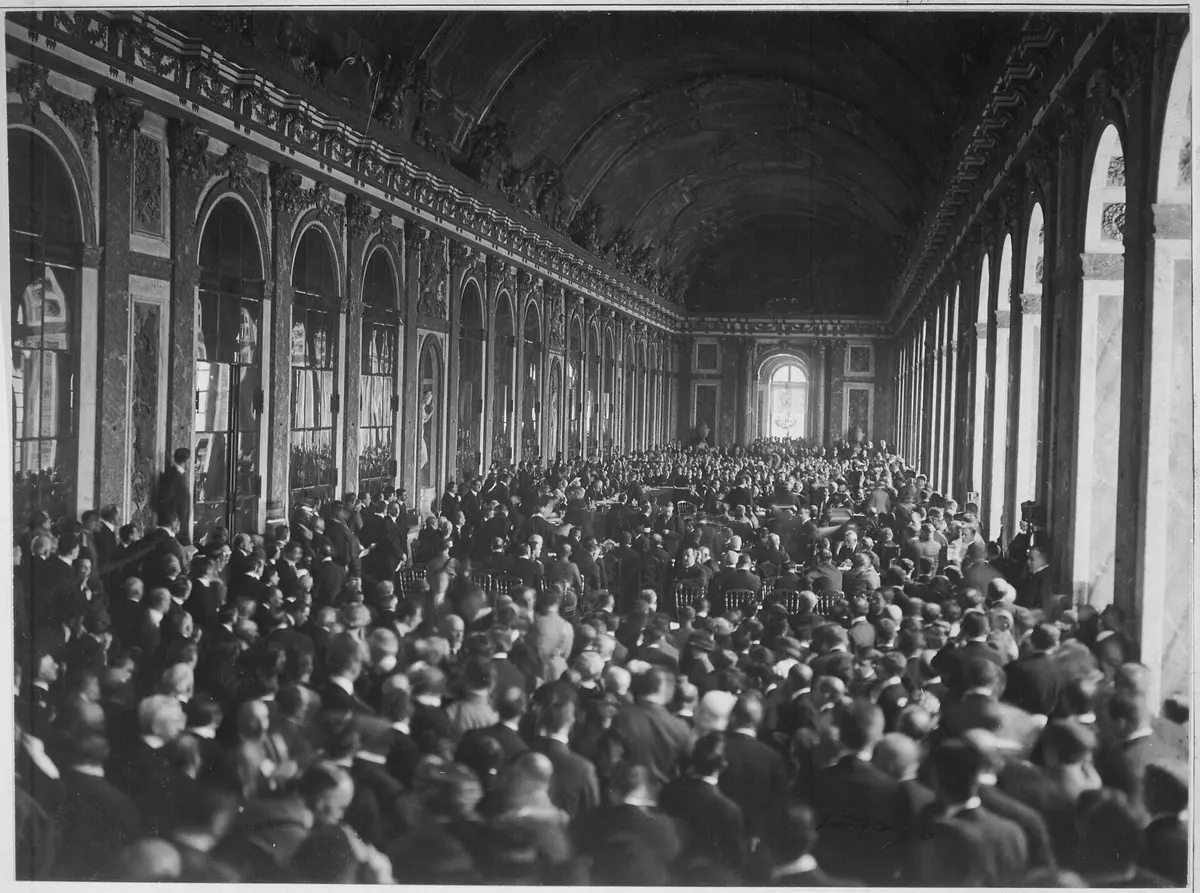
He goes to Versailles as an adviser to the German peace delegation, opposed above all to Germany's admission of sole war guilt; at home he tells General Ludendorff to his face that he should give himself up to the Allies.
He moves to Munich to take Lujo Brentano's chair of social science, economic history and economics; his lectures there, rebuilt from students' notes, later appear as the General Economic History.
Munich, Seestraße 16 in Schwabing: his home from June 1919, when he took the chair at the university, until his death in June 1920His mother, Helene Weber, dies in Charlottenburg; he dedicates Economy and Society to her memory.
- 1920
He dies in Munich of pneumonia, probably after catching the Spanish flu, aged 56, while still correcting the proofs of his collected essays on the sociology of religion and of Economy and Society; his ashes are later buried in the Bergfriedhof in Heidelberg.
Munich, Seestraße 16 in Schwabing: his home from June 1919, when he took the chair at the university, until his death in June 1920