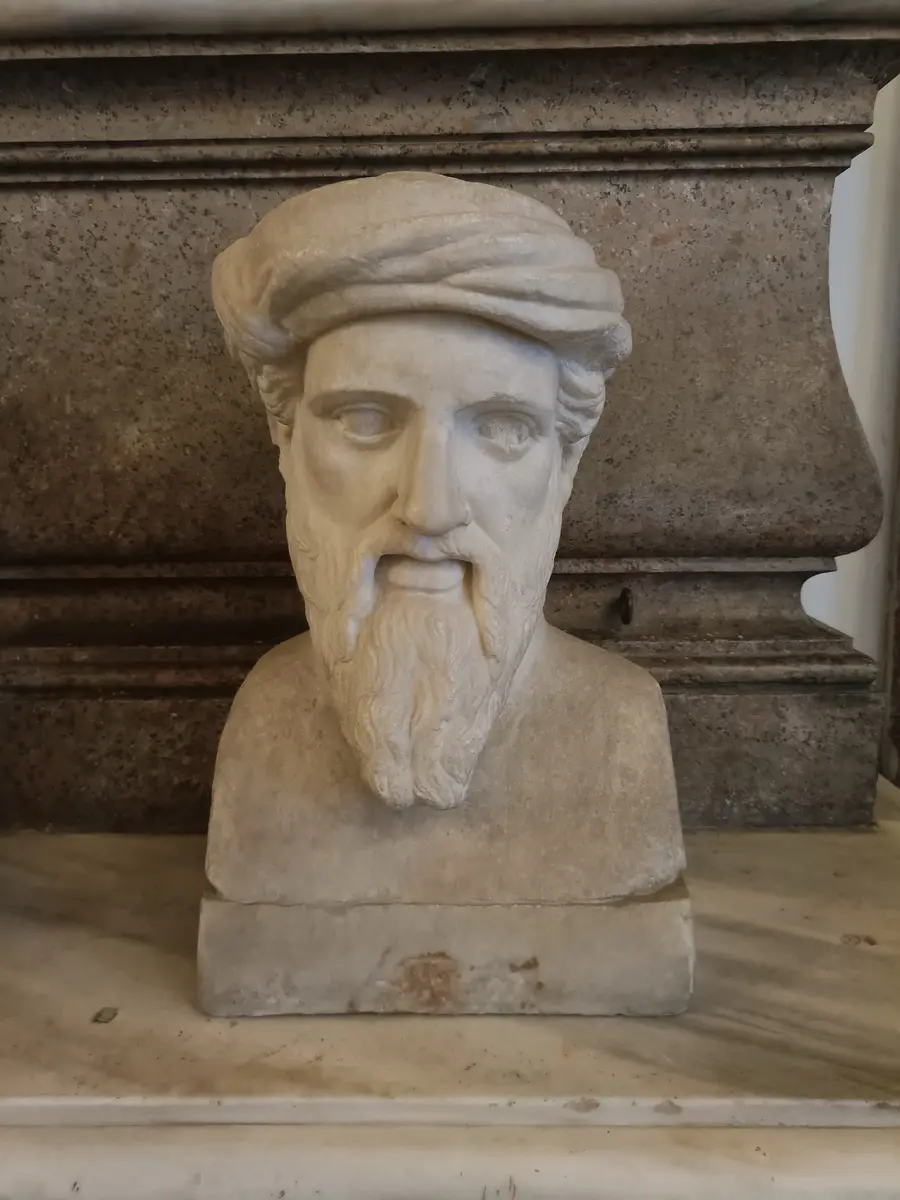
Pythagoras
“The sixth-century sage of Samos and Croton who taught that the soul is reborn and that number orders the world; the theorem bears his name, but the Babylonians knew it first.”
Pythagoras was a Greek thinker of the sixth century BCE who founded a religious and philosophical community in southern Italy, and whose name is attached to the most famous theorem in mathematics. He was born about 570 BCE on the island of Samos, off the coast of Asia Minor, a short sail from Miletus, where Greek philosophy had just begun with Thales and Anaximander. He wrote nothing, no contemporary described him, and the full biographies of him were written eight hundred years after his death by authors who treated him as a half-divine sage. Historians therefore rely on a few early mentions, such as the poet Xenophanes and the philosopher Heraclitus, and on fragments of fourth-century writers like Aristotle's pupils Aristoxenus and Dicaearchus.
Samos in his youth was ruled by the tyrant Polycrates, who seized power about 540 BCE and built the great temple of Hera, a harbour mole and a water tunnel through the mountain. Aristoxenus says that at the age of forty, when the tyranny had become unbearable, Pythagoras left for Croton, a Greek city in the toe of Italy; that puts the move about 530 BCE. Later stories of years spent learning from the priests of Egypt and the scholars of Babylon are reported by Herodotus and others but cannot be checked. At Croton he gathered a large following and set up a way of life with its own rules: shared property, dietary restrictions, ritual, secrecy and strict self-discipline. Around 510 BCE violence against his followers, led by a Crotoniate named Cylon, drove him to the neighbouring city of Metapontum, where he died about 490 BCE.
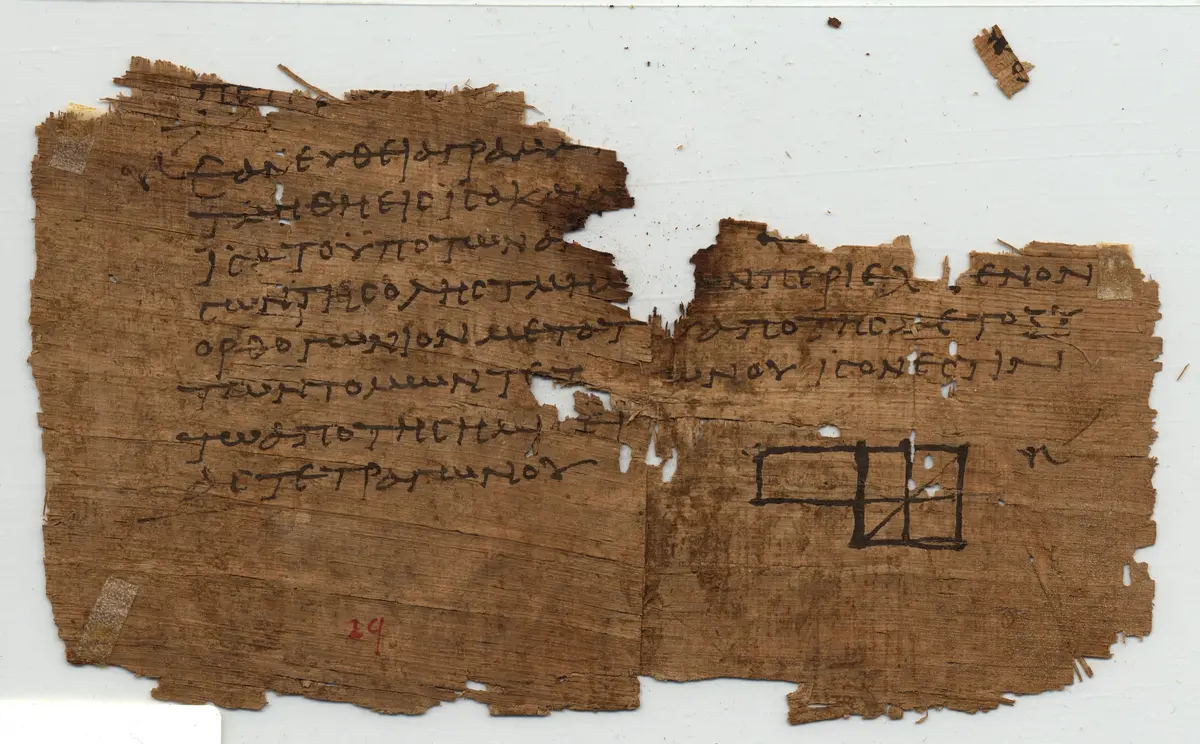
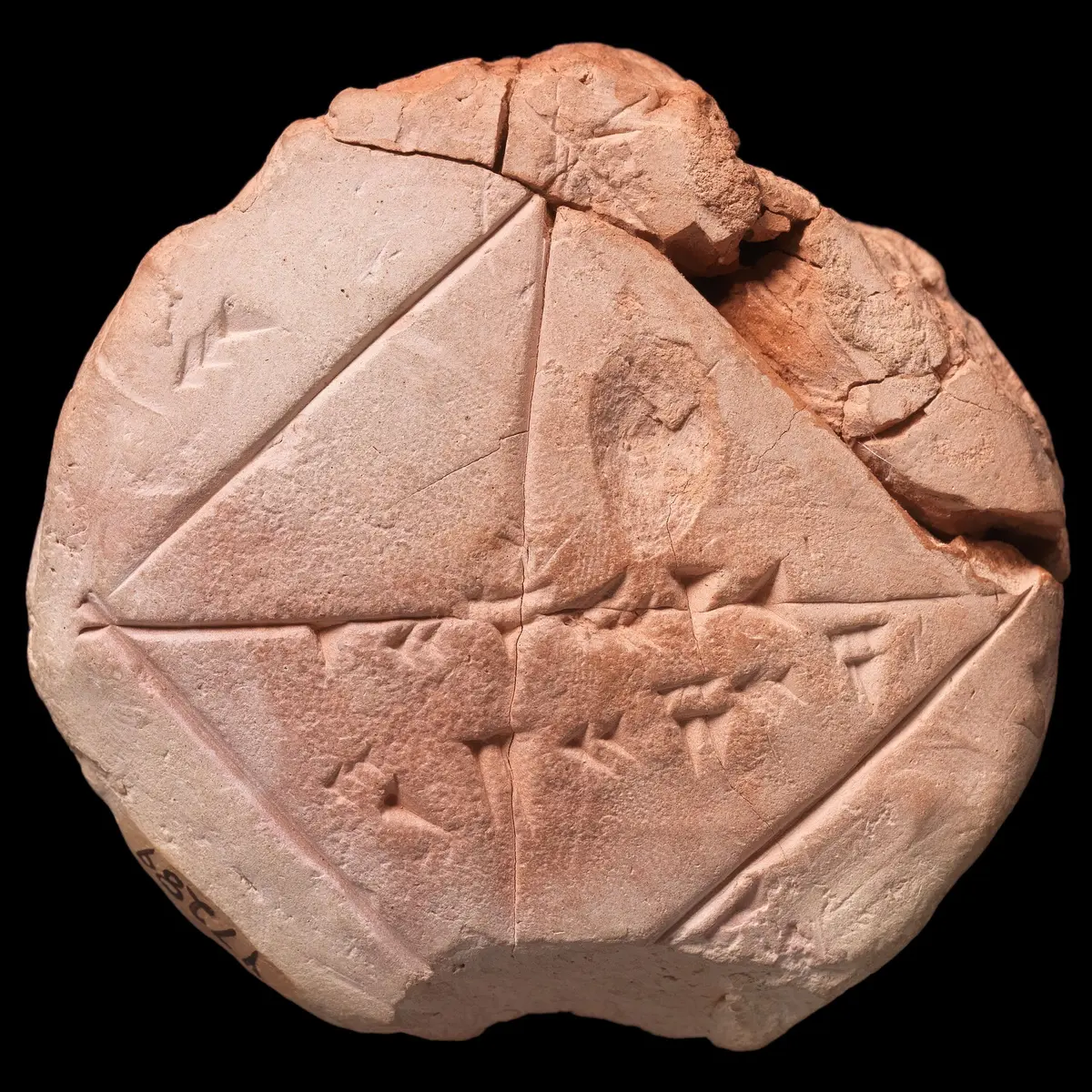
In his own time he was famous not as a mathematician but as an expert on the soul. He taught that the soul is immortal and passes after death into other bodies, animal as well as human; Xenophanes joked that Pythagoras stopped a man beating a dog because he recognised a friend's voice in its yelping. He saw the cosmos as ordered by number and by moral law, and he honoured number by taking it 'away from the use of merchants'. The relation between simple ratios and the musical intervals (the octave 2:1, the fifth 3:2, the fourth 4:3) was prized in his school, though the story of his discovering it from the hammers of a smithy cannot be true. The theorem that the square on the hypotenuse equals the sum of the squares on the other two sides was known to the Babylonians a thousand years before him, and the first proof of it that survives is Euclid's; the late tradition says only that Pythagoras knew the fact and sacrificed oxen in its honour.
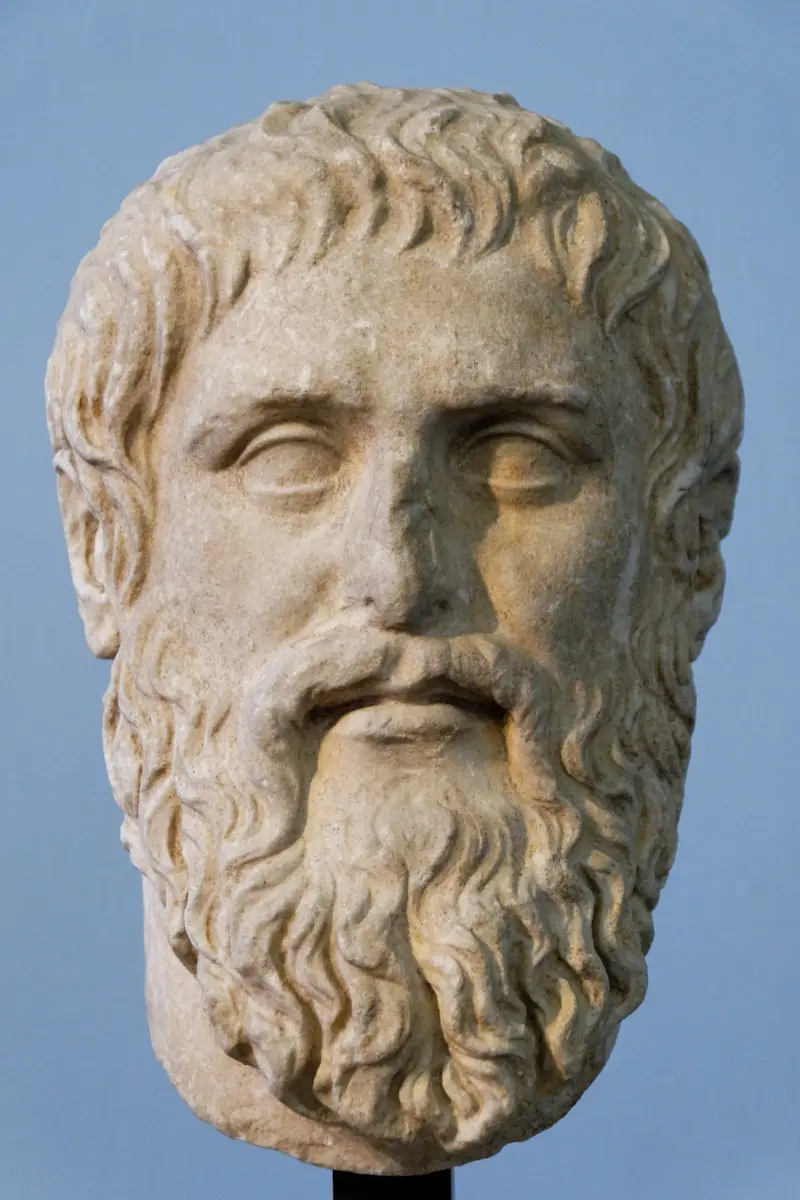
His followers kept the name 'Pythagorean' for two centuries. Philolaus of Croton, a hundred years later, wrote the first Pythagorean book and placed a central fire at the heart of the universe; Archytas of Tarentum was a real mathematician and Plato's friend. Plato borrowed from them the idea that the world is built on number and the hope of the soul's survival, and from Plato's school on, Pythagoras was credited with more and more of later philosophy, until the Neoplatonists made him the source of all wisdom. The theorem, the 'harmony of the spheres' and the figure of the bearded sage in an eastern cap have kept his name alive ever since.
What happened
- 570 BCE
Born on Samos, an Ionian island off the coast of Asia Minor, the son of Mnesarchus; later writers make his father a merchant from Tyre and his mother Pythais a Samian. The date is worked back from Aristoxenus, who says he left Samos at forty.
Samos: born here about 570 BCE and lived here until about 530, under the tyrant Polycrates - 550 BCE
At about twenty, the late biographers say, he crosses to Miletus to meet the aged Thales and hear Anaximander, the first Greek philosophers; the report cannot be checked.
Miletus: the city of Thales and Anaximander, which he is said to have visited as a young man - 540 BCE
Polycrates and his two brothers seize Samos; Polycrates, soon sole tyrant, fortifies the city, builds the harbour mole and the water tunnel of Eupalinus and raises the great temple of Hera. Men of the old families who oppose him go into exile.
Samos: born here about 570 BCE and lived here until about 530, under the tyrant Polycrates - 535 BCE
Years of travel in the East are reported: Egypt, where Herodotus later links the Pythagoreans with Egyptian custom, and, in the legend, captivity in Babylon after the Persian conquest of Egypt in 525. Whether he went at all is disputed; if he did, it is where he could have met the Babylonian rule of the right triangle.
- 530 BCE
At forty, when the tyranny of Polycrates has become unbearable, he leaves Samos for Croton, a Greek city in the toe of Italy founded from Achaea.
Croton: his school and his followers, from about 530 to about 510 BCEAt Croton he wins a large following with speeches to the young, the elders and the women, and founds a community with a way of life of its own: shared property, rules about food, ritual, secrecy and discipline, open to women as well as men. He teaches that the soul is immortal and is reborn in other animals, and gives his followers short sayings, the acusmata, to live by.
Croton: his school and his followers, from about 530 to about 510 BCE- 510 BCE
Croton destroys its rich neighbour Sybaris. Later writers connect the Pythagoreans with the war; the Olympic champion Milo of Croton, in whose house they met, is said to have led the army.
Sybaris: Croton's rival, razed by the Crotoniates in 510 BCECylon, a leading Crotoniate whom the brotherhood had turned away, stirs up violence against the Pythagoreans, perhaps because of the exclusiveness of their way of life. Pythagoras, an old man, leaves for Metapontum up the coast.
Metapontum: his refuge after the attack on his followers, and the place of his death about 490 BCE- 490 BCE
Dies at Metapontum, about eighty years old. His followers keep his name and his way of life for two centuries more; a hundred years later Philolaus of Croton writes the first Pythagorean book, and the Pythagoreans of the fifth century, with their central fire and their 'all is number', are the ones Plato and Aristotle know.
Metapontum: his refuge after the attack on his followers, and the place of his death about 490 BCE