Plato
“Socrates' pupil and Aristotle's teacher, who founded the Academy in Athens and wrote the dialogues, the Republic among them, on which Western philosophy was built.”
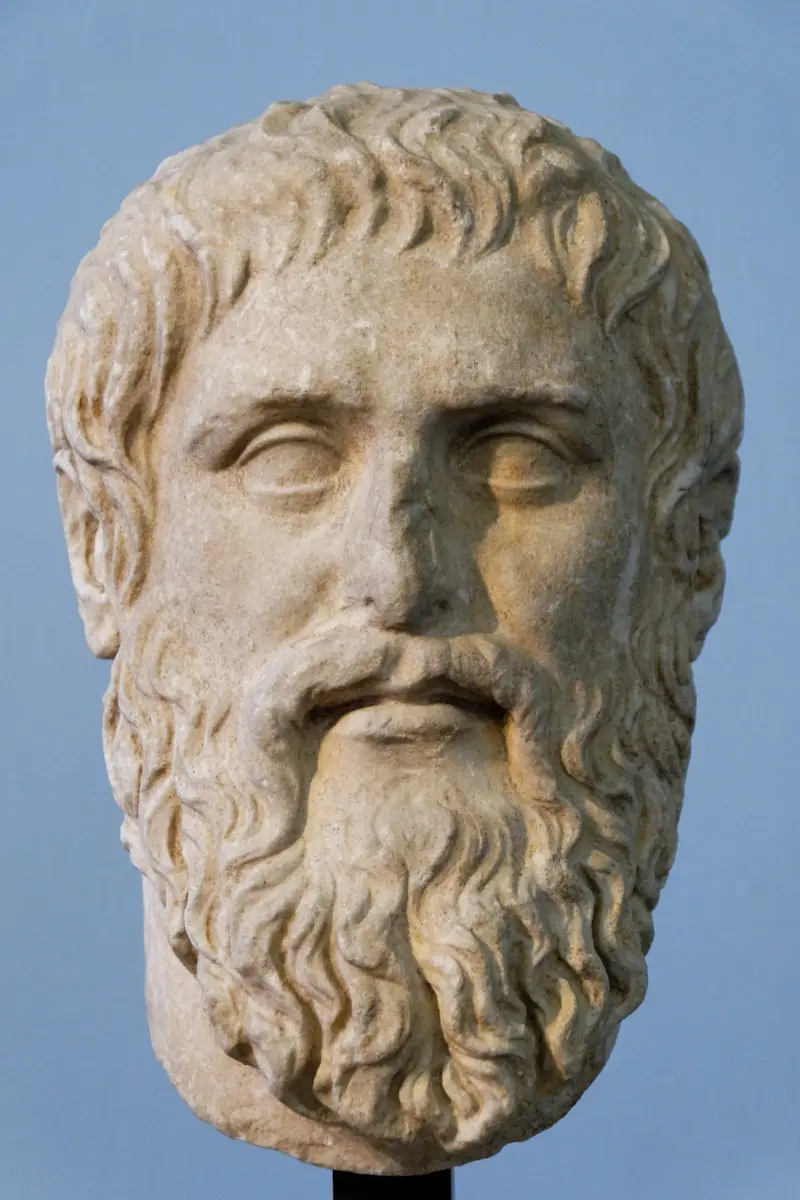
Plato was an Athenian philosopher whose dialogues are the founding texts of Western philosophy. He was born about 428 BCE into one of the richest and best-connected families of Athens, the son of Ariston and Perictione; his mother's family counted the lawgiver Solon among its ancestors, and his brothers Glaucon and Adeimantus speak in his Republic. Ancient writers say his real name was Aristocles and that 'Plato', meaning 'broad', began as a nickname. He grew up during the long Peloponnesian War, and in 404, when Athens lost it, two of his mother's relatives, Critias and Charmides, were among the Thirty Tyrants who seized the city for a year.
As a young man he belonged to the circle around Socrates, and the trial and execution of his teacher in 399 marked him for life. He seems to have started writing soon afterwards, and in nearly all his works Socrates leads the conversation: the Apology gives his speech in court, the Phaedo his last day. If the Seventh Letter can be trusted (its authorship is disputed), the way both the oligarchs and the restored democracy treated Socrates turned Plato away from the political career a man of his birth would normally have chosen. After 399 he stayed for a time at Megara and may have travelled; at about forty he sailed to southern Italy, where he came to know the Pythagoreans and Archytas of Tarentum, and on to Syracuse in Sicily, where the young Dion, brother-in-law of the tyrant Dionysius I, became his devoted friend.
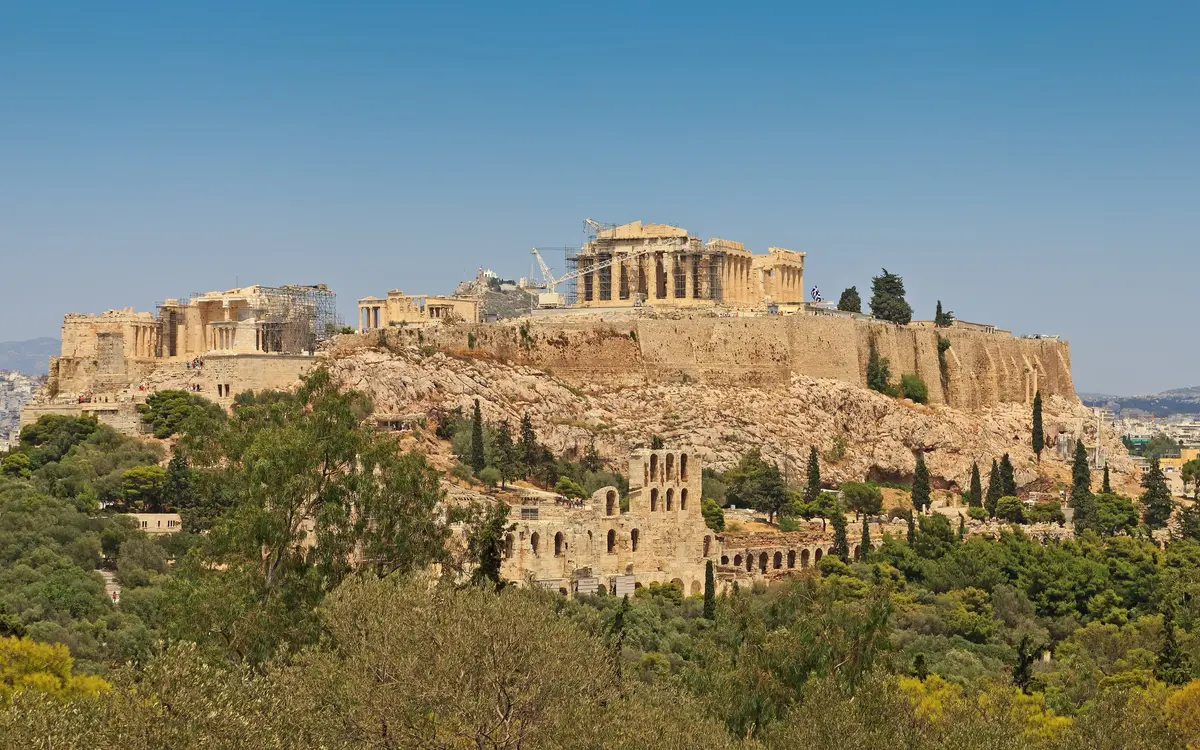
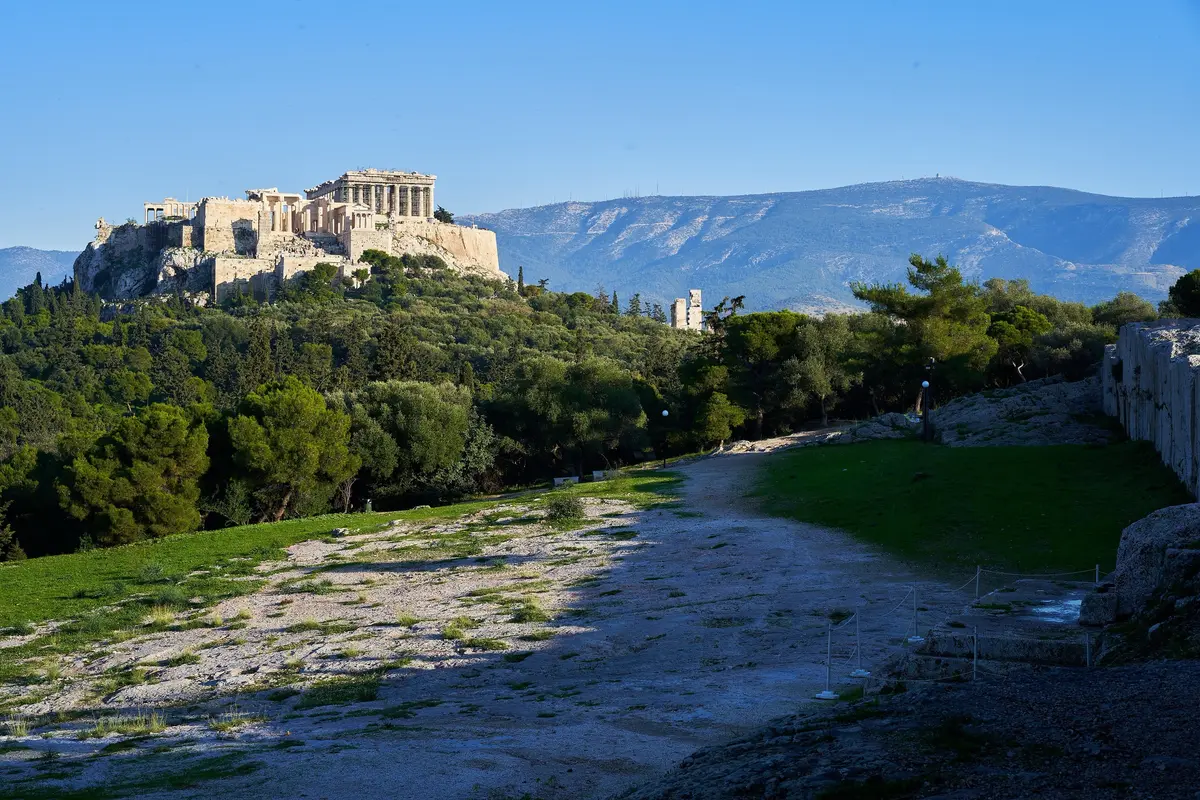
Back in Athens, in the 380s, he founded the Academy, named after the grove of the hero Academus about a mile outside the city walls. It was a community of research and teaching rather than a school with fixed doctrines: the mathematicians Theaetetus and Eudoxus were associated with it, and Aristotle came at seventeen and stayed twenty years. It is the distant ancestor of the university, and the reason we call learning 'academic'. Twice more, in 366 and 361, Plato sailed to Syracuse, persuaded by Dion that the new ruler Dionysius II might become the philosopher-king of the Republic. Both visits failed: Dion was banished, Plato was kept as an honoured prisoner and the second time got away only with the help of his friends at Tarentum. Dion took Syracuse by force in 357 and was murdered three years later.
Plato died in Athens in 348 or 347, at about eighty, and was buried at the Academy, which his nephew Speusippus took over. Unusually for an ancient author, his dialogues have come down to us whole: some twenty-five thought to be his own, besides the Apology and a set of letters, arranged since the first century CE in nine groups of four. In them he argues that the world of the senses is a flawed copy of a more real world of eternal forms, such as Justice, Beauty and the Good, that the soul is immortal and can come to know them, and, in the Republic, his masterpiece, that a city will be just only when philosophers rule it. The image of prisoners in a cave who take shadows for reality comes from the same book.
His influence is everywhere. The Academy lasted, in one form or another, for centuries; the Neoplatonism of Plotinus and the early Christian thinkers, Augustine among them, built on his idea of a higher, unchanging reality and an immortal soul. The Latin West of the Middle Ages knew him mainly through Calcidius's partial translation of the Timaeus, until Marsilio Ficino of Florence translated all his works for the Renaissance, printed in 1484. Scholars still cite him by the page numbers of Henri Estienne's edition of 1578, and philosophy itself, as a rigorous enquiry by argument into ethics, politics, knowledge and reality, can, in the Stanford Encyclopedia's judgement, be called his invention.
What happened
- 428 BCE
Born in Athens into a rich, aristocratic family, the son of Ariston and Perictione, around the time of Pericles' death; ancient writers say he was named Aristocles and that 'Plato', 'broad', began as a nickname.
Athens: born here about 428 BCE, and lived here all his life apart from his travels - 404 BCE
Athens loses the Peloponnesian War and the Thirty Tyrants seize power, led by Critias and with Charmides among them, both relatives of Plato's mother. The democracy returns the next year.
Athens: born here about 428 BCE, and lived here all his life apart from his travels - 399 BCE
Socrates is tried for impiety and corrupting the young and put to death. Plato, in his late twenties, later writes that he himself was ill on the last day; his Apology and Phaedo become the classic accounts of the trial and the death.
Athens: born here about 428 BCE, and lived here all his life apart from his travelsHe leaves Athens and stays for a time at Megara; travels may follow, perhaps to Cyrene, Egypt, Italy and Sicily, though the evidence for most of them is weak.
Megara: his first refuge after the death of Socrates in 399 BCE- 388 BCE
At about forty he sails to southern Italy and meets the Pythagoreans; Archytas, statesman and mathematician of Tarentum, becomes a lasting friend.
Tarentum (Taranto): the city of his friend Archytas, the Pythagorean statesman whose friends helped him get away from SyracuseAt Syracuse, at the court of the tyrant Dionysius I, the young Dion, the tyrant's brother-in-law, becomes his pupil and close friend. Later stories that Dionysius had Plato sold as a slave are doubtful.
Syracuse: three voyages, about 388, in 366 and in 361 BCE, to the court of Dionysius I and of his son Dionysius II- 387 BCE
Back in Athens, about now, he founds the Academy in the grove of the hero Academus, a mile outside the walls: a community for philosophy, mathematics and research, and the distant ancestor of the university.
The Academy, Athens: his school from about 387 BCE until his death, and his burial place - 367 BCE
The seventeen-year-old Aristotle arrives from Stagira and joins the Academy, where he will stay twenty years, until Plato's death.
The Academy, Athens: his school from about 387 BCE until his death, and his burial place - 366 BCE
Dionysius I having died, Dion persuades his young successor Dionysius II to invite Plato, now in his sixties, to make him a philosopher-ruler. Within months Dion is banished for treason, and Plato is kept as the tyrant's 'guest', in effect under house arrest, until he is let go home.
Syracuse: three voyages, about 388, in 366 and in 361 BCE, to the court of Dionysius I and of his son Dionysius II - 361 BCE
A third voyage, on a ship Dionysius II sends to fetch him, made for Dion's sake. It goes no better: held again, he gets away only with the help of his friends at Tarentum.
Syracuse: three voyages, about 388, in 366 and in 361 BCE, to the court of Dionysius I and of his son Dionysius II - 357 BCE
In the summer Dion lands in Sicily with a small army of mercenaries and takes Syracuse, all but the citadel. Plato had known of the plan and did nothing to stop it.
Syracuse: three voyages, about 388, in 366 and in 361 BCE, to the court of Dionysius I and of his son Dionysius II - 354 BCE
Dion, ruling Syracuse but disappointing its citizens, is murdered by agents of Callippus, himself a follower of Plato, and Sicily falls into chaos. The Seventh Letter tells the Sicilian story in Plato's own voice; whether he wrote it is disputed.
Syracuse: three voyages, about 388, in 366 and in 361 BCE, to the court of Dionysius I and of his son Dionysius II - 348 BCE
Dies in Athens, in 348 or 347, at about eighty, and is buried at the Academy; his nephew Speusippus becomes its head, and Aristotle, passed over, leaves Athens.
The Academy, Athens: his school from about 387 BCE until his death, and his burial place