Athens invents democracy
“In 508/507 BCE Cleisthenes gave Athens ten new tribes, a Council of 500 chosen by lot and an Assembly of all citizens on the Pnyx: the first democracy, and the word for it.”
In 508 BCE, two years after Spartan troops had driven the tyrant Hippias out of Athens, two noblemen were fighting for the city. Isagoras, a friend of the old tyrants, won the chief magistracy for the year 508/507; his rival Cleisthenes, of the Alcmaeonid family, was losing in the clubs of the nobles and, as Herodotus puts it, took the people into his party, promising to hand them the government. Isagoras answered by calling in King Cleomenes of Sparta, who sent a herald demanding the banishment of Cleisthenes and his 'accursed' family, then came himself with a small force, expelled seven hundred households and tried to dissolve the Council and give the state to Isagoras and three hundred friends. The Council refused. The ordinary Athenians took up arms, shut the Spartans and Isagoras on the Acropolis, besieged them for two days, let them go under truce on the third, executed Isagoras's followers and recalled Cleisthenes and the exiles.
Cleisthenes's reforms, carried through in 508/507, rebuilt the state from the bottom up. The four old tribes, run by the noble clans, gave way to ten new ones named after heroes chosen by the oracle at Delphi; each was stitched together from three 'thirds', one from the city, one from the coast and one inland, so that no region and no family could own a tribe. The villages and city wards of Attica, the 139 demes, became the unit of citizenship: a man was registered in his deme at eighteen and called by its name rather than his father's. A new Council of 500, fifty from each tribe chosen by lot for a year, prepared the business of the Assembly of all citizens, which from now on met on the Pnyx, the hill facing the Acropolis. The Athenians called the new order isonomia, equality before the law; the word demokratia, 'the people's power', is first found about fifty years later.
Athens had been moving this way for a century: Draco wrote the laws down in 621, Solon in 594 abolished debt-slavery and gave the poorest a vote in the Assembly and a court of the people, and the tyranny of Peisistratus and his sons, from 546 to 510, broke the power of the great families while it lasted. After Cleisthenes the democracy kept growing. The generals were elected by tribe; from 487 the archons were chosen by lot, and that year the Athenians first used ostracism, Cleisthenes's device for sending a dangerous man into ten years' exile by a vote on potsherds. Ephialtes stripped the old council of the Areopagus of its political powers in 462, and Pericles paid citizens to sit as jurors so that the poor could serve. The coups of 411 and 404, in the last years of the Peloponnesian War, each lasted months; the democracy restored in 403 ran until the Macedonians abolished it in 322. It was a democracy of adult male citizens: women, slaves and resident foreigners, most of the people of Attica, had no vote.
Herodotus, writing within living memory, judged the result: under the tyrants the Athenians had been no better soldiers than their neighbours, but once free, 'each one was eager to achieve for himself', and they beat Boeotia and Chalcis on a single day in 506 and the Persians at Marathon in 490. Direct democracy on the Athenian pattern, every citizen voting in the Assembly, most offices filled by lot, juries of hundreds, was never copied exactly, and its critics, Plato among them, are as famous as its admirers. But the idea that power belongs to the whole body of citizens, and the word for it, come from these two years in Athens. The ostraka, the allotment machine, the bronze ballots and the water clock of the law courts dug up in the Agora since 1931 are the democracy's own working tools.
What happened
- 508 BCE
Isagoras, a friend of the old tyrants, is elected archon for 508/507. Cleisthenes, losing to him in the nobles' clubs, takes the people into his party and promises to hand them the government.
The Agora: the civic centre, with the Council house, the monument of the ten tribes' heroes and the ground where ostracisms were votedCleisthenes proposes ten new tribes in place of the four old ones, built on where men live rather than on their clans, so that the old factions of the city, the coast and the plain lose their grip.
Isagoras calls in his friend King Cleomenes of Sparta, whose herald demands the banishment of Cleisthenes and the 'accursed' Alcmaeonids; Cleisthenes slips out of Athens.
Sparta: the city whose king Cleomenes expelled Hippias in 510 and tried to install Isagoras in 508Cleomenes arrives with a small force, expels seven hundred households named by Isagoras, and tries to dissolve the Council and give the state to Isagoras and three hundred of his friends.
The Agora: the civic centre, with the Council house, the monument of the ten tribes' heroes and the ground where ostracisms were votedThe Council refuses and the people take up arms; Cleomenes, Isagoras and their men seize the Acropolis and are besieged for two days. On the third day the Spartans leave under truce; Isagoras's Athenian followers are put to death.
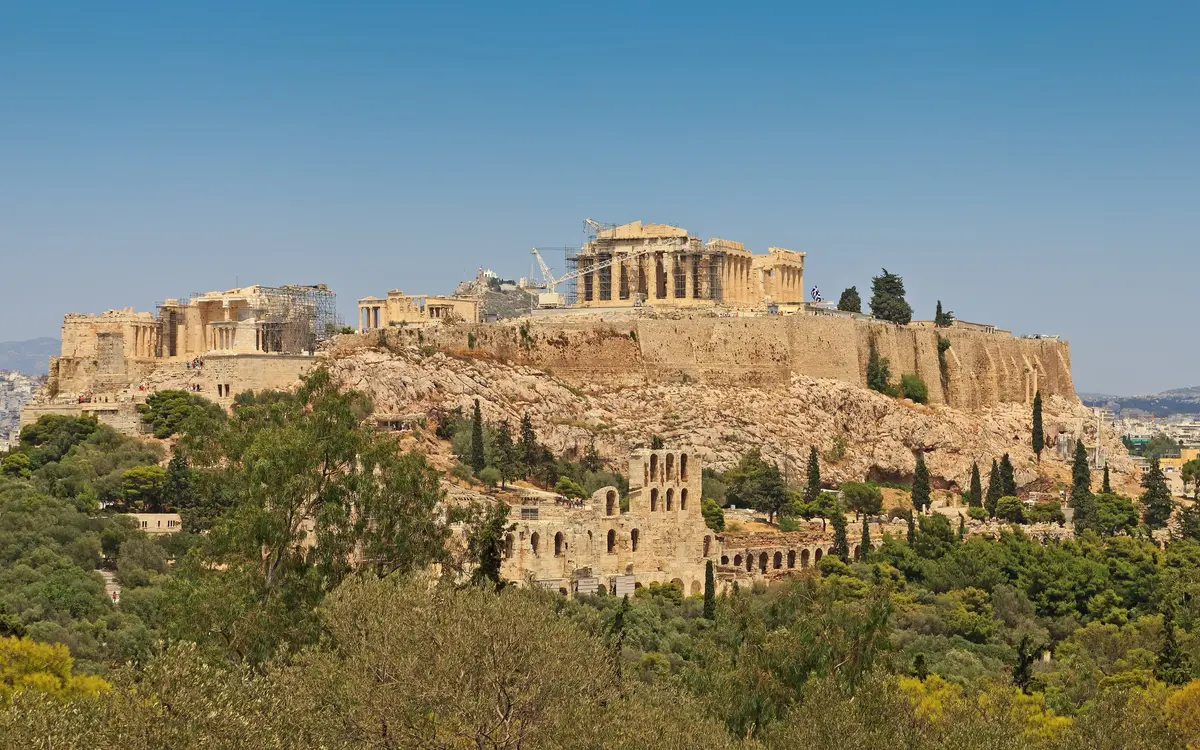
The Acropolis: where Cleomenes and Isagoras were besieged for two days in 508 BCE before leaving under truceThe Athenians recall Cleisthenes and the seven hundred households; the people are in control of the city and Cleisthenes is their leader.
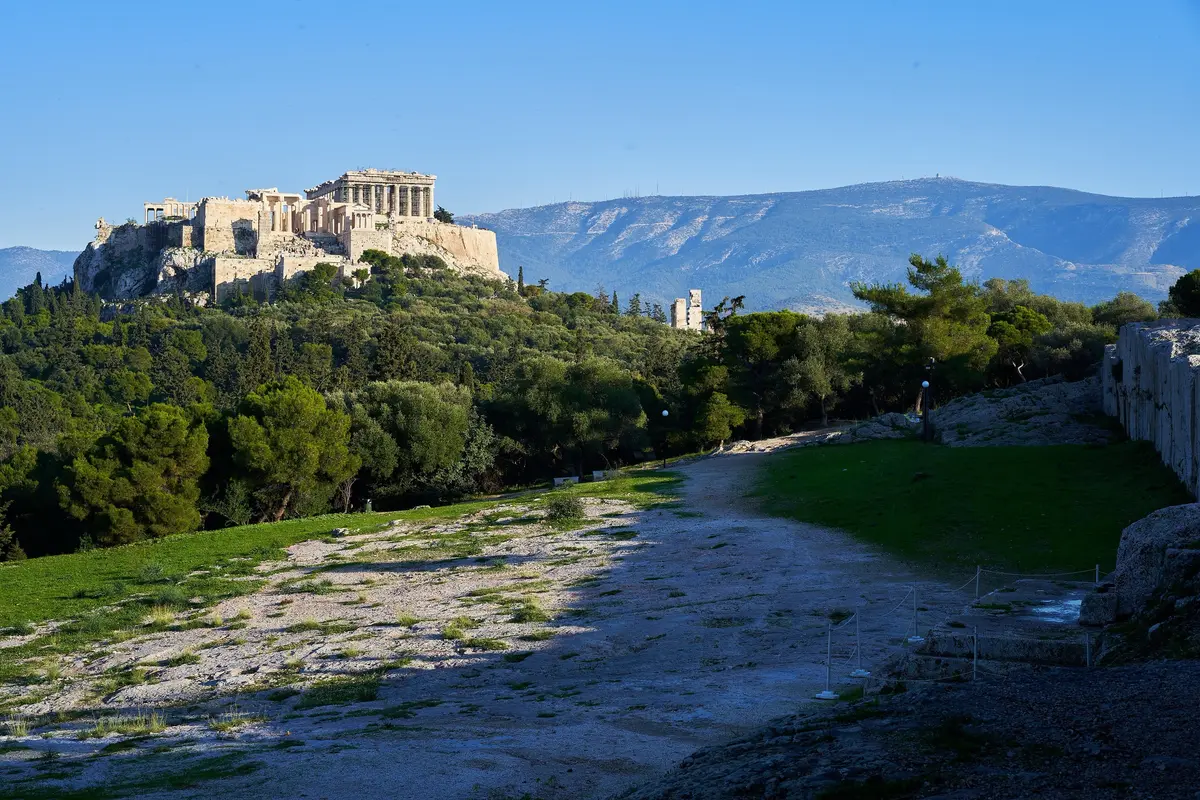
The Pnyx: the hill where the Assembly of all citizens met from Cleisthenes's reforms on, its speaker's platform cut from the rockExpecting Sparta to come back, the Athenians send envoys to the satrap Artaphernes at Sardis; to win a Persian alliance the envoys give King Darius 'earth and water', the sign of submission, and are blamed for it at home.
Sardis: the Persian satrap's seat where Athenian envoys offered 'earth and water' in 507 BCE, fearing Sparta's return- 507 BCE
The reforms take effect in Isagoras's year: ten tribes named after heroes chosen by the Delphic oracle from a list of a hundred, each made of three 'thirds' from city, coast and inland assigned by lot, and built from the 139 demes, in which every citizen is registered and after which he is named.
Delphi: the oracle the Alcmaeonids won over to send Sparta against Hippias, and that chose the ten tribes' heroesA Council of 500, fifty from each tribe chosen by lot for a year, replaces Solon's 400 and prepares the business of the Assembly of all citizens, which now meets on the Pnyx; the Athenians call the new order isonomia, equality before the law.
The Pnyx: the hill where the Assembly of all citizens met from Cleisthenes's reforms on, its speaker's platform cut from the rockCleisthenes's law of ostracism, aimed at the friends of the tyrants and at any man who might become one, lets the Assembly banish one citizen a year for ten years by a vote on potsherds; it is first used in 487, against Hipparchus, a kinsman of Peisistratus.
The Agora: the civic centre, with the Council house, the monument of the ten tribes' heroes and the ground where ostracisms were votedThe new order gives itself heroes: a bronze group of Harmodius and Aristogeiton, the killers of Hipparchus in 514, is commissioned from the sculptor Antenor and set up in the Agora, the first statue of mortals paid for by the city.
The Agora: the civic centre, with the Council house, the monument of the ten tribes' heroes and the ground where ostracisms were voted