Socrates
“The Athenian who asked everyone what they really knew, wrote nothing, and drank the hemlock in 399 BCE rather than stop.”
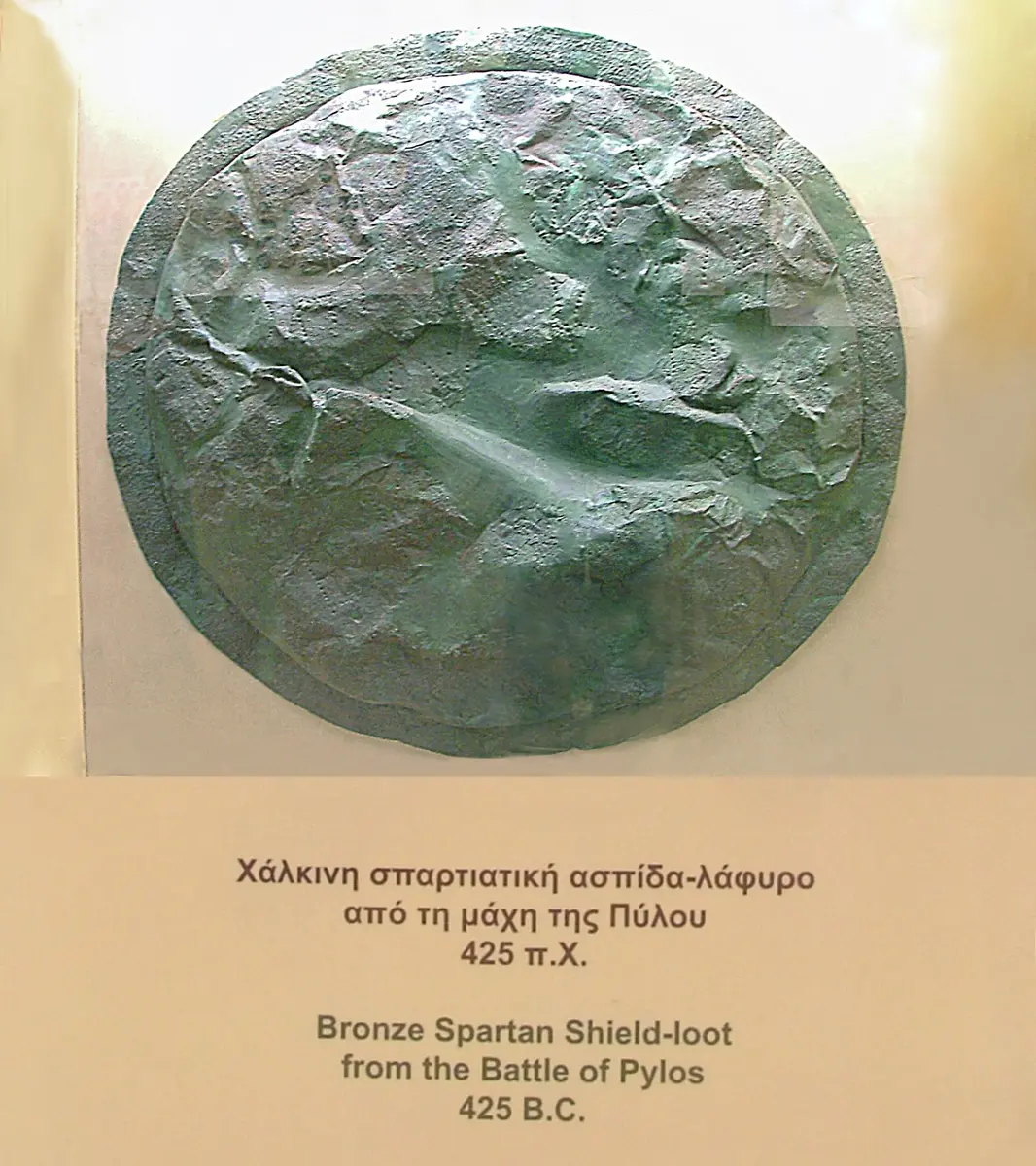
Socrates was an Athenian who spent his life asking questions in the streets and gymnasia of his city and was put to death for it in 399 BCE. He wrote nothing. What we know of him comes from his pupils, above all Plato, whose dialogues make him their main speaker, and Xenophon, and from the comic poet Aristophanes, who mocked him in The Clouds. Born around 470 BCE in the deme of Alopece, the son of a stonemason and a midwife, he served as a hoplite in the Peloponnesian War, at Potidaea, Delium and Amphipolis, and otherwise lived poor, ugly by his own account, married to Xanthippe, and famous.
His method was to ask people who claimed to know something, courage, justice, piety, friendship, what it was, and to show by questions that they could not say. He claimed to know nothing himself; the oracle at Delphi, his friend Chaerephon reported, had said no one was wiser, and Socrates decided this meant that he alone knew that he did not know. He held that no one does wrong knowingly, so that virtue is a kind of knowledge, and that the unexamined life is not worth living. The earlier Greek thinkers had asked what the world is made of; Socrates turned philosophy to how one should live.
He was a conspicuous and awkward citizen. In 406 BCE, chosen by lot to preside over the assembly, he alone refused to put the illegal motion to try the generals of Arginusae as a group. In 404, under the Thirty Tyrants, he refused their order to help arrest Leon of Salamis. But the tyrants had been his associates: Critias had been his companion, and Alcibiades, the traitor, his beloved pupil. When the democracy was restored, in 399, Meletus, Anytus and Lycon charged him with not recognising the city's gods and corrupting the young. A jury of 501 found him guilty by a narrow margin, and when he proposed, as his penalty, free meals at the public expense, sentenced him to death.
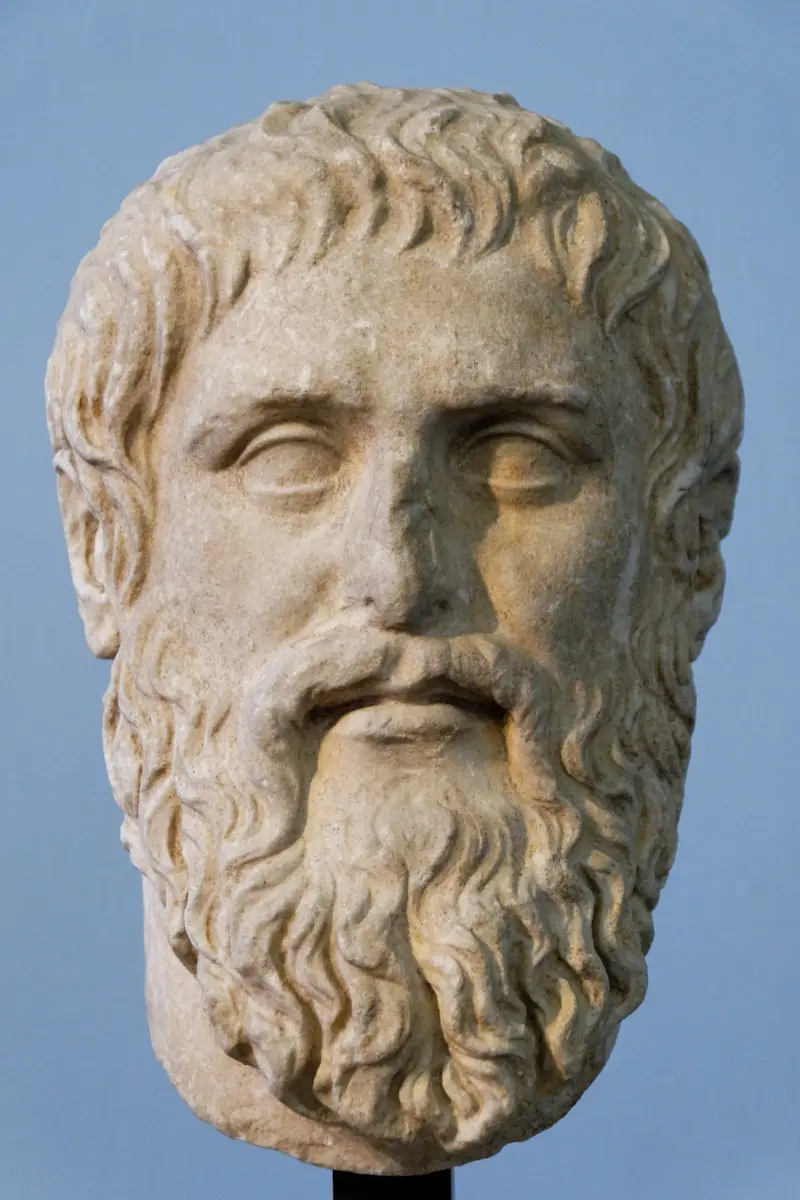
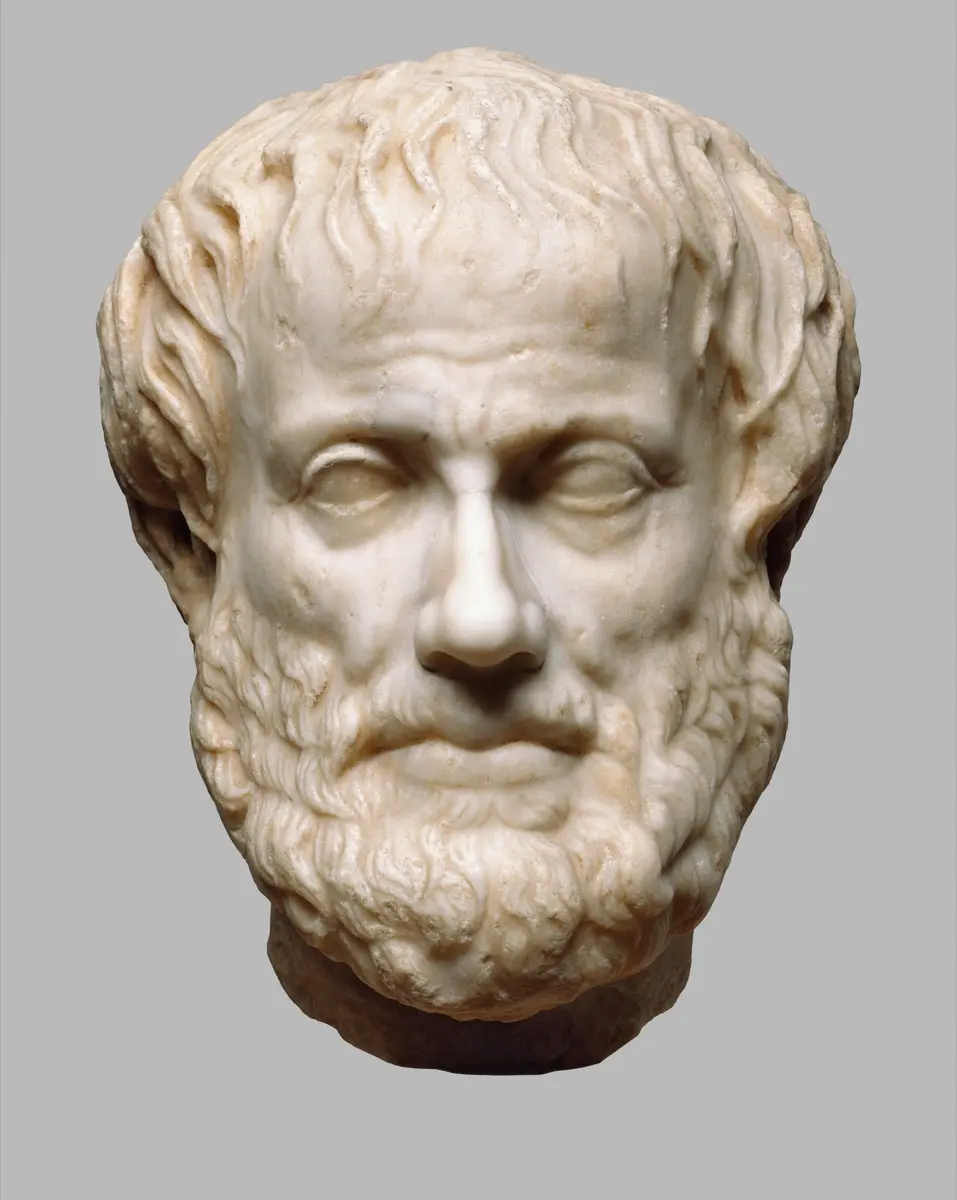
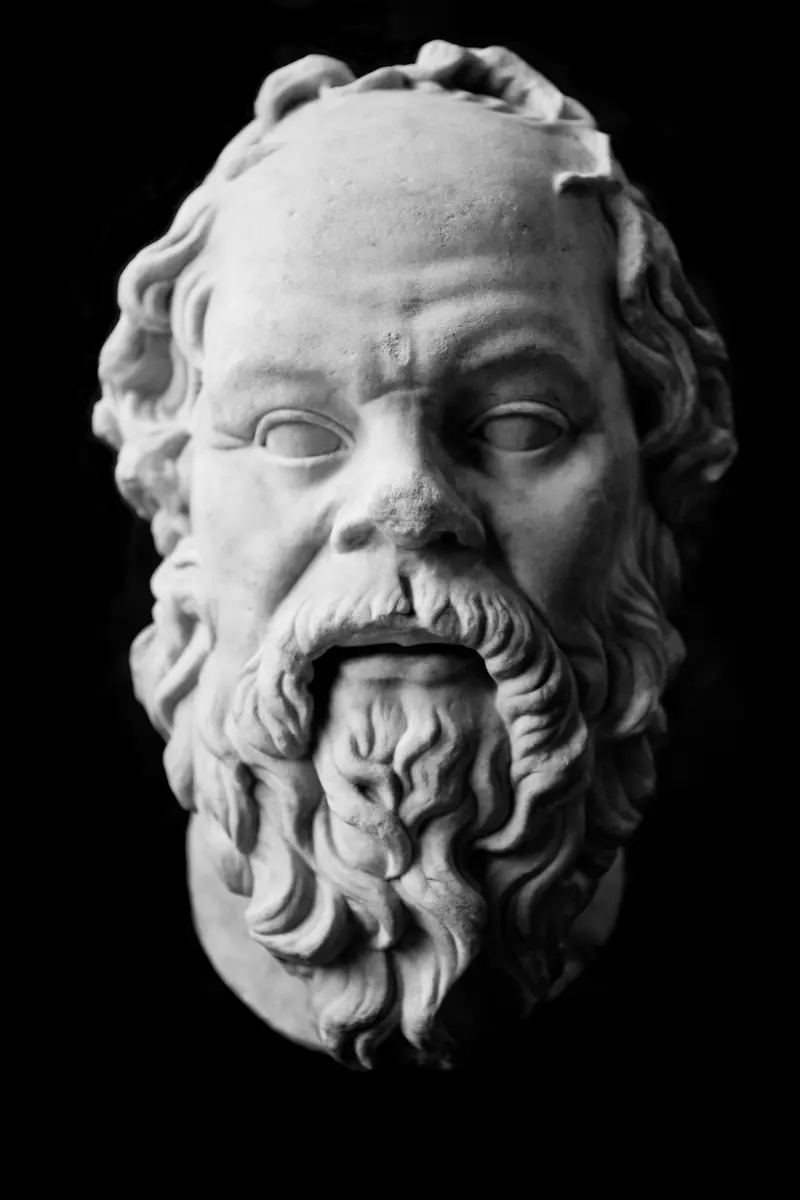
He refused his friends' plan of escape, arguing in Plato's Crito that he owed the laws obedience, spent his last day discussing the immortality of the soul, and drank the hemlock in the prison by the Agora. Plato's Apology, Crito and Phaedo made his death the founding story of philosophy, and Jacques-Louis David painted it in 1787 as the image of a man dying for his principles. Plato founded the Academy in his memory; Aristotle was Plato's pupil; and the Stoics, Cynics and Sceptics all claimed him. His face, snub-nosed and bearded like a satyr, is one of the few ancient portraits everyone recognises.
What happened
- 470 BCE
Born in Alopece, a deme of Athens, to Sophroniscus, a stonemason, and Phaenarete, a midwife; the year is 469 by the Athenian count, 470 by the base list's.
Alopece, his deme, south-east of the city walls: born about 470 BCE - 432 BCE
Serves as a hoplite at the siege of Potidaea, where he saves the life of the young Alcibiades.
Potidaea, Chalcidice: served as a hoplite in the siege of 432 BCE and saved Alcibiades - 424 BCE
Fights in the Athenian defeat at Delium in Boeotia and keeps his head in the retreat, as Alcibiades later tells it in Plato's Symposium.
Delium, Boeotia: fought in the Athenian defeat of 424 BCE - 423 BCE
Aristophanes puts him on stage in The Clouds as a sophist in a basket, teaching young men to make the worse argument the better; the caricature will be used against him at his trial.
- 406 BCE
Chosen by lot to preside over the assembly, he alone refuses to put the illegal motion to try the generals of Arginusae together; they are condemned anyway.
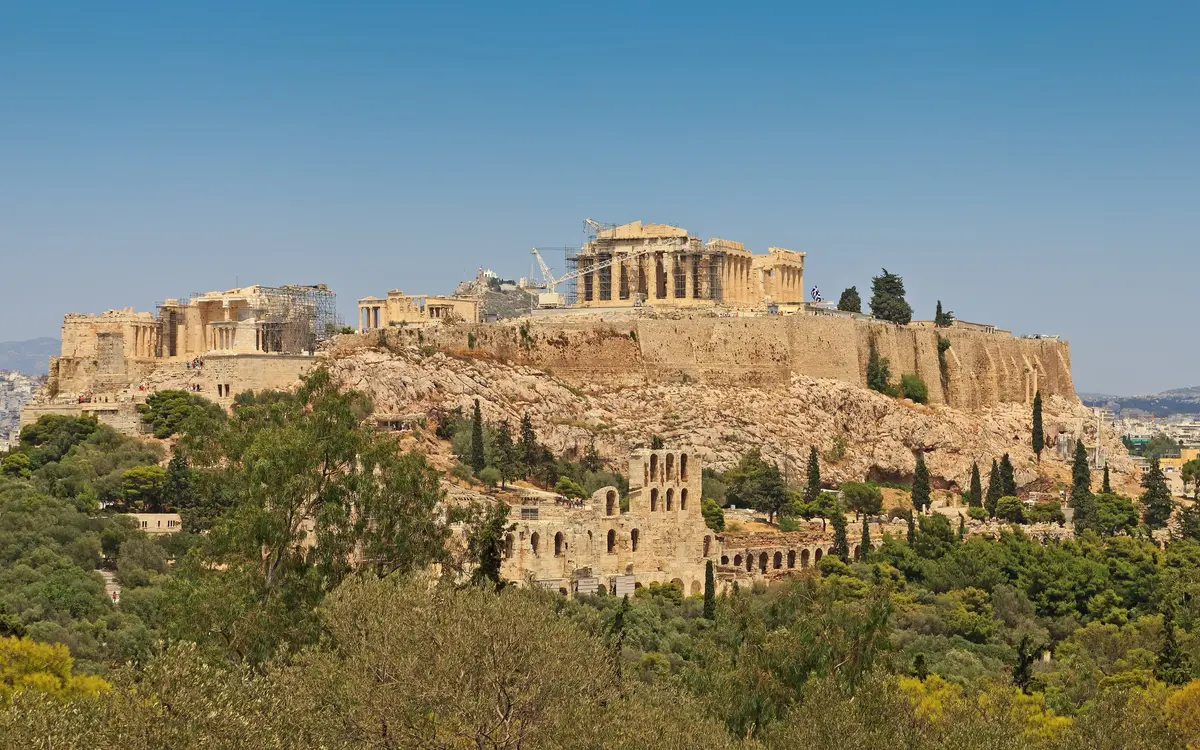
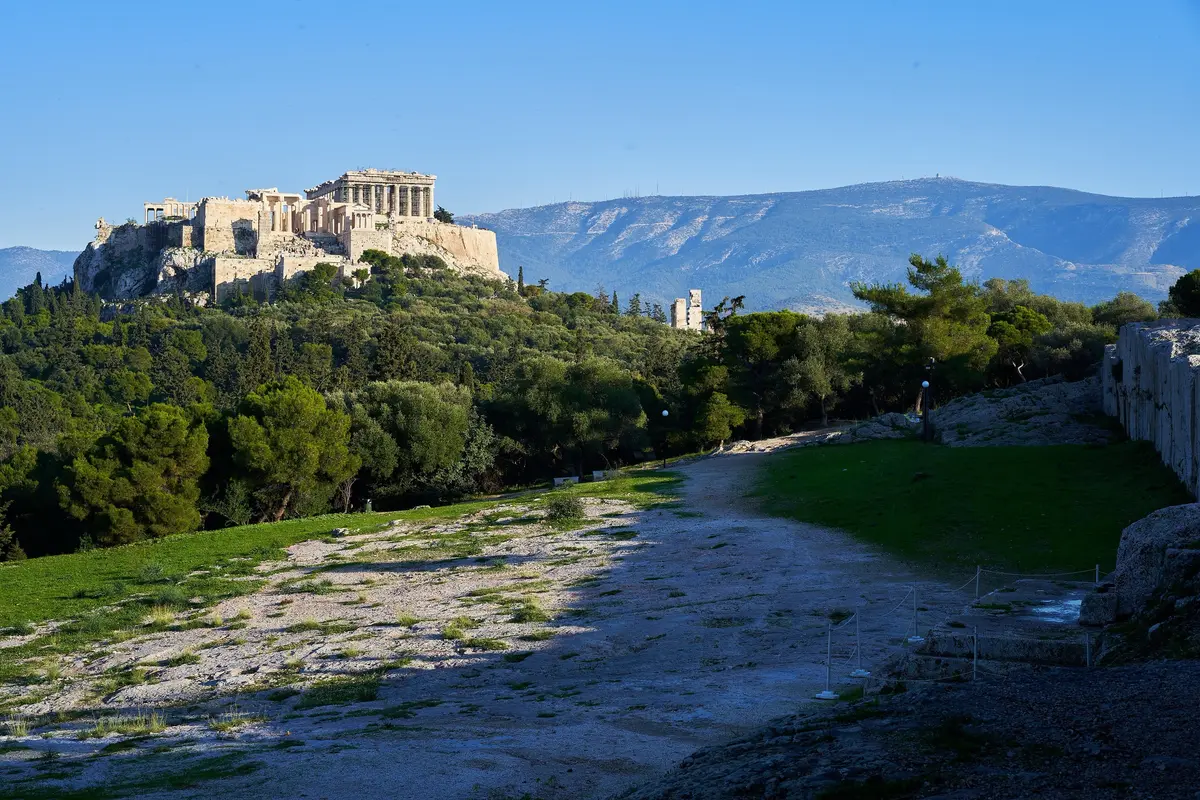
The Agora of Athens: where he questioned the citizens, was tried, and died in the prison beside it- 404 BCE
The Thirty Tyrants, Critias among them, order him to help arrest Leon of Salamis; he goes home instead.
The Agora of Athens: where he questioned the citizens, was tried, and died in the prison beside it - 399 BCE
Charged by Meletus, Anytus and Lycon with impiety and corrupting the young, he is tried before a jury of 501, found guilty, proposes free meals as his penalty, and is sentenced to death.
The Agora of Athens: where he questioned the citizens, was tried, and died in the prison beside itRefusing to escape, he drinks the hemlock in the prison by the Agora after a day spent discussing the soul; Plato's Phaedo tells it.
The Agora of Athens: where he questioned the citizens, was tried, and died in the prison beside it