Aristotle
“Plato's pupil and Alexander's tutor, who founded the Lyceum, invented formal logic and the study of animals, and became the master of medieval thought, Islamic and Christian.”
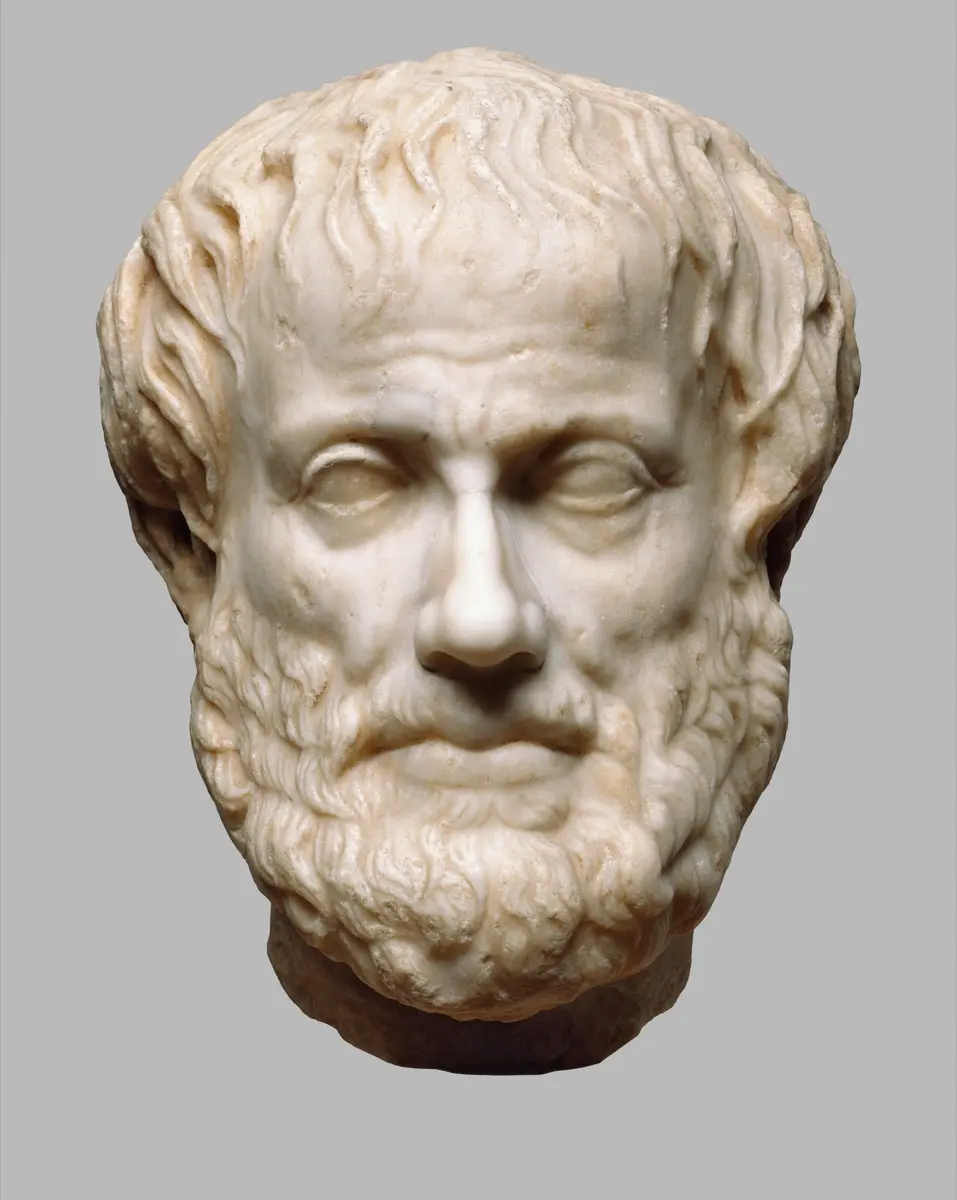
Aristotle was a Greek philosopher and scientist who set out to study nearly everything, from logic and the heavens to animals, poetry and politics, and to put it all in order. He was born in 384 BCE at Stagira, a small town on the Chalcidice peninsula in the north of Greece, where his father Nicomachus was physician to Amyntas III, king of Macedon and grandfather of Alexander the Great. At seventeen he went to Athens and joined Plato's Academy, and he stayed twenty years, first as a student and then as a colleague, until Plato died in 347 BCE.
Passed over for the head of the Academy, which went to Plato's nephew Speusippus, he crossed to Assos on the coast of Asia Minor, ruled by Hermias, a former member of the Academy, and married Hermias's niece Pythias. There, and then on the island of Lesbos with his younger friend Theophrastus, he began the close study of living animals, many of them from the lagoon of Pyrrha. In 343 BCE Philip II of Macedon called him to teach his thirteen-year-old son Alexander, at a sanctuary of the Nymphs at Mieza; the lessons lasted perhaps three years.
In 335, with Alexander now king, Aristotle went back to Athens and opened his own school in the Lyceum, a gymnasium outside the city walls. His followers were called Peripatetics, after the covered walk where they talked; he built up a great library, gave lectures, some of them open to the public, and set his students to collect facts, among them the constitutions of 158 Greek states. When Alexander died in 323 and Athens turned against Macedon, he was threatened with a charge of impiety. Saying he would not let the city sin twice against philosophy, as it had with Socrates, he withdrew to his mother's town of Chalcis on Euboea, and died there the next year.
Perhaps two hundred works went under his name; about thirty survive, most of them lecture notes rather than finished books, edited in Rome around 60 BCE by Andronicus of Rhodes. In them he founded formal logic, with the syllogism; described more than five hundred kinds of animal; explained change by four causes; placed an unmoving, round earth at the centre of the universe; held that happiness comes only from a life of excellence and that man is by nature a political animal; and wrote the first theory of tragedy. He rejected Plato's theory of forms and trusted observation: when theory and the facts disagree, he said, believe the facts.
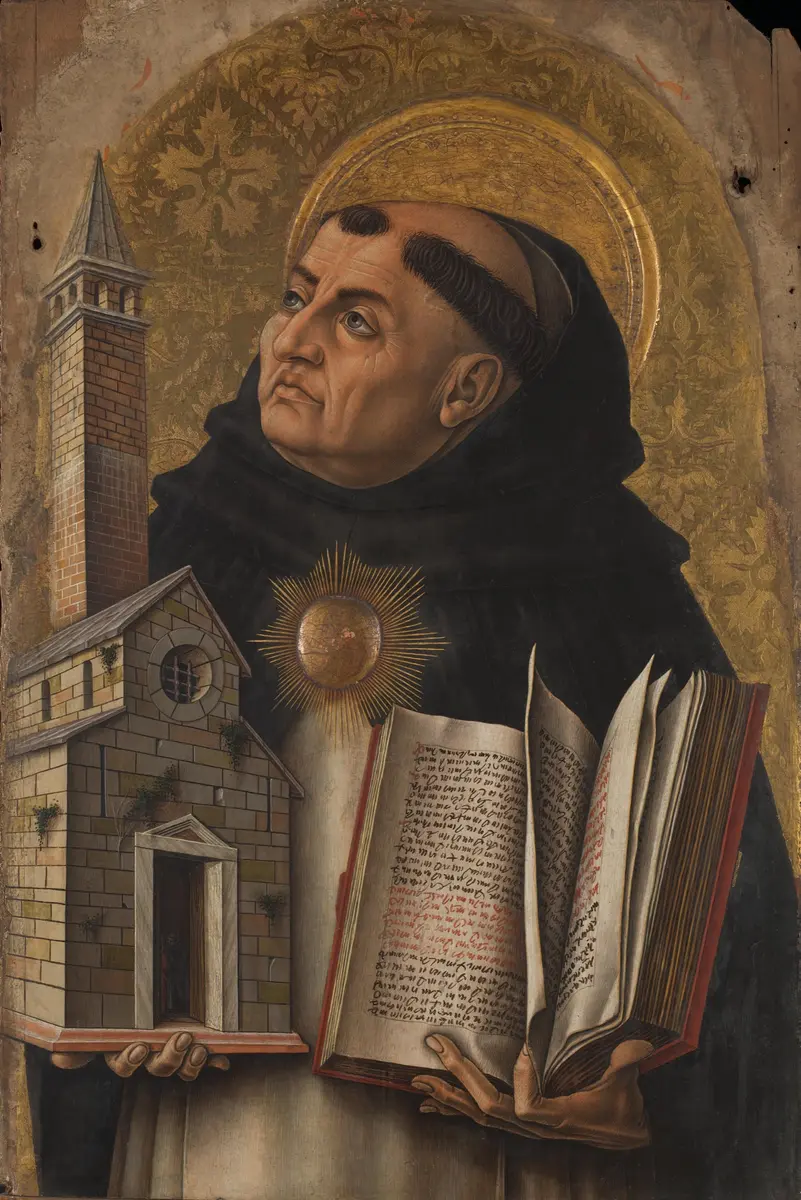
His influence is hard to overstate. Translated from Syriac and Greek into Arabic in ninth- and tenth-century Baghdad, he became 'the First Teacher' of Islamic philosophy, and the commentaries of Avicenna and of Averroes of Córdoba, 'the Commentator', carried him back to the Latin West in the twelfth century. There he was simply 'the Philosopher': Thomas Aquinas reconciled him with Christian theology, and his system framed Christian philosophy until Copernicus, Galileo and Descartes overturned his cosmos and his physics. His ethics, revived as virtue ethics since the 1950s, and his politics are still argued over as living philosophy.
What happened
- 384 BCE
Born at Stagira, a small Greek town on the Chalcidice peninsula, the son of Nicomachus, physician to King Amyntas III of Macedon.
Stagira, Chalcidice: born here in 384 BCE - 367 BCE
After his father's death the seventeen-year-old goes to Athens and joins Plato's Academy, where he will stay twenty years, as student and then colleague.
- 347 BCE
Plato dies and his nephew Speusippus takes over the Academy. Aristotle leaves Athens for Assos in Asia Minor, ruled by Hermias, a former student of Plato's, and marries Hermias's niece Pythias.
Assos, in the Troad: the guest of its ruler Hermias from 347 BCE, and the start of his studies of animals - 345 BCE
About now he crosses to Lesbos and works there with Theophrastus, a native of the island, studying the sea creatures of the lagoon of Pyrrha.
- 343 BCE
Philip II of Macedon summons him to teach his thirteen-year-old son Alexander; Philip gives them the sanctuary of the Nymphs at Mieza as their school.
The Nymphaeum of Mieza, Macedonia: the school where he taught the young Alexander from 343 BCE - 341 BCE
Hermias, betrayed to the Persian king, is put to death; Aristotle honours him in his 'Ode to Virtue', his only surviving poem.
- 340 BCE
The lessons end when Philip leaves the sixteen-year-old Alexander to govern Macedon; Aristotle seems to stay in Macedonia or at Stagira for five more years.
- 335 BCE
Back in Athens, a year after Alexander became king, he opens his own school in the Lyceum, a gymnasium sacred to Apollo Lykeios outside the walls; his followers are called Peripatetics, after its covered walk.
The Lyceum, Athens: his school from 335 to 323 BCE - 327 BCE
His nephew Callisthenes, Alexander's historian on Aristotle's recommendation, opposes the king's demand that Greeks prostrate themselves before him and is executed; teacher and pupil have grown apart.
- 323 BCE
Alexander dies at Babylon and Athens rises against Macedon. Threatened with a charge of impiety, Aristotle leaves for his mother's family home at Chalcis, saying he will not let Athens sin twice against philosophy.
Chalcis, Euboea: his mother's town, his refuge from 323 BCE and the place of his death in 322 - 322 BCE
Dies at Chalcis, aged about sixty-two, probably of a long illness of the stomach; his will leaves his library and his writings to Theophrastus, his successor at the Lyceum.
Chalcis, Euboea: his mother's town, his refuge from 323 BCE and the place of his death in 322