Thomas Aquinas
“The Dominican friar who joined Aristotle's philosophy to Christian theology in the Summa theologiae, teaching that faith and reason cannot truly conflict: the greatest of the medieval scholastics.”
Thomas Aquinas was an Italian friar of the Dominican order and the greatest philosopher and theologian of the medieval universities, who built one system out of the Christian faith and the newly recovered philosophy of Aristotle. He was born about 1225 in the castle of Roccasecca, between Rome and Naples, the youngest son of a noble family in the service of the emperor Frederick II. At about five he was given to the Benedictine abbey of Monte Cassino, where his family hoped he would one day be abbot. When the emperor drove out the monks in 1239 he went to the new University of Naples, and there he first met Aristotle's works on nature, just translated into Latin from Greek and Arabic.
In 1244 he joined the Dominicans, a young order of preaching friars who lived by begging. His family had him seized on the road and kept him at home for a year, but he would not give way, and in 1245 he went to Paris to study under Albert the Great, whom he followed to Cologne in 1248. Back in Paris, he became a master of theology in 1256, younger than the rules allowed. He then taught for ten years in Italy, at Orvieto, in Rome and near the papal court, went back to Paris for a stormy second term from 1268 to 1272, and ended at Naples. In December 1273 he stopped writing, saying that all he had written seemed like straw. Summoned to the Council of Lyon, he fell ill on the road and died at the abbey of Fossanova on 7 March 1274, not yet fifty.
In barely twenty years he wrote more than eight million words: the Summa contra Gentiles, the unfinished Summa theologiae, disputed questions, commentaries on the Bible and on almost all of Aristotle, and hymns still sung in church. His method was the disputed question: first the arguments against, then an authority on the other side, then his own answer, then a reply to each objection. His central conviction was that faith and reason both come from God and cannot truly contradict each other. Reason alone, he argued, can show that God exists, in the 'five ways' of the Summa theologiae, and can know the natural law of right and wrong; revelation adds what reason cannot reach. He held that the soul is the form of the body, not a prisoner inside it, and he treated theology itself as a science that reasons from revealed principles.
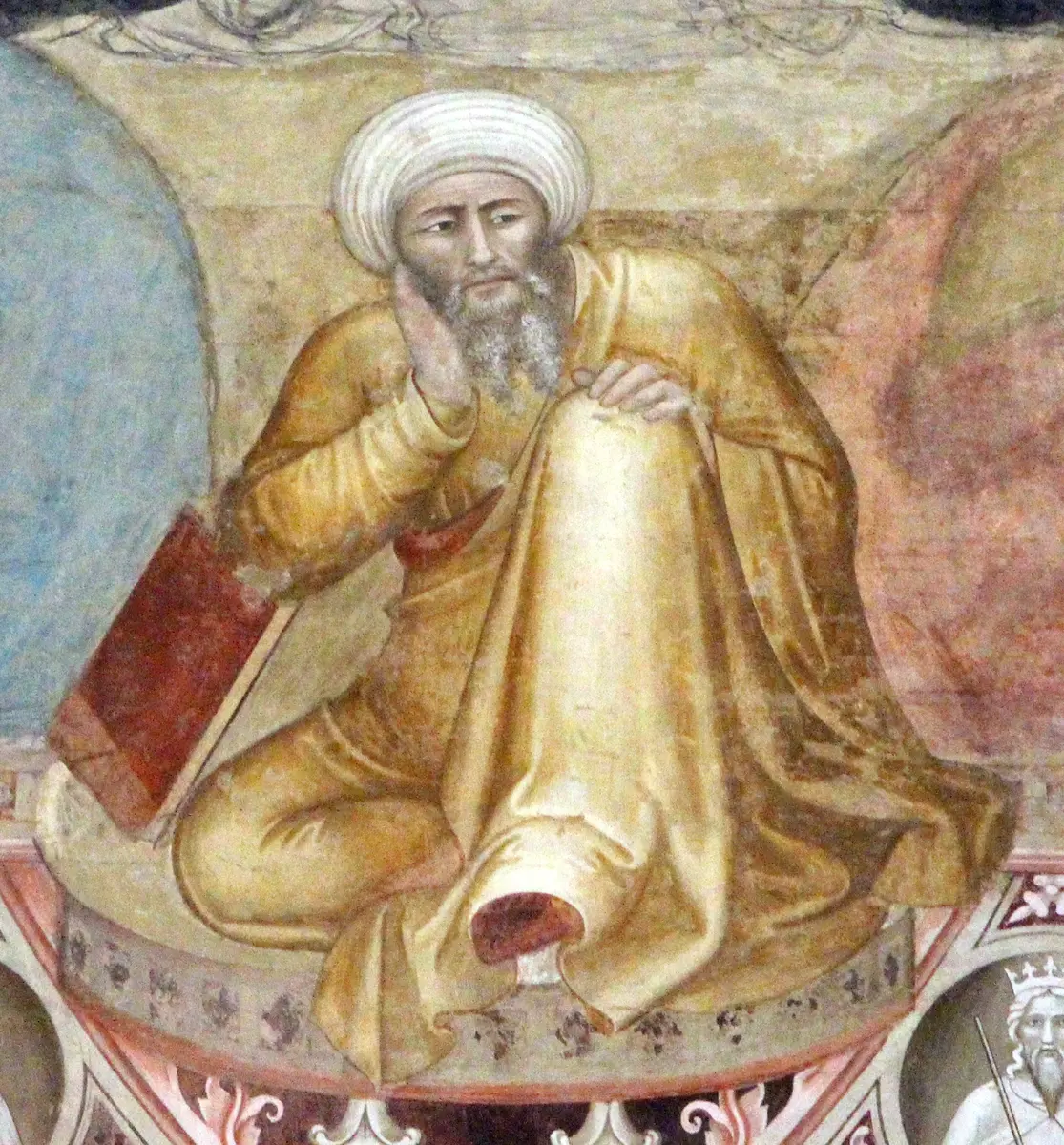
In his own time this Christian Aristotle was controversial. In Paris he fought on two fronts: against the 'Averroists' of the arts faculty, who followed Averroes's reading of Aristotle even where it contradicted the faith, and against conservative theologians in the tradition of Augustine, who distrusted Aristotle altogether. On 7 March 1277, three years to the day after his death, the bishop of Paris condemned 219 propositions, some of which touched his own teaching, and later that month at Oxford Archbishop Robert Kilwardby condemned a list of theses that included two of his central doctrines. But his Dominican brothers defended him, Pope John XXII declared him a saint on 18 July 1323, his body was taken to Toulouse in 1369, and in 1567 Pope Pius V named him a Doctor of the Church.
Thomism, the system named after him, shaped Catholic teaching for centuries, even as Luther, the humanists and the new philosophers of the seventeenth century mocked the scholastics. In 1879 Pope Leo XIII held him up as the model of the Christian philosopher and founded the critical edition of his works, and in 1917 the Church adopted his philosophy as its official one. In the twentieth century Jacques Maritain, Étienne Gilson, Elizabeth Anscombe and Alasdair MacIntyre made him a living voice again, and his ideas of natural law and the virtues still find followers among Catholics, Protestants and non-Christians alike.
What happened
- 1225
Born, probably in 1225, in the castle of Roccasecca near Aquino, between Rome and Naples, the youngest son of Landulf of Aquino and his wife Theodora, a noble family in the service of the emperor Frederick II.
Roccasecca: the castle of the counts of Aquino, where he was born about 1225 and where his family held him in 1244–45; Monte Cassino, his school as a boy, is about 14 km to the south-east - 1230
About five years old, he is given as an oblate to the great Benedictine abbey of Monte Cassino near his home, where his family hopes he will one day be abbot.
- 1239
Frederick II expels the monks of Monte Cassino, who are too loyal to the pope, and Thomas goes to study at the University of Naples, recently founded by the emperor, where he first meets Aristotle's works on nature, newly translated from Greek and Arabic.
Naples: the Dominican convent, today San Domenico Maggiore, where he joined the order in 1244 and lived while teaching in the city in 1272–73; he had studied at Naples from 1239 - 1244
At Naples he takes the habit of the Dominicans, a new order of preaching friars who live by begging, to the fury of his family; his superiors send him north at once.
Naples: the Dominican convent, today San Domenico Maggiore, where he joined the order in 1244 and lived while teaching in the city in 1272–73; he had studied at Naples from 1239- 1245
Seized on the road by his brothers and kept at Roccasecca for about a year, he will not give in; the story goes that he drove out a woman sent to seduce him with a burning log. At last his family lets him go.
Roccasecca: the castle of the counts of Aquino, where he was born about 1225 and where his family held him in 1244–45; Monte Cassino, his school as a boy, is about 14 km to the south-eastIn the autumn he reaches Paris and the Dominican convent of Saint-Jacques, the order's great house of study at the university, and studies under Albert the Great.
Paris: the site of the Dominican convent of Saint-Jacques on the Left Bank, his home as student and as master (1245–48, 1252–59, 1268–72)- 1248
In the summer he follows Albert to Cologne, where the Dominicans are opening a new house of studies; the story that his classmates called the silent student 'the dumb ox' belongs to these years.
- 1252
On Albert's recommendation he is sent back to Paris to train as a master of theology, though two years younger than the rules allow, and lectures as a bachelor on the Bible and on Peter Lombard's Sentences.
Paris: the site of the Dominican convent of Saint-Jacques on the Left Bank, his home as student and as master (1245–48, 1252–59, 1268–72) - 1256
Granted the licence to teach early in the year, he becomes a master of theology in his early thirties and holds one of the two Dominican chairs in Paris until 1259.
Paris: the site of the Dominican convent of Saint-Jacques on the Left Bank, his home as student and as master (1245–48, 1252–59, 1268–72) - 1259
His term over, he returns to Italy, where he will spend most of the next ten years teaching in Dominican houses and near the papal court; the Summa contra Gentiles, his defence of the faith by reason, is written in these years.
- 1261
He becomes lector of the Dominican house at Orvieto, where Pope Urban IV is living; for the pope he weaves the Church Fathers' comments on the Gospels into the Catena aurea, and he is traditionally credited with the hymns of the new feast of Corpus Christi.
- 1265
Sent to Rome, he teaches young Dominicans at the convent of Santa Sabina and begins the Summa theologiae, a whole course of theology meant, its prologue says, for beginners.
- 1268
Suddenly sent back to Paris for a rare second term as master, he is caught between conservative theologians who distrust Aristotle and the 'Averroists' of the arts faculty, who follow the Muslim commentator Averroes even where he contradicts the faith.
Paris: the site of the Dominican convent of Saint-Jacques on the Left Bank, his home as student and as master (1245–48, 1252–59, 1268–72)- 1270
In On the Unity of the Intellect he attacks the Averroist view that all human beings share a single intellect, which he holds would leave no personal immortality or responsibility; in the same year Bishop Étienne Tempier of Paris condemns the radical Averroists' theses.
Paris: the site of the Dominican convent of Saint-Jacques on the Left Bank, his home as student and as master (1245–48, 1252–59, 1268–72) - 1272
Having left Paris at Easter, he begins teaching at Naples in October, setting up a Dominican house of studies at the university at the wish of King Charles of Anjou, and works on his commentaries on Aristotle's On the Heavens and On Generation and Corruption.
Naples: the Dominican convent, today San Domenico Maggiore, where he joined the order in 1244 and lived while teaching in the city in 1272–73; he had studied at Naples from 1239- 1273
In the middle of the Summa's treatise on the sacraments he has a powerful religious experience and stops writing; when his assistant Reginald of Piperno urges him on, he says that all he has written now seems to him like straw.
Naples: the Dominican convent, today San Domenico Maggiore, where he joined the order in 1244 and lived while teaching in the city in 1272–73; he had studied at Naples from 1239- 1274
Pope Gregory X summons him to the Second Council of Lyon, called to heal the split between the Latin and Greek churches, and he sets out from Naples on foot.
Taken ill on the road near Terracina, he is nursed at his niece's castle of Maenza and then carried to the Cistercian abbey of Fossanova, where he dies on 7 March, not yet fifty.
Fossanova: the Cistercian abbey near Terracina where he died on 7 March 1274