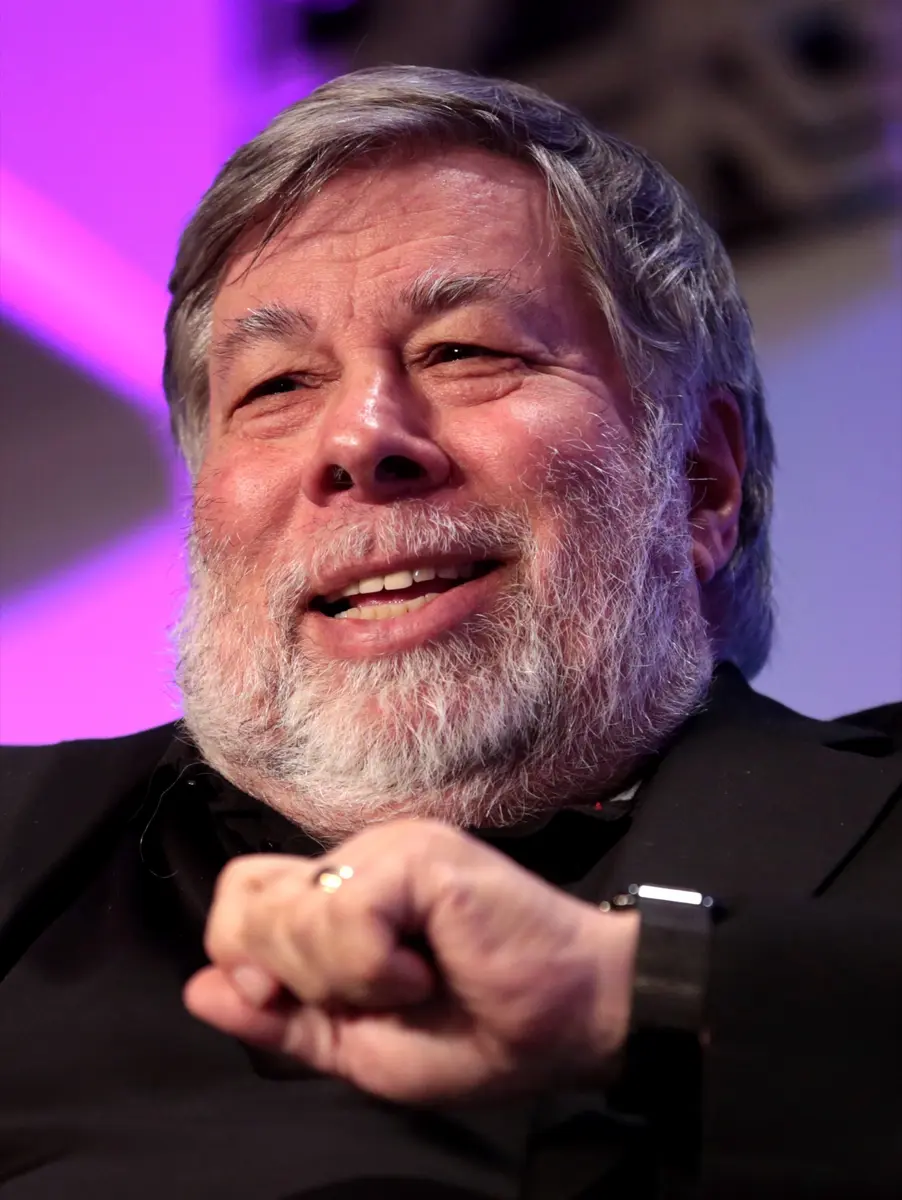
Steve Wozniak
“The Apple co-founder who designed the Apple I and the Apple II almost single-handed, the first mass-market personal computer, then left engineering for teaching, giving and festivals.”
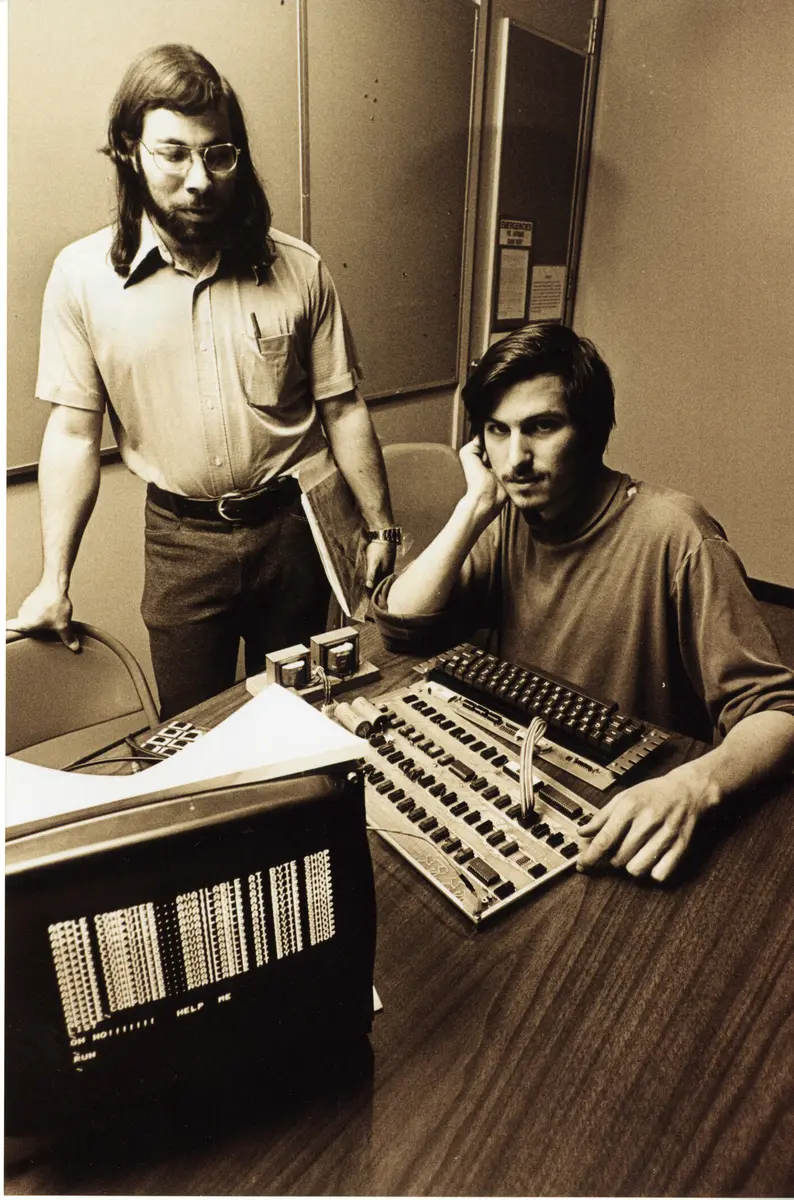
Steve Wozniak (born 1950), known to everyone as 'Woz', is the American electronics engineer who designed Apple's first two computers and co-founded the company with Steve Jobs in 1976. The Apple I was a single circuit board that a hobbyist could connect to a keyboard and a television; the Apple II of 1977 was a complete machine in a plastic case, with colour graphics, sound, a built-in BASIC and slots for more hardware, and it became the first personal computer to sell in very large numbers to ordinary homes, schools and offices. He designed its electronics and wrote much of its first software almost alone, while still working days at Hewlett-Packard, and his colour-graphics circuit is the patent for which he was inducted into the National Inventors Hall of Fame.
He was born in San Jose, California, on 11 August 1950, the son of an engineer at Lockheed's missile and space division in Sunnyvale, in the orchards that were turning into Silicon Valley. His father taught him electronics; at eleven he had a ham radio licence, and in eighth grade his home-built adding machine won the Air Force's prize at the Bay Area Science Fair. In high school he redesigned the minicomputers of the day on paper, always trying to use fewer chips. After a year at the University of Colorado, a friend, Bill Fernandez, introduced him to a younger boy from the same school, Steve Jobs. In 1971, after reading an Esquire article about telephone hackers, Wozniak designed a digital 'blue box' that made free long-distance calls, and the two sold it to students. From 1973 he designed calculator chips at Hewlett-Packard in Cupertino, and for Jobs, then at Atari, he designed the arcade game Breakout in four sleepless nights.
The Homebrew Computer Club, whose first meeting he attended in March 1975, gave him his audience. By the end of June he had a microprocessor board that showed typed letters on a TV screen; he handed out its plans freely, and Jobs persuaded him to sell it. After Apple's founding on 1 April 1976 he designed the Apple II, left HP early in 1977 when the investor Mike Markkula turned Apple into a corporation, and showed the new machine at the first West Coast Computer Faire in April 1977. In the following months he added a floppy-disk controller made of only eight chips, the Disk II of 1978, which made the Apple II useful for business software. When Apple went public in December 1980 he became a very rich man.
On 7 February 1981 he crashed his small plane on take-off at the Sky Park airfield in Scotts Valley, and for five weeks afterwards he could not form new memories. He used the break to finish college at Berkeley under an assumed name, and spent millions on two huge rock-and-technology festivals, the US Festivals of 1982 and 1983 near San Bernardino. Back at Apple as an engineer from 1983, he stopped working there day to day in February 1985, the month he and Jobs received the National Medal of Technology from President Reagan, though he never left its payroll. His own company, CL 9, made the CORE (1987), an early programmable universal remote control.
Since then he has been better known as a teacher, giver and public figure than as a designer. He taught computer classes to schoolchildren in Los Gatos for years, helped found the Electronic Frontier Foundation in 1990, and was the founding sponsor of San Jose's Children's Discovery Museum, which stands on a street named Woz Way, and of the Tech Museum. He wrote an autobiography, iWoz (2006), worked as chief scientist for storage companies, appeared on Dancing with the Stars, and lent his name to an online coding school, Woz U. In 2026, the year Apple turned fifty, he was still giving commencement speeches and collecting honours as the friendly, joking face of the garage era of personal computing.
What happened
- 1950
Stephen Gary Wozniak is born in San Jose, California. His father, an engineer at Lockheed's missile and space division in Sunnyvale, teaches him electronics as a child.
San Jose, California: born here on 11 August 1950; Woz Way, beside the Children's Discovery Museum he sponsored, is named after him- 1964
In eighth grade he builds a 10-bit adder and subtractor from transistors and wins the Air Force's award for the best electronics project at the Bay Area Science Fair, against pupils up to twelfth grade. He has had a ham radio licence since sixth grade.
- 1968
He graduates from Homestead High School in Cupertino and goes to the University of Colorado at Boulder for one year.
- 1970
Back home, he builds a small computer of lights and switches with a neighbour, Bill Fernandez, the 'Cream Soda Computer', named after the drink they lived on; Fernandez introduces him to Steve Jobs, a younger pupil at Homestead High.
- 1971
He reads Ron Rosenbaum's article on telephone hackers in Esquire's October issue, finds the tone frequencies with Jobs in SLAC's library and, now in his third year at Berkeley, designs a digital 'blue box' that makes free long-distance calls. He and Jobs sell it to students.
University of California, Berkeley: his third college year (1971-72), when he built the digital blue box, and his return in 1981-82 as 'Rocky Raccoon Clark' to finish his degree- 1973
Taking a year off college to earn his fees, he joins Hewlett-Packard's calculator division in Cupertino as an engineer, designing calculator chips. Atari soon offers him a job after seeing his home-made Pong; he stays at HP, but designs Breakout for Atari with Jobs in four nights.
- 1975
He goes to the first meeting of the Homebrew Computer Club, 32 hobbyists in Gordon French's garage in Menlo Park, who have come to see the Altair 8800 kit. It inspires him to design his own computer with a keyboard and a screen.
His prototype works: for the first time, letters he types on a keyboard appear on the screen of his own microprocessor computer. He designs it in his Cupertino apartment and his cubicle at HP and hands out the plans at the club.
- 1976
He, Jobs and Ronald Wayne sign the partnership that founds the Apple Computer Company to sell his board, the Apple-1 (see 'Apple is founded'). He keeps his job at HP and in the evenings designs the Apple II.
- 1977
With Mike Markkula's money behind the new corporation, he leaves HP and becomes a vice-president and the secretary of Apple Computer, Inc., where he stays an engineer rather than a manager.
He files his patent application for the Apple II's video circuit, which makes colour pictures on an ordinary television directly from digital data.
The Apple II is shown at the first West Coast Computer Faire in San Francisco's Civic Auditorium (16 to 17 April), from a prime booth with a rented video projector; among the demonstrations is a joke program he wrote.
Byte publishes his 'System Description: The Apple-II', which explains the machine's integral colour graphics and its BASIC in read-only memory.
Apple ships the Apple II: $1,298 with 4 KB of memory, fully assembled, with colour, sound, game paddles, expansion slots and BASIC built in.
- 1978
At the Consumer Electronics Show he and Randy Wigginton demonstrate his floppy-disk controller for the Apple II, built from only eight chips.
Apple II DOS 3.1, written by Paul Laughton of Shepardson Microsystems on top of Wozniak's and Wigginton's read-write routines, is released, and the Disk II drive makes the Apple II a machine for business software.
- 1979
The Association for Computing Machinery gives him its Grace Murray Hopper Award for young computer professionals.
US Patent 4,136,359, 'Microcomputer for use with video display', is granted in his name alone.
- 1980
Apple goes public at $22 a share. Its prospectus lists him as co-founder and vice-president with 7.9 percent of the shares, which makes him one of the richest men in California.
- 1981
Taking off from the Sky Park airfield in Scotts Valley, his single-engine Beechcraft Bonanza crashes; he and his three passengers survive. Injured in the head, he cannot form new memories for five weeks and later remembers nothing of it.
Skypark, Scotts Valley: the former Sky Park airfield, where he crashed his plane on take-off on 7 February 1981He goes back to UC Berkeley to finish his degree, enrolling as 'Rocky Raccoon Clark'.
University of California, Berkeley: his third college year (1971-72), when he built the digital blue box, and his return in 1981-82 as 'Rocky Raccoon Clark' to finish his degree- 1982
The first US Festival opens at Glen Helen Regional Park near San Bernardino (3 to 5 September): three days of rock music and technology tents, paid for by his company Unuson ('unite us in song'), with a satellite link to the Soviet Union. It loses millions.
Glen Helen Regional Park, Devore, near San Bernardino: the US Festivals he paid for, 3 to 5 September 1982 and 28 May to 4 June 1983- 1983
The second US Festival runs from 28 to 30 May, with a country-music day on 4 June. Afterwards he goes back to Apple as an engineer in the Apple II group.
Glen Helen Regional Park, Devore, near San Bernardino: the US Festivals he paid for, 3 to 5 September 1982 and 28 May to 4 June 1983- 1985
He stops working day to day at Apple, though he stays on its employee list, and founds CL 9 to build a programmable remote control. He says he never quit and did not leave in anger.
In the East Room of the White House, President Reagan gives him and Jobs the National Medal of Technology for the personal computer.
- 1986
UC Berkeley awards him his bachelor's degree in electrical engineering and computer science.
University of California, Berkeley: his third college year (1971-72), when he built the digital blue box, and his return in 1981-82 as 'Rocky Raccoon Clark' to finish his degree - 1987
CL 9 brings out the CORE, a remote that can learn the infrared signals of other remotes; it is clever but too hard to program and sells poorly.
- 1990
The Electronic Frontier Foundation is founded by Mitch Kapor, John Perry Barlow and John Gilmore with his help, to defend civil liberties online.
- 1998
The Computer History Museum makes him a Fellow, for co-founding Apple and inventing the Apple I.
- 2000
He is inducted into the National Inventors Hall of Fame for the personal computer, US Patent 4,136,359.
- 2001
He receives the 7th Heinz Award for Technology, the Economy and Employment, for the first personal computer and for teaching: since the late 1980s he has 'adopted' grades 5 to 8 of the Los Gatos schools, giving them computers, wiring them and teaching pupils and teachers himself.
Los Gatos, California: his home for decades and the school district where he taught computer classes to children from the late 1980s - 2006
W. W. Norton publishes his autobiography, iWoz, written with Gina Smith.
- 2009
He becomes chief scientist of Fusion-io, a maker of flash storage on whose board he sat; that spring he dances on the eighth season of ABC's Dancing with the Stars.
- 2017
He co-founds Woz U, an online school for software engineering and technology.
- 2020
He co-founds Efforce, which uses a blockchain token to fund energy-saving projects.
- 2024
He gives the commencement address at Folsom Field to the University of Colorado Boulder's class of 2024, 56 years after his single year there.
- 2025
In San Jose he celebrates the Byte Shop's 50th anniversary with its founder, Paul Terrell, whose order for 50 Apple-1s in 1976 started Apple's business.
San Jose, California: born here on 11 August 1950; Woz Way, beside the Children's Discovery Museum he sponsored, is named after him- 2026
The Tech Interactive, the San Jose science museum he helped found, gives him its 2025 James C. Morgan Global Humanitarian Award at its Tech for Global Good Celebration, with a fireside chat hosted by Drew Carey.
San Jose, California: born here on 11 August 1950; Woz Way, beside the Children's Discovery Museum he sponsored, is named after himGrand Valley State University in Michigan gives him an honorary Doctor of Computing; he speaks at all three of its commencement ceremonies at Van Andel Arena on 1 and 2 May, telling graduates not to throw away their time.