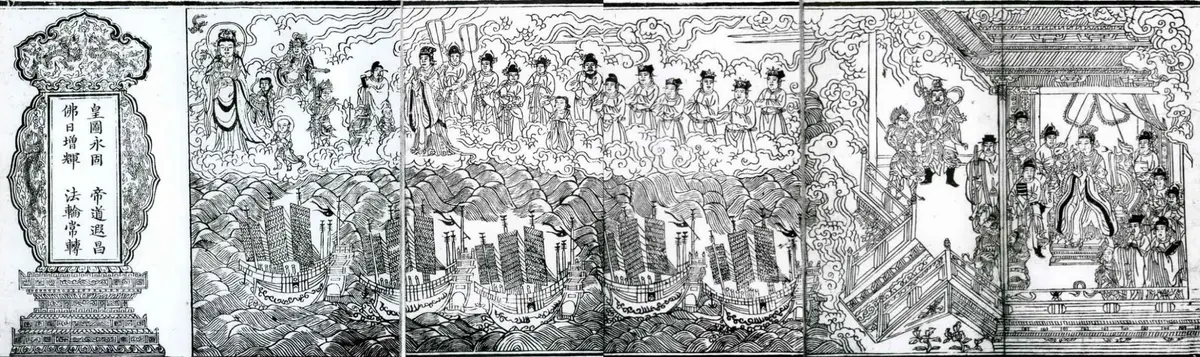
Zheng He
“The Muslim eunuch admiral of Ming China who led seven great treasure fleets across the Indian Ocean to Arabia and East Africa between 1405 and 1433, decades before the Portuguese.”
Zheng He was the admiral of Ming China's 'treasure fleets', the greatest navy the world had yet seen. Between 1405 and 1433 he led seven voyages for the Yongle emperor and his grandson across the South China Sea and the Indian Ocean: to Java, Sumatra and Malacca, to Ceylon and the pepper port of Calicut in India, to Hormuz on the Persian Gulf, to Aden in Arabia, and to Mogadishu and Malindi on the coast of East Africa. The largest fleets had more than two hundred ships and some 27,000 men, most of them soldiers. Their task was diplomacy backed by force: to show the power of the new dynasty, to make the rulers of the ocean ports send tribute to the emperor, and to bring back their envoys, jewels, spices and animals no one in China had seen. He reached India almost a century before the Portuguese.
He was born about 1371 as Ma He, in a Muslim family of Kunyang near Kunming in Yunnan, then the last corner of China still held for the Mongols. His father and grandfather had made the pilgrimage to Mecca, and the family claimed descent from an early Mongol governor of Yunnan. When Ming armies conquered Yunnan in 1381 the boy, about ten years old, was captured, castrated and sent into the army as an orderly. He came into the household of Zhu Di, the Prince of Yan, who guarded the northern frontier from Beiping, today's Beijing, and grew up a soldier: tall, imposing, educated and trusted. He fought for the prince in the civil war of 1399 to 1402, which ended with Zhu Di taking Nanjing and the throne as the Yongle emperor, and the new emperor gave him the surname Zheng and made him a grand eunuch of the palace.
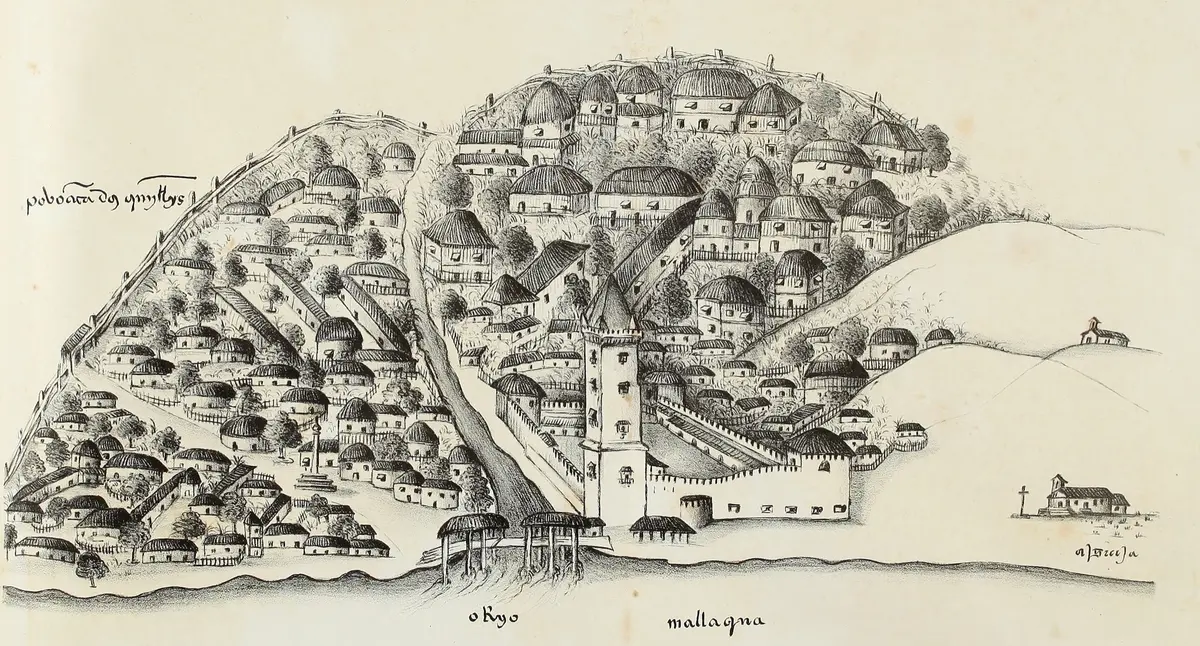
Yongle, a usurper anxious to prove his right to rule, sent armies into Vietnam and fleets into the 'Western Ocean', and chose Zheng He to command them. The first fleet sailed in 1405 and came home in 1407 with the Chinese pirate chief Chen Zuyi, captured at Palembang, the 'Old Port' of Sumatra, after a battle in which thousands of his men were killed. The fleets fought again in Ceylon, whose king Zheng He took prisoner in 1411, and in northern Sumatra in 1415. At Malacca, a new port whose ruler the Ming had recognised as a king, they kept a walled depot. From the fourth voyage of 1413 to 1415 they sailed on to Hormuz, and from the fifth to Arabia and East Africa; envoys came back with lions, zebras, ostriches and giraffes, which the court hailed as the qilin, the beast of good omen. Ma Huan, a Muslim interpreter who sailed with him from 1413, wrote the best account of the lands they saw.
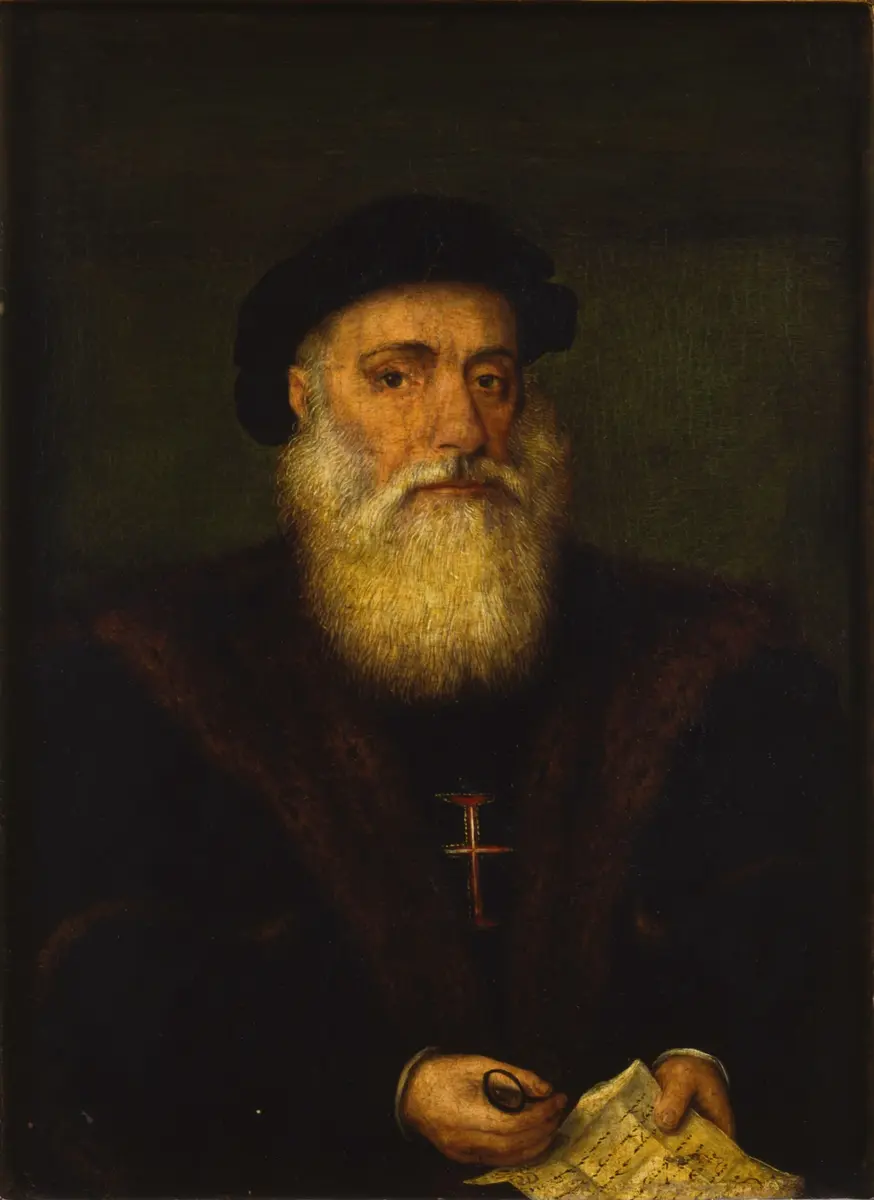
The voyages ended with the emperor who had launched them. Yongle died in 1424, his son the Hongxi emperor stopped the expeditions, and Zheng He was made commander of the garrison at Nanjing. In 1430 the Xuande emperor sent him out once more to announce his reign to some twenty countries. The seventh fleet left in 1431 and reached Calicut and Hormuz, while a detachment went on to Jidda, the port of Mecca. Zheng He, now about sixty, died in 1433 on the way home, probably at Calicut, and may have been buried at sea; his tomb outside Nanjing holds only his clothes. Scholar-officials had always opposed the voyages as a eunuch extravagance, the court never sent another, and in 1477 an official of the Ministry of War kept the records from being used again. Sixty-five years after his death the Portuguese reached Calicut, and in 1511 they took Malacca.
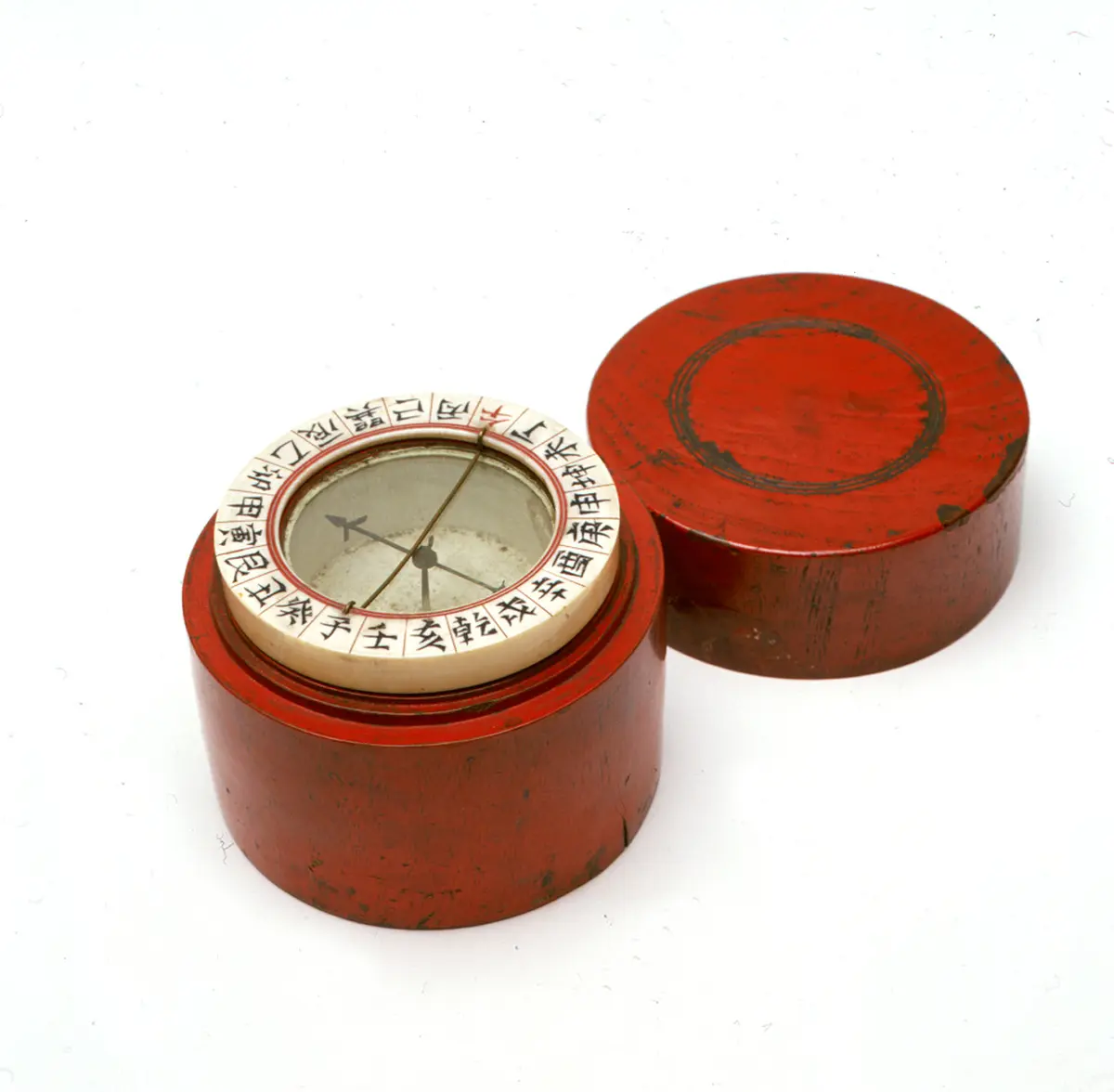
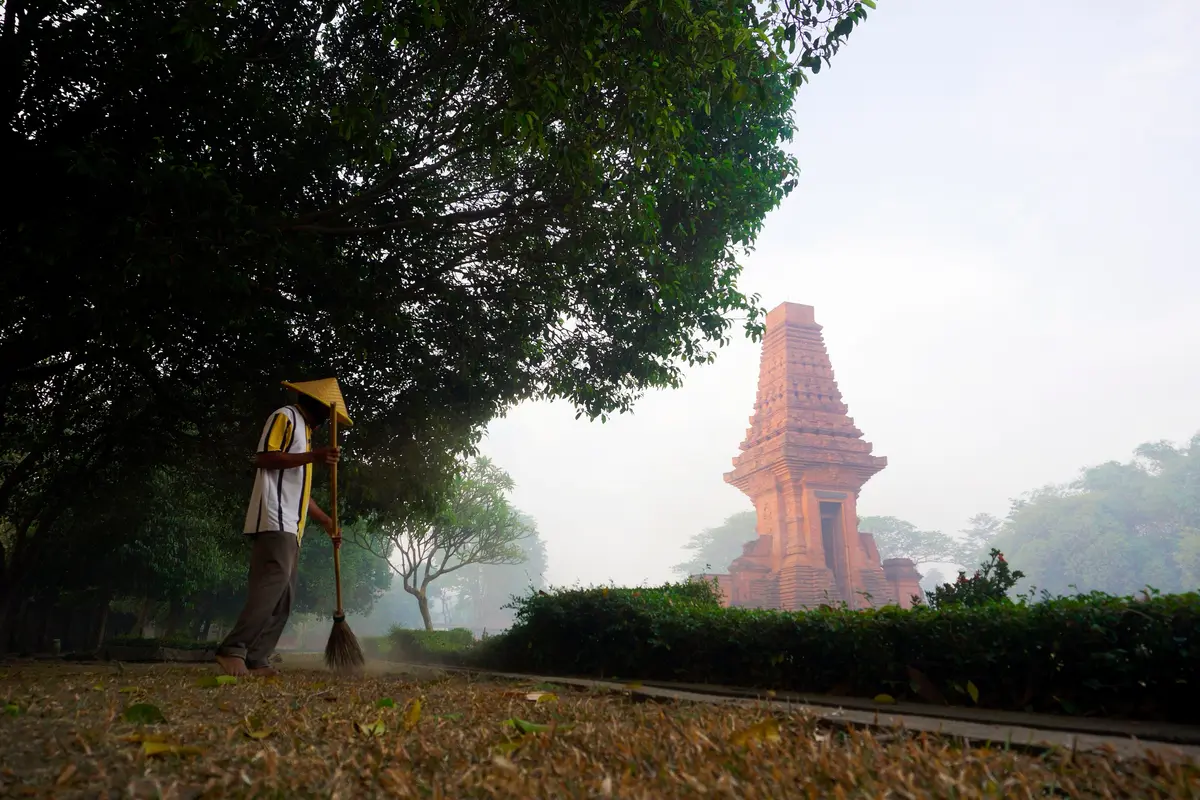
For centuries Zheng He was half forgotten in China, while in Southeast Asia he became a figure of worship: at the cave shrine of Sam Poo Kong in Semarang, Chinese and Javanese Indonesians still honour him as Sam Poo, and Malacca's Chinese see his visits as the beginning of their community. Since the reformer Liang Qichao revived his memory in 1904 he has been a Chinese national hero, presented today as an envoy of peace and friendship. Historians such as Geoff Wade answer that his fleets practised 'gunboat diplomacy', armed missions sent to make the ports of the Indian Ocean acknowledge the Ming. Either way they showed what Chinese ships and navigators could do: the charts of their routes, with compass bearings and the heights of the guiding stars, survive in a military encyclopaedia of the 1620s, the Wubei zhi. The story that one of his fleets discovered America in 1421 has no basis in any source.
What happened
- 1371
Born about this year as Ma He, in a Muslim family of Kunyang near Kunming in Yunnan; his father and grandfather are hajjis, men who have made the pilgrimage to Mecca.
Kunyang, Yunnan: his birthplace, where his father's tomb and the stele of 1405 stand on Moon Hill - 1381
Ming armies conquer Yunnan, the last Mongol stronghold in China. The boy, about ten, is captured, castrated and sent into the army as an orderly; he comes into the household of Zhu Di, the Prince of Yan, at Beiping (Beijing), and by 1390 is a junior officer under him.
- 1402
After a civil war begun in August 1399, in which Ma He fights for him, the Prince of Yan takes Nanjing and four days later the throne, as the Yongle emperor.
- 1403
The new emperor orders the Fujian military command to build 137 ocean-going ships, and other units almost 400 more; the largest ships of the fleets will be built at the treasure-ship yard beside the Yangtze at Nanjing, where one of their rudder posts was dug up in 2004.
The treasure-ship yard at Nanjing, on the Yangtze: where the fleets were built and from where they set out - 1404
Yongle gives his eunuch the surname Zheng for his service in the war; Ma He becomes Zheng He, a grand eunuch of the palace.
- 1405
He has an epitaph composed for his father, who died in the Ming conquest, and carved on a stele at the family tomb in Kunyang.
Kunyang, Yunnan: his birthplace, where his father's tomb and the stele of 1405 stand on Moon HillThe emperor sends 'the eunuch Zheng He and others' with gifts of silk to the kings of the Western Ocean: the first voyage, of some 27,800 men, sails that year for Champa, Java, Sumatra, Ceylon and Calicut.
The treasure-ship yard at Nanjing, on the Yangtze: where the fleets were built and from where they set out- 1407
He returns with the pirate Chen Zuyi in fetters. At Palembang, the 'Old Port' of Sumatra, Chen had feigned surrender and then attacked; the fleet killed over 5,000 of his men, burnt ten ships and took seven. Chen is beheaded in Nanjing.
A new temple of Tianfei, the goddess of seafarers, is dedicated at Longjiang by the shipyard, because Zheng He has reported that the spirits were 'greatly responsive and helpful' on his voyage to Calicut and Malacca.
The treasure-ship yard at Nanjing, on the Yangtze: where the fleets were built and from where they set outThe envoy of Java's western king admits at court that his troops, fighting Majapahit's eastern king, killed 170 of the fleet's men who had gone ashore to trade; the emperor demands 60,000 liang of gold.
- 1408
He is sent out again with brocades for the kings of Calicut, Malacca, Samudera, Aru, Java, Siam, Champa, Cochin and five more countries; like the first fleet it also carries porcelain, silk, tea and iron to trade. It sails in 1409.
- 1409
The date carved on the trilingual stele the fleet sets up at Galle in Ceylon, recording gifts to the Buddha, to a Hindu god and to the saints of Islam.
- 1411
He comes back with Alagakkonara, king of Ceylon, and his family as prisoners. The king had demanded gold and sent troops against the ships; Zheng He took his capital by surprise with 2,000 men. The emperor spares the king and has another ruler chosen.
Parameswara, king of Malacca, comes to court in person and is banqueted. The Ming had recognised him as a king in 1405, and his port holds the fleets' walled depot on the Strait.
Malacca: the port the Ming raised to a kingdom, where the fleets kept their walled depot- 1412
He is sent to Malacca, Java, Samudera, Calicut and on to Hormuz on the Persian Gulf, the first fleet to sail so far; the interpreter Ma Huan goes with him.
- 1414
Envoys of the king of Bengal present a giraffe at court; it is greeted as the qilin, the beast of good omen, and the court painter Shen Du paints it.
- 1415
Home since August, he presents Sekandar (Su-gan-la), who had tried to seize the throne of Samudera in Sumatra and attacked the fleet; he was caught in Lambri and is executed.
- 1416
He is sent home with the envoys of eighteen countries, from Calicut and Malacca to Hormuz, Aden, Mogadishu, Brava and Malindi: the fleet that sails in 1417 reaches East Africa.
- 1419
The fifth fleet comes back with Hormuz's lions and leopards, a giraffe from Aden, zebras from Mogadishu and ostriches from Brava.
- 1421
He sails with the envoys of sixteen countries going home; he is back on 3 September 1422 with envoys of Siam, Samudera and Aden.
- 1424
He is sent to Palembang with a silver seal for its new Chinese superintendent: a short eighth mission.
The Yongle emperor dies on campaign in Mongolia; his son, the Hongxi emperor, suspends the voyages.
- 1425
His troops are ordered to guard Nanjing, and he becomes commander of the old capital's garrison; in October he asks for gold leaf to restore its palace.
The treasure-ship yard at Nanjing, on the Yangtze: where the fleets were built and from where they set out- 1428
The Xuande emperor puts him in charge of finishing the great Bao'en temple at Nanjing with its Porcelain Tower, completed in 1431.
- 1430
Xuande sends Zheng He and Wang Jinghong with a proclamation of his reign to some twenty countries, from Malacca and Calicut to Hormuz, Aden and Mogadishu: the seventh voyage.
- 1431
The last fleet leaves Nanjing. At Liujiagang and at Changle in Fujian, where it gathers before crossing the sea, he and his officers set up steles to the goddess Tianfei that list all seven voyages.
- 1432
The fleet reaches Calicut; three days later it sails for Hormuz, which it reaches on 16 January 1433, while ships go on to Jidda, the port of Mecca.
Calicut (Kozhikode): the pepper port his fleets came back to again and again, where he probably died in 1433- 1433
Zheng He dies on the voyage home, probably at Calicut in the spring, and may have been buried at sea; his tomb on Niushou Hill outside Nanjing holds only his cap and clothes.
Calicut (Kozhikode): the pepper port his fleets came back to again and again, where he probably died in 1433His deputy Wang Jinghong brings the fleet home and reports at court. No treasure fleet sails again.