Bitcoin goes live
“On 3 January 2009 the unknown 'Satoshi Nakamoto' started Bitcoin, money kept on a shared public ledger instead of by a bank; by 2017 it had gone from pizza money and Silk Road to Wall Street futures.”
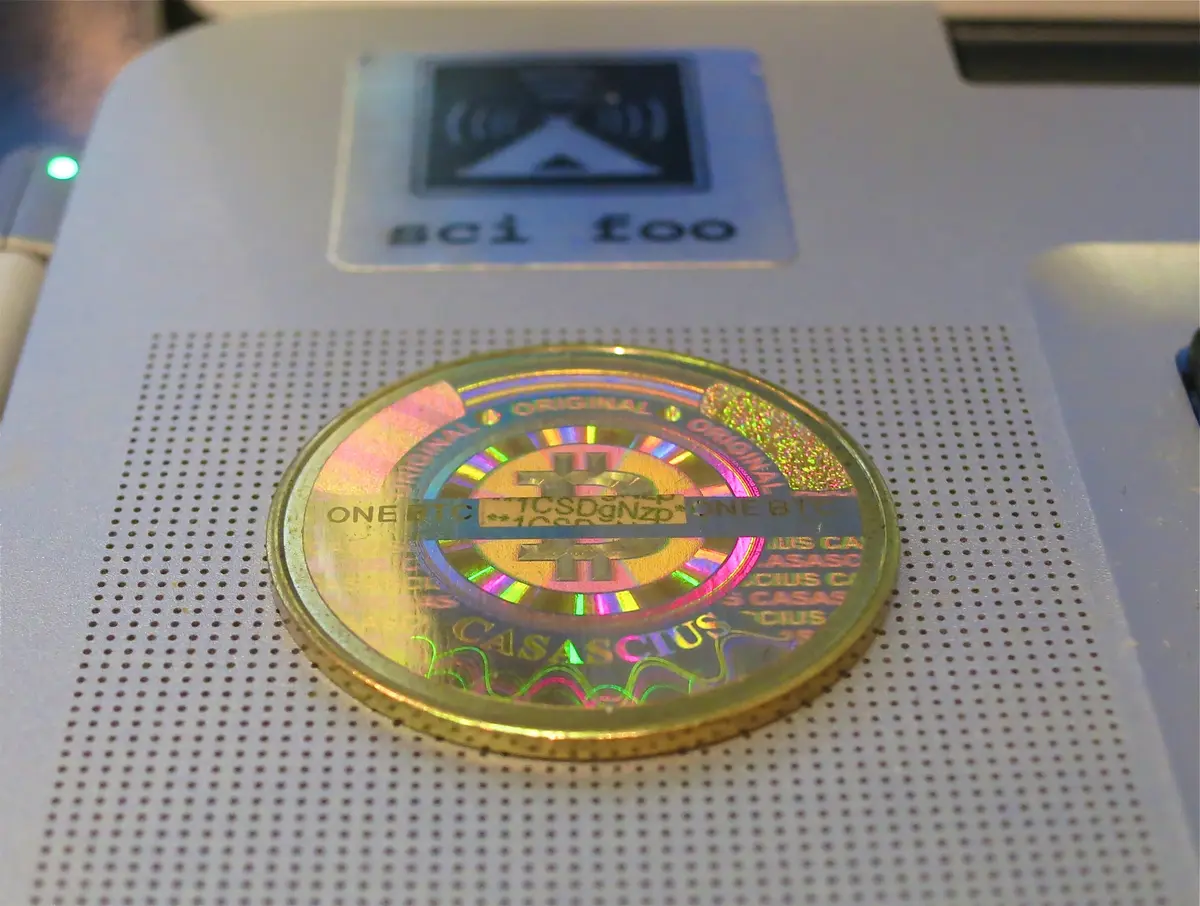
Bitcoin is the first digital money that works without a bank, a company or a government in the middle. On 31 October 2008, six weeks after the fall of Lehman Brothers, an unknown programmer who called himself Satoshi Nakamoto posted a nine-page paper to a cryptography mailing list: 'Bitcoin: A Peer-to-Peer Electronic Cash System'. On 3 January 2009 he created the system's first block of records, and inside it he wrote the front-page headline of that day's Times of London: 'Chancellor on brink of second bailout for banks'. He released the software on 8 January, and on 12 January he sent ten bitcoins to Hal Finney, an American cryptographer, in the first transaction between two people.
The idea solved an old problem of digital cash: how to stop someone from spending the same coin twice without a bank keeping the books. In Bitcoin every computer in the network keeps a copy of one shared ledger. Payments are collected into blocks, and each block is sealed to the one before it with a cryptographic fingerprint, forming a chain, the 'blockchain'. To add a block, computers called miners race to solve a puzzle that takes a great deal of computing work; the winner is paid in new bitcoins. The reward halves about every four years, so no more than 21 million bitcoins can ever exist. The Bank of England called this shared 'distributed ledger' a genuine technological innovation in 2014.
At first bitcoins were worth almost nothing. In May 2010 Laszlo Hanyecz, a forum user in Jacksonville, Florida, paid 10,000 of them for two pizzas, the first well-known purchase of real goods. Nakamoto wrote his last forum post in December 2010 and his last known emails in April 2011, saying he had 'moved on to other things' and leaving the project to other developers led by Gavin Andresen. Who he was is still unknown; one analysis credits him with about a million early coins that have never been spent. The price swung wildly: about $30 in June 2011, under $3 by the end of that year, more than $1,100 in December 2013.
Bitcoin's anonymity also served crime. Silk Road, a hidden website opened in January 2011, used it to sell illegal drugs to more than 100,000 buyers until the FBI arrested its founder, Ross Ulbricht, in San Francisco in October 2013; he was sentenced to life in prison in 2015 and pardoned by President Trump in January 2025. In February 2014 Mt. Gox, a Tokyo exchange and one of the largest in the world, collapsed after reporting about 850,000 bitcoins missing. Governments began to fit the new money into old rules: the United States treated exchanges as money transmitters from 2013 and bitcoin as a commodity from 2015. Mining also uses a great deal of electricity: an estimated 0.14 percent of the world's supply in late 2017, and today, by the University of Cambridge's estimate, roughly 160 terawatt-hours a year.
By the end of 2017 bitcoin had reached Wall Street. Its price rose from about $1,000 at the start of the year to nearly $20,000 in mid-December, and on 18 December CME Group's Chicago Mercantile Exchange began trading bitcoin futures under the eye of the US regulator. The boom was followed by crashes and new highs, by many imitations, and in January 2024 by funds traded on American stock exchanges, approved by a regulator whose chairman still called bitcoin 'primarily a speculative, volatile asset'. To its supporters bitcoin is digital gold that no state controls; to many central banks and critics it is a costly bet with little use as money. Either way, it showed that strangers could keep a trusted shared record with no one in charge, an idea that spread far beyond money.
What happened
- 2008
- 2:10 p.m.
At 14:10 New York time, 'Satoshi Nakamoto' posts 'Bitcoin P2P e-cash paper' to the Cryptography Mailing List: 'a new electronic cash system that's fully peer-to-peer, with no trusted third party', with a link to the paper at bitcoin.org.
- 2009
- 6:15 p.m.
At 18:15 UTC by its own timestamp, the genesis block, block 0, is created. Its coinbase carries the day's Times headline: 'Chancellor on brink of second bailout for banks'.
- 2:27 p.m.
Nakamoto announces 'Bitcoin v0.1 released' on the same list: Windows-only, open-source software, a total of 21 million coins, the reward halving every four years.
- 2:54 a.m.
Block 1 is mined, six days after the genesis block: from now on new blocks follow one another and the network runs.
- 9:22 p.m.
Hal Finney, a cryptographer and veteran of PGP, replies on the list, congratulating Satoshi on the first alpha release and asking how such a currency could ever be valued.
- 3:30 a.m.
Block 170 records the first transaction between two people: Satoshi sends ten bitcoins to Hal Finney as a test.
- 2010
Laszlo Hanyecz, a forum user in Jacksonville, Florida, offers on the Bitcoin forum to pay 10,000 bitcoins for two large pizzas; another user values the coins at about $41.
Jacksonville, Florida: Laszlo Hanyecz's pizzas, bought for 10,000 bitcoins on 22 May 2010Hanyecz reports that he has 'successfully traded 10,000 bitcoins for pizza' and posts photographs of the two pizzas: the first famous purchase of goods with bitcoin.
Jacksonville, Florida: Laszlo Hanyecz's pizzas, bought for 10,000 bitcoins on 22 May 2010- 11:48 p.m.
A bug lets a block create two outputs of 92 billion bitcoins each. Within hours Satoshi publishes version 0.3.10, and the honest chain overtakes and replaces the bad one.
When forum users urge WikiLeaks, cut off by payment companies, to take bitcoin, Satoshi appeals to it not to: 'Bitcoin is a small beta community in its infancy.'
- 6:22 p.m.
Satoshi's last post on the Bitcoin forum, about version 0.3.19 and new limits against denial-of-service attacks.
- 2011
Ross Ulbricht creates Silk Road, a hidden website on the Tor network for drugs and other illegal goods, paid in bitcoin; on 27 January a tax agent finds a forum post about it.
In his last known email to the developer Mike Hearn, Satoshi writes that he has 'moved on to other things' and that Bitcoin is 'in good hands with Gavin and everyone'.
Bitcoin's first big bubble peaks at about $30; by the end of the year it is below $3.
- 2012
- 3:24 p.m.
Block 210,000: the first halving cuts the miners' reward from 50 to 25 new bitcoins a block.
- 2013
The US Treasury's FinCEN rules that businesses that run or exchange virtual currencies are money transmitters, subject to anti-money-laundering law; ordinary users are not.
The FBI arrests Ross Ulbricht, 'Dread Pirate Roberts', in San Francisco and seizes his laptop; Silk Road is shut down.
San Francisco: the FBI arrests Silk Road's founder, Ross Ulbricht, on 1 October 2013Visitors to Silk Road find a government notice in its place: 'This hidden site has been seized'.
Prosecutors announce the seizure of 144,336 more bitcoins from Ulbricht's computers, 173,991 in all, worth over $33.6 million: the largest bitcoin seizure to date.
- 3:02 p.m.
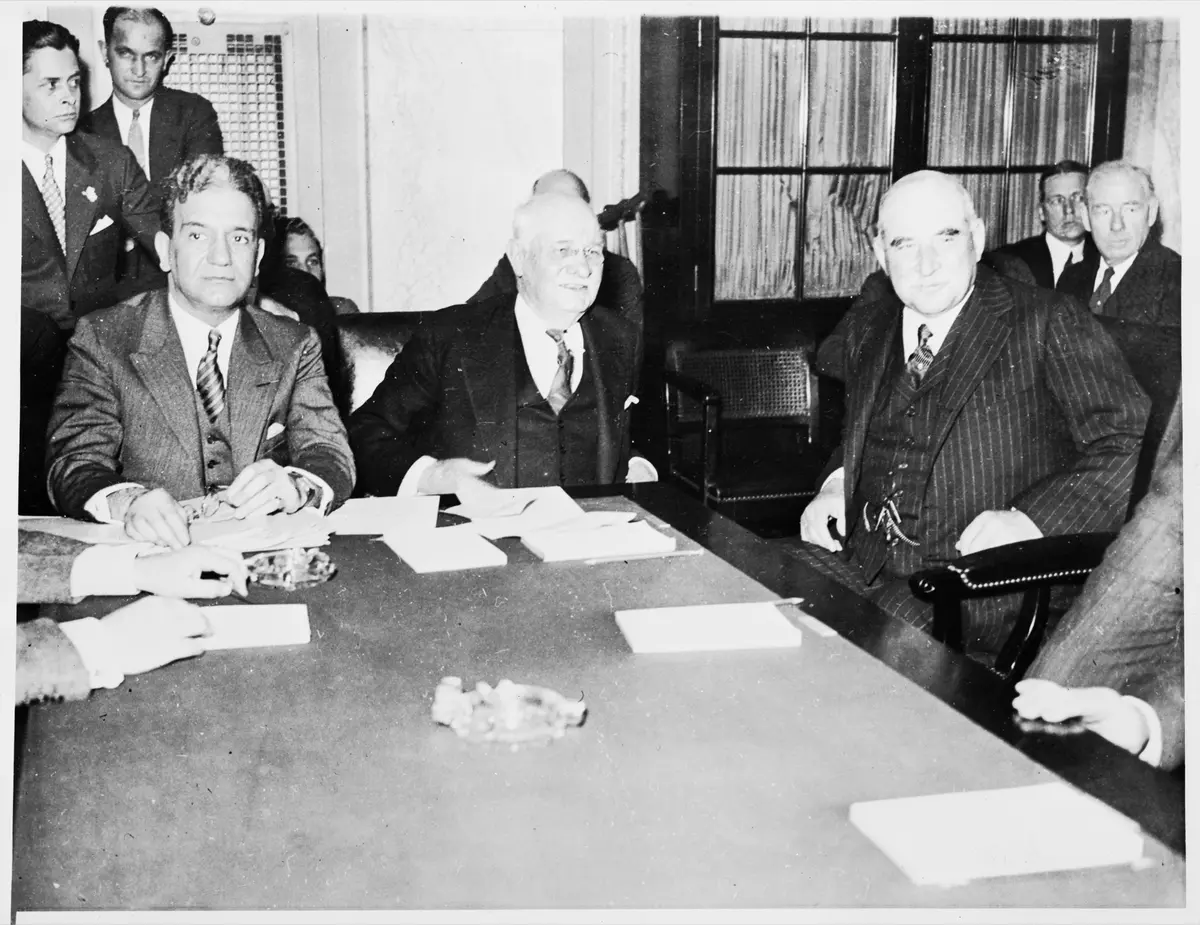
The Senate's homeland security committee holds 'Beyond Silk Road', its hearing on virtual currencies; the Justice Department testifies that they 'can be a legal means of exchange'.
Dirksen Senate Office Building, Washington: the Senate's first hearing on virtual currencies, 18 November 2013 Bitcoin passes $1,100, and companies begin building computers made only for mining it.
- 2014
Kolin Burges, a trader who has flown in from London, begins picketing Mt. Gox's office building in Tokyo, trying to recover the $320,000 he says he has tied up in the exchange.
Mt. Gox's office, Cross Office Shibuya Medio, Shibuya 2-11-5, Tokyo: the exchange closed its site on 25 February 2014- 12:00 p.m.
At noon Tokyo time Mt. Gox closes its website, after finding that a large number of bitcoins and about ¥2.8 billion of customers' cash are missing.
Mt. Gox's office, Cross Office Shibuya Medio, Shibuya 2-11-5, Tokyo: the exchange closed its site on 25 February 2014 Mt. Gox applies to the Tokyo District Court for civil rehabilitation, saying about 750,000 of its users' bitcoins and 100,000 of its own have disappeared.
Tokyo District Court: Mt. Gox applies for civil rehabilitation, 28 February 2014The Bank of England's Quarterly Bulletin judges that digital currencies are money for only a few people and no threat to stability, but calls their distributed ledger a genuine technological innovation.
The Bank of England, City of London: its 2014 Quarterly Bulletin on digital currencies- 2015
A jury in Manhattan federal court convicts Ulbricht on all seven counts, among them drug trafficking, computer hacking and money laundering.
Ulbricht is sentenced to life in prison and ordered to forfeit $183,961,921; prosecutors link drugs bought on Silk Road to at least six deaths.
In its order against the options platform Coinflip, the Commodity Futures Trading Commission holds for the first time that bitcoin is a commodity.
- 2016
- 4:46 p.m.
Block 420,000: the second halving cuts the reward to 12.5 bitcoins, while industrial mining farms take over the work.
- 2017
The Securities and Exchange Commission refuses to let the Winklevoss Bitcoin Trust be listed as an exchange-traded fund, finding the proposal not designed to prevent fraud and manipulation in a largely unregulated bitcoin market.
Nine years to the day after the white paper, CME Group, which calls itself the world's leading derivatives marketplace, announces it will launch bitcoin futures.
Chicago Mercantile Exchange Center, 20 South Wacker Drive, Chicago: CME's bitcoin futures begin on 18 December 2017CME and the CBOE Futures Exchange self-certify bitcoin futures; the CFTC lets them proceed but warns of high volatility and largely unregulated cash markets.
On the Coinbase exchange one bitcoin reaches $19,650.01, its high for the year; it had started 2017 under $1,000.
Bitcoin futures begin trading on the Chicago Mercantile Exchange, with a 35 percent margin: the coin made for a world without banks now trades on a regulated American futures exchange.
Chicago Mercantile Exchange Center, 20 South Wacker Drive, Chicago: CME's bitcoin futures begin on 18 December 2017