The gold standard
“From 1821 to 1931 money was a fixed weight of gold: Britain led, most of the world joined by 1900, the First World War broke it and Britain left it for good on 21 September 1931.”
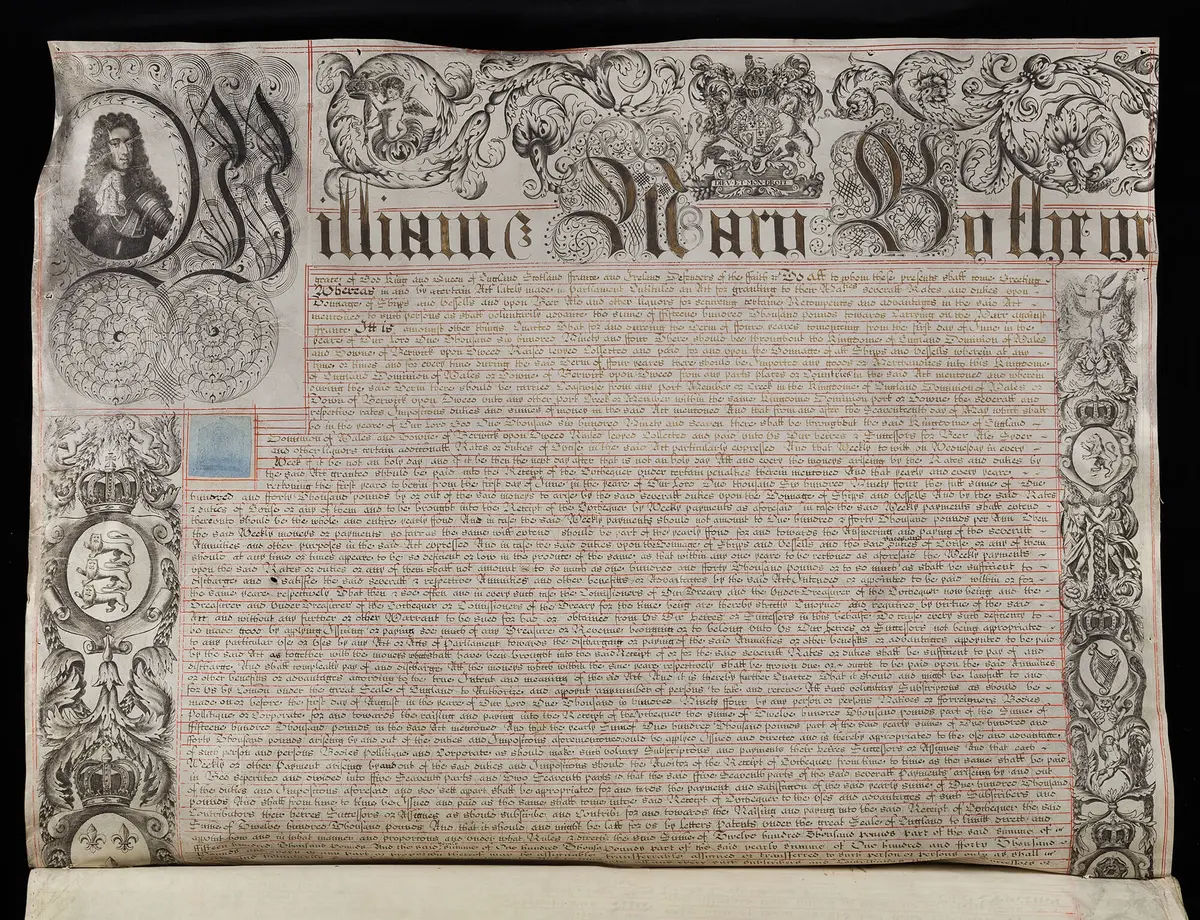
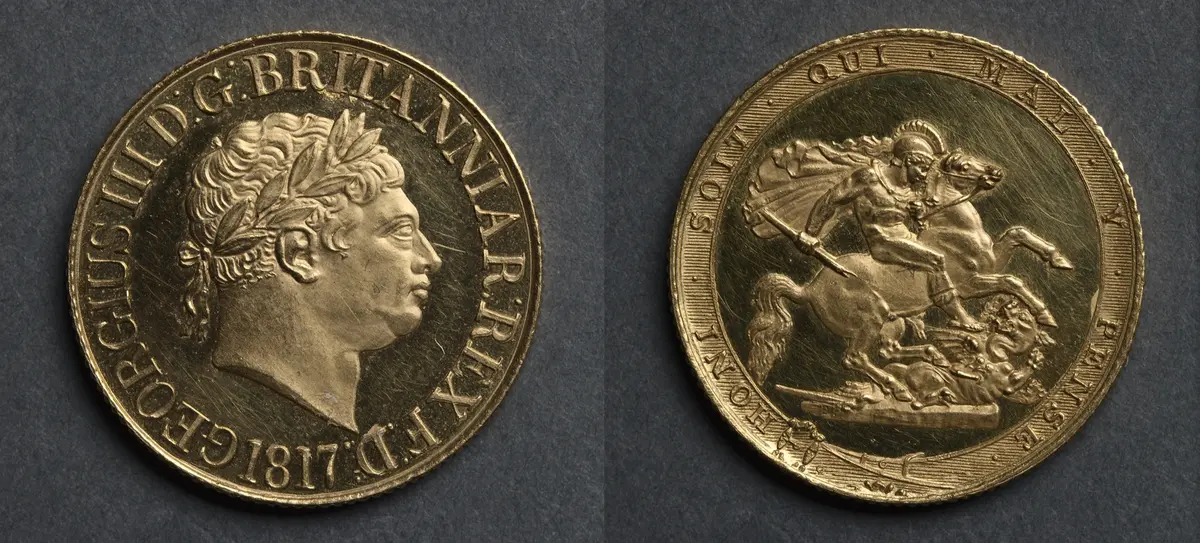
The gold standard was a way of running money in which a country's currency was, by law, a fixed weight of gold. Anyone could take banknotes to the central bank and get gold coin or bars at a fixed price, and gold could be shipped freely in and out of the country. Britain led. During the wars against Napoleon the Bank of England had stopped paying its notes in gold (1797); a law of 1816 then made gold the only standard of British money, and a new gold pound coin, the sovereign, went into circulation in 1817. In 1821 the Bank began paying its notes in gold coin again. From then until 1931, apart from the years of the First World War, an ounce of standard gold was worth £3 17s 10½d at the Mint, and because the dollar was also a fixed weight of gold, a pound was always worth about 4.87 dollars.
For half a century most other countries still used silver, or silver and gold together. The great change came in the 1870s. The new German Empire, using the gold of the indemnity France paid after the war of 1870–71, created a gold mark by laws of 4 December 1871 and 9 July 1873. Scandinavia and the Netherlands followed; France and its partners in the Latin Monetary Union stopped minting silver five-franc coins in 1878; and the United States dropped the silver dollar in 1873 and made its Civil War paper money convertible into gold from January 1879. As the price of silver fell, so did prices in general, and indebted farmers blamed gold: in Chicago on 9 July 1896 William Jennings Bryan told the Democratic convention that mankind must not be crucified 'upon a cross of gold'. He lost the election, and the Gold Standard Act of 14 March 1900 fixed the dollar to gold in law. Japan (1897), Russia (1897) and India (1898) joined, and by the early 1900s most of the trading world was on gold, with London at its centre. The Bank of England ran the system with a small gold reserve, raising its interest rate to pull gold in, and in the Baring crisis of 1890 it borrowed gold from the Banque de France.
The First World War broke the system. In August 1914 the warring countries stopped paying out gold in practice, banned its export and printed paper money; Britain issued Treasury notes for £1 and 10 shillings. After the war governments wanted the old order back. The United States restored convertibility at the pre-war price in 1922, and on 28 April 1925 the Chancellor of the Exchequer, Winston Churchill, announced that Britain would return to gold at the old rate of $4.86. The pound was now overvalued by about ten per cent; John Maynard Keynes warned that wages, starting with the miners', would have to be forced down. France came back in 1928 at a much lower value of the franc. But the new system was weaker: most countries held their reserves partly in pounds and dollars instead of gold, and the gold itself was badly spread, with the United States holding over a third of the world's official stock.
When the Great Depression came, the gold standard carried it from country to country, because a country losing gold had to raise interest rates and cut credit just when its economy was falling. In May 1931 Austria's largest bank failed, in July Germany's banks broke and Germany imposed exchange controls, and money then ran out of London. On Sunday 20 September 1931 the British government announced that the Bank of England would stop selling gold, and on 21 September Parliament passed the law in a single day. By December the pound had fallen from $4.86 to about $3.37. The United States left gold in 1933, and France and the other countries of the 'gold bloc' in 1936.
The gold standard gave the world's trade nearly forty years of fixed exchange rates and is remembered as an age of stable money, but its end is remembered too: countries that left gold early tended to recover from the Depression sooner. After the Second World War the Bretton Woods agreement kept a link to gold through the US dollar, fixed at $35 an ounce, until President Nixon closed the gold window in 1971. Some politicians still call for a return to gold; most economists, and central banks, see the interwar years as the warning.
What happened
- 1821
The Bank of England is allowed from today to pay its notes in gold coin, two years ahead of the date set by Peel's Act of 1819; it resumes cash payments in 1821 and stops issuing £1 notes, so the gold sovereign becomes Britain's everyday pound.
Bank of England, Threadneedle Street, London: the gold reserve behind the pound; paid its notes in gold again from 1821, rescued Barings in 1890 and stopped selling gold on 20 September 1931- 1844
The Bank Charter Act ties the Bank of England's notes to its gold: beyond a fixed £14 million, every note must be backed by gold, and from 31 August anyone may bring standard gold to the Bank and receive notes at £3 17s 9d an ounce.
Bank of England, Threadneedle Street, London: the gold reserve behind the pound; paid its notes in gold again from 1821, rescued Barings in 1890 and stopped selling gold on 20 September 1931- 1871
At Berlin, Emperor Wilhelm I and Bismarck sign the law creating an imperial gold coin, 139½ pieces to the pound of pure gold, whose tenth part is named the mark; the new Germany is moving from silver to gold.
Berlin: the imperial gold-coinage law of 4 December 1871 and the mint law of 9 July 1873- 1873
The United States Coinage Act becomes law. It drops the silver dollar from the coins the Mint will strike for anyone who brings metal, leaving gold as the standard; silver's supporters later call it 'the Crime of '73'.
The White House, Washington: the Coinage Act of 1873 and the Gold Standard Act of 1900 became lawGermany's mint law replaces the currencies of the German states with the imperial gold coinage, with the mark as its unit; by October 1876 the Empire has coined 1,425 million marks in gold.
Berlin: the imperial gold-coinage law of 4 December 1871 and the mint law of 9 July 1873- 1878
The Latin Monetary Union of France, Belgium, Switzerland, Italy and Greece suspends the minting of silver five-franc coins, putting its members on a 'limping' gold standard in which the old silver coins still circulate.
- 1879
On the first business day under the Resumption Act, the Treasury begins paying gold for the greenbacks of the Civil War. Hardly anyone wants it: in New York more gold is paid in than taken out, and the Gold Room has nothing left to trade.
Federal Hall (the US Sub-Treasury), Wall Street, New York: resumption of gold payments, 2 January 1879- 1890
The Bank of England announces the rescue of Baring Brothers, ruined by Argentine loans: a £17.1 million guarantee fund of the London banks, made possible by £3 million of gold from the Banque de France and £1.5 million from Russia that refilled the Bank's reserve.
Bank of England, Threadneedle Street, London: the gold reserve behind the pound; paid its notes in gold again from 1821, rescued Barings in 1890 and stopped selling gold on 20 September 1931- 1896
In the morning session of the Democratic convention in Chicago, William Jennings Bryan closes his speech for free silver: 'you shall not crucify mankind upon a cross of gold.' The hall erupts and he is nominated for President the next day; in November the gold candidate, William McKinley, wins.
Chicago: Bryan's 'Cross of Gold' speech to the Democratic convention, 9 July 1896- 1897
Russia completes Sergei Witte's currency reform: the ruble is fixed at 0.77 grams of fine gold and the State Bank starts exchanging paper rubles for gold coin.
Japan promulgates its Coinage Law, passed by both houses of the Diet without amendment: the yen becomes a weight of gold, paid for with the indemnity China owed after the war of 1894–95, which Japan took in pounds sterling.
Japan's gold standard comes into operation and the silver yen begins to be withdrawn.
Bank of Japan head office, Tokyo: Japan's gold standard from 1 October 1897- 1900
President McKinley's Gold Standard Act makes the gold dollar of 25.8 grains, nine-tenths fine, the standard unit of value of the United States.
The White House, Washington: the Coinage Act of 1873 and the Gold Standard Act of 1900 became law- 1914
A day after the Currency and Bank Notes Act, the Treasury issues £1 notes, 10-shilling notes following on 14 August. Britain never legally suspends gold payments, but the war ends the gold standard in practice everywhere: gold is held back, exports are stopped and paper money takes over.
Bank of England, Threadneedle Street, London: the gold reserve behind the pound; paid its notes in gold again from 1821, rescued Barings in 1890 and stopped selling gold on 20 September 1931- 1922
The Genoa economic conference opens. Its financial experts back a return to gold and urge countries to save gold by holding part of their reserves in pounds and dollars, the 'gold-exchange standard' of the 1920s.
Palazzo San Giorgio, Genoa: the Genoa conference of April–May 1922- 1925
- 4:30 p.m.
In his Budget speech Winston Churchill tells the House of Commons that the Bank of England may export gold from today: 'We thus resume our international position as a gold standard country.' The pound returns to its pre-war $4.86, backed by $300 million of American credits; there will be no gold coins, only bars of 400 ounces.
Palace of Westminster, London: Churchill's return to gold, 28 April 1925, and the Gold Standard (Amendment) Act, 21 September 1931 - 1928
France's Monetary Law restores the franc's convertibility into gold, at a far lower gold value than before the war; with all four core countries back on gold, the interwar standard is at its height.
- 1931
A run on Austria's largest bank, the Creditanstalt, brings it down and spreads the panic to Germany.
Germany's banking crisis forces it to impose exchange controls, which take it off gold; from mid-July money starts to flee London.
On a Sunday the Treasury announces that the Bank of England will stop selling gold at a fixed price: more than £200 million has been withdrawn from London since mid-July, and the Bank's gold is down to some £130 million.
Bank of England, Threadneedle Street, London: the gold reserve behind the pound; paid its notes in gold again from 1821, rescued Barings in 1890 and stopped selling gold on 20 September 1931Parliament passes the Gold Standard (Amendment) Act through all its stages in one day and it receives the Royal Assent. Britain is off gold; by December the pound is worth $3.37 and many countries follow it.
Palace of Westminster, London: Churchill's return to gold, 28 April 1925, and the Gold Standard (Amendment) Act, 21 September 1931