Brahmagupta treats zero as a number
“In 628 the Indian astronomer Brahmagupta wrote the first known rules for zero as a number, with 'fortunes' and 'debts'; through Baghdad, India's 0–9 became our 'Arabic' numerals.”
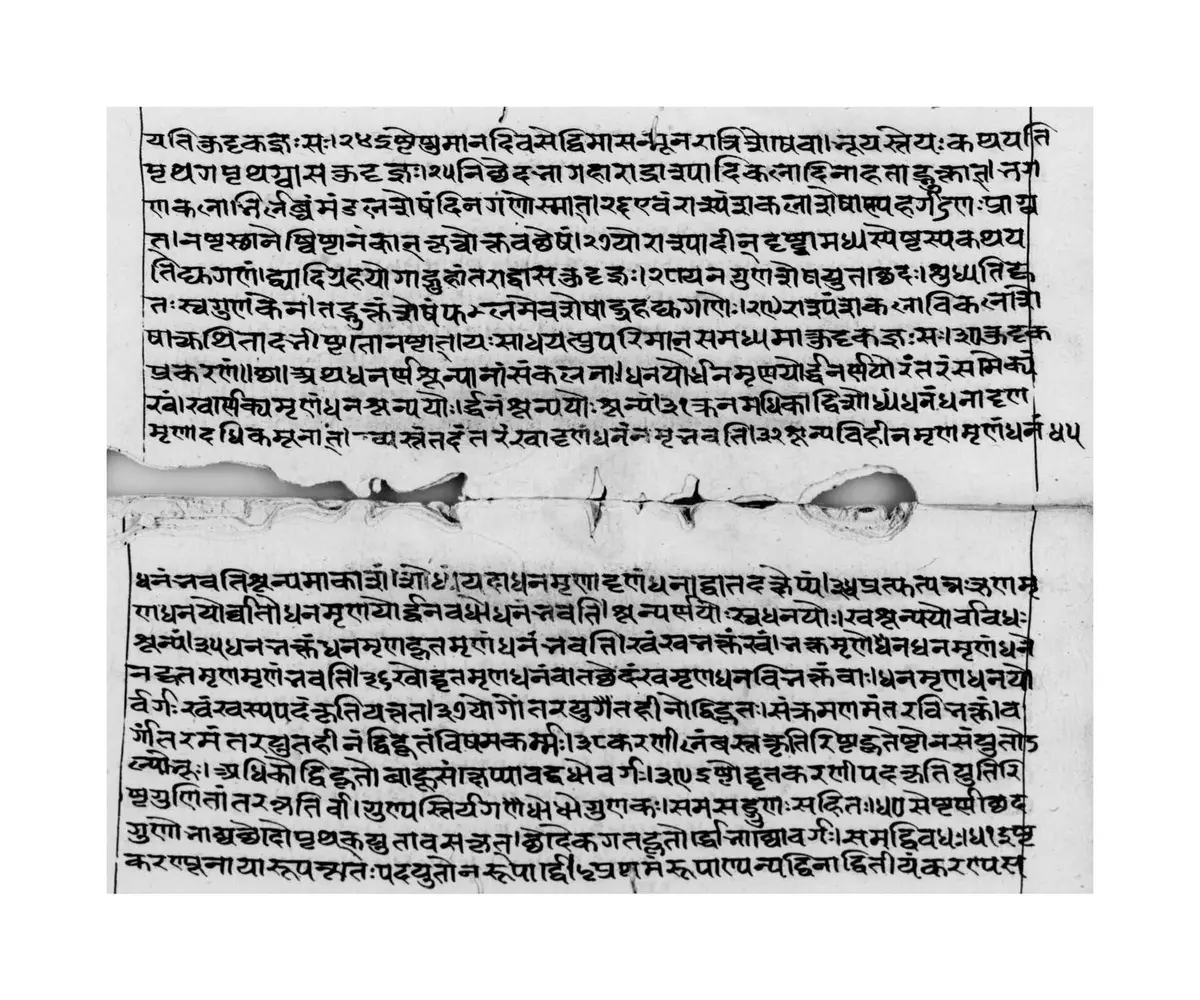
In 628 an Indian astronomer of thirty named Brahmagupta finished a long book in Sanskrit verse at Bhillamala, today Bhinmal in Rajasthan, the capital of a Gurjara king called Vyaghramukha. He called it the Brahmasphutasiddhanta, 'the correctly established doctrine of Brahma'. Most of its twenty-four chapters are about the planets, eclipses and the instruments of astronomy, but in its chapter on algebra he did something no one before him is known to have done: he gave rules for calculating with zero as a number in its own right, alongside positive numbers, which he called 'fortunes' or 'property', and negative numbers, which he called 'debts'.
Zero, he wrote, is what you get when you take a number away from itself. Adding zero to a number or taking zero from it leaves the number as it was, and any number multiplied by zero gives zero. A debt taken from zero becomes a fortune, and a fortune taken from zero becomes a debt. Division was harder: a number divided by zero, he said, is simply a fraction with zero below the line, and zero divided by zero is zero, which is wrong. Indian mathematicians argued over it for five hundred years; in the twelfth century Bhaskara II called such a fraction an infinite quantity. The same book gives his famous rule for the area of a four-sided figure whose corners lie on a circle. In 665, at sixty-seven, he wrote a shorter handbook for astronomers, the Khandakhadyaka, which counts its days from Sunday 15 March 665.
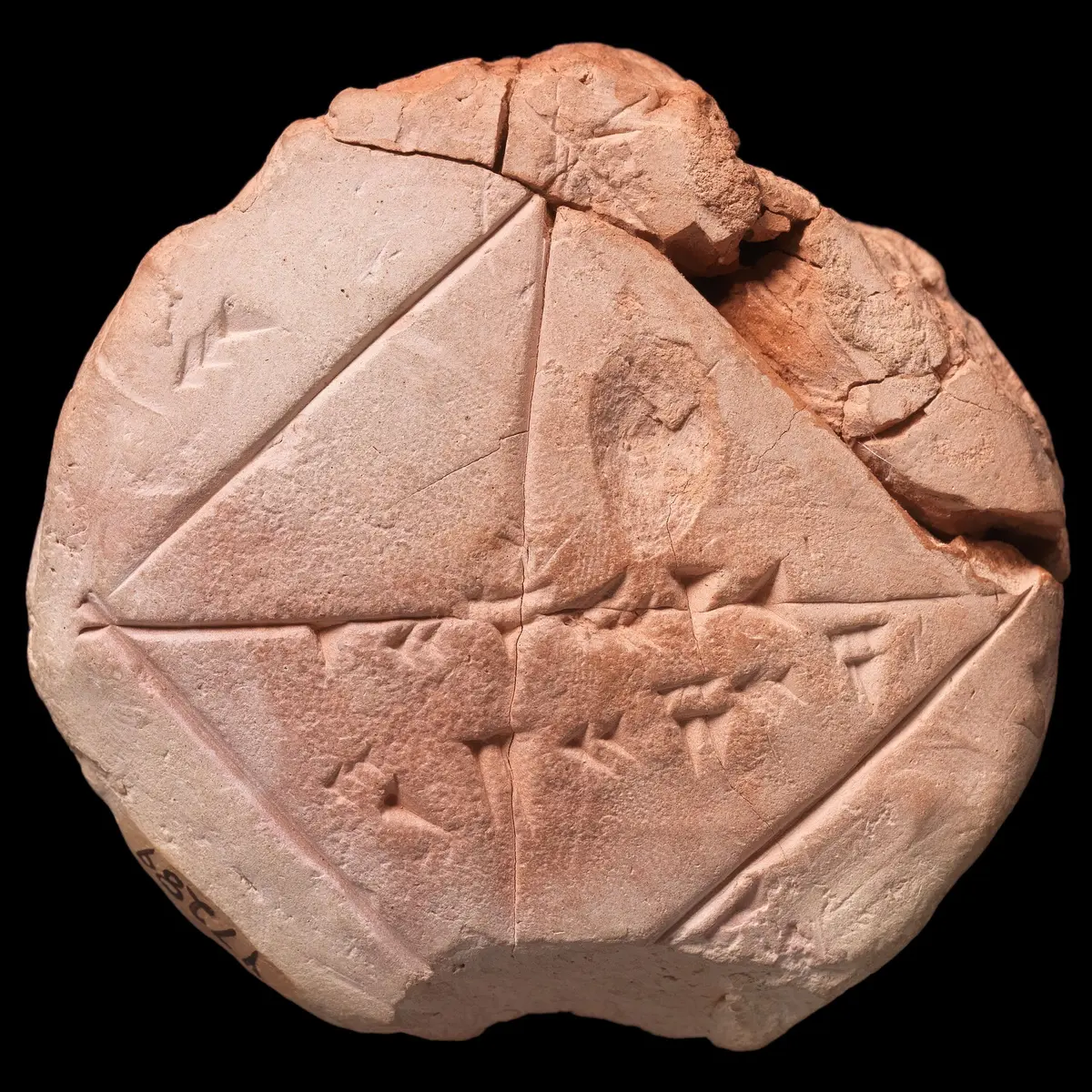
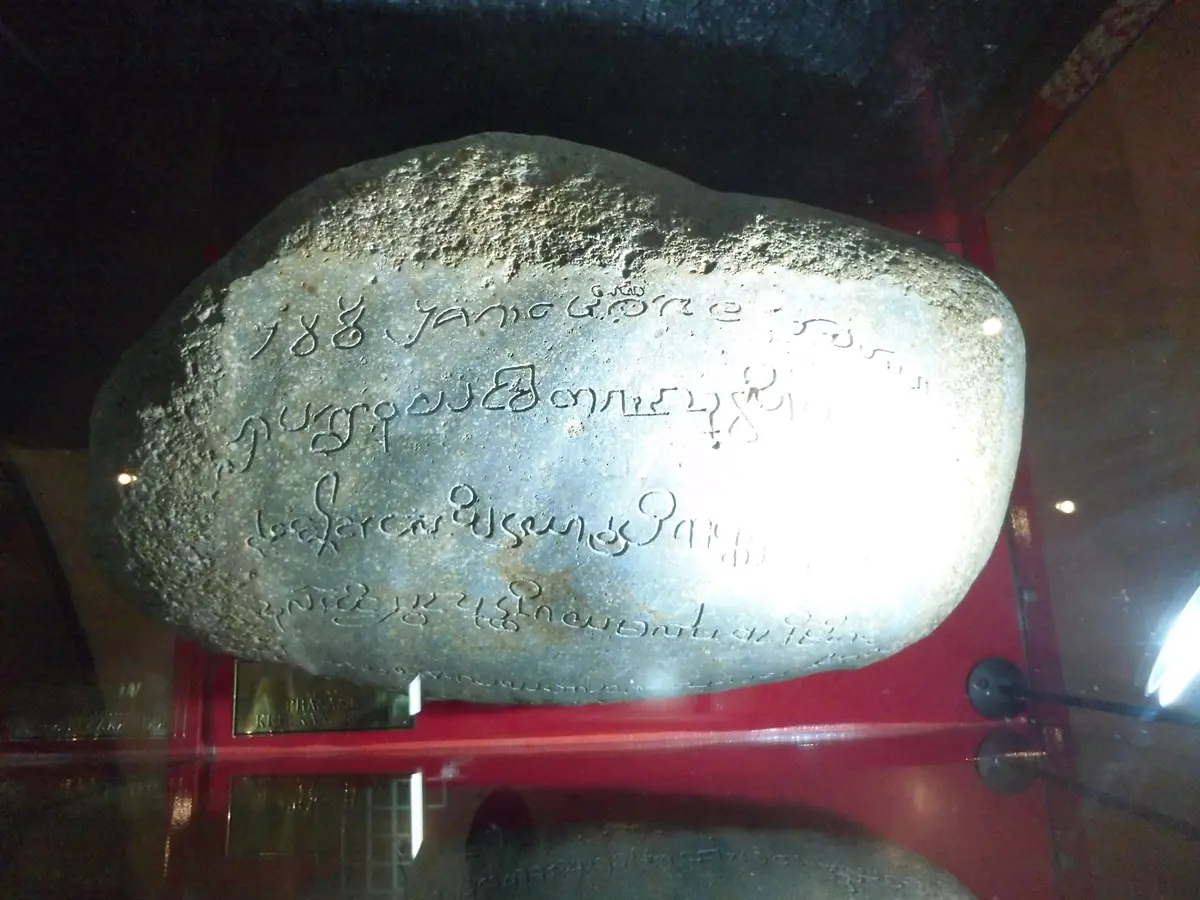
Brahmagupta did not invent the sign for zero. Babylonian scribes had marked an empty place in their numbers since at least the 4th century BCE, and Greek astronomers such as Ptolemy wrote a small circle for one, but none of them treated nothing as a number. In India the nine figures and a dot or a circle for an empty place were coming into use around his time, yet the oldest written zeros that survive with a date are from South-East Asia: two stones carved in the Saka year 605, 682 or 683 by our calendar, one at Sambor in Cambodia with a dot and one at Palembang in Sumatra with a small circle. India's oldest undisputed dated zero is on a temple wall at Gwalior from 876, in the numbers 270 and 50.
One famous challenger fell away. In 2017 the Bodleian Library announced that the Bakhshali manuscript, a birch-bark arithmetic full of dot zeros, was partly as old as the 3rd or 4th century; historians of Indian mathematics objected, and in 2024 the library's own report found that early date was a faulty measurement: the five leaves tested were all formed between about 773 and 1032.
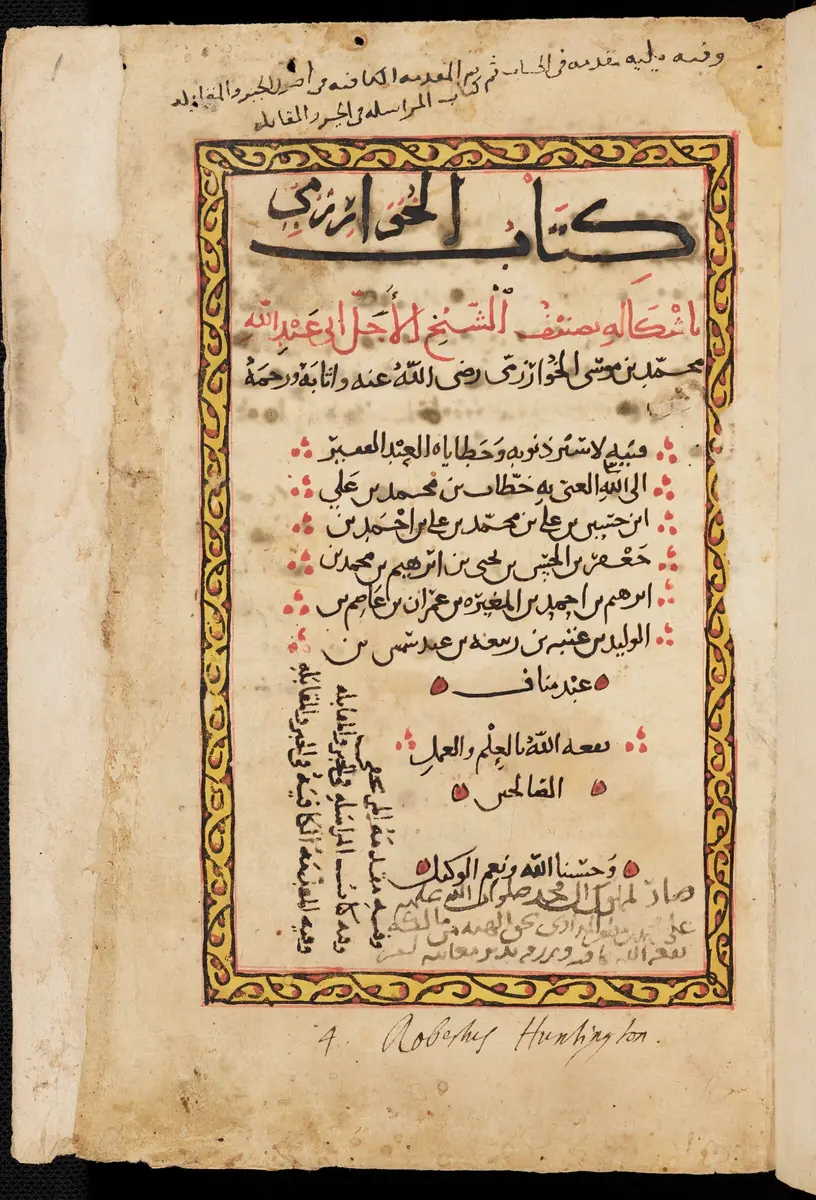
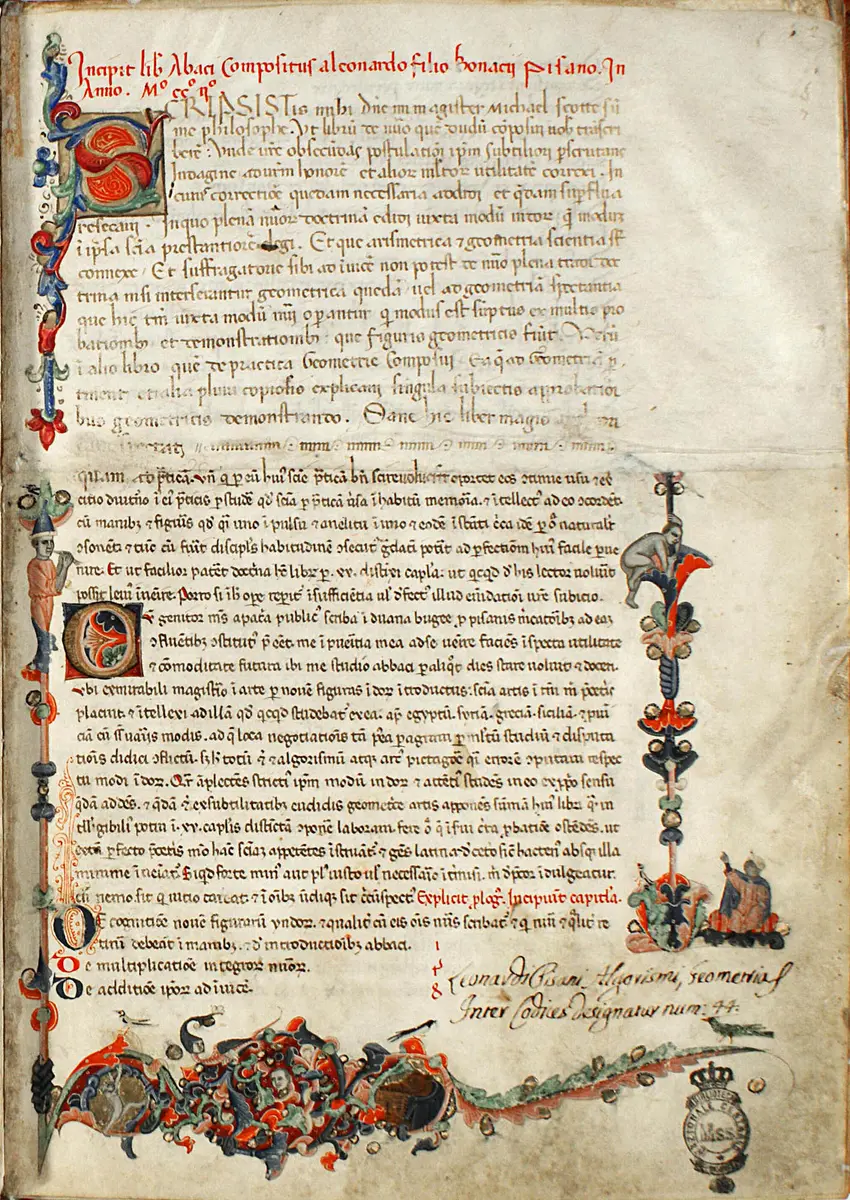
The new arithmetic travelled west. Already in 662 a Syrian bishop on the Euphrates praised the Indians for calculating 'by means of nine signs'. Soon after 770 an Indian embassy brought an astronomical work related to Brahmagupta's book to the caliph al-Mansur in Baghdad, where it was put into Arabic as the Zij al-Sindhind. In the next century al-Khwarizmi's books spread the Indian numerals with zero through the Islamic world, Latin translations and Fibonacci brought them to Europe, and Europeans called them 'Arabic numerals'. Every calculation that treats zero and negative numbers as ordinary numbers, from a bank balance to a computer, builds on the idea he first wrote down in 628.
What happened
- 628
At thirty, Brahmagupta, son of Jisnugupta, finishes the Brahmasphutasiddhanta at Bhillamala, capital of the Gurjaras, in the reign of King Vyaghramukha of the Capa dynasty. Its twenty-four chapters cover the planets, eclipses, the sphere and astronomical instruments, criticise earlier astronomers such as Aryabhata, and give the year as 365 days, 6 hours, 5 minutes and 19 seconds.
Bhinmal (Bhillamala), Rajasthan: the Gurjara capital where Brahmagupta wrote his book in 628In chapter 18, on algebra, he sets out how to add, subtract, multiply and divide 'fortunes', 'debts' and zero: zero is a number taken from itself; zero added or taken away changes nothing; anything times zero is zero; a debt taken from zero is a fortune. A number divided by zero is left as a fraction over zero, and zero divided by zero is zero, the one rule that is wrong.
Bhinmal (Bhillamala), Rajasthan: the Gurjara capital where Brahmagupta wrote his book in 628In chapter 12, on mathematics, he gives the area of a four-sided figure from its four sides, and the lengths of its diagonals: exact, as later readers saw, when the corners lie on a circle, though he does not say so.
Bhinmal (Bhillamala), Rajasthan: the Gurjara capital where Brahmagupta wrote his book in 628- 629
Bhaskara I, a follower of Aryabhata and Brahmagupta's rival, writes his commentary on the mathematical verses of the Aryabhatiya, defending the teacher whose spinning Earth Brahmagupta rejects.
- 641
The Chinese pilgrim Xuanzang, on his long journey through India, records that the capital of the Gurjaras is Bhillamala: the account by which we know where Brahmagupta lived and worked.
Bhinmal (Bhillamala), Rajasthan: the Gurjara capital where Brahmagupta wrote his book in 628 - 662
Far to the west, Severus Sebokht, a Syrian bishop and scholar of the monastery of Qenneshre on the Euphrates, writes that the Indians' methods of calculation 'surpass description' and are done 'by means of nine signs': the earliest known sign that the Indian numerals were known west of India.
Qenneshre on the Euphrates: the monastery where Severus Sebokht praised the Indians' 'nine signs' in 662 - 665
Now sixty-seven, Brahmagupta writes the Khandakhadyaka, a short practical handbook for astronomers in eight chapters, which follows Aryabhata's day beginning at midnight and counts its days from this Sunday, 15 March 665 (the Saka year 587). He is not heard of again; he died in or soon after 665.