Fibonacci brings Arabic numerals to Europe
“In 1202 Leonardo of Pisa's Liber abbaci taught Europe's merchants to reckon with the Indian figures 1–9 and 0, learned in North Africa; they took three centuries to push out Roman numerals and the counting board.”
In 1202 a merchant's son from Pisa, Leonardo, known today as Fibonacci, finished a long Latin book called the Liber abbaci, the 'Book of Calculation'. It taught Europeans to write any number with just ten signs, the nine 'figures of the Indians' and a sign for nothing, 0, which he called zephirum after the Arabic sifr, the root of our words zero and cipher. The place of a figure shows whether it counts units, tens or hundreds, so sums can be worked out on paper, step by step, and checked. Most of the book puts the method to work on merchants' problems: prices and profits, barter, partnerships, interest, the many weights, measures and coins of the Mediterranean, and the mixing of metals for coinage. Among its hundreds of exercises is a puzzle about breeding rabbits whose answer, 1, 2, 3, 5, 8, 13 and so on, is the sequence that now carries his name.
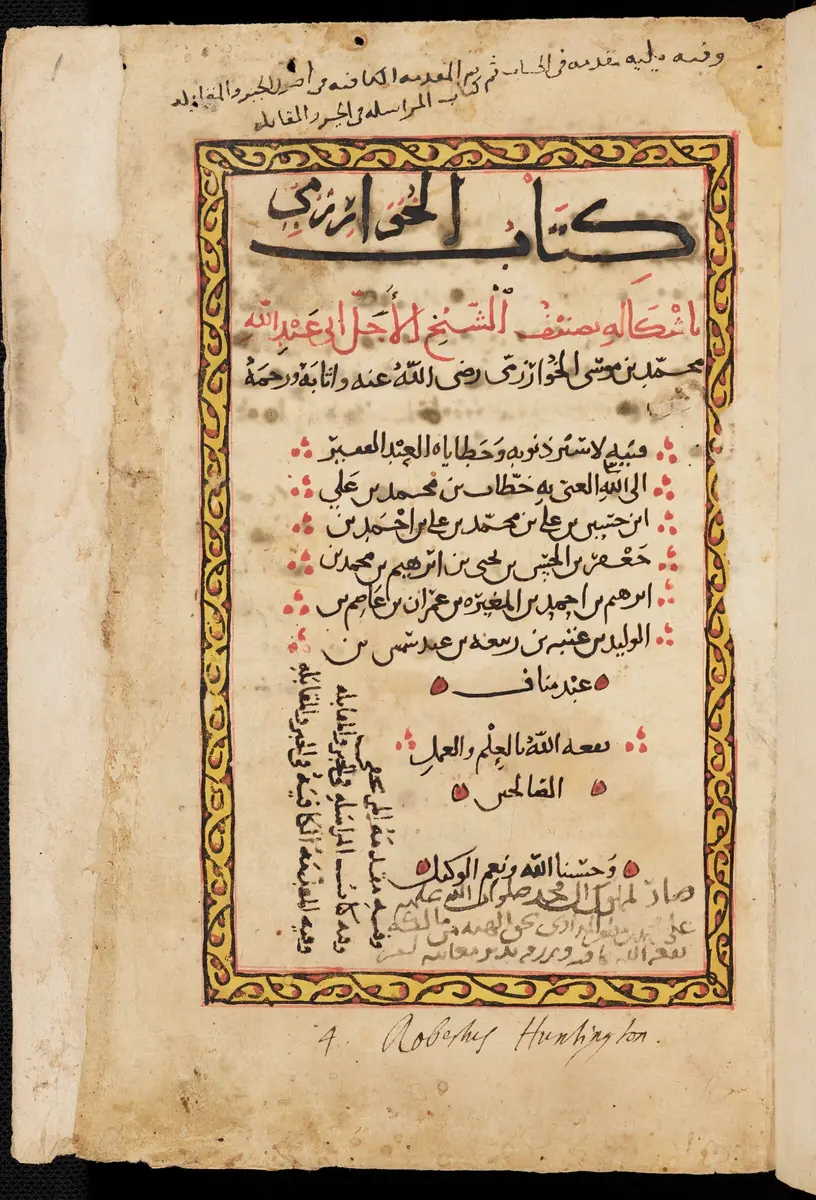
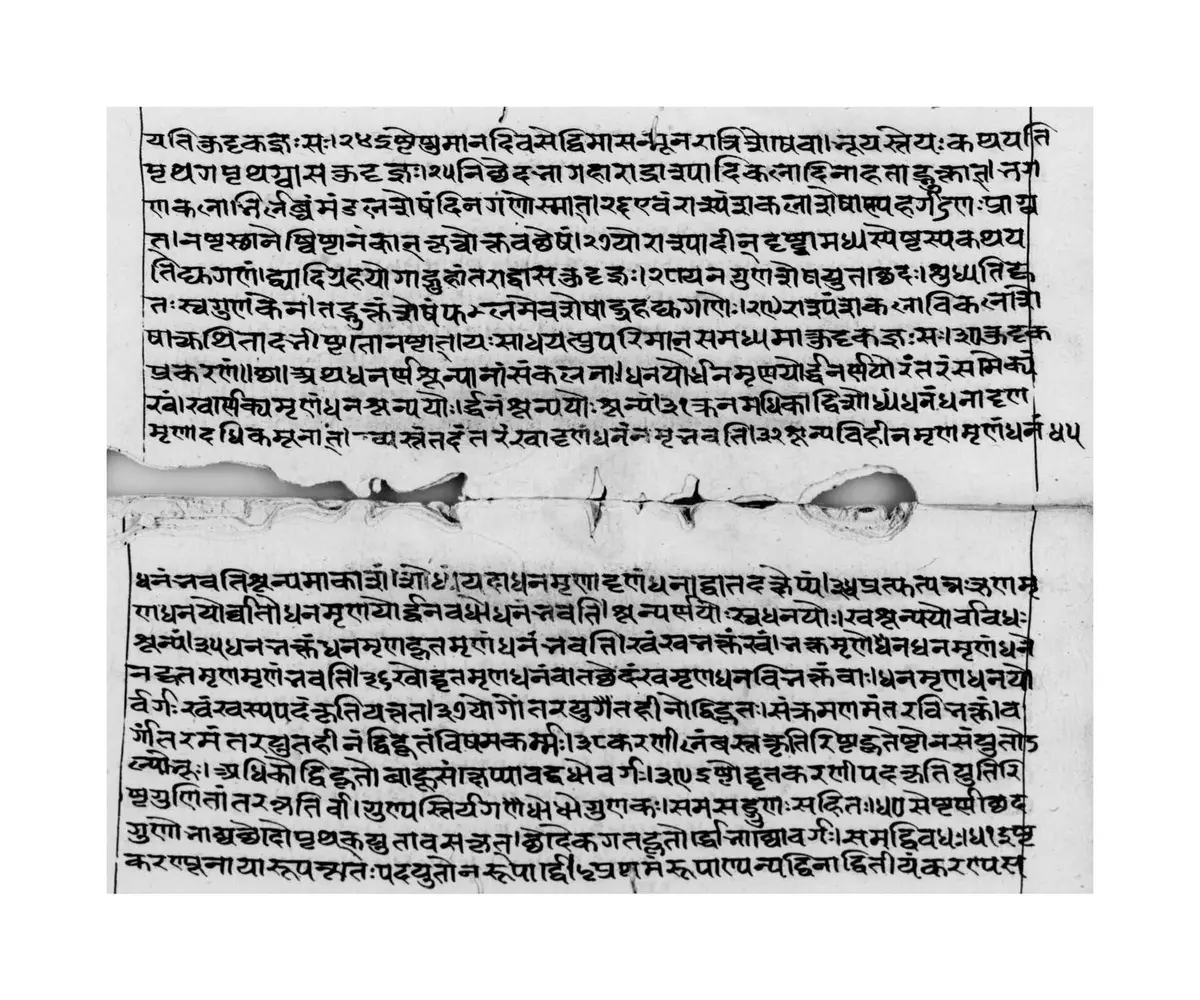
Leonardo learned the method in North Africa. In the book's prologue he tells how his father, Guglielmo, an official sent by Pisa to its customs house at Bugia (today Béjaïa in Algeria), where Pisan merchants traded, had him come there as a boy to study calculation, and how excellent teaching introduced him to the Indian figures. On later business journeys to Egypt, Syria, Greece, Sicily and Provence he studied the local ways of reckoning and argued with their experts, and found them all 'almost a mistake' next to the Indian method. Back in Pisa around 1200 he wrote his book so that, in his words, the Latin people should no longer be without it. The figures had travelled from India through the Islamic world, where al-Khwarizmi had explained them in the ninth century; the Latin form of his name gave Europe the words algorism and algorithm.
Leonardo was not the first to bring the figures to Europe. They appear, without the zero, in a Spanish manuscript of 976; the scholar Gerbert of Aurillac, later Pope Sylvester II, used them on the counters of his abacus around the same time; and Latin versions of al-Khwarizmi circulated in the twelfth century. But those were for monks and scholars. Leonardo's book showed, in hundreds of worked problems, what the method could do for trade, and it made its author famous. Around 1225 the emperor Frederick II, holding court at Pisa, met him and had his scholars set him problems; Leonardo dedicated his Book of Squares to the emperor, and in 1228 he dedicated a revised Liber abbaci, the version every surviving copy carries, to the court astrologer Michael Scot. In 1240 the city of Pisa granted 'the serious and learned master Leonardo Bigollo' a yearly salary for teaching its citizens and advising on its accounts, the last we hear of him.
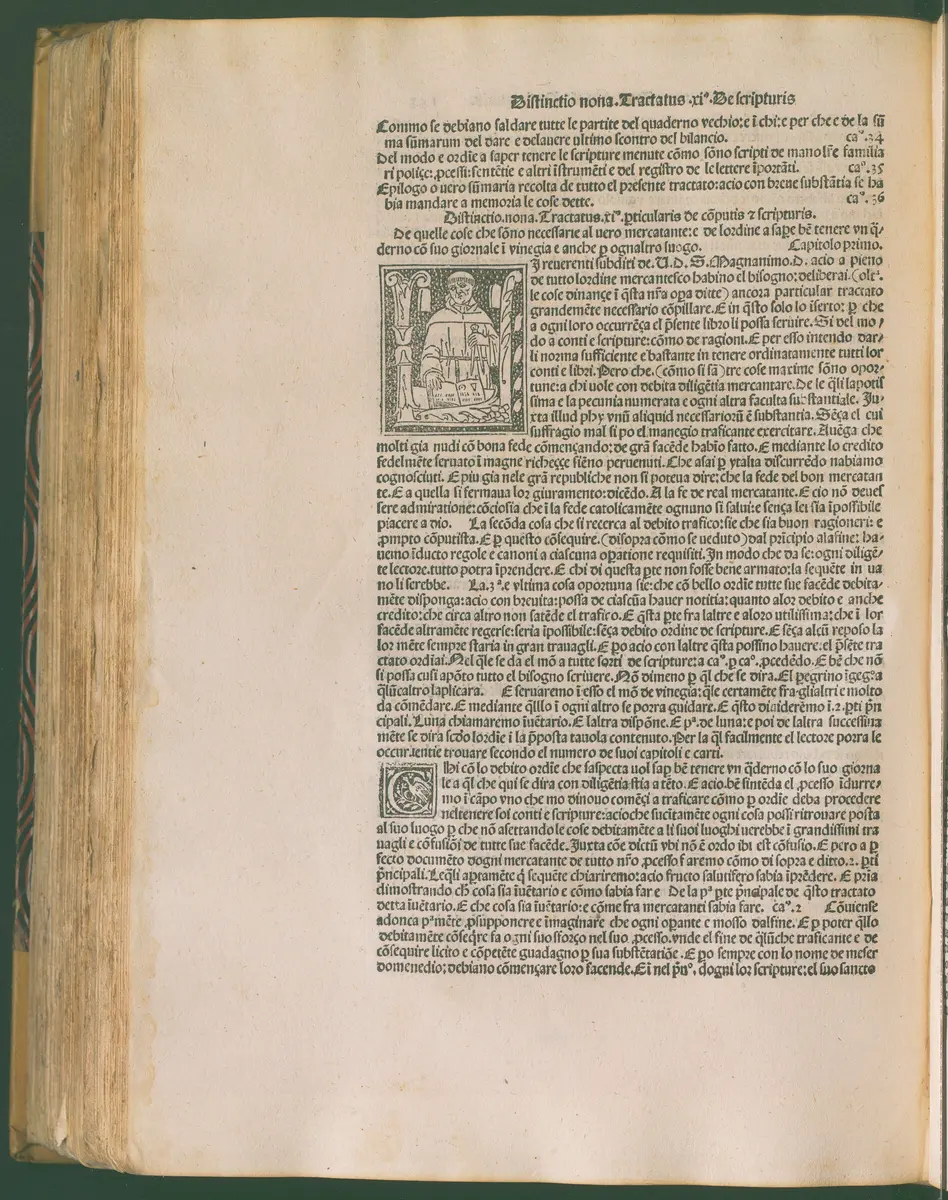
The new figures spread slowly. From the late thirteenth century Italian trading cities had abacus schools, where merchants' sons learned the written arithmetic from short books in Italian. The earliest that survive date from about 1290 to 1300, and one of them claims to follow 'master Leonardo', though historians such as Jens Høyrup argue that this school arithmetic grew out of a wider Mediterranean merchants' culture rather than from his book alone. Old habits held on: in 1299 the money changers of Florence were still forbidden to use the figures in their books, and in northern Europe the counting board and Roman numerals ruled ordinary reckoning into the sixteenth century. Printed arithmetic books, such as Filippo Calandri's of Florence in 1491 and Luca Pacioli's Summa of 1494, which often cites Leonardo, carried the method across Europe. Leonardo himself was then forgotten until the historian Pietro Cossali brought him back to light in 1797, and his name became famous again through the sequence that the French mathematician Édouard Lucas named after him in the nineteenth century.
What happened
- 1192
Around 1192 Leonardo's father Guglielmo, sent by Pisa as an official to its customs house at Bugia in North Africa, where Pisan merchants traded, has his son come to him to study calculation for a while. There 'marvellous teaching' introduces the boy to the nine figures of the Indians, and the art pleases him above all others.
Béjaïa (medieval Bugia), Algeria: the port where Pisa kept a customs house for its merchants, where Leonardo's father served and Leonardo learned the Indian figures as a boy - 1200
After business journeys to Egypt, Syria, Greece, Sicily and Provence, where he studies the local ways of reckoning and debates with their experts, Leonardo is back in Pisa around 1200. Next to the Indian method, he writes, all the others now seem to him 'almost a mistake'.
Pisa, the cathedral square: Leonardo's city, where he wrote his books, met Frederick II around 1225 and was granted a salary in 1240; his statue of 1863 stands in the Camposanto on the square - 1202
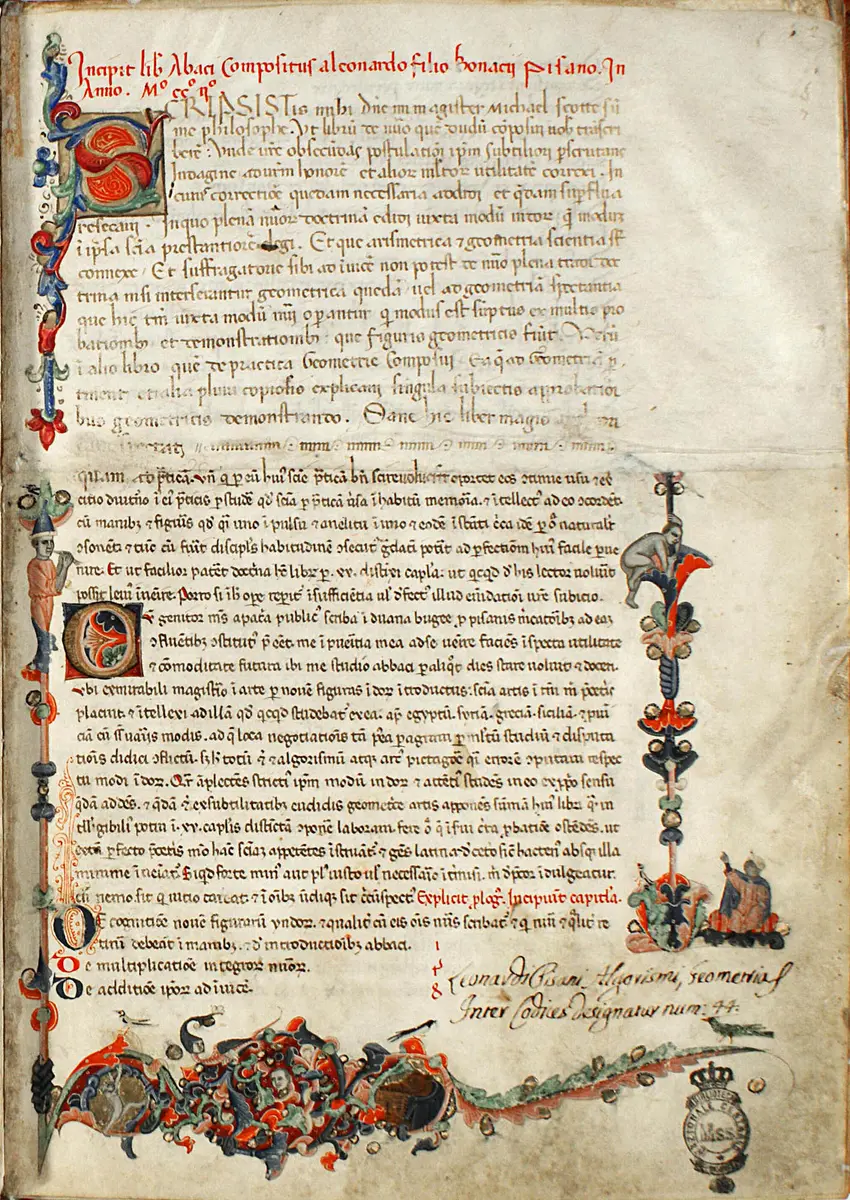
He finishes the Liber abbaci, 'composed by Leonardo of Pisa in the year 1202': fifteen chapters that teach the new figures and how to use them, written so that 'the Latin people' should no longer be without this knowledge.
Pisa, the cathedral square: Leonardo's city, where he wrote his books, met Frederick II around 1225 and was granted a salary in 1240; his statue of 1863 stands in the Camposanto on the squareThe first chapter sets out the system: the nine figures 9 8 7 6 5 4 3 2 1, 'and with this sign 0, which in Arabic is called zephirum, any number can be written', the place of each figure showing units, tens or hundreds. The first seven chapters teach writing numbers and adding, subtracting, multiplying and dividing with them, each result checked by casting out nines.
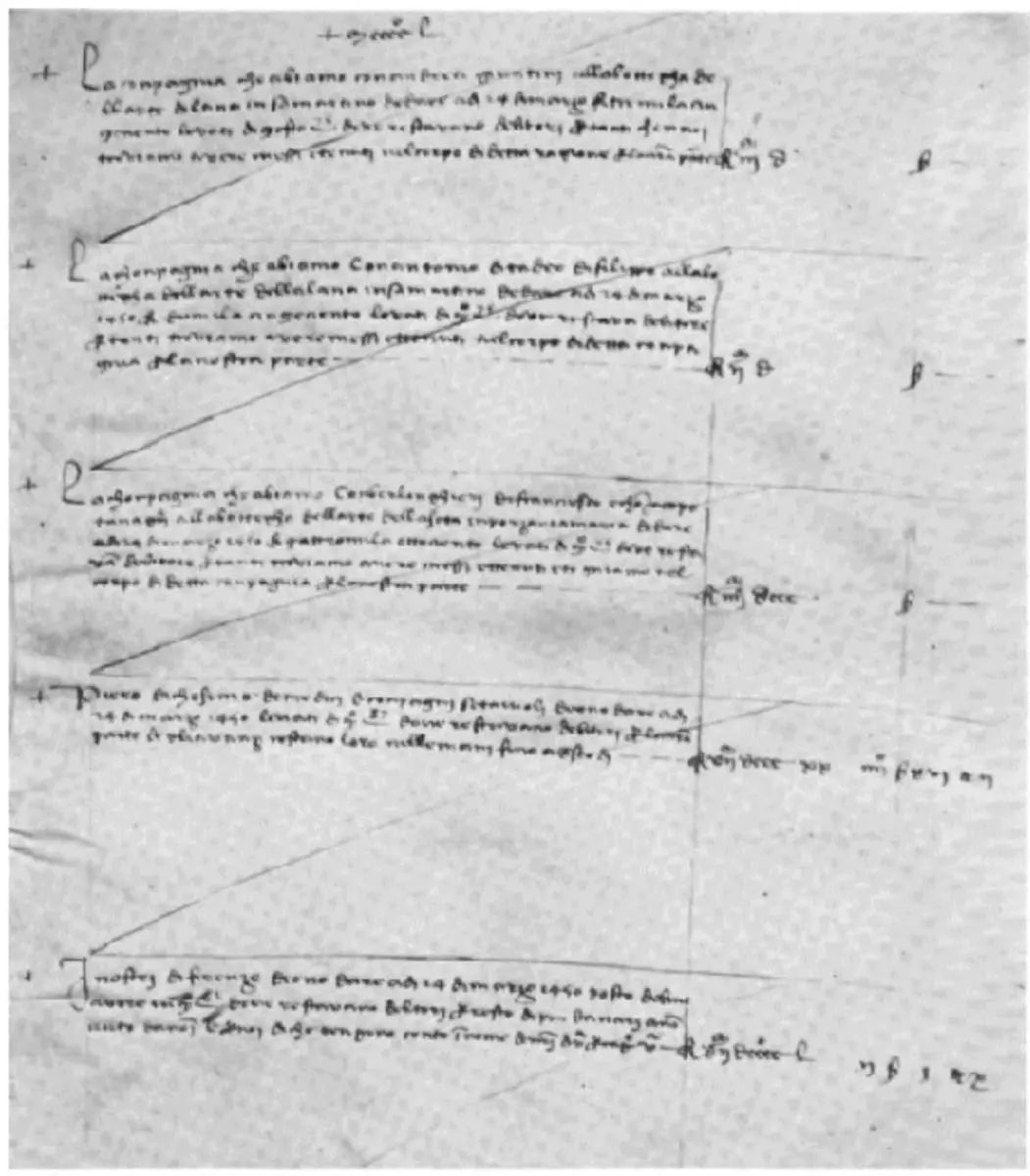
The rest of the book puts the method to work for merchants: prices and profits, barter, partnerships, interest, money changing, mixing metals for coins. Among hundreds of puzzles, a pair of rabbits breeds a new pair every month; after a year there are 377 pairs, and the margin lists the months' totals, 1, 2, 3, 5, 8, 13, 21, 34, 55, 89, 144, 233, 377.
- 1220
He writes the Practica geometriae, a book of geometry and practical measuring for surveyors, dedicated to Master Dominicus of the emperor's circle.
Pisa, the cathedral square: Leonardo's city, where he wrote his books, met Frederick II around 1225 and was granted a salary in 1240; his statue of 1863 stands in the Camposanto on the square - 1225
The emperor Frederick II, holding court at Pisa, receives Leonardo, introduced by Master Dominicus. John of Palermo of the court sets him problems, among them a cubic equation whose root he works out to nine decimal places. Leonardo sends the solutions to the emperor in a little book called Flos and dedicates to him his Book of Squares, the Liber quadratorum.
Pisa, the cathedral square: Leonardo's city, where he wrote his books, met Frederick II around 1225 and was granted a salary in 1240; his statue of 1863 stands in the Camposanto on the square - 1228
He issues a revised Liber abbaci, with 'new material added and the superfluous removed', dedicated to the emperor's astrologer Michael Scot. Every surviving copy carries this second version; the text of 1202 is lost.
- 1240
The commune of Pisa grants 'the serious and learned master Leonardo Bigollo' a yearly salary of twenty pounds of denari, besides his expenses, for his teaching and his unpaid advice on the city's accounts. It is the last record of his life.
Pisa, the cathedral square: Leonardo's city, where he wrote his books, met Frederick II around 1225 and was granted a salary in 1240; his statue of 1863 stands in the Camposanto on the square