Fairchild Semiconductor: Silicon Valley is born
“In 1957 eight scientists left Shockley's lab and, with $1.38 million from Sherman Fairchild found by banker Arthur Rock, started Fairchild Semiconductor; its spin-offs, Intel and AMD among them, became Silicon Valley.”
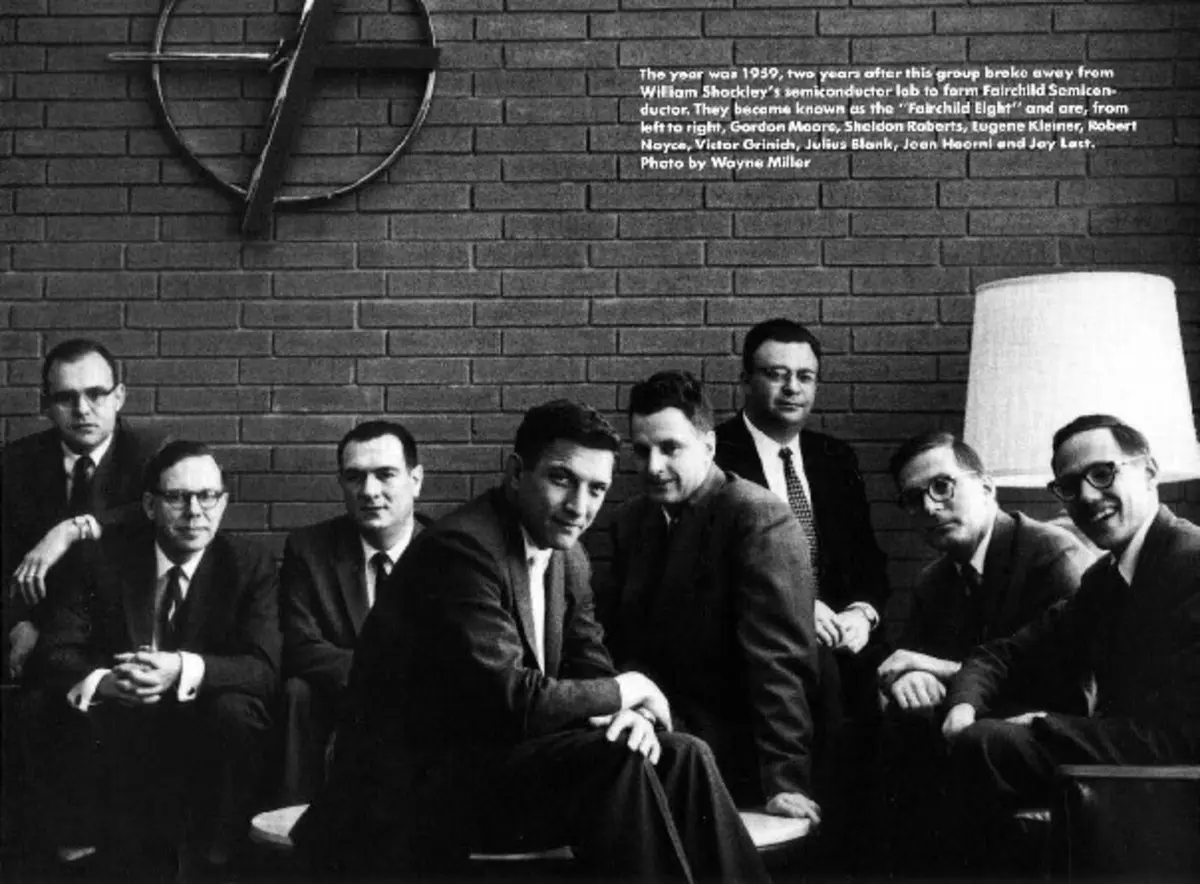
Fairchild Semiconductor was the company that eight young scientists and engineers started in 1957 after walking out of William Shockley's laboratory in Mountain View, California, and it is remembered less for one invention than for a way of making new companies. Shockley, the co-inventor of the transistor and a Nobel laureate from 1956, had hired some of the brightest young people in the field, but he managed them badly and steered them away from the silicon transistor they wanted to build. When his backer, Arnold Beckman, refused to replace him, Julius Blank, Victor Grinich, Jean Hoerni, Eugene Kleiner, Jay Last, Gordon Moore, Robert Noyce and Sheldon Roberts decided to leave together, at a time when changing employer as a group, let alone starting a company, was almost unheard of.
The money came through Wall Street. Kleiner wrote to the broker who handled his father's account at Hayden, Stone & Co. in New York, asking whether some company might hire the whole group. The letter reached a young analyst, Arthur Rock, who flew out with a partner, Alfred 'Bud' Coyle, and over breakfast at San Francisco's Clift Hotel persuaded them to found their own company instead. Rock and Coyle then took the idea to some 35 established companies, and every one refused: none could see how to back a separate group whose members would own more of their venture than the firm's own staff did. At last they were introduced to Sherman Fairchild, the inventor and investor who controlled Fairchild Camera and Instrument of Syosset, Long Island. On 18 September 1957 the eight resigned; the next day they signed with his company. Fairchild Camera lent the new firm $1.38 million over eighteen months, held control through a voting trust, and took an option to buy all its shares for $3 million. Each founder put in $500 of his own money.
In an empty building at 844 Charleston Road in Palo Alto the eight built their own furnaces and cameras and, in under a year, had a product: the 2N697, a silicon transistor made many at a time on a wafer, for which IBM had already placed the first order, one hundred at $150 each for a bomber's computer. In 1959 Hoerni's planar process, which leaves a protective layer of oxide over the transistor, made the devices more reliable and opened the way to Noyce's integrated circuit. Sales passed $20 million by 1960, and in 1959 Fairchild Camera exercised its option early; each founder received about $250,000, a fortune for men in their early thirties, but from then on they were employees of an East Coast company that refused to give stock options to its staff.
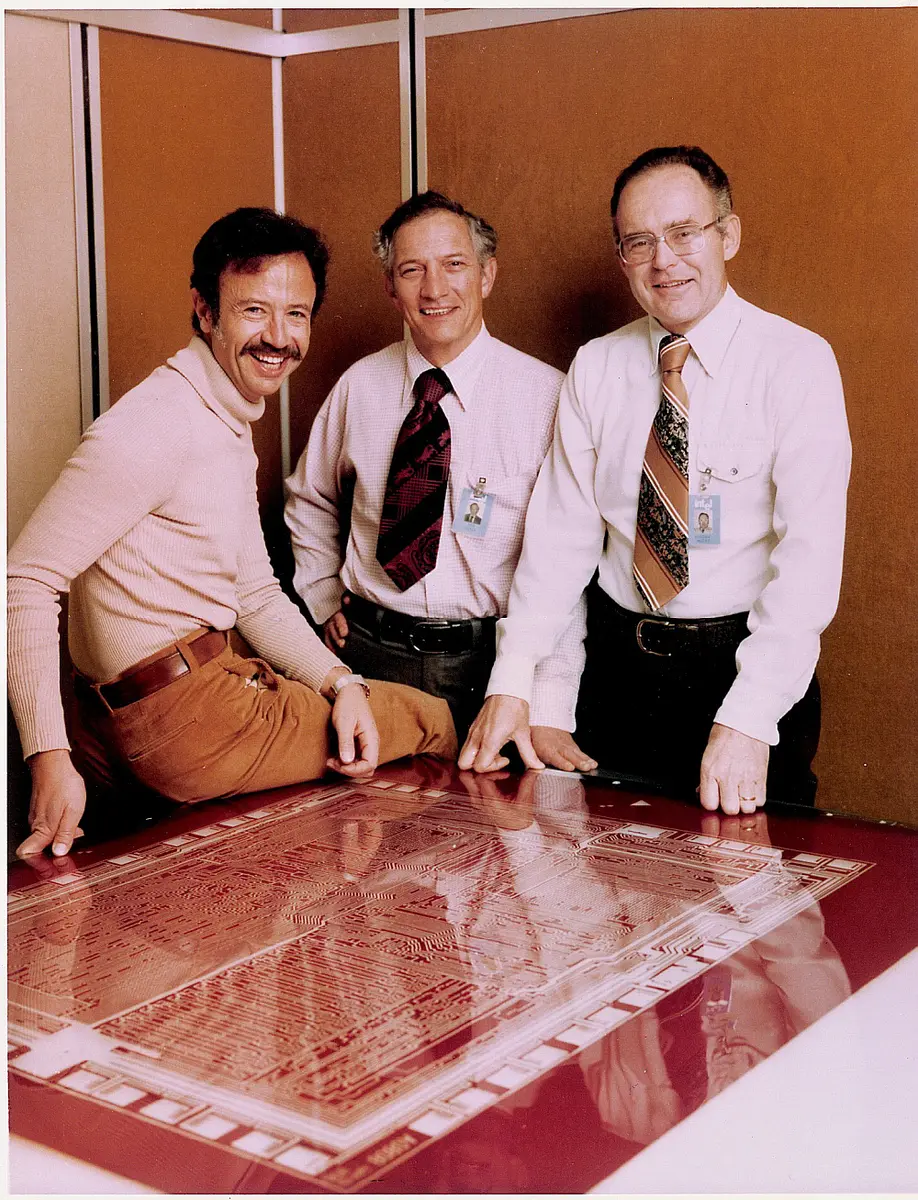
That refusal shaped what followed. Fairchild's first general manager left in 1959 to found Rheem Semiconductor; Last and Hoerni left at the start of 1961 to set up Amelco with money from Teledyne that Rock arranged, and Roberts and Kleiner joined them; others founded Signetics the same year. Charles Sporck took a team to run National Semiconductor in 1967, Noyce and Moore founded Intel in July 1968 with $2.5 million raised by Rock, and Jerry Sanders and seven colleagues incorporated Advanced Micro Devices on 1 May 1969. Rock moved to San Francisco in 1961 to invest in such ventures, and Kleiner co-founded the venture firm Kleiner Perkins in 1972. These 'Fairchildren' clustered in the orchards between Palo Alto and San Jose, and on 11 January 1971 the journalist Don Hoefler gave the place its name in a series in Electronic News, 'Silicon Valley U.S.A.'
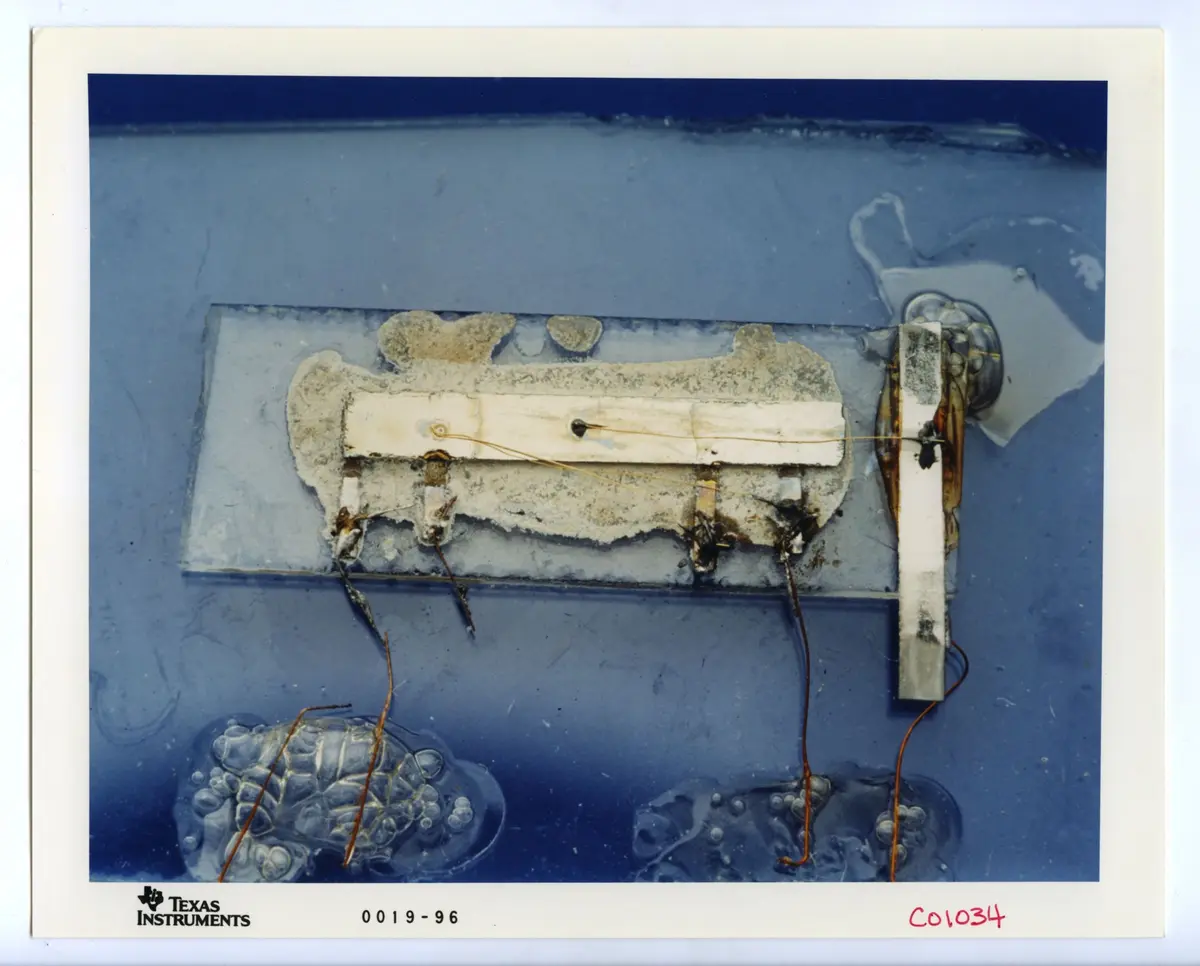
Fairchild itself declined after 1967, but its model outlived it: engineers who leave to start their own firm, investors who back them for a share of the company, and stock options that give employees a stake. A chart first published in 1977 traced 66 chip companies back to Fairchild, and Rock's arrangement of 1957, in which the investors took about a fifth of the shares, is often seen as the pattern of modern venture capital.
What happened
- 1957
After Arnold Beckman refuses to remove Shockley, Eugene Kleiner writes, for seven of the group, to his father's broker at Hayden, Stone in New York, asking whether a company might hire them all. The young analyst Arthur Rock and the partner Bud Coyle fly out and, over breakfast in the Redwood Room of San Francisco's Clift Hotel, talk them into founding a company of their own; Robert Noyce joins, making eight, and Coyle has everyone sign ten new dollar bills as their contracts with each other.
Clift Hotel, Geary Street, San Francisco: the breakfast in the Redwood Room where Rock and Coyle talked the eight into starting their own company (1957)Rock and Coyle list some 35 established companies from the Wall Street Journal and approach them; all refuse, unwilling to back an outside group on better terms than their own staff. Then they are introduced to Sherman Fairchild, who sends them to John Carter, chief executive of Fairchild Camera and Instrument; Carter sends his executive vice-president Richard Hodgson to meet the eight.
Syosset, Long Island, New York: headquarters of Fairchild Camera and Instrument, the backer and later ownerThe eight resign from the Shockley Semiconductor Laboratory. On their last day Beckman calls them into a small room and reads them a prepared statement: their concerted departure, he warns, 'will be looked on as a shameful act'.
Shockley Semiconductor Laboratory, 391 San Antonio Road, Mountain View: the eight resigned from here on 18 September 1957The eight sign the papers establishing Fairchild Semiconductor Corporation with Fairchild Camera and Instrument. The parent lends $1.38 million over eighteen months, controls the firm through a voting trust and takes an option to buy all its shares for $3 million; each founder invests $500, and Hayden, Stone keeps a share for arranging the deal.
The founders move into an empty building at 844 Charleston Road, Palo Alto. With no suppliers for most of what they need, they build their own crystal growers, diffusion furnaces and step-and-repeat cameras, and soon hire a general manager, Ed Baldwin of Hughes.
844 East Charleston Road, Palo Alto: Fairchild Semiconductor's first building, entered on 1 October 1957; later its research laboratory- 1958
Early in the year IBM's Federal Systems Division places Fairchild's first order: one hundred high-voltage silicon transistors at $150 each, to drive the core memory of the B-70 bomber's on-board computer, a part no established maker could supply.
At the Wescon show Fairchild launches the 2N697, a double-diffused silicon mesa transistor made by the batch on a wafer; Autonetics then chooses it for the Minuteman missile's guidance system.
844 East Charleston Road, Palo Alto: Fairchild Semiconductor's first building, entered on 1 October 1957; later its research laboratory- 1959
Far sooner than the founders expected, Fairchild Camera exercises its option and buys out all the shareholders for $3 million; each founder receives about $250,000, and Fairchild Semiconductor becomes a division of the East Coast parent.
Fairchild builds its own plant on a ten-acre site on Whisman Road, Mountain View, begun in December 1958; production and headquarters move there around the turn of 1959 to 1960, while Charleston Road becomes the research laboratory.
Whisman Road, Mountain View: Fairchild Semiconductor's plant and headquarters from the turn of 1959-60Ed Baldwin and several of the people he had hired leave to found Rheem Semiconductor down the road, the first Fairchild spin-off; Noyce takes over as general manager.
Jean Hoerni demonstrates a working planar transistor, sealed under its oxide layer: more reliable than the mesa, and the basis for Noyce's integrated circuit and for Fairchild's lead in the industry.
844 East Charleston Road, Palo Alto: Fairchild Semiconductor's first building, entered on 1 October 1957; later its research laboratory- 1960
Sales pass $20 million, and the company is recognised as a leader in silicon transistors.
Whisman Road, Mountain View: Fairchild Semiconductor's plant and headquarters from the turn of 1959-60Prompted by Arthur Rock, a director of Teledyne, Jay Last and Jean Hoerni meet Henry Singleton in Los Angeles on New Year's Eve; early in 1961 they leave Fairchild to found Amelco, Teledyne's semiconductor arm, and Sheldon Roberts and Eugene Kleiner follow.
- 1961
Arthur Rock moves to San Francisco and forms Davis & Rock, one of the first West Coast venture-capital firms; the same year four Fairchild engineers found Signetics, one of the first companies devoted to integrated circuits.
- 1967
Charles Sporck, Fairchild's general manager, leaves with a team of managers to rebuild National Semiconductor in Santa Clara for its new investors; in October the division loses money for the first time since its start.
- 1968
Robert Noyce writes to Sherman Fairchild to resign; Gordon Moore will leave with him.
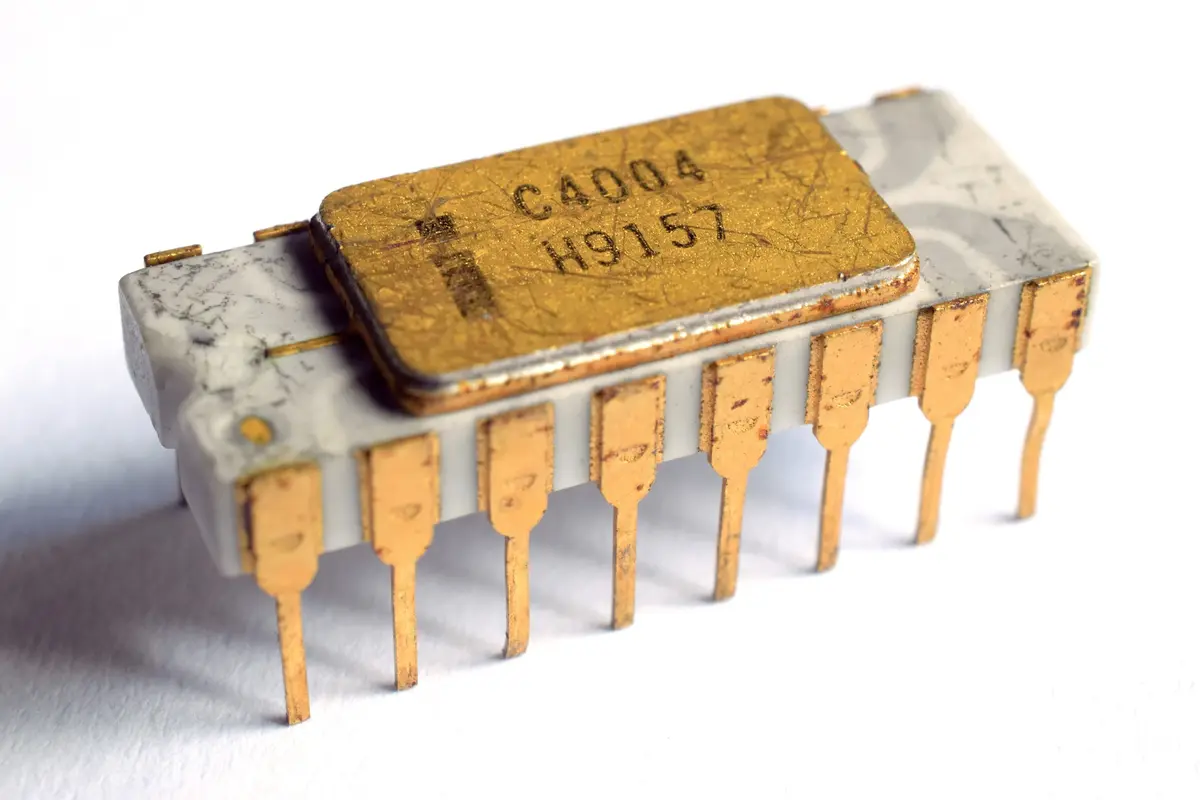
Noyce and Moore incorporate their new company, first as N.M. Electronics, soon Intel. Rock raises $2.5 million by telephone, the two founders putting in $250,000 each; work starts on 1 August in the old Union Carbide building on Middlefield Road, Mountain View.
Union Carbide building, 365 Middlefield Road, Mountain View: Intel's first home from July 1968- 1969
Advanced Micro Devices is incorporated in Delaware, founded by Jerry Sanders and seven other Fairchild employees in Sunnyvale.
- 1971
Electronic News prints the first part of Don Hoefler's series on the Bay Area chip industry, 'Silicon Valley U.S.A.', tracing 23 companies back to the rebels of Shockley's laboratory: the first known use of the name in print.