Robert Noyce
“The physicist who co-invented the microchip in 1959 and co-founded Fairchild Semiconductor and Intel: 'the Mayor of Silicon Valley'.”
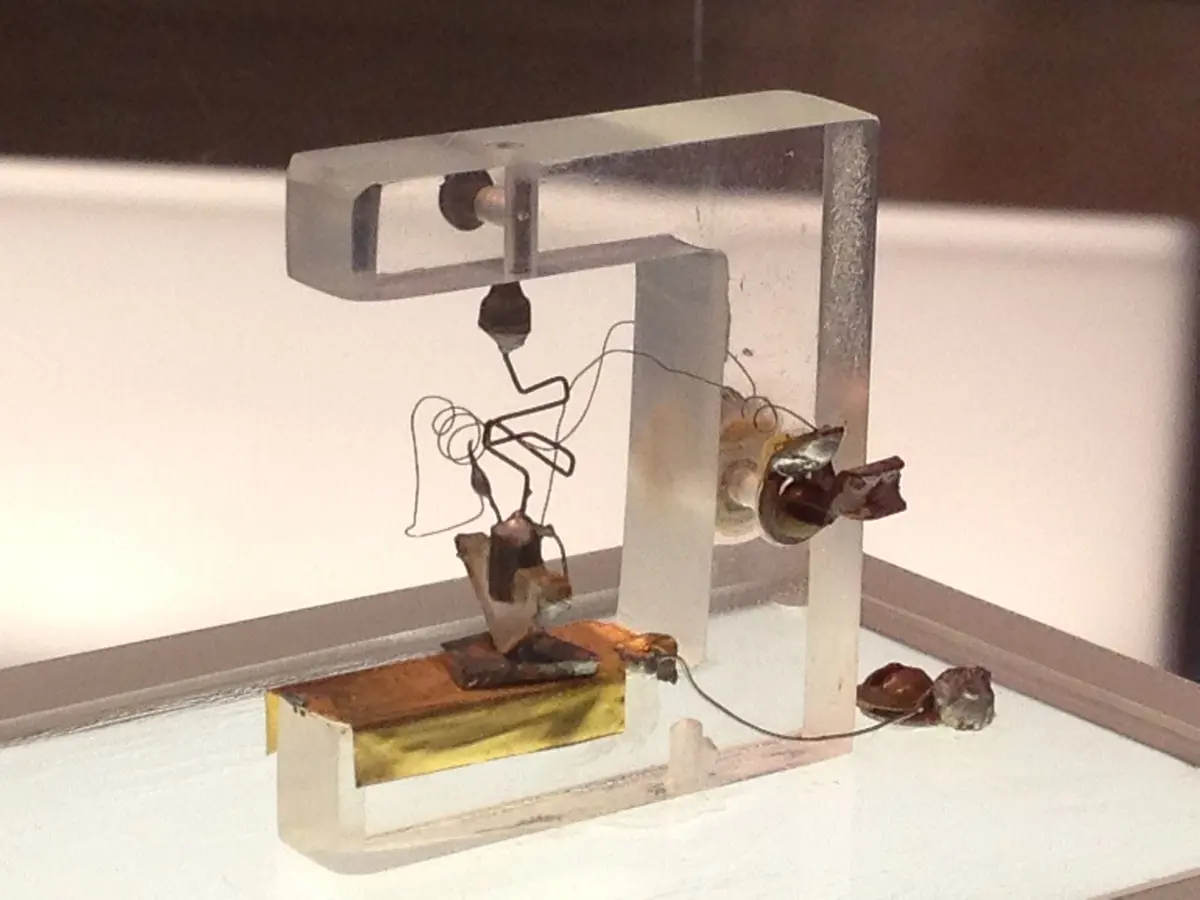
Robert Noyce was the American physicist and businessman who co-invented the integrated circuit, the microchip, and co-founded two of the companies that made Silicon Valley: Fairchild Semiconductor in 1957 and Intel in 1968. His key idea, written in his notebook in January 1959, was to make all the parts of an electronic circuit in one piece of silicon and join them with thin metal lines laid on top of a protective glass-like layer, instead of wiring separate parts together by hand. Chips are still made that way. Easy-going, quick and persuasive, he became the industry's best-known spokesman, and people called him 'the Mayor of Silicon Valley'.
He was born on 12 December 1927 in Burlington, Iowa, the son of a Congregational minister, and grew up in small Iowa towns, from 1939 in Grinnell. He liked to take machines apart. At Grinnell College his physics professor, Grant Gale, a university friend of the transistor's co-inventor John Bardeen, obtained some of the very first transistors from Bell Labs in 1948, and Noyce studied them in class. After a degree in physics and mathematics (1949) and a doctorate in physical electronics at the Massachusetts Institute of Technology (1953), he worked on transistors at Philco in Philadelphia. In 1956 William Shockley, the famous co-inventor of the transistor, hired him for his new laboratory in Mountain View, California.
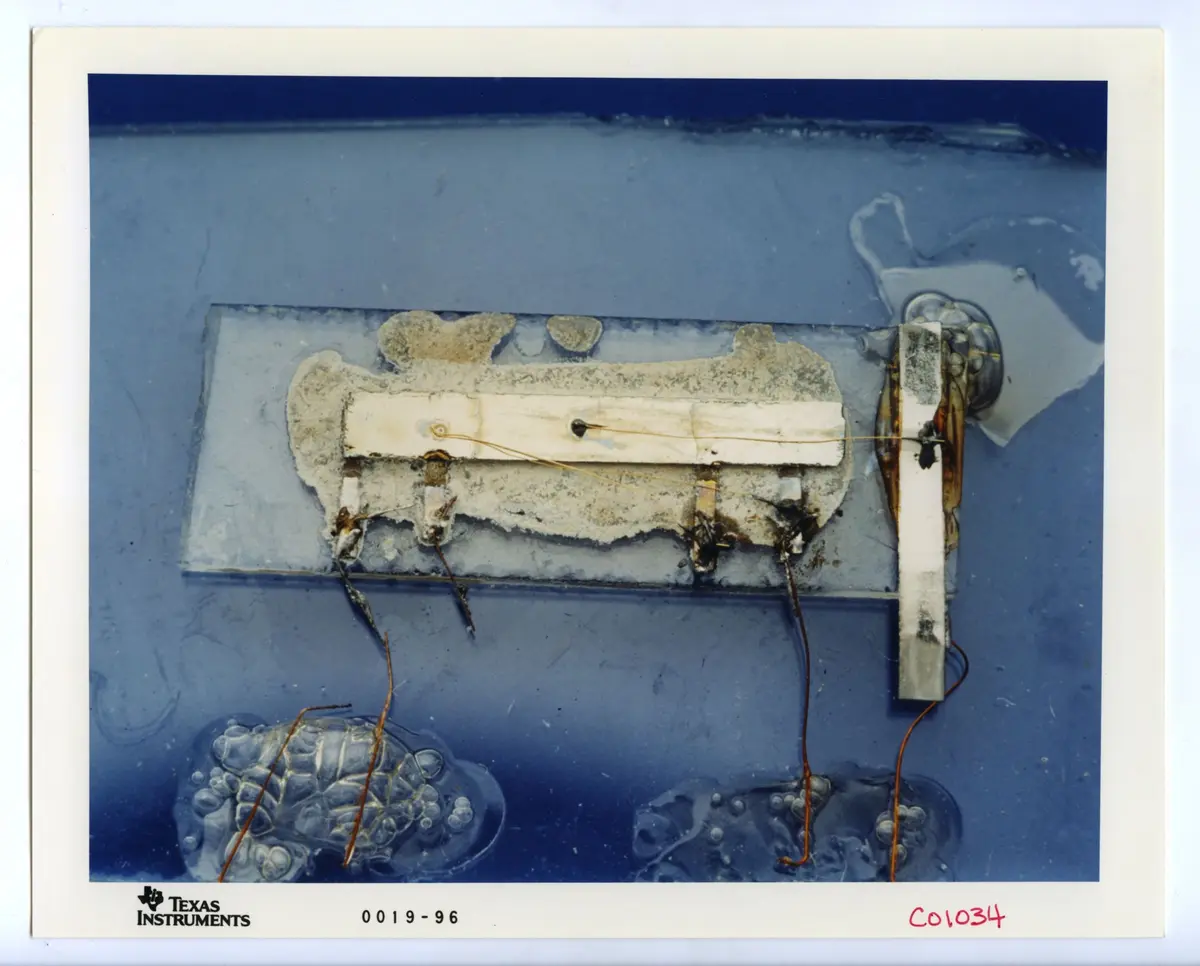
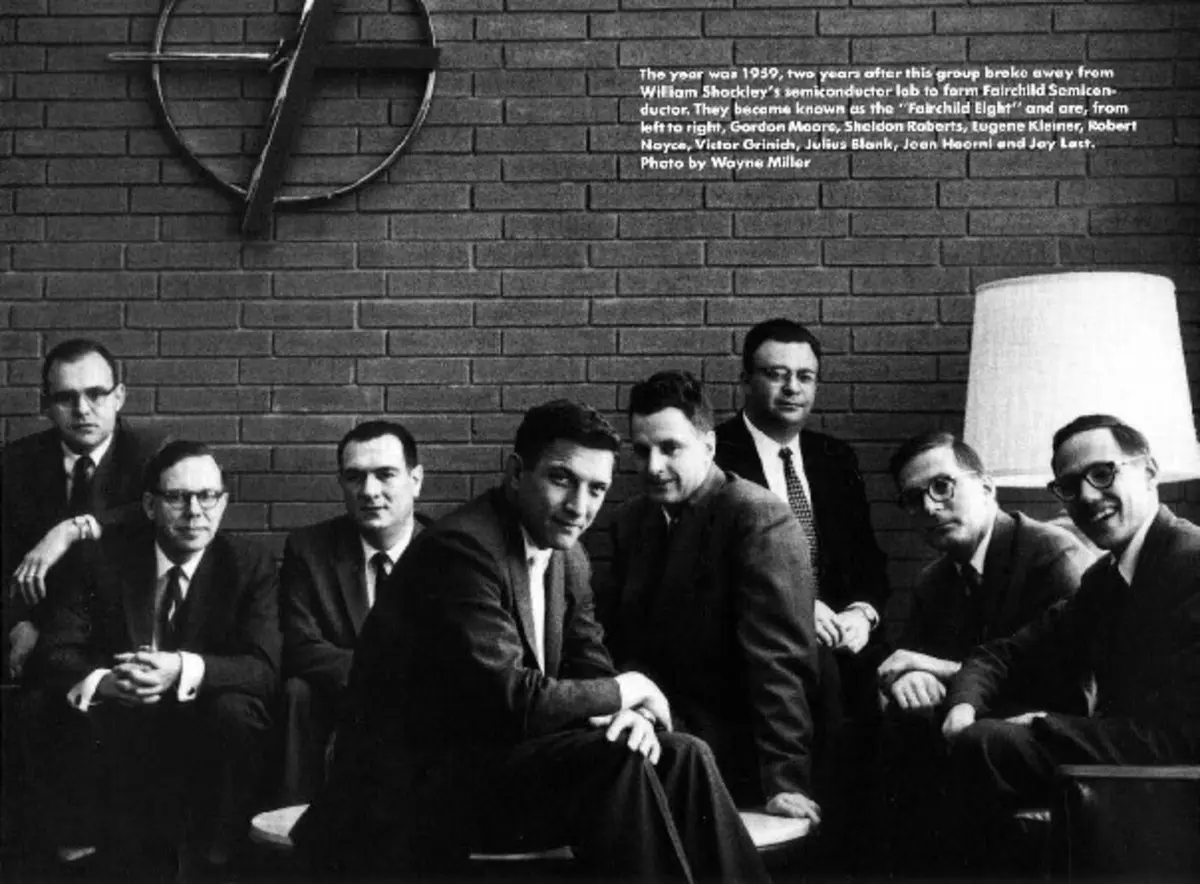
Shockley proved a difficult boss, and in September 1957 Noyce led seven colleagues out of his laboratory. With $1.38 million from Fairchild Camera and Instrument of New York they set up Fairchild Semiconductor in Palo Alto to make silicon transistors for military and aerospace customers. Noyce ran the research and, from 1959, the whole company. When his colleague Jean Hoerni found how to cover transistors with a layer of silicon dioxide (the planar process), Noyce saw that the same layer could carry the 'wiring' between transistors, resistors and diodes made side by side in the silicon. He filed his patent in July 1959. Jack Kilby at Texas Instruments had built a working chip a few months earlier, and the two are honoured as co-inventors; Noyce's method was the one that could be mass-produced. Fairchild's first chips, called Micrologic, went on sale in 1961, and NASA chose Fairchild chips for the Apollo guidance computer.
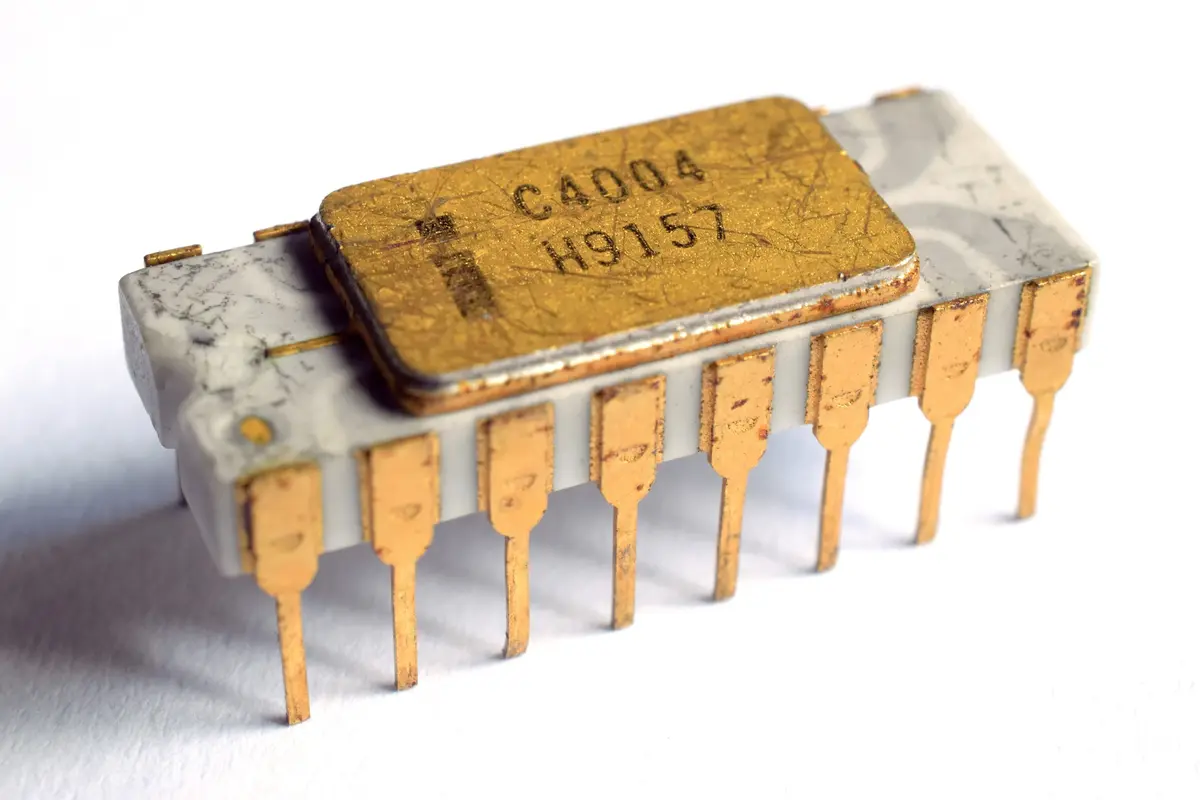
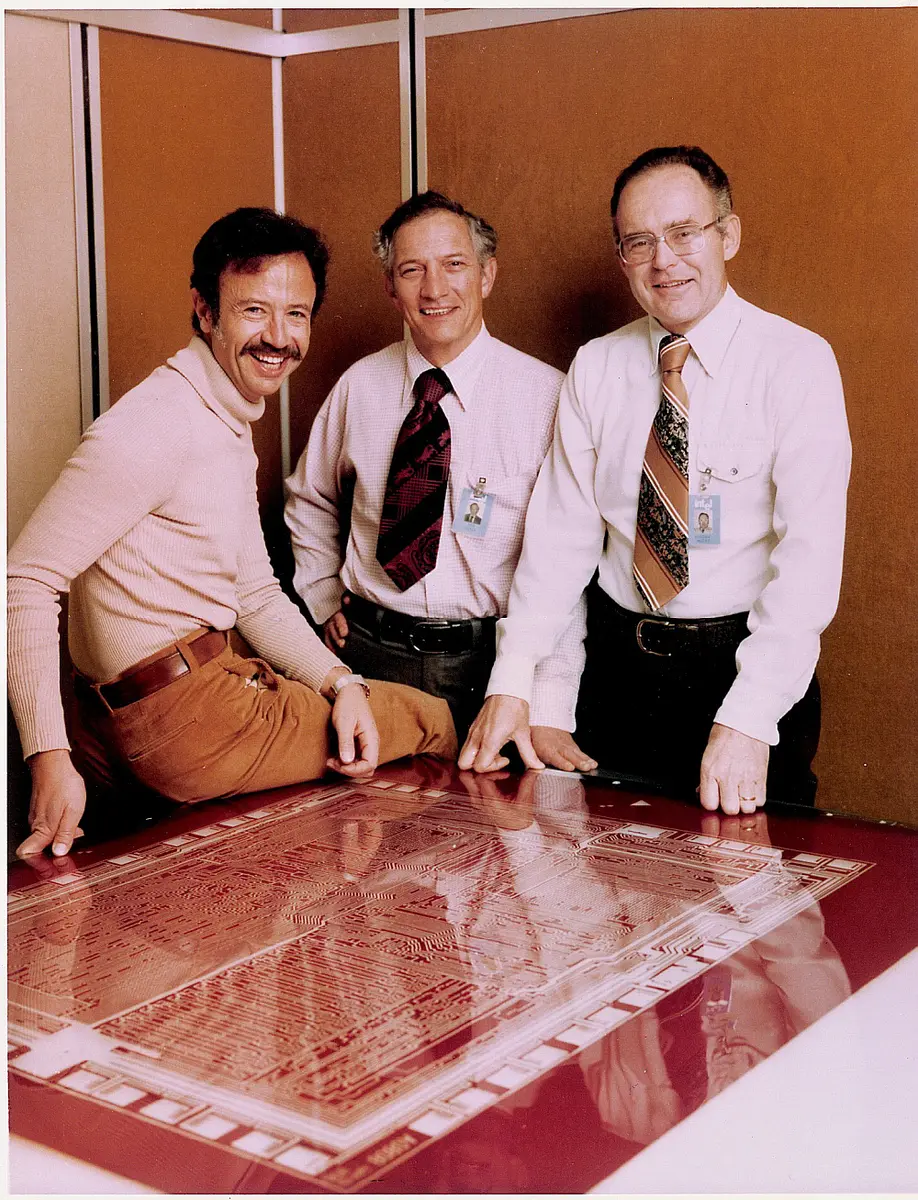
In 1968, tired of a large company run from the East Coast, Noyce left Fairchild and founded Intel with Gordon Moore; Andy Grove joined them. Intel made memory chips: its 1103 of 1970 was the first chip to beat the old magnetic core memories on price, and in 1971 came the 4004, a whole computer processor on one chip. Noyce was Intel's president until 1975, then its chairman and vice chairman. He kept the informal style he had brought from Fairchild, with few executive privileges, and he spoke for the chip industry in Washington. In 1988, when the United States feared it was losing chip manufacturing to Japan, he agreed to lead Sematech, a research consortium of chip makers and the government in Austin, Texas.
He died of a heart attack in Austin on 3 June 1990, aged 62. He had received the National Medal of Science (1979), the National Medal of Technology (1987) and, with Kilby in February 1990, the first Charles Stark Draper Prize. When Kilby received the Nobel Prize in Physics in 2000 for the integrated circuit, he wrote that he had no doubt they would have shared it had Noyce lived; the Nobel is not given to the dead. Every chip in today's phones and computers, with billions of transistors, still rests on the planar interconnection that Noyce patented in 1959.
What happened
- 1927
Robert Norton Noyce is born in Burlington, Iowa, one of four sons of a Congregational minister, Ralph Noyce, and Harriet Norton Noyce.
Burlington, Iowa: born here on 12 December 1927, the son of a Congregational minister- 1939
After years in other Iowa towns (Atlantic, Decorah, Webster City), the family settles in Grinnell, where his father has a post as a minister. Robert grows up tinkering with machines and later mows the lawn of the college's physics professor, Grant Gale.
Grinnell College, Iowa: his home town from 1939; here he met the first transistors in Grant Gale's physics class and graduated in 1949 - 1948
Grant Gale, who studied with John Bardeen at the University of Wisconsin, obtains some of the first transistors from Bell Labs and teaches one of the earliest courses on the physics of solids to eighteen physics majors at Grinnell College. Noyce, one of them, is captivated.
Grinnell College, Iowa: his home town from 1939; here he met the first transistors in Grant Gale's physics class and graduated in 1949 - 1949
He graduates from Grinnell College with degrees in physics and mathematics, Phi Beta Kappa, and goes on to the Massachusetts Institute of Technology.
Grinnell College, Iowa: his home town from 1939; here he met the first transistors in Grant Gale's physics class and graduated in 1949 - 1953
He takes his doctorate at MIT with a thesis on surface states on insulators, supervised by Wayne Nottingham, and joins Philco in Philadelphia as a research engineer, working on new kinds of transistors.
- 1956
William Shockley, co-inventor of the transistor, recruits him for his new Shockley Semiconductor Laboratory, and Noyce moves to California. The laboratory, at 391 San Antonio Road in Mountain View, concentrates on Shockley's four-layer diode.
- 1957
Having failed to get a new manager in place of Shockley, Noyce and seven colleagues (Julius Blank, Victor Grinich, Jean Hoerni, Eugene Kleiner, Jay Last, Gordon Moore and Sheldon Roberts) sign the papers that found Fairchild Semiconductor, financed with $1.38 million from Fairchild Camera and Instrument, a deal Arthur Rock helped to arrange. Noyce is the group's leader.
844 East Charleston Road, Palo Alto: Fairchild Semiconductor's first building, where he conceived the planar integrated circuit in 1959 (California Historical Landmark No. 1000)- 1958
At the Wescon show Fairchild launches its first product, the 2N697 silicon transistor, made with photographic masks that Noyce and Jay Last developed; IBM has already ordered a hundred for a bomber's computer.
844 East Charleston Road, Palo Alto: Fairchild Semiconductor's first building, where he conceived the planar integrated circuit in 1959 (California Historical Landmark No. 1000)- 1959
Building on Jean Hoerni's planar process, which leaves a protective layer of oxide on the silicon, Noyce writes up in his notebook how to make a whole circuit in one chip: isolate the transistors, resistors and diodes from each other in the silicon and connect them with metal lines laid on the oxide.
844 East Charleston Road, Palo Alto: Fairchild Semiconductor's first building, where he conceived the planar integrated circuit in 1959 (California Historical Landmark No. 1000)When the general manager, Ed Baldwin, leaves to start a rival company, Noyce takes over the running of Fairchild Semiconductor, at first as a stopgap; he becomes its general manager and a vice president of Fairchild Camera and Instrument.
844 East Charleston Road, Palo Alto: Fairchild Semiconductor's first building, where he conceived the planar integrated circuit in 1959 (California Historical Landmark No. 1000)Pressed by Fairchild's patent attorney, John Ralls, to find other uses for the planar process, Noyce files his patent 'Semiconductor device-and-lead structure', the planar integrated circuit.
- 1960
A Fairchild team led by Jay Last, whom Noyce had asked the previous August to turn the idea into a product, makes the first working planar integrated circuits.
- 1961
Fairchild announces its first integrated circuit for sale, a Micrologic flip-flop of four transistors and five resistors, at the IRE show in New York.
His patent is granted. Texas Instruments, for Jack Kilby, fights it for years; the courts uphold Noyce's claim to the way the parts are connected, the companies cross-license, and, in Noyce's words in 1975, nobody can legally make a chip without licensing both men's patents.
- 1968
Frustrated with the East Coast parent company, Noyce writes to Sherman Fairchild to resign: he wants to work again in a small company developing new technology.
Noyce and Gordon Moore incorporate their new company, at first as N M Electronics; it becomes Intel, for integrated electronics. Andy Grove follows them from Fairchild, and on 1 August about a dozen engineers start work in a conference room of a former Union Carbide building on Middlefield Road, Mountain View.
365 East Middlefield Road, Mountain View: Intel's first home, from 1968 until the move to Santa Clara in 1971- 1970
Late in the year Intel introduces the 1103, a memory chip of 1,024 bits; by late 1971 it is the industry standard, the first semiconductor memory to beat magnetic cores on price.
365 East Middlefield Road, Mountain View: Intel's first home, from 1968 until the move to Santa Clara in 1971 - 1971
Intel becomes a public company and makes its first profit, moves into a new headquarters in Santa Clara and introduces the MCS-4 and MCS-8, built around processors on a single chip, the first of them the 4004.
- 1975
Noyce hands Intel's presidency to Gordon Moore and becomes chairman of the board.
- 1978
The Institute of Electrical and Electronics Engineers awards him its Medal of Honor.
- 1979
President Jimmy Carter awards him the National Medal of Science. He gives up the chairmanship of Intel, staying on as vice chairman, and spends more of his time speaking for the American chip industry in Washington.
- 1983
He is inducted into the National Inventors Hall of Fame for patent 2,981,877, and Tom Wolfe's profile of him in Esquire makes him famous beyond the industry.
- 1984
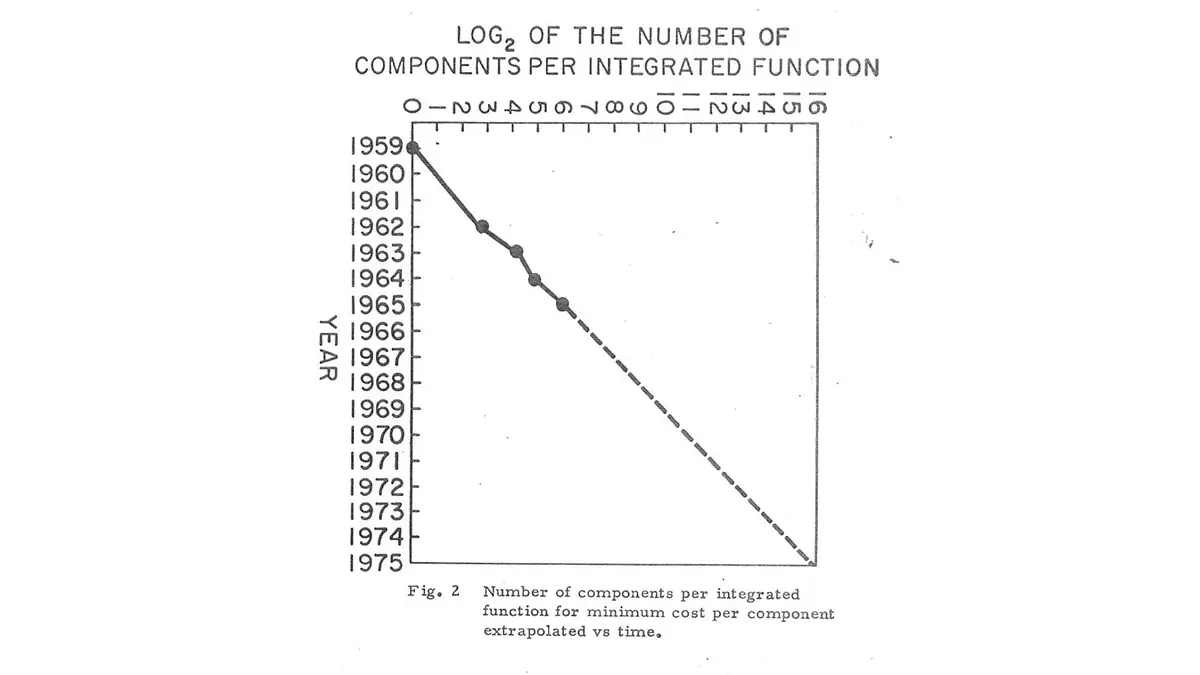
He lectures on 'The Impact of Integrated Circuits', from the transistors of the 1950s to the chips of the 1980s and Moore's law; the recording is kept by the Computer History Museum.
- 1987
President Ronald Reagan awards him the National Medal of Technology for the integrated circuit, the microprocessor and his leadership of research.
- 1988
After a long search for a leader fails, Noyce, who had first said he was too old, agrees to head Sematech, the chip makers' research consortium in Austin, Texas, funded half by the Defense Department; its plant opens in November.
Sematech, Montopolis Drive, Austin, Texas: the consortium he led from 1988; he died in Austin on 3 June 1990 - 1990
- 8:40 p.m.
At the State Department in Washington, President George H. W. Bush presents the National Academy of Engineering's first Charles Stark Draper Prize to Jack Kilby and to Noyce, and both give short speeches of thanks.
Noyce has a heart attack at his home in Austin, after his morning swim according to Britannica, and dies at Seton Medical Center, aged 62.
Sematech, Montopolis Drive, Austin, Texas: the consortium he led from 1988; he died in Austin on 3 June 1990