Stoicism is founded in Athens
“Zeno's school on the Painted Porch of Athens, c. 300 BCE: live by reason and virtue, accept what you cannot control; carried into Rome by Seneca, Epictetus and Marcus Aurelius.”
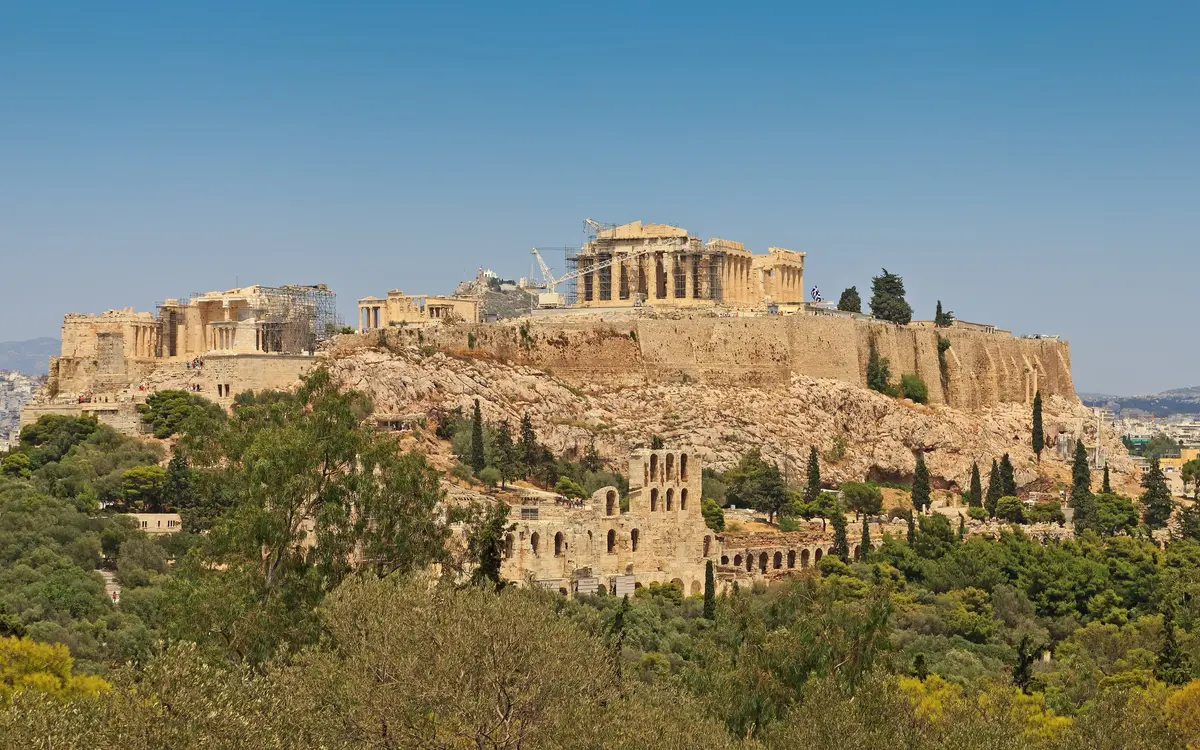
About 300 BCE a merchant's son from Citium in Cyprus, Zeno, began to teach philosophy in the Painted Stoa, a long colonnade on the north side of the market square of Athens, hung with famous paintings of the battle of Marathon and other Athenian victories. The story told in antiquity is that he had been shipwrecked on a voyage with a cargo of purple dye, wandered into an Athenian bookshop, read Xenophon's memoir of Socrates and asked where such a man could be found; the bookseller pointed at Crates the Cynic walking past. Zeno studied under Crates and under the heads of Plato's Academy and the Megarian school, then set up on his own. His hearers were soon called the men of the Stoa, the Stoics, after their porch.
Zeno taught that the universe is a single living thing ordered by reason, the logos, and that a human being, a small part of it, lives well by living in agreement with nature: by using reason, by doing what is right, and by treating everything that is not in our power, health, wealth, reputation, even life, as 'indifferent', to be preferred or avoided but never clung to. Virtue alone is good, and the wise person is free and untroubled whatever happens. Fear, grief and anger are mistaken judgements that can be unlearned. The school divided philosophy into logic, physics and ethics, and its third head, Chrysippus of Soli, who took over about 230 BCE, wrote more than seven hundred books to make the system watertight: 'if there had been no Chrysippus, there would have been no Stoa'. Almost all of this writing is lost; what we know of the early Stoics comes from quotations and summaries, above all in Cicero and in Diogenes Laertius.
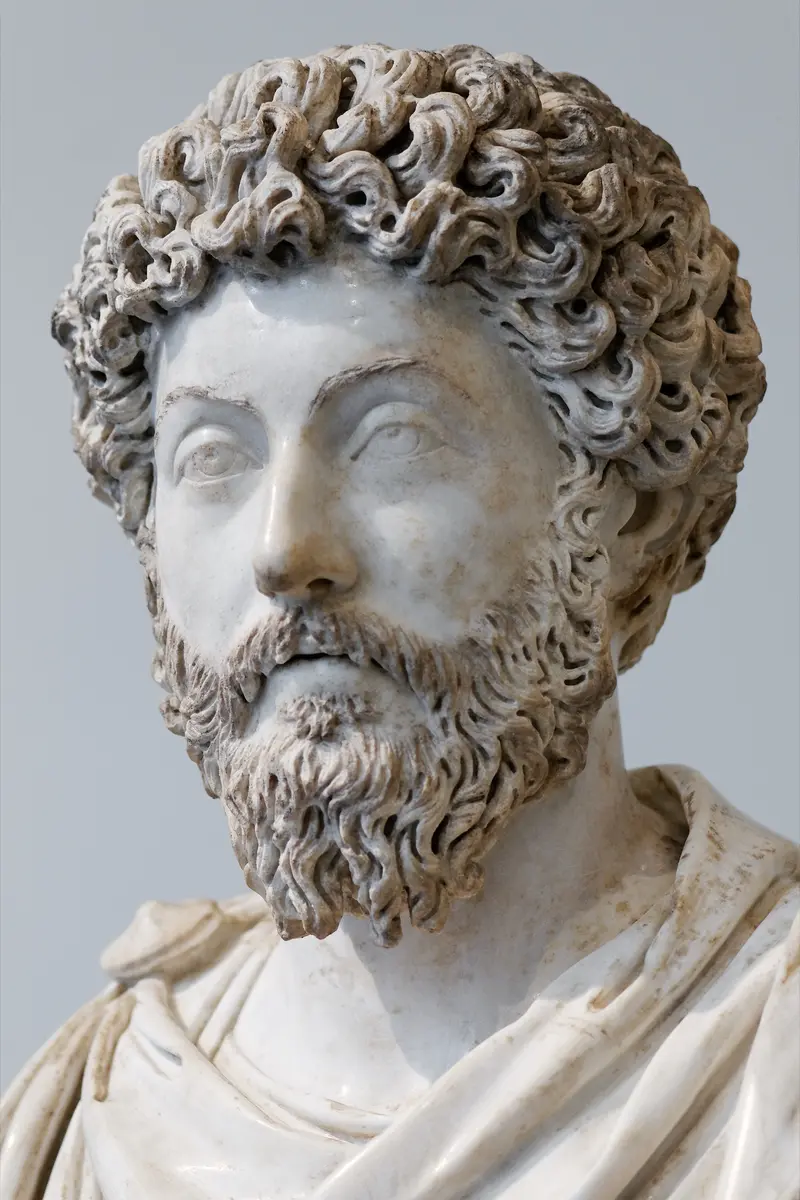
In the second and first centuries BCE the school moved with the world: Panaetius of Rhodes lived for years in Rome in the circle of Scipio Aemilianus, and his pupil Posidonius taught at Rhodes, where Cicero came to study under him. Under the Roman emperors Stoicism became the philosophy of a governing class and of its opposition. Cato the Younger, who killed himself at Utica in 46 BCE rather than accept Caesar's pardon, became its martyr. Seneca, tutor and adviser to Nero, wrote the letters and essays on anger, clemency, time and death that are still the most read Stoic books, and was ordered to kill himself in 65 CE. Epictetus, born a slave, was expelled from Rome with the other philosophers under Domitian and taught at Nicopolis in Greece, where his pupil Arrian wrote down his Discourses and the short Handbook. Marcus Aurelius, emperor from 161 to 180, kept a notebook in Greek in his camps on the Danube, addressed to himself, which we call the Meditations.
The ancient school faded after Marcus, and the philosophical schools of Athens were closed by Justinian in 529, but Stoic ideas passed into Christian writers and into Renaissance humanism, where Justus Lipsius's dialogue On Constancy (1584) made a Christian Stoicism for a Europe at war. Thomas More, Descartes and Spinoza all read the Stoics. In our own time the Meditations and the Handbook are read as practical guides, and cognitive behavioural therapy borrows the Stoic rule that it is not events that disturb us but our judgements about them. The entry runs from the founding of the school to the death of its emperor, the last great ancient Stoic.
What happened
- 300 BCE
Zeno of Citium, in Athens since about 312 after, the story goes, a shipwreck with a cargo of purple dye and a chance reading of Xenophon's memoir of Socrates in a bookshop, begins to teach on his own in the Painted Stoa on the north side of the Agora, pacing up and down the colonnade. He has studied under Crates the Cynic, Stilpo the Megarian and Polemo of the Academy.
The Painted Stoa (Stoa Poikile) on the north side of the Agora of Athens: Zeno taught here from about 300 BCE, and his hearers were called Stoics after itThe porch, built about 475-450 BCE and hung with paintings of Marathon and other victories, gives the school its name: Zeno's hearers, once called Zenonians, are now called the men of the Stoa, the Stoics.
The Painted Stoa (Stoa Poikile) on the north side of the Agora of Athens: Zeno taught here from about 300 BCE, and his hearers were called Stoics after it- 276 BCE
Antigonus Gonatas, king of Macedon since 277, hears Zeno whenever he is in Athens and invites him to Pella; Zeno declines and sends his pupils Persaeus and Philonides. The Athenians, Diogenes Laertius says, trust him with the keys of the city walls.
- 262 BCE
Zeno dies, aged about seventy, after a fall leaving the school: he strikes the ground, quotes a line of tragedy and holds his breath. The Athenians decree him a golden crown and a tomb in the Ceramicus at public expense, 'for his goodness and temperance', because he 'exhorted to virtue and temperance those of the youth who came to him'.
The Painted Stoa (Stoa Poikile) on the north side of the Agora of Athens: Zeno taught here from about 300 BCE, and his hearers were called Stoics after itCleanthes of Assos, the former boxer who drew water by night to study by day, takes over the school and leads it for some thirty years; he writes the Hymn to Zeus, the one long early Stoic text that survives.
The Painted Stoa (Stoa Poikile) on the north side of the Agora of Athens: Zeno taught here from about 300 BCE, and his hearers were called Stoics after it- 230 BCE
Chrysippus of Soli succeeds Cleanthes. In twenty-five years he writes more than seven hundred books of logic, physics and ethics, answering the sceptics of the Academy and fixing the system: 'if there had been no Chrysippus, there would have been no Stoa'.
The Painted Stoa (Stoa Poikile) on the north side of the Agora of Athens: Zeno taught here from about 300 BCE, and his hearers were called Stoics after it - 155 BCE
Athens sends the heads of its three great schools, the Stoic Diogenes of Babylon, the Academic Carneades and the Peripatetic Critolaus, as ambassadors to Rome. Their lectures are the Romans' first taste of Greek philosophy, and alarm the elders.
Rome: the philosophers' embassy of 155 BCE, Panaetius in Scipio's circle, Seneca at Nero's court and his death in 65 CE, Musonius and Epictetus teaching until Domitian expelled the philosophers - 140 BCE
Panaetius of Rhodes lives for years in Rome as a friend of Scipio Aemilianus and the historian Polybius, and about 140 accompanies Scipio on an embassy to the East; he softens the old Stoa's austerity, and his book On the Appropriate becomes the model of Cicero's On Duties. From 129 he heads the school in Athens.
Rome: the philosophers' embassy of 155 BCE, Panaetius in Scipio's circle, Seneca at Nero's court and his death in 65 CE, Musonius and Epictetus teaching until Domitian expelled the philosophers - 78 BCE
Cicero, aged twenty-eight, studies at Rhodes under Posidonius, Panaetius's pupil, the most learned Stoic of the age, who measures the earth and the tides and writes a history of his times; Cicero's later books on ends, duties and fate will carry Stoic doctrine to every later century.
- 46 BCE
After Caesar's victory in Africa, Cato the Younger, the Stoic senator who led the resistance, sends the senators and his soldiers safely out of Utica, reads Plato's Phaedo on the soul and kills himself with his sword rather than accept Caesar's pardon; for the Stoics of the Empire he becomes the pattern of the free man.
- 41
Seneca, a senator and writer from Corduba in Spain, is banished to Corsica by Claudius on a charge of adultery with Caligula's sister; in exile he writes consolations to his mother and to a freedman of the emperor. Agrippina has him recalled in 49 to teach her son Nero.
- 54
Nero becomes emperor at sixteen; Seneca writes his speeches and, with the guard commander Burrus, guides the government for five good years, addressing to the young emperor the essay On Clemency.
Rome: the philosophers' embassy of 155 BCE, Panaetius in Scipio's circle, Seneca at Nero's court and his death in 65 CE, Musonius and Epictetus teaching until Domitian expelled the philosophers - 65
The conspiracy of Piso against Nero is betrayed. Seneca, who has tried twice to retire, is accused and ordered to die: he opens his veins, takes hemlock, and suffocates in the steam of a hot bath, dictating to the end. The Stoic knight Musonius Rufus is exiled to the barren island of Gyaros.
Rome: the philosophers' embassy of 155 BCE, Panaetius in Scipio's circle, Seneca at Nero's court and his death in 65 CE, Musonius and Epictetus teaching until Domitian expelled the philosophers- 93
Domitian expels the philosophers from Rome. Epictetus, a lame freedman from Hierapolis who was once a slave at Nero's court and a pupil of Musonius, crosses to Nicopolis in Epirus and opens a school that draws the sons of senators.
Nicopolis in Epirus: Epictetus's school after his expulsion from Rome, where Arrian heard the Discourses - 107
The young Arrian of Nicomedia, later Hadrian's governor and the historian of Alexander, attends Epictetus's classes at Nicopolis and writes down what he hears: four of the eight books of the Discourses survive, and his short digest, the Handbook, becomes the most read of all Stoic books.
Nicopolis in Epirus: Epictetus's school after his expulsion from Rome, where Arrian heard the Discourses - 161
Marcus Aurelius becomes emperor. Trained from boyhood in philosophy, he has read Arrian's Epictetus, lent to him by his Stoic teacher Rusticus, and thanks his teachers for it in the first book of his notebook.
- 171
In his winter headquarters at Carnuntum on the Danube, in the middle of the wars against the Marcomanni, Marcus writes in Greek a notebook addressed to himself, book by book over the last decade of his life: the Meditations, as a modern editor named them.
- 180
Marcus dies in camp on the Danube, probably at Vindobona, the last great ancient Stoic. The school has no later head of note; its books, and above all the Meditations, the Handbook and Seneca's Letters, carry Stoicism on.
Vindobona (Vienna): the Danube camp where Marcus Aurelius, the last great ancient Stoic, died on 17 March 180